

Every year, roughly 1,000 people visit emergency rooms due to injuries from wind-blown beach umbrellas, while thousands more arrive at popular coastal destinations with beach tents only to discover they are banned by local regulations. The beach umbrella vs beach tent debate affects millions of beachgoers annually, and most online comparisons are written by companies that sell one or the other. Choosing the right beach shade is not merely a matter of comfort or aesthetic preference; it is a critical calculation involving wind dynamics, UV radiation physics, and municipal compliance.
For decades, the beach shade market has been dominated by conflicting narratives. Manufacturers of pop-up tents argue that their products offer superior enclosed protection, while umbrella companies claim portability and tradition as their primary advantages. This binary debate often leaves consumers confused, leading to purchases that fail to meet specific needs or, worse, compromise safety. The reality is that neither option is universally superior. The effectiveness of a beach umbrella versus a beach tent depends entirely on specific variables: the angle of the sun, the velocity of the wind, the composition of the group, and the specific rules governing the stretch of sand in question.
This guide provides an objective comparison of beach umbrellas and beach tents across seven critical factors, utilizing actual measurements, verified UV data, and wind safety standards. By examining the distinct advantages and limitations of each shade type: from the specific UPF ratings of fabrics to the aerodynamic lift generated by canopy shapes, readers will gain a clear decision framework. UV-Blocker manufactures high-performance umbrellas but acknowledges the specific scenarios where tents legitimately outperform overhead shade. An informed beachgoer makes safer decisions, ensuring that their day by the water remains focused on relaxation rather than equipment management or regulatory enforcement.

Beach Umbrella vs Beach Tent: How Does UV Protection Compare?
Beach tents typically offer UPF 50+ protection across enclosed walls, while quality beach umbrellas range from UPF 30 to UPF 50+, with coverage depending on canopy size and sun angle.

The primary function of any beach shade device is to protect human skin from ultraviolet radiation, yet the mechanism by which this is achieved differs fundamentally between tents and umbrellas. Most high-quality beach tents are constructed from fabrics with a UPF 50+ rating, meaning they block approximately 98 percent of UV rays. Because tents provide enclosed walls on three sides, they offer a static physical barrier against direct sunlight, regardless of the sun's position. This structural design inherently limits UV exposure from low angles, which can be a significant advantage during early morning or late afternoon hours.
However, the UPF rating of the fabric is only one component of the total protection equation. A critical and often overlooked factor is reflected UV radiation. According to the Skin Cancer Foundation, sand reflects between 15 percent and 25 percent of UV rays upward, meaning that even in perfect shade, a person is bombarded by radiation from below. Beach tents, with their enclosed sides, block a significant portion of this scattered and reflected light. A standard beach umbrella provides overhead protection but leaves the sides open. Without a high-quality canopy material or supplementary protection, the user remains exposed to indirect UV radiation. To mitigate this, premium umbrellas often utilize specialized coatings. For example, Sunburn in Shade: Why You Get Burned explains that reflected UV rays can cause significant skin damage even when a person feels cool and shaded.
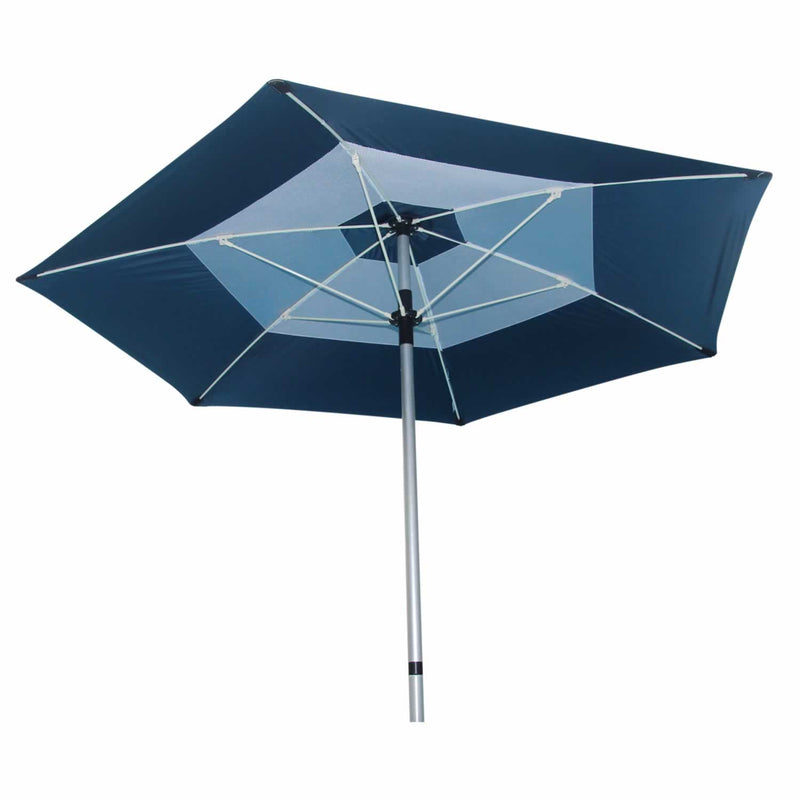
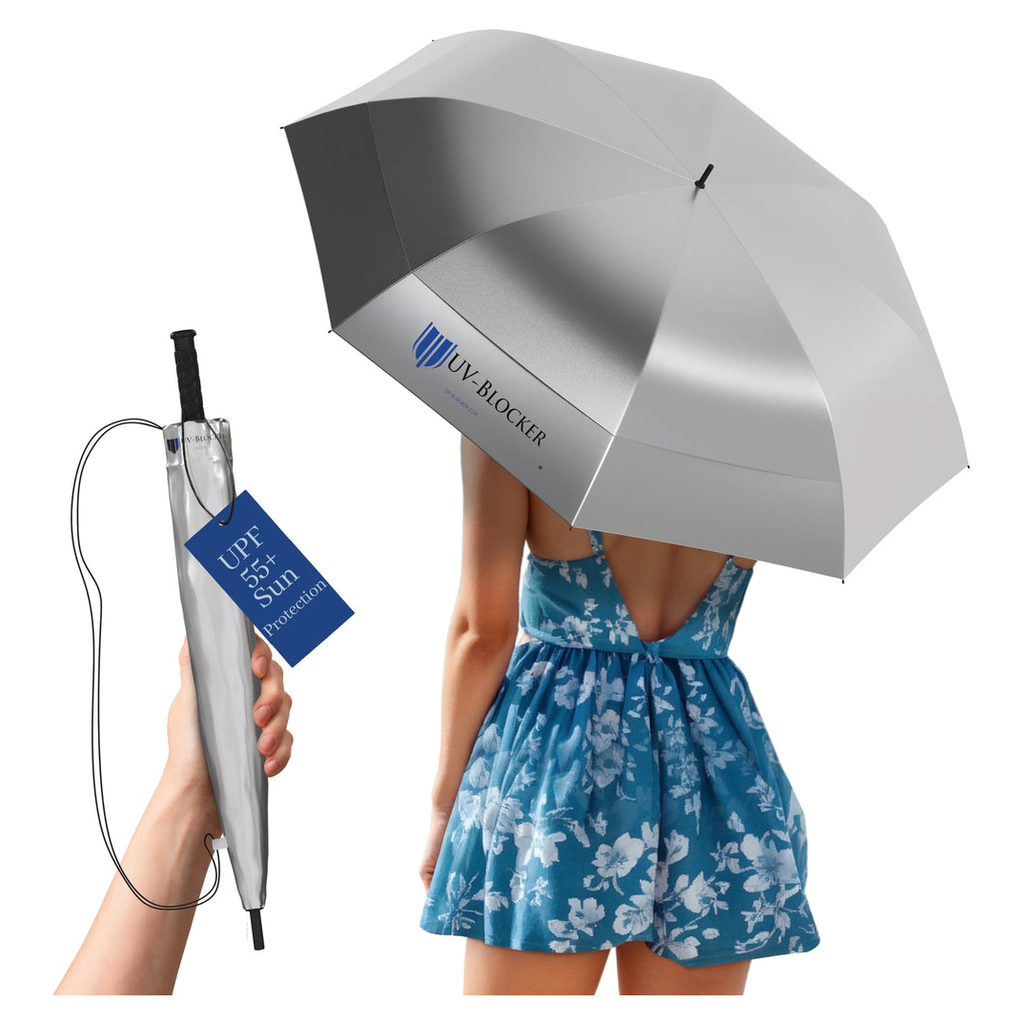
Coverage area also varies significantly between the two options. A typical pop-up beach tent provides between 40 and 60 square feet of enclosed shade. This space is fixed and cannot be easily adjusted once the tent is staked down. A large beach umbrella, such as the UV-Blocker Large Beach Umbrella, offers approximately 42 square feet of overhead shade with an 88-inch diameter canopy. While the total square footage may be slightly less than a large tent, the umbrella's shade is dynamic. The pole allows for angle adjustments to track the sun's movement, maintaining a shadow over the user without requiring the entire structure to be moved.
Temperature regulation is another area where physics dictates performance. Enclosed tents, while excellent at blocking side light, frequently trap heat. Unless the tent is designed with substantial mesh windows for cross-ventilation, the interior can become significantly hotter than the surrounding air, creating a "greenhouse effect." Umbrellas avoid this issue entirely by allowing 360-degree airflow. Umbrellas equipped with reflective coatings, such as Solarteck, actively reflect sunlight away from the canopy. Data indicates that this technology can reduce the temperature underneath the umbrella by up to 15 degrees Fahrenheit compared to direct sunlight, a cooling benefit that enclosed fabric structures struggle to replicate.
Which Is Easier to Carry and Set Up: A Beach Umbrella or Beach Tent?
Beach umbrellas weigh 5-8 pounds and set up in under 2 minutes, while beach tents weigh 8-15 pounds, take 5-10 minutes to set up, and require more car trunk space.
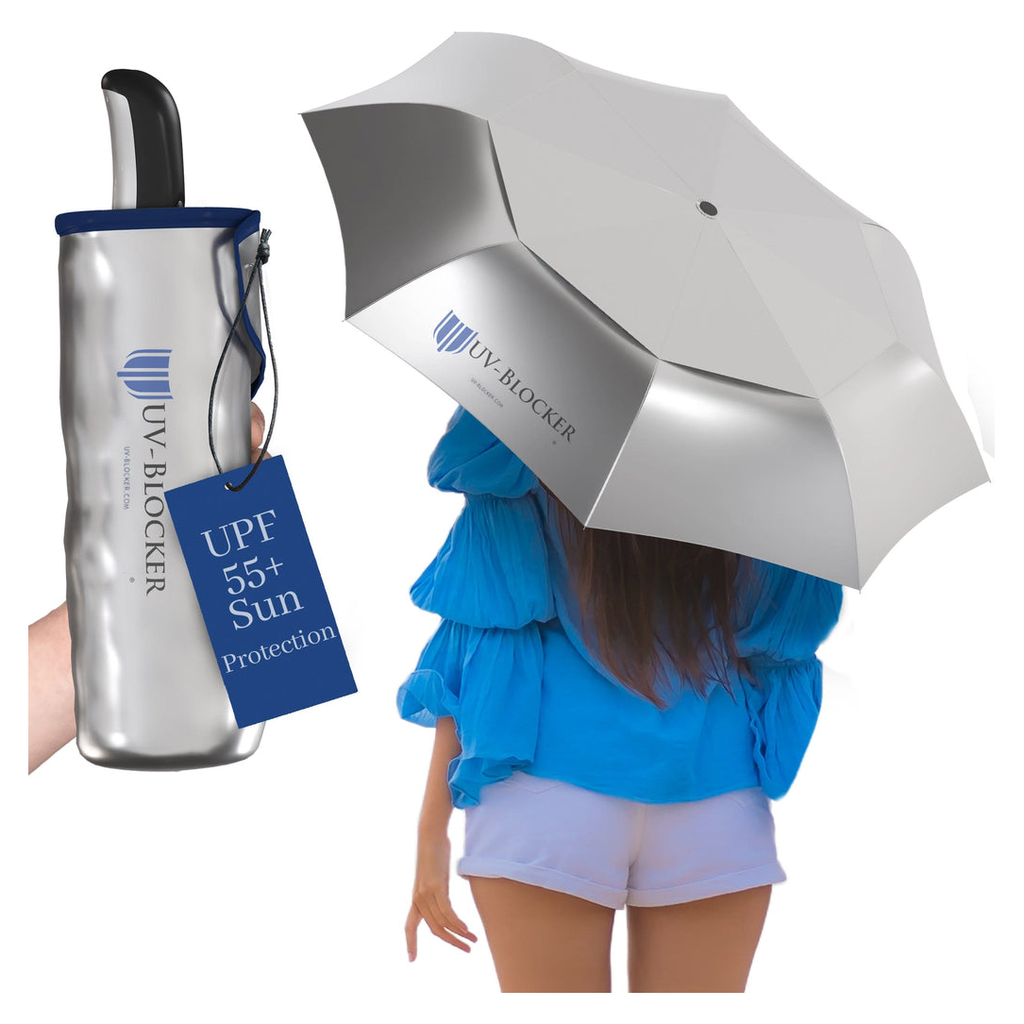
Portability is frequently the deciding factor for beachgoers who must navigate parking lots, boardwalks, and soft sand to reach their destination. In this category, the beach umbrella maintains a distinct advantage regarding weight and bulk. A high-quality umbrella, such as the UV-Blocker Large Beach Umbrella, weighs approximately 7.5 pounds. It collapses into a long, slender profile (roughly 45 to 55 inches in length) that can be easily slung over a shoulder or tucked into the side of a beach cart. This form factor is particularly compatible with airline travel, as many umbrellas can be checked as sports equipment or fit within specialized luggage, whereas the circular or rectangular bulk of a packed tent can prove problematic.
Setup procedures highlight another divergence in user experience. An umbrella requires a straightforward sequence: secure the anchor, insert the pole, and open the canopy. With a proper sand anchor, this process takes between 60 and 90 seconds and can be easily performed by a single person. Beach tents, specifically the "pop-up" variety, have improved significantly in recent years but still present a more complex assembly challenge. A typical setup involves removing the tent from its disc or bag, allowing it to spring into shape, staking down four corners, and filling sandbags to prevent it from blowing away. This process generally consumes 5 to 10 minutes.
While some modern instant-tents claim setup times comparable to umbrellas, the physical reality of managing a larger structure often complicates these estimates. Folding a pop-up tent back into its carrying bag is a notorious point of frustration for many users, often requiring specific twisting motions that can be difficult to master. The footprint of a packed tent (often a disc 2 to 3 feet in diameter or a localized bag 4 feet long) occupies significantly more trunk space than the linear profile of an umbrella. For solo beachgoers or those managing small children, the logistical burden of a tent can outweigh its spatial benefits.
Quick Comparison: Usability and Specifications
| Feature | Beach Umbrella | Beach Tent |
|---|---|---|
| Weight | 5-8 lbs | 8-15 lbs |
| Setup Time | 1-2 minutes | 5-10 minutes |
| Packed Size | 45-55" long tube | 4ft x 6" disc/bag |
| Solo Setup | Yes | Possible but harder |
| UV Protection | UPF 30-55+ | UPF 50+ |
| Coverage Area | 25-42 sq ft | 40-60 sq ft |
| Price Range | $50-$160 | $40-$150 |
| Side Protection | No (overhead only) | Yes (enclosed walls) |
| Airflow | Excellent | Limited (trapped heat) |
| Beach Regulations | Allowed everywhere | Banned at many beaches |
Which Beaches Ban Tents but Allow Umbrellas?
Many popular US beaches ban tents during peak summer season, including Myrtle Beach (Memorial Day to Labor Day), Ocean City MD, and most Hawaii state beaches, while umbrellas remain universally allowed.
This regulatory reality shifts the beach umbrella vs beach tent calculation for many travelers. Perhaps the most critical, yet frequently ignored, factor in the purchasing decision is regulatory compliance. A superior shade structure is rendered useless if local ordinances prohibit its deployment. In recent years, an increasing number of high-traffic beaches have implemented bans or strict restrictions on tents and canopies, driven by the need to maintain clear sightlines for lifeguards, ensure emergency vehicle access, and manage overcrowding. These regulations effectively partition the market: beach umbrellas are universally accepted, while tents face a patchwork of seasonal and geographical prohibitions.
Myrtle Beach, South Carolina, one of the most visited coastal destinations in the United States, enforces a strict ban on tents and canopies from Memorial Day through Labor Day. During this peak window, only circular umbrellas with a diameter of 7.5 feet or less are permitted. This regulation forces thousands of vacationers who arrive with tents to either rent umbrellas or purchase new equipment upon arrival. Similarly, Ocean City, Maryland, has implemented restrictions that limit the use of shading devices to traditional umbrellas during peak hours to prevent the "tent cities" that obstruct views and impede public safety personnel.
Hawaii presents another significant regulatory landscape. State rules generally prohibit camping and the erection of tent structures on public beaches. While enforcement can vary, pop-up shade tents exist in a regulatory gray area that often leads to their removal by authorities, particularly in high-density tourist areas like Waikiki. The rationale is consistent across these jurisdictions: tents occupy a large footprint and create visual barriers that complicate water safety surveillance.
The traditional center-pole umbrella is recognized as the standard for personal beach shade. Its smaller footprint and open profile allow lifeguards to see through and around the device, making it the "safe bet" for travelers visiting unfamiliar beaches. For beachgoers planning trips to multiple destinations or those visiting strict jurisdictions like Virginia Beach or the Florida Gulf Coast, relying on a tent introduces a risk of non-compliance that an umbrella simply does not carry.
Beaches That Ban Tents During Peak Season * Myrtle Beach, SC (Memorial Day - Labor Day) * North Myrtle Beach, SC (similar restrictions) * Ocean City, MD (size restrictions on canopies) * Waikiki Beach, Hawaii (tents prohibited) * Virginia Beach, VA (tent size restrictions) * Many Florida Gulf Coast beaches (local ordinances vary)
How Do Beach Umbrellas and Beach Tents Handle Wind?
Unanchored beach umbrellas cause roughly 1,000 ER visits annually, but properly anchored umbrellas with vented canopies withstand winds up to 30 mph, while tents become sail-like in strong gusts.
Wind is the common enemy of all temporary outdoor structures, but the failure modes of umbrellas and tents differ drastically. The Consumer Product Safety Commission (CPSC) reports approximately 1,000 emergency room visits annually related to wind-blown beach umbrellas. These incidents are almost exclusively the result of user error, specifically the failure to anchor the pole sufficiently, combined with the use of cheap, non-vented umbrellas that act as parachutes. When air gets trapped under a solid canopy, the resulting lift can rip the umbrella from the sand with dangerous force.
However, this risk is mitigated entirely by proper engineering and deployment. The ASTM F3681-24 standard establishes that a compliant beach umbrella must withstand 75 pounds of force or 30 mph winds. Achieving this requires two specific features: a vented canopy and a secure anchor. A vented system, such as the patented double-canopy design found on high-performance umbrellas, allows wind to pass through the structure rather than building up pressure underneath. This reduces aerodynamic lift by 40 to 60 percent. For a detailed breakdown of this physics, readers can consult the wind-proofing guide, which explains the crucial difference between standard and wind-resistant designs.
Beach tents face a different set of aerodynamic challenges. While they are less likely to become airborne projectiles that cause impalement injuries, they are highly susceptible to structural collapse. The broad, flat sides of a tent act as sails, catching the wind laterally. In strong gusts, the fiberglass poles can bend to the breaking point, or the stakes can be pulled from the loose sand, causing the tent to tumble down the beach. While sandbags help stabilize the corners, the large surface area of a tent makes it inherently less stable in high winds than a streamlined umbrella.
Security ultimately depends on the anchoring technique. For umbrellas, the "stab and twist" method is insufficient. A proper sand anchor must be screwed 18 to 24 inches into the substrate to engage the dense, wet sand below the surface. This creates a foundation capable of resisting significant leverage. The umbrella anchoring guide details the specific "Sand Lock Protocol" required to ensure safety. Securing a tent often requires burying large sand anchors or deadman anchors, a labor-intensive process that must be repeated if the wind direction shifts.
Should You Choose a Beach Umbrella or Beach Tent for Your Family?
Choose a beach umbrella for portability, universal beach access, and walk-around shade. Choose a beach tent for enclosed privacy, nap space for toddlers, and full-day base camps on tent-friendly beaches.
The beach umbrella vs beach tent decision should not be based on brand loyalty but on the specific logistics of the beach trip. Different group dynamics and use cases clearly favor one option over the other. For the solo beachgoer or a couple, the beach umbrella is the unequivocal winner. The lightweight nature of the equipment, combined with the speed of setup, aligns with the needs of those who value mobility. As the sun moves across the sky, adjusting an umbrella requires nothing more than a tilt of the pole, whereas rotating a tent to chase the shade is a cumbersome operation involving the re-staking of lines.
Families with infants or toddlers face a different set of priorities. In this scenario, the beach tent, where permitted, offers distinct advantages. The enclosed space provides a controlled environment for naps, diaper changes, and breastfeeding, shielded from the visual noise of a crowded beach. The floor of the tent also protects young children from hot sand. However, parents must verify local regulations before committing to this strategy, as being forced to dismantle a tent mid-day can ruin a family outing.
For larger groups of friends, multiple umbrellas often provide a superior experience to a single large tent or canopy. A cluster of umbrellas allows for a flexible arrangement where individuals can choose to sit in the sun or shade without being confined to a single designated area. This setup also promotes better airflow and socialization compared to huddling inside a three-sided enclosure. Frequent travelers also benefit more from umbrellas, specifically compact models like the UV-Blocker Compact Umbrella, which can fit into suitcases and rental cars with ease.
A hybrid approach is increasingly adopted by "power users" who visit tent-friendly beaches for full-day excursions. This involves pitching a tent near the dunes to serve as a base camp for coolers and gear storage, while deploying a high-quality umbrella near the water's edge. This strategy leverages the privacy and storage capacity of the tent while maintaining a portable shade station for active supervision of swimmers.
Decision Matrix: Matching Shade to Scenario
| Your Scenario | Best Choice | Why |
|---|---|---|
| Solo beachgoer | Umbrella | Lighter, faster, repositionable |
| Couple | Umbrella | Easy to move as sun shifts |
| Family with toddlers | Tent (where allowed) | Enclosed nap/changing space |
| Group of friends | Umbrella(s) | Flexible spread-out coverage |
| Windy beach | Vented umbrella | Tents act as sails; vented canopies handle gusts |
| Beach with tent ban | Umbrella | Only legal option during peak season |
| Frequent traveler | Umbrella | Lighter, packs easier |
| Full-day base camp | Tent + umbrella combo | Best of both worlds |

Frequently Asked Questions About Beach Umbrellas and Beach Tents
Do beach tents block UV rays?
Most quality beach tents offer UPF 50+ protection, blocking approximately 98% of UV rays through their fabric walls and canopy.
However, the open side of a beach tent still allows reflected UV from sand (15-25% of UV rays). For complete protection, combine tent shade with SPF 30+ sunscreen.
Are beach tents allowed on all beaches?
No. Many popular US beaches ban tents during peak summer season, including Myrtle Beach SC, Ocean City MD, and most Hawaii state beaches.
Always check local beach regulations before purchasing a tent. Umbrellas are universally allowed on US public beaches.
Which is better for windy beaches, an umbrella or a tent?
A properly anchored umbrella with a vented canopy outperforms tents in wind, as tents act as sails and can collapse or blow away in strong gusts.
Look for umbrellas meeting ASTM F3681-24 standard (withstands 30 mph winds). Use a sand anchor buried 18-24 inches for secure placement.
How much shade does a beach umbrella provide compared to a tent?
A standard beach umbrella covers 25-42 square feet of overhead shade, while beach tents typically provide 40-60 square feet of enclosed coverage.
Tents provide more total coverage, but umbrella shade is repositionable as the sun moves throughout the day.
Can you use a beach umbrella and tent together?
Yes, and many experienced beachgoers recommend this hybrid approach: a tent as a base camp for gear and the umbrella for portable shade near the water.
This combination works best on tent-friendly beaches for families spending full days at the beach.
Why do some beaches ban beach tents?
Beaches ban tents to maintain lifeguard sight lines, ensure emergency vehicle access, prevent overcrowding, and keep sand areas accessible for all beachgoers.
Tent bans are most common during peak summer season (Memorial Day through Labor Day) when beaches are most crowded.
What UPF rating should a beach umbrella have?
Look for beach umbrellas rated UPF 50 or higher, which blocks at least 98% of UV rays. UPF 50+ umbrellas with reflective coatings provide the strongest protection.
Standard beach umbrellas without UV treatment may only rate UPF 10-30. The UPF rating should be independently tested and labeled.
Conclusion
The beach umbrella vs beach tent comparison ultimately comes down to a tradeoff between enclosure and flexibility. Beach tents offer superior privacy and a defined space that is particularly valuable for families with young children, provided the beach regulations permit their use. However, their weight, bulk, and susceptibility to wind make them less versatile than their traditional counterparts. Beach umbrellas, specifically those engineered with UV-reflective coatings and vented canopies, offer a universal solution that balances high-level protection with portability and safety.
For the majority of beachgoers, a high-quality umbrella remains the most practical investment. It ensures compliance with regulations across all coastal destinations, handles wind gusts with greater stability when properly anchored, and offers a cooler, breezier environment. Regardless of the chosen equipment, the most critical takeaway is the necessity of comprehensive protection. Whether sitting under the canopy of a UV-Blocker Large Beach Umbrella or lounging inside a pop-up tent, the reflection of UV rays from the sand demands the diligent use of sunscreen. By understanding the specific advantages of each shade type and verifying local rules before travel, beachgoers can ensure their time in the sun is both safe and enjoyable.
Beach Umbrella vs Beach Tent: Frequently Asked Questions
Which option provides superior UV protection for those with sensitive skin?
While both provide shade, UV-Blocker umbrellas and tents utilize Solarteck® technology to block 99% of UVA and UVB rays, far exceeding standard retail fabrics. Products rated UPF 50+ are essential because they allow less than 2% of UV radiation to penetrate the material, providing a critical barrier against skin damage. This level of protection has earned UV-Blocker the Melanoma International Foundation seal of approval for high-standard sun safety.
How do umbrellas and tents compare when it comes to heat reduction?
Beach tents often trap stagnant air, whereas UV-Blocker umbrellas feature a double-canopy design that promotes airflow while reflecting solar heat. Lab tests indicate that Solarteck® fabric can keep the temperature under the umbrella up to 15 degrees cooler than the ambient air. This significant temperature reduction helps prevent heat exhaustion during peak solar intensity hours when surfaces reflect the most thermal energy.
Can a beach umbrella really protect me from UV rays reflecting off the sand?
Dry beach sand reflects approximately 15% to 25% of UV radiation, meaning you can still burn while sitting in the shade. UV-Blocker designs account for this by offering wider diameters that increase the distance between the user and the edge of the shadow, reducing indirect exposure. For total protection, the Melanoma International Foundation recommends using a UPF 50+ shade structure in conjunction with wearable sun protection to mitigate these reflected rays.
Which structure is safer and more reliable to use during high-wind coastal conditions?
Tents are generally more stable in winds exceeding 15 mph due to their low center of gravity, but UV-Blocker umbrellas are specifically engineered with patented wind vents to prevent inversion. Data suggests that improperly secured umbrellas are a leading cause of beach injuries, so choosing a model with a heavy-duty integrated sand anchor is vital. While a tent offers a physical windbreak, a UPF 50+ umbrella provides superior visibility and easier repositioning as the sun moves throughout the day.