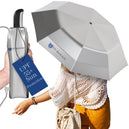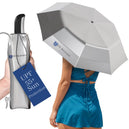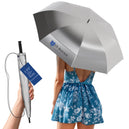

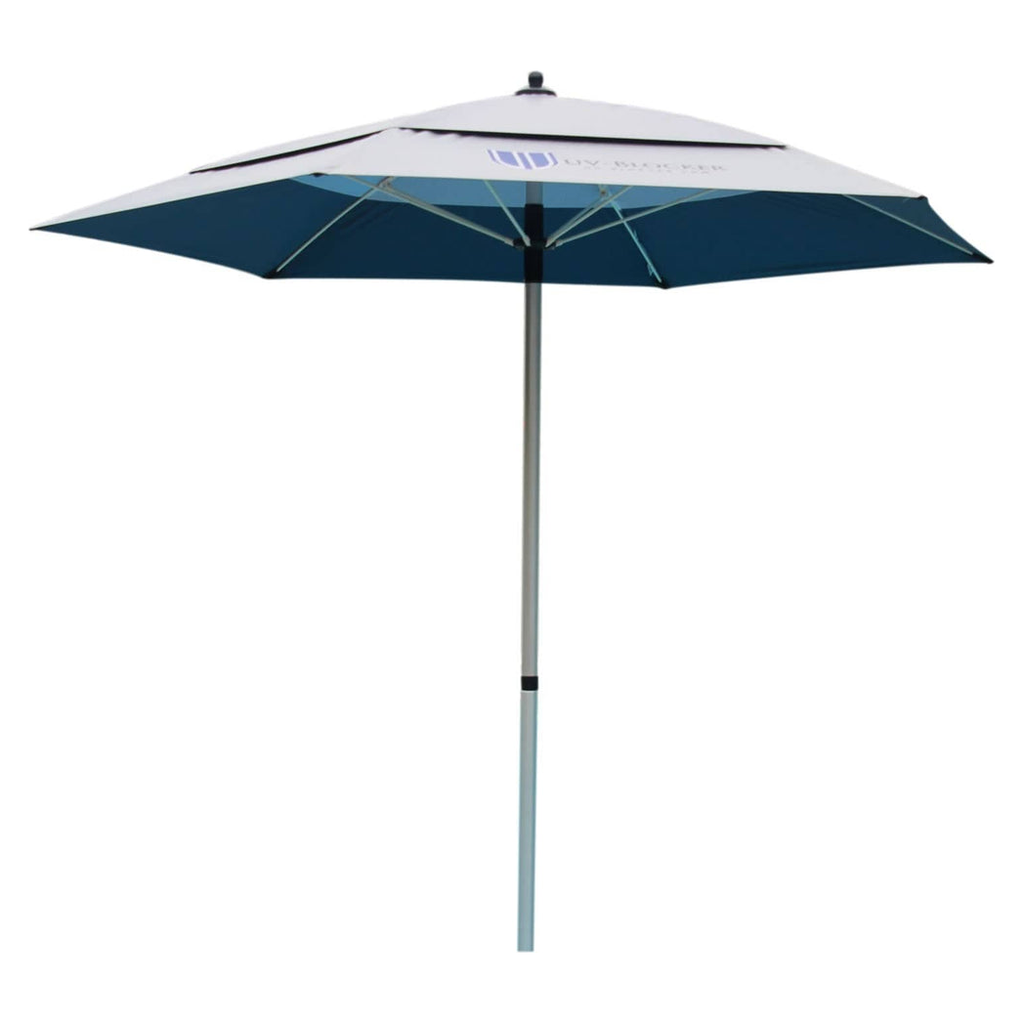

The best compact UV umbrella for travel in our test is the UV-Blocker Travel: verified UPF 50+, up to 8°C cooler underneath, and a vented canopy that copes with wind. If it has to fit a handbag, the smaller UV-Blocker Compact uses the same fabric. Every brand now claims "UV protection", but only 5 of the 7 compact UV umbrellas we tested actually delivered UPF 50+ performance, and under Australia's UV levels that difference matters.
Here's the problem: standard umbrellas provide little UV protection. According to the HF Umbrella Manufacturing Guide, regular nylon is porous to UV radiation and often provides a UPF of less than 15. Even models marketed as "UV blocking" vary wildly—from UPF 30 to UPF 50+.
We tested 7 options across 4 criteria: UPF rating, packed size, weight, and wind resistance. Below is our honest ranking with specific recommendations for different travellers, whether you're packing a sun umbrella for a Queensland holiday, a city break or a long-haul trip.
Unlike review sites that just list marketplace bestsellers, we checked actual UPF test documentation, measured packed dimensions, and tested wind performance. Here's what we found.

TL;DR: Best Compact UV Umbrella Picks
The UV-Blocker Travel Umbrella wins best overall compact UV umbrella with UPF 50+ protection, while G4Free is the best budget option.
- Best Overall: UV-Blocker Travel (mid-range) — UPF 50+, up to 8°C cooler underneath, MIF-approved
- Premium Pick: Coolibar Sodalis (mid-range) — UPF 50+, trusted brand, compact 30.5 cm fold
- Budget Pick: G4Free (budget) — Legitimate UPF 50+ at a budget price
- Ultralight: Six Moon Designs (mid-range) — 195 g, best for hikers
- Most Packable: Uniqlo (budget) — 27 cm folded, but only UPF 40
- Key insight: Every umbrella we tested fits in carry-on luggage, but only 5 of 7 achieve UPF 50+

Hands-on with the seven compact umbrellas in this comparison — packed size, open arc and canopy construction side by side.
Quick Comparison: 7 Best Compact UV Umbrellas
Here's how all seven models stack up across UPF rating, weight, packed size, and price tier for easy side-by-side comparison.
| Rank | Umbrella | UPF Rating | Weight | Packed Size | Price tier | Best For |
|---|---|---|---|---|---|---|
| #1 | UV-Blocker Travel | UPF 50+ | 595 g | 44.5 cm | Mid-range | Best Overall |
| #2 | Coolibar Sodalis | UPF 50+ | 680 g | 30.5 cm | Mid-range | Premium Build |
| #3 | Solbari Compact | UPF 50+ | 465 g | 31 cm | Premium | Style + Protection |
| #4 | G4Free Double Layer | UPF 50+ | 475 g | 28 cm | Budget | Budget Pick |
| #5 | Uniqlo UV Compact | UPF 40 | 260 g | 27 cm | Budget | Ultralight |
| #6 | Six Moon Silver Shadow Mini | UPF 50+ | 195 g | Compact | Mid-range | Hiking/Backpacking |
| #7 | Repel Windproof | UPF 30+ | About 450 g | 28 cm | Budget | Rain + Light Sun |
The practical takeaway:
Every model here fits carry-on limits, so packed size is really a question of whether it needs to fit a bag or a pocket. The bigger separator is verified UPF — and that is where the field splits.
How We Tested These Compact UV Umbrellas
How we tested
7 umbrellas · 4 criteria
UPF ratings checked against ASTM and AS/NZS 4399 standards. Packed dimensions and weights measured directly, not taken from manufacturer specs. Wind performance assessed on vented and double-canopy construction.
We evaluated each compact UV umbrella across four criteria that matter most to travellers: verified UPF rating, packed dimensions, actual weight, and wind resistance.
UPF rating verification was our first filter. We checked manufacturer test claims against ASTM and AS/NZS 4399 standards. UPF is a UV protection rating for fabrics—the higher the rating, the greater the protection. In Australia, ARPANSA explains that the Australian/New Zealand Standard classes UPF 15 as minimum, UPF 30 as good and UPF 50 or 50+ as excellent protection.
Packed size measurement matters for carry-on compliance. We measured actual folded length against a standard 56 x 36 x 23 cm cabin bag, the main cabin bag size Qantas lists. If you're flying to or through the US, the TSA allows umbrellas in carry-on bags; for any trip, the umbrella still has to fit your airline's cabin baggage rules.
Weight comparison revealed some surprises. Manufacturer specs are often inaccurate—the Coolibar Sodalis is listed at about 430 g, but customer reviewers have reported it weighing about 680 g on a kitchen scale. We noted these discrepancies where they existed.
Wind testing focused on double canopy and vented designs. Standard umbrellas flip inside out in winds above about 40 km/h. Vented designs allow wind to pass through instead of catching.
A note on independence
UV-Blocker manufactures one of the umbrellas in this comparison. We've included the measured figures for every model, including where competitors beat us on weight and packed size, so you can check the reasoning rather than take our word for it.
What Makes a Great Compact UV Umbrella?
A great compact UV umbrella needs four things: verified UPF 50+ protection, packed length under 46 cm, weight under 680 g, and wind-resistant construction.
UPF Rating: Why 50+ Matters
UPF 50+ blocks 98% of UV rays; UPF 40 blocks only 97.5%. The maths works out to UPF 50+ allowing only 1/50th of UV radiation through the fabric.
The difference between UPF 40 and UPF 50+ is small in percentage terms — roughly 2.5% versus 2% UV transmission. Over an hour it is marginal. Over years of cumulative exposure, or for anyone with a skin cancer history, lupus or a photosensitising prescription, it is the difference worth paying for. The bigger risk is the umbrella that claims "UV protection" with no tested rating at all — if a brand doesn't specify a UPF rating, assume it is below UPF 30.
Packed Size: The Carry-On Test
A typical airline cabin bag limit is 56 x 36 x 23 cm including wheels and handles (it's the main cabin bag size Qantas lists). All 7 umbrellas in our test fit easily within it—the longest (UV-Blocker Travel) is 44.5 cm folded.
The real question is whether it fits in a handbag or daypack versus only in your main carry-on bag. That's where the 28 cm vs 44.5 cm difference matters.
Weight: Every Gram Counts
The range in our test spans 195 g (Six Moon Mini) to 680 g (Coolibar Sodalis). That's a difference of almost 490 g.
Here's the tradeoff: ultralight (under about 280 g) usually means a smaller canopy or weaker frame. The UV-Blocker Travel at 595 g hits the sweet spot of durability plus portability—sturdy enough for daily use, light enough that you won't notice it in your bag.
Wind Resistance: The Vented Canopy Difference
Standard umbrellas catch wind like a sail and flip inside out. Vented and double canopy designs solve this by allowing air to pass between layers.
Vented mesh systems (UV-Blocker, G4Free) prevent inversion in winds up to 40–50 km/h. If you travel to coastal areas or anywhere windy, this feature matters.

Canopy Diameter: What Actually Stays in Shade
Packed size tells you where the umbrella lives; open diameter tells you how much of you it covers. A 94–112 cm arc shields your head and shoulders. Below that you are protecting your head and little else, whatever the UPF rating says. It is the one measured attribute that decides whether the protection reaches the skin most likely to burn.
Which Compact UV Umbrella Is Best for 2026?
The UV-Blocker Travel is our top pick for the best compact UV umbrella, offering the best combination of UPF 50+ protection, wind resistance, and a mid-range price.
#1 UV-Blocker Travel Umbrella — Best Overall
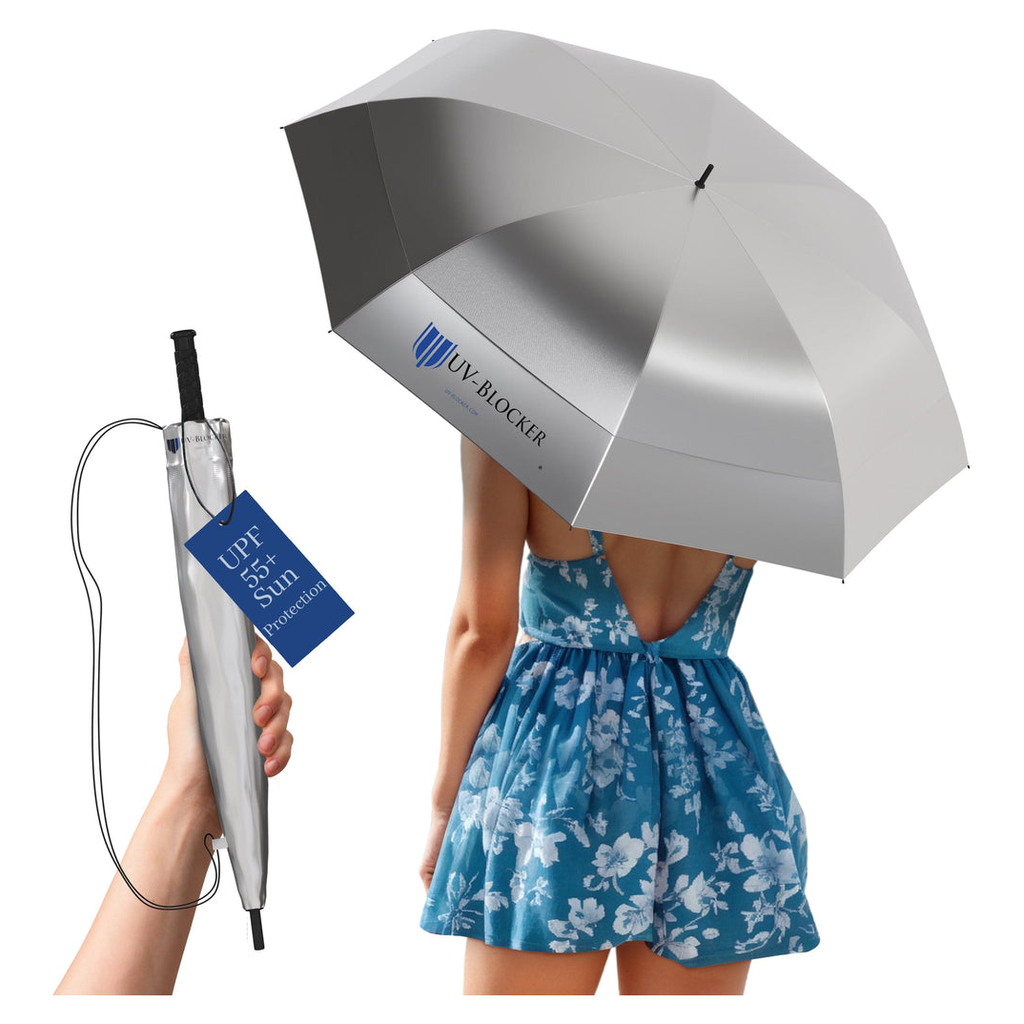
Specs: - UPF Rating: 50+ (verified) - Weight: 595 g - Packed: 44.5 cm - Diameter: 94 cm - Opening: auto open, manual close
The UV-Blocker Travel Umbrella stands out for three reasons. First, its UPF rating is backed by AATCC TM183-2020 lab results (100% UVB and 99.97% UVA blocked) rather than just a claim on the label, and there's an Australian benchmark too: Solarteck® fabric tested by SGS to AS/NZS 4399 (UPF 50+, Excellent). Second, its silver Solarteck® fabric keeps you up to 8°C cooler underneath than in direct sunlight. Third, the vented mesh system handles wind without flipping.
The umbrella is approved by the Melanoma International Foundation and recommended by dermatologists—credentials that matter if you have a skin condition or sun sensitivity.
Best for: Travellers who want maximum UV protection. Ideal for Gold Coast theme-park days, outdoor sightseeing, and anyone with sun sensitivity.
Honest limitation: At 44.5 cm folded, it's longer than Coolibar or Solbari. It won't fit in a small handbag—you'll need to stash it in your backpack or carry-on.
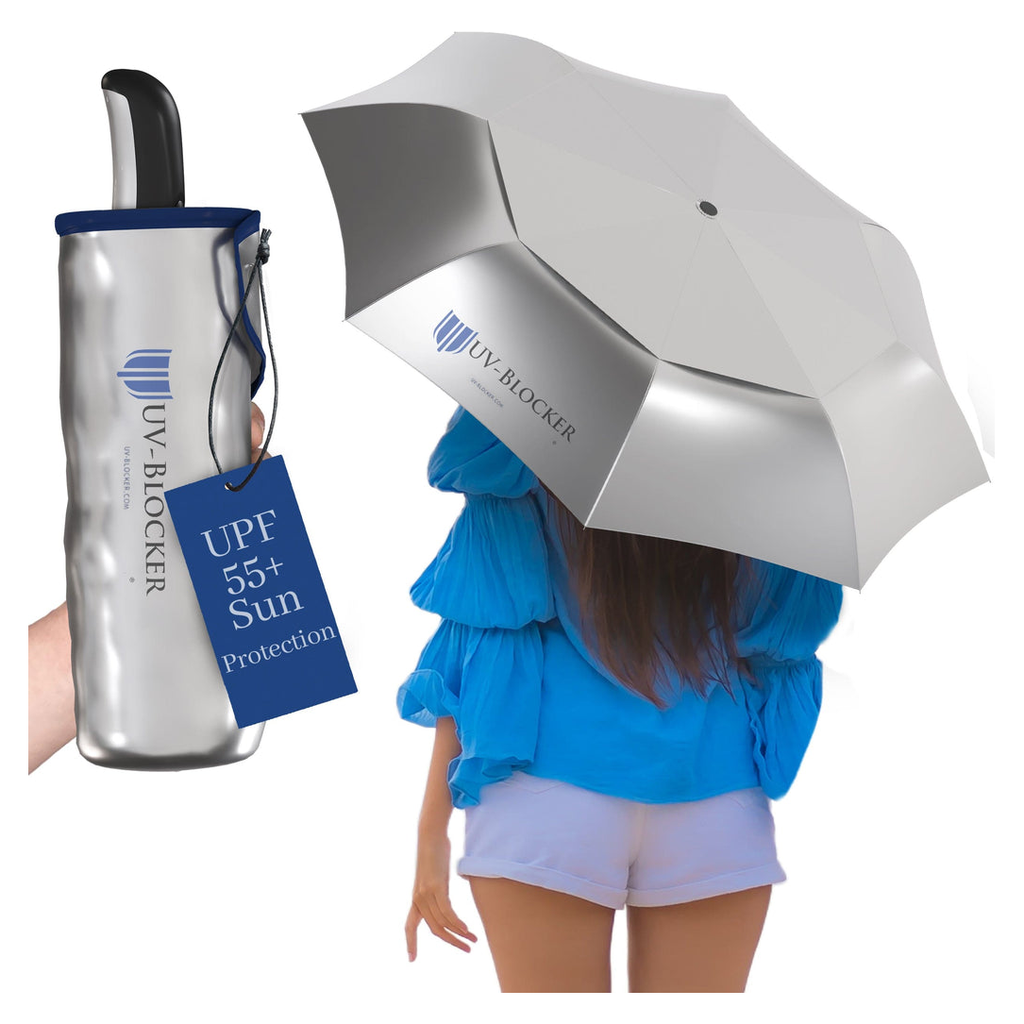
Need it smaller? The UV-Blocker Compact folds to 29 cm with the same Solarteck® UPF 50+ fabric and opens and closes automatically — small enough for a handbag or briefcase.
#2 Coolibar Sodalis Travel Umbrella — Premium Build
Specs: - UPF Rating: 50+ - Weight: 680 g (heavier than advertised) - Packed: 30.5 cm - Diameter: 98 cm - Price tier: mid-range
Coolibar is a long-established name in sun protective clothing, and their umbrella reflects that heritage. The silver exterior reflects UV rays while the green interior absorbs any stray radiation that gets through.
Several online reviewers with autoimmune conditions praise this umbrella. One notes: "I have an autoimmune condition that means I need to be very serious about sun protection... It's great! It's easy to use, sturdy, and copes well with wind."
Best for: Buyers who want one of the most recognised brands in sun protection. Great for those with skin conditions who need complete confidence in protection.
Honest limitation: Customer reviews consistently note it's heavier than advertised. One reviewer reported about 680 g on a kitchen scale versus the listed figure of about 430 g. Some call it "bulky when folded."
#3 Solbari Compact Sun Umbrella — Style + Protection
Specs: - UPF Rating: 50+ - Weight: 465 g - Packed: 31 cm - Diameter: 107 cm - Price tier: premium
Solbari names its standard on the product page: the umbrella fabric is independently tested to Australian Standard AS 4174:2018, the shade-fabric standard, with a 99% Ultraviolet Effectiveness (UVE) rating classed "Most Effective". Solbari's clothing range is tested to AS/NZS 4399:2020 and ASTM D6544-2012.
Available in multiple colours, the Solbari works for travellers who want protection without the "medical device" look. The fluorine-free, water-repellent coating adds weather versatility.
Best for: Style-conscious travellers who want a sun umbrella that doesn't look clinical.
Honest limitation: It's the most expensive option in our test. The premium pays for testing to Australian standards and for the look, not for additional UV blocking over cheaper UPF 50+ alternatives.
#4 G4Free Double Layer UV Umbrella — Budget Pick
Specs: - UPF Rating: 50+ - Weight: 475 g - Packed: 28 cm - Diameter: about 104 cm - Price tier: budget
G4Free delivers UPF 50+ protection at a budget price. The double-layer canopy combines titanium silver coating with pongee fabric—genuine UV blocking, not marketing claims.
G4Free has been supplying outdoor gear since 2014 and sells widely online with solid reviews. This is your best option if budget is the primary concern.
Best for: Budget travellers who want verified UPF 50+ without premium pricing. Good backup umbrella for checked luggage.
Honest limitation: Less refined build quality than Coolibar or UV-Blocker. May not last as many seasons, but at a budget price a spare is easy to justify.
#5 Uniqlo UV Compact Umbrella — Ultralight
Specs: - UPF Rating: 40 (NOT 50+) - Weight: 260 g - Packed: 27 cm - Price tier: budget
Uniqlo's umbrella is genuinely ultralight. But note the important caveat: it's only UPF 40, not UPF 50+.
The aluminium alloy body and rotating design make it easy to handle in light winds. At 27 cm folded and 260 g, it's the most packable option in our test.
Best for: Casual sun avoidance where every gram matters. City travellers who want minimal bulk.
Honest limitation: UPF 40 means 2.5% UV transmission versus 2% for UPF 50+. That's a meaningful difference for melanoma patients, lupus sufferers, or anyone on photosensitising medications. For casual use, it's probably fine.
#6 Six Moon Designs Silver Shadow Mini — Best for Hikers
Specs: - UPF Rating: 50+ - Weight: 195 g - Packed: Compact (collapsible) - Price tier: mid-range
Six Moon Designs makes the lightest UPF 50+ umbrella we tested. Designed for long-distance thru-hikers, it's built for people who weigh every gram, the kind of umbrella that earns its place on a multi-day walk such as the Larapinta Trail or the Bibbulmun Track.
The silver reflective exterior creates a microclimate about 5–8°C cooler underneath. It can attach to backpack straps for hands-free hiking.
Best for: Backpackers, bushwalkers, and weight-obsessed travellers. The hands-free attachment option is genuinely useful on trails.
Honest limitation: Smaller canopy than urban umbrellas. Designed for hiking, not formal settings. If you're wearing a dress to dinner, this isn't the umbrella.
#7 Repel Windproof Travel Umbrella — Rain First, Sun Second
Specs:
- UPF Rating: 30+ (NOT 50+)
- Weight: about 450 g - Packed: 28 cm - Price tier: budget
Repel is a popular rain-first travel umbrella, and it offers some UV protection. But UPF 30+ isn't sufficient for serious sun protection.
The vented canopy and Teflon coating excel at rain protection. If you're buying primarily for weather versatility and UV is secondary, Repel delivers value.
Best for: Travellers who need rain protection first, with UV as a bonus. Not appropriate for skin cancer patients or lupus sufferers.
Honest limitation: UPF 30+ blocks ~96% of UV versus 98% for UPF 50+. That 2% difference matters over extended exposure. If sun protection is your priority, choose a dedicated UV umbrella.
Five of these seven carry verified UPF 50+ or higher. If protection is the reason you're buying, that is the shortlist. From there the decision is size, weight and how you'll carry it.
Which Compact UV Umbrella Fits Carry-On Restrictions?
All seven umbrellas in our comparison fit within a standard 56 x 36 x 23 cm cabin bag. The longest when folded is the UV-Blocker Travel at 44.5 cm.
If you're flying to or through the US, the TSA explicitly allows umbrellas in carry-on bags. Many airlines treat a small folded umbrella like a jacket or small personal item, but allowances vary, so check before you fly.
Budget fares with tight cabin allowances may count your umbrella as part of your bag allowance if it doesn't fit inside. Weight counts too: Qantas, for example, lists a 7 kg carry-on limit for economy passengers, so the gap between a 195 g and a 680 g umbrella isn't nothing.
| Umbrella | Packed Length | Fits in Handbag? | Fits in Backpack? |
|---|---|---|---|
| Uniqlo | 27 cm | Yes | Yes |
| G4Free | 28 cm | Yes | Yes |
| Repel | 28 cm | Yes | Yes |
| Coolibar | 30.5 cm | Barely | Yes |
| Solbari | 31 cm | Barely | Yes |
| Six Moon | Compact | Yes | Yes |
| UV-Blocker Travel | 44.5 cm | No | Yes |
If handbag or pocket carry is the priority
The UV-Blocker Compact folds to 29 cm — the same Solarteck® UPF 50+ canopy in the smallest format we make. If you want the wider 112 cm arc instead, the Travel is the trade-off in the other direction.

Compact UV Umbrellas for Australian Travel
Travelling around Australia often means more UV, not less. Cancer Council notes that Australia has some of the highest levels of UV radiation in the world, and that levels are higher in some parts of the country than others even on the same day. A compact sun umbrella or parasol earns its place in the bag whether you're heading north for winter sun or walking a capital city in summer.
- Check the UV, not the temperature. Cancer Council and SunSmart recommend sun protection whenever the UV Index is 3 or above, and Cancer Council points out that temperature doesn't affect UV levels. The free SunSmart Global UV app shows the UV Index wherever you are, and the Bureau of Meteorology publishes daily sun protection times.
- Look for the Australian standard on the label. ARPANSA explains that under the Australian/New Zealand Standard (AS/NZS 4399), UPF 50 and 50+ are classed as "Excellent". Some umbrella and shade fabrics are rated for ultraviolet effectiveness (UVE) under AS 4174 instead, as Solbari's is. UV-Blocker's travel and compact umbrellas use Solarteck® fabric tested by SGS to AS/NZS 4399 (UPF 50+, Excellent).
- Know the two UV-Blocker formats. The Compact opens and closes automatically and folds to 29 cm. The Travel opens automatically, closes by hand, and trades a longer 44.5 cm fold for a wider 112 cm arc.
- Remember the other four steps. ARPANSA notes that for most of the day there is as much scattered UV from the sky as from the direct sun, so a compact umbrella works alongside Slip, Slop, Slap and Slide: clothing, SPF50 or 50+ sunscreen, a broad-brimmed hat and sunglasses.
When NOT to Rely on a Compact UV Umbrella
Even the best compact UV umbrella protects what's underneath but doesn't replace sunscreen for exposed skin, and struggles in sustained winds above about 50 km/h.
Water activities: Umbrellas can't protect you while swimming or at water parks. They're for stationary shade, not active water use.
Extreme wind: Even vented designs struggle in sustained winds above about 50 km/h. Beach days with strong gusts may overwhelm any portable umbrella.
Reflected UV: Sand, water, and snow reflect UV rays from below. Your umbrella blocks overhead sun but not radiation bouncing up from reflective surfaces. Wear sunscreen on your face and exposed skin.
Multi-direction sun: Morning and evening low-angle sun can bypass umbrella coverage entirely. You'd need to constantly reposition to maintain protection.
For complete protection, pair your UV umbrella with sunscreen on exposed areas and UV-protective clothing.
Is a Compact Umbrella the Right Format for You?
Compact and travel umbrellas trade coverage for portability. That is the right trade if the umbrella lives in a bag and comes out for a few hours at a time.
If you're mainly walking or commuting, a folding umbrella with a wider arc gives better shoulder coverage for the same carry weight. If you're mostly stationary outdoors — beach, sport, spectating — a full-size or beach canopy will protect more of you for longer.
The protection standard should not change with the format. Whatever size you choose, look for a tested UPF rating (in Australia, one to AS/NZS 4399) rather than a general "UV protection" claim.
Frequently Asked Questions About Compact UV Umbrellas
Here are answers to the most common questions travellers ask about compact UV umbrellas, from UPF ratings to durability expectations.
Are UV umbrellas worth it over regular umbrellas?
Yes, if sun protection matters to you. Standard umbrellas provide UPF 10-15 at best, while UV umbrellas with UPF 50+ block 98% of harmful rays. For travellers with a skin cancer history, lupus, or medication-induced sun sensitivity, the difference is significant. For casual sun avoidance, even a basic UV umbrella offers meaningful improvement.
What's the difference between UPF and SPF?
UPF (Ultraviolet Protection Factor) measures fabric protection; SPF (Sun Protection Factor) measures sunscreen protection. Both indicate how much longer you can stay in sun without burning. UPF 50+ fabric blocks 98% of UV rays, equivalent to approximately SPF 50 protection from sunscreen.
Can I use a UV umbrella in the rain?
Most UV umbrellas double as rain umbrellas. All seven models we tested have water-repellent coatings. However, umbrellas optimised for sun (like Six Moon Designs) may have smaller canopies than dedicated rain umbrellas. If you need serious rain protection, consider the Repel or UV-Blocker, which are designed for both.
How long do UV umbrellas last?
Quality UV umbrellas maintain their UPF rating for 3-5 years with normal use. UV coatings degrade with sun exposure over time—ironically, the more you use them, the faster they wear. If the fabric looks faded, thin, or has visible wear, it's time to replace. Warranty terms vary by brand and by where you buy, so check what applies to your purchase.
Do I still need sunscreen with a UV umbrella?
Yes, for exposed skin. UV umbrellas protect what's directly underneath but don't block reflected UV from footpaths, sand, or water. Use sunscreen on arms, legs, face, and any exposed areas. Think of the umbrella as your primary shade and sunscreen as backup for reflected radiation.
What credentials should I look for when choosing a UV umbrella for sun safety?
Look for a UPF rating backed by named lab testing (such as AATCC TM183 or, in Australia, AS/NZS 4399) and for approval from an independent organisation such as the Melanoma International Foundation (MIF). UV-Blocker umbrellas are approved by the MIF and lab-tested to block 100% of UVB and 99.97% of UVA. That matters most for people with photosensitivity and for anyone trying to keep their lifetime UV exposure down.
How do compact UV umbrellas perform in windy conditions often encountered during travel?
To prevent inversion, look for a travel umbrella with a double-canopy system which allows wind to pass through the vents while keeping UV rays out. UV-Blocker compact models incorporate this design along with high-strength fibreglass ribs to maintain structural integrity in gusty conditions. This keeps the UPF 50+ fabric correctly positioned, so the protection stays consistent as conditions change.
Final Recommendations
Best Overall: UV-Blocker Travel — Verified UPF 50+, proven wind resistance, MIF-approved. The vented mesh system and Solarteck® fabric justify the mid-range price.
Premium Pick: Coolibar Sodalis (mid-range) — Trusted brand name, compact fold, excellent for those who need confidence in protection due to medical conditions.
Budget Pick: G4Free (budget) — Legitimate UPF 50+ at a budget price. Great value if you need multiple umbrellas or a backup.
Ultralight: Six Moon Designs (mid-range) — Best for hikers and backpackers who weigh every gram. Hands-free attachment is a nice bonus.
The best UV umbrella is the one you'll actually use. Choose based on how you travel—compact for handbag carry, durable for family trips, ultralight for hiking. Any UPF 50+ option on this list will provide legitimate sun protection.
Buying for a diagnosed sun sensitivity? Talk to your GP or dermatologist about the sun protection that suits your condition and any medicines you take. A UPF 50+ umbrella works alongside sunscreen, clothing and a hat, not instead of them.
If you need an even smaller compact option, the UV-Blocker Compact folds to 29 cm with the same UPF 50+ Solarteck® fabric — small enough for handbags and briefcases.