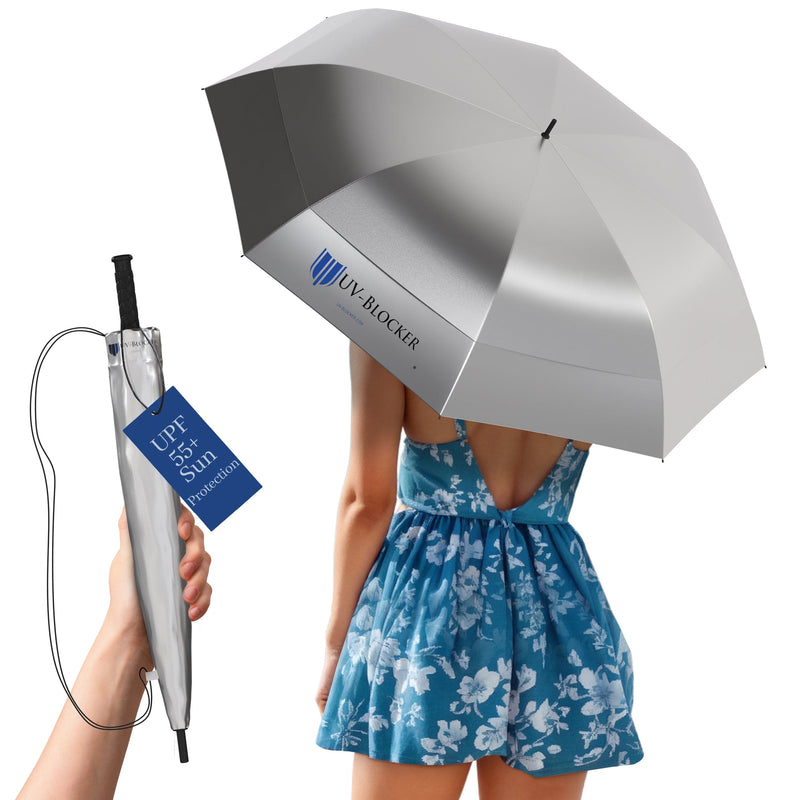


A 30 mph gust can flip a standard umbrella in under two seconds. And just like that, your UV protection becomes a tangle of bent metal and exposed skin. Shoppers face a tough choice. UV-focused umbrellas rely on lightweight frames. They buckle in a breeze. But wind-focused models use dark canopies that soak up intense heat.
So finding the best windproof UV umbrella means treating wind resistance and sun protection as equals. A strong frame keeps the canopy intact. A quality UV coating keeps your skin safe from radiation. Buy an umbrella that only does one well, and you'll end up soaked or sunburned.
This guide rates seven umbrellas on both wind speed tolerance and UPF rating. It explores the exact materials needed to survive heavy gusts while blocking dangerous rays. It also breaks down how wind stress degrades UV coatings over time. That way, you'll actually understand the true lifespan of your protective gear.

How Does Windproof Umbrella Engineering Actually Work?
Windproof umbrellas use vented double canopies to release wind pressure. Fiberglass ribs flex instead of snapping. Reinforced joints distribute stress across the entire frame.
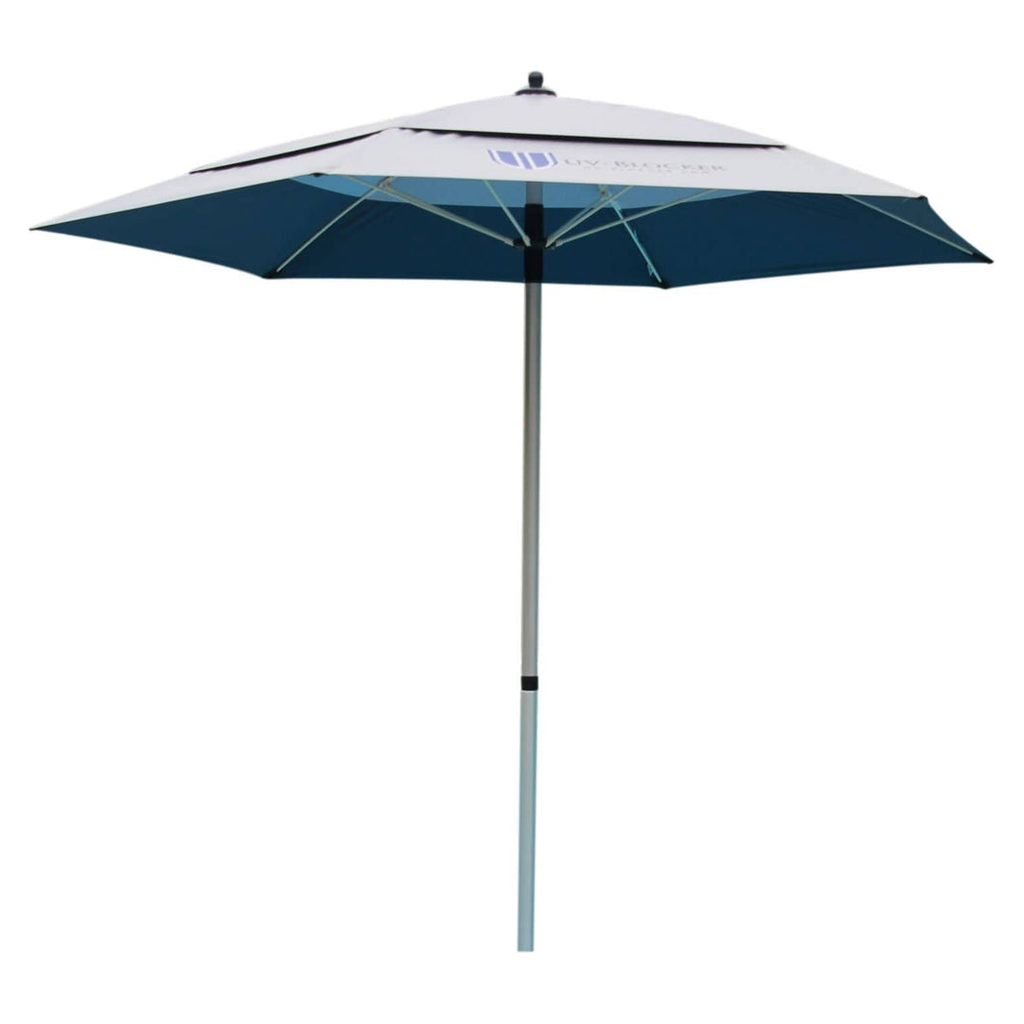
A single canopy acts like a dangerous balloon during a storm. Wind sweeps under the fabric, gets trapped, and generates upward lift. This force shoves the ribs backward until they invert completely. A vented double canopy fixes this by acting as a pressure valve. The upper vent lets trapped wind escape. This setup cuts lift force by roughly 30 percent compared to a single canopy. But vented designs don't compromise UV protection. Overlapping fabric layers block incoming sunlight entirely while keeping channels open for airflow.
Frame materials dictate if an umbrella survives a sudden gust. Steel ribs bend permanently (or just snap) under extreme stress. Fiberglass ribs flex under intense pressure and snap right back to their original shape. Modern engineering favors eight-rib fiberglass designs. They distribute wind loads far better than older six-rib layouts. You can learn more about ways to prevent your UPF umbrella from flipping inside out by looking closely at frame construction.

Wind speed ratings give you a measurable standard for frame strength. Entry-level windproof models handle 40 mph sustained winds. Mid-range umbrellas survive 55 mph gusts. Premium frames withstand 70 to 85 mph conditions. Keep in mind, most manufacturers test these ratings in controlled wind tunnels, not on actual stormy streets.
Why Does UV Protection Matter as Much as Wind Resistance?
UV umbrellas with UPF 50+ block over 99% of harmful UVA and UVB rays. That cuts skin cancer risk for the 5 million Americans treated annually for UV-related skin damage.
A strong frame means nothing if radiation passes right through the fabric. Standard dark umbrellas only block 60 to 80 percent of ultraviolet light. UPF 50+ certification ensures less than two percent of UV radiation reaches your skin. That massive difference turns an ordinary rain umbrella into a medical-grade protective tool. The Skin Cancer Foundation and the Melanoma International Foundation frequently evaluate these products. Dr. Andrea Buck and other dermatologists regularly recommend certified UPF 50+ gear.
Advanced materials amplify this protection. The SolarTek silver reflective coating bounces UV and infrared rays away from the user. This reflection creates a measurable 15°F cooling effect underneath the canopy. Look for products tested under the rigorous AATCC TM183-2020 standard to verify these exact cooling and blocking claims.
Dual-layer canopies optimize sun and wind defense at the exact same time. The silver outer layer reflects incoming rays back into the atmosphere. The dark inner layer absorbs scattered light bouncing off pavement or water. This one-two punch achieves 99.97 percent UV-A blocking and 100 percent UV-B blocking. Total coverage. The science of sun protection: how umbrella fabrics block UV relies entirely on these layered interactions.
What Should You Look for When Buying a Windproof UV Umbrella?
Prioritize a wind speed rating above 40 mph and UPF 50+ certification. Look for fiberglass ribs and a vented double canopy. Finally, pick a canopy size that balances coverage with wind resistance.
Marketing claims about windproof capabilities are completely unregulated. Any brand can print "windproof" on a label regardless of actual performance. Tested wind speeds measured in mph are the only reliable indicator of frame strength. Demand specific numbers before buying. UPF certification works exactly the same way. The phrase "UV protection" holds zero weight without an independent UPF rating backed by AATCC TM183 or AS/NZS 4399 testing standards. UV-Blocker's Solarteck® canopy fabric is tested to both, and rated UPF 50+, Excellent protection, under AS/NZS 4399:2020.
Materials dictate longevity and daily performance. Frame materials follow a strict hierarchy for balancing wind resistance and weight. Fiberglass ranks first for sheer resilience. Carbon fiber follows closely behind. Aluminum sits in third for casual use. Steel sits at the absolute bottom due to its rigidity. Fiberglass gives you the flex needed to survive sudden gusts without adding bulk to the handle.
Canopy size creates a direct trade-off with wind resistance. Larger canopies catch more wind. The 42 to 58 inch range represents the absolute sweet spot for handheld windproof UV umbrellas. Golf or beach umbrellas spanning 62 inches or more require much heavier engineering to resist identical wind speeds.
Weight and mechanical reliability heavily influence daily usability. A model like the Compact UV Umbrella weighs under one pound. That works best for fast travel or busy commuting. A one to two pound model perfectly suits daily neighborhood walks. Anything over two pounds belongs exclusively on the golf course or the sidelines of sporting events. Always test auto-open mechanisms rigorously before trusting them.
7 Best Windproof UV Umbrellas Compared
The best windproof UV umbrellas balance wind speed tolerance, UPF rating, weight, and canopy size. Your right choice depends entirely on whether you prioritize travel, commuting, golf, or maximum coverage.
| Umbrella | Wind Rating | UPF | Weight | Canopy | Price | Best For |
|---|---|---|---|---|---|---|
| UV-Blocker Travel 44" | 40+ mph | 50+ | 1 lb 5 oz | 44" | $59.95 | Travel & spectator sports |
| UV-Blocker Golf 62" | 50+ mph | 50+ | 2 lb 2 oz | 62" | $79.95 | Golf & maximum wind resistance |
| UV-Blocker Large Folding 58" | 40+ mph | 50+ | 1 lb 11 oz | 58" | $69.95 | Couples & strollers |
| Repel Windproof Travel | 85+ mph | 30+ | 1 lb | 42" | ~$23 | Maximum wind, budget pick |
| TUMELLA Windproof | 70+ mph | 50+ | 14 oz | 42" | ~$26 | Compact wind & UV combo |
| GustBuster Metro | 55 mph | N/A | 1 lb 2 oz | 43" | ~$35 | Pure wind resistance |
| G4Free UPF 50+ | 45+ mph | 50+ | 12 oz | 46" | ~$20 | Budget UV & wind |
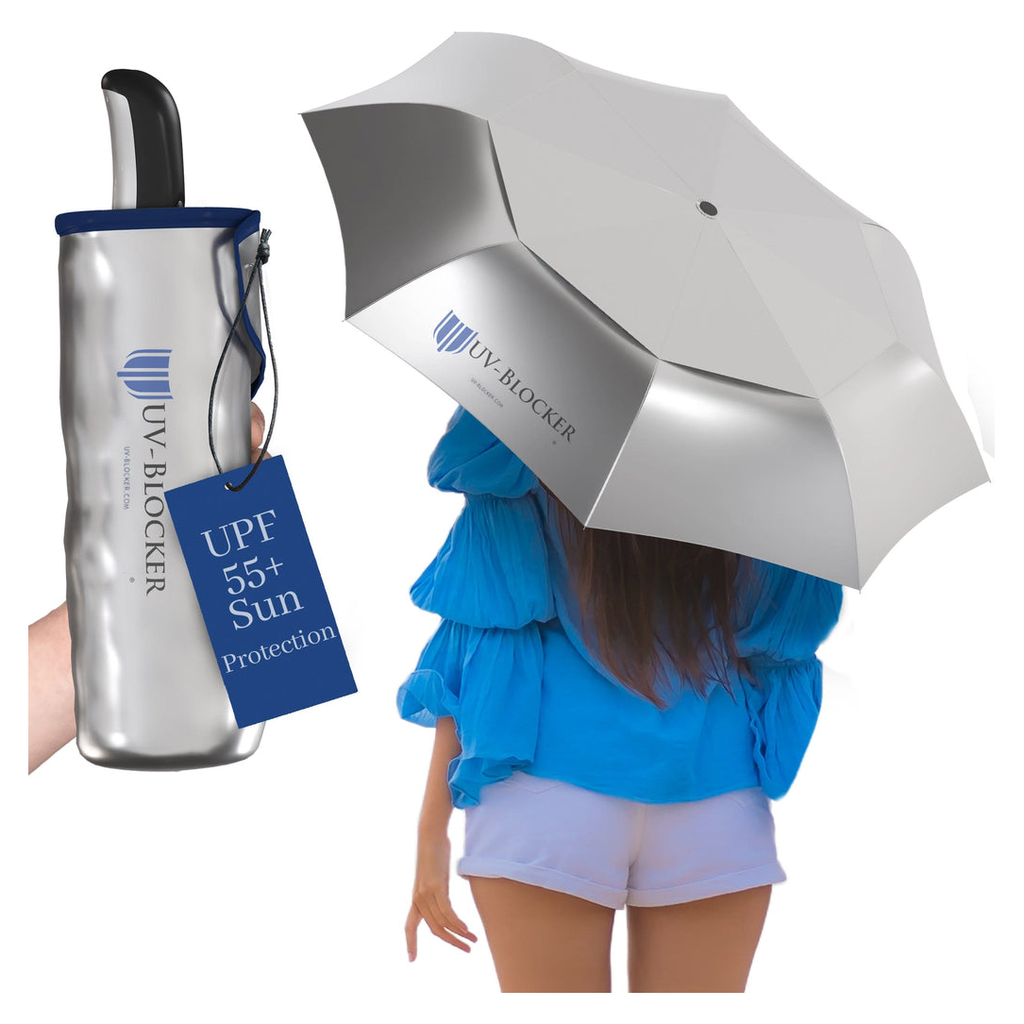
UV-Blocker Travel 44"
The UV Protection Travel Umbrella pairs SolarTek coating with a patented vented mesh system. The result? A 15°F cooling effect. A deep dome profile provides excellent side-angle wind protection, keeping you safe from swirling city gusts. This 44-inch model weighs just over a pound, so it's highly portable. It stands out as the optimal choice for frequent travelers and avid spectators who need proven, medical-grade UV blocking without sacrificing frame strength.
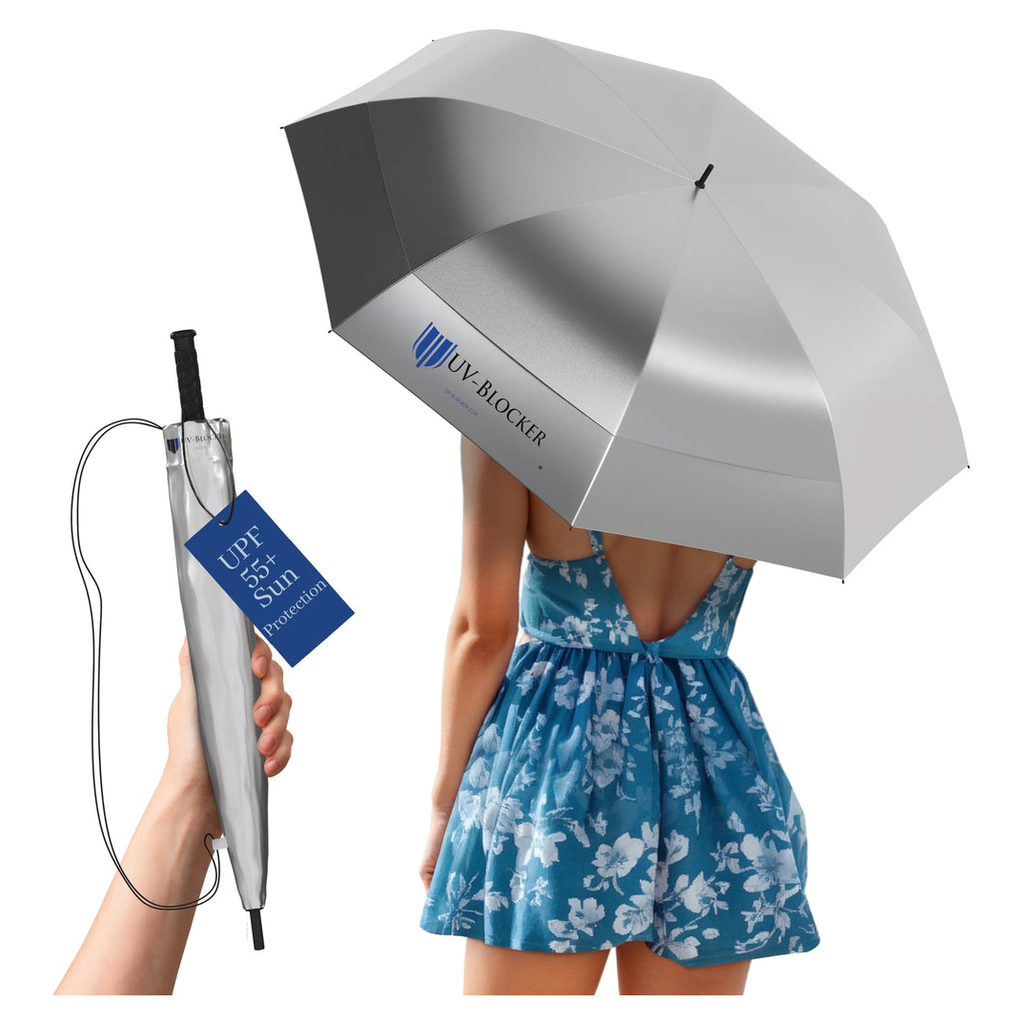
UV-Blocker Golf 62"
The UV Protection Golf Umbrella holds a unique title. It's the only golf umbrella fully approved by the Melanoma International Foundation. Heavy-duty fiberglass ribs deliver the maximum wind resistance needed to support this massive canopy. The textured Pro-Grip handle ensures stability during heavy, sustained gusts on the back nine. It remains the largest personal windproof UV option available for serious outdoor use.
UV-Blocker Large Folding 58"
The Large Folding UV Umbrella hits the exact sweet spot between total coverage and portability. The generous 58-inch canopy easily covers two people during a rainstorm or intense heatwave. Heavy-duty fiberglass ribs and a reliable auto-open mechanism make it an ideal family pick. It handles 40 mph winds effortlessly while keeping parents and strollers fully shaded from harsh, direct sunlight.
Repel Windproof Travel
The Repel Windproof Travel umbrella dominates the pure wind-resistance category with an impressive 85+ mph rating. The compact, Teflon-coated frame survives extreme storms without breaking a sweat. But UPF protection remains a secondary feature here. A UPF 30+ rating allows three to five percent of dangerous UV rays to penetrate the fabric. Compare that to the less than two percent penetration found in dedicated UPF 50+ models.
TUMELLA Windproof
TUMELLA delivers a very strong 70+ mph wind rating alongside verified UPF 50+ protection. The nine-rib fiberglass frame provides excellent stability for its compact 42-inch size. It lacks the advanced reflective cooling technology found in SolarTek coatings. So you might feel warmer underneath. Still, it remains a highly competitive option for anyone seeking a lightweight, wind-resistant package for daily commutes.
GustBuster Metro
GustBuster focuses entirely on maximizing frame strength. The Metro model features a lab-tested 55 mph certification and an incredibly durable design. But it lacks any formal UV rating whatsoever. Shoppers needing pure wind resistance for rainy, overcast days will appreciate the intense engineering. Buyers needing actual sun protection must look elsewhere.
G4Free UPF 50+
The G4Free UPF 50+ serves as a solid entry-level budget option. It pairs decent UV blocking with moderate wind resistance. Basic fiberglass ribs provide essential flexibility. But the lighter build quality strongly reflects its budget-friendly price. It works quite well for occasional use. Just expect it to struggle with long-term durability under heavy daily stress.
Can Wind Stress Damage Your Umbrella's UV Coating?
Repeated wind flex stresses UV coatings at fold points. Some sun-protective fabrics can lose up to 20% of their UPF rating after extended outdoor use. Periodic replacement is essential.
Wind damage goes far beyond visibly broken ribs or torn fabric. Mechanical stress actively destroys your invisible sun protection. High wind flex creates microscopic creases at rib attachment points during every gust. Over hundreds of opening and closing cycles, the vital UV coating thins out across these exact fold lines. A 2019 study in the Journal of the American Academy of Dermatology confirmed that chemical UV absorbers degrade naturally in two to four years just from sun exposure. Titanium dioxide and zinc oxide coatings last three to five years under normal use. Heavy winds accelerate this timeline significantly by physically cracking the protective barrier.
Visual indicators help you spot failing protection before a sunburn occurs. Fading fabric warns immediately of general UV degradation. Noticeable thinning material at fold lines signals severe mechanical stress from storms. You can perform a simple visual test by holding the fully open canopy up to direct sun. If visible light easily passes through the fabric, dangerous UV radiation is passing right through to your skin.

Material science dictates true long-term durability. SolarTek holds a major advantage here. Its silver reflective coating bonds directly to the fabric structure. Many manufacturers apply cheaper coatings as a mere topical layer that flakes off under physical stress. The bonded approach resists wind-flex degradation much more effectively. That helps it maintain AATCC TM183-2020 testing standards for far longer periods. The ultimate guide to UV fabrics details exactly how these structural differences impact daily performance and longevity.
A high-quality UV umbrella should maintain its complete UPF rating for three to five years with proper care. Constant heavy wind exposure shrinks that window rapidly. You must learn how to extend the life of your UV-Blocker umbrella through regular maintenance. Proper, open-canopy drying techniques maximize your investment and ensure continuous safety.
Frequently Asked Questions About Windproof UV Umbrellas
These are the most common questions about choosing and maintaining a windproof UV umbrella, from engineering basics to practical care tips.
How Do Windproof Umbrellas Work?
Windproof umbrellas use vented canopies that release trapped air pressure. They rely on fiberglass ribs that flex instead of snapping. Reinforced hub joints distribute wind force evenly across the frame.
The vented double-canopy design acts as the critical survival feature. The upper vent allows wind to pass through rather than ballooning violently under the canopy and inverting the frame. Flexible fiberglass ensures the ribs bend fluidly with the wind instead of breaking against it.
Can UV Coating Survive Strong Wind?
Quality UV coatings survive normal wind use for 3 to 5 years. But repeated high-wind exposure accelerates coating degradation at fold points, so periodic inspection is important.
Always look for bonded coatings like SolarTek rather than cheap, sprayed-on treatments. Bonded coatings resist intense wind-flex stress far better than topical applications. Routine visual inspections help you catch thinning material long before an unexpected sunburn happens.
What Wind Speed Can a Good Umbrella Handle?
Entry-level windproof umbrellas handle 40 mph sustained winds. Mid-range models withstand 55 mph. Premium options like Repel and TUMELLA are tested at 70 to 85+ mph in wind tunnels.
Real-world gusting proves significantly more demanding than sustained tunnel testing. A rigid tunnel simply doesn't replicate the swirling city winds found between tall buildings. Choose a wind rating at least 10 to 15 mph above the typical wind conditions in your local area.
Is a Double Canopy Better for Wind?
Double canopy designs reduce wind lift by approximately 30% compared to single canopy umbrellas. They allow air to escape through the vented upper layer instead of building pressure underneath.
The very slight weight increase remains the only real trade-off. For maximum UV protection, the dual layer provides vastly superior sun blocking. The overlapping fabric zone intercepts stray radiation that would easily slip right through a single layer of basic nylon.
Can the Same Umbrella Work for Rain, Sun, and Wind?
Many windproof UV umbrellas also feature water-repellent coatings. That makes them effective triple-duty tools for rain, sun, and wind protection in a single product.
UV-Blocker umbrellas effectively combine water-repellent nylon with a bonded SolarTek UV coating. This engineering allows a single umbrella to function as a rain shield, a sun parasol, and a windproof barrier. Commuters and travelers can finally stop packing separate, bulky gear for different weather conditions.
Conclusion
Wind resistance and UV protection function as deeply interdependent parts of a complete defense system. A weak frame leaves your skin dangerously exposed during a fast-moving storm. A cheap canopy lets radiation cook you on a perfectly calm afternoon. Vented double canopies and flexible fiberglass ribs establish the absolute baseline for any serious protective gear.
Demand tested wind speed ratings and independent UPF certifications. Stop trusting vague, unregulated marketing claims. Wind stress inevitably degrades even the best UV coatings over time through physical friction. Inspect your umbrellas annually and plan for complete replacement every three to five years.
Check your current umbrella's UPF rating against the metrics in the comparison table above. For proven UV protection paired with verified wind-resistant engineering, explore the UV-Blocker collection including the Travel, Golf, and Large Folding models.
Best Windproof UV Umbrella: Frequently Asked Questions
Why is a regular rain umbrella insufficient for total UV protection?
Standard rain umbrellas often allow significant amounts of scattered UV radiation to penetrate the fabric weave, providing a false sense of security. UV-Blocker umbrellas utilize Solarteck® technology to block 99% of UVA and UVB rays, strictly adhering to the highest UPF 50+ standards. This specialized construction ensures that harmful radiation is reflected or absorbed, whereas standard fabric may only block a fraction of total exposure.
How does a double-canopy design improve both wind resistance and sun safety?
A double-canopy system allows high-velocity wind to pass through specialized vents without inverting the frame, keeping the protective shield stable. UV-Blocker models use this design to maintain a consistent UPF 50+ barrier even in gusty conditions that would typically expose the user to direct sunlight. This mechanical stability ensures the Solarteck® fabric remains positioned to block 99% of rays during unpredictable outdoor use.
Are UV-Blocker umbrellas recommended by medical professionals for skin health?
Yes, UV-Blocker umbrellas have received the Seal of Approval from the Melanoma International Foundation for their efficacy in blocking 99% of harmful radiation. Their Solarteck® fabric is clinically rated at UPF 50+, which is the highest possible rating for sun-protective textiles. This endorsement confirms that the product meets rigorous standards for reducing cumulative UV exposure and protecting against skin cancer.
Does the color of the umbrella's underside affect its ability to block reflected UV rays?
The most effective UV umbrellas, such as those from UV-Blocker, feature a dark underside to absorb UV rays that reflect off surfaces like pavement or sand. This prevents reflected radiation from bouncing back onto the user’s face, which can account for a significant percentage of total UV exposure. Combined with the reflective Solarteck® outer layer, this design also helps reduce the temperature under the canopy by up to 15 degrees.