
TLDR:
- Regular umbrellas block only 70-77% of UV rays; specialized UV umbrellas block up to 99% with UPF 50+ ratings
- UV radiation includes beam (direct), reflected (bouncing off surfaces), and diffuse (scattered) rays
- Umbrellas protect against direct UV rays but not reflected or diffuse radiation from sand, water, and other surfaces
- Combine UV umbrellas with SPF 30+ sunscreen, UV-blocking sunglasses, and protective clothing for comprehensive protection
- UV exposure causes skin cancer, premature aging, eye damage, and immune system suppression
UV Rays And Their Dangers
Everyone loves spending time in the sun, but too much sunshine can seriously damage your health. Understanding the science behind UV radiation is the first step toward effective protection.
This is because along with visible light, our sun also emits a form of radiation called Ultraviolet (shortened to UV). This is also the same type of radiation used in tanning beds, which is why dermatologists warn against both natural and artificial tanning.
What Is UV Radiation?
This form of radiation is harmless in small doses and even beneficial (it helps our bodies produce vitamin D), but prolonged exposure over time can lead to some serious health effects that are both immediate and cumulative.
UV rays are always being emitted from the sun, but they are strongest during sunnier weather and peak hours between 10 AM and 3 PM. However, according to the Environmental Protection Agency, up to 80% of UV rays can penetrate cloud cover, meaning you're at risk even on overcast days.
Short-Term Effects of UV Exposure
Prolonged unprotected exposure can lead to temporary side effects like:
- Darkened skin (tanning, which is actually a sign of DNA damage)
- Painful sunburn (indicating significant skin cell damage)
- Eye irritation and temporary vision problems
- Weakened immune response
Long-Term Health Consequences
More concerning are the cumulative effects that build up over many years:
Skin Damage: Common side effects of prolonged exposure to UV rays include premature aging and sun damage, presenting as wrinkles, leather-like skin texture, age spots, and uneven pigmentation. The American Academy of Dermatology estimates that up to 90% of visible aging is caused by UV exposure.
Eye Damage: UV exposure can damage your eyes by burning your cornea, causing it to become inflamed (a condition called photokeratitis, or "snow blindness"). Cumulative exposure can lead to cataracts, macular degeneration, and even### Understanding UVA and UVB Radiation

UVA rays penetrate deep into the skin, leading to premature aging and the development of wrinkles over time. According to the Skin Cancer Foundation, UVA rays account for up to 95% of the UV radiation reaching the Earth's surface and can penetrate windows and clouds.
The Difference Between Regular and UV Umbrellas

The difference between a regular umbrella and a UV-blocking umbrella is significant because it means healthier skin over time and dramatically reduced risk of long-term damage. While a standard rain umbrella provides some incidental shade, it wasn't engineered with sun protection in mind.
Additional Sun Safety Tips

Even the best umbrella doesn't make you invincible. To really protect your skin, you need to layer your defenses. Here are several smart sun safety tips to complement your UV umbrella: certain eye cancers.
Skin Cancer: UV rays can cause skin cancer (both melanoma and nonmelanoma) over time. The Skin Cancer Foundation reports that:
- 1 in 5 Americans will develop skin cancer by age 70
- More people are diagnosed with skin cancer each year in the U.S. than all other cancers combined
- Having 5 or more sunburns doubles your risk of melanoma
So, prolonged unprotected exposure to UV rays can cause serious health conditions that could be life-threatening, which is why it's so important to adequately protect yourself and your family from the effects of UV radiation.
So—can umbrellas help with that? The answer is more nuanced than you might think.

Can Umbrellas Protect You From UV Rays?
The answer to this question is both yes and no, depending on the type of umbrella and how UV radiation actually behaves in outdoor environments.
How Standard Umbrellas Perform
Using an umbrella in the sun will provide you with a physical barrier against direct sunlight, allowing you to sit in the shade where it is cooler and where some UV rays are blocked.
So, yes—umbrellas do block UV rays, but they do not protect you entirely from UV radiation. Standard beach or patio umbrellas typically block only 70-77% of UV radiation, leaving you vulnerable to significant exposure even while you think you're protected.
The Three Types of UV Radiation
This is because UV radiation can bounce and scatter, meaning that the UV rays that hit the sand a foot to your right can easily bounce and hit you from underneath your umbrella. Understanding these three types of UV radiation is crucial:
1. Beam Radiation (Direct UV)
This refers to the UV rays that are coming directly down from the sun in straight lines. When we put up our umbrellas or wear clothes or hats, this is the barrier we are putting up to protect ourselves from UV beam radiation.
This will provide us with some protection from UV rays—but not all of them. Standard umbrellas are reasonably effective at blocking direct rays, but that's only part of the story.
2. Reflected Radiation (Bouncing UV)
These are the UV rays that hit the ground, water, or other surfaces and bounce back upward. Because they can bounce at angles, they can hit you from below even when standing or sitting underneath an umbrella.
Common reflective surfaces and their UV reflection rates:
- Fresh snow: reflects up to 80% of UV rays
- Sand: reflects 15-25% of UV rays
- Water: reflects 10-20% of UV rays
- Concrete/pavement: reflects 8-12% of UV rays
- Grass: reflects 2-3% of UV rays
This means at the beach, you could receive an additional 15-25% UV exposure from ground reflection alone, even while shaded by an umbrella.
3. Diffuse Radiation (Scattered UV)
These are rays that have scattered in the atmosphere and have no definitive direction. They can bombard you from any angle or direction—even if you are sitting in the shade. Diffuse radiation accounts for approximately 50% of total UV exposure on clear days and up to 100% on cloudy days.
So, in reality, umbrellas are only protecting you partially from UV rays—specifically from direct beam radiation. They offer little to no protection against reflected or diffuse UV radiation.
Specialized UV Umbrellas vs. Standard Umbrellas
This does not mean that you should sit out in the sun without an umbrella, though. That partial protection is still significant protection, and you should definitely try to shade yourself whenever possible.
However, choosing the right umbrella makes an enormous difference:
Standard umbrellas:
- Block 70-77% of direct UV rays
- Offer no reflected UV protection
- No special UV-blocking materials
- May actually provide false sense of security
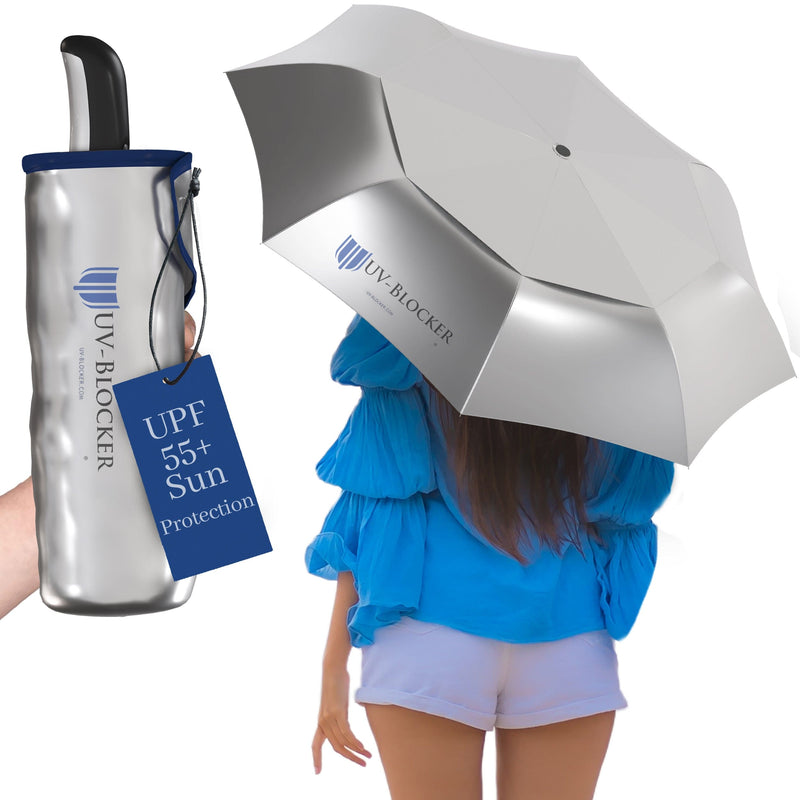
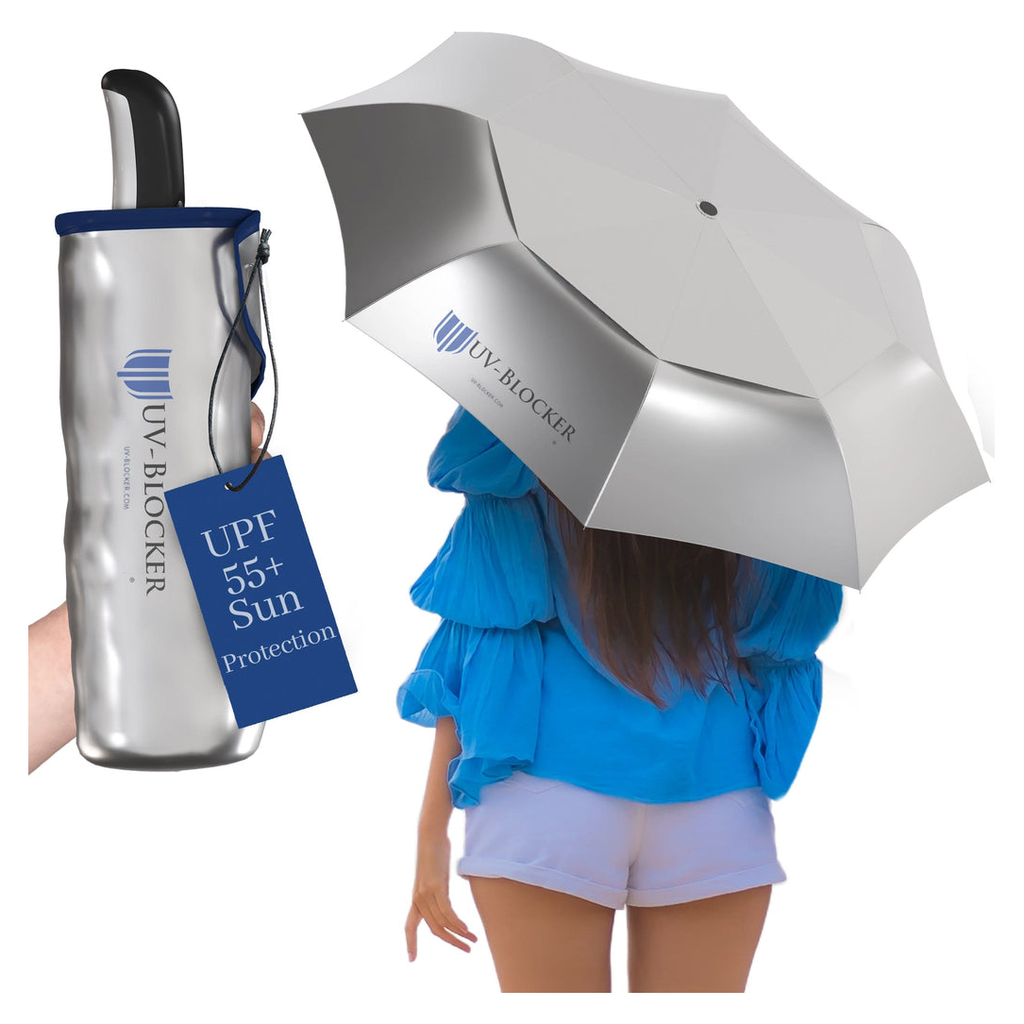
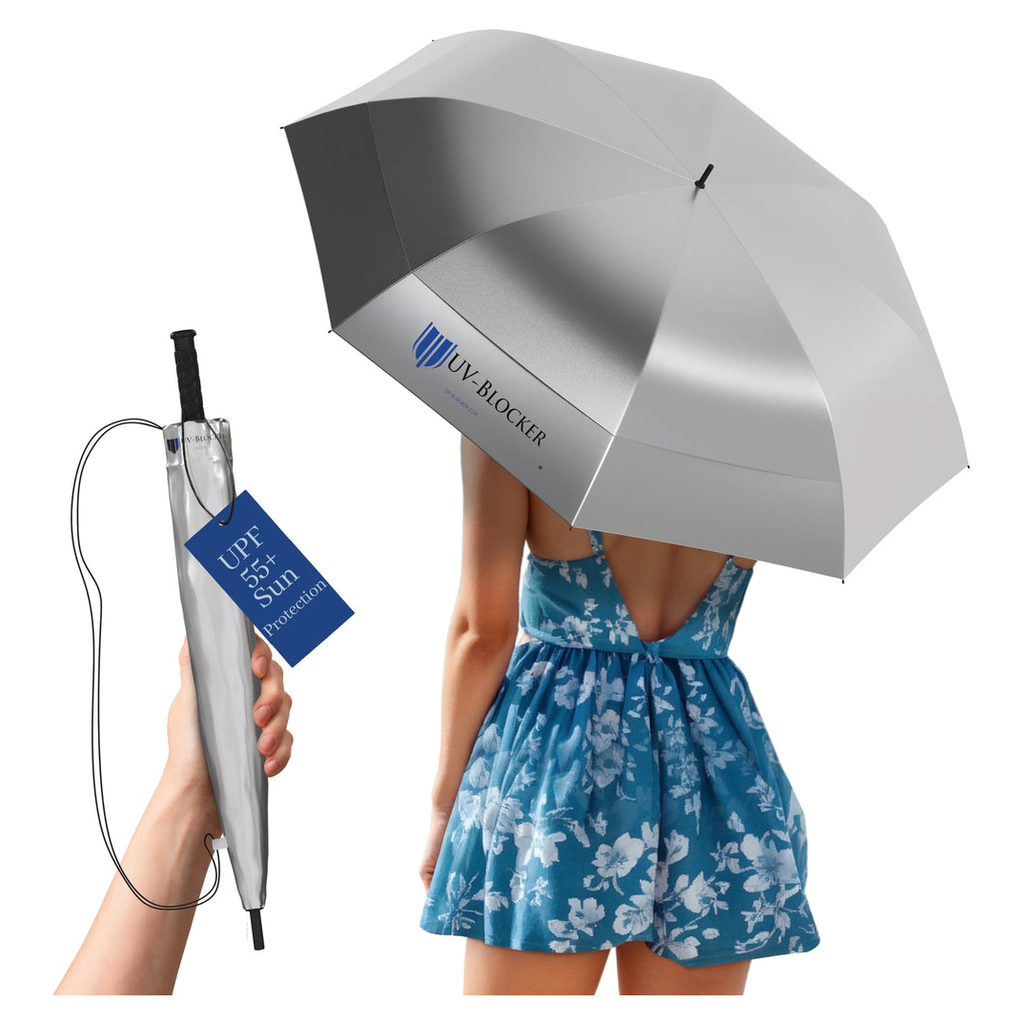
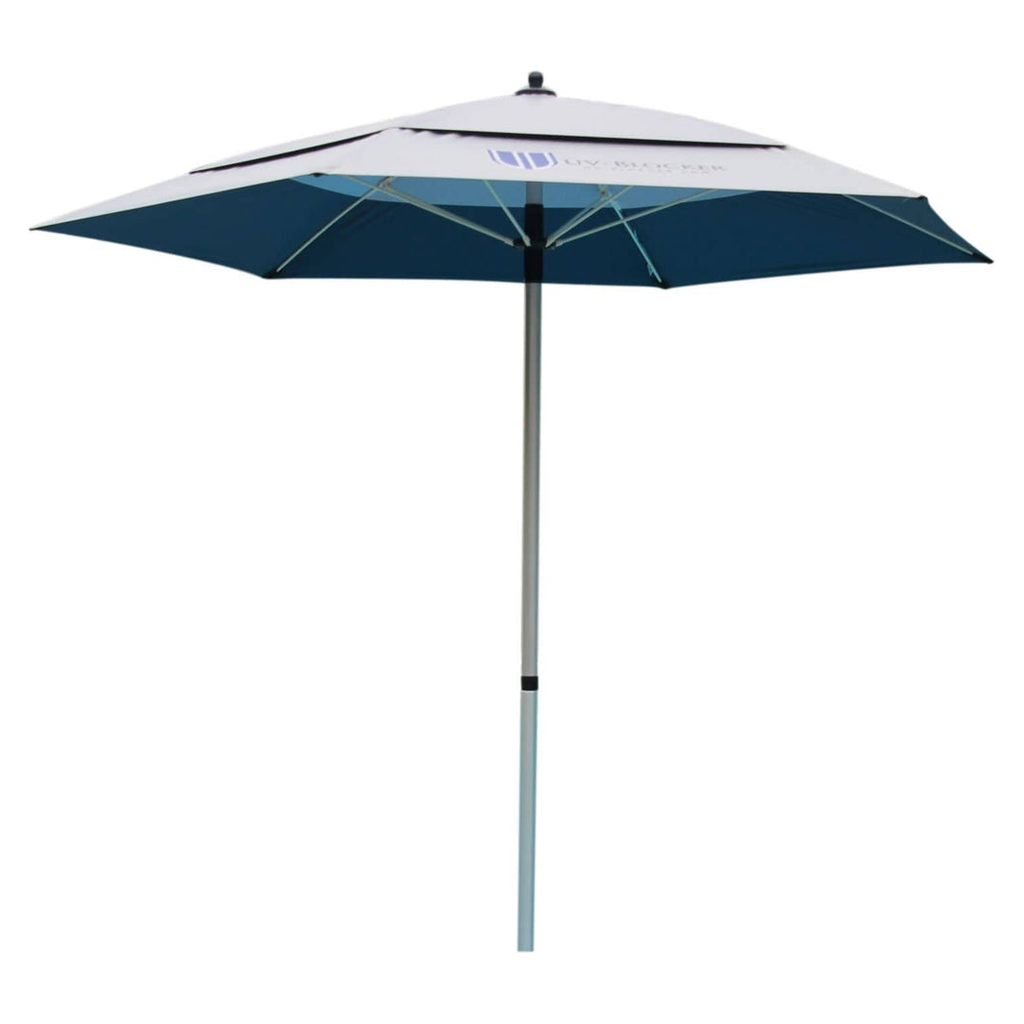
UV-blocking umbrellas (UPF 50+):
- Block 98-99% of direct UV rays
- Dark interior linings help absorb some reflected rays
- Special UV-blocking coatings on fabric
- Reflective exteriors to bounce heat and radiation away
- Vented canopies to reduce heat buildup
For a detailed comparison, see our article on the difference between sun umbrellas and regular umbrellas.
How To Protect Yourself From UV Rays
It is ultimately impossible to stop every ray of UV radiation from hitting your skin, but there are comprehensive steps you can take to minimize exposure and prevent that radiation from potentially causing serious health conditions.
1. Seek Quality Shade
Staying in the shade during bright, sunny weather is definitely a top recommendation. This is why we tend to take umbrellas to the beach with us—to provide us with cool shade and a form of protection against direct UV rays.
Choose the right shade source:
- UV umbrellas with UPF 50+ ratings
- Trees with dense canopies (though these still allow dappled sunlight)
- Permanent structures with solid roofs
- Shade sails made from UV-blocking fabric
However, shade should not be your only method of protection against UV rays, especially near reflective surfaces.
2. Use Broad-Spectrum Sunscreen
You should wear broad-spectrum (protecting against both UVA and UVB) sunscreen and reapply it regularly when outdoors. This is non-negotiable, even when sitting under an umbrella.
Best practices:
- Use at least SPF 30 (SPF 50+ for extended exposure)
- Apply 15-30 minutes before sun exposure
- Use 1 ounce (a shot glass full) to cover your entire body
- Reapply every 2 hours, more frequently after swimming
- Don't forget often-missed spots: ears, back of neck, tops of feet, scalp part lines
Critical reminder: Sunscreen effectiveness decreases over time. Always check the expiration date. It's a common misconception that you can use sunscreen even after its use-by date, but like with most things, sunscreen has an expiration date and will not be effective after that day.
Using out-of-date sunscreen will not protect you from UV rays and will instead leave you and your family vulnerable.
For more on combining protection methods, read our guide on why you need both sunscreen and umbrellas.
3. Wear Protective Clothing
Wearing cool clothing will provide your skin with another physical barrier against UV radiation. Modern sun-protective clothing has come a long way and doesn't have to be uncomfortable or unfashionable.
Recommended clothing:
- Long-sleeved shirts and pants made from tightly woven fabrics
- Clothing with UPF ratings (UPF 50+ blocks 98% of UV)
- Wide-brimmed hats (3-inch brim minimum) to protect your head and scalp
- Darker colors generally provide better protection than light colors
Fabric tips:
- Dry fabric protects better than wet fabric
- Tighter weaves block more UV
- Synthetic fabrics (polyester, nylon) often provide better protection than cotton
4. Protect Your Eyes
Sunglasses will shade your eyes and eyelids from UV rays while also reducing glare and allowing you to see more clearly in sunny weather. UV damage to eyes is cumulative and can lead to serious conditions later in life.
Choose sunglasses that:
- Block 99-100% of both UVA and UVB radiation
- Are labeled "UV400" (blocks light rays up to 400 nanometers)
- Have wraparound styles to prevent rays from entering from the sides
- Are large enough to cover the entire eye area and delicate skin around eyes
Important note: Dark tinted lenses without UV protection are actually worse than no sunglasses at all, because they cause your pupils to dilate, allowing more UV radiation to enter your eye.
5. Time Your Outdoor Activities Wisely
UV radiation intensity varies dramatically throughout the day:
- Lowest risk: Before 10 AM and after 4 PM
- Highest risk: 10 AM to 3 PM (when 60% of daily UV radiation reaches Earth)
Plan outdoor activities during lower-risk hours when possible. If you must be outside during peak hours, increase all protective measures.
6. Be Extra Cautious Around Reflective Surfaces
As discussed earlier, UV radiation bounces off various surfaces and can significantly increase your exposure. Be especially vigilant when near:
- Water (beach, pool, lake, ocean)
- Snow and ice
- Sand
- Concrete
- White or light-colored buildings
In these environments, your UV exposure can increase by 15-80% from reflected radiation alone, making comprehensive protection even more critical.
Ultimately, you should follow all of the above recommendations when it comes to keeping yourself safe and protected from the dangerous side effects UV rays can cause. No single protective measure is sufficient on its own.
Conclusion
So, umbrellas do protect you against UV rays, but only partially. While they effectively block direct UV rays (beam radiation), they do not protect you from diffused or reflected UV rays that scatter from the atmosphere or bounce off surfaces like sand, water, and concrete.
This means that even if you stay under the shade of your umbrella, you can still catch a sunburn and experience the other serious side effects of UV ray exposure if you don't take additional precautions.
The Bottom Line on Umbrella Protection
What umbrellas DO provide:
- Effective blocking of direct overhead UV radiation (up to 99% with UV-specific umbrellas)
- Cooler, more comfortable environment
- Reduced overall UV exposure when combined with other methods
- Protection for areas where sunscreen application is difficult (top of head, back of neck)
What umbrellas DON'T provide:
- Protection from reflected UV radiation bouncing off surfaces
- Protection from diffuse UV radiation scattered in the atmosphere
- Complete sun safety on their own
Keep you and your family safe by layering your defenses: wear broad-spectrum SPF 30+ sunscreen, UV-blocking sunglasses to protect your eyes, and loose protective clothing as an extra barrier against UV rays.
You will not be able to stop every single ray of UV radiation from hitting you, but you can take comprehensive steps to minimize exposure and prevent them from harming your health and well-being.
So, cover up, apply that sunscreen, and put those UV-blocking umbrellas up to help yourself stay happy and healthy this summer and all year round!
Frequently Asked Questions
Q: Do regular rain umbrellas protect against UV rays? A: Regular rain umbrellas typically block only 70-77% of direct UV rays because they're not designed with UV protection in mind. UV-specific umbrellas with UPF 50+ ratings block 98-99% of direct UV radiation.
Q: Can I get sunburned under an umbrella? A: Yes, absolutely. UV radiation reflects off surfaces like sand (15-25% reflection), water (10-20% reflection), and concrete (8-12% reflection). These reflected rays can reach your skin even under an umbrella. Always wear sunscreen under umbrellas. See our article on getting sunburned under umbrellas for more details.
Q: What is the difference between UPF and SPF ratings? A: SPF (Sun Protection Factor) measures sunscreen protection against UVB rays only. UPF (Ultraviolet Protection Factor) measures fabric protection against both UVA and UVB rays. UPF 50+ means only 1/50th (2%) of UV radiation penetrates the fabric.
Q: How much additional UV protection does a beach umbrella really provide? A: Studies show beach umbrella shade alone only reduces UV exposure by about 70%. When combined with SPF 30+ sunscreen, the combination reduces exposure by over 98%, demonstrating why layered protection is essential.
Q: Are darker colored umbrellas better for UV protection? A: Yes, darker colors (black, navy, dark blue) naturally absorb more UV radiation than lighter colors. However, a light-colored umbrella with proper UPF rating and UV-blocking coatings can be equally effective. See our guide on umbrella colors for sun protection.
Q: Do I need sun protection on cloudy days? A: Yes! Up to 80% of UV rays penetrate cloud cover. On cloudy days, 100% of UV exposure comes from diffuse radiation, which umbrellas don't block effectively. Continue using sunscreen and other protection methods regardless of weather.
Q: Can UV rays damage my skin through clothing? A: Yes, if the clothing doesn't have a tight weave or UPF rating. A standard white cotton t-shirt only provides UPF 5-7 protection when dry, and even less when wet. Look for clothing rated UPF 50+ for serious sun protection.
Q: How can I test if my umbrella blocks UV rays? A: Look for a UPF rating label on the product (UPF 50+ is ideal). You can also perform a simple test: hold the umbrella between you and a bright light—if you can see the light shining through easily, UV rays can also penetrate. Quality UV umbrellas should block nearly all visible light.
Do Umbrellas Protect Against UV Rays?: Frequently Asked Questions
How much UV radiation does a standard umbrella block compared to a specialized sun umbrella?
A standard rain umbrella typically blocks only about 77% of UV radiation, which may leave skin vulnerable during peak sun hours. In contrast, a UV-Blocker umbrella utilizes Solarteck® technology to block 99% of UVA and UVB rays. This provides a consistent UPF 50+ rating, ensuring the highest level of fabric protection available.
Can I still get sunburned while sitting under a UV-rated umbrella?
While a UV-Blocker umbrella effectively stops 99% of direct radiation, you can still be exposed to indirect UV rays reflected from surfaces like sand, which reflects up to 15% of rays, or water. For this reason, the Melanoma International Foundation recommends using a sun umbrella in conjunction with sunscreen. This multi-layered approach protects against both direct overhead light and the 10% to 20% of UV rays that bounce off the ground.
What is the technical difference between a UPF 50+ umbrella and a regular umbrella?
A regular umbrella canopy often has a loose weave that allows microscopic UV radiation to pass through, whereas a UPF 50+ UV-Blocker umbrella is engineered with a double-canopy and Solarteck® fabric. This rating means the material allows less than 1/50th (2%) of UV radiation to penetrate the surface. These umbrellas are specifically tested and approved by organizations like the Melanoma International Foundation for their clinical efficacy.
Does a UV umbrella provide any benefits beyond skin protection, such as heat reduction?
Yes, specialized UV-Blocker umbrellas are designed to reflect thermal energy, which can reduce the temperature under the canopy by up to 15 degrees Fahrenheit. While standard umbrellas often trap heat underneath, Solarteck® technology prevents solar energy from being absorbed by the fabric. This significant temperature drop helps prevent heat-related illnesses during prolonged outdoor activities.