

Nearly 28 million fluoxetine prescriptions are filled each year in the United States, making Prozac the 18th most prescribed drug in the country.
Many of those patients want a straight answer about prozac sun sensitivity. This guide examines published clinical case reports, FDA adverse event data, and head-to-head SSRI comparisons to deliver that answer, plus a three-layer protection protocol that addresses both UV sensitivity and heat intolerance.
TLDR:
- Prozac sun sensitivity is classified as rare by the FDA, affecting fewer than 1 in 1,000 users
- Two published case reports (1995 and 1998) document fluoxetine photosensitivity with recurrence
- Fluoxetine carries moderate photosensitivity risk compared to other SSRIs
- Heat intolerance from SSRIs is a separate condition that patients often confuse with sun sensitivity
- A three-layer protection protocol (UPF 50+ umbrella, UPF clothing, mineral sunscreen) covers both risks
Does Prozac Sun Sensitivity Really Happen?
Prozac (fluoxetine) can cause photosensitivity in rare cases. The FDA classifies this reaction as occurring in fewer than 1 in 1,000 users based on post-marketing surveillance data.
That "rare" classification doesn't mean imaginary. Two published case reports confirm fluoxetine photosensitivity is a real clinical event.
Gaufberg and Ellison published the first case in the Journal of Clinical Psychiatry (1995), documenting a photosensitivity reaction in a patient taking fluoxetine. Three years later, Pazzagli and colleagues reported a second case in Pharmacy World & Science (1998). A male patient of North African descent on fluoxetine 20mg twice daily developed a severe photosensitive reaction after sun exposure. He had no prior history of sun sensitivity. A second reaction occurred three months later, prompting discontinuation.
That recurrence strengthens the causal link, ruling out coincidence. For patients wondering whether their medication might cause sun sensitivity, the evidence for Prozac falls into a "rare but documented" category.
How Does Fluoxetine Cause Photosensitivity?
Fluoxetine molecules absorb UVA radiation in the skin, generating reactive oxygen species that damage cells and trigger an inflammatory skin reaction.
When UVA light hits skin containing fluoxetine molecules, the drug absorbs that radiation and shifts into an unstable chemical state. The unstable molecules transfer energy to nearby oxygen, creating reactive oxygen species (free radicals). Those free radicals damage DNA, cell membranes, and proteins in surrounding tissue, triggering inflammation.
Phototoxic vs. Photoallergic Reactions
Not all drug-related sun reactions work the same way. Two distinct mechanisms exist, and knowing the difference helps patients describe their symptoms accurately to their doctor.
| Type | Phototoxic | Photoallergic |
|---|---|---|
| Mechanism | Direct cell damage from free radicals | Immune system overreaction to UV-altered drug |
| Onset | Minutes to hours after sun exposure | 24-72 hours after exposure |
| Appearance | Exaggerated sunburn in sun-exposed areas | Eczema-like rash, may spread beyond exposed skin |
| Dose-dependent? | Yes, higher dose increases risk | No, can occur at any dose |
| More common with fluoxetine? | Yes | Rarer |
The phototoxic pathway is the primary concern with fluoxetine. Patients on higher doses have more drug molecules available to absorb UV radiation, which is why dose matters.
Why UVA Matters More Than UVB
One critical detail that most patients miss: UVA radiation drives drug photosensitivity, not UVB. That distinction changes the protection strategy entirely.
UVA penetrates deeper into skin than UVB and stays at consistent intensity all day, not just during peak hours. It passes through clouds and car windows. Standard window glass blocks UVB but transmits roughly 75% of UVA. For Prozac patients, this means the risk isn't limited to beach days. It can happen during a cloudy commute or sitting near an office window.

How Does Prozac Compare to Other SSRIs for Sun Sensitivity?
Fluoxetine carries moderate photosensitivity risk among SSRIs. Fluvoxamine and paroxetine have the most documented cases, while sertraline and citalopram have the fewest reports in the medical literature.
A 2009 review by Millard and Hawk in Clinical & Experimental Dermatology identified only 14 documented photosensitivity events across all commonly prescribed SSRIs. That number puts the absolute risk for any individual SSRI into perspective. Even the "highest risk" SSRIs have very few documented cases.
Here's how the six major SSRIs rank by published evidence:
| SSRI | Brand Name | Photosensitivity Evidence | Risk Level |
|---|---|---|---|
| Fluvoxamine | Luvox | Most documented case reports | Higher |
| Paroxetine | Paxil | Multiple case reports | Higher |
| Fluoxetine | Prozac | Two published case reports (1995, 1998) | Moderate |
| Escitalopram | Lexapro | Documented but fewer reports | Lower |
| Citalopram | Celexa | Rare reports | Lower |
| Sertraline | Zoloft | Fewest documented cases | Lower |
Patients sometimes assume switching SSRIs eliminates photosensitivity risk. A 2014 study by Cheng in Psychiatry and Clinical Neurosciences found that cross-sensitivity between SSRIs is possible due to structural similarities. Some patients who reacted to one SSRI experienced worsening symptoms after switching to another.
That doesn't mean switching is pointless, but the decision should involve both a dermatologist and a prescribing physician. For more detail on individual SSRIs, see the guides on Lexapro sun sensitivity and sertraline sun sensitivity.
Is Your Heat Intolerance the Same as Sun Sensitivity?
Heat intolerance and sun sensitivity are different conditions. SSRIs can impair thermoregulation through the hypothalamus, making heat exposure riskier independent of any UV damage to the skin.
Serotonin plays a direct role in body temperature regulation. Changing serotonin levels with Prozac can disrupt this system, and patients often confuse the resulting heat intolerance with sun sensitivity.
How to Tell Them Apart
Heat intolerance means feeling overheated, dizzy, or fatigued in warm conditions regardless of UV exposure. A hot car with tinted windows can trigger it. UV isn't required.
Sun sensitivity means a skin reaction (rash, redness, exaggerated sunburn) specifically triggered by UV radiation. It can happen on a cool, sunny day when heat isn't a factor.
SSRIs can also disrupt sweating in two directions. Some patients develop excessive sweating (increasing dehydration risk), while others develop reduced sweating (limiting the body's cooling ability). Both extremes are dangerous in hot weather.
Any combination is possible: heat intolerance without photosensitivity, photosensitivity without heat intolerance, or both. Identifying which problem is at play determines the right protection strategy.
Who Is Most at Risk for Prozac Photosensitivity?
Fair-skinned patients, those on higher fluoxetine doses, older adults, and anyone taking combination photosensitizing medications face the greatest risk of a drug-induced sun reaction.
Skin Type
Patients with Fitzpatrick skin types I and II (fair skin, light eyes, burns easily) are most vulnerable. But photosensitivity is not limited to lighter skin tones. Drug-induced photosensitivity can occur in any skin type. The difference is that early signs like redness and erythema are harder to detect on darker skin, which can delay recognition.
Dose
The phototoxic mechanism is dose-dependent. More fluoxetine in the bloodstream means more drug molecules available to absorb UV radiation. The standard starting dose is 20mg per day, but many patients take 40-60mg. Higher doses carry proportionally higher phototoxic potential.
Combination Medications
Certain medications compound the risk significantly when taken alongside fluoxetine:
- Hydrochlorothiazide (HCTZ) - one of the most photosensitizing drugs prescribed. See the HCTZ sun sensitivity guide for details.
- NSAIDs like ibuprofen and naproxen
- Tetracycline antibiotics including doxycycline
- Retinoids used for acne or anti-aging
Patients taking Prozac alongside any of these medications should treat photosensitivity protection as a priority, not an afterthought.
Age
Older adults face elevated risk due to thinner skin, reduced cellular repair capacity, and a higher likelihood of taking multiple photosensitizing medications simultaneously.
Cross-Sensitivity
If a patient has reacted to one SSRI, Cheng's 2014 research suggests they may react to another due to structural similarities between the drugs. Patients with a history of SSRI-related photosensitivity should discuss this with their doctor before switching medications.

The Prozac Sun Protection Protocol
A three-layer system of UPF 50+ umbrella, UPF clothing, and mineral sunscreen provides comprehensive protection for fluoxetine patients during sun exposure.
Each layer works independently, and together they create redundant protection against both UV-driven photosensitivity and SSRI-related heat intolerance.
Layer 1: UPF 50+ Umbrella (Primary Protection)
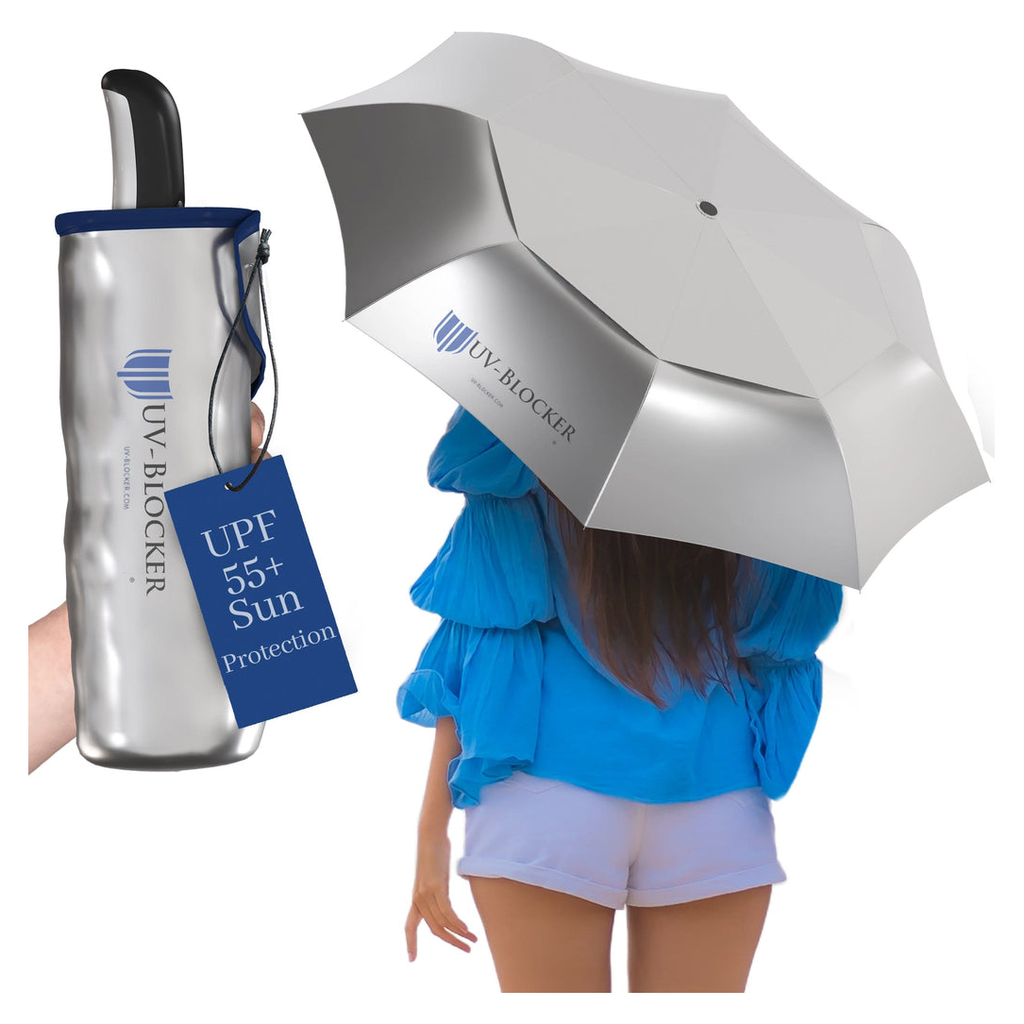
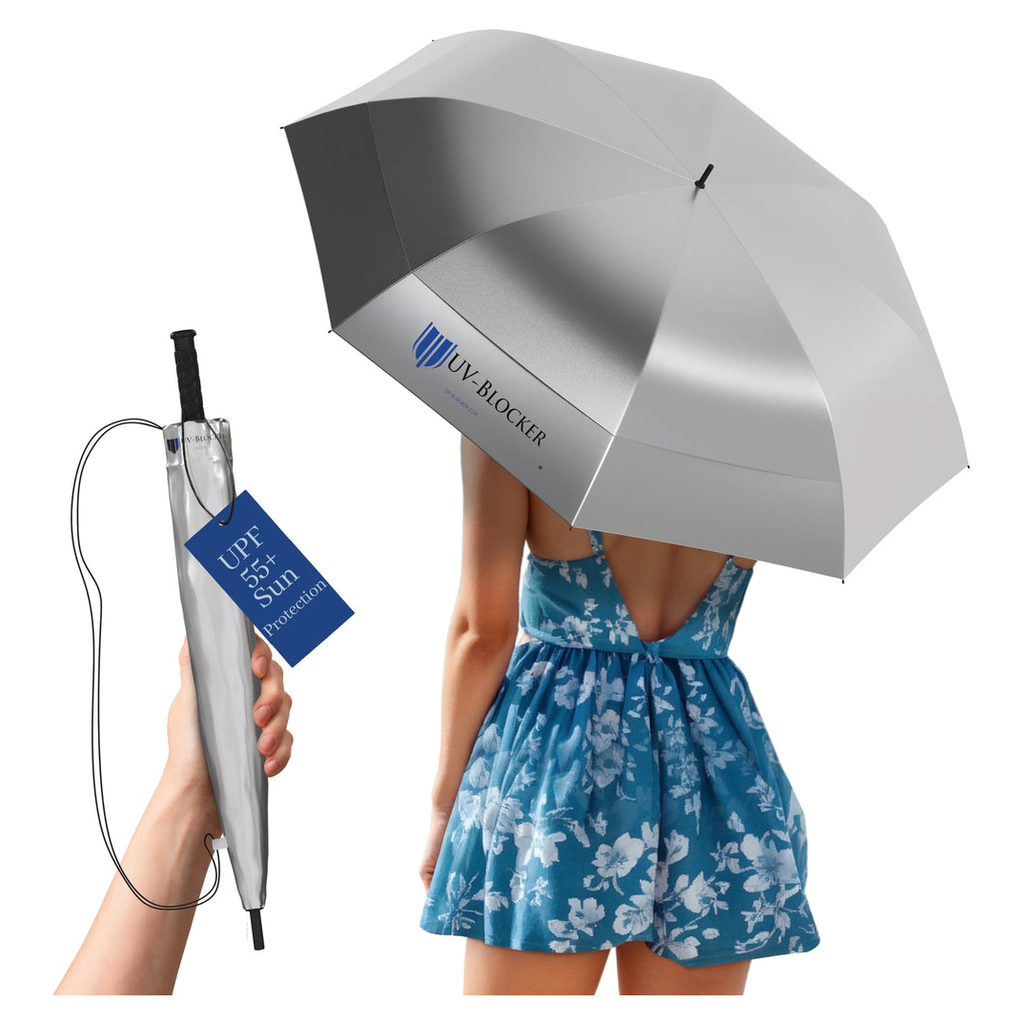
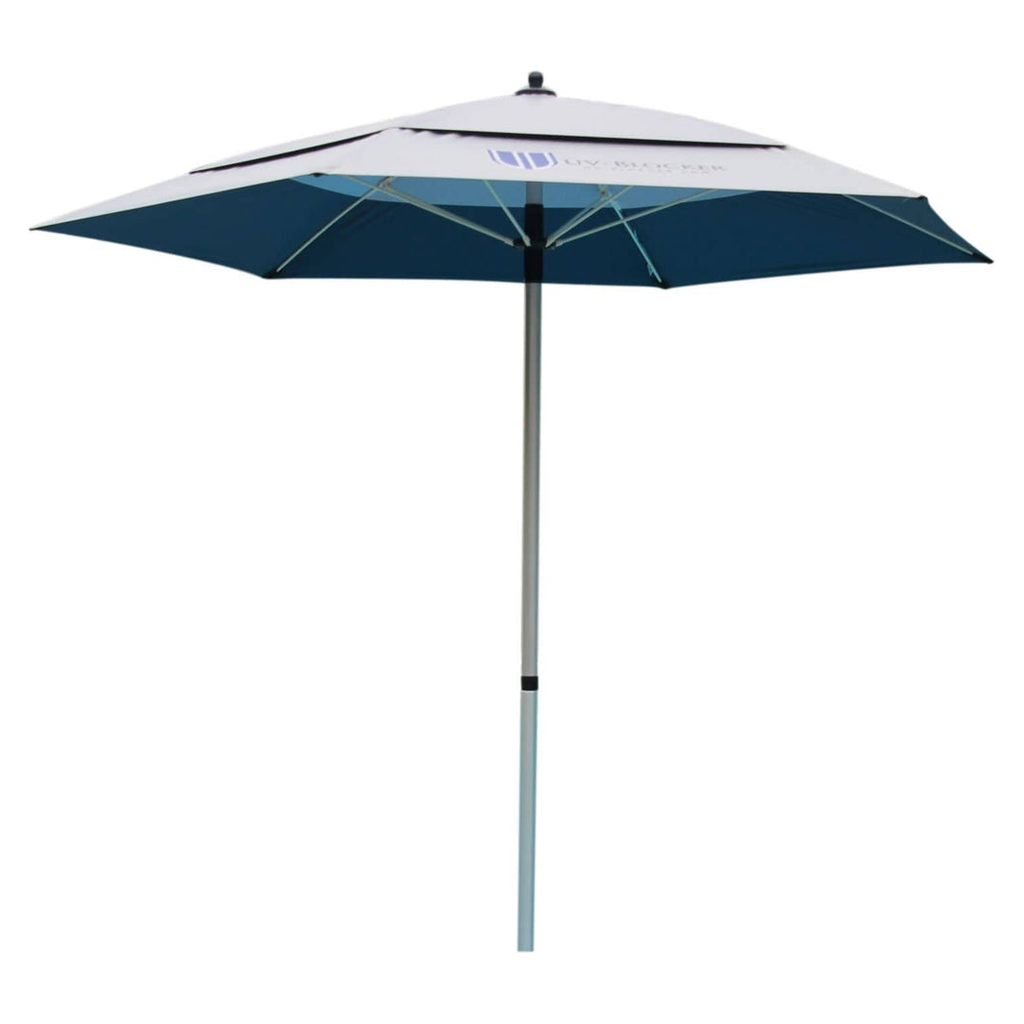
A UPF 50+ umbrella blocks 99% of UV rays while reducing the temperature underneath by up to 15 degrees Fahrenheit. For Prozac patients, this single tool addresses both problems at once: it shields skin from the UVA radiation that triggers phototoxic reactions and it reduces heat stress on a body with impaired thermoregulation.
The UV-Blocker Compact umbrella ($59.95) folds to 11.5 inches and fits in a purse, backpack, or briefcase. Medication photosensitivity isn't seasonal. It doesn't care whether it's July or January. Having daily-carry protection matters more than beach-day protection.
Layer 2: UPF Clothing
Lightweight long-sleeved shirts and wide-brim hats rated UPF 50+ provide consistent coverage that doesn't wash off, fade in water, or require reapplication. UPF clothing is particularly effective because it removes the human error factor from protection.
Layer 3: Mineral Sunscreen
Zinc oxide or titanium dioxide-based sunscreens (SPF 30 or higher) create a physical barrier that reflects UV radiation. Reapply every two hours during continuous outdoor exposure. Mineral formulations are preferred over chemical sunscreens for photosensitive patients, since some chemical UV filters may interact with photosensitizing medications.
Timing Matters
Because UVA drives drug photosensitivity and UVA is present all day, protection isn't limited to the 10am-4pm peak window. UVA passes through clouds and car windows. Year-round, all-day awareness is what separates effective protection from false confidence.
Frequently Asked Questions About Prozac and Sun Sensitivity
Patients starting or continuing fluoxetine often have specific questions about sun exposure. Here are the most common.
Does Prozac make you burn faster?
Prozac does not increase burn speed for most users. In rare cases, fluoxetine photosensitivity can cause skin reactions from sun exposure that would normally be harmless.
The reaction is a separate drug-mediated chemical process, not an accelerated version of normal sunburn.
Should I stop taking Prozac in summer?
No. Never stop or adjust psychiatric medication without consulting a prescribing doctor. Sun protection measures are effective without medication changes.
Abruptly stopping fluoxetine can cause discontinuation syndrome (dizziness, nausea, irritability). The photosensitivity risk is far too rare to justify stopping a medication that manages depression or anxiety.
How long after starting Prozac does sun sensitivity develop?
Drug photosensitivity can develop at any point during treatment. No predictable onset window exists. It can appear in the first week or after months of uneventful sun exposure.
The 1998 case report documented a patient who experienced a first reaction and then a recurrence three months later, confirming that the risk doesn't diminish over time on the medication.
Can I still get vitamin D while taking Prozac?
Yes. Brief incidental sun exposure during daily activities typically provides adequate vitamin D. Patients concerned about deficiency should discuss supplementation with their doctor rather than increasing deliberate sun exposure.
A vitamin D supplement is a straightforward alternative that eliminates the UV risk entirely.
Does Prozac sun sensitivity affect people with darker skin?
Photosensitivity can occur in any skin type. Higher melanin levels provide some natural UV protection, but drug-induced photosensitivity can override this baseline defense.
Darker skin may mask early signs of a reaction since redness is harder to spot, which can delay treatment. Any unusual skin changes after sun exposure warrant medical attention regardless of skin tone.
When should I call my doctor?
Contact a doctor if unusual rash, blistering, or exaggerated sunburn develops after brief sun exposure while taking Prozac. Do not stop medication without medical guidance.
Take a photo of the reaction before it fades and note the timing. Mention all current medications, not just Prozac, to give the clearest clinical picture.
Conclusion
Prozac sun sensitivity is rare by the numbers but real by the evidence. Two published case reports, FDA adverse event classification, and a growing body of SSRI photosensitivity research confirm that fluoxetine can trigger skin reactions in susceptible patients.
The key takeaways for anyone on Prozac:
- The risk is rare but documented. Fewer than 1 in 1,000 fluoxetine users report photosensitivity. Two clinical case reports with recurrence confirm the mechanism.
- Fluoxetine ranks moderate among SSRIs. Fluvoxamine and paroxetine carry higher documented risk. Sertraline and citalopram carry lower risk.
- Heat intolerance is a separate problem. SSRIs impair thermoregulation through the hypothalamus. A patient can have heat problems without UV sensitivity, or both.
- Three layers of protection cover both risks. A UPF 50+ umbrella handles UV and heat simultaneously. Add UPF clothing and mineral sunscreen for full coverage.
The single most practical step is carrying a UPF 50+ umbrella daily. It solves the UV problem and the heat problem in one tool, fits in a bag, and works year-round. The UV-Blocker Compact was designed for exactly this kind of everyday protection.
For a broader look at medications that cause sun sensitivity, including NSAIDs, blood pressure drugs, and antibiotics, the full guide covers over 30 drug classes.
This article is for educational purposes only. Do not adjust or discontinue any medication without consulting your prescribing physician.
Sun Safety in Canada
Canada experiences meaningful UV exposure throughout the year, with UV Index levels regularly reaching 8–10 or higher during summer months in cities such as Vancouver, Calgary, Toronto, and Ottawa. Health Canada and Environment and Climate Change Canada publish daily UV Index forecasts and recommend protective measures whenever the index exceeds 3 — a threshold reached on most clear days between May and August across the country.
Key resources for Canadian sun safety:
- Health Canada UV Index: Published daily via the Environment and Climate Change Canada weather portal (weather.gc.ca). Canadians can track UV levels by city and receive alerts when protection is recommended.
- Canadian Cancer Society: Recommends UPF 50+ clothing, hats, sunscreen, and shade-seeking as primary sun protection strategies. Physical UV barriers — such as UPF 50+ umbrellas — are emphasized for prolonged outdoor exposure.
- Canadian Dermatology Association: Endorses broad-spectrum sun protection strategies, including shade structures and UV-blocking accessories, especially for individuals with fair skin or a personal or family history of skin cancer.
For Canadians spending extended time outdoors — whether working, playing sports, or enjoying recreational activities — a UV-blocking umbrella rated UPF 50+ provides continuous, reapplication-free protection. The UV-Blocker umbrella, independently tested and approved by the Melanoma International Foundation, blocks 99% of UV rays and keeps users up to 15°F cooler — making it a practical and reliable companion for Canadian summers.
Frequently Asked Questions
Does Prozac really make skin more sensitive to sunlight?
Yes. Prozac belongs to a class of medications that can trigger photosensitivity reactions in a subset of patients. This can cause sunburn-like reactions with minimal UV exposure, or trigger phototoxic skin rashes. The reaction severity varies by individual, dosage, and UV intensity. Always review your medication guide and consult your prescribing physician if you notice unusual skin reactions in sunlight.
What SPF should I use if I take this medication?
Dermatologists generally recommend SPF 30+ broad-spectrum sunscreen for patients on photosensitizing medications, with reapplication every 2 hours. However, sunscreen alone isn't sufficient for high UV exposure. Combining sunscreen with physical barriers — UPF 50+ clothing, wide-brim hats, and UV-blocking umbrellas — provides the most reliable protection. UV-Blocker's UPF 50+ umbrellas block 99% of UVA and UVB rays.
Can I still go outdoors while taking this medication?
Absolutely. Most patients can continue outdoor activities with appropriate precautions: avoid peak UV hours (10am–4pm), wear protective clothing, use SPF 30+ sunscreen, and use shade whenever possible. A portable UV-blocking umbrella offers hands-free shade wherever you go, making it a practical solution for patients who need consistent sun avoidance.
How long after stopping the medication until sun sensitivity resolves?
Photosensitivity typically resolves within days to weeks after discontinuing the medication, depending on the drug's half-life and your individual metabolism. Some medications with long half-lives may cause sensitivity for weeks. Continue sun protection until your doctor confirms it's safe to reduce precautions.
What are the signs of a phototoxic reaction vs. a photoallergic reaction?
Phototoxic reactions look like severe, rapid sunburn — they appear within hours of UV exposure and are dose-dependent. Photoallergic reactions involve an immune response, can spread beyond sun-exposed areas, and may appear days later. Both require prompt sun avoidance. See your dermatologist for diagnosis and management.
Sun Safety Essentials for Patients on Photosensitizing Medications
- Keep a UV index app on your phone and avoid going outdoors when the index exceeds 6 without full protection
- Wear UPF 50+ sun-protective clothing on arms and legs, not just sunscreen
- Carry a portable UV-blocking umbrella for shade on demand — especially effective during outdoor commutes, sporting events, or waiting outdoors
- Apply sunscreen to the back of hands and tops of feet — commonly missed areas that receive direct UV
- Inform your pharmacist about all medications you take so they can flag photosensitizing combinations
- Request a window film UV assessment if you drive frequently — car windows block UVB but not all UVA
Frequently Asked Questions
Does Prozac really make skin more sensitive to sunlight?
Yes. Prozac belongs to a class of medications that can trigger photosensitivity reactions in a subset of patients. This can cause sunburn-like reactions with minimal UV exposure, or trigger phototoxic skin rashes. The reaction severity varies by individual, dosage, and UV intensity. Always review your medication guide and consult your prescribing physician if you notice unusual skin reactions in sunlight.
What SPF should I use if I take this medication?
Dermatologists generally recommend SPF 30+ broad-spectrum sunscreen for patients on photosensitizing medications, with reapplication every 2 hours. However, sunscreen alone isn't sufficient for high UV exposure. Combining sunscreen with physical barriers — UPF 50+ clothing, wide-brim hats, and UV-blocking umbrellas — provides the most reliable protection. UV-Blocker's UPF 50+ umbrellas block 99% of UVA and UVB rays.
Can I still go outdoors while taking this medication?
Absolutely. Most patients can continue outdoor activities with appropriate precautions: avoid peak UV hours (10am–4pm), wear protective clothing, use SPF 30+ sunscreen, and use shade whenever possible. A portable UV-blocking umbrella offers hands-free shade wherever you go, making it a practical solution for patients who need consistent sun avoidance.
How long after stopping the medication until sun sensitivity resolves?
Photosensitivity typically resolves within days to weeks after discontinuing the medication, depending on the drug's half-life and your individual metabolism. Some medications with long half-lives may cause sensitivity for weeks. Continue sun protection until your doctor confirms it's safe to reduce precautions.
What are the signs of a phototoxic reaction vs. a photoallergic reaction?
Phototoxic reactions look like severe, rapid sunburn — they appear within hours of UV exposure and are dose-dependent. Photoallergic reactions involve an immune response, can spread beyond sun-exposed areas, and may appear days later. Both require prompt sun avoidance. See your dermatologist for diagnosis and management.
Sun Safety Essentials for Patients on Photosensitizing Medications
- Keep a UV index app on your phone and avoid going outdoors when the index exceeds 6 without full protection
- Wear UPF 50+ sun-protective clothing on arms and legs, not just sunscreen
- Carry a portable UV-blocking umbrella for shade on demand — especially effective during outdoor commutes, sporting events, or waiting outdoors
- Apply sunscreen to the back of hands and tops of feet — commonly missed areas that receive direct UV
- Inform your pharmacist about all medications you take so they can flag photosensitizing combinations
- Request a window film UV assessment if you drive frequently — car windows block UVB but not all UVA