

Sun exposure triggers flares in 81% of rosacea patients. That number comes from a National Rosacea Society survey of over 1,000 patients — sunlight is the single most reported trigger for the condition. And yet most patients still get incomplete advice about managing time outdoors.
Here is the gap: most rosacea flare prevention advice starts and ends with sunscreen. Sunscreen only addresses ultraviolet radiation. Heat — the second most common trigger — passes straight through every SPF product on the shelf.
That blindspot explains why patients follow all the rules and still end up with a red, burning face after a twenty-minute walk. This article covers the daily rosacea flare prevention protocol backed by the AAD and the National Rosacea Society. It addresses both UV and heat triggers through physical shade, timed exposure, and layered protection.
TLDR: The Rosacea Flare Prevention Protocol * Sun triggers 81% of rosacea flares through two separate pathways: UV radiation and infrared heat. * Sunscreen blocks UV but lets heat pass right through — and heat alone can trigger a full flare. * The AAD recommends physical shade as the first defense, before sunscreen. * A UPF 50+ umbrella blocks 98%+ of UV and drops the temperature underneath by up to 15°F. * Daily routine: check UV index, pack an umbrella, time outdoor activities, layer mineral sunscreen last.
Why Does Sun Trigger Rosacea Flares in 81% of Patients?
Sun triggers rosacea through two separate pathways: UV radiation damages skin cells and activates inflammation, while infrared heat dilates blood vessels and locks in flushing.
Sunlight hits the skin with two types of energy that matter for rosacea. UV light and infrared heat attack through different mechanisms — and that is the part most patients miss.

The UV pathway works at the cellular level. UVB radiation damages keratinocytes — the cells in the outer layer of skin. That damage prompts the release of cathelicidin LL-37, a peptide that kicks off the body's inflammatory response. In healthy skin, this takes a decent amount of sun exposure. In rosacea skin, even sub-erythemal doses — amounts too small to cause a visible sunburn — can set off a flare. The skin overreacts to tiny amounts of cellular stress.
The heat pathway works at the vascular level. Infrared radiation from the sun raises skin temperature quickly. Blood vessels expand to release that heat. In rosacea skin, those vessels fill with blood and get stuck in the dilated position. This happens independently of UV damage. The vessels lose their ability to constrict back to normal once the heat source goes away.
Outdoors, patients deal with both at the same time. Picture someone walking in 85°F weather with a fresh layer of SPF 50. They can still flush within 20 minutes from the heat alone. The AAD confirms that just a few minutes of sunlight on rosacea-prone skin can lead to uncontrollable flushing and redness. UV inflammation plus vascular dilation creates the conditions for a multi-day flare.
So if UV and heat are two separate triggers, why do most patients only protect against one?
Why Does Sunscreen Alone Fail Rosacea Patients?
Sunscreen blocks UV but not heat, requires irritating skin contact, degrades within two hours, and leaves coverage gaps on the ears, neck, and hairline.
SPF products filter UV wavelengths but are transparent to infrared radiation. This is the thermal blindspot. Skin temperature still rises under sunscreen. The heat passes through the lotion, hits the skin, and triggers the same vasodilation cascade described above. Think of sunscreen as a clear window — it stops the UV light, but the heat still warms the room.
Chemical irritation makes things worse. The National Rosacea Society recommends mineral formulas — zinc oxide or titanium dioxide — because chemical filters like oxybenzone and avobenzone frequently cause stinging and burning on compromised skin barriers. Those chemical filters absorb UV energy and convert it into heat on the skin surface. The lotion meant to protect the face can actually trigger flushing on its own.
Then there's the reapplication problem. SPF degrades with sweat and movement. Dermatologists say reapply every two hours. Every reapplication means rubbing another layer of product onto an already inflamed face. The friction itself adds a mechanical trigger on top of the environmental ones.
And coverage gaps. Most people miss their ears, hairline, neck, and eyelids during morning application. These are common rosacea flare zones. One unprotected spot can trigger redness that spreads across the face — the blood vessels connect, and once one section dilates, the surrounding vessels tend to follow.
So what actually works? The same medical organizations that recommend sunscreen say something else should come first.
What Is the AAD's Shade-First Protocol for Rosacea?
The AAD recommends shade as the first line of defense for rosacea, followed by protective clothing, wide-brim hats, and mineral sunscreen for residual exposure.
Dermatologists set up a clear hierarchy for outdoor rosacea flare prevention. Shade comes first in every AAD recommendation for photosensitive skin conditions. Protective clothing and wide-brim hats form the second layer. Sunscreen is the final step — it catches whatever residual light bounces off concrete or water.
Why shade first? Because physical shade blocks both UV and heat at the same time. One overhead barrier intercepts the energy before it reaches the body. That dual action is what sets shade apart from sunscreen for patients with vascular reactivity. The shade stops cellular damage and stops the thermal load in one move.
But not all shade is equal. A standard rain umbrella lets 20 to 50 percent of UV pass through. A UPF 50+ umbrella blocks more than 98 percent. That gap matters for rosacea patients, whose flare threshold is lower than average. Here is what UPF 50+ means in terms of fabric testing and real-world performance.
A UPF 50+ umbrella also drops the temperature underneath the canopy by up to 15°F compared to direct sun. That temperature reduction directly counteracts the heat trigger. The full rosacea sun protection guide covers how physical barriers outperform chemical filters for temperature control.
| Protection Method | UV Block | Heat Block | Skin Contact | Reapplication |
|---|---|---|---|---|
| SPF 50 Sunscreen | ~98% (when fresh) | None | Required | Every 2 hours |
| Regular Umbrella | 20-50% | Moderate | None | Never |
| UPF 50+ Umbrella | 98%+ | Significant (15°F cooler) | None | Never |
| Wide-Brim Hat | 50-70% (face only) | Slight | None | Never |
| UPF Clothing | 98%+ (covered areas) | Moderate | Direct | Never |
Knowing the hierarchy is one thing. Building it into a functional daily routine requires specific execution.
How Do You Build a Daily Rosacea Flare Prevention Routine?
A daily rosacea prevention routine starts with checking the UV index, packing a UPF 50+ umbrella, timing outdoor activities before 10 AM or after 4 PM, and layering mineral sunscreen last.
The patients who manage rosacea best treat sun and heat protection like a morning checklist. Reacting to a flush after it starts rarely works. Prevention has to happen before the skin gets warm.

Start by checking the local UV index before leaving the house. The CDC provides daily ratings. If the index is above 3, all protection layers go on. Above 6? Reschedule outdoor activities to a different part of the day if possible.
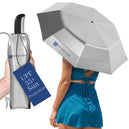
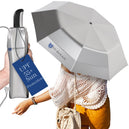
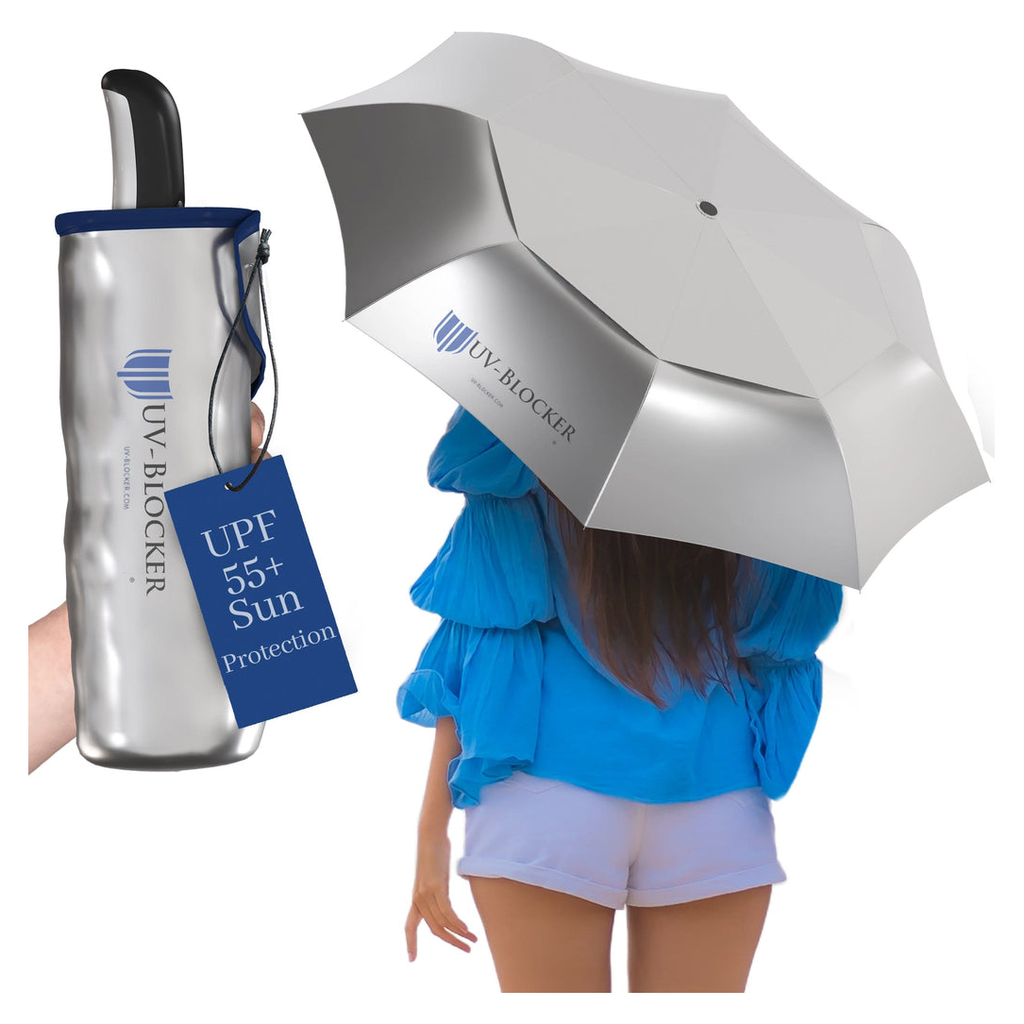
Pack a compact UPF 50+ umbrella. It fits in a purse, backpack, or messenger bag. Open it before stepping into direct sunlight — not after the skin starts feeling warm. The UV Protection Compact Umbrella weighs about 13 ounces and provides overhead shade on demand.
The AAD advises patients to stay out of the midday sun. Peak UV runs from 10 AM to 4 PM. Scheduling walks, errands, and yard work for early morning or late afternoon cuts flare frequency more than any topical product. And keep in mind that medications that cause sun sensitivity — including doxycycline, a common rosacea treatment — make timing even more important.
Bring a small spray bottle of cold water. Pack ice chips for chewing during walks. Keep a cold, wet cloth in a plastic bag for the back of the neck. The AAD recommends all of these for active heat management. Lowering the body's core temperature helps prevent the facial vessels from dilating in the first place.
Apply mineral SPF 30+ (zinc oxide or titanium dioxide) to exposed skin only after shade and clothing are in place. Reapply every two hours if staying outdoors. Sunscreen is the last layer, not the first — it fills the gaps that physical shade leaves open.
| Protocol Step | Action Item | Target Trigger | Required Equipment |
|---|---|---|---|
| 1. Morning Check | Monitor local UV index | Prevention | CDC UV Index Forecast |
| 2. Primary Barrier | Deploy overhead shade | UV and Heat | UPF 50+ Umbrella |
| 3. Timing | Avoid 10 AM to 4 PM window | UV and Heat | Adjusted schedule |
| 4. Cool-Down | Apply active cooling | Heat | Water spray, ice chips |
| 5. Secondary Barrier | Apply to exposed skin | UV only | Mineral SPF 30+ |
What about exercise, travel, and seasonal changes?
Frequently Asked Questions About Rosacea Flare Prevention
These are the most common questions from rosacea patients managing daily outdoor exposure, answered with AAD and National Rosacea Society guidance.
These come up constantly. Here are straight answers.
Can you exercise outdoors with rosacea without triggering a flare?
Yes — but timing and cooling matter. Exercise in early morning or late afternoon, stay under shade, spray cold water on the face, and consider cool-water activities like swimming. The AAD recommends exercising on shaded paths or in air-conditioned spaces during peak summer. Chewing ice chips while walking or running helps lower facial temperature from the inside out. The National Rosacea Society highlights aqua aerobics as one of the safest outdoor exercise options.
Does humidity make rosacea worse than dry heat?
Usually, yes. Humidity traps heat against the skin and slows evaporative cooling, so flares tend to last longer. Sweat can't evaporate well in humid air. The skin holds onto thermal energy, keeping blood vessels dilated longer. The AAD recommends washing the face with a gentle cleanser and cool water right after humid outdoor exposure. A spray bottle of cold water helps in the moment.
Are rosacea flares from sun permanent or temporary?
Individual flares are temporary. But repeated UV exposure causes cumulative vascular damage that can make redness stick around. The AAD notes that chronic UV exposure contributes to telangiectasia — those permanent, visible blood vessels that require laser treatments to remove. Prevention matters more than treatment because the vessel wall damage builds up over years of unprotected exposure.
Is a UV umbrella HSA or FSA eligible for rosacea patients?
Yes. UPF 50+ umbrellas qualify as HSA and FSA eligible sun protection purchases for medical conditions including rosacea. Because rosacea carries a recognized diagnostic billing code, qualifying sun protection gear can be purchased with tax-advantaged health spending accounts. Keep the receipt and ask the prescribing dermatologist for a letter of medical necessity.
What SPF should rosacea patients use alongside physical shade?
The AAD recommends SPF 30 or higher with zinc oxide or titanium dioxide — mineral formulas that sit on the skin's surface instead of absorbing into it. Go fragrance-free to reduce irritation risk. Apply to exposed areas only after shade and clothing are already in place. Avoid spray sunscreens with alcohol — the propellant stings on compromised skin barriers.
Conclusion
Rosacea flare prevention requires blocking both UV and heat — sunscreen handles one, physical shade handles both.
Most rosacea patients protect against UV and ignore heat. That is the gap the AAD's shade-first protocol fills.
- Sun triggers 81% of rosacea flares through two separate pathways: UV radiation and infrared heat.
- Sunscreen blocks UV but does nothing against ambient heat.
- The AAD puts physical shade first in its flare prevention guidance.
- A UPF 50+ umbrella blocks both UV (98%+) and heat (15°F cooler) at the same time.
- The daily routine: check UV index, pack the umbrella, time your exposure, layer sunscreen last.
Check your local UV index today. If it is above 3, all four protective layers should go on tomorrow morning. A single UPF 50+ umbrella costs less than two months of specialty mineral sunscreen — and it blocks the trigger that sunscreen cannot touch. Isn't your skin worth that one-time investment?
Protect Yourself With UV-Blocker
UV-Blocker umbrellas use patented Solarteck® technology — a silver reflective coating independently verified to block 99.97% of UV-A and 100% of UV-B rays (AATCC TM183-2020 certified). Unlike dark umbrellas that trap heat, Solarteck® reflects infrared radiation to keep the air beneath the canopy up to 15°F cooler.
UV-Blocker is the only umbrella brand approved by the Melanoma International Foundation and recommended by dermatologists for patients with photosensitivity conditions.
Why UV Protection Matters
- UVA rays penetrate clouds and glass — they cause skin aging and are linked to melanoma
- UVB rays are the primary cause of sunburn and also contribute to skin cancer risk
- A 2024 Drexel University study found only 20% of handheld umbrellas have verified UPF 50+ protection — most UV claims are unverified
- UV-Blocker's protection is independently tested, not just claimed
Choose Your UV-Blocker
- Compact UV Umbrella — Portable, windproof, fits in any bag. Best for daily use, commuting, and travel.
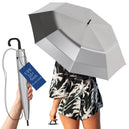
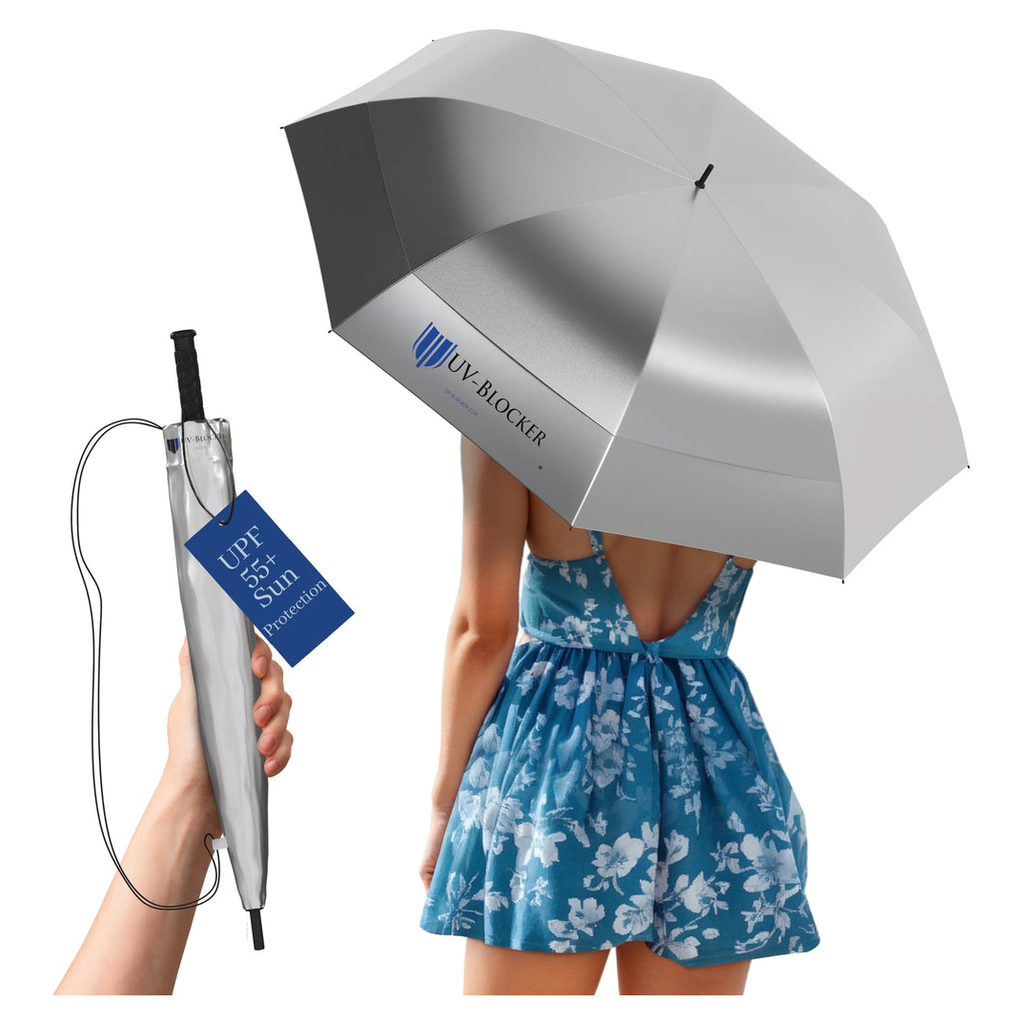
- Golf UV Umbrella — 68" canopy, Melanoma International Foundation approved. Covers you and your equipment.
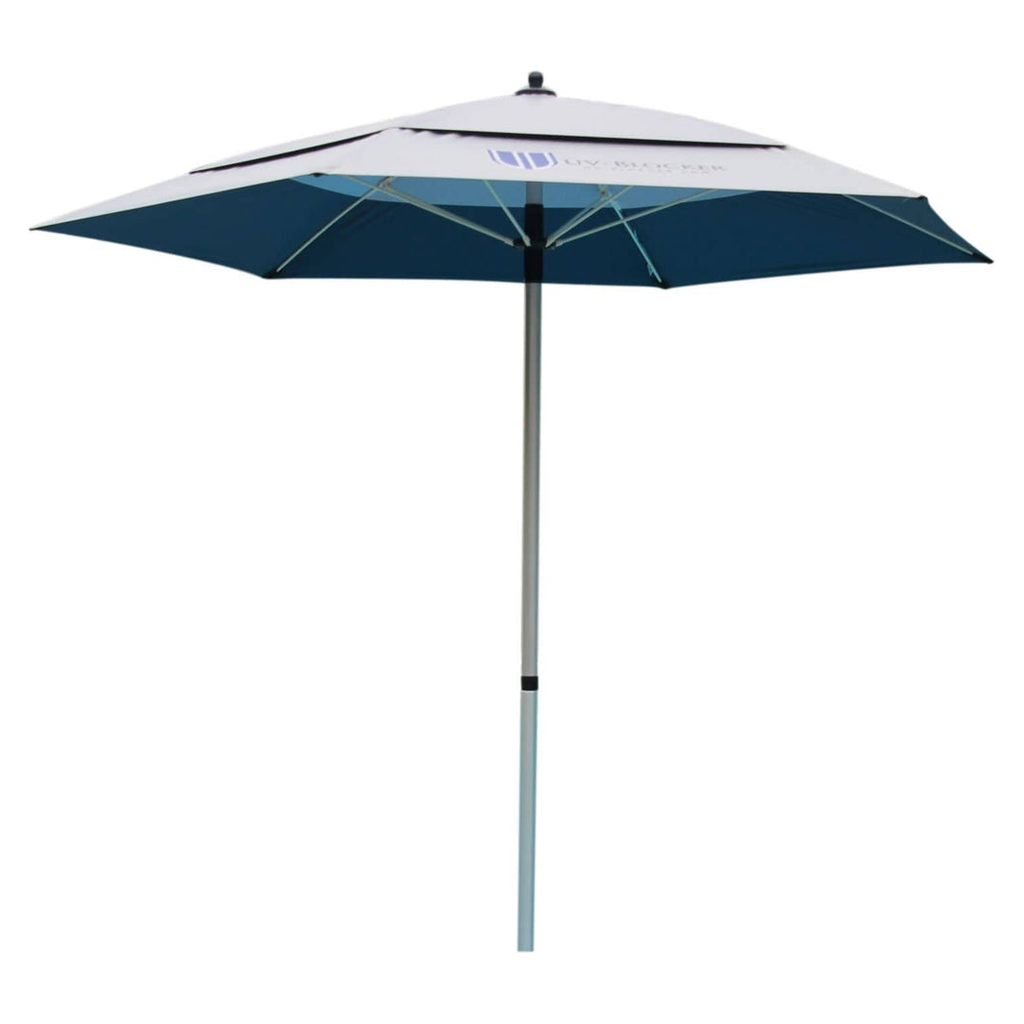
- ServiceShield™ — 7.5ft commercial umbrella for outdoor workers, HVAC technicians, and job sites. Magnetic or clamp base.
- Travel UV Umbrella — TSA-approved compact design. Maximum protection, minimum pack size.
Frequently Asked Questions
- Does a UV umbrella actually block UV rays?
- Only verified ones do. Most umbrellas claim "UV protection" without independent testing. UV-Blocker's Solarteck® coating is verified by AATCC TM183-2020 testing to block 99.97% UV-A and 100% UV-B. A 2024 Drexel study confirmed most competitors' claims are unverified.
- How is UV-Blocker different from a regular umbrella?
- The silver Solarteck® coating reflects solar energy rather than absorbing it. This provides clinically verified UV protection AND keeps you cooler — up to 15°F cooler than standing in direct sun. Regular dark umbrellas absorb heat and re-radiate it downward.
- Is UV-Blocker recommended by doctors?
- Yes. UV-Blocker is dermatologist-recommended and holds Melanoma International Foundation approval — the only umbrella brand with this medical endorsement. It's particularly recommended for people with photosensitivity, lupus, melanoma history, and medication-induced sun sensitivity.
- What is UPF 50+?
- UPF (Ultraviolet Protection Factor) 50+ means the fabric blocks at least 98% of UV radiation. UV-Blocker exceeds this standard with 99.97% UV-A and 100% UV-B blocking, independently tested using the AATCC TM183-2020 standard — the most current certification method.
Shop UV-Blocker Umbrellas — Ships free on qualifying orders.
Rosacea-prone patients undergoing laser or IPL treatments require strict UV avoidance during and after procedures. Find out how UV-Blocker is trusted in cosmetic dermatology for rosacea-prone patients — physical UV barrier protection that works even when topical products are contraindicated post-treatment.
Frequently Asked Questions
How does this skin condition interact with UV exposure?
Many skin conditions are directly triggered or worsened by ultraviolet radiation. UV light causes DNA damage in skin cells, triggers inflammatory cascades, and can activate dormant conditions. For immune-mediated conditions, UV exposure can disrupt immune regulation and cause flares. Understanding your specific UV sensitivity is critical for effective condition management.
What level of sun protection do dermatologists recommend for this condition?
Dermatologists typically recommend broad-spectrum SPF 50+ sunscreen for patients with UV-sensitive skin conditions, combined with physical sun protection: UPF 50+ clothing, wide-brim hats, and shade during peak UV hours (10am–4pm). For conditions like xeroderma pigmentosum or porphyria, near-total sun avoidance is required.
Are certain UV wavelengths more problematic than others for this condition?
Yes. UVB (290–320nm) is primarily responsible for sunburn and direct DNA damage. UVA (320–400nm) penetrates deeper, causing photoaging and activating certain photosensitive conditions. Most photosensitive skin disorders respond to specific wavelength ranges. A phototest by a dermatologist can identify your exact sensitivity spectrum.
Can a UV-blocking umbrella replace sunscreen for sensitive skin conditions?
No — a UV-blocking umbrella complements but doesn't replace sunscreen. Umbrellas block direct overhead UV but not reflected UV from surfaces (sand, water, concrete). The combination of SPF 50+ sunscreen + UPF 50+ umbrella reduces UV exposure by over 99% and is recommended for high-sensitivity patients. UV-Blocker umbrellas are dermatologist-recommended.
How do I find a dermatologist experienced with photosensitive conditions?
Look for board-certified dermatologists with a subspecialty in photodermatology or pigmented skin disorders. The American Academy of Dermatology (AAD) has a physician finder at aad.org. For rare conditions like porphyria, seek specialists at academic medical centers. Some conditions require coordination between dermatology, hematology, or rheumatology.
Expert Dermatology Recommendations for Sun-Sensitive Skin
- Use a UV index app daily and plan outdoor activities around low UV periods — typically before 10am and after 4pm
- Test new sunscreen formulations on a small patch first — some ingredients trigger reactions in sensitive skin
- Invest in UV-protective windows and car film — indoor UV exposure through glass is underestimated
- Carry a UV-blocking umbrella for everyday use — it's the easiest way to create personal shade on demand
- Photograph any skin changes and keep a symptom log to share with your dermatologist
- Wear sun-protective clothing rated UPF 50+ — regular clothing often provides only UPF 6–15