

Millions of cosmetic and medical skin procedures happen every year. From light glycolic peels to Mohs surgery, the aftercare instructions all start the same way: stay out of the sun.
Most patients nod and move on. They do not realize what UV actually does to healing skin. Without its outer barrier, treated skin cannot process ultraviolet radiation. UV hits that raw tissue and the results are ugly — permanent scarring, dark patches that never fade, infections, and lost treatment results. The AAD is blunt about this.
A quick swipe of SPF 30 in the morning does not cut it here. Healing skin needs full UV avoidance. This article covers how long to stay out of the sun by procedure type, why sunscreen alone fails during recovery, and the shade-first protocol dermatologists recommend to protect both the patient and their investment.
Why Is Skin So Vulnerable to UV After a Procedure?
Skin procedures strip the outer protective barrier, leaving healing tissue exposed to UV that causes scarring, permanent dark patches, and infection.
Chemical peels, laser resurfacing, and microneedling all work the same basic way. They damage the epidermis on purpose. That controlled damage triggers the body's healing response — new cell turnover, collagen production, smoother skin. But in the short term, the outer barrier is gone. The skin is raw and wide open.
Without that barrier, UV goes deeper and does more damage faster. Think of it as sunburn on top of a burn — the harm multiplies. The skin has nothing left to fight with.
Pigment cells (melanocytes) go haywire during healing. Even small amounts of UV push them to overproduce melanin. The result: permanent dark patches called post-inflammatory hyperpigmentation. The AAD warns this risk runs higher in patients with darker skin tones.
It gets worse than cosmetic damage. The AAD says unprotected sun exposure after procedures raises the risk of infection and raised scarring. UV breaks down the new collagen strands the procedure was meant to build. That effectively erases what the patient paid for. Every minute of unprotected exposure works against the recovery.
How Long Should You Avoid Sun After Each Procedure?
Timelines range from 1-2 weeks after microneedling to 3-6 months after deep chemical peels, with laser treatments and Mohs surgery falling in between.
It depends on how deep the procedure went. A superficial peel takes off the top layer of dead skin — 1 to 7 days of sun avoidance. A medium peel goes deeper: full sun avoidance until the skin closes and finishes peeling, usually 7 to 14 days. A deep peel is a different animal. Patients need to stay out of the sun for 3 to 6 months to prevent permanent scarring.
Lasers break down differently. Non-ablative lasers heat tissue under the surface without breaking it — 1 to 2 weeks of strict avoidance, then ongoing SPF 30+. Ablative lasers vaporize the outer skin layers. That means 2 to 4 weeks of total avoidance and indefinite sun protection afterward.
Microneedling feels like a bad sunburn for the first 48 to 72 hours. Patients should stay out of the sun for at least 1 to 2 weeks. And the sun protection does not stop when the redness fades — ongoing UV defense preserves the collagen the treatment generated.
Mohs surgery creates its own timeline. Scar tissue stays UV-sensitive for 12 months or longer. Unprotected sun turns surgical scars permanently dark. The sun protection after Mohs surgery guide covers this in detail. Melanoma patients face the same long recovery — see sun protection after melanoma for the full protocol.

| Procedure | Strict Sun Avoidance | Ongoing Protection | Key Risk |
|---|---|---|---|
| Superficial peel | 1-7 days | Daily SPF 30+ | Uneven pigmentation |
| Medium peel | 7-14 days | Daily SPF 30+ | Scarring, infection |
| Deep peel | 3-6 months | Indefinite SPF 30+ | Permanent scarring |
| Laser (non-ablative) | 1-2 weeks | Daily SPF 30+ | Hyperpigmentation |
| Laser (ablative) | 2-4 weeks | Indefinite SPF 30+ | Scarring, dark marks |
| Microneedling | 1-2 weeks | Daily SPF 30+ | Lost results |
| Mohs surgery | 4-8 weeks | 12+ months SPF 30+ | Scar darkening |
Medications add another layer of risk. Some oral and topical drugs ramp up UV sensitivity on their own. Patients should review their full medication list — including medications that cause sun sensitivity — with their doctor before any procedure.
Why Isn't Sunscreen Enough During Recovery?
Sunscreen wears off in two hours, misses reflected UV from below, and often cannot be applied to raw healing skin — physical shade must come first.
Right after a deep peel or ablative laser, you cannot put sunscreen on at all. The skin is open. Dermatologists say apply nothing until it closes. Slathering chemical formulas on weeping tissue leads to stinging, irritation, and infection risk.
Once the skin heals enough for topicals, sunscreen still has problems. It degrades in sunlight. It wears off every two hours. Most people apply 50-75% less than they need. That thin coat leaves gaps on skin that has zero tolerance for UV right now.
UV also comes from angles sunscreen cannot reach. Concrete, water, and glass buildings bounce rays upward and sideways. Sunscreen on the forehead does not cover the sides of the neck, the ears, or under the jaw. Those reflected rays hit the edges of the treated area — often the most vulnerable spots.
Chemical sunscreen ingredients irritate post-procedure skin. Dermatologists recommend mineral formulas only: zinc oxide or titanium dioxide. These sit on top of the skin instead of absorbing in.
The AAD says physical barriers come first. Shade, clothing, and hats protect without rubbing off, sweating away, or requiring painful reapplication on tender skin.
What Does the AAD-Recommended Post-Procedure Sun Protection Protocol Look Like?
The AAD recommends shade-first protection: seek shade with a UPF 50+ umbrella, wear sun-protective clothing and wide-brim hats, and apply SPF 30+ mineral sunscreen to exposed skin.
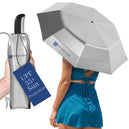
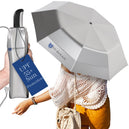
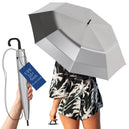
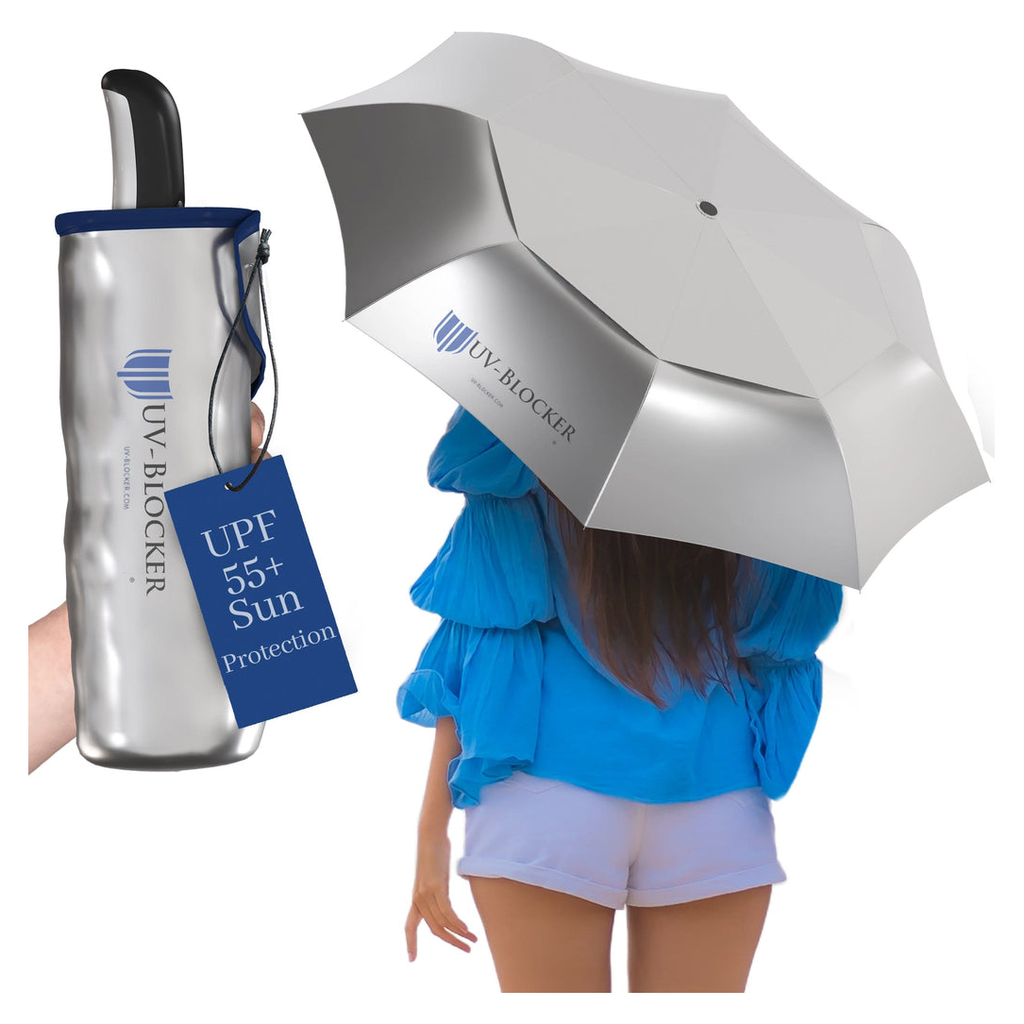
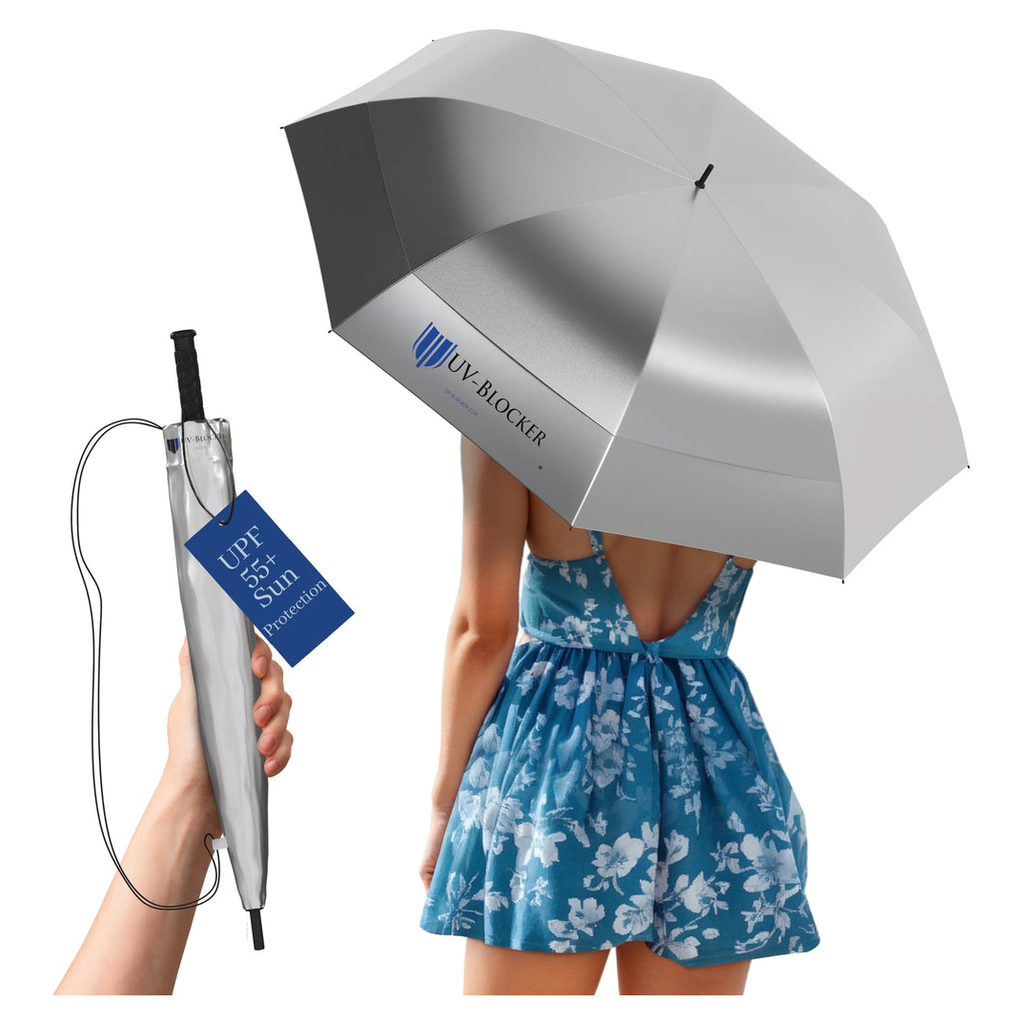
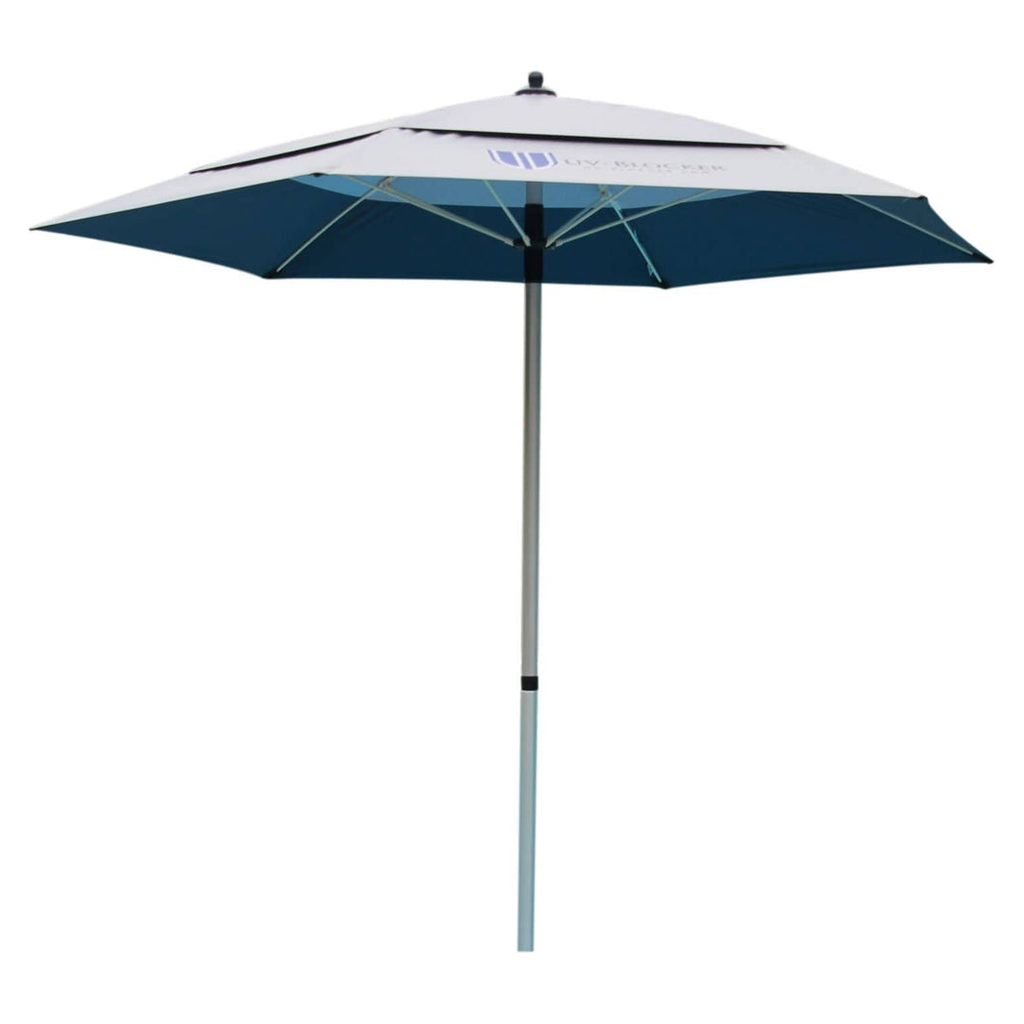
Start with shade. A UPF 50+ umbrella blocks over 98% of UV and goes with you. It makes the difference between staying locked inside for weeks and actually running errands during recovery. UPF 50+ explained covers what that rating guarantees in practice.

Next: clothing. Long sleeves in UPF-rated fabric. A wide-brim hat that actually covers the face, ears, and neck — not a baseball cap.
Then mineral sunscreen on whatever skin stays exposed. SPF 30+ zinc oxide or titanium dioxide, applied thick. But only once the skin has healed enough to tolerate a topical product. After deep peels, that might be weeks.
Timing rounds it out. The AAD recommends avoiding the 10 a.m. to 4 p.m. window — peak UV. Staying indoors during those hours cuts the biggest chunk of exposure risk. When that is not possible, the first three layers handle the job.
A single UPF 50+ umbrella covers the whole recovery period. UV-Blocker's Compact 42" fits in a bag and qualifies as an HSA/FSA eligible purchase. For someone who just invested in a skin procedure, isn't protecting that result worth one small purchase? See how a UV umbrella can protect your family for the full picture.
Frequently Asked Questions About Sun Protection After Skin Procedures
Post-procedure patients most often ask about makeup SPF, driving safety, scar protection, indoor UV, and insurance eligibility for sun protection equipment.
Can SPF makeup replace sunscreen after a peel?
No. SPF in makeup is not applied thick enough to deliver the rated protection. Use a standalone mineral sunscreen under makeup, plus physical shade. The amount of foundation needed for real SPF coverage would look like a mask.
Is it safe to drive with healing skin?
UVA passes through car side windows. Use UV-filtering window film or a UPF umbrella angled over the driver side during recovery. Even a 10-minute commute exposes raw skin to meaningful UV.
How should a Mohs surgery scar be protected from the sun?
Cover the scar with a bandage or SPF 30+ mineral sunscreen for at least 12 months. Scars darken permanently if UV hits them during healing — the new tissue has no natural pigment defense.
Does indoor lighting affect healing skin?
Fluorescent and halogen bulbs put out UV that can affect post-procedure skin. Swap to LED bulbs during recovery. If the office lights cannot change, UV-blocking shields over the tubes help.
Are UV umbrellas HSA/FSA eligible for post-procedure recovery?
Yes. UPF 50+ umbrellas qualify as HSA and FSA eligible medical purchases. Most plan administrators accept items tested and rated for UV avoidance.
Conclusion
Every dermatological procedure strips the skin's UV defense, making physical shade the non-negotiable first step in protecting both the healing skin and the treatment investment.
Every procedure — peel, laser, microneedling, Mohs — leaves the skin temporarily open to UV damage. Sun exposure during recovery risks scarring, dark patches, infection, and erased results. The AAD says physical shade comes first. Sunscreen alone is not enough for raw tissue.
Recovery windows range from one week (light peel) to six months (deep peel). Whatever the procedure, a layered approach — shade, clothing, mineral sunscreen, timing — keeps healing on track.
UV-Blocker's Compact 42" umbrella delivers verified UPF 50+ protection, fits in a bag, and qualifies as an HSA/FSA medical expense. For someone recovering from a procedure, protecting that investment is worth one small, one-time purchase.
2026 Update: Post-Procedure Sun Protection Recommendations
Dermatological guidance on post-procedure sun protection has continued to strengthen in 2026, with clearer timelines and more specific protection requirements following common procedures.
Key 2026 updates for post-procedure care:
- Laser resurfacing and chemical peels: New guidance recommends UPF 50+ physical barriers for a minimum of 3 to 6 months post-procedure, not just during the initial healing phase. The skin remains photosensitive beyond visible healing.
- Mohs surgery: Surgical sites require strict sun avoidance for 6 to 12 months to prevent hyperpigmentation and complications. Physical shade over the surgical site — not just sunscreen — is recommended given sunscreen's application variability.
- Microneedling and IPL: A minimum 72-hour sun avoidance window post-procedure, with physical barriers recommended for the first 2 weeks.
For patients recovering from skin procedures, UV-Blocker's UPF 50+ umbrellas provide complete certified UV coverage for the areas they shade — without the application-dependent failures of sunscreen. The Melanoma International Foundation's approval of UV-Blocker products reflects their role as medical-grade sun protection tools. Explore the UV-Blocker umbrella collection for post-procedure sun protection.
Sun Protection After Skin Procedures: Frequently Asked Questions
Why is skin significantly more vulnerable to damage immediately after a dermatological procedure?
Post-procedure skin has a compromised epidermal barrier, making it up to 100% more susceptible to UV-induced hyperpigmentation and permanent scarring. Wearing UPF 50+ protective clothing from UV-Blocker ensures that 98% of harmful rays are blocked during this critical healing phase. This physical barrier is often safer than chemical sunscreens, which can cause contact dermatitis on raw or sensitive skin during the first week of recovery.
How long should I strictly avoid sun exposure after a laser or chemical treatment?
Dermatologists typically recommend strict UV avoidance for 7 to 14 days post-procedure, as regenerating skin cells are significantly more prone to DNA damage. Utilizing UV-Blocker gear featuring Solarteck® technology provides consistent, all-day protection that won't rub off or lose effectiveness like topical lotions. This is vital for preventing post-inflammatory hyperpigmentation, which can occur with even five minutes of exposure during the initial healing window.
Can I rely solely on sunscreen to protect my skin after a surgical procedure?
Sunscreen alone is often insufficient for post-surgical sites because it requires frequent reapplication and may not provide a complete physical block against all wavelengths. UV-Blocker products meet rigorous UPF 50+ standards, providing a reliable physical barrier that blocks 98% of UVA and UVB rays without the risk of wound irritation. These garments carry the Melanoma International Foundation seal of approval, ensuring they meet the high standards required for medical-grade photoprotection.
What are the specific risks of exposing fresh scars or incisions to UV rays?
UV exposure on fresh incisions can cause permanent darkening of scar tissue and degrade the collagen necessary for proper wound closure. Clinical data indicates that unprotected scars are highly vulnerable to the 95% of UVA rays that penetrate deep into the dermis, potentially leading to thickened, discolored keloids. Wearing UV-Blocker apparel shields these areas effectively, facilitating a smoother recovery and preventing the long-term aesthetic damage associated with solar radiation.