

Roofers carry a heat-related death risk index of 6.93 — nearly seven times baseline — and face a 43–77% higher skin cancer rate than the general population. In Arizona and Florida, dark membrane roofing surfaces reach 150–180°F during peak June hours, compounding ambient air temperatures that already exceed 100°F.
TLDR: - Roofers and HVAC technicians face compounding heat illness AND UV skin cancer risk simultaneously — most safety programs address only one - OSHA's "water, rest, shade" framework makes employer-provided shade a legal obligation under the General Duty Clause - Hard hats, sunscreen, and verbal reminders do not satisfy OSHA's structural shade requirement - At heat index levels above 103°F — routine in Arizona and Florida from June through September — crews should rotate every 20 minutes - Pole-mounted shade units at the RTU work zone provide hands-free, PPE-compatible structural shade that satisfies OSHA inspection requirements - A compliant heat-stress plan requires written procedures, acclimatization schedules, shade infrastructure, hydration stations, and documentation
Why Does Sun Protection for HVAC Technicians and Roofers Demand a Different Approach?
Roofers carry a heat-death risk index of 6.93 and 43–77% higher skin cancer rates than the general population — two simultaneous hazards that make sun protection for HVAC technicians and roofers a structural employer obligation.
Construction workers represent 6% of the U.S. workforce but accounted for 36% of all occupational heat-related fatalities between 1992 and 2016, according to the CPWR Center for Construction Research. Among construction trades, roofers rank among the most exposed: a heat risk index of 6.93 means the trade carries nearly seven times the baseline fatality risk during heat events.
The physics on a commercial rooftop compounds the problem. Dark membrane surfaces absorb solar radiation and radiate it back at 150–180°F during summer peak hours, while ambient air temperatures in Arizona and Florida routinely hit 100–105°F from late May through September. Workers face a dual thermal load — hot air above, superheated surface below — that drives core body temperature far faster than outdoor air temperature alone suggests.
UV exposure adds a separate risk layer that most trade safety programs underaddress. Unlike heat illness, UV damage is cumulative and invisible during the shift. Outdoor workers face a 77% higher risk of squamous cell carcinoma and actinic keratosis, and a 43% higher risk of basal cell carcinoma, compared to the general population, according to the Skin Cancer Foundation.
At rooftop elevation, there are no trees or adjacent buildings to provide partial shadow. Every minute of rooftop work is unfiltered UV exposure.
Understanding why sun protection for HVAC technicians and roofers is a structural employer obligation — not a personal choice — starts with the state-level data. The geographic concentration is stark. Florida logged 61 fatal occupational heat exposure cases over three decades and averages over 121 annual heat illness cases involving days away from work. Arizona carries one of the highest proportional heat illness rates nationally. Safety managers in these two states are managing worst-case conditions for both risks every summer.
What Does OSHA's "Water, Rest, Shade" Framework Require for Rooftop Crews?
OSHA requires employers to provide cool drinking water, mandatory rest breaks scaled to heat stress levels, and accessible shade within 200 feet of each work area.
OSHA's General Duty Clause (Section 5(a)(1)) requires employers to protect workers from recognized hazards — and OSHA has explicitly named heat as one. The agency's Water. Rest. Shade. campaign translates that obligation into three concrete employer requirements.
Water: Employers must provide cool drinking water at the worksite. For shifts exceeding two hours in heat, electrolyte-containing fluids prevent hyponatremia from water-only hydration. The water must be employer-provided, located near the work area, and available in sufficient quantity for the full shift.
Rest: Break length and frequency must scale with heat stress levels. OSHA and NIOSH guidance specifies that new workers and those returning after a week or more away need 7–14 days of acclimatization — a ramp-up from 50% of normal heat exposure in days 1–3, to 75% in days 4–7, to full exposure from day 8 onward. Skipping acclimatization is a documented factor in heat fatality cases.
Shade: The 2024 OSHA Notice of Proposed Rulemaking would codify shade access within 200 feet of each work area and require capacity for simultaneous breaks. Even under the current General Duty Clause, OSHA inspectors evaluate whether shade is physically accessible — not merely whether shade "exists somewhere on the property."
OSHA's enforcement posture has sharpened significantly. The agency's National Emphasis Program updated in April 2026 reports heat inspections increased from approximately 200 per year to 2,400 per year, now accounting for roughly 6% of all OSHA inspections, targeting 55 high-risk industries including roofing and HVAC service.
The compliance gap on rooftops is structural. Flat commercial rooftops have no natural shade — no trees, no adjacent structures, no built-in rest shelters. Meeting OSHA's shade requirement means installing a physical shade structure at or near the work zone.

| Heat Index | OSHA Risk Level | Shade Access Requirement | Rest Break Guideline |
|---|---|---|---|
| Below 91°F | Lower | Recommended | Light work: as needed |
| 91–103°F | Moderate | Required | 45 min work / 15 min rest |
| 103–115°F | High | Mandatory + monitoring | 20 min work / 20 min rest |
| Above 115°F | Very High/Danger | Mandatory + buddy system | Restrict non-essential work |
In Phoenix and Miami, heat index readings above 103°F are the standard conditions from late May through September — not exceptional days. Safety managers in these markets should operate at the "High" protocol as the default.
Why Standard Approaches to Sun Protection for HVAC Technicians and Roofers Fall Short
Hard hats, sunscreen, and long sleeves reduce but cannot eliminate UV exposure, and none count as employer-provided shade under OSHA standards.
Hard hats block the crown of the skull from overhead sun. They do not protect the face, neck, ears, forearms, or hands — the body regions accumulating the most cumulative UV exposure during a rooftop shift. No OSHA inspection would accept a hard hat as a shade provision.
Sunscreen degrades faster than most safety programs account for. SPF 50 breaks down within 80 minutes of sweating and direct sun exposure. Reapplication requires stopping work, removing gloves, and applying product to exposed skin — an unrealistic expectation for technicians in harnesses and full tool kits on a service call schedule.
Behavioral compliance compounds the gap. A CDC study of construction worker sun protection behaviors found only 27% of construction workers consistently use sunscreen, even when it is provided. The distance between "employer provides sunscreen" and "workers actually use it" is wide enough to make behavioral compliance an unreliable safety control.
OSHA inspectors evaluating shade provision look for a physical structure providing relief from both direct sun and radiant heat. A sunscreen bottle in the supply kit does not meet that standard. A verbal reminder to "find shade" does not meet that standard when no shade structure exists within 200 feet of the work zone.
PPE compatibility creates a final constraint specific to HVAC and roofing trades. Workers in harnesses, hard hats, and tool belts cannot hold a personal umbrella while servicing equipment or laying membrane. Any shade solution that requires a hand to hold it gets set down as soon as work resumes.

How Does the UV-Blocker ServiceShield Solve the Rooftop Shade Problem?
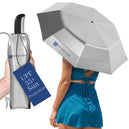
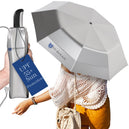
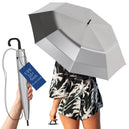
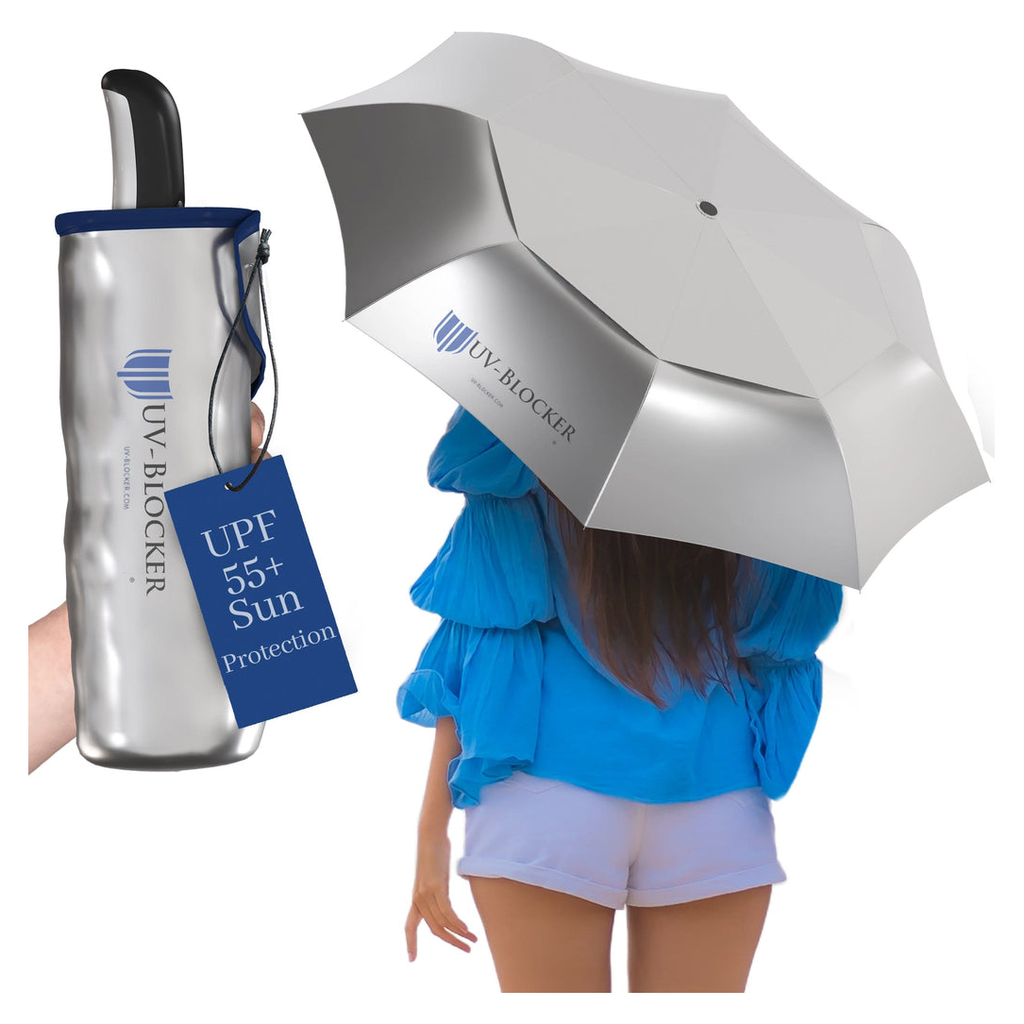
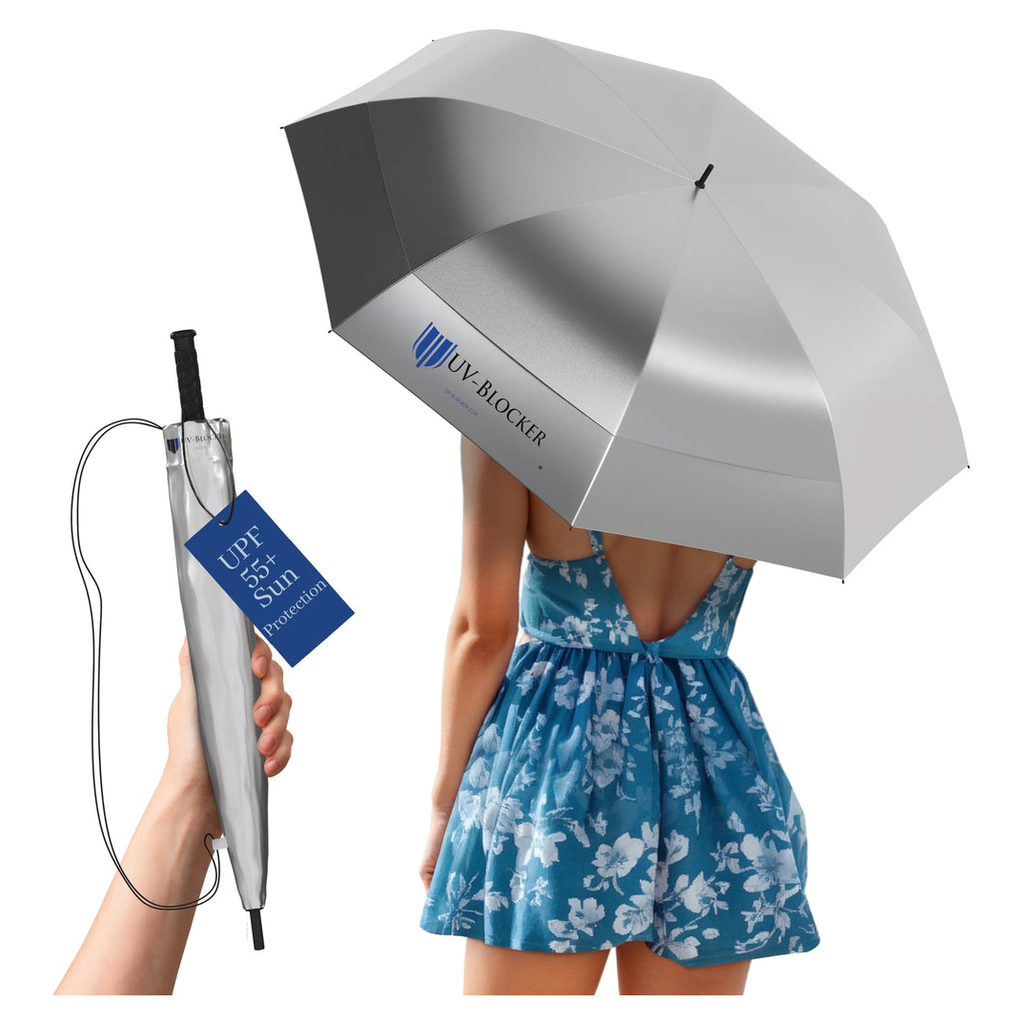
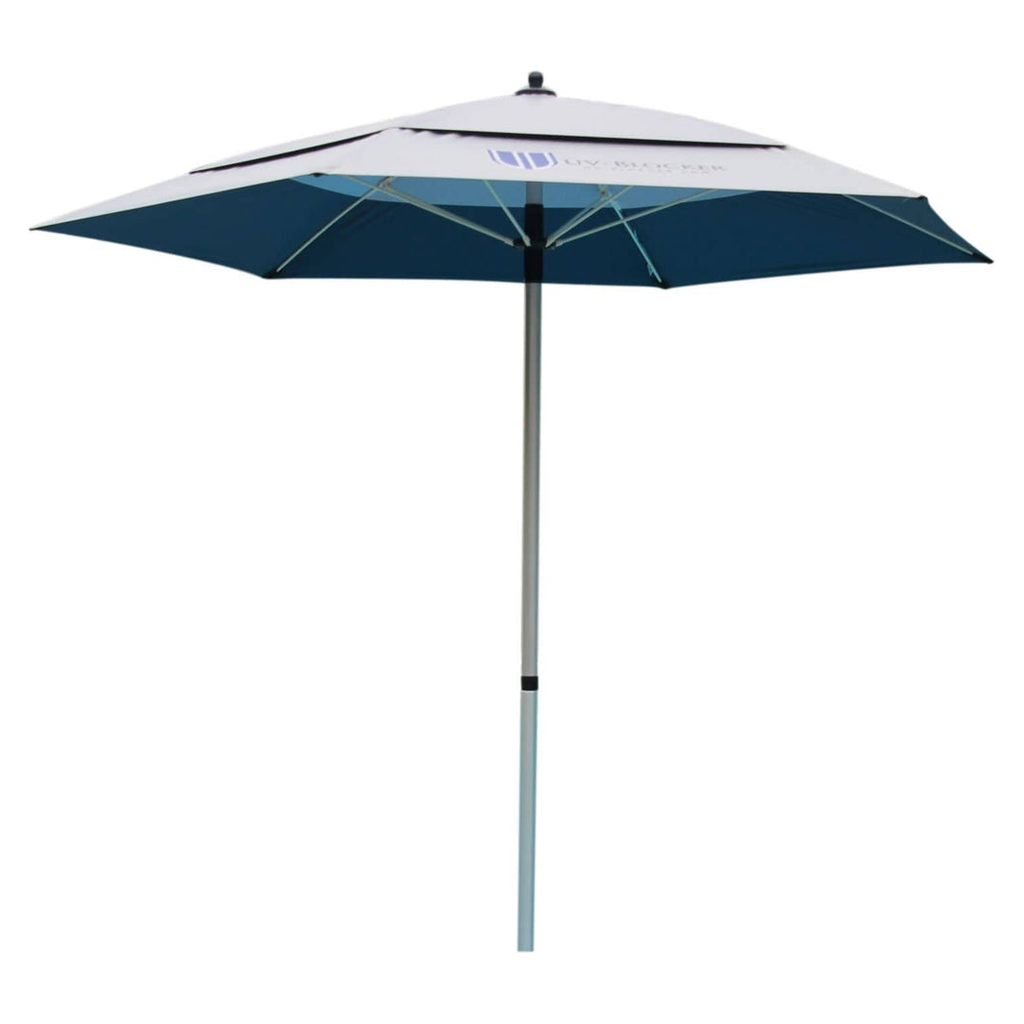
The UV-Blocker ServiceShield is a pole-mounted shade umbrella with a magnetic base that attaches directly to HVAC rooftop units, providing hands-free UPF 50+ shade at the work zone.
The magnetic base clamps directly to the metal casing of rooftop units (RTUs) without drilling, without permanent modification, and without a separate weighted base on a membrane roof surface — relevant for commercial properties with roof warranty requirements that prohibit penetrations.
The canopy carries UPF 50+ Solarteck® fabric, independently tested to block 100% of UV-B radiation and 99.97% of UV-A radiation under AATCC TM183-2020 standards. These are the tested values safety managers can document in a written heat illness prevention plan.
The Solarteck® fabric's silver reflective outer layer bounces UV radiation and infrared heat away from the work zone, creating a measured 15°F temperature reduction underneath the canopy versus direct sun. For a worker in 105°F conditions on a 160°F roof surface, that recovery benefit during a standing break reduces the core temp load that drives heat illness risk.
The double-canopy vented mesh addresses rooftop wind. Exposed flat rooftops generate unpredictable gusts, and a solid-canopy umbrella becomes a sail. The vented mesh allows wind to pass through rather than build pressure, preventing inversion without sacrificing UV block.
Because the unit mounts to the RTU and stays in position, workers' hands remain completely free for tool use, harness attachment, and equipment handling. The shade stays at the workstation without requiring any worker action to maintain it. For mounting configurations and RTU compatibility details, the UV-Blocker magnetic base guide covers installation in full.
From a compliance standpoint, a mounted unit at the RTU work zone provides the physical shade structure OSHA inspectors look for. Pair it with a ground-level air-conditioned rest location — a vehicle or trailer — for extended breaks, and the two-tier system satisfies both the brief recovery and full rest-break requirements OSHA evaluates.
For a broader comparison of portable shade options, see the HVAC rooftop shade options guide.
What Should a Heat-Stress Safety Plan Include for Roofing and HVAC Crews?
A compliant heat-stress plan for rooftop crews requires written procedures, acclimatization schedules, shade infrastructure, hydration stations, emergency response protocols, and documented crew training.
OSHA's 2024 NPRM would require a written plan for high-risk employers. Even under the current General Duty Clause, written plans serve as evidence of good-faith compliance during inspections and provide a liability shield in workers' compensation disputes.
Key components:
- Written procedures — Heat index thresholds that trigger each action level, shade deployment locations by jobsite, break schedules, and named supervisor responsibilities.
- Acclimatization schedule — 50% of normal heat exposure in days 1–3, 75% in days 4–7, full exposure from day 8 onward. Applies regardless of a worker's prior outdoor experience.
- Hydration protocol — 8 oz of cool water every 15–20 minutes per worker. Electrolyte supplements for shifts exceeding two hours. Employer-provided and worksite-located.
- Shade infrastructure — Documented shade locations at each active work zone, confirming no worker is more than 200 feet from shade at any point during the shift.
- Emergency response — Crew leads trained in heat stroke recognition: confusion or slurred speech, cessation of sweating despite high body temperature, core temp above 104°F. Protocol: remove from heat, call 911, initiate rapid cooling (cold water immersion or ice packs to neck, armpits, groin) while waiting for EMS.
- Documentation — Daily heat index readings at shift start and midday, shade availability checks before work begins, and break compliance noted by crew leads. These records are the primary evidence OSHA inspectors request in heat-related investigations.
For heat safety strategies specific to rooftop environments, see the guide on how to stay cool on a roof. The sun protection for outdoor workers guide covers the broader trade-by-trade framework for companies managing multiple crew types.
Frequently Asked Questions About Sun Protection for HVAC and Roofing Crews
Safety managers and crew leads frequently ask these questions when building compliant heat protection programs for rooftop trades.
What PPE is required for UV protection on rooftops?
OSHA does not mandate specific UV-protective PPE, but employers have a General Duty obligation to protect workers from recognized UV hazards including skin cancer risk.
In practice, this means providing structural shade access, encouraging UPF-rated garments where feasible, and documenting crew training on UV risk. Sunscreen provision alone does not fulfill the shade requirement under OSHA's structural interpretation.
Does OSHA require shade for roofing crews in all states?
OSHA's General Duty Clause applies nationally; the 2024 proposed heat rule would codify shade requirements across all states, but California, Washington, and Oregon already have specific state heat standards with explicit shade mandates.
Arizona and Florida fall under federal OSHA jurisdiction. The proposed rule's 200-foot shade access standard is the current planning benchmark. Building a compliant program against the proposed standard now avoids retrofitting when the rule finalizes.
How often should rooftop crews take shade breaks in summer?
At heat index levels above 103°F — common in Arizona and Florida from June through September — crews should rotate out of direct sun every 20 minutes, with 20-minute recovery breaks in shade.
Acclimatized workers tolerate heat better, but break frequency should not drop below one 10-minute break per hour in extreme heat regardless of acclimatization status. Crew leads are responsible for enforcing the schedule even when workers resist.
Can a UV umbrella satisfy OSHA's shade requirement for rooftop workers?
A pole-mounted umbrella attached at the workstation can satisfy OSHA's structural shade requirement if it provides measurable relief from both direct sun and radiant heat from hot roof surfaces.
Handheld personal umbrellas do not satisfy the requirement because they prevent workers from using their hands and are not consistently maintained during the shift. A mounted unit that stays in position at the RTU work zone is the practical compliance solution.
What is the heat index threshold that triggers mandatory shade access?
OSHA guidance recommends mandatory shade access when the heat index exceeds 91°F; above 103°F, shade access becomes a critical control with mandated rest schedules and monitoring requirements.
In Phoenix and Miami, heat index levels above 103°F are standard from late May through September. Safety managers in these markets should default to the high-risk protocol for the full summer season.
Conclusion
Sun protection for HVAC technicians and roofers demands structural employer action, not behavioral reminders.
OSHA's water-rest-shade framework makes employer-provided structural shade a legal obligation. Heat inspections have increased more than tenfold in recent years, and rooftops with no natural shade cannot meet the requirement without a physical structure at the work zone.
Key takeaways:
- Roofers carry a heat-death risk index of 6.93 and 43–77% higher skin cancer rates than the general population
- OSHA's General Duty Clause makes employer-provided structural shade a legal requirement, not a recommendation
- Hard hats, sunscreen, and verbal reminders do not satisfy the shade requirement on rooftops with no natural shade
- Pole-mounted workstation shade units close the compliance gap while keeping workers' hands free for trade work
- A compliant heat-stress plan requires written procedures, acclimatization, hydration, shade infrastructure, and documented training
The immediate action for safety managers: conduct a shade gap audit at each active rooftop jobsite this week. Walk each work zone and confirm whether shade is physically accessible within 200 feet. Where it is not, a mounted shade unit at the RTU provides the most practical path to structural compliance before peak-heat conditions arrive.
For shade solutions built for rooftop environments, see the UV-Blocker sun protection collection.
References: CPWR Heat Illness Data | OSHA Water. Rest. Shade. | OSHA NEP Update April 2026 | ScienceDirect State Heat Data | Skin Cancer Foundation Outdoor Workers | CDC Construction Worker Sun Protection | OSHA Heat NPRM
Real-World UV Exposure Data from HVAC and Roofing Job Sites
Industry surveys and occupational health studies reveal that HVAC technicians and roofers are among the highest UV-exposed occupational groups in the country — yet UV protection is rarely included in standard PPE requirements or safety training.
Measured UV Exposure on Rooftop Job Sites
A 2022 occupational health study published in the Journal of Occupational and Environmental Medicine measured actual UV doses for rooftop workers across six U.S. cities:
- Average daily UV dose: 185 SED (Standard Erythemal Dose) — equivalent to 12+ hours of midday sun exposure for fair-skinned workers
- Peak doses in Phoenix and Miami exceeded 300 SED on summer days
- Reflective roofing materials (white membrane, metal) increased UV exposure by 40–60% compared to asphalt surfaces
- Neck, ears, and forearms received the highest cumulative doses — areas rarely covered by standard hard hat and gloves
PPE Gap Analysis for Rooftop Workers
| Body Area | Standard PPE Coverage | UV Exposure Level | Recommended Addition |
|---|---|---|---|
| Top of head | Hard hat ✓ | Low | None needed |
| Face | Partial (hard hat brim) | MODERATE | Face shield or UV hat |
| Neck | None | VERY HIGH | UPF neck gaiter + shade |
| Forearms | None typically | HIGH | UPF sleeves or UPF shirt |
| Work zone shade | None | EXTREME | UV-Blocker ServiceShield |
The ServiceShield's magnetic base attaches directly to metal rooftop equipment (HVAC units, ductwork) without drilling, providing a stable shade station that moves with the work crew throughout the day.
Sun Safety in Australia
Australia has some of the highest UV radiation levels in the world, with the UV Index regularly reaching extreme levels (11 or above) in cities such as Sydney, Melbourne, Brisbane, Perth, and Adelaide for much of the year — including on overcast days. The Cancer Council Australia reports that approximately two in three Australians will be diagnosed with some form of skin cancer by age 70, making sun protection a national health priority.
Key resources and guidelines for Australian sun safety:
- SunSmart Program (Cancer Council Australia): The SunSmart UV Alert is broadcast daily and recommends sun protection whenever the UV Index reaches 3 or above. In most Australian cities, this threshold is met every day of the year, including winter months in northern regions.
- ARPANSA (Australian Radiation Protection and Nuclear Safety Agency): Provides real-time UV monitoring at stations across all states and territories. Australians can access current UV levels at arpansa.gov.au.
- Safe Work Australia — UV Radiation as an Occupational Hazard: Australian workplace health and safety legislation requires employers to assess and manage UV radiation exposure for outdoor workers. Physical shade, including umbrellas rated UPF 50+, is recognised as a primary engineering control under these regulations.
A UPF 50+ UV-blocking umbrella provides the consistent, continuous shade protection that is essential under Australia's intense sun. The UV-Blocker umbrella, with its patented Solarteck® reflective coating, blocks 99% of UV rays and reduces perceived temperature by up to 15°F — a meaningful advantage for outdoor activities in Australia's climate. It is the only umbrella of its kind approved by the Melanoma International Foundation.
Sun Safety in Canada
Canada experiences meaningful UV exposure throughout the year, with UV Index levels regularly reaching 8–10 or higher during summer months in cities such as Vancouver, Calgary, Toronto, and Ottawa. Health Canada and Environment and Climate Change Canada publish daily UV Index forecasts and recommend protective measures whenever the index exceeds 3 — a threshold reached on most clear days between May and August across the country.
Key resources for Canadian sun safety:
- Health Canada UV Index: Published daily via the Environment and Climate Change Canada weather portal (weather.gc.ca). Canadians can track UV levels by city and receive alerts when protection is recommended.
- Canadian Cancer Society: Recommends UPF 50+ clothing, hats, sunscreen, and shade-seeking as primary sun protection strategies. Physical UV barriers — such as UPF 50+ umbrellas — are emphasized for prolonged outdoor exposure.
- Canadian Dermatology Association: Endorses broad-spectrum sun protection strategies, including shade structures and UV-blocking accessories, especially for individuals with fair skin or a personal or family history of skin cancer.
For Canadians spending extended time outdoors — whether working, playing sports, or enjoying recreational activities — a UV-blocking umbrella rated UPF 50+ provides continuous, reapplication-free protection. The UV-Blocker umbrella, independently tested and approved by the Melanoma International Foundation, blocks 99% of UV rays and keeps users up to 15°F cooler — making it a practical and reliable companion for Canadian summers.
Key Takeaways
- Outdoor workers like Sun Protection for HVAC Technicians and Roofers typically accumulate 2–3× more UV exposure than indoor office workers.
- OSHA's General Duty Clause requires employers to protect workers from recognized hazards, including UV radiation.
- For workers who need freedom of movement, the most effective combination is: (1) UPF 50+ work shirts and pants, (2) wide-brim hard hat or sun-prote...
- Sunscreen should be reapplied every 2 hours, and immediately after heavy sweating or toweling off.
Frequently Asked Questions
What are the specific UV risks for Sun Protection for HVAC Technicians and Roofers?
Outdoor workers like Sun Protection for HVAC Technicians and Roofers typically accumulate 2–3× more UV exposure than indoor office workers. Chronic UV exposure increases melanoma and non-melanoma skin cancer risk significantly. OSHA recognizes UV radiation as a workplace hazard, and workers' compensation claims related to occupational UV exposure are rising. Proper sun protection is both a health and occupational safety requirement.
Does OSHA require sun protection for outdoor workers?
OSHA's General Duty Clause requires employers to protect workers from recognized hazards, including UV radiation. While no specific UV standard exists for most industries, OSHA guidance on heat illness prevention overlaps with UV protection. Several states have stronger outdoor worker heat and UV protection regulations. Employers should provide shade, schedule breaks, and supply sun protection equipment.
What sun protection equipment works best for active outdoor work?
For workers who need freedom of movement, the most effective combination is: (1) UPF 50+ work shirts and pants, (2) wide-brim hard hat or sun-protective hat, (3) SPF 50 water-resistant sunscreen on exposed skin, and (4) a portable clamp or magnetic-base UV umbrella that creates shade at a fixed workstation. UV-Blocker's ServiceShield umbrella was specifically designed for rooftop and outdoor workstation use.
How often should outdoor workers apply sunscreen during a shift?
Sunscreen should be reapplied every 2 hours, and immediately after heavy sweating or toweling off. Most outdoor workers underapply — dermatologists recommend 1 oz (shot glass amount) for full body coverage. Water-resistant SPF 50+ formulas last longer during sweating. Physical (mineral) sunscreens tend to be more stable under direct sun than chemical formulas.
What long-term skin damage should outdoor workers watch for?
Watch for actinic keratoses (rough, scaly patches), unusual moles or growths that change in size, shape, or color, and persistent sores that don't heal. Annual skin cancer screenings with a dermatologist are strongly recommended for outdoor workers with 10+ years of occupational sun exposure. Early detection dramatically improves outcomes.
Professional Sun Safety Protocol for Sun Protection for HVAC Technicians and Roofers
- Schedule intensive UV work (roof work, outdoor inspections) before 10am or after 4pm when UV index is lowest
- Use UV-blocking umbrella attachments at fixed workstations — they eliminate ambient UV exposure during breaks
- Establish a buddy system: coworkers check each other for missed sunscreen areas and early sunburn signs
- Keep sunscreen in the work vehicle or tool bag — accessibility increases compliance
- Document sun protection training in safety briefings — it creates legal compliance records and reinforces habits
- Consider UV-protective safety eyewear — eyes are often neglected in outdoor worker sun protection protocols
Key Takeaways
- Outdoor workers like Sun Protection for HVAC Technicians and Roofers typically accumulate 2–3× more UV exposure than indoor office workers.
- OSHA's General Duty Clause requires employers to protect workers from recognized hazards, including UV radiation.
- For workers who need freedom of movement, the most effective combination is: (1) UPF 50+ work shirts and pants, (2) wide-brim hard hat or sun-prote...
- Sunscreen should be reapplied every 2 hours, and immediately after heavy sweating or toweling off.
Frequently Asked Questions
What are the specific UV risks for Sun Protection for HVAC Technicians and Roofers?
Outdoor workers like Sun Protection for HVAC Technicians and Roofers typically accumulate 2–3× more UV exposure than indoor office workers. Chronic UV exposure increases melanoma and non-melanoma skin cancer risk significantly. OSHA recognizes UV radiation as a workplace hazard, and workers' compensation claims related to occupational UV exposure are rising. Proper sun protection is both a health and occupational safety requirement.
Does OSHA require sun protection for outdoor workers?
OSHA's General Duty Clause requires employers to protect workers from recognized hazards, including UV radiation. While no specific UV standard exists for most industries, OSHA guidance on heat illness prevention overlaps with UV protection. Several states have stronger outdoor worker heat and UV protection regulations. Employers should provide shade, schedule breaks, and supply sun protection equipment.
What sun protection equipment works best for active outdoor work?
For workers who need freedom of movement, the most effective combination is: (1) UPF 50+ work shirts and pants, (2) wide-brim hard hat or sun-protective hat, (3) SPF 50 water-resistant sunscreen on exposed skin, and (4) a portable clamp or magnetic-base UV umbrella that creates shade at a fixed workstation. UV-Blocker's ServiceShield umbrella was specifically designed for rooftop and outdoor workstation use.
How often should outdoor workers apply sunscreen during a shift?
Sunscreen should be reapplied every 2 hours, and immediately after heavy sweating or toweling off. Most outdoor workers underapply — dermatologists recommend 1 oz (shot glass amount) for full body coverage. Water-resistant SPF 50+ formulas last longer during sweating. Physical (mineral) sunscreens tend to be more stable under direct sun than chemical formulas.
What long-term skin damage should outdoor workers watch for?
Watch for actinic keratoses (rough, scaly patches), unusual moles or growths that change in size, shape, or color, and persistent sores that don't heal. Annual skin cancer screenings with a dermatologist are strongly recommended for outdoor workers with 10+ years of occupational sun exposure. Early detection dramatically improves outcomes.
Professional Sun Safety Protocol for Sun Protection for HVAC Technicians and Roofers
- Schedule intensive UV work (roof work, outdoor inspections) before 10am or after 4pm when UV index is lowest
- Use UV-blocking umbrella attachments at fixed workstations — they eliminate ambient UV exposure during breaks
- Establish a buddy system: coworkers check each other for missed sunscreen areas and early sunburn signs
- Keep sunscreen in the work vehicle or tool bag — accessibility increases compliance
- Document sun protection training in safety briefings — it creates legal compliance records and reinforces habits
- Consider UV-protective safety eyewear — eyes are often neglected in outdoor worker sun protection protocols
Key Takeaways
- Outdoor workers like Sun Protection for HVAC Technicians and Roofers typically accumulate 2–3× more UV exposure than indoor office workers.
- OSHA's General Duty Clause requires employers to protect workers from recognized hazards, including UV radiation.
- For workers who need freedom of movement, the most effective combination is: (1) UPF 50+ work shirts and pants, (2) wide-brim hard hat or sun-prote...
- Sunscreen should be reapplied every 2 hours, and immediately after heavy sweating or toweling off.
Frequently Asked Questions
What are the specific UV risks for Sun Protection for HVAC Technicians and Roofers?
Outdoor workers like Sun Protection for HVAC Technicians and Roofers typically accumulate 2–3× more UV exposure than indoor office workers. Chronic UV exposure increases melanoma and non-melanoma skin cancer risk significantly. OSHA recognizes UV radiation as a workplace hazard, and workers' compensation claims related to occupational UV exposure are rising. Proper sun protection is both a health and occupational safety requirement.
Does OSHA require sun protection for outdoor workers?
OSHA's General Duty Clause requires employers to protect workers from recognized hazards, including UV radiation. While no specific UV standard exists for most industries, OSHA guidance on heat illness prevention overlaps with UV protection. Several states have stronger outdoor worker heat and UV protection regulations. Employers should provide shade, schedule breaks, and supply sun protection equipment.
What sun protection equipment works best for active outdoor work?
For workers who need freedom of movement, the most effective combination is: (1) UPF 50+ work shirts and pants, (2) wide-brim hard hat or sun-protective hat, (3) SPF 50 water-resistant sunscreen on exposed skin, and (4) a portable clamp or magnetic-base UV umbrella that creates shade at a fixed workstation. UV-Blocker's ServiceShield umbrella was specifically designed for rooftop and outdoor workstation use.
How often should outdoor workers apply sunscreen during a shift?
Sunscreen should be reapplied every 2 hours, and immediately after heavy sweating or toweling off. Most outdoor workers underapply — dermatologists recommend 1 oz (shot glass amount) for full body coverage. Water-resistant SPF 50+ formulas last longer during sweating. Physical (mineral) sunscreens tend to be more stable under direct sun than chemical formulas.
What long-term skin damage should outdoor workers watch for?
Watch for actinic keratoses (rough, scaly patches), unusual moles or growths that change in size, shape, or color, and persistent sores that don't heal. Annual skin cancer screenings with a dermatologist are strongly recommended for outdoor workers with 10+ years of occupational sun exposure. Early detection dramatically improves outcomes.
Professional Sun Safety Protocol for Sun Protection for HVAC Technicians and Roofers
- Schedule intensive UV work (roof work, outdoor inspections) before 10am or after 4pm when UV index is lowest
- Use UV-blocking umbrella attachments at fixed workstations — they eliminate ambient UV exposure during breaks
- Establish a buddy system: coworkers check each other for missed sunscreen areas and early sunburn signs
- Keep sunscreen in the work vehicle or tool bag — accessibility increases compliance
- Document sun protection training in safety briefings — it creates legal compliance records and reinforces habits
- Consider UV-protective safety eyewear — eyes are often neglected in outdoor worker sun protection protocols