

Five blistering sunburns before age 20 doubles lifetime melanoma risk. A single summer of weekend kayaking can deliver that cumulative dose faster than most paddlers realize.
The problem isn't just overhead sun. Water reflects 10-25% of ultraviolet radiation back upward, attacking skin from angles that hats, clothing, and sunscreen can't fully cover. With over 20 million kayakers and 4.13 million stand-up paddleboarders in the US alone, millions of people spend hours on open water with zero shade.
This guide breaks sun protection for kayaking into three zones matched to how paddlers actually spend their time: active movement, stationary fishing, and shore time. Each zone requires a different strategy.
Why Do Kayakers Face Higher UV Exposure Than Other Outdoor Athletes?
Kayakers receive UV from above and below simultaneously. Water reflects 10-25% of ultraviolet radiation back onto skin that clothing and sunscreen miss.
Unlike trail runners who pass through tree canopy (forests block 50-90% of UV) or cyclists who get intermittent shade from buildings, paddlers sit on a flat reflective surface with nothing between them and the sky. The exposure is constant and bidirectional.
Fresh water reflects 5-10% of UV radiation. Open saltwater pushes that to 10-25%, according to the World Health Organization. That reflected dose hits skin from below: under the chin, inside the nostrils, beneath hat brims where sunscreen is rarely applied.
Then there's duration. A recreational kayak outing averages 2-4 hours. Fishing trips run 4-6 hours. UV dose equals intensity multiplied by time, making extended outings exponentially more dangerous than a quick walk outside.
Sunscreen compounds the issue. The FDA's maximum water-resistance claim is 80 minutes. Paddle grip friction, spray, and immersion strip protection even faster. After 80 minutes on the water, exposed skin is essentially unprotected.
Five blistering sunburns doubles melanoma risk according to the Skin Cancer Foundation. Weekend kayakers can accumulate dangerous exposure across a single season without realizing it.
What Are the Most Vulnerable Burn Zones for Paddlers?
Paddlers burn most on the backs of hands, tops of feet, under the chin from water reflection, lower back during paddle strokes, and the scalp part line.

Backs of hands. The grip position exposes the hand dorsum to direct overhead UV for the entire paddle session. Sunscreen wipes off within minutes from paddle shaft friction. UPF-rated paddling gloves are the only reliable fix.
Tops of feet. Sit-on-top kayaks and stand-up paddleboards leave feet fully exposed. Even mesh-drainage water shoes allow UV through the openings. Closed-upper neoprene shoes block both water and radiation.
Under-chin and under-nose. This is the paddler-specific burn that surprises everyone. Water reflects UV upward directly into areas a hat brim can't shade. A UV buff or gaiter pulled up over the chin solves this — and it's the only reliable option.
Lower back. The forward paddle stroke on a SUP lifts shirts and exposes a strip of lower back skin. Hours of repetitive motion means this gap opens thousands of times per outing. A long rashguard that stays tucked eliminates the problem.
Ears and scalp part line. Thin skin, poor blood flow, and consistently missed during sunscreen application. Wide-brim hats with ear coverage flaps or a buff worn under a cap address both zones.
What Should Kayakers Wear for Active Paddling Protection?
Active paddlers need UPF 50+ long-sleeve rashguards, wide-brim hats with chin straps, UV buffs, and paddling gloves. These wearables stay effective regardless of water contact.
Fabric-based protection doesn't degrade in water. A UPF 50+ rashguard blocks 98% of UV radiation whether it's soaked or dry. That makes it fundamentally more reliable than sunscreen for multi-hour water exposure.
Long-sleeve rashguard (UPF 50+). Quick-dry, form-fitting, and purpose-built for water sports. Covers the torso, arms, and wrists without restricting paddle motion. For more on sun protection clothing, look for garments tested to AATCC TM183 standards.
Wide-brim hat with chin strap. A 3-inch minimum brim covers face, ears, and the back of the neck. The chin strap isn't optional. Wind and paddle movement dislodge unsecured hats constantly. Legionnaire-style flaps provide additional neck coverage.
UV buff or gaiter. Addresses the reflected-UV-from-below problem directly. Pull it up over the chin and lower face for protection from water-reflected rays hitting upward. Lightweight, breathable, and doesn't interfere with paddling.
Paddling gloves (UPF-rated). The backs of hands are the number-one forgotten zone for kayakers. Fingerless models maintain paddle grip feel while covering the entire hand dorsum.
Closed-upper water shoes. Protects foot tops on sit-on-top kayaks and SUP. Neoprene blocks UV while allowing water drainage through sole ports rather than mesh uppers.
How Can Kayak Fishers Add Shade Without Leaving the Water?
Fishing kayakers can mount a UV umbrella in a standard rod holder, creating full upper-body shade during stationary fishing without modifying the kayak.
Bimini tops work on motorboats but don't fit solo kayaks. They're too heavy, too wide, and they interfere with casting. For years, kayak anglers had no realistic shade option. That's changed.
Rod holder umbrella mounts are already a recognized accessory category. Brands like TACO Marine and Scotty sell dedicated mounting hardware for $80-$120+. The concept is proven: kayak fishers already mount rod holders for electronics, flag poles, and camera arms. A UV umbrella is the logical next addition.
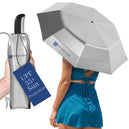
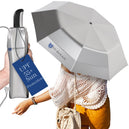
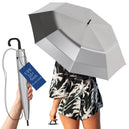
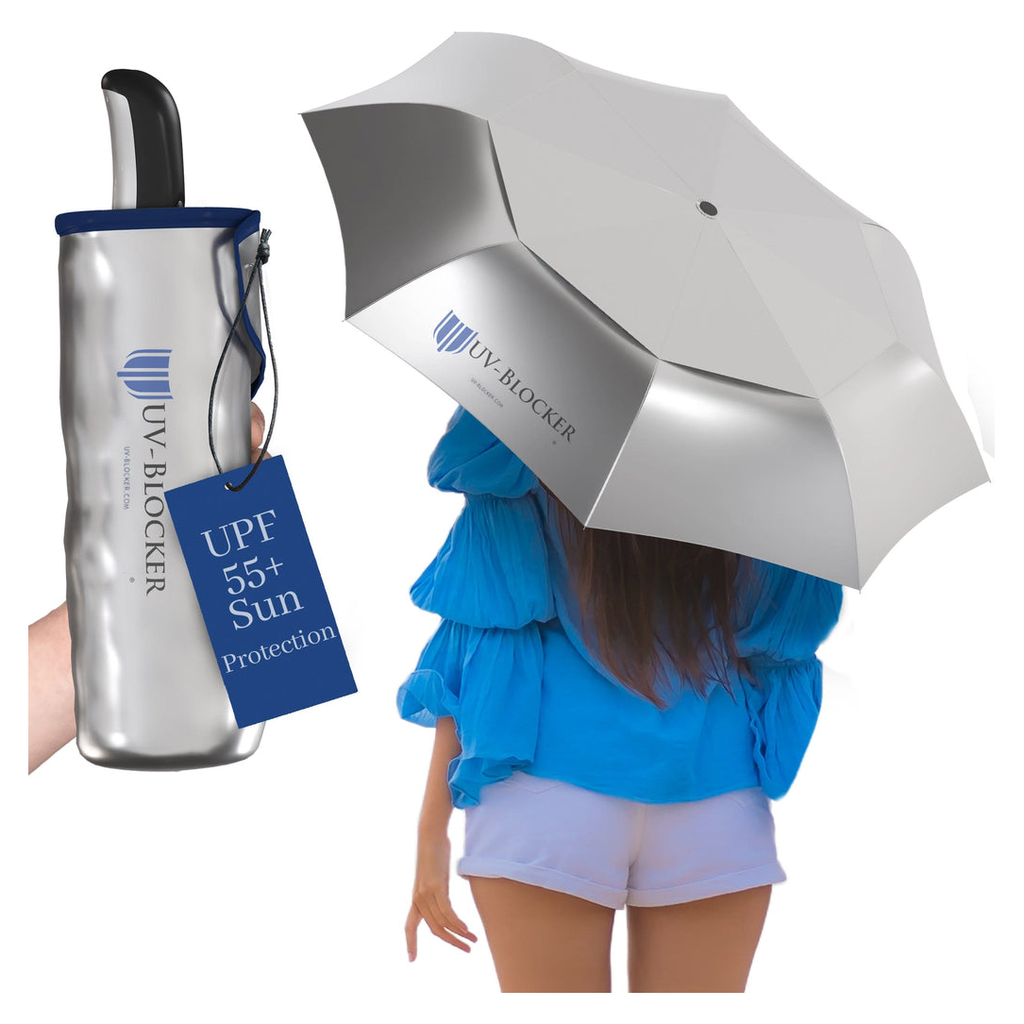
The UV-Blocker Sports Umbrella Holder fits standard rod holder diameters and positions a UPF 50+ umbrella directly over the angler. The Solarteck fabric blocks 99% of UV rays while creating a cooling zone underneath (up to 15 degrees cooler than direct sun). On a stationary kayak with minimal air movement, that temperature drop matters.
When mounted shade works: anchored fishing, slow drift fishing, bank fishing from a kayak, waiting for bites with paddle stowed. Anytime the kayak is stationary or moving slowly enough that wind load on the canopy is manageable.
When it doesn't: active paddling, fast-current navigation, high winds. The umbrella stays stowed during these conditions. This is strictly a stationary shade solution.
For related water-based fishing protection strategies, see sun protection for fishing and sun protection for boating.
How Do You Set Up a Sun-Protected Shore Base Camp?
A large beach umbrella at the launch point provides shade for gear loading, rest breaks, and post-paddle recovery. That covers the 30-60 minutes most paddlers spend ashore.
Most kayakers spend 15-20 minutes at the launch site loading gear, another 15-20 minutes rigging, and 15-30 minutes post-paddle cooling down and loading the vehicle. That's potentially an hour of sun exposure that doesn't feel like "kayaking" but still counts toward daily UV dose.
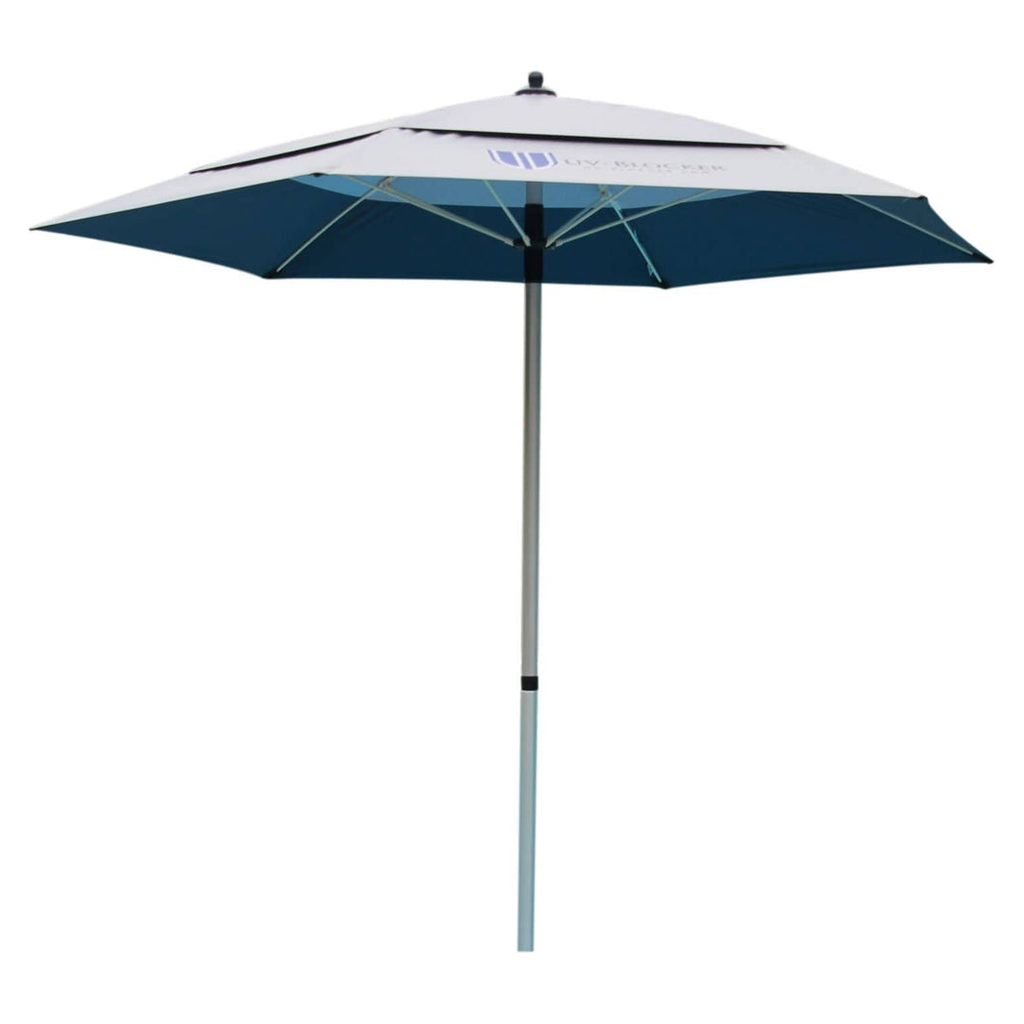
Launch site setup. A 7.5-foot beach umbrella anchored at the put-in point creates a staging zone for the group. Gear stays cooler, sunscreen application happens in shade (where thoroughness improves), and there's a recovery station waiting on return.
Pre-paddle sunscreen zone. Applying SPF 50+ sunscreen 30 minutes before launch allows proper skin bonding. Doing this in shade means standing still long enough for full coverage (something that rarely happens when already on the water).
Post-paddle shade. After 3-4 hours on water, skin has zero residual sunscreen protection. Immediately returning to shade stops UV accumulation during the vulnerable window between landing and reaching a vehicle or building.
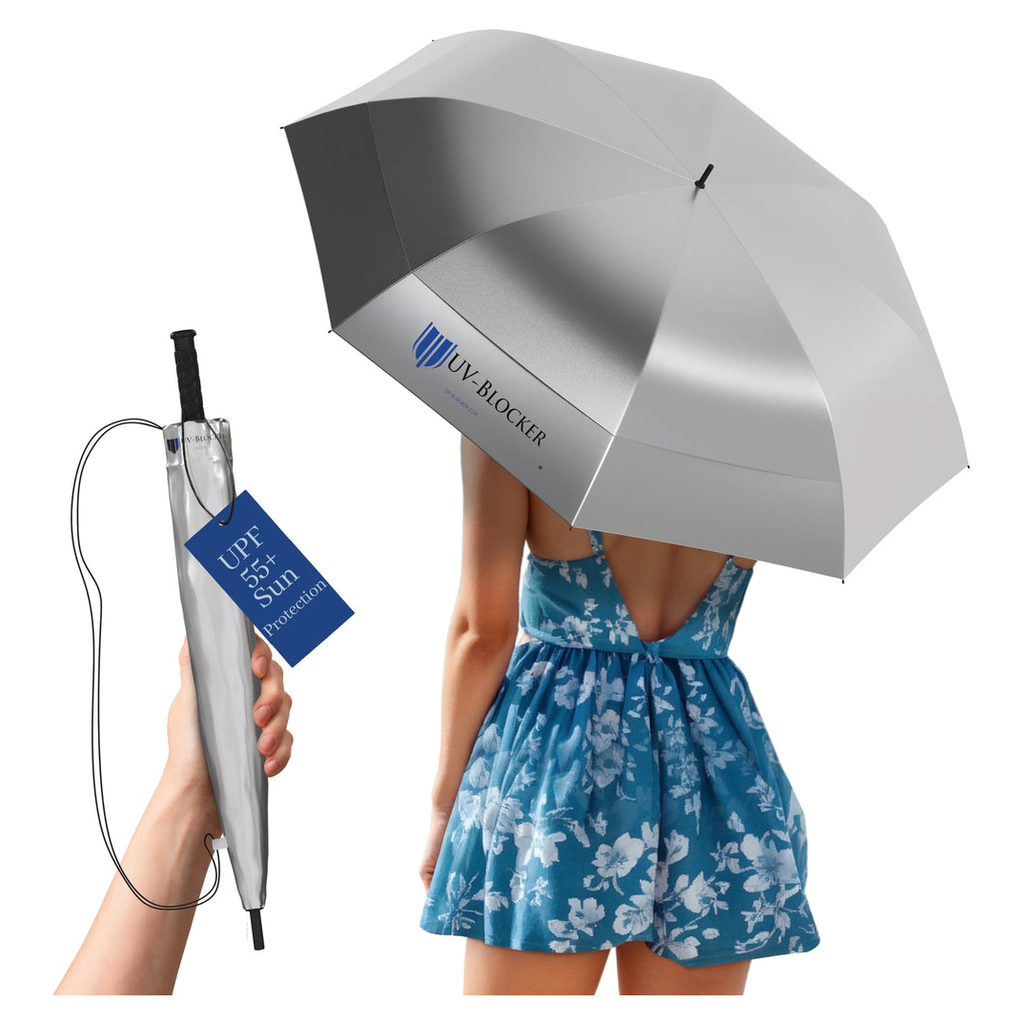
Parking lot staging. Loading a kayak onto a roof rack takes 15-20 minutes of direct overhead sun. A Compact UV Umbrella provides quick-deploy portable shade during this often-forgotten exposure window. At 11.5 inches folded, it fits in a dry bag.
What Sunscreen Strategy Works Best for Kayakers?
Kayakers should apply SPF 50+ broad-spectrum sunscreen 30 minutes before launching, use reef-safe mineral formulas, and reapply every 80 minutes or after each swim.
Sunscreen remains important, but it's the third layer of protection, not the foundation. Physical shade (umbrellas) and fabric (UPF clothing) don't wash off. Sunscreen does.
Pre-launch timing. Apply in shade, 30 minutes before water contact. This allows the formula to bond with skin before paddle friction, spray, and waves begin stripping it. Applying at the water's edge while already wet dramatically reduces effectiveness.
Reef-safe formulas. Zinc oxide and titanium dioxide (mineral sunscreens) avoid oxybenzone and octinoxate, chemicals banned in Hawaii, Key West, US Virgin Islands, and Palau. Paddlers in sensitive waterways should check local regulations. Even where not mandated, mineral formulas resist water slightly better than chemical alternatives.
Reapplication reality. FDA rules cap water-resistance claims at 80 minutes. Paddle friction on hands, life jacket rubbing on shoulders, and splash zones on the face degrade coverage faster than pool swimming does. Set a watch alarm. Even on cloudy days, up to 80% of UV penetrates cloud cover.
Why shade supplements sunscreen — not the reverse. Sunscreen degrades with time, water, and friction. An umbrella mounted in a rod holder or positioned at shore provides constant protection that doesn't need reapplication. Build the protection strategy around shade and clothing first, then add sunscreen for remaining exposed areas.
Kayak Type UV Exposure Comparison
Sit-on-top kayaks and stand-up paddleboards expose the most skin, while sit-inside touring kayaks protect legs but leave the upper body fully exposed to reflected UV.
The right protection strategy depends on kayak type, session duration, and whether the paddler is moving or stationary.
| Kayak Type | UV Exposure Level | Key Vulnerable Zones | Best Shade Solution | Essential Wearables |
|---|---|---|---|---|
| Recreational (sit-on-top) | Very High | Full body, feet, hands | Umbrella in rod holder (if stationary) | Rashguard, hat, water shoes |
| Touring (sit-inside) | High | Upper body, hands, face | Shore umbrella for breaks | Rashguard, hat, gloves |
| Fishing kayak | Extreme (long duration) | All zones; stationary = constant angle | Sports Umbrella Holder in rod holder | Full coverage + mounted shade |
| Stand-up paddleboard (SUP) | Very High | Full body + lower back, feet | Shore umbrella only | Full rashguard, leggings, hat |
| Canoe | High | Upper body, hands | Umbrella clamp possible on seats | Rashguard, hat, gloves |

Fishing kayaks represent the unique intersection of extreme duration (4-6 hours), stationary positioning, and existing rod holder infrastructure. That combination makes them the only kayak type where mounted shade is both practical and effective during use.
Frequently Asked Questions About Sun Protection for Kayaking
These are the most common questions paddlers ask about UV protection on the water, answered with sport-specific context.
Can I use an umbrella while kayaking?
Only while stationary. Fishing kayakers can mount an umbrella in a rod holder for overhead shade. Using an umbrella while actively paddling is unsafe because it compromises balance, restricts paddle movement, and catches wind dangerously.
When anchored or drifting slowly in a fishing kayak with the paddle stowed, a mounted umbrella provides effective full upper-body shade without any handling issues.
How do I protect my hands while paddling?
UPF-rated paddling gloves protect the backs of hands (the most sunburned zone for kayakers) without sacrificing grip on the paddle shaft.
Fingerless models cover the hand dorsum while leaving fingertips free for tackle, snaps, and phone screens. Reapplying sunscreen to hands mid-paddle is nearly impossible with wet grips, making gloves the only lasting solution.
What SPF should I use for kayaking?
SPF 50+ broad-spectrum, water-resistant (80 minutes) sunscreen applied 30 minutes before launching. Reapply every 80 minutes maximum, sooner if swimming or heavy splashing occurs.
Mineral formulas (zinc oxide) resist water slightly better than chemical filters and avoid the reef-toxicity concerns relevant to paddlers in marine environments.
Do sit-on-top kayaks have more UV exposure than sit-inside?
Yes. Sit-on-top kayaks expose legs, feet, and the entire lower body, increasing total UV-exposed skin area by roughly 40% compared to sit-inside models where the cockpit partially shades the legs.
Neither type protects the upper body, but sit-on-top paddlers need water shoes and either leggings or heavy sunscreen application below the waist.
How long can I kayak without getting sunburned?
Unprotected fair skin can burn in 15-30 minutes on open water at midday. Water reflection effectively adds 10-25% to the UV index experienced on land. A UV Index 8 day on shore becomes 9-10 on water.
Burn threshold depends on skin type (Fitzpatrick scale I-II burns fastest), latitude, time of day, and altitude. Paddling before 10am or after 4pm significantly reduces UV intensity while often providing better fishing conditions.
Conclusion
Sun protection for kayaking requires a layered approach matched to three distinct activity states:
- Water reflection doubles the problem. The 10-25% UV bouncing off the surface creates burn zones (under chin, feet, hands) that single-strategy protection can't cover.
- Active paddling demands fabric. UPF 50+ rashguards, wide-brim hats, gloves, and water shoes provide protection that doesn't wash off during hours of movement and spray.
- Stationary fishing makes shade possible. A UV umbrella mounted in a standard rod holder creates the only realistic overhead protection available on a solo kayak, and it's compatible with existing hardware.
- Shore time matters. The 30-60 minutes spent loading, launching, and recovering adds UV dose that a beach umbrella at the put-in point eliminates entirely.
- Sunscreen is the supplement, not the foundation. It degrades in 80 minutes maximum. Build the strategy around shade and fabric first.
Before the next paddle, check whether the fishing kayak's rod holders can accept an umbrella mount. That single addition transforms a zero-shade cockpit into full upper-body coverage during the longest-exposure phase of any trip.
Explore the Sports Umbrella Holder for rod-holder-compatible shade that blocks 99% of UV rays while keeping temperatures up to 15 degrees cooler underneath.
The Physics of Water UV Reflection in Kayaking
Water UV reflection is one of the most underestimated factors in paddling sun exposure — and it's the primary reason kayakers get burned in unexpected places despite wearing sunscreen on the obvious zones.
Open water reflects 10 to 25 percent of UV radiation depending on the angle of the sun, water surface conditions, and water clarity. This reflected UV comes from below the horizon — a direction that standard sun protection (hats, overhead shade, sunscreen on top surfaces) doesn't naturally address. Reflected UV strikes the chin, under-nose, neck, and lower face from an angle below eye level. It enters the sides and bottom of sunglasses that standard frames leave open. It reaches the inner forearms and lower wrists where sunscreen application is commonly incomplete.
Practical implications for kayakers:
- Apply sunscreen under the chin and lower face explicitly. This area receives reflected UV at a near-direct angle during flatwater paddling. Most people apply sunscreen to the nose and cheeks but miss the chin and underside of the jaw.
- Wear wrap-around UV sunglasses with side protection. Peripheral UV enters through the sides of standard sunglass frames. Wrap-around frames or polarized sport glasses with broad side coverage block these reflected angles. Polarized lenses also reduce water glare, improving visibility for navigation.
- Check sunscreen on the forearms and hands. Paddles require constant forearm and hand exposure. Apply sunscreen to both surfaces of the forearm comprehensively.
How Kayak Type Changes UV Exposure
Sit-on-top kayaks, sit-inside kayaks, sea kayaks, and canoes each create meaningfully different UV exposure profiles based on body position, freeboard height, and the amount of direct water contact.
| Kayak Type | Body Position | Reflected UV Risk | Water Contact | Primary Protection Priority |
|---|---|---|---|---|
| Sit-on-top recreational kayak | Elevated, exposed | High (low freeboard) | Regular splash exposure | Full-body water-resistant SPF + UPF clothing |
| Sit-inside touring kayak | Low seating, legs covered by deck | Moderate (deck reduces leg exposure) | Minimal in calm conditions | Upper body focus; face, arms, neck |
| Sea kayak | Low cockpit, long exposure periods | High (extended on open water) | Spray and splash regular | Maximum water-resistance sunscreen; UPF paddling top |
| Canoe (open) | Kneeling or seated, wide exposure | High (open boat, closer to water) | Regular contact at gunwales | Full upper and lower body coverage |
| Stand-up paddleboard | Standing, maximum exposure | Very High (full body overhead + reflected) | Falls and water contact regular | UPF rash guard, sunscreen refresh every 60 min |
Sit-on-top kayakers face the most comprehensive UV exposure because the low, open design places the body close to the water surface while leaving legs and torso fully exposed to overhead UV. Sea kayaking expeditions amplify risk through duration — full-day trips exceeding 6 hours on open water with no available shade represent one of the highest cumulative UV doses available in recreational sports.
Kayaking-Specific Sun Protection Products: What Actually Works on the Water
Standard consumer sun protection products often fail in kayaking conditions because of water contact, sweat, and the physical demands of paddling. Here's what actually performs on the water:
Sunscreen: Use water-resistant (80-minute rating) SPF 50+ mineral or sport formulas. Standard SPF 30 lotion designed for casual outdoor use washes off within 30 to 40 minutes of paddling when sweat and water spray are constant. Apply 20 minutes before launch, and set an alarm for 60-minute reapplication during paddling.
UPF paddling tops and rash guards: Long-sleeve UPF 50+ rash guards eliminate sunscreen dependency on arms and torso entirely. Performance synthetic fabrics maintain UPF 50+ ratings even when wet, unlike cotton which loses UV protection when saturated. Look for flat-seam construction to prevent chafing during extended paddling strokes.
Portable UV umbrella for rest breaks: The UV-Blocker Compact Umbrella packs to 12 inches — fits in a day hatch or dry bag — and deploys instantly during water breaks, lunch stops, or while anchored. For paddlers who take regular rest breaks on shore or in sheltered coves, the umbrella provides full UPF 50+ overhead protection without any chemical application. The Solarteck silver coating keeps temperatures up to 15°F cooler beneath the canopy, making shoreside breaks more comfortable in summer heat.
For sea kayaking expeditions involving consecutive days on the water, consistent layering of all three protection categories — water-resistant sunscreen, UPF clothing, and shade tools — provides the most durable long-term protection. Single-method approaches fail over multi-day paddling trips when any one category is compromised by water, sweat, or missed reapplication.
Water-Specific UV Hazards for Kayakers
Kayaking creates a unique UV exposure environment that differs significantly from most outdoor activities. Understanding these specific hazards is critical for building an effective protection strategy.
Water Surface UV Reflection
Water reflects UV radiation at rates that vary with sun angle and water condition:
- Calm water (flat light conditions): UV reflection 5–10% of incident radiation
- Choppy/rippled water: UV reflection 15–25% of incident radiation (variable angles of incidence create scattered reflection)
- Direct overhead sun on flat water: reflection <5%, but total intensity is highest at peak UV hours
The practical effect: during a 4-hour paddle on choppy open water, you receive direct UV plus reflected UV from below, creating exposure from two angles simultaneously. Sunscreen on the underside of your chin, below your nose, and on the bottom of your forearms (resting position) is frequently overlooked but critical in kayaking conditions.
Water-Depleted Sunscreen
Even water-resistant sunscreen (tested at 40 or 80 minutes of water immersion) degrades faster during kayaking due to:
- Water spray on skin during paddling
- Perspiration from paddling exertion in summer heat
- Hand-to-face contact when adjusting gear or drinking
- Hull spray from bow wave in touring kayaks
Reapplication protocol for kayaking: Regardless of water resistance rating, reapply sunscreen every 60–90 minutes during active paddling. Carry a dedicated dry-bag with sunscreen, lip balm (SPF 30+), and spare sunglasses specifically for on-water reapplication.
Altitude and Latitude Effects on Paddlers
Sea-level coastal kayaking, river kayaking at altitude, and lake kayaking at high latitude each present different UV intensity profiles:
- Sea-level coastal: UV amplified by water reflection; salt spray removes sunscreen faster
- High-altitude rivers (1000m+): UV intensity increases ~10% per 1000m elevation; mountain rivers often have white/light-coloured rocky bottoms with additional reflection
- High-latitude lakes: Longer paddling days in summer (extended daylight); UV index may be lower per hour but total daily exposure is greater due to duration
The Kayaking-Specific UV Protection System
Effective kayaking sun protection works in layers. Unlike activities where you can duck indoors, open-water paddling commits you to UV exposure for the duration of the trip.
- Base layer: Broad-spectrum SPF 50+ mineral sunscreen applied 30 minutes before launch; include ears, back of neck, underneath chin, and back of hands
- Clothing layer: Long-sleeve UPF 50+ paddling top or sun hoodie with hood option; UPF 50+ convertible pants for leg protection
- Head and face: Wide-brim hat with UPF 50+ rating and chin cord (wind-secure); neck gaiter or UV face shield for extended multi-day trips
- Eyes: Polarised UV400 sunglasses; polarisation specifically reduces water-reflected glare that causes eye fatigue on open water
- On-water shade: UV umbrella clamp-mounted to kayak deck rigging for stationary fishing or picnic stops; hands-free shade during lunch breaks on shore
Frequently Asked Questions: Sun Protection for Kayaking
Can I use a regular umbrella while kayaking?
A standard umbrella provides minimal UV protection (typical UPF 5–15) and no meaningful UV-A block. For kayaking use during shore breaks or stationary fishing, use a certified UPF 50+ umbrella — the difference in UV-A protection is significant. For active paddling, hands are needed for the paddle — clothing, sunscreen, and hat are the practical protection layers during active strokes.
What's the best sunscreen for kayaking: spray, lotion, or stick?
For kayaking: use a lotion or stick for face, ears, and neck (better control, no spray drift risk over water), and a water-resistant mineral lotion for arms and legs. Avoid spray formulas on water — wind drift means you'll miss coverage and inhale propellant. Mineral formulas (zinc oxide) are also reef-safe for ocean kayaking and more resistant to washing off than chemical filters.
How do I protect my lips while kayaking?
The lips are among the most sun-damaged areas for kayakers — low melanin content, constant wind and spray drying, and UV exposure from both above and water reflection below. Use SPF 30+ lip balm applied before launch and reapplied every 60–90 minutes. Water-resistant formulas help but must still be reapplied regularly.
Should children be allowed to kayak in peak UV hours?
Children's skin has less developed melanin protection and lower UV tolerance than adults. For children under 12, plan paddles before 10am or after 4pm during summer months. Use UPF 50+ long-sleeve rashguards, wide-brim sun hats with chin straps, SPF 50+ water-resistant mineral sunscreen, and UV-protective sunglasses with a retainer strap. A UV umbrella mounted at a rest point or dock allows supervised unloading without sun exposure.