

TLDR:
- Landscapers average 5.36 hours of daily peak-sun exposure, but only 28.4% use sunscreen regularly — the worst compliance rate among outdoor trades
- Mowing, hedge trimming, and irrigation create UV risks no other occupation shares, including surface reflection and wet-skin sunscreen washoff
- A 5-layer protection system built around shade stations and schedule optimization addresses the "too hot" barrier that stops 78.9% of landscapers from wearing protective clothing
- Business owners can equip every truck with a portable shade station for under $90 and reduce workers' comp liability at the same time
The U.S. landscape services industry employs roughly 1 million workers. A peer-reviewed study of 109 landscapers found they average 5.36 hours of peak-hour sun exposure daily — yet only 28.4% use sunscreen regularly.
That gap between exposure and protection isn't a surprise to anyone who's pushed a mower across a concrete driveway at noon in July. Landscapers know UV is dangerous. What they don't have is a sun protection plan that actually works in extreme heat.
This guide covers the landscaping-specific UV hazards, the peer-reviewed data behind landscaper behavior, and a 5-layer protection system designed for crews who can't afford to overheat on the job.
Why Do Landscapers Face Higher UV Risks Than Other Outdoor Workers?
Landscaping creates UV exposure patterns no other trade shares — mowing reflects UV upward, trimming exposes missed skin zones, and irrigation washes off sunscreen.
Most sun protection for landscapers advice treats them as generic "outdoor workers." That misses the point. A landscaper rotates through multiple tasks across a single shift, each with a different UV exposure profile.
Mowing Surface Reflection
Concrete driveways reflect roughly 25% of UV rays. Light pavers bounce back 15-20%. White ornamental rock can push that above 30%. All that reflected UV hits the underside of your arms, chin, and neck — areas a hat and long sleeves don't protect.
Hedge Trimming Postures
Trimming hedges means arms extended overhead for extended periods. That posture exposes the underarm and inner forearm — two areas people almost never apply sunscreen to. Application happens before work starts, when arms are at the sides. These zones get missed every time.
Irrigation Work Near Wet Surfaces
Crouching near wet soil and standing water creates a double problem. Wet surfaces reflect UV upward. And wet skin absorbs UV more efficiently while simultaneously washing off applied sunscreen. Irrigation work increases exposure and decreases protection at the same time.
Chemical Photosensitizer Exposure
Some pesticide and herbicide classes — particularly organochlorines and organophosphates — are flagged in occupational health research as photosensitizers, meaning they increase skin's UV sensitivity. A landscaper applying these chemicals before 5 hours of peak sun faces compounded risk. If crew members also take medications that cause sun sensitivity, that risk multiplies.
What Does the Research Say About Landscaper Sun Exposure?
A peer-reviewed study of 109 landscapers found 5.36 hours of daily peak-sun exposure, 58% sunburn rate, and only 28.4% regular sunscreen use.
The study, published in the Journal of the Mississippi State Medical Association (PMC3816039), surveyed workers with a mean occupational tenure of 11 years — over a decade of cumulative UV dose.

| Metric | Finding |
|---|---|
| Daily peak-sun exposure | 5.36 hours average |
| Sunburn in prior year | 58% |
| Regular sunscreen use | 28.4% |
| Long-sleeved shirt use | 13.8% |
| Wide-brimmed hat use | 14.7% |
| "Too hot" as primary barrier | 78.9% |
| Aware of elevated cancer risk | 69.7% |
| Mean occupational tenure | 11 years |
The number that matters most: 78.9% said protective clothing was "too hot." That's why telling landscapers to "cover up" doesn't work.
The knowledge-behavior gap is just as stark. 69.7% said they believe they're at higher skin cancer risk than the general population. They know. They just don't have solutions that work in the conditions they face.
What Is the 5-Layer Protection System for Landscaping Crews?
The 5-layer system combines schedule optimization, shade stations, UPF clothing, targeted sunscreen, and UV-blocking eyewear — built around the "too hot" barrier.

Each layer covers what the others miss.
Layer 1: Schedule Optimization
Front-load hardscape work — walkways, patios, retaining walls — to morning hours when UV index is lower. Save shaded tasks like tree trimming under canopy for peak UV hours between 10am and 2pm.
This costs nothing. Most crews already batch work by type. Reordering tasks by UV exposure takes the same crew, same hours, same jobs — with less cumulative damage.
Layer 2: Portable Shade Stations
The "too hot" barrier means shade breaks matter more than additional clothing. Setting up a UPF 50+ umbrella at the job site creates a recovery zone where skin and core temperature drop during 15-minute breaks.
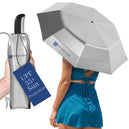
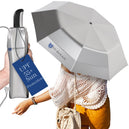
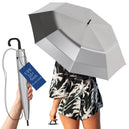
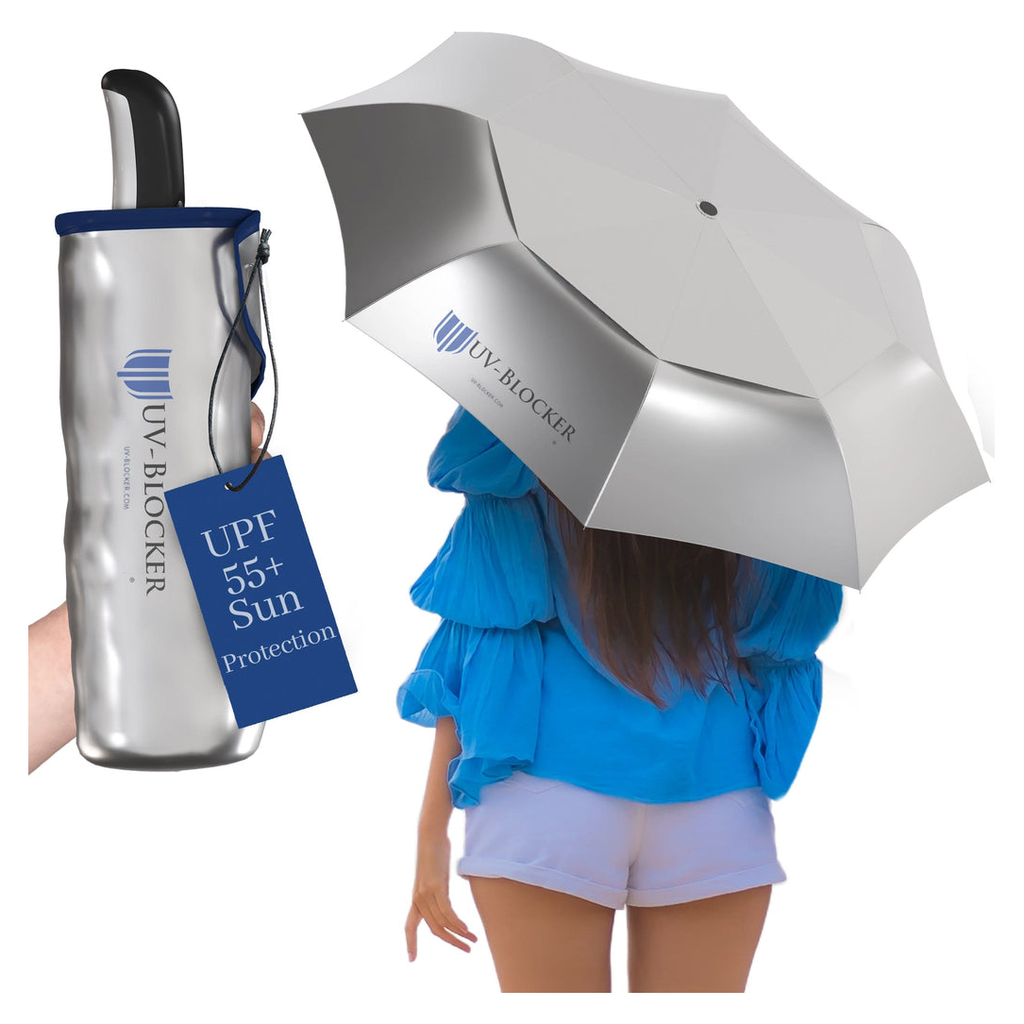
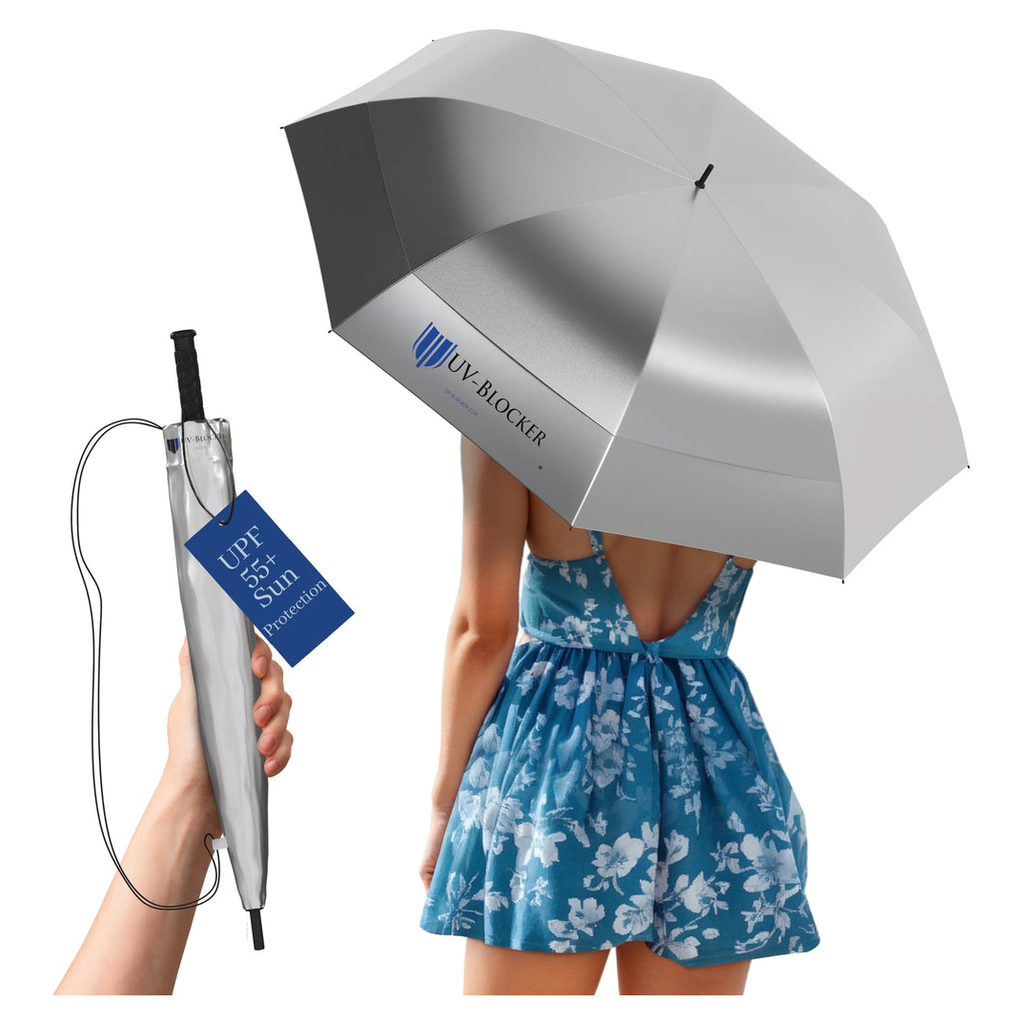
A UV-Blocker Compact Umbrella ($59.95) paired with a Chair Umbrella Holder ($29.95) creates a portable shade station for under $90. It fits in any work truck and sets up in 30 seconds. UV-Blocker's Solarteck coating blocks 99% of UV rays and drops the temperature underneath by up to 15 degrees compared to direct sun.
For landscaping crews, that's the "truck kit" — one umbrella and one holder per vehicle. Every job site gets a shade station regardless of whether trees or structures provide natural shade.
Layer 3: UPF Clothing (Heat-Adapted)
The "too hot" complaint is valid for cotton. But modern moisture-wicking UPF 50+ fabrics can feel cooler than bare skin in direct sunlight because they block infrared heat while allowing sweat evaporation. Look for fabric weight under 4 oz/yard with ventilation panels at the underarms and mid-back.
Layer 4: Targeted Sunscreen
Full-body sunscreen isn't realistic for 10-hour days in the heat. Target the five zones clothing misses: back of hands, ears, back of neck, face, and forearms during overhead trimming.
Use SPF 30+ with water-resistant formulation rated for 80 minutes. Reapply every 40 minutes of active sweating — not the standard 2-hour label interval. For irrigation crews, the 80-minute water-resistant rating is critical.
Layer 5: UV-Blocking Eye Protection
Wraparound UV-blocking sunglasses close the gaps that standard frames leave at the sides and bottom. Reflected UV from concrete and pavers enters from below the normal sightline — exactly where standard frames don't protect.
How Should Landscaping Business Owners Build a UV Safety Program?
Landscaping business owners should provision bulk sunscreen, equip trucks with shade stations, rotate crew schedules during peak UV, and document every measure for OSHA inspection defense.
For business owners, sun protection for landscapers is a liability management strategy as much as a health measure.
Bulk Sunscreen Provisioning
Provide sunscreen at the truck. Don't expect workers to bring their own — the 28.4% compliance rate proves they won't. Cost: $3-5 per worker per day, compared to a single workers' comp skin cancer claim in the five figures.
Shade Equipment for Every Truck
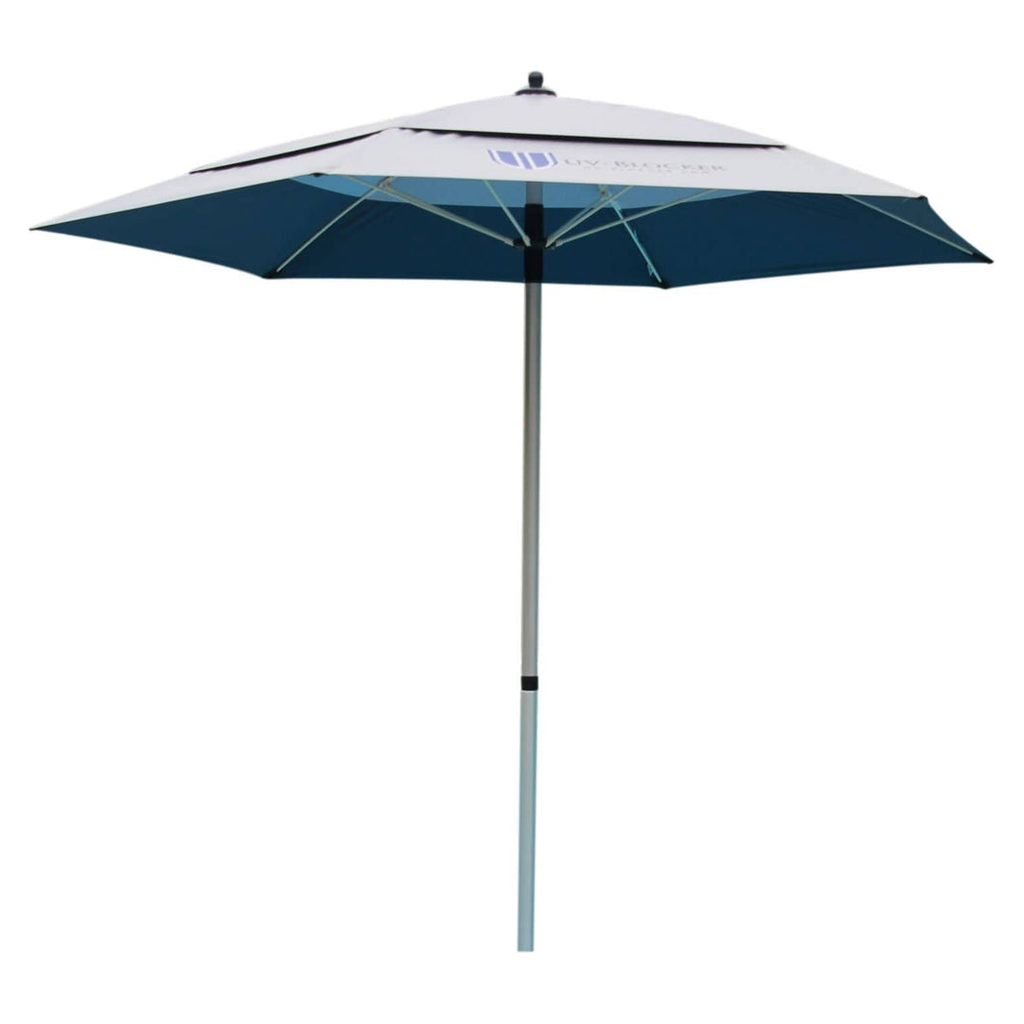
Stock one shade station per truck. A UV-Blocker Compact Umbrella plus Chair Umbrella Holder costs under $90 and creates a portable break station at every job site. For crews of 3-5 workers, that's under $20 per person for shade access all season. Browse the full UV umbrella collection for sizing options if your crew needs larger coverage.
Schedule Rotation
Rotate team members between sun-exposed tasks (open-lawn mowing, edging, hardscape) and shaded tasks (under-canopy trimming, covered-area cleanup). No worker should pull more than 2 consecutive hours of unshaded peak-UV work without a rotation.
OSHA Compliance Documentation
The OSHA General Duty Clause requires employers to address recognized hazards. Cal/OSHA Section 3395 specifically mandates shade access, water, and rest during heat events. Other states are adopting similar standards.
Document your UV safety measures — training records, equipment logs, shade break schedules. If you're already doing it, write it down. Documentation is defense.
Why Is Spring the Most Dangerous Season for Landscaper UV Exposure?
Spring landscaping season starts before workers readjust to UV intensity — NIOSH recommends a 1-2 week acclimatization period with 20% daily exposure increases for returning outdoor workers.
Landscaping ramps up in March and April when UV index is already climbing, but crews coming off winter break haven't rebuilt skin tolerance or protective habits. Early-season sunburns are the most damaging because untanned skin has lost its winter adaptation.
The NIOSH acclimatization protocol calls for increasing outdoor exposure by 20% per day over 1-2 weeks for returning workers. For landscaping businesses, that means shortened peak-UV shifts and more frequent shade breaks during the first two weeks of spring season.
What Is the Real Cost of Ignoring UV Protection in Landscaping?
Occupational UV exposure increases nonmelanoma skin cancer risk by 60%, costs $8.1 billion annually in U.S. medical expenses, and creates growing workers' comp liability for landscaping businesses.
The WHO/ILO joint estimates: workers in high-UV occupations face a 60% increased risk of nonmelanoma skin cancer. One in three global nonmelanoma skin cancer deaths are attributable to occupational UV exposure. U.S. skin cancer treatment costs reach $8.1 billion annually.
The landscapers in the PMC3816039 study averaged 11 years of occupational tenure with 5+ hours of daily peak-UV exposure and minimal protection. Cumulative dose at that level isn't theoretical.
Shade stations, sunscreen provisioning, and schedule optimization cost a fraction of a single occupational skin cancer claim. It's business math.
Frequently Asked Questions About Sun Protection for Landscapers
These are the most common questions landscapers and business owners ask about UV protection on the job.
Do landscapers have a higher skin cancer risk?
Yes — landscapers average 5.36 hours of daily peak-sun exposure and face reflected UV from mowing surfaces, placing them among the highest-risk outdoor occupations for skin cancer.
Long exposure hours combined with 28.4% sunscreen compliance and trade-specific risks like surface reflection create a risk profile exceeding most outdoor trades. See how sun protection for construction workers compares.
What SPF should landscapers use?
SPF 30 or higher with water-resistant formulation rated for 80 minutes. Reapply every 40 minutes during active sweating, not the standard 2-hour interval.
Focus on the five zones clothing misses: back of hands, ears, back of neck, face, and forearms during overhead trimming.
Is shade required at outdoor job sites?
Federal OSHA does not mandate shade specifically, but the General Duty Clause requires employers to address recognized hazards. Cal/OSHA Section 3395 and several other state standards explicitly require shade access during heat events.
Regardless of mandate, providing shade is a best-practice investment that reduces heat illness, improves crew retention, and documents your commitment to worker safety. A portable UV umbrella at each job site meets this need for under $90.
How do I protect my crew without slowing down the job?
Schedule UV-intensive tasks like open-area mowing and hardscape installation before 10am. Rotate crews between sun-exposed and shaded work zones. Set up a portable shade station for 15-minute breaks every hour during peak UV.
Shade breaks reduce core body temperature and prevent heat fatigue, so crews that take them maintain higher output across a full day.
Are landscaping chemicals photosensitizers?
Some pesticide and herbicide classes — particularly organochlorines and organophosphates — are flagged as photosensitizers in occupational health research, meaning they can increase skin's UV sensitivity.
Crews handling these chemicals should apply sunscreen before chemical application and check safety data sheets for photosensitivity warnings. Workers on photosensitizing medications face compounded risk.
Conclusion
Sun protection for landscapers requires a trade-specific approach. Generic outdoor worker advice doesn't account for mowing surface reflection, hedge trimming postures, irrigation washoff, or chemical photosensitizers. The data is clear: landscapers know UV is dangerous, but 78.9% say current protection options are too hot to use.
The 5-layer system works because it doesn't ask landscapers to overheat:
- Schedule optimization moves high-exposure tasks to lower-UV hours — zero cost, zero equipment
- Portable shade stations provide break-time UV recovery that clothing alone can't match
- Targeted sunscreen focuses on the five zones clothing misses, with 40-minute reapplication for sweating conditions
- Crew management protocols turn sun safety from a personal choice into a business operations standard
Start with Layer 1 tomorrow — rearrange your task schedule by UV exposure instead of convenience. For shade station equipment, a UV-Blocker Compact Umbrella and Chair Umbrella Holder create a portable shade break station for under $90 that fits in any work truck.
If you're a homeowner looking for yard work UV protection instead, our guide to sun protection for yard work covers residential-specific advice. For adjacent occupational guides, see sun protection for farmers.
Sun Safety in Australia
Australia has some of the highest UV radiation levels in the world, with the UV Index regularly reaching extreme levels (11 or above) in cities such as Sydney, Melbourne, Brisbane, Perth, and Adelaide for much of the year — including on overcast days. The Cancer Council Australia reports that approximately two in three Australians will be diagnosed with some form of skin cancer by age 70, making sun protection a national health priority.
Key resources and guidelines for Australian sun safety:
- SunSmart Program (Cancer Council Australia): The SunSmart UV Alert is broadcast daily and recommends sun protection whenever the UV Index reaches 3 or above. In most Australian cities, this threshold is met every day of the year, including winter months in northern regions.
- ARPANSA (Australian Radiation Protection and Nuclear Safety Agency): Provides real-time UV monitoring at stations across all states and territories. Australians can access current UV levels at arpansa.gov.au.
- Safe Work Australia — UV Radiation as an Occupational Hazard: Australian workplace health and safety legislation requires employers to assess and manage UV radiation exposure for outdoor workers. Physical shade, including umbrellas rated UPF 50+, is recognised as a primary engineering control under these regulations.
A UPF 50+ UV-blocking umbrella provides the consistent, continuous shade protection that is essential under Australia's intense sun. The UV-Blocker umbrella, with its patented Solarteck® reflective coating, blocks 99% of UV rays and reduces perceived temperature by up to 15°F — a meaningful advantage for outdoor activities in Australia's climate. It is the only umbrella of its kind approved by the Melanoma International Foundation.
Sun Safety in Canada
Canada experiences meaningful UV exposure throughout the year, with UV Index levels regularly reaching 8–10 or higher during summer months in cities such as Vancouver, Calgary, Toronto, and Ottawa. Health Canada and Environment and Climate Change Canada publish daily UV Index forecasts and recommend protective measures whenever the index exceeds 3 — a threshold reached on most clear days between May and August across the country.
Key resources for Canadian sun safety:
- Health Canada UV Index: Published daily via the Environment and Climate Change Canada weather portal (weather.gc.ca). Canadians can track UV levels by city and receive alerts when protection is recommended.
- Canadian Cancer Society: Recommends UPF 50+ clothing, hats, sunscreen, and shade-seeking as primary sun protection strategies. Physical UV barriers — such as UPF 50+ umbrellas — are emphasized for prolonged outdoor exposure.
- Canadian Dermatology Association: Endorses broad-spectrum sun protection strategies, including shade structures and UV-blocking accessories, especially for individuals with fair skin or a personal or family history of skin cancer.
For Canadians spending extended time outdoors — whether working, playing sports, or enjoying recreational activities — a UV-blocking umbrella rated UPF 50+ provides continuous, reapplication-free protection. The UV-Blocker umbrella, independently tested and approved by the Melanoma International Foundation, blocks 99% of UV rays and keeps users up to 15°F cooler — making it a practical and reliable companion for Canadian summers.