

Texas logged 82,462 melanoma diagnoses between 2000 and 2018, placing it among the top three states for skin cancer volume according to data published in PMC12064134. The state holds more than 32 million residents, more people than the entire country of Australia.
But a one-size-fits-all sun safety approach doesn't work across a geography this vast and varied. Texas spans four climate zones, from the humid Gulf Coast to the high-altitude Chihuahuan Desert. Gulf Coast humidity strips sunscreen off faster than dry air. Desert altitude pushes UV intensity up by double digits. River water and beach sand bounce radiation upward to double total exposure.
This guide breaks down UV exposure by specific Texas cities, delivers region-specific protection strategies for all four climate zones, and provides actionable advice for activities like river tubing, football tailgating, and Gulf Coast beach days.
What Is the UV Index in Texas by City?
Texas cities hit UV index readings of 10 to 12+ during summer months, with El Paso reaching Extreme levels thanks to its 3,789-foot elevation and 302 annual sunshine days.

The peak UV index stays at dangerous levels from April through September. That's six straight months of "Very High" to "Extreme" ratings across the state. Even October doesn't offer real relief, registering a 7 to 8 "High" rating in most Texas cities. You can't rely on the calendar to decide when protection matters.
An index reading above 11 signals extreme danger where unprotected skin burns in minutes. Altitude plays a defining role in these numbers. The World Health Organization confirms that UV radiation increases 10 to 12 percent for every 1,000 meters of elevation gained.
| City | Peak Summer UV Index | Elevation (ft) | Annual Sunshine Days |
|---|---|---|---|
| El Paso | 11-12 (Extreme) | 3,789 | 302 |
| Austin | 10-11 (Very High) | 505 | 300 |
| San Antonio | 10-11 (Very High) | 650 | 300 |
| Houston | 10-11 (Very High) | 50 | 204 |
| Dallas | 10 (Very High) | 430 | 234 |
El Paso regularly crosses the "Extreme" threshold. The city's high altitude and clear skies create intense exposure that sea-level cities rarely see. Similar desert conditions drive the strategies outlined in the Arizona Sun Protection Guide. Dallas and Houston sit just below that extreme tier but still maintain a solid 10 rating through peak summer. Austin and San Antonio split the difference with harsh, direct sunlight baking the central corridor.
These numbers vary by city because Texas spans four distinct climate zones.
How Do Texas's Four Climate Zones Affect Sun Protection?
Texas spans Gulf Coast humidity, Hill Country sun, West Texas desert, and North Texas plains. Each zone requires different sunscreen reapplication schedules and shade strategies.

Gulf Coast (Houston, Galveston)
This region sustains 75 percent average humidity through peak season. Sweat and dense moisture wash off standard sunscreens much faster here. Residents should reapply every 60 to 80 minutes instead of the standard two-hour window. Cloud cover creates a dangerous false sense of safety since clouds block only 20 to 40 percent of UV radiation according to WHO data. Can You Get Sunburn on a Cloudy Day? details why this misconception causes severe, unexpected burns along the coast.
Central Texas / Hill Country (Austin, San Antonio)
The region sees roughly 300 sunshine days a year. Tubing season brings crowds to the Guadalupe, Frio, and Comal rivers, where water reflection amplifies UV during extended floats. Lower humidity means slightly less sunscreen washoff, but direct overhead exposure remains intense.
West Texas / Desert (El Paso, Midland)
This zone registers the highest UV in the state. Altitude combines with bone-dry air and clear skies to create relentless exposure. The atmosphere provides no moisture to diffuse incoming rays. Maximum physical coverage and serious hydration are critical.
North Texas / Panhandle (Dallas, Amarillo)
The continental climate produces a slightly lower peak index, but readings still hit "Very High" from May through September. High winds sweeping the plains create a cooling sensation that masks sun intensity. Residents often feel comfortable while their skin burns.
Knowing your zone matters most when choosing protection for specific Texas outdoor activities.
What Are the Biggest Sun Exposure Risks for Texas Activities?
Texas outdoor activities like football tailgating, river tubing, Gulf Coast beaches, and golf expose participants to 4 to 8 hours of continuous UV, with water and sand reflection doubling exposure.
Football and tailgating pull fans into parking lots and open stadiums for 4 to 8 hours. Pre-game tailgates account for significant unprotected exposure before kickoff even starts. Heat illness risk is 11.4 times higher for football than all other sports combined based on NCAA data.
River tubing on the Guadalupe, Frio, and Comal rivers means multi-hour floats where sunscreen washes off within 40 to 80 minutes. Water reflection bounces rays upward to strike the chin and nose. A UPF 50+ sun shirt and portable shade are more reliable than constant reapplication during a 3-hour float.
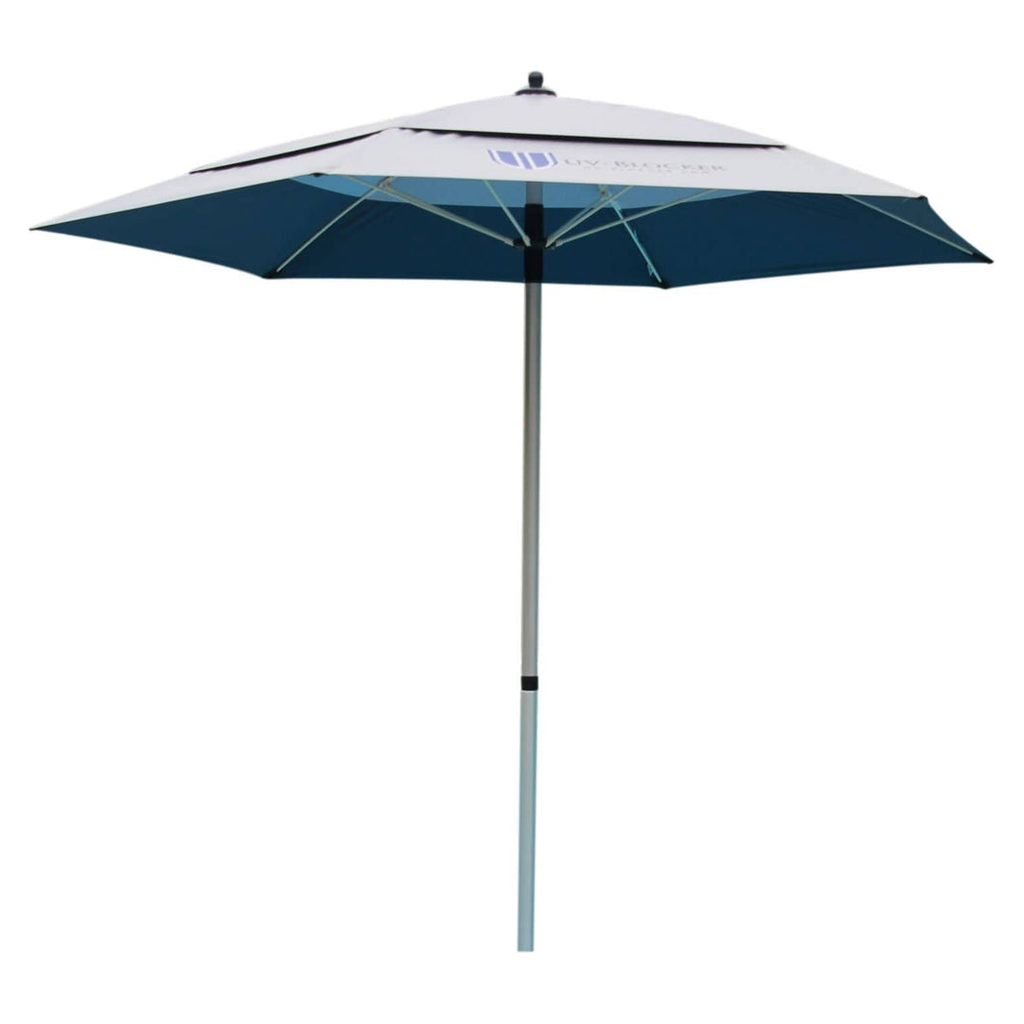
Gulf Coast beaches like South Padre and Galveston combine sand and shallow water. This dual reflection can nearly double the total UV dose absorbed by beachgoers. The UV-Blocker Large Beach Umbrella offers UPF 50+ rated shade that doesn't wash off or need reapplication.
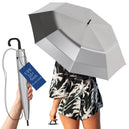
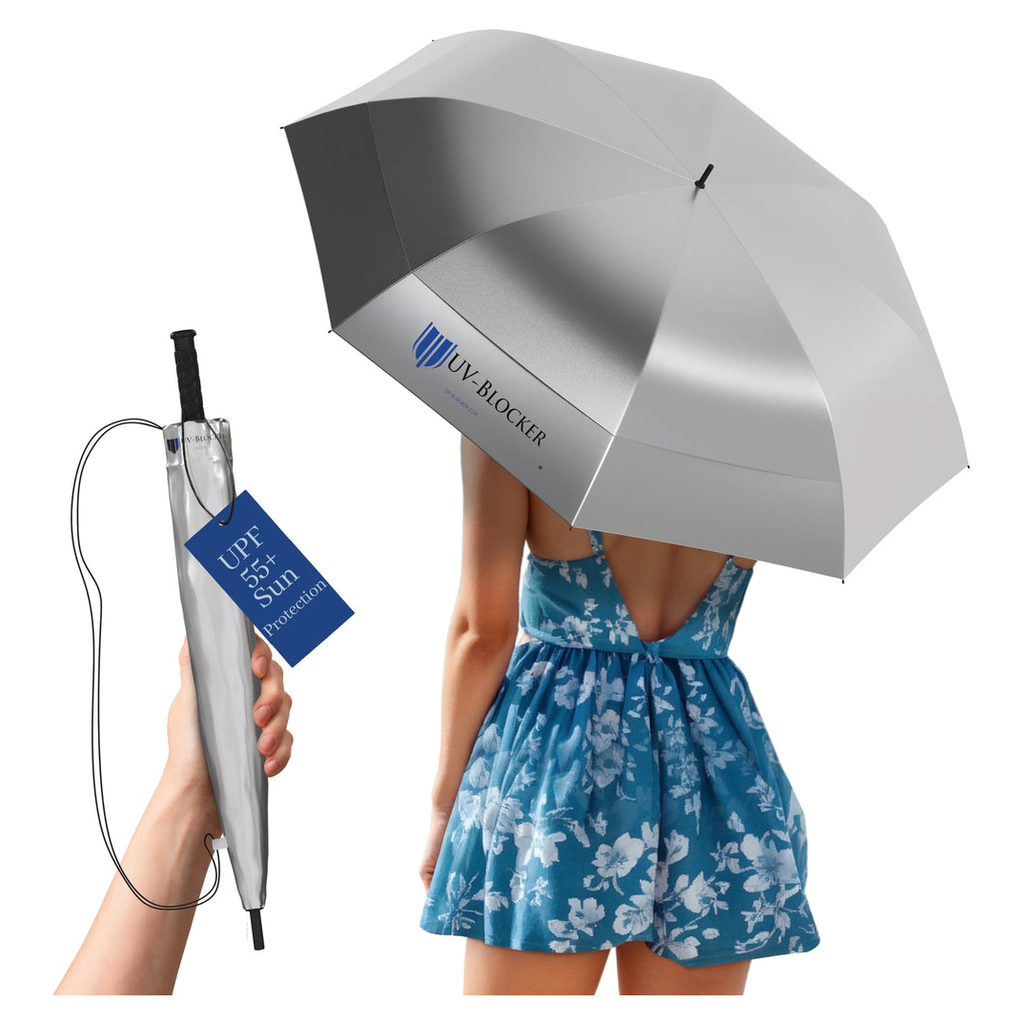
Golf is a major exposure risk in Texas, which has over 800 courses (third most nationally). A single round guarantees 4 to 5 hours of continuous sun on open greens. A standard golf cart roof provides only partial relief depending on sun angle. A UV-Blocker Golf Umbrella offers critical on-course shade with a wind-resistant vented canopy.
Hiking at Big Bend and Enchanted Rock offers zero natural tree canopy. High altitude combined with reflected UV from rock surfaces pushes exposure well beyond ground-level estimates.
The cumulative toll of this exposure shows up clearly in Texas skin cancer statistics.
Why Are Texas Skin Cancer Rates So High?
Texas recorded 82,462 melanoma cases from 2000 to 2018, with 11.3% diagnosed at late stage and higher late-stage rates in rural areas and communities of color.
Researchers tracked those 82,462 melanoma cases over an 18-year period in the PMC12064134 study. A full 11.3 percent (9,352 patients) received a late-stage diagnosis, meaning the cancer had already advanced before detection. These numbers point to a real gap in preventive care and daily protection habits across the state.
Rural areas report higher late-stage diagnosis rates. Geographic barriers prevent regular dermatological access for Texans living outside major cities. A resident in the Panhandle might need to drive three hours to see a dermatologist.
Skin cancer affects all skin tones, and darker skin often sees later diagnoses due to lower general awareness and persistent medical biases. Non-Hispanic Black patients showed the highest late-stage growth rate during the study period, with an Annual Percent Change of 5.79 percent. This equity issue highlights the need for protection education across all demographics.
Incidence rates rose across the full study timeline, particularly among males over 50 and non-Hispanic White populations. Texans work, play, and socialize outdoors close to 12 months a year, and each severe burn increases baseline risk for eventual tumor development.
What Does a Complete Texas Sun Protection Toolkit Include?
A complete Texas sun protection toolkit combines SPF 30+ broad-spectrum sunscreen, UPF 50+ clothing, portable shade like a UV-blocking umbrella, a wide-brim hat, and UV-filtering sunglasses.
SPF 30+ broad-spectrum sunscreen is the baseline. Reapplication schedules should match your climate zone: every 60 minutes on the Gulf Coast, 90 minutes in Central Texas, and the standard 120 minutes in West Texas's dry heat. Mineral sunscreens resist sweat better than chemical alternatives in high-humidity environments.
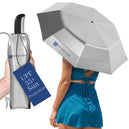
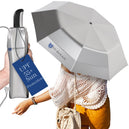
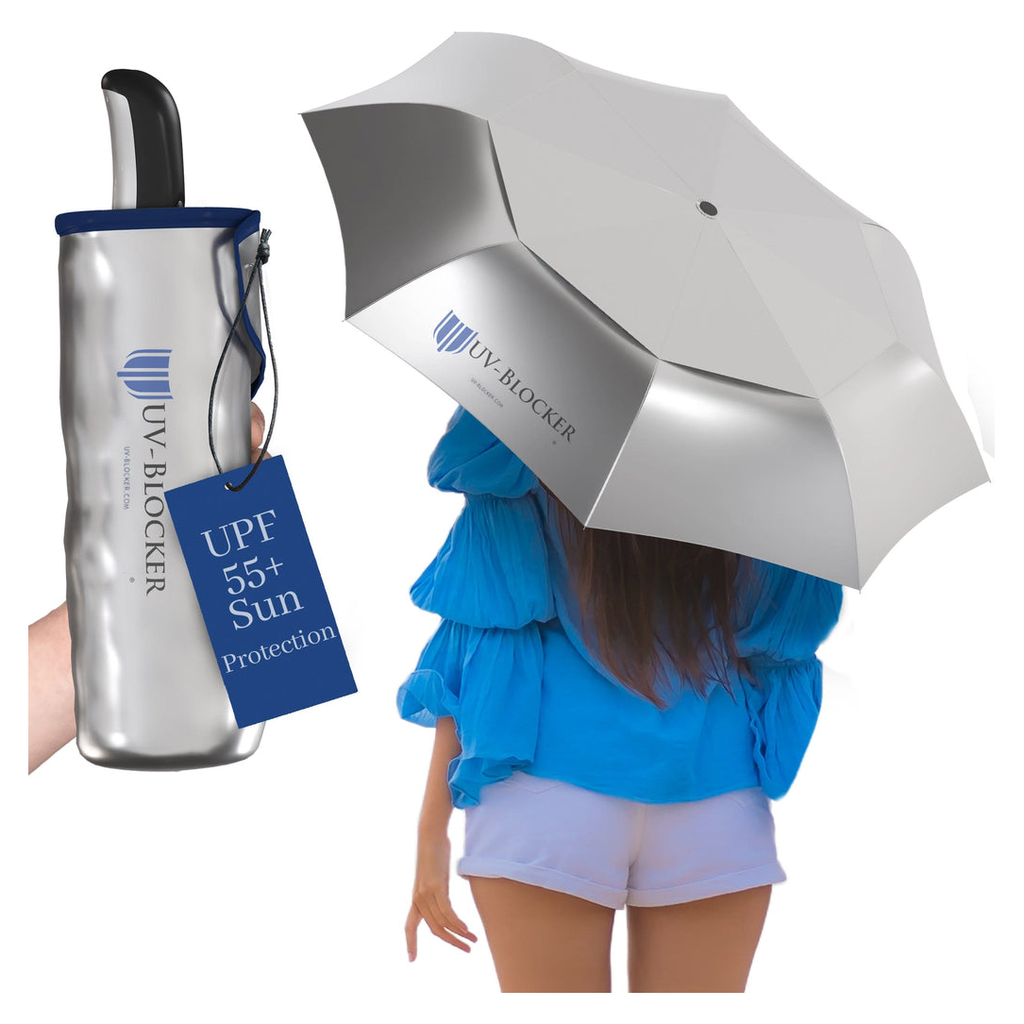
UPF 50+ clothing and shade offer more reliable defense than sunscreen alone for extended outdoor time. A certified UPF 50+ umbrella blocks 99 percent of UV without reapplication. Products with Solarteck silver reflective coating drop temperatures underneath by up to 15 degrees Fahrenheit, providing both shadow and active cooling. The UV-Blocker Compact Umbrella handles daily city errands. Commuters in Houston and Dallas can stash the UV-Blocker Travel Umbrella in a bag for quick transit coverage.
A wide-brim hat (at least 3 inches) protects the ears, neck, and lower face. These are the areas people consistently miss when applying sunscreen.
UV-filtering sunglasses shield eyes from permanent damage. UV exposure directly contributes to cataract formation over time, and wraparound styles block peripheral rays bouncing off concrete or water.
Timing also matters. Reduce exposure between 10 AM and 4 PM when UV peaks. In Texas summer, this high-danger window stretches from 9 AM to 5 PM. Check the daily UV index on the EPA UV Index page before heading outside. For those working outdoors all day, more detailed occupational guidance is available in Sun Protection for Outdoor Workers.
How Does HB 2127 Affect Texas Outdoor Workers?
Texas HB 2127, effective September 2023, preempted local water break ordinances in Austin and Dallas, leaving outdoor workers without mandatory rest-break protections during extreme heat.
The Texas legislature passed HB 2127 into law in 2023. The legislation nullified existing municipal ordinances in Austin and Dallas that required a mandatory 10-minute water break every four hours for construction crews.
OSHA has a proposed federal heat standard in development. This rule would trigger mandatory workplace protections at an 80-degree Fahrenheit threshold and would apply regardless of state law. The regulation remains a proposal and isn't yet enacted.
Employers still hold responsibility for worker safety. Providing shade structures, reliable water access, and frequent breaks remains an established industry best practice. The law doesn't prohibit voluntary compliance with safety standards. It removes the municipal mandate.
Workers should take greater personal responsibility for daily exposure. Portable shade, UPF-rated clothing, and strict hydration schedules aren't optional in Texas heat.
Frequently Asked Questions About Texas Sun Protection
These are the most common questions about UV exposure, sunburn risk, and skin cancer prevention for Texas residents and visitors.
What is the UV index in Texas during summer?
Texas cities typically reach a peak UV index of 10 to 12 during June through August. El Paso consistently hits the highest levels due to its altitude and dry desert climate. All major Texas cities reach "Very High" or "Extreme" categories by mid-summer.
Is the sun stronger in Texas than other states?
Texas ranks among the top 10 states for UV intensity. Southern and western Texas cities receive UV levels comparable to parts of Mexico and the Caribbean during peak summer months.
Do you need sunscreen in Texas in winter?
Yes. Texas winter UV index ranges from 3 to 5 (Moderate to High) across most cities. Cumulative exposure still damages skin over time, and reflected UV from water or concrete adds to the dose year-round.
Why is skin cancer so common in Texas?
Texas combines intense UV radiation with a large outdoor-active population and over six months of extreme sun season. Limited shade infrastructure contributes to the 82,462 melanoma cases recorded between 2000 and 2018.
Does humidity affect sunburn risk?
Humidity doesn't reduce UV radiation. It does wash off sunscreen faster, though. Gulf Coast residents should reapply every 60 to 80 minutes instead of the standard two hours to maintain effective protection.
Is the UV index higher in El Paso than Houston?
El Paso generally records higher peak UV index readings than Houston. Its 3,789-foot elevation adds roughly 12 percent more UV intensity per 1,000 meters of altitude. Houston's humidity creates a false sense of security that often leads to worse sunburn outcomes because residents don't feel the intensity.
Conclusion
The Texas sun demands respect and preparation. UV radiation sits at dangerous "Extreme" levels for six months straight, not just during July and August. Protection strategy should match your specific climate zone and outdoor activity.
A layered defense combining broad-spectrum sunscreen, reliable portable shade, and UPF clothing outperforms any single method. Check today's UV index for your Texas city before heading outside, and build a toolkit that matches your region and activities.
Browse the full collection of UV-Blocker UPF 50+ portable umbrellas for AATCC TM183-2020 tested shade that blocks 99% of UV rays and keeps you up to 15 degrees cooler.
What Does Texas UV Look Like Month by Month?
Texas does not have a "safe season" for UV exposure. While July and August register the most extreme readings, every month except December and January can deliver "High" or above UV index readings across major population centers. Understanding the seasonal calendar helps Texans plan protection year-round rather than only during the obvious summer months.
| Month | Average UV Index (Houston/Austin) | Risk Category | Protection Priority |
|---|---|---|---|
| January | 3-4 | Moderate | Sunscreen for extended outdoor time |
| February | 4-5 | Moderate-High | Sunscreen daily, hat for outdoor workers |
| March | 6-7 | High | Full protection protocol begins |
| April | 8-9 | Very High | UV umbrella recommended for 1+ hour outdoor time |
| May | 10 | Very High | Full 5-layer protection daily |
| June–August | 10-12 | Very High–Extreme | Maximum protection all day |
| September | 9-10 | Very High | Full protection continues |
| October | 7-8 | High | Sunscreen + shade for extended outdoor time |
| November | 4-5 | Moderate | Sunscreen for outdoor workers and midday exposure |
| December | 3 | Moderate | Sunscreen for prolonged outdoor activities |
March through October represents a full eight months where daily sun protection is not optional for anyone spending meaningful time outdoors. Texas's geographic position means even "winter" months carry more UV risk than summer months in northern states like Minnesota or Wisconsin.
Spring is particularly underestimated. April delivers UV index readings of 8 to 9, equivalent to what many European beaches see at peak summer. Texans who relax their protection habits after Labor Day and don't resume them until June are skipping two full months of "Very High" exposure in spring and accumulating damage without realizing it.
Texas-Specific Guidance for Medical Conditions and Sun Sensitivity
For Texans managing health conditions that increase UV sensitivity, the state's extended sun season creates real daily risk that requires a more aggressive protection strategy than standard sunscreen alone.
Lupus patients face one of the most serious sun sensitivity challenges. UV exposure can directly trigger lupus flares through a process called photosensitivity — where UV radiation activates the immune response in lupus patients. Texas's 300-plus annual sunshine days mean almost no outdoor day is fully safe without layered protection. A UPF 50+ umbrella provides constant shade that keeps UV off skin entirely, without relying on sunscreen reapplication that can be missed. The complete lupus sun protection guide covers the specific daily protocol dermatologists recommend.
Melanoma survivors living in Texas should treat every outdoor exposure as a skin cancer risk management decision. After a melanoma diagnosis, the skin's history of UV damage puts new malignancies at higher risk. The post-melanoma sun protection guide outlines the layered approach dermatologists prescribe after diagnosis.
Patients on photosensitizing medications — including antibiotics like ciprofloxacin and doxycycline, diuretics like hydrochlorothiazide, and immunosuppressants like methotrexate — face dramatically increased burn risk in Texas conditions. A medication that normally produces mild photosensitivity in a moderate-UV climate can cause severe burns within minutes of midday exposure in Houston or El Paso. If you take any medication with a photosensitivity warning, speak with your pharmacist about your Texas UV environment and adjust protection protocols accordingly.
People with skin conditions including rosacea, eczema, vitiligo, and psoriasis often have skin barriers compromised by those conditions themselves. Texas heat and UV exposure can trigger flares in all four. A UV umbrella provides the most effective passive protection — no chemicals, no reapplication, no contact with already-sensitive skin.
Texas Outdoor Event Sun Protection: The Complete Checklist
Texas hosts thousands of major outdoor events annually: the Texas State Fair (October, Dallas), Austin City Limits Music Festival (October), Houston Livestock Show and Rodeo (March), SXSW outdoor stages (March), and year-round sports events at high school, college, and professional levels. Each event creates multi-hour outdoor exposure that demands a specific protection plan.
Before any Texas outdoor event lasting two or more hours, run through this checklist:
- Check the UV index. Use the EPA UV Index tool for your event date and city. Index 6 or above requires active protection.
- Apply sunscreen 15 minutes before leaving the house. Sunscreen needs absorption time to activate. Applying in the car parking lot loses effectiveness.
- Pack a UPF 50+ portable umbrella. The UV-Blocker Travel Umbrella fits in a standard tote bag and deploys in seconds for immediate shade at any outdoor venue.
- Bring a wide-brim hat (3-inch minimum brim). Texas event seating is often fully exposed. A hat protects ears and neck even when shade isn't available.
- Schedule a reapplication reminder. Set a phone alarm for 90 to 120 minutes after initial application. One reminder converts sporadic reapplication into a habit.
- Carry a water bottle. Dehydration reduces the body's ability to regulate heat and compounds sun exposure risks. Texas heat makes hydration critical, especially at events without easy water access.
- Identify shaded areas at the venue. Many Texas event venues include covered sections. Arriving early often means better access to these spots. At open-air stadiums, covered sections under awnings or upper decks can reduce UV exposure by 80 percent or more.
For outdoor workers and event staff spending eight or more hours in the Texas sun, see the detailed sun protection for outdoor workers guide for shift-by-shift protection protocols.
Texas UV Index by Region: What the Data Shows
Texas spans multiple climate zones — each with distinct UV profiles that affect how aggressively you need to protect yourself. The following breakdown is based on NOAA UV Index historical averages (May–September peak season):
| Region | Peak Summer UV Index | Annual High UV Days (>8) | Reflective Hazard |
|---|---|---|---|
| West Texas (El Paso, Midland) | 11–12 | 150+ | High (desert albedo) |
| Gulf Coast (Corpus Christi, Galveston) | 10–11 | 120+ | Very High (water + sand) |
| Central Texas (Austin, San Antonio) | 10–11 | 115+ | Moderate |
| North Texas (Dallas-Fort Worth) | 9–10 | 100+ | Moderate |
| East Texas (Tyler, Beaumont) | 9–10 | 90+ | Low-Moderate |
| South Texas (McAllen, Laredo) | 11–13 | 160+ | High |
Note: A UV Index of 11+ is classified as "Extreme" by the WHO. South Texas routinely exceeds this threshold for 5+ months per year, placing it among the highest UV-exposure regions in the continental United States.
Texas Sun Protection Calendar
- January–February: UV Index 3–5 (moderate). Sun protection advisable midday (10am–2pm).
- March–April: UV Index 6–8 (high). Full protection needed; allergies and outdoor activities increase exposure time.
- May–September: UV Index 9–13 (very high to extreme). Maximum protection protocols required all outdoor hours.
- October–November: UV Index 5–7 (moderate-high). Cooler temperatures encourage longer outdoor stays — don't drop sun protection habits.
- December: UV Index 3–4 (moderate). Lowest risk period but UV-A remains present year-round.
Texas-Specific Outdoor Risks
Texas outdoor culture creates several unique UV exposure scenarios that standard sun protection guides miss:
- Friday Night Lights: High school football draws families to open bleachers every Friday from August through November. The August–October season coincides with peak UV hours on Saturday game days.
- Texas Hill Country hiking: Limestone trail surfaces reflect up to 12% UV, adding meaningful cumulative exposure on multi-hour hikes.
- Lake recreation: Lakes Texoma, Travis, and Conroe see heavy summer traffic. Water surface reflection amplifies UV exposure by 15–25%.
- Agricultural work: With over 247,000 farms across Texas, outdoor agricultural workers face some of the highest occupational UV exposure of any U.S. state.
- South Texas brush country: Sparse vegetation provides minimal natural shade in the Rio Grande Valley — one of the highest-UV zones in North America.
Frequently Asked Questions: Texas Sun Protection
What time of year is UV risk highest in Texas?
June and July consistently record the highest UV Index readings statewide, with South Texas reaching UV Index 13 (extreme) during peak hours. However, May and August often surprise residents — temperatures drop slightly but UV intensity remains very high, leading to longer, less-protected outdoor exposure.
Is sunscreen enough to protect against Texas UV levels?
For extended outdoor exposure in Texas summers, sunscreen alone has limitations. SPF 50 sunscreen blocks approximately 98% of UV-B when applied at the recommended 2mg/cm² — but most people apply 25–50% of the recommended amount, effectively reducing protection to SPF 10–15. Dermatologists recommend layering sunscreen with physical shade (UPF umbrella, shade structures) for activities lasting more than 30 minutes outdoors.
How does Texas humidity affect sun protection choices?
Gulf Coast humidity (70–90%) makes sunscreen application less effective, as sweat and moisture degrade SPF ratings faster. Humid conditions also cause more discomfort with long-sleeved UPF clothing. A portable UPF 50+ umbrella provides heat and UV protection without contact with skin — making it particularly effective in humid Texas conditions where clothing feels oppressive.
Do Texans have higher skin cancer rates than other states?
Yes. Texas ranks among the top 15 states for melanoma incidence, with the American Cancer Society estimating approximately 4,800 new melanoma diagnoses annually in Texas. The combination of high UV Index, large Hispanic and outdoor-working populations, and cultural underestimation of UV risk contributes to this elevated incidence rate.
Texas UV Protection: Region-by-Region Quick Reference
Texas spans three distinct UV risk zones — from the Gulf Coast to the high-altitude Trans-Pecos desert. UV protection needs vary significantly by region, season, and activity:
- South Texas / Rio Grande Valley (UV index peak: 12+): Among the highest UV exposure in the continental US — latitude and low cloud cover combine to create year-round extreme UV risk comparable to South Florida
- Houston / Gulf Coast (UV index peak: 11–12): Coastal humidity doesn't reduce UV — in fact, water vapor and sand reflection amplify UV dose for beach and waterfront activities
- Dallas / Fort Worth (UV index peak: 10–11): Summer UV index regularly exceeds 10 from May through September; afternoon thunderstorms reduce UV in the second half of the day but morning outdoor activities carry significant exposure
- Austin / Hill Country (UV index peak: 10–11): Hill Country outdoor recreation (hiking, river tubing, cycling) creates high-cumulative UV scenarios — multi-hour activities with no natural shade cover demand layered protection
- El Paso / West Texas (UV index peak: 11–12, altitude factor): High elevation (3,700+ ft) reduces atmospheric UV filtration — El Paso's UV index is consistently elevated beyond what residents expect for an inland city
Sun Protection in Texas: Expert FAQ
What is the UV index range in Texas throughout the year?
Texas spans multiple UV climate zones. South Texas (San Antonio, Laredo, Corpus Christi) experiences UV index 9–11 from April–September — extreme risk levels. Dallas and Houston average UV index 7–9 in summer. Even in December, southern Texas maintains a UV index of 3–4, requiring protection year-round. Texas has one of the highest skin cancer rates in the US due to this sustained UV exposure.
How does Texas heat amplify UV damage risk?
Texas summer temperatures (often 95–105°F+) cause rapid sweating, washing sunscreen off faster. Heat-related fatigue also reduces vigilance about reapplication. The combination of high UV index and extreme heat creates compounding skin stress — UV damages the skin barrier while heat accelerates transepidermal water loss. UPF 50+ physical shade reduces both UV and solar heat load simultaneously.
Is sun protection necessary in Texas during winter?
Yes. South Texas maintains a UV index of 3–4 in December–January (the 'protection required' threshold is UV index 3). Dallas and Houston average UV index 2–3 in winter. Texans often underestimate winter UV risk because air temperatures are comfortable. The same UV wavelengths that cause skin cancer are present year-round, just at lower intensity.
What makes Texas outdoor sports particularly high-risk for UV exposure?
Texas's combination of high UV index, extended warm season (outdoor sports run 9–10 months), flat terrain with limited natural shade, and culture of year-round outdoor sports creates elevated cumulative UV exposure for athletes. Friday night football, weekend soccer, golf, and youth baseball all occur during high UV hours. Coaches and parents have a responsibility to enforce shade protocols.
What are the most common skin cancer types diagnosed in Texas?
Texas leads the nation in basal cell carcinoma (BCC) and squamous cell carcinoma (SCC) rates, driven primarily by agricultural and outdoor worker UV exposure. Melanoma rates are also elevated in Texas compared to the national average. The Texas Cancer Registry reports that Texans who work outdoors represent the highest-risk demographic, reinforcing the need for occupational sun protection programs.
Texas-Specific UV Risks: What the National Averages Miss
Texas ranks 4th nationally for melanoma incidence despite being geographically lower-latitude than states like Arizona. The reason? Behavioral exposure patterns unique to Texas — outdoor work culture, year-round sports, and a cultural tendency to underestimate winter UV — create a chronic overexposure problem that average UV index data doesn't capture.
Texas Skin Cancer Statistics (2024)
- Texas diagnoses approximately 12,400 new melanoma cases annually — more than California, which has a 50% larger population.
- Agricultural workers in the Rio Grande Valley receive an estimated 1,800 hours of UV exposure per year — 3x the amount that triggers significant skin aging and DNA damage.
- The Texas Department of State Health Services reports melanoma as the 5th most costly cancer to treat in the state, averaging $178,000 per patient over 5 years.
High-Risk Texas Activities and Recommended Protection
| Activity | Avg Annual UV Hours | Recommended Shade Solution |
|---|---|---|
| High school football (practice) | 400–600 hrs | UPF 50+ sideline umbrella |
| Ranch/agricultural work | 1,200–1,800 hrs | UPF clothing + vehicle shade |
| Golf (avid, 3x/week) | 300–450 hrs | UPF 50+ golf umbrella |
| Backyard recreation | 150–250 hrs | Patio umbrella or portable shade |
For Texans who need reliable, portable shade — from Lubbock high school sports fields to South Padre Island beaches — UV-Blocker's 68-inch golf and compact travel umbrellas are the Melanoma International Foundation's only approved sun protection umbrellas in their respective categories.
Frequently Asked Questions
What makes UV exposure particularly intense in Texas Sun Protection?
Texas Sun Protection has specific geographic, atmospheric, and seasonal factors that affect UV intensity. Latitude, altitude, proximity to reflective surfaces (water, sand, snow), and cloud cover all play roles. UV Index data from NOAA shows significant variation even within a single state. Checking the daily UV index at your specific location is the only reliable way to gauge actual risk.
What is the UV Index and how should I use it for sun safety planning?
The UV Index (UVI) is a 0–11+ scale measuring UV radiation intensity at ground level. 0–2: Low risk. 3–5: Moderate — use sunscreen. 6–7: High — seek shade. 8–10: Very High — limit midday exposure. 11+: Extreme — avoid outdoors. NOAA provides daily UV Index forecasts by zip code at weather.gov. UV-Blocker recommends checking the index every morning before outdoor planning.
Is sun protection necessary year-round in this region?
Yes. UV radiation can cause skin damage even on cloudy days and throughout all seasons. UVA rays (which penetrate clouds and glass) are relatively consistent year-round, even when visible sunshine is low. While UVB intensity peaks in summer, dermatologists recommend daily SPF 30+ moisturizer as a year-round habit regardless of season or weather.
What activities put people at highest UV risk in this region?
Water sports (reflection amplifies UV by up to 100%), snow activities (snow reflects 80% of UV), beach activities (sand reflects 25%), and any outdoor activity between 10am–4pm. High altitude activities are particularly dangerous — UV intensity increases ~10–12% per 1,000 feet of elevation. A UPF 50+ umbrella provides reliable portable shade for any of these activities.
How do local residents protect themselves from the sun effectively?
Long-term residents of high UV regions tend to adopt comprehensive sun habits: UPF 50+ protective clothing as daily wear, wide-brim hats, window tinting, avoiding peak sun hours, and SPF 50+ sunscreen applied daily (not just at the beach). Portable UV-blocking umbrellas have become increasingly popular for everyday sun protection during outdoor dining, sports spectating, and commuting.
Sun Safety Best Practices for Texas Sun Protection Residents
- Bookmark the NOAA UV Index forecast for your Texas Sun Protection zip code — check it each morning before planning outdoor time
- Apply SPF 30+ sunscreen every morning as part of your daily routine, not just on beach days
- Use window film rated for UV blocking in your home and car — much UV exposure happens indoors
- Keep a UV-blocking umbrella in your car — it's useful for street parking, outdoor dining, and events
- Schedule outdoor physical activity before 10am or after 4pm to avoid peak UV hours
- Annual skin cancer screenings are especially important for long-term residents of high UV regions