

You planned a 20-minute walk. Three days later, your joints ached. A week after that, the butterfly rash came back. Nobody connected it to that walk — because lupus flares don't show up when the sun does.
If you're one of the 1.5 million Americans managing lupus, you already know UV is dangerous. What most guides skip is how to actually live with that reality — not just avoid it.
This guide covers the three-layer protection system rheumatologists recommend for lupus photosensitivity. Not theory. Not "just wear sunscreen." A practical system that lets you go outside without paying for it a week later.

Why UV hits lupus patients harder
Put 10 lupus patients in a room. At least 4 — and possibly 7 — will have disease flares triggered by UV exposure. That's not a sensitivity issue. It's an immune system malfunction that turns ordinary sunlight into a systemic trigger.
What makes lupus photosensitivity uniquely dangerous is the delay. Research published in PMC found that 8 out of every 10 photosensitivity reactions don't appear until a week or more after exposure. The average onset is eight days.
That delay makes tracking cause and effect nearly impossible. You blame stress, diet, or medication changes when the real culprit was last weekend's outdoor birthday party.
What's happening at the cellular level
Dr. Michelle Kahlenberg, professor of internal medicine and dermatology at the University of Michigan, explains it directly: "In people with lupus, the cells are much more sensitive to the damage caused by UV radiation. Once the cells are damaged, the immune system clears them, but people with lupus have a much slower clearance of these cells."
That slower clearance means UV damage piles up. While both UVA and UVB rays cause problems, research indicates UVA tends to be more problematic for lupus flares — which matters when choosing your sunscreen.

Sunscreen: your first defense layer
The Lupus Foundation of America recommends SPF 70+ broad-spectrum sunscreen that blocks both UVA and UVB. If SPF 70 irritates your skin, use the highest number you can tolerate — but never below SPF 30.
Mineral sunscreens work better for lupus
Not all sunscreens are equal for lupus-sensitive skin. Dr. Kahlenberg specifically recommends mineral-based formulations: "We encourage patients to use zinc and titanium-based sunscreens. These formulas work instantly because they sit on the surface of the skin, preventing sunlight from penetrating, and they don't get absorbed."
Zinc oxide and titanium dioxide also block visible light — not just UV. That provides an extra layer of protection some lupus patients need.
Application that actually protects
- Quantity: One full ounce (about a ping-pong ball) covers an average adult body
- Timing: Apply 20 minutes before exposure. Physical sunscreens work immediately, but this catches missed spots
- Reapplication: Every 2 hours outdoors. Immediately after swimming, sweating, or toweling off
- Daily use: Every day — even indoors — especially on face, neck, and hands
Why sunscreen alone isn't enough
Here's the problem: sunscreen washes off, wears away, and research from AJMC shows most people significantly under-apply. Even with perfect application, you're relying on protection that degrades continuously.
Sunscreen is your foundation — but foundations need walls. That's where UPF clothing comes in.
UPF clothing: protection that stays on
A typical cotton t-shirt provides an SPF of about 5. That's roughly the same protection as standing under a tree with gaps in the canopy. It surprises most people who assume any fabric coverage helps.
What UPF ratings actually mean
UPF (Ultraviolet Protection Factor) measures how much UV passes through fabric. Here's the difference it makes:
| UPF Rating | UV Blocked | Protection Level |
|---|---|---|
| UPF 15-24 | 93.3-95.9% | Good |
| UPF 25-39 | 96-97.4% | Very Good |
| UPF 40-50+ | 97.5-98%+ | Excellent |
The Lupus Foundation recommends UPF 30 minimum, with UPF 50+ preferred. At UPF 50, only 1/50th of UV penetrates — that's consistent protection that doesn't wash off, degrade, or need reapplication. For a deeper breakdown of UPF science, see our UPF 50+ explained guide.
Build your protection wardrobe
- Wide-brimmed hat (3+ inch brim): Covers face, ears, and neck in one piece
- Long-sleeved UPF shirts: Lightweight, moisture-wicking fabrics keep comfort high
- UPF arm sleeves: When full coverage feels too hot, these protect the highest-exposure areas
- Wraparound sunglasses: 100% UVA/UVB blocking protects eyes and surrounding skin
Color matters more than you'd think
Darker and brighter colors absorb more UV than pastels. A deep navy UPF shirt outperforms a white one. That's the opposite of what keeps you cool — so balance color with fabric technology.
Clothing covers your body. But what about the gaps — your face when the hat shifts, the walk from the car to the door? That's where the third layer comes in.
Portable Shade for Lupus Sun Protection
Even with sunscreen and UPF clothing, direct sun for extended periods remains risky. The Lupus Foundation specifically recommends carrying an umbrella for instant shade. It's portable protection you control.
Why regular umbrellas fail
Most consumer umbrellas are built for rain, not radiation. Standard 190T nylon weaves have a natural UPF of roughly 10 to 15 — which means 10% to 30% of UV passes straight through the canopy.
For someone without lupus, that leakage causes a mild tan. For a lupus patient, it's enough to trigger a cutaneous immune response in minutes.
The quick test: Hold your umbrella up to the sun. If you can see light through the fabric, UV is reaching your skin.
Silver beats black for lupus patients
Black umbrellas absorb UV effectively — but they also absorb heat, creating a "heat island" underneath the canopy. That matters because heat is a secondary lupus trigger. High temperatures induce systemic inflammation and fatigue even without direct UV.
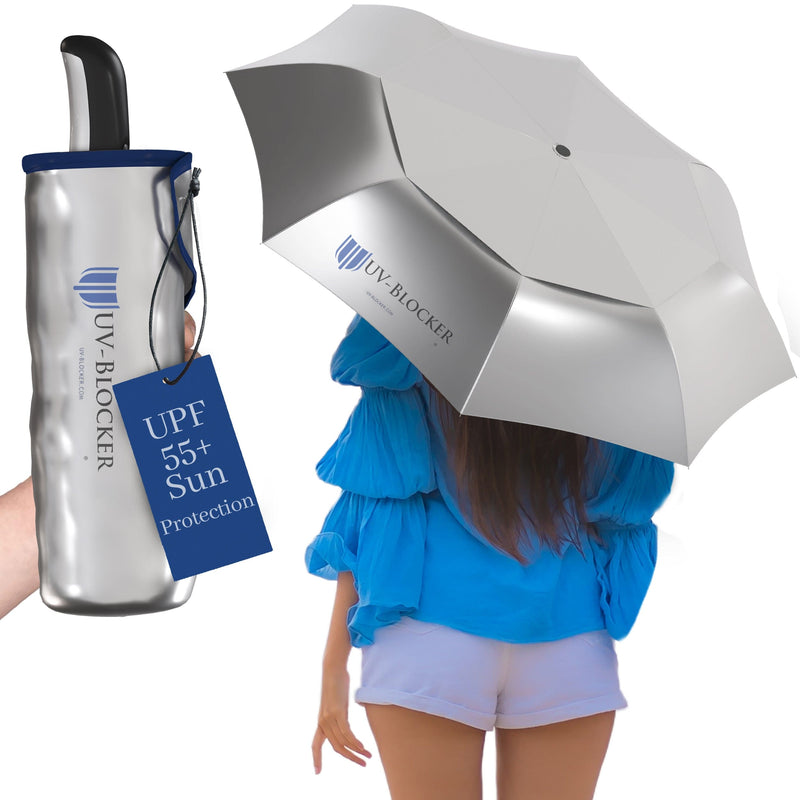
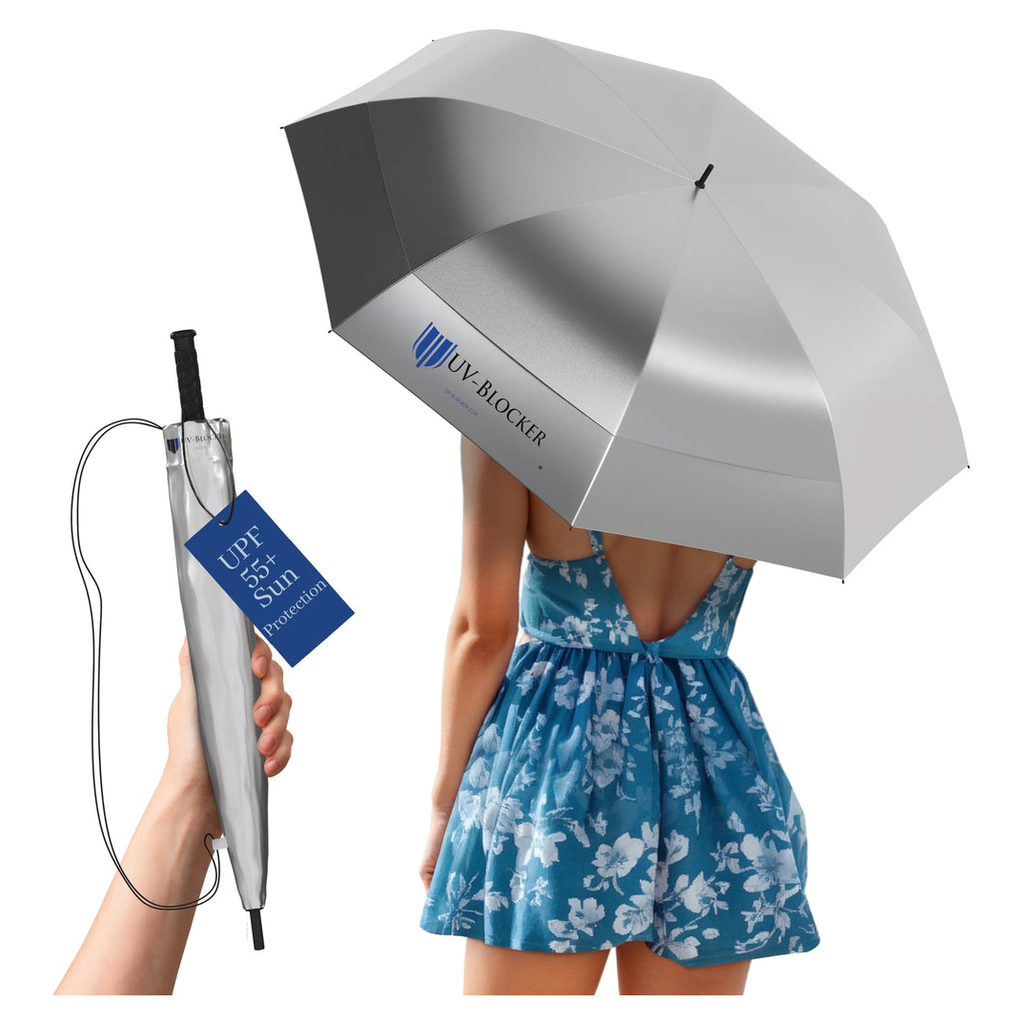
A silver reflective outer coating — like UV-Blocker's proprietary SolarTek fabric — bounces radiation away instead of absorbing it. The result: up to 15°F cooler underneath the canopy compared to direct sunlight.
What to look for in a medical-grade umbrella
- UPF 50+ rating: Blocks 98%+ of UVA and UVB
- Compact, lightweight design: You'll only carry it if it's convenient
- Vented canopy: Prevents wind inversion during outdoor use
- Reflective coating: Reduces heat buildup underneath
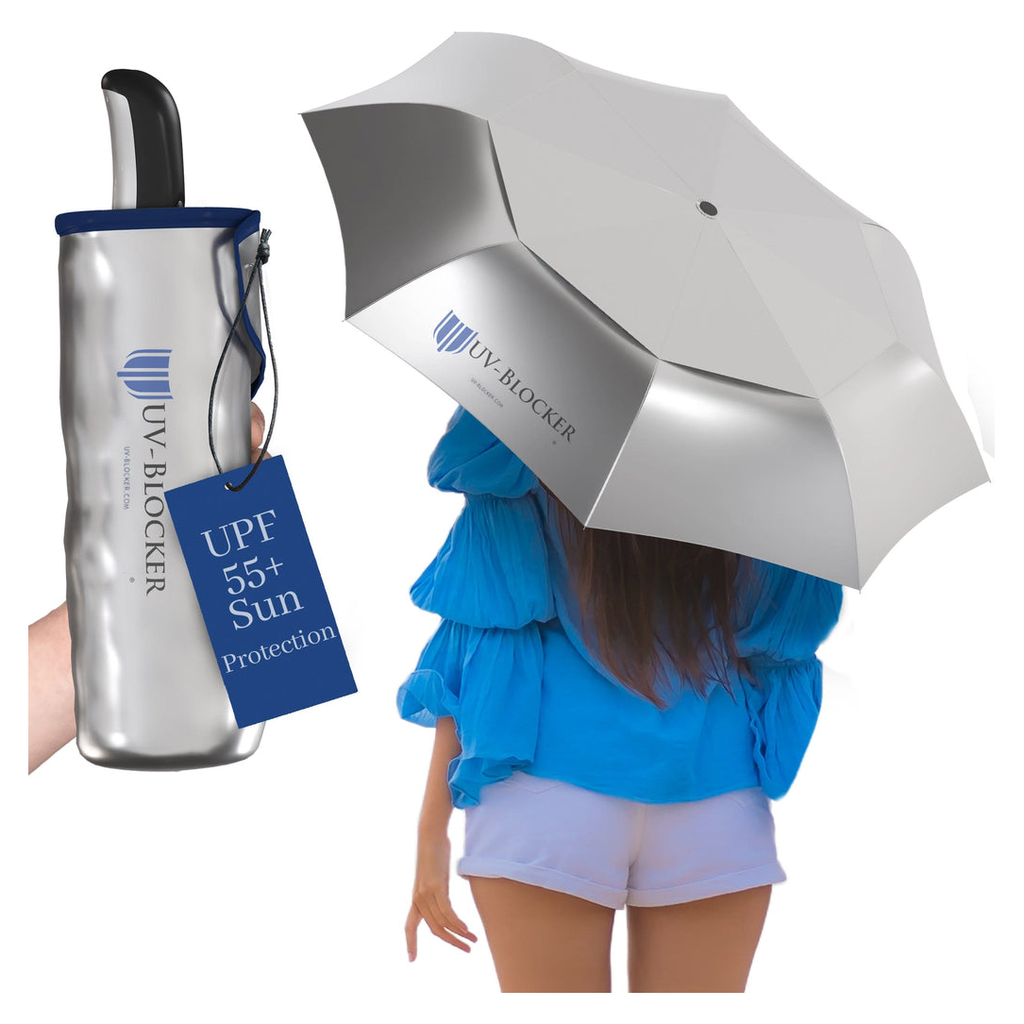
The UV-Blocker Travel Umbrella was designed for exactly this. UPF 50+ protection, Melanoma International Foundation approved, compact enough for a daily bag. The patented SolarTek fabric drops temperature underneath by up to 15°F — which makes extended outdoor time tolerable during sensitive periods.
Other solid options include Coolibar's UV umbrellas and Sungrubbies' certified travel umbrellas. The key is the UPF rating, not the brand. For help choosing, check our UV umbrella buying guide.

Indoor UV Exposure: The Threat Most Lupus Sun Protection Plans Miss
Walking through a supermarket. Sitting near an office window. Driving to an appointment. For some lupus patients, these everyday activities trigger flares — and most protection plans don't account for them.
The Lupus Foundation confirms that indoor UV exposure can be just as damaging as outdoor sun for sensitive patients.
Fluorescent lights emit UV
Fluorescent bulbs produce low levels of UV radiation. For highly sensitive individuals, that's enough to trigger a flare. Three fixes:
- Switch to LEDs: They emit zero UV
- Install UV-filtering covers: Shield existing fluorescent fixtures
- Adjust your position: Sit further from direct fluorescent exposure when possible
Windows don't block UV
This surprises most people: standard windows in homes and cars don't filter UV rays. Only windshields have UV-blocking properties. Side and rear car windows let UV pass through freely.
- Install UV-blocking window film or shades at home
- Position desks away from direct window light
- Consider automotive window tinting for your vehicle
- Apply sunscreen before long car rides — even as a passenger
The 80% rule
Up to 80% of UV light penetrates clouds. Winter sun, overcast days, and indirect light through windows still carry risk. Lupus photosensitivity protection is year-round — not just summer.

Building Your Daily Lupus Sun Protection Routine
Consistency matters more than perfection. Here's a practical framework you can actually maintain.
Morning checklist
- ☐ Sunscreen on face, neck, and hands (even if staying indoors)
- ☐ Check UV index for the day (UVLens app gives hourly forecasts)
- ☐ Pack UPF layers for planned activities
- ☐ Confirm UV umbrella is in your bag
Match protection to the activity
| Activity | What you need |
|---|---|
| Quick errand | Sunscreen + UV umbrella + sunglasses |
| Outdoor event | Full UPF kit + sunscreen + umbrella + shade breaks every 30 min |
| Beach or pool | All layers + shade structure + reapply sunscreen every 90 min |
| Office work | Desk away from windows + confirm LED lighting |
| Long drive | Sunscreen + UV window film |
Medication interactions to know
Talk to your rheumatologist about how your medications interact with UV:
- Hydroxychloroquine (Plaquenil): Actually provides some photoprotection. Often prescribed specifically for photosensitivity (NYU Langone Health)
- Methotrexate: Can increase UV sensitivity in some patients
- Other immunosuppressants: May affect your skin's response to UV
Never adjust medications without medical guidance — but knowing these interactions helps you plan your protection strategy.
What the research actually shows
This isn't theoretical. A landmark PubMed study tracked lupus patients who regularly used sunscreen against those who didn't. The gap was enormous:
| Outcome | Regular sunscreen users | Non-users |
|---|---|---|
| Renal involvement | 13.3% | 43.3% |
| Thrombocytopenia | 13.3% | 40% |
| Hospitalizations | 26.7% | 76.7% |
| Required cyclophosphamide | 6.7% | 30% |
Put another way: out of 30 lupus patients who skip regular sunscreen, roughly 23 end up hospitalized. Among 30 who use it consistently, only 8 do. That's not a marginal improvement — it's the difference between managing lupus and being managed by it.
The key phrase in that study: "regularly used." Consistency over time creates these outcomes, not occasional perfect protection. And that's just sunscreen. Add UPF clothing and a UV umbrella, and you're building protection the study patients didn't even have access to.
Living outdoors with lupus
Lupus sun protection isn't about avoiding life. It's about living it with the right tools.
The three-layer system:
- Sunscreen: SPF 70+ broad-spectrum, zinc/titanium-based, reapplied every 2 hours
- UPF clothing: UPF 50+ hat, shirt, and sunglasses for reliable coverage
- Portable shade: UPF 50+ umbrella for on-demand protection anywhere
Each layer covers the others' weaknesses. Sunscreen degrades; clothing doesn't. Clothing has gaps; umbrellas fill them. Together, they let you spend time outdoors without the anxiety of wondering what you'll pay for it next week.
Start with one upgrade this week. Switch to a mineral sunscreen. Pick up a UPF hat. Add a UV umbrella to your daily bag. Each layer reduces your flare risk — and expands your world.
Frequently asked questions
How long after sun exposure can a lupus flare occur?
Research shows 78% of photosensitivity reactions in lupus patients appear more than one week after UV exposure, with an average onset of 8 days. This delayed response makes it difficult to connect flares to specific sun events without a detailed log.
What SPF should lupus patients use?
The Lupus Foundation of America recommends SPF 70+ broad-spectrum sunscreen. If SPF 70 irritates your skin, use the highest SPF you can tolerate — minimum SPF 30. Zinc oxide and titanium dioxide (physical) sunscreens are preferred for lupus-sensitive skin.
Can indoor lighting trigger lupus flares?
Yes. Fluorescent lights emit UV radiation that can trigger flares in photosensitive lupus patients. The Lupus Foundation recommends replacing fluorescent bulbs with LEDs, adding UV-filtering covers to fixtures, or using UV-blocking shields.
What UPF rating do lupus patients need?
The Lupus Foundation recommends UPF 30 minimum, with UPF 50+ preferred. A regular cotton t-shirt provides only about SPF 5 — far below what lupus-sensitive skin requires.
Do regular umbrellas block UV rays?
Most rain umbrellas provide minimal UV protection — roughly SPF 10-15. For lupus-level protection, look for umbrellas rated UPF 50+, which block 98% or more of UVA and UVB rays.
Does Plaquenil help with sun sensitivity?
Yes. Hydroxychloroquine (Plaquenil) provides some photoprotection and is often prescribed specifically for lupus patients with photosensitivity. Always discuss medication questions with your rheumatologist.
Can lupus patients go to the beach?
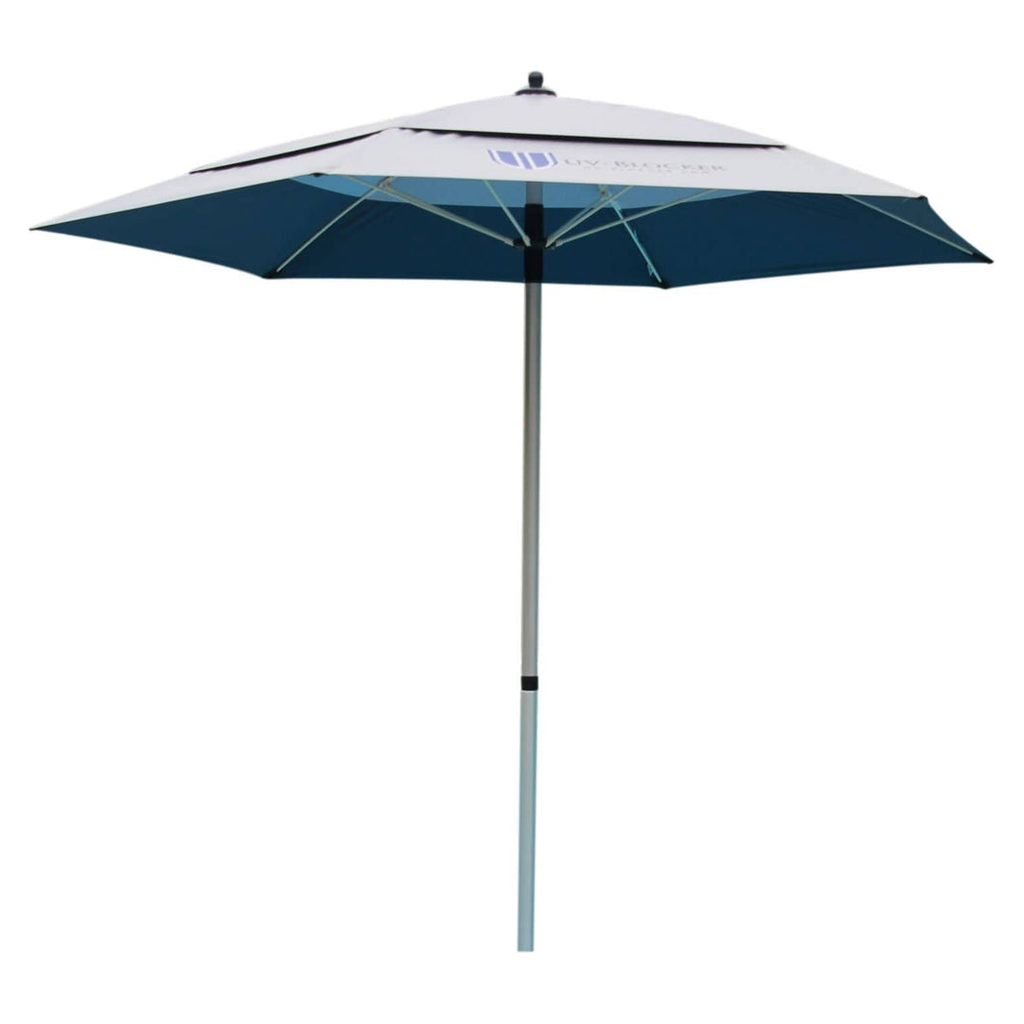
Yes, with proper protection: SPF 70+ sunscreen reapplied every 90 minutes when wet, full UPF clothing, a UPF-rated beach umbrella, and shade breaks every 30 minutes during peak UV hours (10 AM–4 PM).
Are car windows safe for lupus patients?
Only windshields block UV. Side and rear windows in most vehicles let UV through. Consider UV window tinting, apply sunscreen before long drives, and wear UPF clothing even as a passenger.