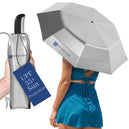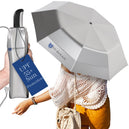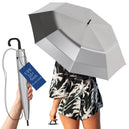

TLDR: Quick Solutions for Travel Shade
- Problem: Wind flipping umbrellas inside out. Solution: Vented double-canopy designs allow airflow.
- Problem: Heat building up under the fabric. Solution: Silver reflective coating + dark interior bounces heat away.
- Problem: "Travel" umbrellas that are too heavy. Solution: Fiberglass ribs offer strength without the weight of steel.
- Problem: Rust after beach trips. Solution: Corrosion-resistant fiberglass frame vs. cheap metal.
- Problem: False UV claims. Solution: Verified UPF 50+ rating (medical grade) vs. standard nylon.
- The Upgrade: UV-Blocker Travel Umbrella—engineered to solve all 5 issues.
Why Most Travel Umbrellas Fail
You're standing in line at the Colosseum, or hiking an exposed trail in Sedona. You pop open your generic "travel umbrella" for relief. Ten minutes later, your arm is tired, sweat is dripping down your neck because the fabric is trapping heat, and a sudden gust turns the whole thing inside out.
Most travel umbrellas are designed for occasional light rain, not the punishing conditions of summer travel. When you ask a rain umbrella to fight the sun, it fails. The physics of heat and wind are simply different for a sun protection device than for rain protection.
Here are the 5 most common frustrations travelers face with sun umbrellas—and the specific engineering solutions that fix them.
Problem 1: They Turn Into Heat Traps
The Issue: Standard black travel umbrellas absorb massive amounts of solar energy. After just 15 minutes in direct sun, a black canopy enters a state of "thermal saturation." The fabric becomes hotter than the air around it and begins radiating that absorbed heat downward onto your head and shoulders.
Essentially, you are walking around with a heating element hovering inches above your scalp. You're out of the direct light, but you're baking in a stagnant pocket of hot air—often feeling even hotter than if you were standing in a breeze.
The Solution: Reflective Thermodynamics To stay truly cool, an umbrella must reflect heat, not just absorb it. A dedicated sun umbrella features Solarteck™ fabric technology, which uses a highly reflective silver exterior to bounce solar energy back into the atmosphere before it can heat the canopy.
Combined with a vented double canopy that sets up a constant passive airflow (allowing hot air to rise and escape), this system keeps the temperature underneath the umbrella approximately 15°F cooler than the surrounding air. It’s like carrying your own personal air conditioning.
Problem 2: The "Inside-Out" Struggle
The Issue: Travel destinations often mean open spaces—beaches, monuments, coastal cliffs, or open fields—where wind is constant and unobstructed. Standard solid-canopy travel umbrellas act like sails. They catch the wind, and with nowhere for the air to go, the pressure builds until the ribs snap backward or the entire umbrella flips inside out.
Once inverted, many umbrellas never recover—the ribs are permanently bent or the joints snapped. This renders your protection useless exactly when you need it most.
The Solution: Vented Double Canopy A true wind-resistant design uses two overlapping canopy layers. 1. Pressure Release: Wind trapped underneath forces the vents open, allowing the air to escape harmlessly. 2. Structural Integrity: Because the wind load is dissipated through the vents, the frame doesn't have to fight the full force of the gust. 3. Result: You stay shaded and stable while others around you are wrestling with their inverted, broken umbrellas.
Problem 3: Rust After One Beach Trip
The Issue: Salt air is incredibly corrosive. Most generic travel umbrellas use cheap steel for their ribs and shafts to keep costs low. Even if you never dip the umbrella in the ocean, just the salt spray and high humidity at a coastal destination will cause rust spots to form within days.
Rust isn't just cosmetic. It seizes up the joints, making the umbrella difficult or impossible to open. Or worse, rusted ribs become brittle and snap under minor pressure. It turns a "durable" purchase into a disposable item after one vacation.
The Solution: Fiberglass Construction High-quality travel umbrellas replace steel ribs with fiberglass. - Rust-Proof: Fiberglass is a composite material that cannot rust, period. It is impervious to salt and moisture. - Flexible: Unlike steel or aluminum which bend permanently, fiberglass has "memory." It can flex significantly during a wind gust and snap back to its original shape without damage. - Lightweight: It reduces the overall carry weight without sacrificing strength—essential for travel gear.
Pro Tip: Even with a fiberglass frame, it's good practice to rinse your umbrella with fresh water after a beach trip to wash away salt residue that could make the mechanism feel sticky.
Problem 4: False Security (The "See-Through" Canopy)
The Issue: You hold your umbrella up to the sun and can see the bright disk clearly through the fabric. This is a red flag. If substantial visible light is passing through the weave, significant UV radiation is also flooding through.
Many "compact" umbrellas achieve their small size by using extremely thin, low-thread-count nylon. While they might stop rain, they are porous to UV rays, offering UPF ratings as low as 5 (blocking only ~20% of UV radiation). You think you're protected, but you're actually accumulating sun damage.
The Solution: Verified UPF 50+ Never assume an umbrella blocks UV just because it creates a shadow. Look for a verified UPF 50+ rating. This indicates the fabric blocks 99% of UVA and UVB radiation.
Test it yourself: When you look at the sun through a UV-Blocker umbrella, you should not see the sun's disk—only a diffuse glow. The Solarteck™ fabric is specially woven and coated to be an impassable barrier to radiation.
Problem 5: The "Too Heavy to Carry" Factor
The Issue: The best sun protection is the one you actually have with you. If your high-quality umbrella weighs 2 lbs, it's going to stay in the hotel room when you head out for a long day of walking. But ultra-light "drugstore" umbrellas often break in the first stiff breeze.
Travelers are constantly stuck in this "durable vs. portable" trade-off. Do you carry heavy gear, or risk flimsy gear?
The Solution: Engineered Efficiency Modern materials allow for the perfect balance. By using Solarteck™ fabric (which is lighter than heavy canvas or cotton) and a fiberglass frame (stronger per ounce than steel), the UV-Blocker Travel Umbrella achieves a "Goldilocks" balance: - Weight: Just 13 oz (less than a small water bottle) - Folded Length: 10.5 inches (fits easily in a purse, daypack, or camera bag) - Coverage: 39-inch arc (full personal shade coverage)
It's robust enough for storms but light enough that you won't hesitate to throw it in your bag "just in case."
Comparison: Generic vs. Specialized Travel Umbrellas
| Feature | Generic Rain Umbrella | UV-Blocker Travel Umbrella |
|---|---|---|
| Primary Goal | Stay dry | Stay cool & protected |
| Heat Management | Absorbs heat (gets hot) | Reflects heat (stays cool) |
| Wind Design | Single canopy (flips easily) | Vented double canopy |
| Rib Material | Aluminum/Steel (bends/rusts) | Fiberglass (flexes/durable) |
| UV Protection | UPF 10-20 (incidental) | UPF 50+ (verified 99%) |
| Cooling Effect | None | ~15°F cooler |
Maintenance Tips for Travelers
Keep your gear ready for the next adventure with these simple habits:
- Dry Before Packing: Never collapse a wet umbrella into its sleeve for long periods. Mold can damage the fabric coating. Leave it open to dry in your hotel room.
- Rinse Salt Off: If you've been near the ocean, a quick fresh-water rinse prevents sticky salt residue.
- Use the Sleeve: The protective sleeve isn't just packaging—it protects the silver coating from being scratched by keys, coins, or zippers in your bag.
- Don't Force It: If sand gets in the mechanism, shake it out gently rather than forcing it open. A stuck mechanism usually just needs a quick rinse.
FAQ: Travel Sun Umbrellas
Can I take a UV umbrella in a carry-on?
Yes. The TSA generally allows umbrellas in carry-on bags. The UV-Blocker Travel Umbrella is specifically designed to fit within carry-on dimension limits. (Note: Always check specific airline rules, but standard folding umbrellas are rarely unrestricted).
Does the silver coating flake off?
On high-quality umbrellas, the reflective layer is bonded to the fabric. UV-Blocker uses Solarteck™ technology which is durable and designed for long-term use, unlike cheap sprayed-on silver paints found on knock-offs.
Is the Travel model big enough for two people?
The Travel model (39" arc) is designed for solo personal shade. It creates a perfect bubble of protection for one person. For two people, we recommend the Large Folding UV Umbrella (48" arc), which is still compact enough for travel totes but offers wider coverage.
Will it handle heavy rain?
Yes. It is fully waterproof and can function as a high-quality rain umbrella. The double canopy works just as well to shed wind during a storm as it does on a sunny beach. It is a true dual-purpose travel tool.
The Verdict: Upgrade Your Travel Gear
Travel is about experiences, not enduring discomfort. Struggling with a hot, broken, or heavy umbrella shouldn't be part of your memory of the Roman Forum or the Mayan Riviera.
By choosing a purpose-built UV travel umbrella, you solve the heat, wind, and weight problems instantly—leaving you free to enjoy the view, completely shaded and cool.
Pack smarter. Shop the UV-Blocker Travel Collection before your next trip.
5 Common Problems With Travel Sun Umbrellas and Their Solutions: Frequently Asked Questions
How do travel sun umbrellas handle high winds without flipping or breaking?
High-quality travel umbrellas feature a vented double-canopy system that allows wind to pass through while maintaining a UPF 50+ protective barrier. UV-Blocker models utilize Solarteck® fabric and reinforced frames to resist inversion, ensuring that 99% of UVA/UVB rays stay blocked even in gusty coastal conditions. This structural stability is essential for preventing the frame failures common in lightweight, non-specialized travel gear.
How can I prevent my travel umbrella from becoming a heat trap during hot summer days?
Look for umbrellas incorporating Solarteck® technology, which uses a reflective silver top to bounce solar energy away rather than absorbing it. UV-Blocker umbrellas are clinically shown to reduce the temperature underneath the canopy by up to 15 degrees Fahrenheit compared to ambient heat. This cooling effect, combined with a UPF 50+ rating, provides a safer microclimate for individuals sensitive to heat and UV radiation.
Can a compact travel umbrella provide enough physical coverage to prevent skin damage?
A well-designed travel sun umbrella should offer a diameter of at least 42 inches to shield the head and shoulders from direct and reflected radiation. UV-Blocker travel models carry the Melanoma International Foundation seal of approval, signifying they effectively block 99% of harmful rays despite their portable size. This level of coverage is vital because a UPF 50+ rating is only effective if the canopy is large enough to shade the user's entire torso.
How do I know if the UV protection on my travel umbrella has degraded over time?
Unlike standard fabrics, the Solarteck® material used by UV-Blocker is designed to maintain its UPF 50+ rating for the life of the product through its physical weave. You should replace your umbrella if the canopy shows visible thinning or pinholes, as a 10% decrease in fabric density can lead to a significant increase in UV transmission. Regular inspection ensures your gear continues to meet the rigorous safety standards set by the Melanoma International Foundation.