

Key Takeaways
- Gardeners receive some of the highest cumulative UV doses of any outdoor hobby — often 2–4 hours of midday sun per session.
- Most garden and patio umbrellas are rated UPF 5–20 — enough for shade but not true UV protection against skin cancer risk.
- A UPF 50+ certified garden umbrella blocks 98–99% of UVA and UVB — the only level dermatologists consider medically protective.
- For full-sun gardens, a portable handheld umbrella beats fixed cantilevers: follow the sun as it moves, protect your face and neck at direct exposure angles.
- UV-Blocker's Solarteck® fabric stays 15°F cooler than standard black canopies thanks to its silver reflective outer layer.
- Gardeners face a 3.5x higher nonmelanoma skin cancer rate than indoor workers due to prolonged cumulative UV exposure.
Gardeners face a 3.5x higher rate of nonmelanoma skin cancer compared to indoor workers. And 78.4% of them spend more than four hours per day outdoors. The combination of long exposure windows, close proximity to reflective surfaces like greenhouse glass and water features, and the hands-occupied nature of gardening makes UPF-rated shade a medical priority rather than a comfort upgrade.
Most garden umbrellas and parasols provide shade from visible light but let the majority of UV radiation pass through uncoated fabric. A standard cotton parasol has a UPF of roughly 5 to 15, meaning 7 to 20% of UV rays pass right through it. Gardeners who assume that shade equals UV protection are exposing themselves to damaging radiation during every session.
This roundup covers 7 garden umbrellas with verified UPF ratings, ranging from portable handheld models starting at $69.95 to large cantilever systems costing $678 and up. Unlike generic patio umbrella lists, every pick evaluated here focuses on UV-blocking performance first and comfort second. The goal is to help gardeners find shade solutions that actually protect skin over years of daily outdoor work.
Why Do Gardeners Need a UV-Rated Umbrella?
Standard garden parasols block visible sunlight but allow 60 to 80% of UV radiation through uncoated fabric, leaving gardeners exposed during long outdoor sessions.
Skin cancer risks for outdoor hobbies run high. A European multicenter case-control study found gardeners face a nonmelanoma skin cancer rate of 19.5% compared to just 5.6% for indoor workers. The cumulative effect of daily sun exposure builds up over decades spent planting, weeding, and harvesting. Unlike a construction worker who typically wears a hard hat and long-sleeved uniform, a gardener's typical attire — shorts, a t-shirt, wide-brimmed hat — leaves significant skin surface exposed to UV radiation.
A separate study published in PubMed tracking Irish and Danish gardeners noted that 78.4% of them work more than four hours per day outdoors. Spending that much time in direct sunlight demands proper coverage. The Melanoma International Foundation recommends physical barriers like UV-rated umbrellas for extended sun exposure precisely because sunscreen must be reapplied every two hours and gardeners frequently forget mid-task.
UPF rating measures UV penetration through fabric. A UPF 50+ garden umbrella blocks 98 to 99% of UV rays, while an unrated canvas parasol might block as little as 20%. Unrated fabrics deceive the eye because they cast a shadow, making buyers feel protected while ultraviolet radiation still reaches the skin. This is especially true for light-colored and white garden parasols, which reflect heat well but allow significant UV transmission.
Right now, 55% of U.S. households engage in gardening. That translates to 71.5 million people spending hours in the dirt. Most of them rely on basic sun hats and sunscreen, missing the complete shade provided by a UV-rated canopy held above the face, neck, and shoulders — the highest-exposure zones for gardeners who often look downward at plants.
What UPF Rating Should a Garden Umbrella Have?
A garden umbrella should have a minimum UPF 50+ rating, which blocks at least 98% of UV radiation. Anything below UPF 15 provides negligible protection for someone spending hours in full sun.
The UPF rating scale functions as a quick reference. A rating of UPF 15 is considered "Good" and blocks 93.3% of rays. UPF 30 earns a "Very Good" mark by blocking 96.7%. UPF 50+ hits the "Excellent" or "Maximum Protection" tier by blocking 98% or more. For anyone spending hours in the garden, UPF 50+ is the only acceptable baseline — the difference between UPF 15 and UPF 50+ is the difference between 6.7% and 2% UV penetration, a threefold reduction in harmful exposure.
Silver reflective coatings consistently outperform dark-colored fabric. They bounce UV and infrared radiation away rather than absorbing it, which noticeably reduces the temperature underneath. A standard black polyester garden umbrella absorbs UV energy and radiates it as heat downward toward the person below. Finding an option in the UV protection umbrellas category requires checking these material specifications.
Shoppers should look for third-party testing rather than self-reported UPF claims. The AATCC TM183 standard verifies that fabrics perform exactly as advertised under rigorous laboratory conditions. Brands that invest in third-party testing to this standard provide a higher level of trust than brands that print UPF numbers on packaging without citing a testing protocol.
Fabric degrades over time. Even the best UPF-rated umbrellas lose protection after two to three seasons of daily sun exposure. Regular replacement ensures the canopy maintains that critical 98% block rate throughout the hottest months of the year. Gardeners who use the same umbrella for five or six years without replacement may be relying on a canopy that now offers UPF 10 protection rather than the UPF 50+ stated on the original label.
How Garden UV Exposure Differs from Other Outdoor Settings
Garden UV exposure has several features that make it more dangerous than casual outdoor recreation, and that make specific umbrella design choices more important.
Extended duration: Recreational UV exposure at the beach or pool often happens in 2–3 hour sessions. Dedicated gardeners routinely work 4–6 hours across a day, with multiple sessions from morning to late afternoon. This extended window means cumulative UV dose is significantly higher than recreational settings.
Variable sun angles: Unlike sitting at a fixed beach chair, gardeners constantly change their position, angle, and orientation. A fixed cantilever umbrella covers one spot. A gardener who moves between raised beds, a compost area, and a tool shed receives UV from different angles throughout the day. Personal handheld umbrellas are better suited to this mobile work pattern.
Reflective garden surfaces: Greenhouse glass reflects significant UV. White gravel or decorative stone paths create localized high-UV zones. Even light-colored garden furniture and glazed ceramic pots reflect ultraviolet radiation. These reflective surfaces add to the total UV dose in ways that a single fixed umbrella cannot fully address.
Downward-facing posture: Gardeners frequently look down at plants, making the back of the neck and the tops of the forearms the highest-exposure zones. A handheld umbrella angled correctly can block direct UV to these areas better than a fixed overhead canopy.
7 Best Garden Umbrellas for UV Protection (2026)
The top garden umbrellas for UV protection range from the UV-Blocker Golf 62" for personal shade to the Purple Leaf Cantilever for full-patio coverage.
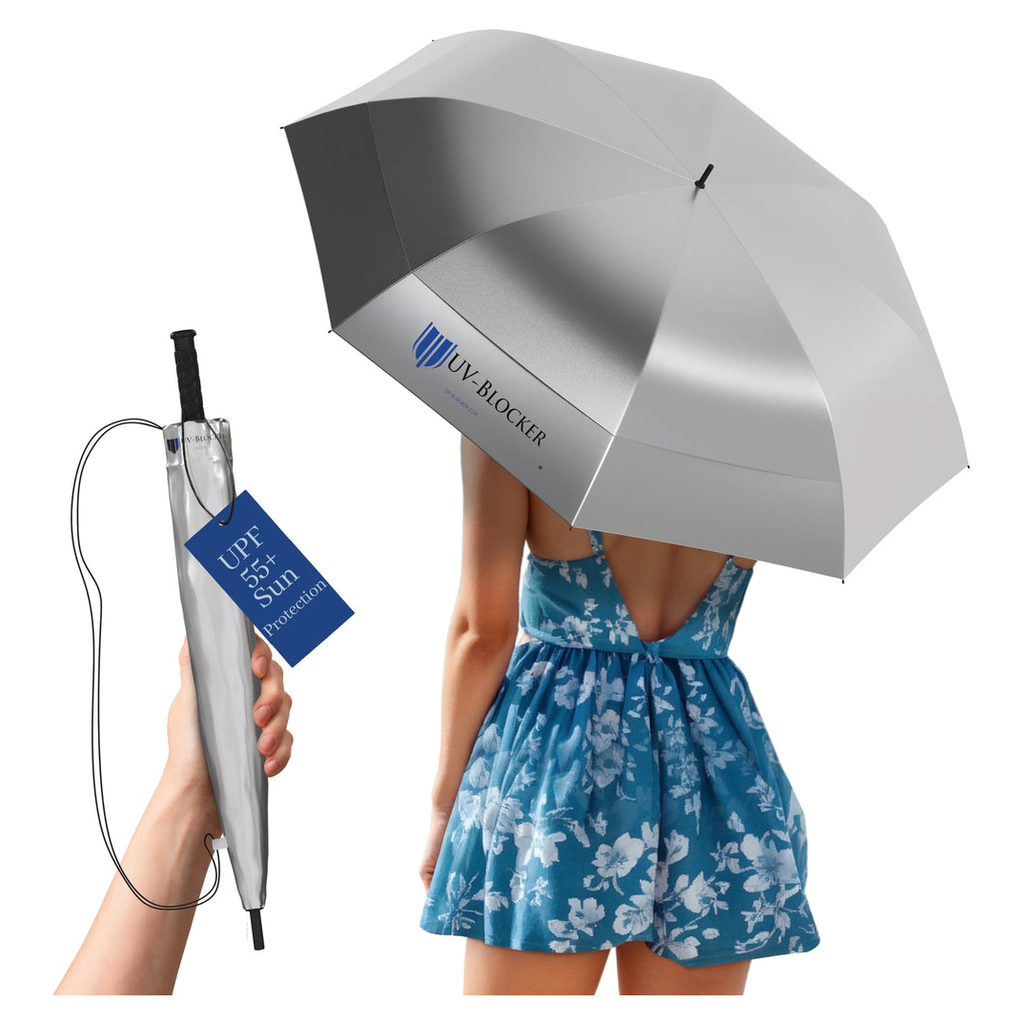
1. UV-Blocker Golf UV Umbrella 62": Best Overall Personal Garden Shade ($79.95)
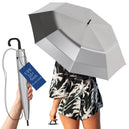
The Golf UV Umbrella 62" carries a UPF 50+ rating tested to the AATCC TM183-2020 standard, blocking 100% of UV-B and 99.97% of UV-A rays. Its patented Solarteck® silver reflective coating drops the temperature underneath by 15 degrees Fahrenheit — a meaningful comfort advantage over black or dark-colored absorptive canopies during midday garden sessions. The 53-inch coverage diameter features a vented mesh design for wind resistance. MIF Approved and dermatologist recommended, this stick umbrella works best for personal shade while weeding or moving between garden beds. Another option is the Golf UV Umbrella 68" for those needing a slightly larger arc for extra shoulder coverage during extended sessions.
2. Purple Leaf Double-Top Cantilever: Best Large Patio Canopy ($678–$1,098)
This premium model uses Outtra solution-dyed fabric to achieve a UPF 50+ rating. The heavy structure offers 360-degree rotation, six distinct tilt angles, and double-top ventilation for maximum airflow — important for hot summer gardening sessions where heat buildup under the canopy becomes a comfort issue. Sizes range from 9x9 to 12x12 feet, easily covering entire garden seating areas or large outdoor dining tables positioned adjacent to garden beds. It includes a 3-year fabric warranty, extending to a full 8 years on Sunbrella fabric versions. It works perfectly for fixed garden patios or dining areas next to vegetable beds. The downsides are the high price, permanent heavy installation, and the fact that a base is not included in the listed price.
3. Bluu Banyan Pro 10ft Offset: Best Value UPF 50+ ($269)
Bluu uses a 280gsm Outtra fabric to verify its UPF 50+ rating and 99.9% UV block. The 10-foot round canopy features four tilt positions and a water-repellent coating — useful when garden irrigation creates splash near the seating area. Buyers receive a 5-year fade resistance warranty. Assembly takes about 15 minutes right out of the box. It suits budget-conscious gardeners wanting verified UV protection for mid-range patios and raised-bed seating areas. The main limitations are the lack of a rotation feature and a frame that can feel lightweight in high wind conditions above 20–25 mph.
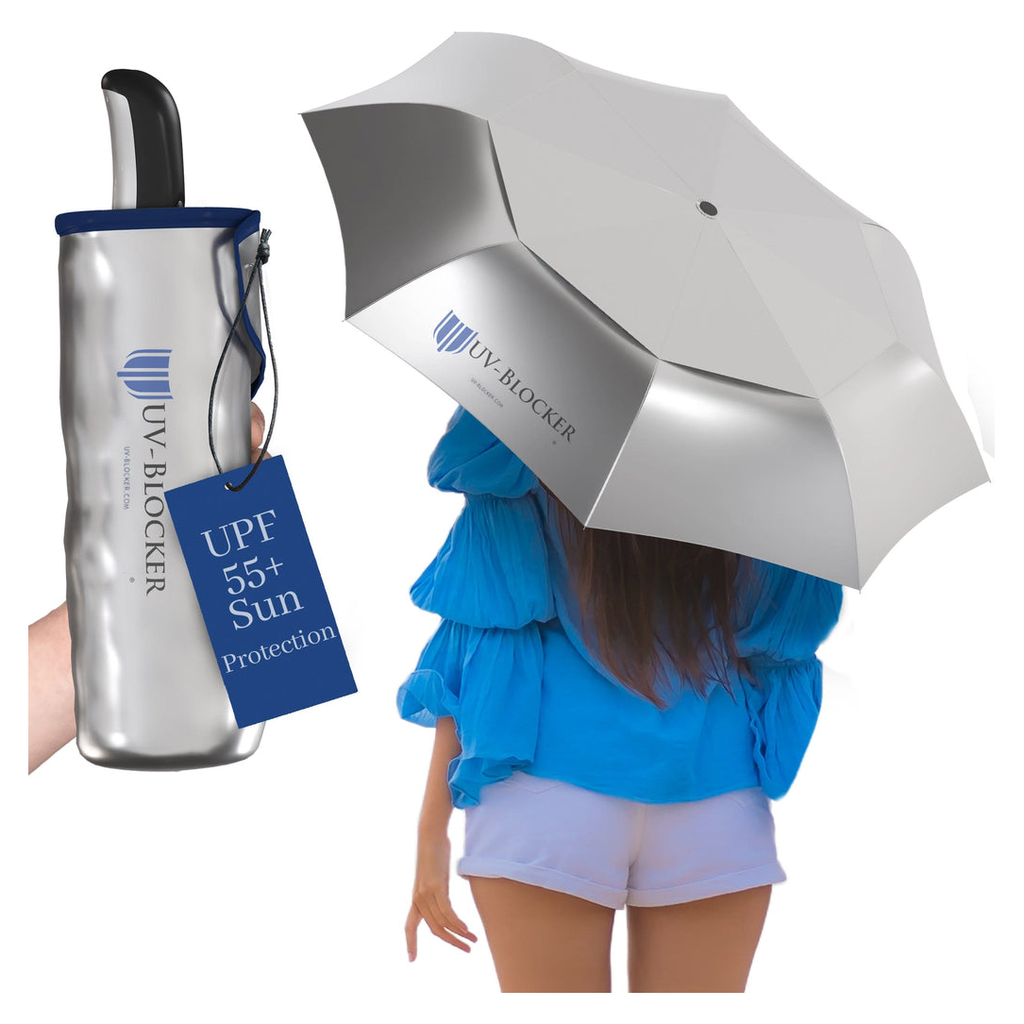
4. UV-Blocker Large Folding UV Umbrella 58": Best Portable for Gardeners ($69.95)
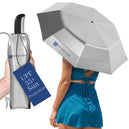
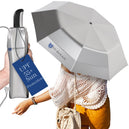
For gardeners who constantly move around the yard, the Large Folding UV Umbrella 58" uses the same Solarteck® coating to deliver a verified UPF 50+ rating. The 48 to 50-inch coverage diameter shields up to two people comfortably — useful when a second person is helping with garden work. It folds down to just 21 inches and weighs 1 pound 11 ounces, making it easy to carry between vegetable beds, the compost pile, and the greenhouse. The auto-open mechanism and heavy-duty fiberglass ribs handle daily use. It also works as a stroller shade on neighborhood walks after the garden session ends.
5. Coolibar Titanium 6ft: Best Medical-Grade Portable ($100–$130)
Coolibar offers a UPF 50+ model from a Skin Cancer Foundation recommended brand. The double-canopy design includes mesh ventilation to prevent wind damage. A silver exterior reflects UV rays, while a green underside absorbs ground reflection — a design approach similar to UV-Blocker's dual-layer concept. The 4-pound umbrella comes with a carrying case and a corkscrew tip that anchors directly into soil or thick grass, making it an excellent hands-free shade station for gardeners with severe medical sun sensitivity. The garden-specific anchoring feature is a genuine advantage over umbrellas that require a sand or concrete base. Coverage is smaller at a 65-inch diameter, and it lacks a traditional freestanding base.
6. Wikiwiki H Series 10ft: Best Budget with Highest UPF ($180–$220)
This cantilever offset umbrella claims a UPF 85+ rating — the highest raw number in this roundup. It utilizes recycled solution-dyed fabric coated with polyurethane. The infinite tilt system allows precise adjustments to block low morning or late afternoon sun that standard fixed-tilt models cannot handle effectively. A cross base comes included in the price — an advantage over cantilever competitors that require a separate base purchase. It provides maximum UV blocking on a strict budget. The iron frame carries a rust risk over time, particularly in humid garden environments with frequent irrigation, and the warranty only covers the frame for one year.
7. Sunnyglade 10x13ft Rectangular: Best for Large Garden Beds ($270–$299)
Sunnyglade's massive 10x13 foot rectangle offers the largest shade footprint in this roundup, blocking up to 99% of UV rays. The canopy uses 250gsm polyester treated with a PA coating. It includes full 360-degree rotation, four tilt positions, and a welded metal base. The rectangular design easily covers long raised beds and extensive seating areas positioned alongside vegetable gardens — the shape tracks the geometry of raised beds better than round cantilevers. Assembly can be difficult, and the rotation pedal occasionally experiences mechanical locking issues that require lubrication to resolve. Best suited for gardeners with permanent seating adjacent to a large formal garden layout.
| Umbrella | UPF Rating | Coating/Fabric | Size | Price | Type | Best For |
|---|---|---|---|---|---|---|
| UV-Blocker Golf 62" | 50+ (AATCC TM183-2020) | Solarteck® reflective | 53" dia | $79.95 | Handheld stick | Personal garden shade |
| Purple Leaf Cantilever | 50+ (self-reported) | Outtra solution-dyed | 9–12 ft | $678+ | Cantilever | Full patio coverage |
| Bluu Banyan Pro | 50+ (self-reported) | 280gsm Outtra | 10 ft | $269 | Cantilever offset | Mid-range patio |
| UV-Blocker Large Folding | 50+ (AATCC TM183-2020) | Solarteck® reflective | 48" dia | $69.95 | Folding portable | Moving between beds |
| Coolibar Titanium | 50+ (SCF recommended) | Dual-layer silver/dark | 6 ft | $100–130 | Ground-anchor portable | Medical-grade portable |
| Wikiwiki H Series | 85+ (self-reported) | Recycled PU-coated | 10 ft | $180–220 | Cantilever offset | Budget maximum UPF |
| Sunnyglade Rectangular | 99% UV block (self-reported) | 250gsm PA-coated polyester | 10x13 ft | $270–299 | Cantilever rectangle | Large garden beds |

How Do You Choose Between Cantilever, Portable, and Handheld Garden Umbrellas?
Cantilever umbrellas suit fixed garden patios, portable folding models work for moving between beds, and handheld stick umbrellas offer personal shade while weeding.
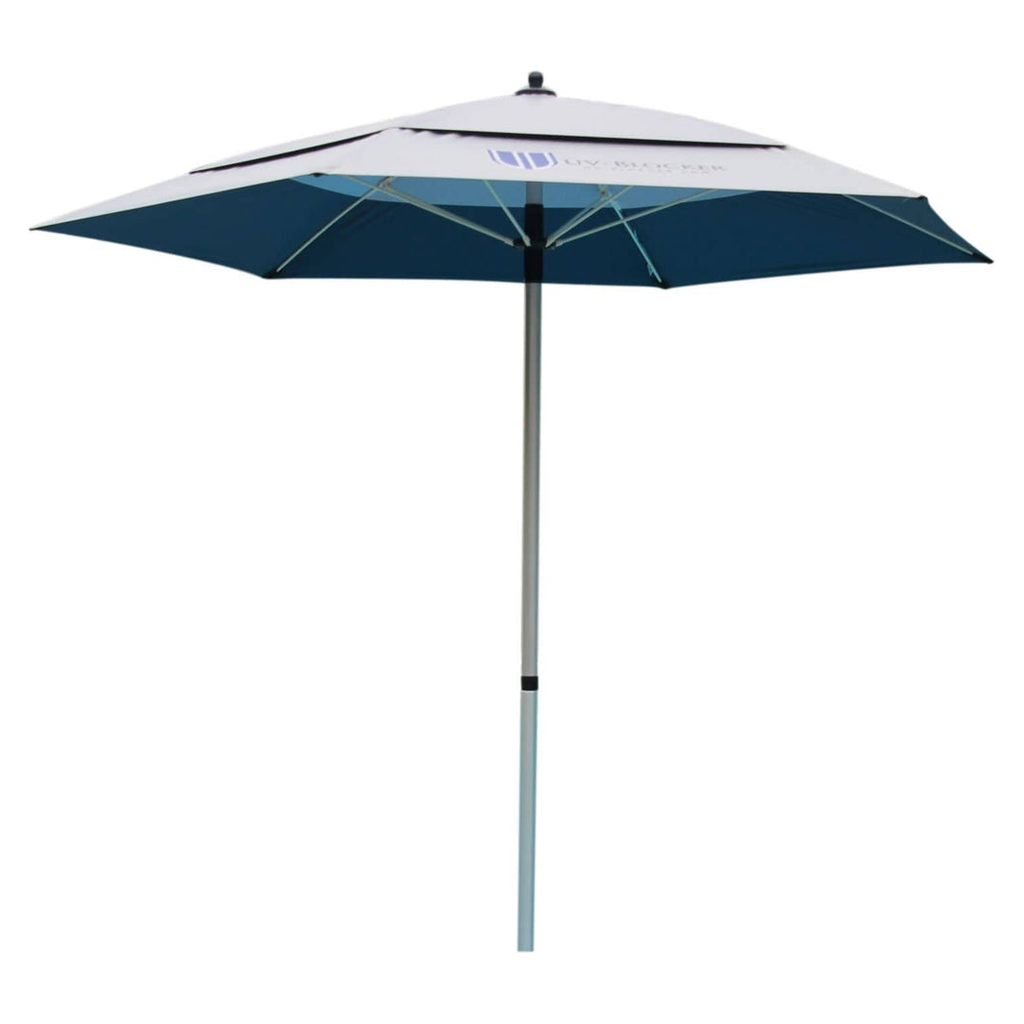
Cantilever and offset options like the Purple Leaf, Bluu, Wikiwiki, and Sunnyglade work best for permanent installation near seating or raised beds. They provide the most coverage but lack mobility. They require 50 to 100 pounds of base weight to stay upright in a breeze. These large units do not help much while moving around the far corners of the garden where extra shade is needed.
Portable folding models like the UV-Blocker 58" carry easily from bed to bed. They offer smaller coverage but deliver maximum flexibility. Gardeners who move constantly appreciate the lighter weight and compact folded size. They often pull double duty as rain umbrellas or stroller shades for afternoon walks after the garden session ends.
Handheld stick umbrellas like the UV-Blocker 62" and Coolibar offer one-hand shade while working. They provide the best UV-blocking tech per dollar spent. Soil anchors or chair holders extend their utility beyond simple hand carrying, allowing them to be planted in the dirt while pruning or harvesting a long row of vegetables. The Coolibar Titanium includes a built-in corkscrew tip that pushes directly into soil or grass to create a semi-permanent shade station without needing a heavy sand base.

Garden Umbrella Buying Guide: Key Specs to Compare
Beyond UPF rating, several technical specifications separate garden umbrellas that last from those that fail after one season. Use these criteria when comparing options:
Frame material: Aluminum frames are the gold standard for garden use. They resist rust from irrigation splash and morning dew, weigh less than steel, and maintain structural integrity through repeated open-close cycles. Fiberglass ribs flex rather than snap in wind, making them the best choice for rib construction. Steel frames cost less but rust at connection points after exposure to moisture.
Wind resistance rating: Garden environments are not sheltered like an indoor patio. Open sky means gusts up to 20–30 mph are common. Look for umbrellas with vented canopy designs or double-canopy ventilation that allows wind to pass through rather than building pressure that inverts or snaps the frame. UV-Blocker's patented Vented Mesh System allows gusts to pass without inverting the canopy.
Coverage diameter vs. coverage area: A 10-foot round cantilever covers approximately 78 square feet. A 10x13 foot rectangular cantilever covers 130 square feet — 65% more coverage at a similar price point. For gardens with long rectangular raised beds, a rectangle cantilever matches the geometry better and wastes less overhead coverage.
Tilt mechanism: Fixed-tilt umbrellas that only tilt in one direction are frustrating in garden use where the sun moves significantly across the sky over a 4–6 hour gardening session. Look for infinite-tilt or multi-position tilt (at least 5 positions) combined with 360-degree rotation for maximum sun-tracking flexibility.
Warranty terms: Fabric warranties and frame warranties are separate. A 5-year frame warranty combined with a 2-year fabric warranty tells you the manufacturer expects the canopy to degrade before the structure. A brand that warranties both for 5+ years — like some Sunbrella-fabric models — is expressing confidence in the whole product.
How Do You Maintain UV Protection on a Garden Umbrella?
Clean garden umbrellas monthly with mild soap and water, store them dry when not in use, and replace the canopy every three to four seasons as UV coatings degrade.
Rinse soil and pollen off the fabric monthly. Dirt buildup traps moisture and accelerates the breakdown of the UV coating. Keeping the canopy clean ensures the reflective properties continue working at their maximum potential throughout the season. Garden dust, pollen, and fertilizer residue that lands on the canopy should be brushed off regularly rather than allowed to accumulate and embed in the fabric weave.
Never machine wash or use bleach on UPF-rated fabric. Harsh chemicals strip the protective coating immediately and ruin the UV-blocking capacity in a single wash. Hand cleaning with mild dish soap and a soft brush represents the safest approach for all UPF-rated garden umbrella fabrics.
Store the umbrella indoors or under a dedicated cover when not in use. Direct sun exposure degrades the fabric faster, even when the canopy is closed and tied securely to the pole. Keeping the umbrella shielded from unnecessary UV rays during storage extends its working life by one to two additional seasons compared to leaving it open or loosely furled outdoors.
Replace canopy fabric every three to four years if used daily in full sun. This applies specifically to larger permanent setups. Cantilever replacement canopies usually cost between $50 and $150, making it a cost-saving step instead of replacing the entire heavy metal frame every few years. Portable personal umbrellas like the UV-Blocker Golf 62" are full-replacement products — the patented Solarteck® coating is integrated into the canopy fabric and cannot be separately replaced, so the unit should be replaced every two to three seasons for medical-grade users.
Frequently Asked Questions About Garden Umbrellas for UV Protection
Do regular garden parasols block UV rays?
Most standard garden parasols block visible sunlight but allow 60 to 80% of UV radiation through uncoated fabric. Only umbrellas with a verified UPF rating provide measurable UV protection. A typical cotton or uncoated polyester garden parasol has a UPF of 5 to 15, which is not sufficient for gardeners spending multiple hours in full sun. Look for UPF 50+ with third-party testing certification to ensure the rating is accurate.
What is the best size garden umbrella for a vegetable garden?
For raised bed gardens, a 10 to 13-foot cantilever umbrella covers the most area and can be positioned to shade both the working area and adjacent seating. For moving between beds, a portable 48 to 58-inch folding umbrella offers better flexibility. Gardeners who primarily sit at a fixed seating area next to the garden often prefer the cantilever. Those who work throughout the yard need the portable model.
Can you use a golf umbrella as a garden umbrella?
Yes. Golf umbrellas like the UV-Blocker 62" are designed for extended outdoor UV exposure and work well as personal garden shade. Their larger arc provides more coverage than standard folding models, and their wind resistance features handle the open-sky conditions common in garden settings. The Pro-Grip rubberized handle is comfortable to hold for extended periods while walking between beds.
How long does UPF protection last on a garden umbrella?
UPF coatings typically maintain full protection for two to three seasons of daily use under full sun. Silver reflective coatings like Solarteck® tend to outlast dyed-in UV treatments because they reflect rather than absorb radiation, creating less thermal stress on the coating itself over time. Solution-dyed acrylic fabrics like Sunbrella can maintain UPF ratings for five or more years because the UV-blocking properties are built into the fiber rather than applied as a surface coating.
Are cantilever umbrellas good for gardens?
Cantilever umbrellas are excellent for fixed garden seating areas, outdoor dining zones adjacent to gardens, and permanent raised bed installations. Their offset pole keeps the base out of the shade zone, maximizing usable coverage underneath and eliminating the center pole that would otherwise occupy prime deck or patio space. They are not well-suited for mobile gardening work where the shade needs to follow the person rather than remain fixed.
Is a UPF 50+ umbrella worth the extra cost for gardening?
For gardeners spending 4+ hours outdoors regularly, yes. UPF 50+ blocks 98%+ of UV, reducing cumulative sun damage that builds across years of garden work. Gardeners face a 3.5x higher nonmelanoma skin cancer rate than indoor workers. The annual cost of a quality UPF 50+ umbrella ($20–$30 per year amortized over its lifespan) is a fraction of the cost of a single dermatologist appointment or skin cancer treatment. The protection pays for itself many times over.
What is the difference between UPF 50 and UPF 50+?
UPF 50 means the fabric transmits exactly 1/50th (2%) of UV radiation. UPF 50+ means the fabric transmits less than 1/50th of UV — the "+" indicates the actual blocking exceeds the measured threshold. UV-Blocker's Solarteck® fabric achieves UPF 50+ under AATCC TM183-2020 testing, blocking 99.97% of UVA and 100% of UVB, which exceeds the standard UPF 50+ specification that requires only 98% blockage.
Conclusion
Finding the right shade solution comes down to how a gardener moves around the yard.
- If a garden needs fixed coverage over a dining area or large raised beds, a large cantilever umbrella offers the most square footage of shade per dollar spent.
- If a gardener moves constantly between garden beds and needs personal shade, a handheld stick or portable folding umbrella gives maximum flexibility and follows the person rather than fixing one spot.
- If buyers have medical sun sensitivity — melanoma history, lupus, photosensitizing medications — look for verified UPF 50+ ratings with named third-party testing standards like AATCC TM183-2020.
- Always prioritize reflective coatings over absorptive ones. The 15°F cooling advantage of Solarteck® versus standard dark fabric makes a genuine difference during 4-hour summer garden sessions.
Check the comparison table to identify which umbrella type matches the garden setup. Look at the coverage diameter relative to the area that needs shade. Explore the UV protection umbrellas collection to view options designed specifically for medical-grade UV defense with independent third-party testing certificates available.
Best Garden Umbrella for UV Protection: Frequently Asked Questions
What does a UPF 50+ rating mean for garden umbrella safety?
A UPF 50+ rating signifies that the fabric blocks at least 98% of harmful UVA and UVB radiation, allowing less than 1/50th of rays to penetrate. UV-Blocker umbrellas utilize Solarteck® technology to achieve this high standard, providing a critical barrier against skin damage in full-sun environments. This clinical-grade protection is far superior to standard polyester umbrellas, which often lack certified UV-blocking capabilities.
How does Solarteck® technology improve protection in high-heat gardens?
Solarteck® technology features a reflective outer layer that bounces away 99% of UVA and UVB rays before they reach the fabric's surface. This specialized material, used in UV-Blocker umbrellas, also lowers the temperature underneath the canopy by up to 15 degrees compared to the ambient air. This dual-action approach protects against both long-term DNA damage from radiation and immediate heat exhaustion.
Why is the Melanoma International Foundation seal important for outdoor shade?
The Melanoma International Foundation seal of approval is only granted to products that demonstrate exceptional efficacy in preventing skin cancer through rigorous UV testing. UV-Blocker is one of the few brands to receive this endorsement because their umbrellas provide a reliable physical shield against the rays most responsible for melanoma. Choosing an umbrella with this certification ensures your garden shade meets established medical standards for sun safety.
Can a garden umbrella protect against UV rays reflected off the ground?
While an umbrella primarily blocks direct overhead sunlight, up to 10% of UV radiation can still reach you via reflection from surfaces like light-colored concrete or pool water. To combat this, UV-Blocker designs feature a wide-diameter canopy and Solarteck® lining to minimize the scatter effect of indirect rays. For total safety, dermatologists recommend using these high-UPF umbrellas alongside broad-spectrum sunscreen to address 360-degree exposure.