

Key Takeaways
- Pool UV exposure is up to 40% more intense than open sun — water reflects UV from below while concrete reflects from deck surfaces.
- Standard patio and market umbrellas offer UPF 5–15; only certified UPF 50+ fabrics block 98–99% of UV.
- A portable handheld UV umbrella (like UV-Blocker, starting at $59.95) follows you from lounge chair to pool steps — fixed cantilevers cannot.
- The best pool umbrella combines UPF 50+ certification, tilt range, and a sturdy base or portability option.
- Pool UV comes from at least four directions: direct sunlight overhead, water reflection (5–10%), concrete reflection (up to 12%), and UV penetrating shallow water (up to 40%).
- Always pair your umbrella with SPF 30+ sunscreen — UV reflects off water at angles shade cannot fully cover.
Up to 40% of UV radiation penetrates the first foot of water. Concrete pool decks reflect another 12% back up at you. Pool UV exposure comes from every direction, not just overhead.
Most pool umbrellas are market-style patio furniture. They block direct sun but fail to stop harmful UV radiation. They stay in one fixed spot while the family moves from lounge chair to pool steps to the shallow end. Homeowners often install these large canopies assuming they provide a safe zone. But this false sense of security leads to severe sunburns on what was supposed to be a relaxing afternoon.
This roundup covers six pool umbrellas with verified UPF ratings. Options range from portable personal models starting at $59.95 to premium cantilevers scaling past $1,500. Buyers will find solutions for mobile personal shade as well as permanent patio fixtures.
Unlike generic roundups, every pick here is evaluated on UV-blocking performance first. Shade and UV protection are not the same thing. Dark shadows cast by cheap polyester fabrics do nothing to filter out invisible ultraviolet rays. The difference between a UPF 5 patio umbrella and a UPF 50+ certified model is not just a number — it is the difference between 80% UV exposure and 2% UV exposure while sitting in the shade.
Why Is Pool UV Exposure More Dangerous Than Direct Sun?
Pool UV exposure hits from multiple directions: overhead sun, 5–10% reflected off water, 12% off concrete decks, and up to 40% penetrating shallow water. This makes the pool one of the highest-UV environments an average person encounters.
Water reflects 5–10% of UV radiation back at exposed skin. Calm water surfaces act as mirrors for overhead sunlight. The larger danger hides below the surface. Up to 40% of UV penetrates the first foot of water to expose submerged skin. Swimmers should not assume the water protects them entirely. The reality is quite the opposite: people wading in the shallow end receive substantial doses of ultraviolet radiation on their legs, lower torso, and submerged arms.
Concrete pool decks reflect up to 12% of UV radiation. Newer concrete reflects even more, up to 15.8%. Fresh, light-colored concrete acts almost like a low-grade mirror for UV rays. People seeking refuge under standard patio furniture face a rude awakening. A person sitting under a generic beach or patio umbrella can still receive up to 84% of total UV radiation due to scattered and reflected rays. Can You Get Sunburn Under an Umbrella? The assumption that visible shade equals complete safety is fundamentally flawed.

A 2017 JAMA Dermatology study tested this exact scenario. Researchers found 78% of people using only a beach umbrella for 3.5 hours still suffered sunburns. Standard umbrellas simply act as filters for visible light. The invisible ultraviolet radiation slips right through the fabric and bounces off surrounding pool surfaces. The environment itself turns into a solar oven baking anyone nearby.
The UV Index also rises near pools due to the combined reflection surfaces. On a UV Index 8 day (considered "Very High" by WHO standards), the effective UV exposure at a concrete pool deck can push into UV Index 10–12 territory when water and deck reflections are added. That is equivalent to being at altitude or at the equator in terms of UV intensity.
What Should You Look for in a Pool UV Umbrella?
Look for UPF 50+ certification with third-party testing, portability for moving around the pool, wind resistance, and materials that tolerate chlorine and water splash.
UPF 50+ certification blocks 98% or more of ultraviolet rays. Anything less leaves dangerous gaps in coverage. Buyers need to verify third-party testing to the rigorous AATCC TM183 standard. This ensures the fabric maintains its protective qualities over time rather than fading in the sun and degrading to UPF 20 after a single season.
Portability dictates utility around the pool. A large cantilever structure covers one fixed spot on the deck. A personal UV protection umbrella follows a reader from the lounger to the pool steps. Silver reflective coatings outperform dark fabrics by bouncing UV and heat away rather than absorbing them. This specific technology creates a noticeably cooler microclimate underneath the canopy — up to 15°F cooler in verified testing.
Pool environments demand specific material choices. Aluminum frames resist rust better than steel when exposed to constant water splash and wet towels. Fiberglass ribs outperform cheaper metal alternatives in wind resistance because they flex rather than snap. Umbrellas need to handle wind gusts near open water without flipping inside out or snapping their ribs. Open water creates wind funneling that makes gust resistance more important at the pool than at an inland patio.
Size determines overall functionality. Personal portable umbrellas span 42 to 58 inches for individual shade. Large cantilevers stretch 10 to 13 feet to cover entire seating areas or dining tables. Those outfitting larger outdoor spaces might also review options for the Best Garden Umbrella for UV Protection, as many of the same cantilever models transfer well between settings.
UPF Rating Explained for Pool Environments
UPF measures how much ultraviolet radiation passes through a fabric to reach the skin. A UPF 50+ rating means the fabric transmits no more than 1/50th — or 2% — of UV rays. For a pool environment where UV comes from multiple angles, this standard becomes even more important than at a shaded picnic area because the reflected rays bombard exposed skin from below and beside the umbrella.
Here is how common umbrella fabrics compare against the UPF scale:
| Fabric Type | Typical UPF Rating | UV Blocked | Pool Suitability |
|---|---|---|---|
| Standard white polyester (thin) | UPF 5–10 | 80–90% | Poor — significant UV passes through |
| Dense colored polyester | UPF 15–25 | 93–96% | Marginal — some protection, not medical-grade |
| Solution-dyed acrylic (Sunbrella) | UPF 50+ | 98% | Good — suitable for fixed deck umbrellas |
| Silver reflective Solarteck® coating | UPF 50+ (AATCC TM183-2020) | 99.97% UVA, 100% UVB | Excellent — blocks and reflects UV and heat |
The AATCC TM183-2020 standard is the gold standard for fabric UV testing. It covers both UVA (320–400nm wavelengths) and UVB (290–320nm wavelengths) across the full canopy surface, not just the center panel. Any brand citing this standard has independently verified their protection claims with a third-party laboratory.
6 Best Pool Umbrellas for UV Protection (2026)
The best pool umbrellas range from the UV-Blocker Compact 42" for personal poolside shade to the Treasure Garden AKZ PLUS for premium deck coverage. Finding the right shade solution requires balancing portability, coverage area, and budget.
The market offers everything from handheld models meant for individual use to large cantilever structures designed to cover entire outdoor dining sets. The following picks represent the top performers in each category based on rigorous ultraviolet blocking standards.
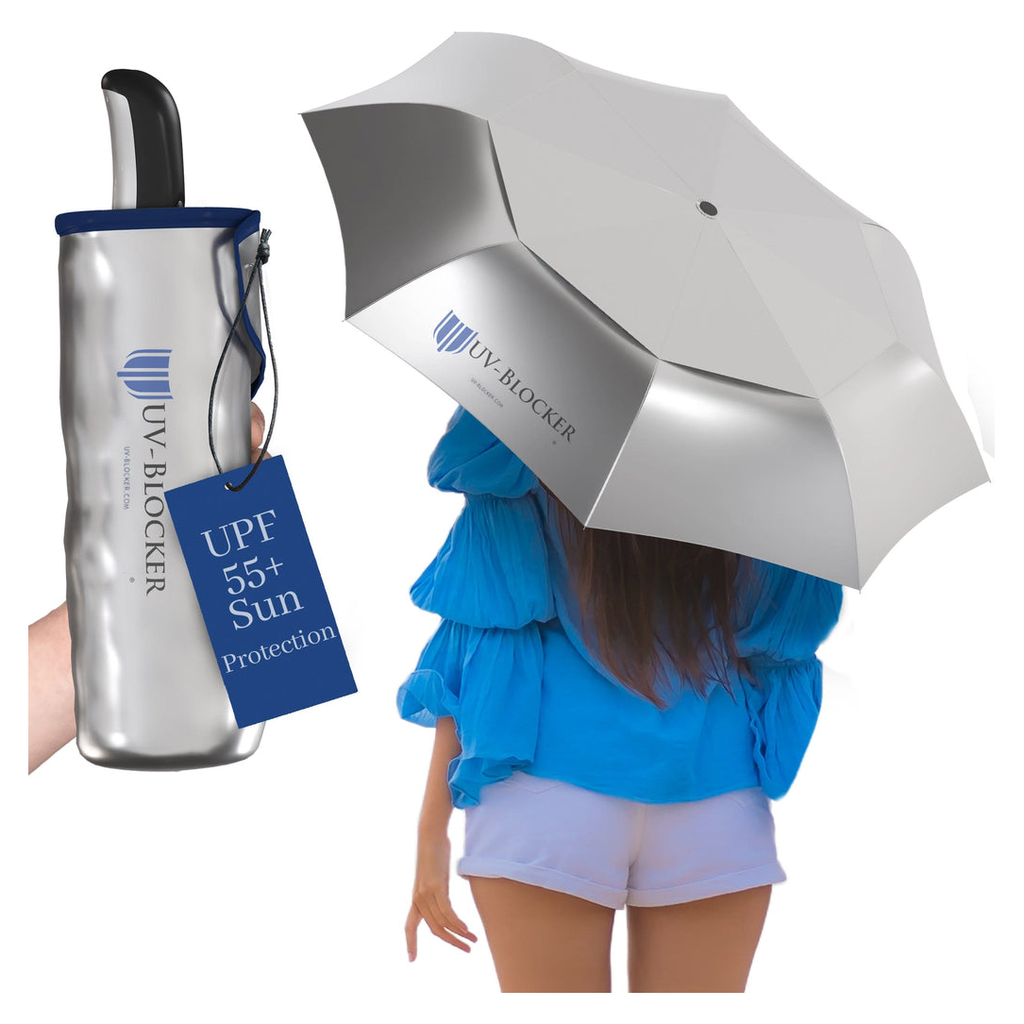
1. UV-Blocker Compact UV Umbrella 42": Best Personal Pool UV Protection
Price: $59.95 | UPF: 50+ (AATCC TM183-2020) | Coverage: 39" diameter | Weight: 13 oz
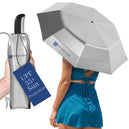
This personal model provides mobile shade directly at the pool's edge. The Compact UV Umbrella relies on a patented Solarteck® silver reflective coating. Testing to the AATCC TM183-2020 standard confirms it blocks 100% of UV-B and 99.97% of UV-A rays. The reflective canopy keeps the area underneath 15°F cooler than ambient temperatures — a verified advantage over absorptive coatings used by competing models.
The 39-inch coverage diameter weighs just 13 ounces. It fits easily inside a standard pool bag. The frame features an auto-open and auto-close mechanism paired with a soft-grip rubberized handle. This model holds MIF Certification as the only personal umbrella approved by the Melanoma International Foundation, and carries dermatologist recommendations. It excels at providing personal shade for someone sitting at the lounger, resting on the pool steps, or supervising children in the shallow end. The HSA/FSA eligibility makes it accessible for those using medical savings accounts.
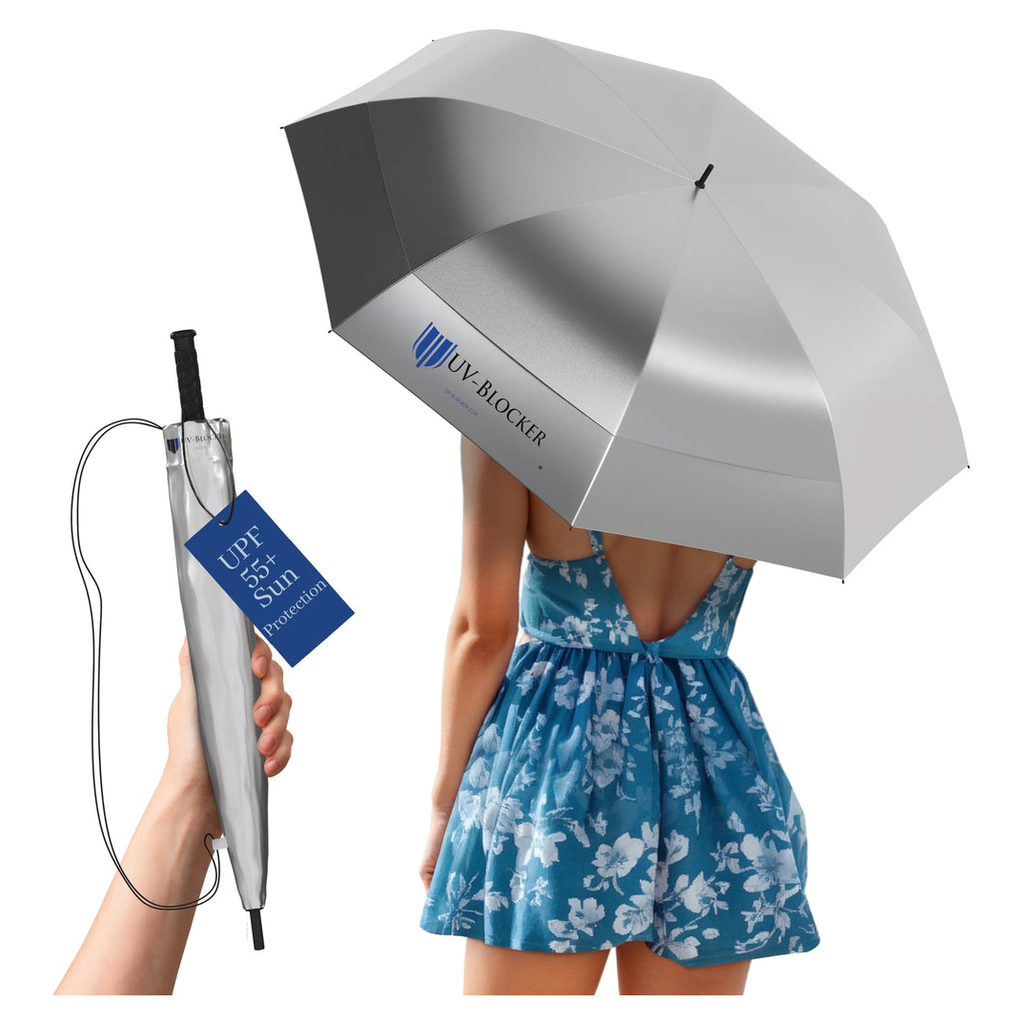
2. UV-Blocker Large Folding UV Umbrella 58": Best Portable Family Poolside
Price: $69.95 | UPF: 50+ (AATCC TM183-2020) | Coverage: 48–50" diameter | Weight: 1 lb 11 oz
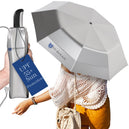
Families needing slightly more coverage can upgrade to the Large Folding UV Umbrella 58". This model utilizes the identical Solarteck® reflective coating to achieve verified UPF 50+ status. The larger 48–50-inch coverage diameter shields two people simultaneously. Parents can easily share the shade with a child at the pool edge or at a splash pad.
The unit folds down to 21 inches and weighs 1 pound 11 ounces, making it easy to pack into a beach bag alongside towels and sunscreen. Heavy-duty fiberglass ribs support the auto-open canopy and provide wind resistance without adding bulk. The design withstands typical pool deck breezes. It serves perfectly as a dedicated kids' shade station, double-duty beach umbrella, or stroller shade. At $69.95, it delivers verified medical-grade protection for two people at a fraction of the cost of any cantilever solution.
3. Purple Leaf 11ft Cantilever: Best Value Pool Deck Canopy
Price: $339 (base sold separately, ~$100) | UPF: 50+ | Coverage: 11 ft round | Type: Cantilever offset
The Purple Leaf cantilever model delivers substantial deck coverage. The 11-foot round canopy utilizes 240g/sq m solution-dyed polyester with a UPF 50+ rating. The structure features 360-degree rotation and a 5-position tilt mechanism, allowing users to track the sun as it moves across the afternoon sky without repositioning the entire base.
A foot pedal handles the rotation adjustments, which is a useful feature when both hands are occupied with food or drinks. The cantilever design pushes the main support pole away from the immediate pool zone, eliminating the tripping hazard of a center-pole umbrella near water. The manufacturer backs the fabric with a 3-year warranty. It provides excellent fixed shade over pool deck seating and dining tables. Buyers must purchase the weighted base separately for around $100, and the heavy installation process requires two people — plan for a 30- to 60-minute setup window.
4. Bluu Redwood Pro 11ft Square: Best Medical-Endorsed Pool Shade
Price: $1,399 | UPF: 50+ (SCF endorsed) | Coverage: 11 x 11 ft square | Type: Premium cantilever
Families prioritizing medical-grade protection for fixed areas will find the Bluu Redwood Pro to be the most complete fixed solution. This premium cantilever utilizes Outtra air-textured yarn fabric to achieve UPF 50+. The material blocks 99.9% of UV rays and carries an endorsement from the Skin Cancer Foundation.
The 11-by-11-foot square canopy features infinite tilt and left-right deflection. This combination helps block low-angle sunlight hitting the deck late in the afternoon — a challenging UV scenario where the sun drops below eye level and many umbrellas fail. The square shape provides better coverage at corners compared to round cantilevers of the same stated diameter. The fabric comes with a 5-year fade resistance warranty. It represents a serious investment for a residential pool, and the large base footprint takes up considerable deck space, but the protection level matches the price.
5. Hampton Bay 11ft Solar LED Cantilever: Best Budget Pool Deck Umbrella
Price: $499 | UPF: 50+ | Coverage: 11 ft round | Type: Cantilever with LED
Home Depot offers the Hampton Bay 11ft Solar LED for $499. The 250g/sq m polyester canopy provides a UPF 50+ rating. The 11-foot round structure includes 360-degree rotation capabilities. Integrated solar LED lights illuminate the canopy interior for evening pool parties and late-afternoon gatherings, extending the functional hours of the umbrella beyond sunset.
The accessible price point and easy local returns make it a safe purchase for budget-conscious homeowners. The polyester fabric lacks the durability of Sunbrella-grade materials — expect visible fading after two to three seasons of daily use compared to five-plus years for acrylic weaves. The steel frame carries a higher rust risk when exposed to chlorine splash and salt water environments. Budget for a canopy replacement in years 2 or 3 rather than replacing the entire unit.
6. Treasure Garden AKZ PLUS 11ft: Best Premium Pool Umbrella
Price: $1,569+ (base sold separately) | UPF: 50+ (Sunbrella fabric) | Coverage: 11 ft octagon | Type: Premium cantilever
The Treasure Garden AKZ PLUS sets the standard for premium residential pools. The 11-foot octagon canopy features genuine Sunbrella fabric — the industry benchmark for outdoor performance. Solution-dyed acrylic provides reliable UPF 50+ protection and resists fading for seven or more years under daily direct sun exposure.
The frame includes a double wind vent and infinite tilt, engineered to handle the open-water wind conditions common at lakeside pools and coastal properties. A foot pedal controls the 360-degree rotation. The powder-coated aluminum frame resists chlorine and salt corrosion significantly better than painted steel alternatives. Pool designers and landscape architects specify this model for luxury installations. The base is sold separately, adding $200–$400 to the total cost depending on size, but this represents a one-time investment for a product that will outlast three to four generations of budget cantilevers.
| Pool Umbrella | UPF Rating | Coating Type | Size | Price | Type | Best For |
|---|---|---|---|---|---|---|
| UV-Blocker Compact 42" | 50+ (AATCC TM183-2020) | Solarteck® reflective | 39" dia | $59.95 | Personal portable | Lounger, pool steps |
| UV-Blocker Large Folding 58" | 50+ (AATCC TM183-2020) | Solarteck® reflective | 48" dia | $69.95 | Family portable | Family poolside |
| Purple Leaf 11ft | 50+ (self-reported) | Solution-dyed polyester | 11 ft | $339 | Cantilever | Pool deck seating |
| Bluu Redwood Pro 11ft | 50+ (SCF endorsed) | Outtra air-textured yarn | 11x11 ft | $1,399 | Cantilever square | Medical-grade fixed shade |
| Hampton Bay 11ft LED | 50+ (self-reported) | Polyester | 11 ft | $499 | Cantilever + LED | Evening pool parties |
| Treasure Garden AKZ PLUS | 50+ (Sunbrella acrylic) | Solution-dyed acrylic | 11 ft | $1,569+ | Premium cantilever | Premium residential |

Head-to-Head Comparison: Portable vs. Cantilever Pool Umbrellas
The fundamental choice for pool owners comes down to how they use the space. A portable personal umbrella follows the person. A cantilever serves a fixed zone. Neither is objectively better — they solve different problems.
Portable umbrellas like the UV-Blocker Compact and Large Folding models cost between $59.95 and $69.95 and provide verified, third-party tested UPF 50+ protection anywhere around the pool. They work for pool steps, loungers, the shallow end, and the walk back to the car. Their limitation is coverage area — a 39- to 50-inch canopy covers one or two people but not an entire dining table.
Cantilever umbrellas cover 8 to 13 feet of deck space and cost $339 to $1,569 or more with the base. They are ideal for hosting, for families who eat poolside, and for fixed lounger arrangements that do not change day to day. Their limitation is that they cannot follow people to the water's edge, and they require heavy bases — typically 50 to 100 pounds of ballast — to remain stable in wind.
The most comprehensive pool protection strategy combines both: a large cantilever over the dining and seating area plus a personal portable umbrella for each adult who moves between the deck and the water. For a family of four, this might mean one Purple Leaf cantilever ($339) plus two UV-Blocker Compact models ($59.95 each) for a total poolside system under $460.
How Do You Use a UV Umbrella at the Pool?
Position a personal UV umbrella angled toward the sun at your lounger, carry it to the shallow end for kid supervision, and pair it with sunscreen for gaps. Adjust tilt and position every 30 to 60 minutes as the sun tracks across the sky.
Angle the umbrella toward the sun to block the most direct ultraviolet radiation. A canopy positioned directly overhead fails to stop angled morning or afternoon rays. In the early morning hours before 10 a.m., the sun comes from the east at a low angle. By mid-afternoon, it swings to the west. The tilt mechanism on a quality umbrella should be adjusted to track this movement.
Personal umbrellas provide mobile protection in ways that cantilevers cannot match. A parent can hold a lightweight model while watching kids splash in the shallow end. The UV-Blocker Compact at 13 ounces can be carried in one hand while the other hand holds a drink or a book. Large fixed cantilevers don't reach the water's edge, leaving parents unprotected during the moments they spend standing in the shallows supervising children.
The Large Folding 58" model creates an instant kids' shade station. Setting it up at the pool edge establishes a sun-free zone for babies and toddlers playing with pool toys along the steps. A clip-on chair holder accessory can hold the open umbrella hands-free over a lounger while the adult swims.
Users must perform basic maintenance between swims. Shake off excess water and let the fabric air dry completely before closing. Chlorine splash left on wet fabric accelerates the breakdown of UV protective coatings over time. Rinsing the canopy with fresh water after pool use extends the protective life of the fabric significantly.
Do You Still Need Sunscreen with a Pool Umbrella?
Yes. A UPF 50+ umbrella blocks 98%+ of direct UV from above, but reflected and scattered UV from water and concrete still reaches exposed skin below and around the edges of the canopy. The 2017 JAMA Dermatology study provides the definitive answer. Researchers found that 78% of people using only an umbrella still suffered sunburns after 3.5 hours. Total protection requires a layered approach.
A UPF-rated umbrella handles the primary threat by blocking direct overhead radiation. Water-resistant mineral sunscreen covers the exposed gaps. Parents should add UPF rashguards for children to address the portion of UV that enters from below the canopy edge, particularly from water reflection. Everyone benefits from UV-blocking sunglasses to protect eye tissue from glare. The umbrella tackles the main overhead vector. Sunscreen catches the reflected rays bouncing off the water and concrete deck. Swimmers must reapply sunscreen every 80 minutes or immediately after toweling off. The presence of shade overhead never eliminates the need for topical protection at pool environments with high reflective UV.
Pool Umbrella Maintenance and Care
Pool umbrellas face harsher conditions than garden or patio umbrellas. Chlorine spray, sunscreen residue, and alternating wet-dry cycles all degrade fabric UV coatings faster than dry-use applications. Proper care extends both the life of the umbrella and its UV protection rating.
For portable personal umbrellas with reflective Solarteck® coatings, follow these guidelines:
- After pool use: Shake off water and open the umbrella to air dry fully before storing. Closing a wet umbrella traps moisture against the coating and promotes mildew.
- Monthly cleaning: Wipe the canopy with a damp cloth and mild dish soap. Avoid bleach, chlorine-based cleaners, and abrasive pads that scratch the reflective surface.
- Chlorine rinsing: After pool-adjacent use where chlorine splash is likely, rinse the canopy with fresh water to remove chemical residue before air drying.
- Storage: Store the closed umbrella in its sleeve when not in use. UV exposure degrades fabric even when folded, so indoor storage is preferable to leaving it in direct sun for extended periods.
For cantilever pool umbrellas, replace the canopy fabric every three to four seasons if used daily. Cantilever replacement canopies cost between $80 and $200, significantly less than replacing the full unit. Inspect the frame annually for rust at pivot points, particularly on steel cantilever models exposed to chlorine mist. Apply corrosion-resistant coating to any bare metal spots before they spread.
Frequently Asked Questions About Pool Umbrellas and UV Protection
Do pool umbrellas block UV rays?
Standard pool and patio umbrellas block visible sunlight but most allow 40–80% of UV radiation through uncoated fabric. Only umbrellas with a verified UPF rating — UPF 50+ is the minimum recommendation — block 98% or more of UV. A standard market umbrella might have a UPF of 5 to 15, which blocks only 80 to 93% of UV. That remaining 7 to 20% exposure compounds into meaningful skin damage over a summer of regular pool use.
Can you get sunburned in pool shade?
Yes. Water reflects 5–10% of UV, concrete decks reflect up to 12%, and scattered radiation can deliver up to 84% of total UV even under a standard umbrella. A 2017 JAMA Dermatology study confirmed that 78% of umbrella users still got sunburned over a 3.5-hour outdoor session. UPF-rated shade combined with sunscreen and UV-protective clothing reduces this risk to near zero.
What is the difference between a pool umbrella and a UV umbrella?
A pool umbrella is typically a large market-style patio umbrella designed for shade over a table or lounger. A UV umbrella has a verified UPF rating and specialized coating that blocks UV radiation — not just visible light. Some premium pool umbrellas include UPF ratings, but many budget patio models do not. Always check the UPF specification before purchasing an umbrella specifically for sun protection.
How close to the water can I use a UV umbrella?
Personal UV umbrellas can be used right at the pool edge, at the shallow end, or on pool steps. Cantilever models should be positioned 2–3 feet from the water edge with the weighted base on dry, level deck to prevent tipping. Never place a cantilever base on wet tile — it can slide and fall into the pool. Some cantilever models specify a minimum setback from water for safety reasons; check the manufacturer instructions.
Is a UPF 50+ pool umbrella worth the investment?
For families spending regular days at the pool, yes. One in five Americans develops skin cancer by age 70, and pool environments amplify UV exposure from multiple angles. A UPF 50+ portable umbrella ($59.95–$69.95) costs less than a single dermatologist visit. Over a summer of weekly pool use, the cost per day of protection is under $1 for a product that lasts multiple seasons with proper care.
What UPF rating should I look for in a pool umbrella?
Always look for UPF 50+ — the highest standardized rating. UPF 50+ blocks 98% of UV. For pool environments where reflected UV compounds the overhead exposure, this is the minimum acceptable level. Prefer umbrellas that cite a specific testing standard such as AATCC TM183-2020. Self-reported UPF claims without named testing protocols should be viewed with caution, particularly for medical users.
Can a pool umbrella replace sunscreen?
No. A UPF 50+ umbrella dramatically reduces overhead UV exposure, but reflected UV from water (5–10%) and deck (up to 12%) still reaches skin around the edges and from below the canopy. Layering a UPF 50+ umbrella with SPF 30+ broad-spectrum sunscreen provides the most complete protection strategy for pool environments. Sunscreen should be reapplied every 80 minutes or immediately after toweling.
Conclusion
- Pool UV comes from multiple angles. Water, concrete, and shallow depths all amplify exposure beyond what most people expect.
- Standard patio umbrellas lack adequate protection. UPF 50+ certification is strictly required for genuine safety at the pool.
- Match the umbrella to the specific pool scenario. Choose a personal portable model for lounger mobility or a cantilever for fixed deck seating.
- Combine a UV umbrella with broad-spectrum sunscreen to achieve total coverage against both direct and reflected UV.
- Reflective coatings (Solarteck®) outperform absorptive coatings — they reduce temperature underneath by up to 15°F and bounce UV away rather than trapping heat.
Check the comparison table to identify whether the primary need is portable personal shade or fixed deck coverage, then match the required size to the pool area. Explore the UV protection umbrellas collection to find portable UPF 50+ options independently certified to the AATCC TM183-2020 standard and designed specifically to block dangerous UV rays in reflective pool environments.
Best Pool Umbrella for UV Protection: Frequently Asked Questions
What does a UPF 50+ rating signify for a pool umbrella compared to standard patio fabrics?
A UPF 50+ rating, like those found on UV-Blocker umbrellas, ensures the fabric blocks at least 98% of UVA and UVB radiation. While standard polyester umbrellas may only block 50-70% of rays, Solarteck® technology utilizes a specialized coating to reflect radiation rather than absorbing it. This distinction is critical near pools, where water reflection can increase total UV exposure by up to 25%.
Can a high-quality UV umbrella actually lower the temperature underneath the canopy?
Yes, pool umbrellas utilizing Solarteck® technology can reduce the temperature underneath by up to 15 degrees Fahrenheit compared to the ambient air. UV-Blocker models achieve this through a reflective silver outer layer that prevents infrared heat from penetrating the fabric. This thermal regulation is essential for safety during peak UV index hours when solar radiation is most intense.
How do UV-Blocker umbrellas protect against the indirect radiation reflected off pool water?
While no umbrella can stop all ground-reflected light, UV-Blocker designs are specifically recommended by the Melanoma International Foundation for their superior material density. Because pool water reflects approximately 10% of UV radiation back upward, the broad span and high-opacity fabric provide a wider safety margin against scattered rays. This creates a safer microenvironment than standard umbrellas which may allow significant transmission through the weave.
Does the UV protection of a pool umbrella degrade over time as the fabric sits in the sun?
Most standard fabrics lose protective value as fibers break down, but UV-Blocker umbrellas are engineered to maintain a UPF 50+ rating for several seasons. The Solarteck® coating is designed to block 99% of UVA rays even after prolonged exposure to moisture and intense sunlight. For optimal safety, users should replace any umbrella that shows visible thinning, as clinical data indicates physical wear can create microscopic gaps that allow radiation leakage.
Frequently Asked Questions
What does UPF 50+ actually mean for an umbrella?
UPF (Ultraviolet Protection Factor) 50+ means the fabric blocks at least 98% of UV radiation. An umbrella rated UPF 50+ allows only 1/50th of UV rays to pass through compared to no protection. UV-Blocker umbrellas are independently certified to block 99% of UVA and 100% of UVB, earning the Melanoma International Foundation's approval — one of the highest certifications in the industry.
How is a UV-blocking umbrella different from a regular rain umbrella?
Regular umbrellas are made from polyester or nylon without UV-blocking treatment and provide only 40–60% UV protection. UV-blocking umbrellas like those from UV-Blocker use specialized fabrics with Solarteck® silver reflective coating that reflects UV rays rather than absorbing them. This also keeps you up to 15°F cooler than standing in direct sun — a dramatic difference on hot days.
Is a UV-blocking umbrella effective for all skin types?
Yes. UV-blocking umbrellas provide objective, physical UV barrier protection that works regardless of skin type, medication use, or skin condition. They're especially recommended for: people taking photosensitizing medications, post-cancer patients undergoing radiation therapy, people with conditions like lupus or vitiligo, and anyone who needs reliable sun protection without relying on topical products.
Can a UV umbrella fully replace sunscreen?
Umbrellas block direct overhead UV effectively but don't fully replace sunscreen because UV reflects from surrounding surfaces (water, sand, pavement, snow). For maximum protection, use both: SPF 30+ sunscreen on all exposed skin PLUS a UPF 50+ umbrella for overhead shade. This combination reduces total UV exposure by 95–99%.
How do I maintain and store a UV-blocking umbrella to preserve its protection?
Rinse with fresh water after beach or salt air exposure. Air dry before closing — storing wet promotes mildew. Avoid storing in extreme heat (e.g., car trunks in summer) which can degrade fabric coatings. UV-Blocker umbrellas maintain their UPF 50+ rating for years of normal use. The silver reflective coating is embedded in the fabric, not a surface treatment that washes off.
Expert Guide to Choosing and Using UV-Blocking Umbrellas
- Look for third-party UPF certification, not just manufacturer claims — independent testing matters
- Canopy diameter matters: 40" covers one person, 60"+ covers two adults — choose based on your typical use
- Wind resistance rating is important for outdoor sports and beach use — look for umbrellas rated for 30+ mph winds
- A magnetic or clamp base lets you use a UV umbrella hands-free at a fixed workstation, patio, or sports sideline
- The silver side of a UV-Blocker umbrella should face up — this maximizes UV reflection away from you
- Pair with UPF 50+ clothing and SPF 50 sunscreen for comprehensive protection in high UV environments