

Florida logs UV index readings above 10 for six straight months every year. Despite that, 33% of adults ages 18 to 44 still report getting sunburned according to the Florida Department of Health.
Most florida sun protection advice targets tourists spending a long weekend in South Beach. It stops at "wear sunscreen and a hat." But the 22 million people who live here year-round need a different approach, one built on actual UV data instead of travel blog cliches.
This guide breaks down city-by-city UV index numbers, the beach sand science most people miss, county umbrella regulations, and a month-by-month protection calendar designed for residents, not vacationers.
TLDR:
- Florida's UV index exceeds 6 (high risk) for eight or more months per year in every major city
- The state ranks #2 nationally for new melanoma cases, with roughly 7,940 invasive diagnoses per year
- Dry beach sand reflects 15-18% of UV radiation upward, and sea foam reflects 25%, bypassing hats and overhead shade
- Beach umbrella rules vary by county: Walton County limits tents to 10x10 feet, St. Johns County requires oceanside placement
- Year-round residents need a layered strategy combining UPF-rated shade, sunscreen on exposed skin, and UV-aware scheduling
Why Does Florida UV Hit Harder Than Other States?
Florida receives UV index readings between 10 and 12 for roughly six months each year, driven by its low latitude, high humidity, and the absence of any true UV off-season.
The state sits between 24°N and 31°N latitude, closer to the equator than any other mainland U.S. state except Hawaii. That geography translates directly into higher UV intensity. According to World Population Review's UV rankings, Florida ranks among the top five states for annual UV irradiance.
Here's the part most Floridians underestimate: humidity creates a false sense of safety. Overcast, muggy days feel cooler, but up to 80% of UV radiation still penetrates cloud cover. A thick cloud bank in Seattle blocks more UV than Florida's thin, humid haze ever does.
And there is no off-season. December UV readings in Miami still range from 4 to 6, classified as "moderate" by the EPA but high enough to cause cumulative damage over a lunch break. Compare that to New York City's December UV of 1 to 2. Florida's winter is another state's spring.
How Bad Is Florida's Skin Cancer Problem?
Florida ranks second in the nation for new melanoma diagnoses, with an estimated 7,940 invasive cases per year and a melanoma incidence rate of 28 per 100,000 residents.
Those numbers from the AIM at Melanoma Foundation put the scale in perspective. But the less-cited stat hits closer to home: 1 in 10 Floridians (9.2% of the population) have been told they have some form of skin cancer. That's not a niche concern. For a state of 22 million, that's over 2 million people carrying a diagnosis.
The age group catching the most UV? Adults 18 to 44. A third of them report sunburn, making them the least likely to protect themselves and the most likely to accumulate the damage that shows up decades later.
| Florida Skin Cancer Snapshot | Value |
|---|---|
| National melanoma ranking | #2 in the U.S. |
| Estimated invasive melanomas per year | ~7,940 |
| Age-adjusted incidence rate | 28 per 100,000 |
| Residents diagnosed with skin cancer | 1 in 10 (9.2%) |
| Adults 18-44 reporting sunburn | 33% |
Sources: Florida Department of Health, AIM at Melanoma Foundation, State Cancer Profiles
Ron Walker, the founder of UV-Blocker, was diagnosed with Stage 1 melanoma in 2003. That diagnosis drove the creation of the Solarteck-coated umbrella line, designed specifically for people who need medical-grade sun protection to stay outdoors safely.
What Is the UV Index in Florida's Major Cities?
Miami peaks above UV index 12 in June, Orlando and Tampa hit 10 to 12 during summer, and even Jacksonville in the north reaches 10 or higher between June and August.
No existing florida sun protection guide breaks down UV risk by city and season. The table below changes that. These ranges are based on historical UV index data for Florida cities and represent typical conditions, not single-day extremes.
| City | Winter (Dec-Feb) | Spring (Mar-May) | Summer (Jun-Aug) | Fall (Sep-Nov) |
|---|---|---|---|---|
| Miami | 4-6 | 8-10 | 11-12+ | 6-9 |
| Key West | 5-7 | 8-11 | 11-12+ | 7-9 |
| Orlando | 3-5 | 7-9 | 10-12 | 5-8 |
| Tampa / Clearwater | 3-5 | 7-9 | 10-11 | 5-8 |
| Destin / Panhandle | 3-4 | 6-8 | 9-11 | 5-7 |
| Jacksonville | 3-4 | 6-8 | 9-10 | 5-7 |
Three things stand out from this data:
- Key West rarely drops below UV 5, even in January. That's higher than many northern states see in July.
- Every city hits "extreme" UV (10+) during summer. The difference between Miami and Jacksonville is roughly two months of peak season, not peak intensity.
- Spring ramps fast. By March, Orlando is already hitting UV 7-9. Anyone who waits until "summer" to start protecting themselves is two months too late.
For beach-specific rental options and vendor comparisons in these cities, see the Miami beach umbrella rental guide and the Destin beach umbrella rental guide.
How Does Sand and Water Double Your UV Exposure?
Dry beach sand reflects 15-18% of UV radiation upward, sea foam reflects approximately 25%, and calm water reflects 6-10%. That means UV hits from below as well as above.

Most people think of UV as coming straight down from the sun. At the beach, it comes from every direction. The World Health Organization's UV radiation data confirms that dry sand bounces back 15-18% of incoming UV, while sea foam (the white churning water near the shore) reflects a surprising 25%.
That reflected UV is the part hats don't stop. A wide-brim hat blocks direct overhead rays, but UV bouncing off sand hits the face, neck, and arms from below at angles a hat can't cover. The same goes for cheap rental umbrellas with no UPF rating. They block some direct sun but do nothing about the radiation reflecting up from the sand underneath.
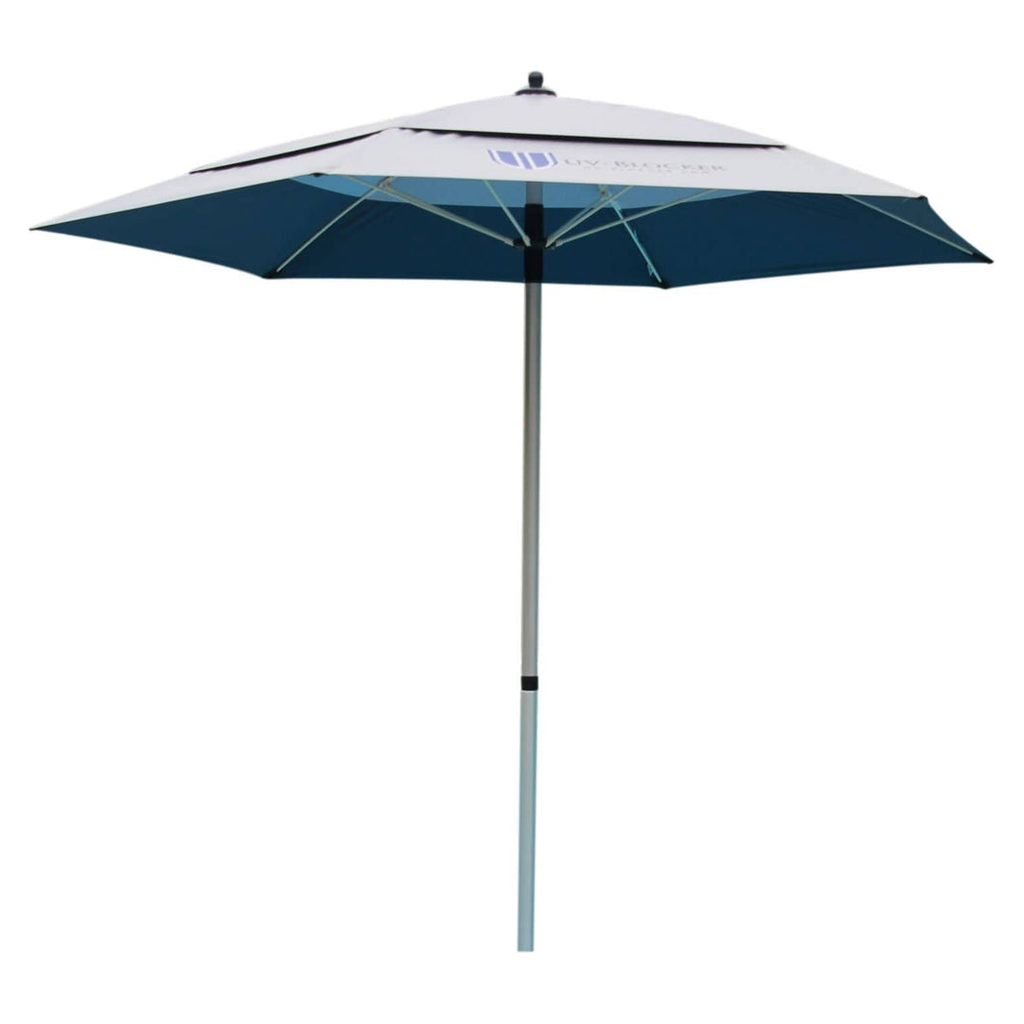
This is where UPF-rated shade changes the equation. The UV-Blocker Beach 7.5ft umbrella uses Solarteck coating rated UPF 50+, blocking 99% of UVA and UVB radiation from above while keeping the area beneath up to 15 degrees cooler than direct sunlight. Combined with sunscreen on exposed skin, it addresses the reflected UV that overhead-only shade misses. (Carry bag included; sand anchor recommended, sold separately.)
For a detailed comparison of beach umbrella UV ratings, see Best Beach Umbrellas for UV Protection: 7 Tested.
What Are Florida's Beach Umbrella Rules by County?
Florida beach umbrella regulations differ by county. Walton County limits tent structures to 10x10 feet, St. Johns County requires items placed oceanside of the driving lane, and nearly every coastal county bans overnight storage.
Walton County (30A / Destin Area)
Walton County beach rules are among the strictest in the state. No tents or canopies larger than 10 feet by 10 feet are permitted on county-maintained beaches, and all personal items must be set up in the top third of the beach. Anything left on the beach from one hour after dusk to one hour after sunrise gets removed and discarded.
St. Johns County
St. Johns County allows vehicles on certain beach sections, creating a unique rule: all personal items including umbrellas and chairs must be placed oceanside of the driving lane. Overnight storage is prohibited.
General Florida Beach Rules
Across most Florida counties, the pattern is consistent: umbrellas and personal shade are welcome during the day, but nothing stays overnight. Individual cities may add restrictions on anchor types, setback distances from the water, or hours of operation for commercial rental operators.
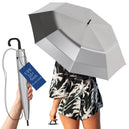
One safety note: wind-blown beach umbrellas send roughly 1,000 people to emergency rooms annually across the U.S. Vented canopy designs, like the patented mesh system on UV-Blocker beach umbrellas, allow wind to pass through instead of catching the canopy and ripping the umbrella out of the sand.
For Panhandle-specific vendor details, see the Destin beach umbrella rental guide.
Is Physical Shade a Reef-Friendly Alternative to Chemical Sunscreen?
A UPF 50+ beach umbrella delivers zero-chemical UV protection that safeguards both skin and coral reefs, a relevant consideration near Florida's 360-mile reef tract.
In 2019, Key West voted 6-to-1 to ban sunscreens containing oxybenzone and octinoxate, two chemicals linked to coral bleaching and DNA damage. NOAA data shows oxybenzone harms coral at trace concentrations, as little as one drop in 4.3 million gallons of water.
The ban didn't last. Governor DeSantis signed SB 172 in 2020, preempting all local sunscreen bans statewide. The law stands, but the environmental evidence hasn't changed.
For anyone spending time near Florida's reef system (from Key West through the Keys and along the southeast coast), physical UV shade eliminates the chemical question entirely. A UPF-rated umbrella blocks UV without introducing any substance into the water. It's not a replacement for sunscreen on exposed skin, but it dramatically reduces the amount of sunscreen needed during a full beach day.
What Does Year-Round Florida Sun Protection Look Like?
Year-round florida sun protection means adjusting protection layers by season, starting with daily UPF shade from March through October and maintaining UV-aware habits even during the cooler months.

Winter (December - February): UV Index 3-6
Don't skip protection just because it's "cool." A UV index of 3 to 6 still causes cumulative damage during extended outdoor time. SPF moisturizer, polarized sunglasses, and a compact umbrella cover the basics for daily errands, outdoor dining, and weekend walks.
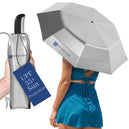
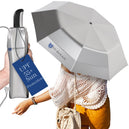
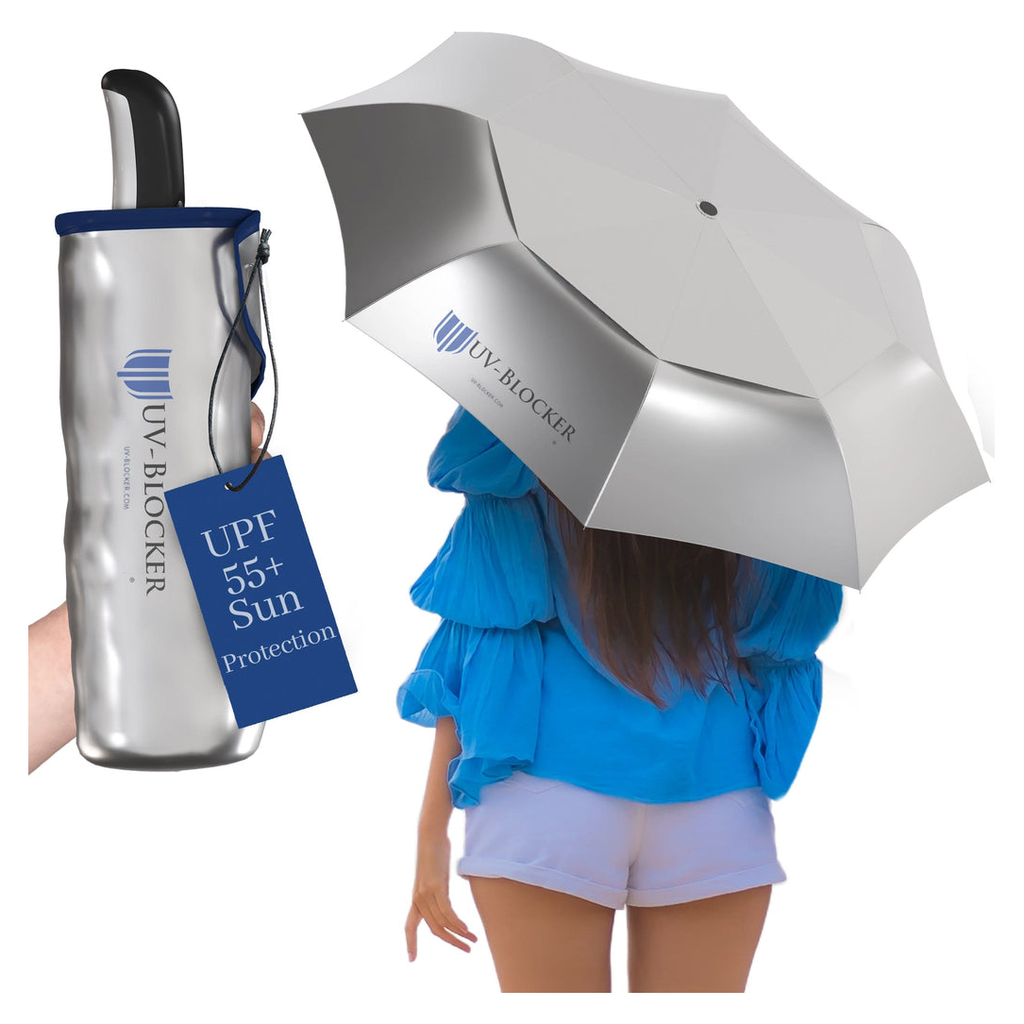
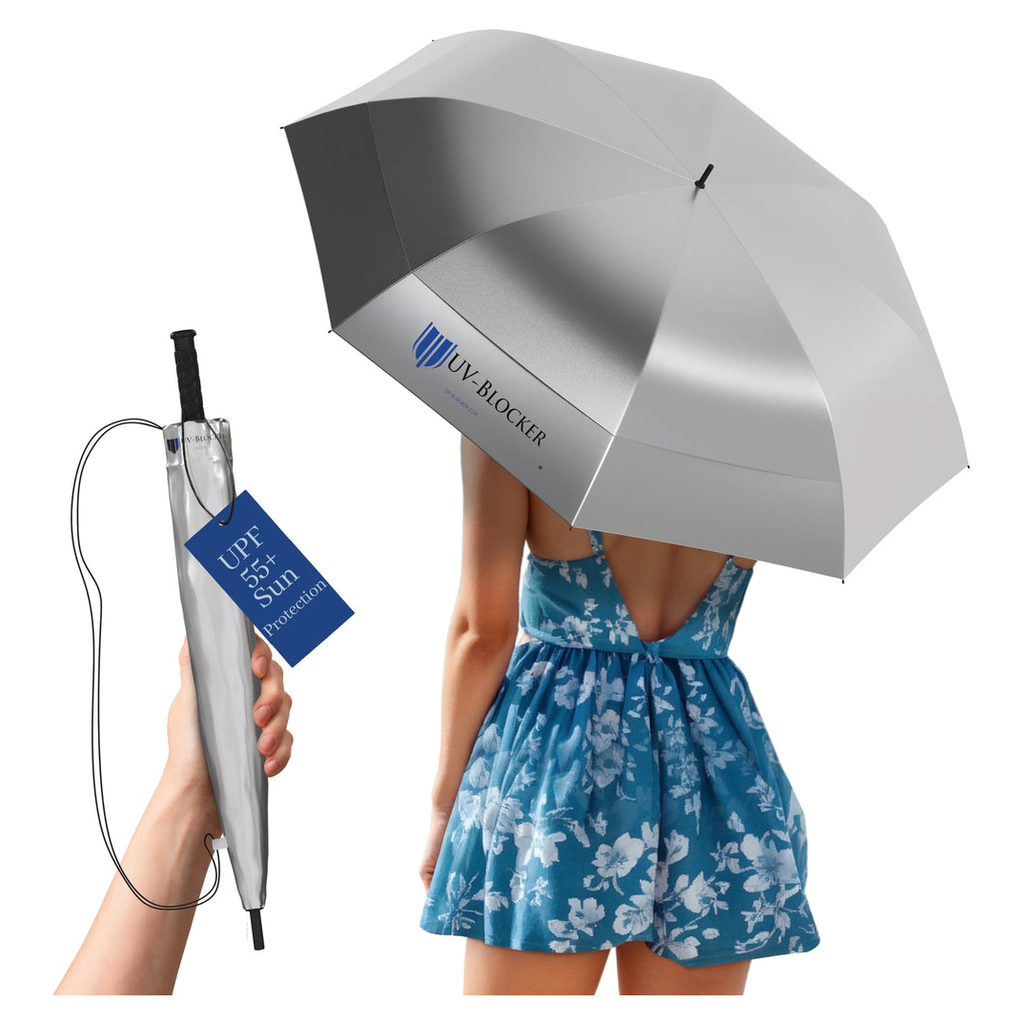
The UV-Blocker Compact Umbrella folds to 11.5 inches, small enough for a purse or work bag, and is rated UPF 50+. For Florida commuters who walk to the office or wait at school pickup, it's the practical winter layer most people skip.
Spring (March - May): UV Index 6-10
Spring is where most Floridians get caught. By March, UV levels in Orlando and Tampa already reach 7 to 9, "high" to "very high" on the EPA scale. Full sun protection gear becomes necessary for any outdoor time exceeding 30 minutes: broad-spectrum sunscreen, hat, sunglasses, and physical shade for stationary activities.
Summer (June - August): UV Index 10-12+
Peak danger season. Every city in Florida hits "extreme" UV during these months. Physical shade isn't optional. It's the baseline. Beach days require a UPF-rated umbrella, sunscreen reapplied every two hours on exposed skin, and scheduling around the 10 a.m. to 4 p.m. peak window when possible.
Fall (September - November): UV Index 5-9
October fools people. In Miami and Key West, the UV index still hits 7 to 8 through mid-October. Protection layers should stay in place through November before gradually scaling back for the brief winter dip.
Daily Scenarios for Residents
- Morning commute (walk or wait): Compact UPF umbrella + sunglasses
- School pickup (20-30 min standing): Hat + SPF moisturizer
- Outdoor dining (lunch): Seek shaded seating; UV peaks at noon
- Weekend beach trip: UPF 50+ beach umbrella + sunscreen on exposed skin + protective clothing for children
Frequently Asked Questions About Florida Sun Protection
These are the most common questions Florida residents and visitors ask about sun safety in the Sunshine State.
Do you need sunscreen in Florida in winter?
Yes. Florida's winter UV index ranges from 3 to 6, still high enough to cause cumulative skin damage and sunburn with extended exposure.
Even in December, South Florida cities like Miami and Key West maintain UV index readings of 4 to 6. A broad-spectrum SPF 30+ moisturizer is recommended for any outdoor time beyond 30 minutes. For more on UV exposure in low-sun conditions, see Can You Get Sunburned on a Cloudy Day?
What UV index is dangerous in Florida?
A UV index of 6 or above requires active sun protection. Florida exceeds that threshold for eight or more months annually, depending on the city.
The EPA classifies UV index 3-5 as moderate, 6-7 as high, and 8-10 as very high. Florida cities routinely hit 8 to 12 between April and September. Even "moderate" UV causes damage over cumulative hours outdoors.
Can you get sunburned on a cloudy day in Florida?
Yes. Up to 80% of UV radiation passes through cloud cover, and Florida's thin, humid cloud layers block even less than dense overcast skies in northern states.
This is the most common misconception among both residents and visitors. A cloudy 85-degree day in Tampa still delivers significant UV exposure. The humidity makes the air feel cooler, but it does not reduce UV transmission.
What is the best time to go to a Florida beach to avoid sunburn?
Before 10 a.m. or after 4 p.m. UV index readings drop 50-75% compared to the midday peak window of 10 a.m. to 2 p.m.
Even outside peak hours, reflected UV from sand and water still reaches exposed skin. A UPF-rated beach umbrella combined with sunscreen provides reliable coverage regardless of the time window.
Are reef-safe sunscreens required in Florida?
No. Florida's SB 172, signed in 2020, preempted all local sunscreen bans statewide, including Key West's 2019 ban on oxybenzone and octinoxate products.
While not legally mandated, many Floridians choose reef-safe options voluntarily. Physical UV shade through a UPF-rated umbrella provides chemical-free protection that sidesteps the reef debate entirely.
Conclusion
Florida sun protection is a 12-month commitment, not a summer accessory. Three takeaways from the data:
- No off-season exists. Even December UV readings in South Florida exceed what northern states see in May. The UV calendar above shows that meaningful protection runs March through October at minimum.
- The beach doubles the danger. Sand and sea foam reflect 15-25% of UV upward, hitting skin from angles that hats and overhead shade miss. UPF-rated umbrellas address this gap; cheap canopies don't.
- County rules matter. Check local beach regulations before arriving. Tent size limits, placement rules, and overnight bans vary by county and catch unprepared visitors every season.
The immediate next step: Check the city-by-city UV table for the city closest to where you live. Compare those numbers to how much unprotected outdoor time you logged last week. If the gap surprises you, start with one addition: a UPF 50+ beach umbrella for weekend beach trips, or a compact UPF umbrella for the daily commute.
Florida's UV doesn't take days off. Neither should the protection plan.
Florida UV Index by City: A Data-Driven Guide
Florida's combination of low latitude, high humidity, and proximity to water makes it one of the highest-UV states in the continental US. However, UV intensity varies meaningfully between North and South Florida throughout the year.
| City | Summer Peak UV (Jun–Aug) | Winter UV (Dec–Feb) | Annual High UV Days (>8) |
|---|---|---|---|
| Miami / Miami Beach | 11–12 | 6–7 | 200+ |
| Key West | 11–13 | 6–8 | 220+ |
| Fort Lauderdale | 11–12 | 6–7 | 200+ |
| Tampa / St. Pete | 10–11 | 5–6 | 180+ |
| Orlando | 10–11 | 4–6 | 170+ |
| Jacksonville | 9–10 | 3–5 | 145+ |
| Pensacola | 9–10 | 3–5 | 140+ |
| Naples / Fort Myers | 11–12 | 6–7 | 200+ |
Florida's Year-Round UV Risk: The "It's Florida" Complacency Trap
Residents often become habituated to Florida's sun, developing a paradoxical complacency. Key facts that counter this:
- South Florida's December UV Index (6–8) equals or exceeds the peak summer UV of many northern US cities
- Florida leads all U.S. states in melanoma incidence, with approximately 7,500 new cases annually
- Retirees relocating to Florida from northern states — accustomed to lower UV — are at particularly high risk during their first 1–3 years of adjustment
- Golf, water sports, and outdoor walking culture in Florida creates year-round high-exposure recreation patterns
Florida's Unique UV Risk Factors
- White sand beaches: Florida's quartz sand beaches (Siesta Key, Clearwater) rank among the lightest-coloured in the world — reflecting 17–25% of UV back onto beachgoers from below
- Gulf and Atlantic water reflection: Ocean proximity adds 5–25% additional UV from water surface reflection, depending on conditions
- Theme park exposure: Visitors to Disney World, Universal, and Busch Gardens spend 8–12 hours outdoors with minimal shade — one of the most concentrated UV exposure events for many families
- Boating culture: Florida has more registered boats than any other state. Open-water boating at sea level with water reflection creates some of the highest ambient UV environments outside of alpine settings
- Afternoon thunderstorm pattern: Florida's summer afternoon thunderstorms create a false sense of UV protection in mornings — but UV intensity peaks between 10am–2pm, before afternoon storm patterns typically develop
Frequently Asked Questions: Florida Sun Protection
Is Florida's UV risk really that different from other Southern states?
Yes, meaningfully so. Florida's southern latitude (Key West: 24.5°N) puts it closer to the tropics than any other continental U.S. state. Combined with high coastal humidity and year-round warm temperatures encouraging outdoor activity, Florida generates more annual cumulative UV exposure for residents than states at comparable latitudes that are inland (like parts of Texas or Georgia).
When is it safe to be outdoors in Florida without sunscreen?
In South Florida, there is essentially no month where brief midday outdoor exposure doesn't warrant SPF protection. Before 9am and after 5pm, UV index drops to 3 or below in most months — these windows are safer for extended outdoor activity without full protection. However, morning exercise and sunset activities still carry UV exposure risk that accumulates over years.
How should Florida tourists prepare differently than residents?
Tourists — particularly those from northern US, Canada, or Europe — face acute risk from unfamiliar UV intensity. Recommendations: start with 30-minute sun exposure windows and build gradually; apply SPF 50+ before any outdoor activity; carry a compact UV umbrella for outdoor dining, theme parks, and beach time; and avoid the 11am–3pm window entirely for the first few days of a Florida visit.
What's the best UV protection strategy for Florida outdoor dining?
Outdoor restaurant dining in Florida is a high UV-exposure activity: tables are often in full or partial sun, lunch service coincides with peak UV hours, and the casual setting leads to underestimation of exposure time. Choose shaded seating when available; use a personal UV umbrella if no shade exists; apply SPF 30+ before leaving the hotel; and choose restaurants with covered outdoor areas for mid-day meals.
Florida UV Protection: City-by-City at a Glance
Florida's UV index varies significantly by latitude, season, and coastal vs. inland location. Here's what residents and visitors in major Florida cities need to know for practical UV planning:
- Miami / South Florida (UV index peak: 12–13+): The highest UV levels in the continental US — UV index 11+ occurs on 200+ days per year. Full UV protection (UPF umbrella + SPF 50+) is recommended year-round, not just summer
- Orlando / Central Florida (UV index peak: 11–12): Theme park visitors spend 8–12 hours in unshaded outdoor environments — Orlando dermatologists report among the highest rates of sunburn-related visits in the state
- Tampa / St. Pete (UV index peak: 11): Beach and waterfront activities amplify UV — water reflection adds 25–30% to UV exposure; a UV umbrella is effective for both beach and boat settings
- Jacksonville / North Florida (UV index peak: 10–11): Lower than South Florida but still high-risk from April through October — residents often underestimate UV risk compared to Miami, leading to inconsistent protection habits
- Year-round UV reality: Even in January, Miami's UV index exceeds 8 on clear days — Florida sun protection is a 365-day practice, not a summer consideration
Sun Protection in Florida: Expert FAQ
What is the average UV index in Florida throughout the year?
Florida has one of the highest UV indices of any US state year-round. Miami averages a UV index of 7–11 from April through October (very high to extreme) and maintains a UV index of 4–6 in winter months (moderate to high). Orlando and Tampa track similarly. Even in January, Florida's UV index frequently exceeds the 'protection required' threshold.
Does Florida's humidity affect sunscreen effectiveness?
High humidity causes perspiration that washes sunscreen off faster than in dry climates. In Florida's summer heat and humidity, reapplication every 40–60 minutes during outdoor activity is recommended rather than the standard 80-minute interval. Sweating also increases core body temperature, amplifying UV-related heat stress. Water-resistant SPF 50+ formulas are specifically designed for humid conditions.
Are Florida beach conditions particularly dangerous for UV exposure?
Yes. Florida beaches combine multiple UV amplifiers: near-equatorial latitude, high UV index, sand reflectivity (reflects 17% of UV back upward), water reflectivity (10–30% depending on angle), and extended beach stays. A 3-hour Florida beach visit can deliver as much UV exposure as a full day in northern latitudes. Physical UV barriers — UPF 50+ umbrellas and sun shirts — are especially important.
Should Florida residents approach sun protection differently than tourists?
Residents often develop a false sense of acclimatization — tan skin provides some UV protection but a melanin tan equivalent to only SPF 2–4. Long-term Florida residents who believe their tan protects them account for a disproportionate share of Florida's melanoma cases. Both residents and tourists should use the same layered protection approach.
What is the best sun protection strategy for Florida theme parks?
Theme parks combine long queue times with reflective surfaces and limited natural shade. Key strategies: start the day with SPF 50+ application before leaving accommodation; carry a compact UPF 50+ umbrella for queue lines; reapply sunscreen every 60–80 minutes or after water rides; wear UPF 50+ clothing; schedule the most sun-exposed attractions before 10 AM or after 4 PM when UV intensity drops.
Florida Sun Protection by City: UV Index Benchmarks and Local Rules
Florida isn't uniformly dangerous — UV intensity varies significantly by region, season, and proximity to water. Here's what residents and visitors need to know by location:
Average Annual UV Index by Florida City (2024 NOAA Data)
| City | Avg Peak UV Index | Days UV ≥ 10/yr | Skin Cancer Rate (per 100k) |
|---|---|---|---|
| Miami | 10.8 | 214 | 18.4 |
| Tampa | 10.2 | 198 | 22.1 |
| Orlando | 9.9 | 183 | 21.3 |
| Jacksonville | 9.4 | 162 | 24.7 |
| Pensacola | 9.1 | 155 | 25.9 |
Florida Beach Umbrella Rules You Must Know
Several Florida beach municipalities have enacted umbrella regulations following fatality incidents with improperly anchored umbrellas. Key rules as of 2026:
- Miami Beach: Umbrellas over 7.5 ft require a sand anchor or weighted base; freestanding poles without anchors are prohibited in designated swimming areas.
- Clearwater Beach: Commercial umbrella setups must be removed by 6 p.m. daily; personal umbrellas permitted at any size with proper anchoring.
- Sarasota County: Wind advisory triggers automatic umbrella restrictions above sustained 20 mph — check NWS forecast before setup.
UV-Blocker umbrellas are engineered with vented canopy designs and weighted/magnetic base options specifically to meet these municipal stability requirements while providing certified UPF 50+ protection.
Sun Safety in Canada
Canada experiences meaningful UV exposure throughout the year, with UV Index levels regularly reaching 8–10 or higher during summer months in cities such as Vancouver, Calgary, Toronto, and Ottawa. Health Canada and Environment and Climate Change Canada publish daily UV Index forecasts and recommend protective measures whenever the index exceeds 3 — a threshold reached on most clear days between May and August across the country.
Key resources for Canadian sun safety:
- Health Canada UV Index: Published daily via the Environment and Climate Change Canada weather portal (weather.gc.ca). Canadians can track UV levels by city and receive alerts when protection is recommended.
- Canadian Cancer Society: Recommends UPF 50+ clothing, hats, sunscreen, and shade-seeking as primary sun protection strategies. Physical UV barriers — such as UPF 50+ umbrellas — are emphasized for prolonged outdoor exposure.
- Canadian Dermatology Association: Endorses broad-spectrum sun protection strategies, including shade structures and UV-blocking accessories, especially for individuals with fair skin or a personal or family history of skin cancer.
For Canadians spending extended time outdoors — whether working, playing sports, or enjoying recreational activities — a UV-blocking umbrella rated UPF 50+ provides continuous, reapplication-free protection. The UV-Blocker umbrella, independently tested and approved by the Melanoma International Foundation, blocks 99% of UV rays and keeps users up to 15°F cooler — making it a practical and reliable companion for Canadian summers.
Frequently Asked Questions
What makes UV exposure particularly intense in Florida Sun Protection?
Florida Sun Protection has specific geographic, atmospheric, and seasonal factors that affect UV intensity. Latitude, altitude, proximity to reflective surfaces (water, sand, snow), and cloud cover all play roles. UV Index data from NOAA shows significant variation even within a single state. Checking the daily UV index at your specific location is the only reliable way to gauge actual risk.
What is the UV Index and how should I use it for sun safety planning?
The UV Index (UVI) is a 0–11+ scale measuring UV radiation intensity at ground level. 0–2: Low risk. 3–5: Moderate — use sunscreen. 6–7: High — seek shade. 8–10: Very High — limit midday exposure. 11+: Extreme — avoid outdoors. NOAA provides daily UV Index forecasts by zip code at weather.gov. UV-Blocker recommends checking the index every morning before outdoor planning.
Is sun protection necessary year-round in this region?
Yes. UV radiation can cause skin damage even on cloudy days and throughout all seasons. UVA rays (which penetrate clouds and glass) are relatively consistent year-round, even when visible sunshine is low. While UVB intensity peaks in summer, dermatologists recommend daily SPF 30+ moisturizer as a year-round habit regardless of season or weather.
What activities put people at highest UV risk in this region?
Water sports (reflection amplifies UV by up to 100%), snow activities (snow reflects 80% of UV), beach activities (sand reflects 25%), and any outdoor activity between 10am–4pm. High altitude activities are particularly dangerous — UV intensity increases ~10–12% per 1,000 feet of elevation. A UPF 50+ umbrella provides reliable portable shade for any of these activities.
How do local residents protect themselves from the sun effectively?
Long-term residents of high UV regions tend to adopt comprehensive sun habits: UPF 50+ protective clothing as daily wear, wide-brim hats, window tinting, avoiding peak sun hours, and SPF 50+ sunscreen applied daily (not just at the beach). Portable UV-blocking umbrellas have become increasingly popular for everyday sun protection during outdoor dining, sports spectating, and commuting.
Sun Safety Best Practices for Florida Sun Protection Residents
- Bookmark the NOAA UV Index forecast for your Florida Sun Protection zip code — check it each morning before planning outdoor time
- Apply SPF 30+ sunscreen every morning as part of your daily routine, not just on beach days
- Use window film rated for UV blocking in your home and car — much UV exposure happens indoors
- Keep a UV-blocking umbrella in your car — it's useful for street parking, outdoor dining, and events
- Schedule outdoor physical activity before 10am or after 4pm to avoid peak UV hours
- Annual skin cancer screenings are especially important for long-term residents of high UV regions
Frequently Asked Questions
What makes UV exposure particularly intense in Florida Sun Protection?
Florida Sun Protection has specific geographic, atmospheric, and seasonal factors that affect UV intensity. Latitude, altitude, proximity to reflective surfaces (water, sand, snow), and cloud cover all play roles. UV Index data from NOAA shows significant variation even within a single state. Checking the daily UV index at your specific location is the only reliable way to gauge actual risk.
What is the UV Index and how should I use it for sun safety planning?
The UV Index (UVI) is a 0–11+ scale measuring UV radiation intensity at ground level. 0–2: Low risk. 3–5: Moderate — use sunscreen. 6–7: High — seek shade. 8–10: Very High — limit midday exposure. 11+: Extreme — avoid outdoors. NOAA provides daily UV Index forecasts by zip code at weather.gov. UV-Blocker recommends checking the index every morning before outdoor planning.
Is sun protection necessary year-round in this region?
Yes. UV radiation can cause skin damage even on cloudy days and throughout all seasons. UVA rays (which penetrate clouds and glass) are relatively consistent year-round, even when visible sunshine is low. While UVB intensity peaks in summer, dermatologists recommend daily SPF 30+ moisturizer as a year-round habit regardless of season or weather.
What activities put people at highest UV risk in this region?
Water sports (reflection amplifies UV by up to 100%), snow activities (snow reflects 80% of UV), beach activities (sand reflects 25%), and any outdoor activity between 10am–4pm. High altitude activities are particularly dangerous — UV intensity increases ~10–12% per 1,000 feet of elevation. A UPF 50+ umbrella provides reliable portable shade for any of these activities.
How do local residents protect themselves from the sun effectively?
Long-term residents of high UV regions tend to adopt comprehensive sun habits: UPF 50+ protective clothing as daily wear, wide-brim hats, window tinting, avoiding peak sun hours, and SPF 50+ sunscreen applied daily (not just at the beach). Portable UV-blocking umbrellas have become increasingly popular for everyday sun protection during outdoor dining, sports spectating, and commuting.
Sun Safety Best Practices for Florida Sun Protection Residents
- Bookmark the NOAA UV Index forecast for your Florida Sun Protection zip code — check it each morning before planning outdoor time
- Apply SPF 30+ sunscreen every morning as part of your daily routine, not just on beach days
- Use window film rated for UV blocking in your home and car — much UV exposure happens indoors
- Keep a UV-blocking umbrella in your car — it's useful for street parking, outdoor dining, and events
- Schedule outdoor physical activity before 10am or after 4pm to avoid peak UV hours
- Annual skin cancer screenings are especially important for long-term residents of high UV regions