
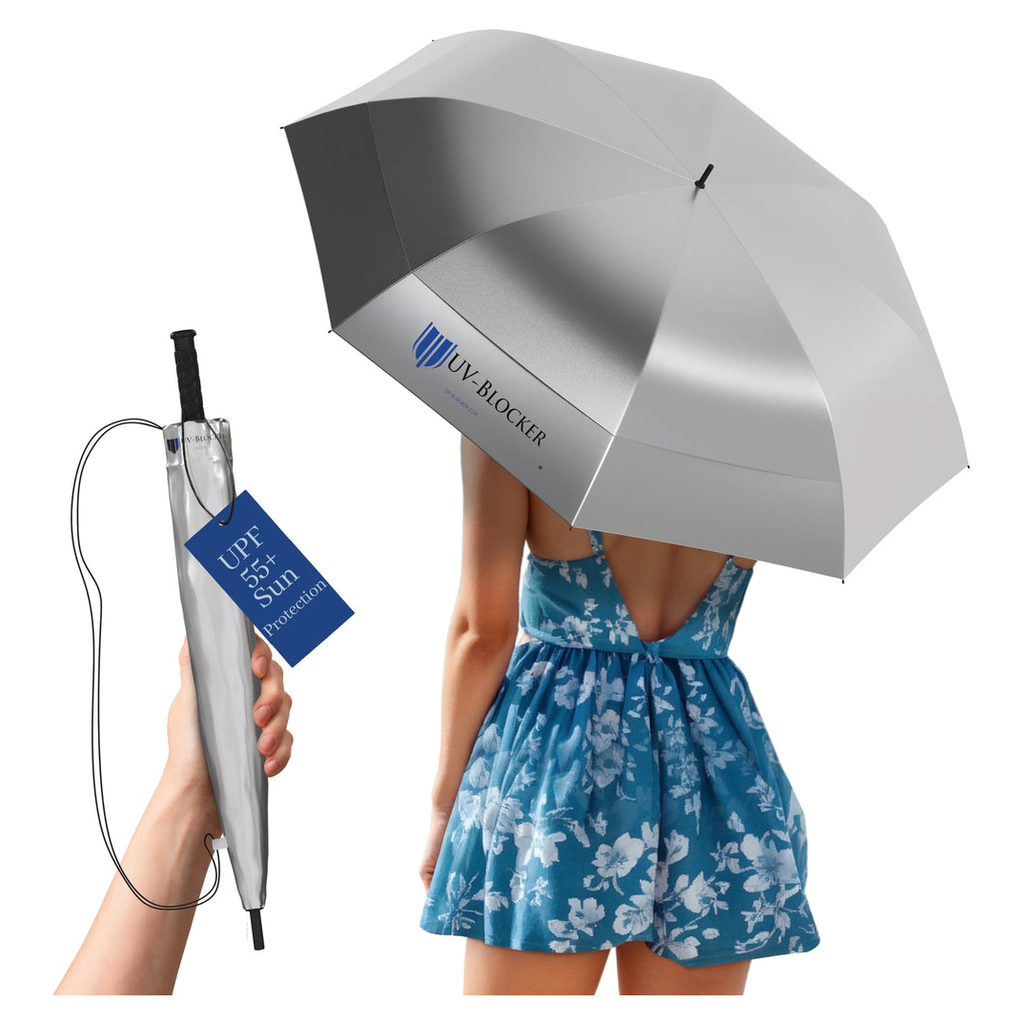
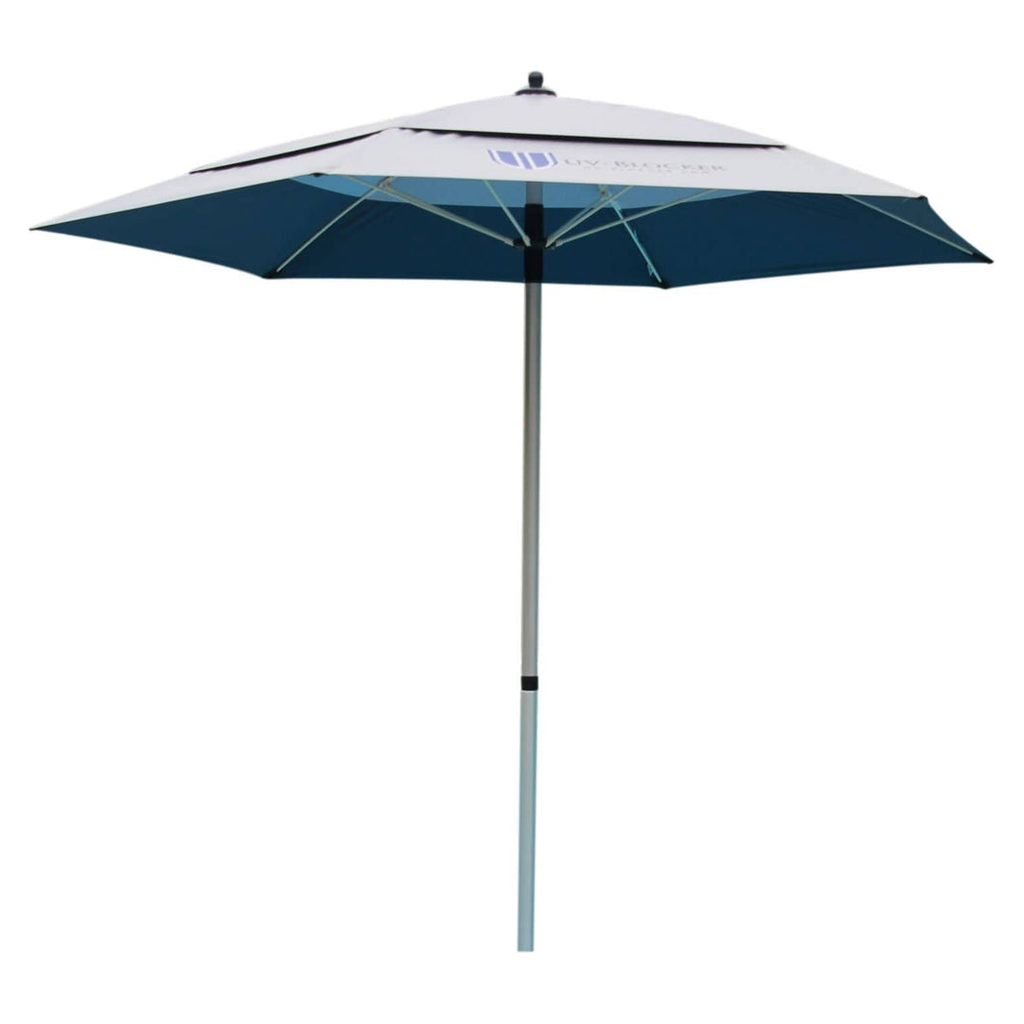

It's 45°F, overcast, and the course is quiet. Perfect winter golf conditions — except for one thing. The UV radiation hitting your face, scalp, and neck right now is nearly as intense as July.
According to the Skin Cancer Foundation, UVA rays — the ones that cause aging and skin cancer — remain relatively constant year-round. Cold air masks the sensation, but the damage accumulates with every winter round just as it does in summer.
A golf sun umbrella isn't a summer accessory you pack away in October. It's year-round equipment — and in some ways, more useful in winter than July. Here's why.
Why winter golf UV exposure is worse than you think
Cold air tricks your body into thinking the sun isn't a threat. You don't feel heat on your skin, so you don't seek shade. Meanwhile, UV radiation works silently underneath.
The American Academy of Dermatology reports that winter sunburns are often more severe than summer ones — precisely because golfers don't realize they're burning until hours of damage have already occurred.
Winter golf courses make this worse in specific ways:
- Dormant grass reflects more UV than lush green turf — lighter surfaces bounce radiation back at angles you don't expect
- Frost patches and sand traps act as reflectors, sending UV upward toward your face and under hat brims
- Lower sun angle puts UVA rays directly into your eyes and face at an intensity that summer's overhead angle doesn't produce
- Up to 80% of UV penetrates cloud cover, according to the EPA — overcast winter days are not safe days
A 4-hour winter round delivers substantial UV. Multiply that across 15–20 rounds between November and March, and you've accumulated a significant dose that most golfers never account for.
How a golf sun umbrella improves winter course performance
Beyond skin protection, a golf sun umbrella solves three winter-specific performance problems that hats and jackets can't address.
Glare reduction for better shot accuracy
Winter's lower sun angle creates glare that cuts across fairways at eye level. Lining up a putt or reading a green becomes harder when bright angles hit you directly. An overhead canopy blocks that glare entirely, improving visibility on every shot.
Wind break between shots
Winter rounds are colder, windier, and more fatiguing. A golf umbrella provides a micro-shelter between shots — cutting wind chill and giving your eyes and skin a reset. Over 18 holes, those brief breaks reduce fatigue measurably.
Temperature comfort under the canopy
Even in winter, direct sun on your face creates uneven heating that leads to discomfort and distraction. The reflective Solarteck™ fabric on UV-Blocker umbrellas moderates that temperature difference — keeping conditions under the canopy consistent so your focus stays on the next shot.
Winter golf sun umbrella features that matter
Not every golf umbrella handles winter conditions. Summer umbrellas are built for heat; winter golf demands different priorities.
Wind resistance is non-negotiable
Winter courses are exposed and gusty. A golf sun umbrella that inverts in a 25 mph gust is worse than useless — it's a distraction and a potential hazard.
Look for double-canopy vented designs with fiberglass ribs. The venting lets wind pass through instead of catching the canopy like a sail. Fiberglass flexes under pressure rather than snapping.
Waterproof for winter precipitation
Winter golf means dealing with drizzle, sleet, and occasional snow. A golf sun umbrella with waterproof coating handles both UV and precipitation — dual protection from one piece of equipment.
UPF 50+ for year-round UV blocking
UPF ratings don't change with temperature. A UPF 50+ umbrella blocks 98% of UV in January the same as August. Reflective silver coatings remain effective regardless of ambient temperature or cloud conditions.
Cart compatibility for hands-free protection
Cold hands make holding an umbrella for 4 hours impractical. A golf sun umbrella that mounts to your push cart or riding cart provides continuous overhead shade without requiring you to grip the handle through gloves.
Golf sun umbrella vs. hat for winter UV protection
Most winter golfers rely on a beanie or cap for sun protection. The coverage gap is significant.
A baseball cap protects the top of your head and part of your forehead. It leaves your ears, neck, lower face, and shoulders completely exposed. A beanie covers your scalp but protects nothing else.
Winter's lower sun angle compounds this problem. UV hits you more horizontally — striking under hat brims, catching your ears at direct angles, and reflecting upward from lighter winter surfaces toward your chin and jawline.
A golf sun umbrella solves this by creating overhead shade that covers the head, face, ears, neck, and shoulders simultaneously. It intercepts both direct UV from above and reflected UV from below — something no hat design can achieve.
The practical advantage: a hat requires sunscreen on every exposed area. A golf sun umbrella covers those same areas physically, which means less sunscreen application with cold, gloved hands. In freezing conditions, that convenience turns theoretical protection into actual protection.
Best golf sun umbrellas for winter months
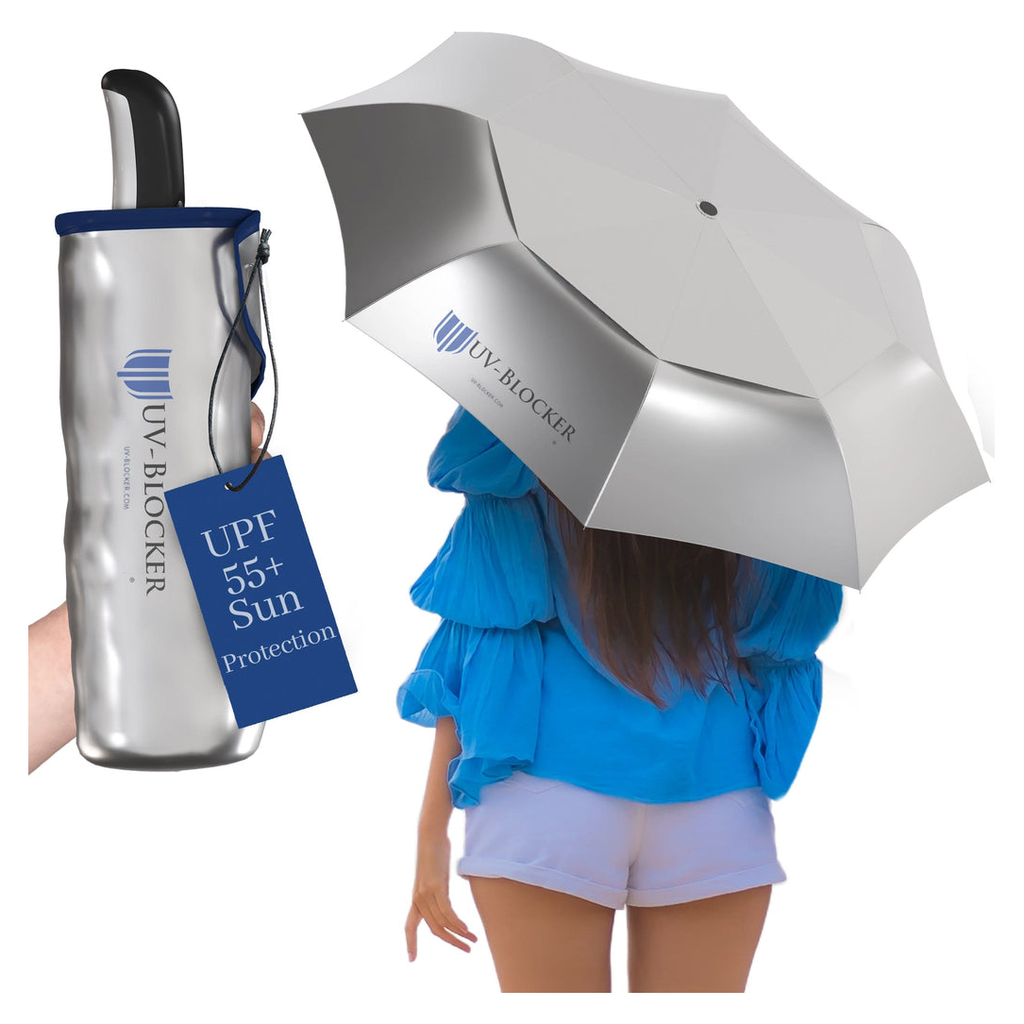
UV-Blocker umbrellas are dermatologist-recommended and block 99% of UVA/UVB rays year-round. Here are the best options for winter golf:
UV-Blocker 68" Golf UV Umbrella — best for winter rounds
- Arc: 68" (58" diameter coverage)
- UPF: 55+
- Weight: 2 lb 6 oz
- Why it works for winter: Patented Vented Mesh System handles gusts without inverting. The 68" canopy shades you and your bag. Solarteck™ reflective fabric blocks UV regardless of temperature. Fits standard golf cart holders for hands-free use in cold weather
This is the only golf umbrella approved by the Melanoma International Foundation — relevant for the 40% of the year most golfers ignore.
UV-Blocker Large Folding Umbrella — best for walking rounds
- Arc: 62"
- Why it works for winter: Wind-resistant vented canopy. Lighter than the 68" Golf for carrying over 18 holes. Covers 2–3 people — useful for foursome shade-sharing on exposed fairways
UV-Blocker Travel Umbrella — best for the driving range
- Arc: 44"
- Why it works for winter: Compact enough for your range bag. Sets up fast between sessions. Provides personal coverage for stationary practice — where you're standing in one spot absorbing UV for an hour or more
Browse the full UV umbrella collection to find the right fit for your winter game.
Building a year-round golf sun protection routine
The CDC reports that skin cancer risk is cumulative — every unprotected round adds to your lifetime total. Winter represents 40% of the year. Ignoring protection during those months significantly increases your total UV dose.
A complete year-round golf sun protection routine includes:
- Golf sun umbrella: Overhead shade for face, scalp, ears, and neck — mounted to your cart or hand-carried
- SPF 30+ sunscreen: On exposed skin — face, hands, forearms, and any scalp showing through thinning hair
- UV-blocking sunglasses: Protect eyes from winter glare and UV damage that contributes to cataracts
- UPF-rated layers: Winter golf clothing that blocks UV as well as cold
- SPF lip balm: Cold, dry winter air makes lips especially vulnerable to UV burns
The golf sun umbrella is the anchor of this system. It provides passive protection — no application, no reapplication, no discomfort in cold conditions. Everything else layers on top.
Frequently asked questions
Do I need a golf sun umbrella in winter?
Yes. UVA rays — the primary cause of skin aging and cancer — remain relatively constant year-round. Cold air masks the sensation but not the damage. Up to 80% of UV penetrates cloud cover, making winter rounds a real exposure risk.
Can I use a golf umbrella in cold and windy conditions?
Quality golf sun umbrellas are designed for exactly this. Double-canopy vented designs let wind pass through instead of catching the canopy. Fiberglass ribs flex rather than snap. The UV-Blocker 68" Golf Umbrella handles gusts on open fairways.
Is a hat enough for winter golf UV protection?
No. A baseball cap leaves ears, neck, and lower face exposed. Winter's lower sun angle hits these areas directly. A beanie protects the scalp but nothing else. A golf sun umbrella covers the head, face, ears, neck, and shoulders — blocking both direct and reflected UV.
Does cold weather reduce UV radiation?
Temperature has no effect on UV intensity. UVA rays remain consistent in winter. What changes is your perception — cold air eliminates the warming sensation that normally signals UV exposure, causing winter sunburns to go unnoticed until significant damage occurs.
Which UV-Blocker umbrella is best for winter golf?
The 68" Golf UV Umbrella is the best choice — it provides the largest coverage, fits cart holders for hands-free use in cold weather, and features the patented wind-resistant Vented Mesh System. It's the only golf umbrella approved by the Melanoma International Foundation.
Why You Need a Golf Sun Umbrella Even in Winter Months: Frequently Asked Questions
Does the sun really damage skin during the winter months on the golf course?
Yes, while UVB rays are weaker in winter, UVA rays remain consistent year-round and account for approximately 95% of the UV radiation reaching Earth. UV-Blocker umbrellas provide a critical barrier against these aging rays, especially since snow and frost can reflect up to 80% of UV radiation back onto your skin.
Can I just use a standard rain umbrella for sun protection while golfing in winter?
Standard umbrellas often lack specialized coatings, whereas UV-Blocker models feature Solarteck® technology that reflects 99% of UVA and UVB rays. This ensures the product meets the UPF 50+ standard, which is the highest possible rating for sun-protective fabrics. Without this engineering, harmful radiation can still penetrate the canopy even on overcast winter days.
Why is a sun umbrella necessary if I already wear layers of winter clothing?
While clothing covers your body, your face and neck remain vulnerable to reflected UV rays bouncing off the ground, which can increase exposure by up to 50% on bright winter days. Using a UV-Blocker umbrella provides overhead coverage that significantly reduces this indirect exposure. This extra layer of defense is why these products carry the Melanoma International Foundation seal of approval for effective sun protection.
How does the Solarteck® technology specifically help golfers during colder rounds?
The Solarteck® technology used in UV-Blocker umbrellas features a double-canopy design that blocks 99% of harmful rays while allowing wind to pass through, maintaining stability in winter gusts. This specialized fabric is lab-tested to provide UPF 50+ protection, ensuring that even during four-hour rounds, your cumulative UV exposure is minimized. Clinical data suggests that consistent use of high-UPF barriers is essential for preventing long-term actinic damage.