
Balancing Outdoor Sports and Skin Cancer Risk: How to Stay Safe and Reap the Benefits of Exercise
Outdoor sports are a great way to stay active and maintain a healthy lifestyle, but they also come with a hidden risk: increased exposure to ultraviolet (UV) radiation from the sun. Whether you’re running, cycling, playing tennis, or engaging in any other outdoor activity, spending long hours under the sun without proper protection can elevate your risk of developing skin cancer. However, physical activity offers a multitude of benefits, including a reduced risk of various other cancers. So, how do you strike a balance between staying active and protecting yourself from the sun? Let’s dive into the risks and rewards, and how you can enjoy outdoor sports safely.
The Link Between Outdoor Sports and Skin Cancer
Outdoor sports inherently increase exposure to UV rays, which are the primary cause of skin cancer. Prolonged sun exposure, especially without protection, can damage the DNA in skin cells, leading to mutations that can develop into cancer. Athletes involved in outdoor sports are particularly vulnerable, as they spend more time in direct sunlight than the average person.
Additionally, sweat and water can make sunscreen less effective, leaving skin exposed even if you've applied a generous layer before heading out. Swimming, sweating, or wiping your face with a towel can all diminish the protective barrier that sunscreen provides, increasing your risk of harmful UV exposure.
While UV exposure is a concern, there’s no need to avoid outdoor sports altogether. By taking the right precautions, you can enjoy the benefits of physical activity while minimizing the risk of skin cancer.
How Physical Activity Lowers the Risk of Other Cancers
The health benefits of regular exercise are numerous, and one of the most significant is its ability to reduce the risk of several types of cancer. Studies have consistently shown that individuals who engage in higher levels of physical activity have a lower risk of developing cancers like breast, colon, endometrial, kidney, bladder, esophageal, and stomach cancer.
The link between physical activity and lower cancer risk is supported by observational studies, where participants self-report their exercise habits and are followed for years. While these studies can’t definitively prove a causal relationship, their consistency across different populations provides strong evidence that staying active plays a role in cancer prevention.
In fact, a study published in the Journal of Clinical Oncology in 2019, conducted by the American Cancer Society, the National Cancer Institute, and the Harvard T.H. Chan School of Public Health, found that the equivalent of 2.5 to 5 hours of moderate-intensity activity per week (or 1.25 to 2.5 hours of vigorous activity) significantly lowered the risk of seven types of cancer. This study highlights the importance of regular physical activity in reducing cancer risk across the board.
Mechanisms Behind Exercise and Cancer Prevention
Regular exercise helps maintain a healthy weight, which in turn helps regulate hormones like insulin and estrogen. These hormones, when imbalanced, can contribute to cancer growth. Exercise also supports the immune system, improving the body’s ability to detect and fight off abnormal cells before they turn into cancer.
In the U.S., being overweight or obese contributes to an estimated 14% to 20% of cancer deaths. Losing even a small amount of weight can have profound health benefits, making exercise a key component of cancer prevention. By engaging in regular physical activity, you not only reduce your risk of developing cancer but also enhance your overall health and well-being.
Striking a Balance: Tips for Reducing Skin Cancer Risk During Outdoor Sports
So how do you continue to enjoy the benefits of outdoor sports while protecting yourself from skin cancer? Here are some practical tips:
- Avoid peak sun exposure: The sun’s UV rays are strongest between 10 a.m. and 4 p.m., so try to schedule your workouts during the early morning or late afternoon. Not only will you reduce your exposure to harmful UV rays, but you’ll also enjoy cooler, more comfortable temperatures.
- Wear adequate clothing: Opt for sun-protective clothing, including long-sleeve shirts, hats with wide brims, and sunglasses that block 100% of UV rays. Many athletic brands now offer clothing made from fabrics that provide UV protection, making it easier than ever to stay covered while staying active.
- Apply water-resistant sunscreen: Use a broad-spectrum sunscreen with an SPF of at least 30, and make sure it’s water-resistant if you’re likely to sweat or swim. Reapply every two hours, or more frequently if you're swimming or sweating heavily.
- Seek shade: Whenever possible, take breaks in shaded areas to give your skin a break from direct sunlight. If you’re at a sporting event, sit under an umbrella or shaded structure when you're not actively playing.
- Use UV-blocking accessories: Sunglasses, hats, and even specialized UV umbrellas can help reduce your overall UV exposure when combined with sunscreen and protective clothing.
How Much Exercise Is Enough?
The 2019 study published in Journal of Clinical Oncology suggests that adults should aim for at least 2.5 to 5 hours of moderate-intensity physical activity per week. This could include activities like brisk walking, cycling, or doubles tennis. Alternatively, you can engage in 1.25 to 2.5 hours of vigorous-intensity activity, such as running, swimming laps, or playing singles tennis.
Even if you haven’t been active for a while, starting slowly and building up your activity level can still provide significant benefits. Research shows that even lower amounts of physical activity can reduce cancer risk, so it’s never too late to start. Before beginning any new exercise routine, it’s a good idea to check in with your doctor, especially if you have any underlying health conditions.
Conclusion: Stay Active and Stay Safe
Outdoor sports offer a wealth of health benefits, including a reduced risk of several types of cancer. However, it’s important to recognize the increased risk of skin cancer that comes with prolonged sun exposure. By following simple sun safety tips—such as wearing protective clothing, applying water-resistant sunscreen, and avoiding peak sun hours—you can enjoy the benefits of physical activity while protecting yourself from harmful UV radiation.
Remember, physical activity is a powerful tool in reducing the risk of many cancers, including breast, colon, and bladder cancer. By staying active and taking precautions against UV exposure, you can safeguard your health in more ways than one.
What to Carry for Sun Protection During Outdoor Exercise
Most exercisers think about gear in terms of performance — the right shoes, hydration, heart rate monitor. But for outdoor exercise in any season, sun protection belongs in that gear list, not as an afterthought.
- Broad-spectrum SPF 30+ sunscreen: Apply 20 minutes before heading out. Choose a sport or sweat-resistant formula designed to stay on during physical activity. Reapply every two hours, or sooner if you're swimming or sweating heavily.
- UPF-rated clothing: A standard cotton t-shirt provides roughly UPF 5. UPF 50+ running gear blocks 98% of UV rays and doesn't require reapplication.
- Wide-brim hat or running cap with neck coverage: The scalp, ears, and back of the neck are frequently burned during outdoor exercise. A hat with at least a 3-inch brim or a running cap with a neck flap covers these vulnerable areas.
- UV-rated sunglasses: Look for UV400 certification. Eyes are directly exposed during outdoor exercise, and cumulative UV exposure is a leading cause of cataracts and macular degeneration.
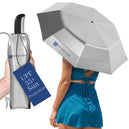
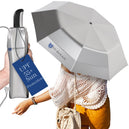
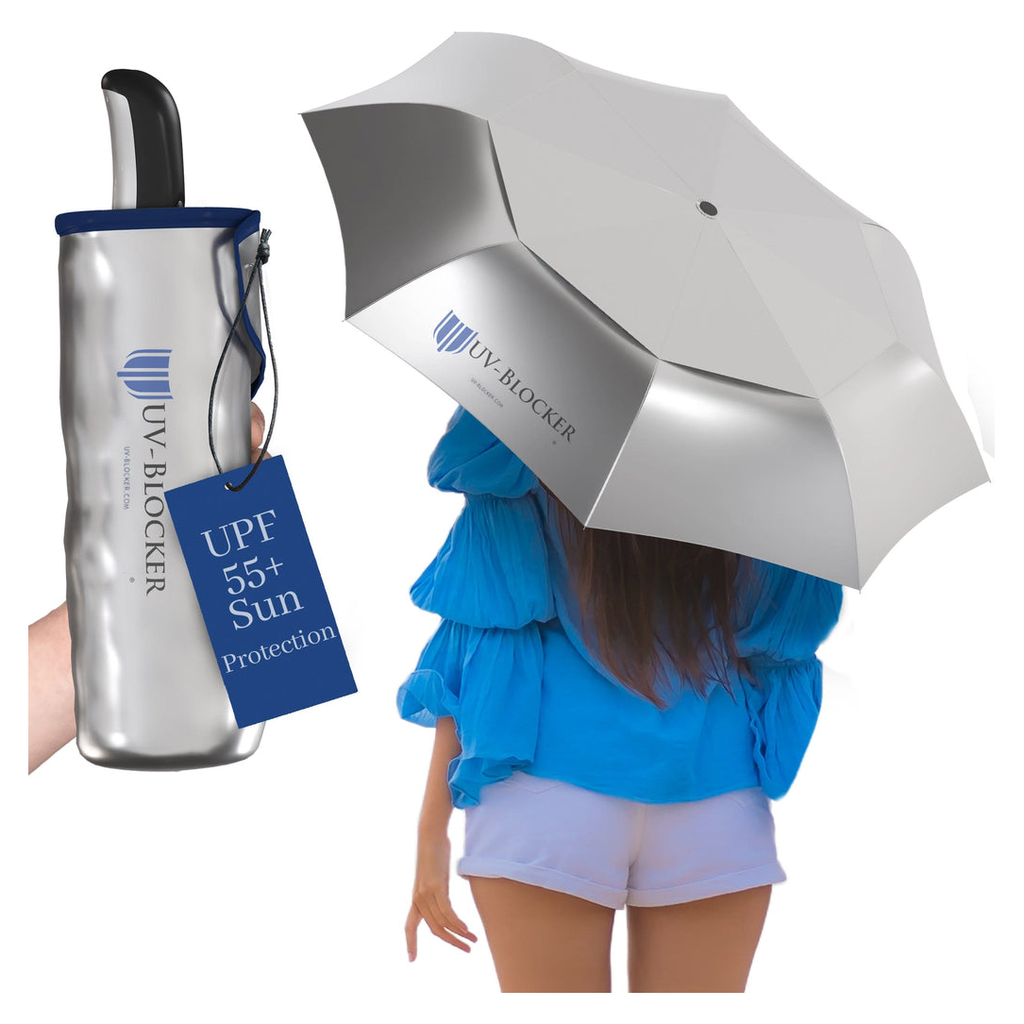
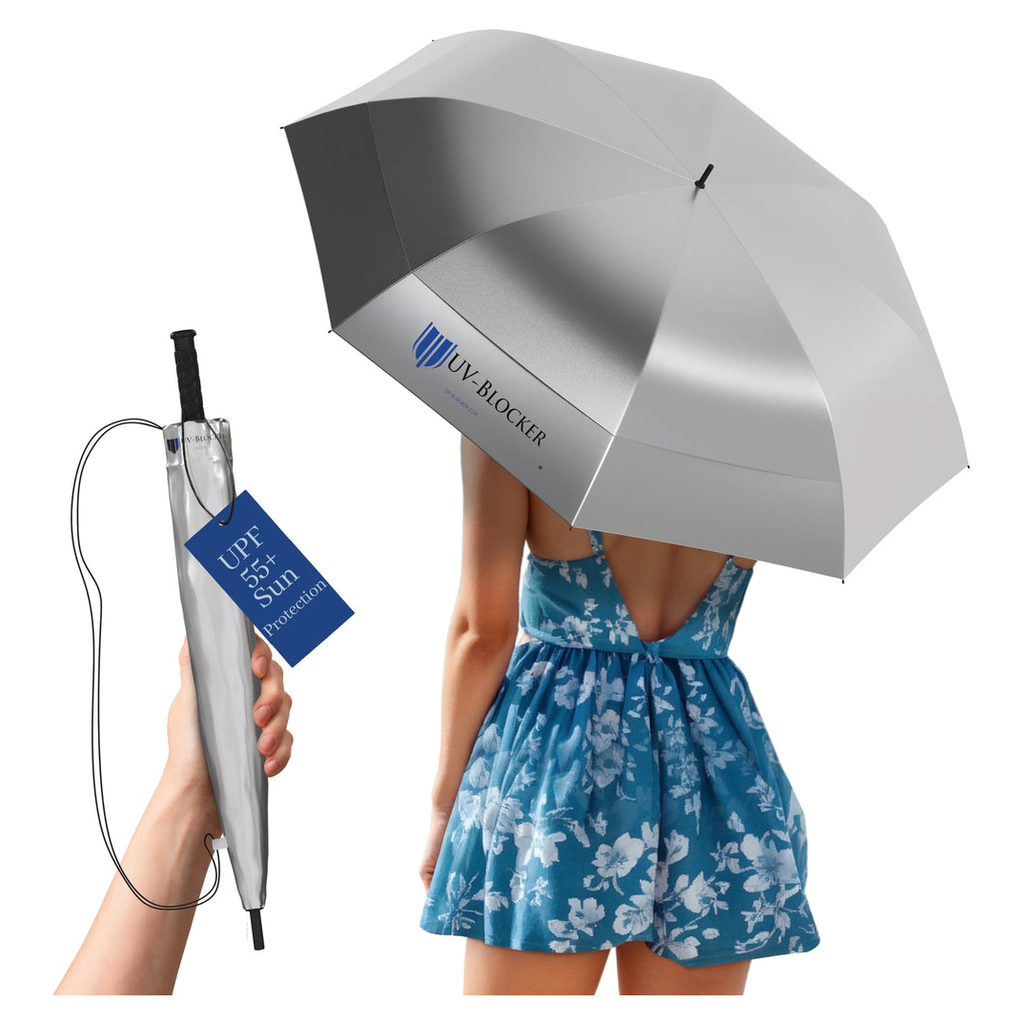
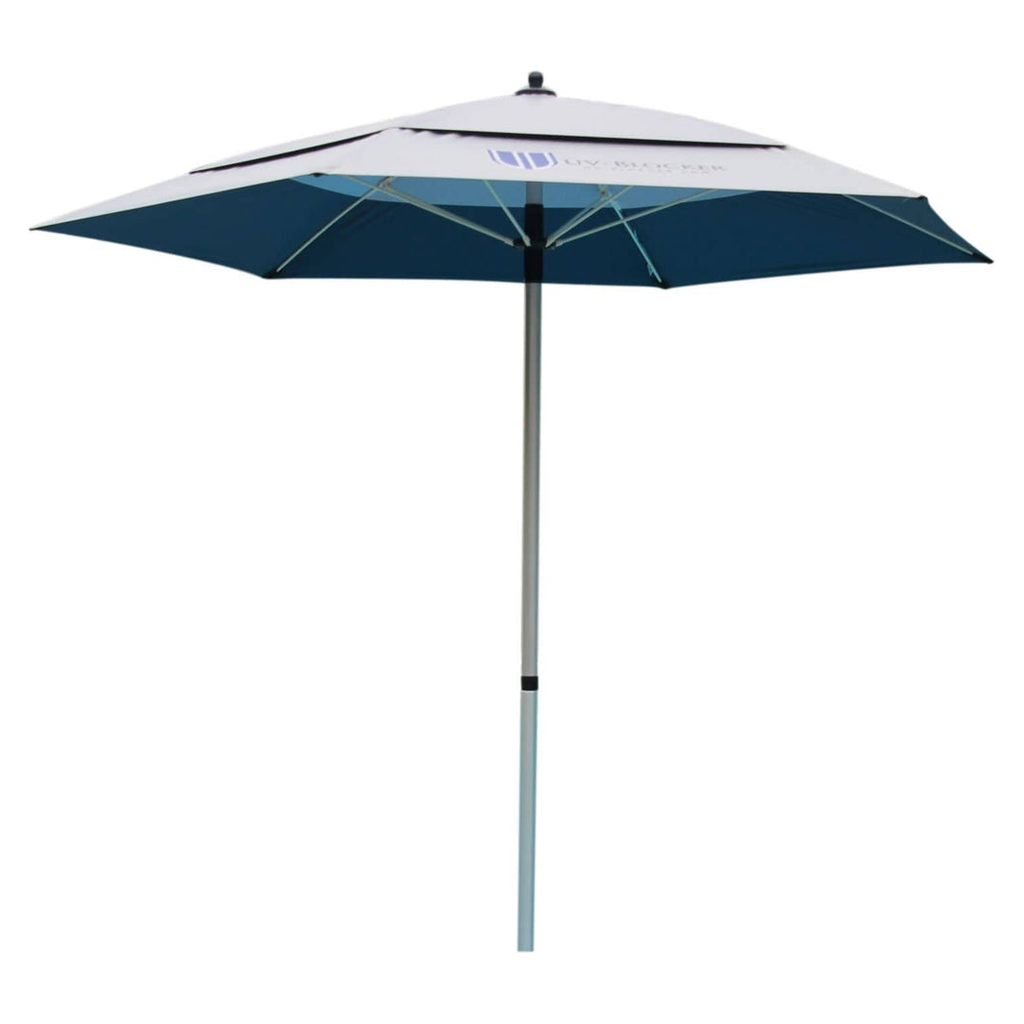
- UV umbrella for rest and recovery periods: During outdoor fitness classes, golf rounds, or warm-up and cool-down periods, a UV-Blocker umbrella provides certified shade without requiring you to leave the area. It's especially practical on the sideline, at the driving range, or while watching teammates compete.
UV Protection for Common Outdoor Sports
Different outdoor activities carry different UV risk profiles, depending on duration, time of day, and environment.
Golf
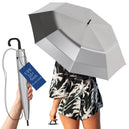
A round of golf means three to five hours of peak-hour sun exposure on open terrain with minimal shade. Golfers have among the highest rates of hand, face, and neck skin cancers of any outdoor sport participant. A UV umbrella rated UPF 50+ travels with you between holes and provides consistent coverage during the slow, stationary periods — teeing up, putting, waiting for your group — when UV accumulates most. UV-Blocker's 68-inch Golf UV Umbrella is the only golf umbrella approved by the Melanoma International Foundation, with a canopy large enough to shade two people.
Running and Walking
Most runners head out during morning or evening hours, which reduces — but doesn't eliminate — UV exposure. On a summer morning at 8am, UV index values can already reach moderate-to-high levels depending on latitude. For mid-day runs, UPF-rated clothing and sunscreen on exposed areas (face, arms, back of the neck) are essential. Recovery stretching or cool-down walks after a run are often done in full sun — a UV umbrella is practical here for stationary stretching periods.
Youth and Recreational Team Sports
Weekend youth sports typically run on Saturday and Sunday mornings — directly in the 10am to 2pm peak UV window. Players on the field are moving and generally can't use an umbrella, which makes sunscreen and UPF clothing critical. But parents, coaches, and substitutes on the sideline accumulate significant UV over a full season of games. A personal UV umbrella eliminates that exposure during the hours they're stationary.
Frequently Asked Questions About Outdoor Exercise and UV Protection
Does sunscreen affect exercise performance?
Properly formulated sport sunscreens are designed to stay on during sweat and won't interfere with physical performance. Mineral-based sunscreens (zinc oxide, titanium dioxide) sit on the skin's surface and are generally well-tolerated during exercise.
Should I apply sunscreen before or after moisturizer?
Apply sunscreen as the last step before going outside — after moisturizer if you use one. For exercise, choose a sport-specific sunscreen that's water and sweat-resistant to maintain effectiveness during activity.
Is morning exercise safer for UV exposure?
Early morning (before 9am) does have lower UV index levels than midday. However, from late spring through early fall, UV can reach moderate levels as early as 8am depending on your location. Checking the UV index forecast for your planned exercise time is more reliable than relying on the time alone.
Are UV-blocking umbrellas practical for outdoor exercise?
UV umbrellas are most useful for stationary or low-mobility outdoor exercise: golf, stretching, warm-up and cool-down, spectating, coaching. They're not practical for running or active court sports. For those activities, UPF clothing and sunscreen are the correct tools.
How Outdoor Exercise Prevents Cancer: Frequently Asked Questions
Does outdoor exercise provide a measurable reduction in cancer risk compared to indoor settings?
Clinical studies indicate that consistent outdoor physical activity can lower the risk of 13 types of cancer, including a 20% reduction in colon cancer risk. However, to prevent skin damage while training, it is essential to use tools like a UV-Blocker sun umbrella which provides a physical UPF 50+ barrier. This allows you to reap metabolic rewards while adhering to the safety guidelines approved by the Melanoma International Foundation.
How can I maximize the immune-boosting benefits of the sun without increasing my risk of melanoma?
While vitamin D synthesis is linked to a 30-50% lower risk of internal cancers, 90% of non-melanoma skin cancers are caused by excessive UV exposure. Utilizing Solarteck® technology allows you to stay outdoors longer by blocking 99% of harmful UVA and UVB rays that cause DNA damage. A UV-Blocker provides this critical protection without the need for frequent sunscreen reapplication during a long workout.
Is there a specific way that physical UV barriers like Solarteck® improve exercise endurance and safety?
Solarteck® fabric integrated into UV-Blocker products can reduce the temperature under the canopy by up to 15 degrees, significantly lowering the risk of heat-related illness during exercise. Maintaining a lower core temperature encourages longer workout durations, which is vital for the weight management associated with preventing 1 in 20 cancer cases. These products are rigorously tested to meet UPF 50+ standards, ensuring maximum safety for high-intensity outdoor athletes.
What are the most dangerous times for cancer-causing UV exposure during an outdoor workout?
UV radiation is strongest between 10 AM and 4 PM, a period when the risk of cellular mutation is highest for outdoor exercisers. During these hours, a UV-Blocker offers a reliable defense that is specifically recognized by the Melanoma International Foundation for its protective capabilities. Using a physical UPF 50+ shield ensures that your cancer-prevention routine does not inadvertently lead to skin damage or future malignancies.
Frequently Asked Questions
Does sunscreen actually prevent skin cancer during exercise?
Sunscreen significantly reduces UV damage but has notable limitations during exercise. Sweat, toweling off, and water exposure degrade SPF coverage within 40–80 minutes, meaning runners and cyclists often lose protection mid-workout without knowing it. Broad-spectrum SPF 30–50 is the clinical minimum, but it must be reapplied every 80 minutes during activity. Physical barriers — UPF 50+ clothing and umbrellas like the UV-Blocker (certified by the Melanoma International Foundation) — provide uninterrupted protection that does not wash off with perspiration, making them a critical complement to any sunscreen routine for outdoor athletes.
What UV index level is dangerous for runners and cyclists?
A UV Index of 3 or above is considered moderate risk and warrants sun protection measures. At UV Index 6–7 (high), unprotected skin can burn in as little as 15–25 minutes. Most summer midday conditions in sunbelt states reach UV Index 8–11 (very high to extreme), where damage accumulates even faster. The key problem for runners is that a 60-minute run can span several UV index points as the sun rises toward its peak. Apps like EPA's UVIndex or Weather.com provide hourly UV forecasts — plan runs for hours when the index is below 3, or use a UPF 50+ sun umbrella if midday exercise is unavoidable.
Should I exercise in the morning or evening to avoid UV exposure?
Yes — timing is one of the most effective UV-reduction strategies for outdoor athletes. UV radiation peaks between 10 AM and 4 PM solar time, with intensity 2–3× higher at noon than at 8 AM. Running, cycling, or training before 9 AM or after 5 PM cuts UV exposure by 50–70% compared to midday. Morning workouts also come with cooler air temperatures, reducing heat stress. If scheduling forces midday exercise, use a combination of UPF 50+ clothing, dermatologist-recommended broad-spectrum sunscreen, and a personal UV-blocking umbrella — the UV-Blocker's Solarteck® coating blocks 99% of UV rays and keeps the area beneath it up to 15°F cooler.
How does UPF clothing protect outdoor athletes compared to regular sportswear?
Standard athletic shirts offer minimal UV protection — many white polyester fabrics test at only UPF 5–10, meaning they transmit 10–20% of UV radiation to skin. UPF 50+ fabrics (rated via AATCC TM183) block at least 98% of UV rays; a garment rated UPF 50+ allows just 1/50th of ambient UV to reach skin. For endurance athletes, this translates to dramatically reduced cumulative DNA damage across training seasons. Look for garments with independent UPF certification — not self-declared — and darker or tighter weave fabrics, which consistently test higher. Pairing UPF 50+ tops with wide-brim hats provides layered protection for the face, neck, and scalp.
Do UV umbrellas actually help during outdoor exercise?
For certain exercise formats, a UV umbrella is highly effective. Walkers, hikers on flat terrain, open-water swimmers between laps, and athletes in spectator or rest periods benefit most. The UV-Blocker umbrella uses Solarteck® reflective coating to block 99% of UV rays (100% UVB, 99.97% UVA per AATCC TM183-2020 testing) and reduces perceived temperature by up to 15°F — measurable benefits for recovery and pre/post-exercise periods. Umbrellas are impractical for high-intensity running or cycling but serve an important role for warm-ups, cool-downs, coaching positions, and spectator supervision. The Melanoma International Foundation endorses this type of physical UV shielding.
Which outdoor sports carry the highest skin cancer risk?
Endurance sports with prolonged, unshaded sun exposure at altitude or near reflective surfaces carry the highest cumulative risk. Alpine skiing and mountaineering top the list — UV intensity increases approximately 4–5% per 1,000 feet of elevation, and snow reflects up to 80% of UV. Open-water swimming and rowing expose athletes to both direct and reflected UV from water (up to 25% reflection). Road cycling and marathon running during peak hours accumulate significant exposure over training seasons. Golf is frequently underestimated — a 4-hour round can deliver 2–4 hours of near-peak UV exposure. Regular dermatology screening and consistent physical UV barriers are especially important for athletes in these disciplines.