
Are you aware of how dangerous the sun can be on your skin?
The sun radiates UVA and UVB rays that cause damage to your body, both long-term and short-term exposure.
Exposure to sunlight is the main culprit in premature aging of the skin, as well as many other health problems such as wrinkles, sun spots, inflammation, age spots, and even cancer.
This is bad news to anyone who loves being in the sun, especially those who do not live in warm areas, and want to make the most of the nice weather.
So, how can you protect yourself?
In this article, we will tell you what to know about the dangers of the sun, and how to prevent it from damaging your skin permanently.
Let's get into it.
The Dangers Of The Sun
We have all heard about the dangers of the sun, probably when we were younger and our parents would have us wear sunscreen.
Those who have been sunburned in the past know how uncomfortable and painful sunburn can be.
It is a part of life that most people will experience at some point in their lives.
Unfortunately, enough people are not aware of the long-term effects of excessive exposure to sunlight.
The biggest danger of being caught in direct sunlight for too long is the development of melanoma, which is a form of skin cancer.
Melanoma is one of the deadliest forms of skin cancer, and accounts for more than 75 percent of the deaths associated with this type of cancer.
Other types of skin cancers include basal cell carcinoma and squamous cell carcinoma.
Although these cancers do not pose as significant a health risk as melanoma, they still require early detection and treatment if caught before spreading.
Other dangers that can be caused by the sun are cataracts, premature aging, damage to the retina and damage to DNA.
Knowing And Understanding Your Skin Type
Anyone who has ever visited a sunbed salon will know that, on your first visit, you will usually get asked what skin type you have.
According to a scale known as the Fitzpatrick skin type scale, there are 6 skin types.
Your skin phototype will depend on how much melanin pigment is in your skin.
In other words, it depends on whether you tan easily, or whether you burn easily, when exposed to sunlight.
The 6 skin types are as follows:
- Pale skin, light eyes, and blonde/red hair (always burns and never tans)
- Fair skin, light eyes (burns very easily, tans sometimes)
- Darker white skin (tans after burning)
- Light brown skin (burns sometimes, tans easily)
- Brown skin (burns rarely, tans very easily)
- Dark brown or black skin (never burns, always tans)
By knowing where you fit on the Fitzpatrick skin type scale, you can roughly work out how long you need to spend in the sun before getting burnt.
For example, if you are a pale-skinned person with light hair and blue eyes, then you should be careful about spending too much time in the sun without protection.
If you are a dark-skinned person with darker hair and brown eyes, then you can spend longer in the sun without having to worry.
However, it does not matter how dark your skin is: if you are in direct sunlight for too long, and too often, you could still suffer from sun damage.
This is because the UV rays penetrate deep into the layers of your skin, even though they may only reach the top layer.
Tips To Staying Safe In The Sun

No matter whether your skin is very dark or very light, you should still be cautious when exposing yourself to the sun.
The following tips will help protect your skin against harmful UVA and UVB rays.
Avoid Spending Too Much Time In The Sun (Especially During Peak Hours)
This is the easiest way to stay safe in the sun, although it is not the most preferred: the best way to avoid the dangers of sun rays is to simply stay out of the sun.
The sun is usually at its brightest and strongest between the hours of 10am and 3pm.
Of course, some areas of the world are sunnier than others, therefore you are going to find that the times at which you want to go outside vary throughout the year.
For example, during summer months, the sun is generally at its peak around midday, whereas during winter months, the sun is at its peak later in the day.
Only you will know how hot the sun is when you are out in it, therefore you will need to judge the heat for yourself.
If you find yourself feeling uncomfortable, you should either find a shady area to rest, or sit inside.
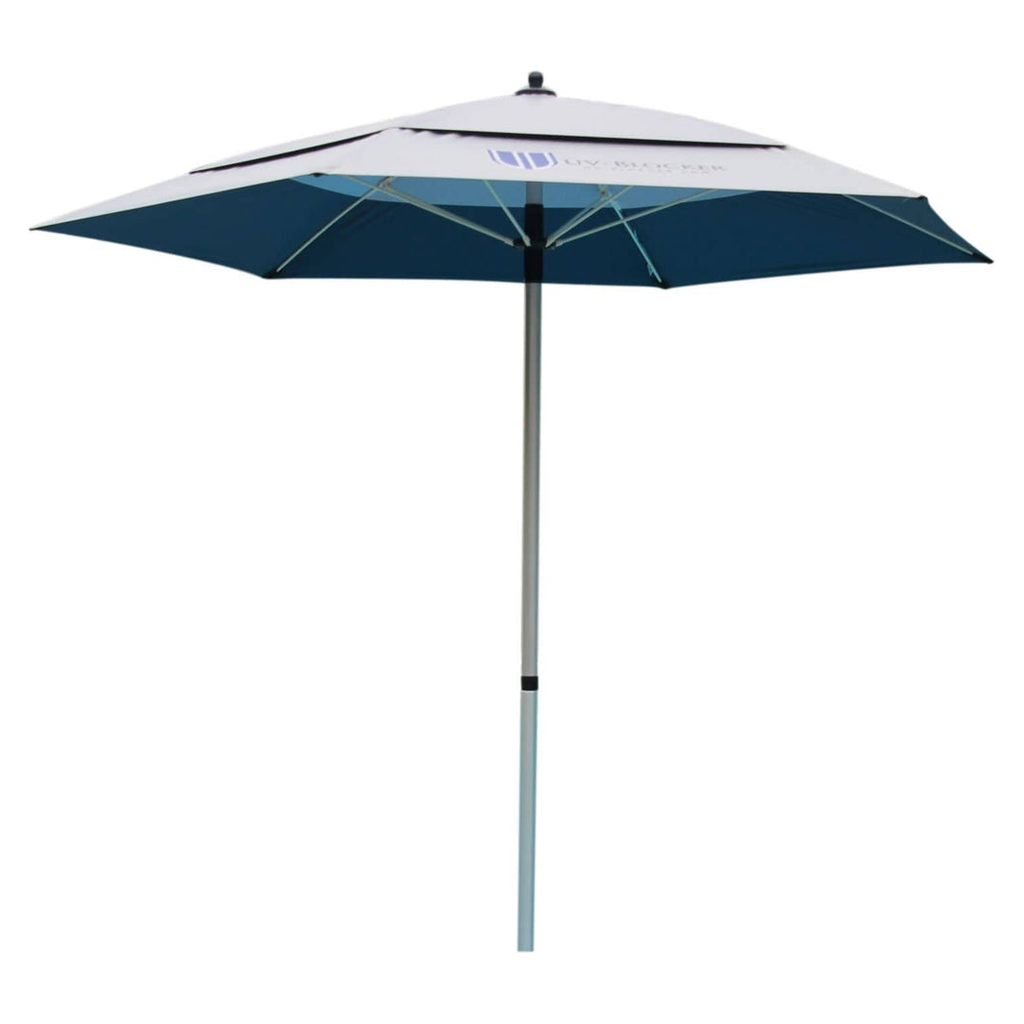
You would also benefit from using an umbrella, parasol or shade cloth in order to shield yourself from the sun's damaging rays.
Wear Suitable Clothing For The Weather
Another way to protect yourself from the sun is by wearing suitable clothes for the weather.
Of course, you do not want to leave the house wearing thick sweaters and heavy coats if the temperature is reaching 50ºF: this can lead to overheating, and in severe cases, can cause death.
However, this is why it is important to dress appropriately for the weather.
If it is sunny but cool, take advantage of the shade: wear loose clothing such as shorts or skirts, so that you keep cool whilst avoiding overexposure to the sun's rays.
Also, make sure that your arms and legs are protected.
You should always invest in sunglasses, as they will protect your eyes from the sun's damaging UV rays.
You should also ensure that your clothing covers your face and neck properly, so that you do not get sunburns here.
Additionally, consider wearing a hat: hats provide shade and cover up any exposed areas of your head, ensuring that you remain comfortable and covered.
A hat will also help keep your entire face in the shade.
Always Wear Sunscreen!
Here is the obvious point that you were waiting for.
Although this is something that some people would prefer to avoid, we cannot stress how important it is to wear sunscreen when you are exposed to the sun.
Sunscreens work by blocking the penetration of both UVA and UVB radiation into the skin.
They come in many different forms, including creams, lotions, and sprays.
There are different strengths of sunscreen that can be purchased, depending on your own skin type.
If you have particularly pale skin and light hair/eyes, you should look at covering yourself in a stronger sunscreen.
As long as you continue to lightly apply sunscreen throughout the day, you can rest easy knowing that your skin will be kept safe from the harmful effects of the sun.
Although, sunscreen is not a complete solution to protecting against the sun; it is highly recommended that you use other methods alongside it such as protective clothing and hats.
Final Thoughts
In conclusion, the best ways to protect yourself from the sun's harmful rays are to keep covered, wear sunscreen, and avoid long term exposure.
The most effective method of protection is to combine these three factors together, which allows you to enjoy all the benefits of spending time outdoors without putting your life or health at risk.
It is essential that you educate yourself about what the sun does to your body, and understand the signs and symptoms of excessive sun exposure.
Once you have found out more about the risks involved with sun damage, you can then decide whether you need to put measures in place to reduce them.
We hope you found this article useful.
The Role of Physical Barriers in Sun Protection
Sunscreen is the most commonly discussed sun protection tool, but dermatologists consistently rank physical barriers — shade, clothing, and UV-rated umbrellas — above topical products for reliability. The reason is simple: physical barriers don't degrade, wear off, or get applied at the wrong dose.
Consider how sunscreen actually performs in real-world conditions versus lab conditions. SPF ratings are established using 2mg of product per square centimeter of skin — roughly a shot glass for full-body application. Studies consistently show people apply 25 to 50% of this amount, which reduces a labeled SPF 50 to something closer to SPF 10 to 15 in practice. Add heat, sweat, and the two-hour reapplication schedule most people don't keep, and the gaps in protection are substantial.
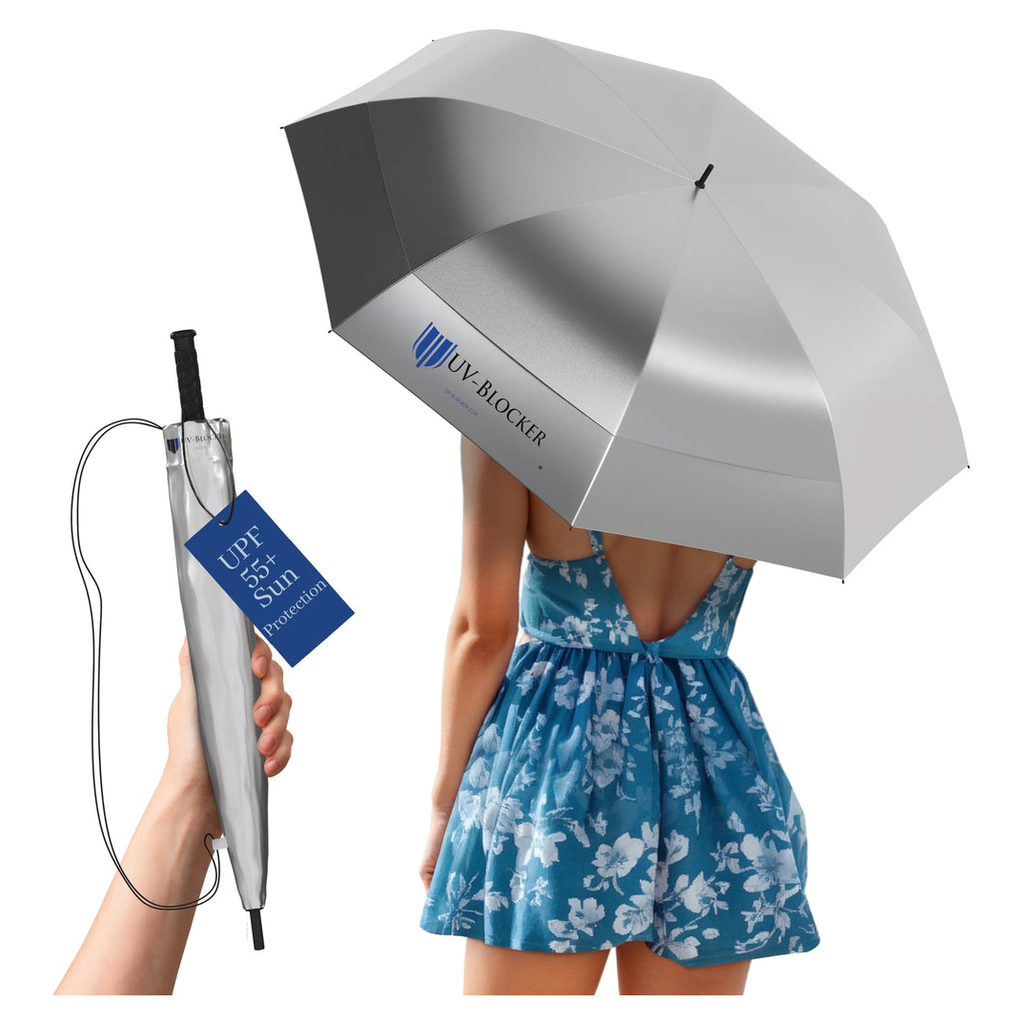
Physical barriers have no such failure modes. A UPF 50+ umbrella delivers the same protection on hour one as on hour three. It doesn't require reapplication. It doesn't miss spots. When positioned correctly, it blocks UV radiation before it reaches skin entirely.
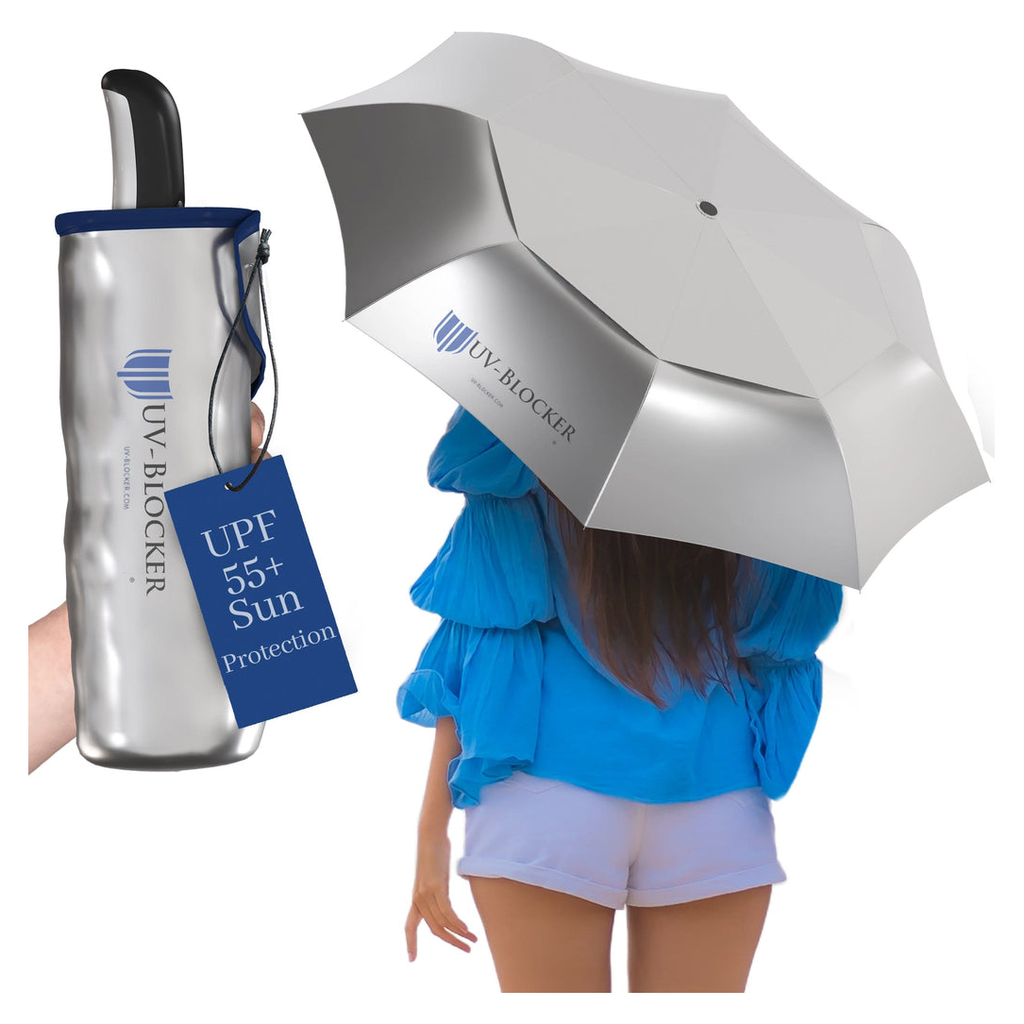
For people with elevated UV sensitivity — melanoma survivors, lupus patients, those on photosensitizing medications — this reliability difference is clinically significant. UV-Blocker's UPF 50+ umbrellas use Solartek® silver-reflective fabric certified to block 100% of UVB and 99.97% of UVA radiation. The Melanoma International Foundation has approved UV-Blocker products for this reason. Physical shade from a certified UV umbrella is the most consistent sun protection available for stationary outdoor use.
Building a Complete Daily Sun Protection Routine
The most effective skin protection strategy layers multiple methods so that each covers the gaps of the others. Here's how that looks practically:
- Morning routine: Apply broad-spectrum SPF 30+ sunscreen to face, neck, ears, and hands 20 minutes before going outside. These areas accumulate UV year-round, not just at the beach.
- Clothing first, sunscreen second: For areas covered by clothing, UPF-rated garments (UPF 50+) provide more reliable protection than sunscreen — no reapplication, no missed spots. A standard white cotton t-shirt offers only UPF 5.
- UV umbrella for stationary outdoor time: During outdoor dining, commuting, watching sports, or any period of prolonged outdoor exposure, a UPF 50+ umbrella eliminates UV entirely for the area it shades. Combine with sunscreen on exposed skin for complete layered coverage.
- UV-rated sunglasses: UV400-labeled lenses protect against the cumulative UV exposure that contributes to cataracts and macular degeneration — conditions that develop over decades of unprotected eye exposure.
- Check UV index daily: Most weather apps include the UV index. Anything at 3 or above requires active protection measures. Anything at 6 or above means unprotected skin can burn in 15 minutes or less.
Frequently Asked Questions About Protecting Your Skin From the Sun
What SPF level should I use daily?
Dermatologists recommend SPF 30 as the minimum for daily use on sun-exposed skin — it blocks about 97% of UVB rays when applied at the correct dose. SPF 50 blocks about 98%. The difference between SPF 30 and 50 is modest; what matters more is applying enough and reapplying every two hours during outdoor activity.
Does sun protection matter on cloudy days?
Yes. Up to 80% of UV radiation passes through light cloud cover. The UV index — not the cloud cover or temperature — is the relevant measure of UV risk on any given day. Overcast conditions create a false sense of security that leads to some of the worst cumulative exposures.
What is the most reliable form of sun protection?
Physical barriers — shade from a certified UV umbrella, UPF-rated clothing, and wide-brim hats — are the most reliable because they don't degrade, wash off, or require reapplication. Sunscreen is valuable but performs best as a complement to physical barriers, not a substitute. A layered approach combining shade, UPF clothing, and sunscreen on exposed skin provides the most complete protection.
How early do signs of sun damage appear?
The most visible signs — uneven pigmentation, fine lines, and texture changes — often begin appearing in the late 20s to mid-30s with regular unprotected exposure. But the underlying cellular DNA damage that drives both premature aging and skin cancer risk begins accumulating from childhood. Consistent sun protection at any age reduces ongoing damage, even if it can't reverse what has already occurred.
Can UV umbrellas be used as everyday sun protection?
Yes. UV-Blocker umbrellas are designed for everyday use — commuting, outdoor lunch breaks, gardening, sports watching, and travel. They fold to 12 inches, weigh under 1 pound, and provide certified UPF 50+ protection year-round. For people with elevated UV sensitivity or medical conditions triggered by sun exposure, a UV umbrella is often a key component of daily protection.
How To Protect Your Skin From Sun: Frequently Asked Questions
What is the most effective way to block UV rays while outdoors?
UPF 50+ rated materials are clinical-grade barriers that block 98% of UVA and UVB radiation. UV-Blocker products utilize Solarteck® technology to reflect these rays away from the body, providing a significantly cooler environment and superior protection compared to standard fabrics. This physical barrier is essential for preventing the cumulative damage that leads to photoaging and various skin cancers.
How often should I reapply sun protection during prolonged exposure?
While dermatologists recommend reapplying topical sunscreen every 120 minutes, a UV-Blocker umbrella provides a constant UPF 50+ shield that does not degrade over time. This physical barrier blocks nearly 99% of UVA rays, which are the primary cause of deep cellular DNA damage. Utilizing such technology is highly recommended during peak UV hours, typically between 10 AM and 4 PM, to supplement topical lotions.
Does the material of an umbrella really affect its ability to protect the skin?
Standard umbrella fabrics often provide a measly SPF equivalent of 5, whereas Solarteck® technology ensures a consistent UPF 50+ rating. UV-Blocker umbrellas are specifically engineered with a specialized silver coating to reflect radiation rather than allowing it to penetrate the fabric. Because of this high standard of efficacy, these products have earned the Melanoma International Foundation seal of approval for skin safety.
Is sun protection necessary on cloudy days or when standing in the shade?
Up to 80% of the sun's UV radiation can pass through cloud cover, meaning significant skin damage can still occur on overcast days. Using a UV-Blocker portable umbrella ensures you have a reliable, mobile shield that filters out 98% of harmful radiation, protecting you from both direct and reflected UV rays. This is a critical preventative habit for maintaining skin integrity and reducing the long-term risk of melanoma.