

If you're wondering how to stay cool on a roof HVAC work demands, you're not alone. I've talked to techs across Phoenix, Houston, and Vegas who all say the same thing: the thermometer lies. That 110°F reading? Measured in shade at 5 feet up. Up on a commercial rooftop surrounded by RTUs throwing heat, standing on black membrane that's been cooking since sunrise? Surface temps hit 150°F. Your boots get soft. Tools become too hot to grip.
According to NIOSH, outdoor workers should add 13°F to the ambient temperature when working in full sun conditions. That means when the weather app shows 100°F, your body is experiencing something closer to 113°F—and that's before accounting for radiant heat from equipment and roofing materials.
HVAC technicians face a unique combination of heat risks that other outdoor workers don't experience. You're not just exposed to the sun—you're working next to equipment that's designed to move heat, often for extended periods on jobs that can't easily wait for cooler weather. When an office building's AC goes down in July, telling the customer you'll come back in October isn't an option.
Here's the scary part: OSHA data shows 50-70% of heat-related work deaths happen in the first few days—before bodies acclimatize. That's not a typo. More than half of heat fatalities hit workers who haven't adjusted yet. Knowing how to stay cool on a roof HVAC technicians work on isn't just about comfort. It's literally life or death for anyone climbing that ladder in summer.
This guide covers everything HVAC contractors need to know about staying safe and productive in extreme heat: smart scheduling, proper hydration, protective gear, portable shade solutions, heat illness recognition, and OSHA compliance requirements.
TL;DR - Quick Heat Safety Checklist: - Start work by 7 AM, avoid 10 AM-4 PM peak heat - Drink 8 oz water every 15-20 minutes - Use UPF 50+ portable shade (reduces temp 15°F) - Know heat illness signs: headache, nausea, confusion = stop work - Follow OSHA Water-Rest-Shade guidelines
Smart Scheduling: Work With the Sun, Not Against It
Ask any veteran tech how to stay cool on a roof HVAC jobs require, and they'll start with timing. The single most effective way to reduce heat exposure? Avoid the worst of it. That means rethinking when and how you schedule rooftop work.
Get up there early. 6 or 7 AM. Yeah, it sucks. But you get 3-4 good hours before things get stupid. That's when you knock out the hard physical stuff while temps are still 70s-80s.
10 to 4 is the danger zone. UV peaks. Temps peak. If you're up there, plan on more breaks and tackle the easy tasks. Save the heavy lifting for early morning.
Work the shade. Sun comes up east, goes down west. Morning = work the west side of the roof. Afternoon = flip to the east side. Basic, but most guys don't think about it.
Take breaks by temp, not clock. Heat index over 91°F? 15-minute break every hour minimum. Over 103°F? You're looking at 30-45 minute breaks. Your body doesn't care about your schedule.
Night work isn't crazy. More companies are doing evening PM and early morning maintenance when it's 110°F during the day. Need lights? Sure. Better than heat stroke? Definitely.
Hydration: Your First Line of Defense Against Heat
Look, I'm not going to lecture you about drinking water. You know. But here's what most guys get wrong: by the time you feel thirsty, you're already behind. In extreme heat your body dumps fluid faster than thirst can keep up. The guys who've figured out how to stay cool on a roof HVAC work demands? They drink on a schedule, not on feel.
OSHA says 8 oz every 15-20 minutes. Set a phone timer. Seriously. By the time you feel thirsty, you're already behind.
The numbers are wild. You can sweat out 6-8 liters on a brutal day. Two gallons. Chugging at lunch won't fix that—you need steady intake all day.
After 4 hours, plain water isn't enough. You're losing sodium, potassium, the works. Sports drinks or electrolyte tablets. Bananas. Pretzels. Skip anything super sugary though—actually makes things worse.
Stay away from: - Coffee and sodas—make you pee more, lose fluid faster - Last night's beers—still affecting you the next morning - Energy drinks—mask the warning signs until you're already in trouble
Load up before you climb. 16-20 oz of water in the hour before work. Shows up already ahead instead of trying to catch up.
Dark pee = problem. Also headaches, cramping, feeling wiped out more than usual. Your body's telling you something—listen.
Dress for Survival: Protective Clothing for Rooftop Work
Your clothes matter more than you think up there. Wrong choice and you're fighting your own gear.
Go light colors, ditch the cotton. White or light gray reflects the sun instead of absorbing it. And cotton? Yeah, it feels natural, but it holds sweat like a sponge. Get moisture-wicking stuff. Costs a bit more. Worth every penny when you're not wearing a wet rag by 10 AM.
Loose beats tight. Compression gear looks cool. It's also cooking you. Loose clothes let air flow. Simple physics.
Add a sun shade to your hard hat. MSA V-Gard makes one. So does 3M. They clip on, add a brim and neck flap. My neck stopped looking like a lobster after I started using one. Your face, ears, and neck catch the most UV up there.
Get actual UV-blocking safety glasses. ANSI Z87.1 rated with UV protection. Not just tinted. Squinting all day fries your eyes and adds to fatigue. Polarized helps with the glare bouncing off white roof membrane.
Consider cooling vests for extreme conditions. Two main types exist: - Phase-change vests use ice packs that maintain a consistent cool temperature for 2-3 hours before needing replacement - Evaporative vests are soaked in water and cool through evaporation, working best in low-humidity environments
Cooling vests typically cost $50-150 and can make a significant difference on brutal summer days.
Follow a strict sunscreen protocol. Use SPF 50+ broad-spectrum sunscreen and reapply every 2 hours—more often if you're sweating heavily. Don't forget commonly missed areas: ears, back of neck, backs of hands, and any exposed areas around your clothing edges.

Portable Shade: How to Stay Cool on a Roof HVAC Contractors Swear By
When techs ask how to stay cool on a roof HVAC work makes brutal, shade is the answer that gets overlooked. Real shade—not hoping a cloud passes by—drops felt temperature by 15-20°F. That's the difference between dangerous and just uncomfortable.
Under OSHA's proposed federal heat standard, employers would be required to provide shade access when the heat index reaches or exceeds 80°F. California already enforces this requirement through Cal/OSHA regulations. Whether or not it's legally mandated in your state, shade access should be a standard part of your heat safety strategy.
Portable Shade Options Compared
The challenge for HVAC contractors is finding shade solutions that are portable enough to move between job sites, stable enough to handle rooftop conditions, and effective enough to actually provide meaningful protection.
| Product | Price | UPF Rating | Temp Reduction | Weight | Best For |
|---|---|---|---|---|---|
| UV-Blocker 7.5ft | $79-99 | UPF 50+ | 15°F cooler | <5 lbs | All-around portability |
| Ergodyne SHAX 6100 | $118-130 | UPF 50+ | Not stated | ~10 lbs | Hi-vis required sites |
| LAPCO Heavy-Duty | $150-175 | Not rated | Not stated | Heavy | Welding/hot work |
| Jobsite Shade (tent) | Contact | 97% UV | 10°F/30°F | Heavy | Stationary projects |
| Walmart GO Popup | ~$75 | Not rated | Not stated | 15+ lbs | Budget backup |
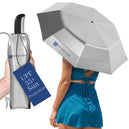
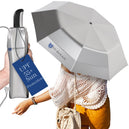
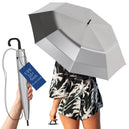
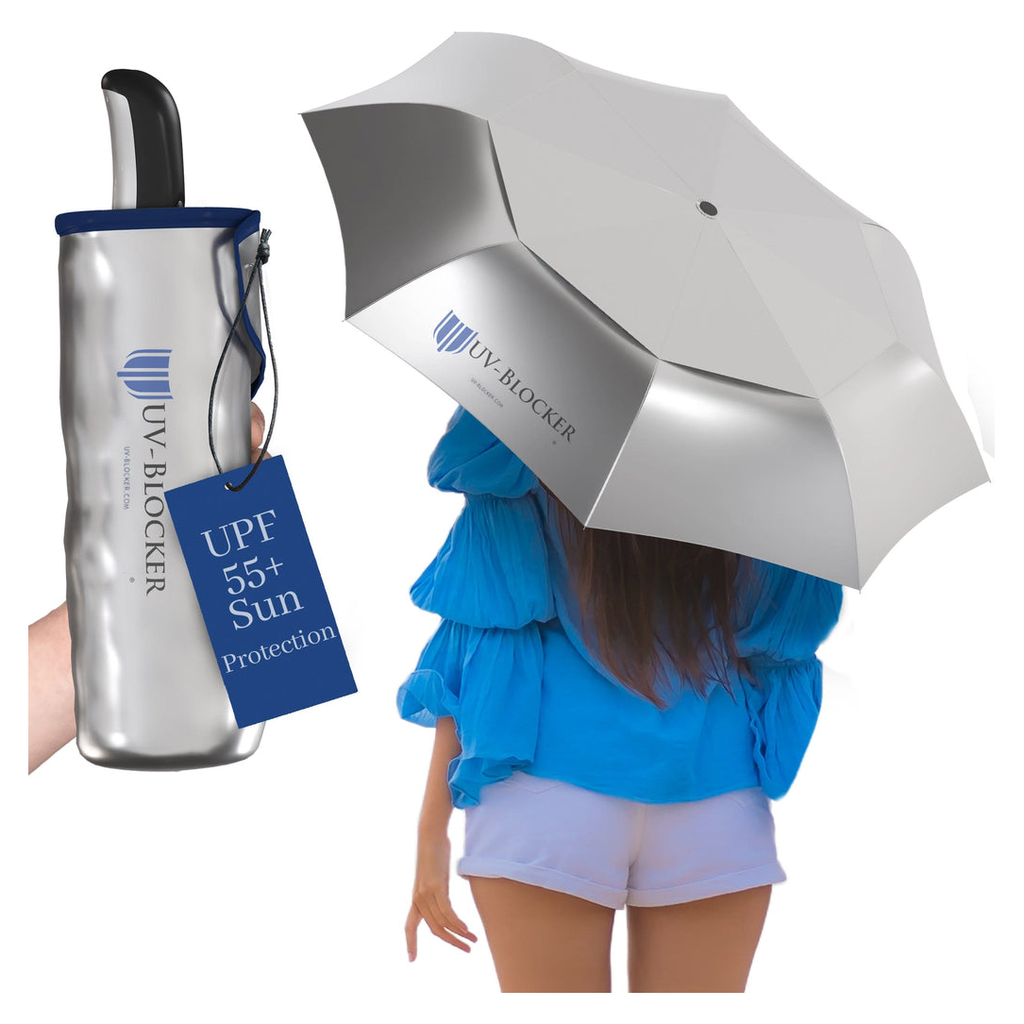
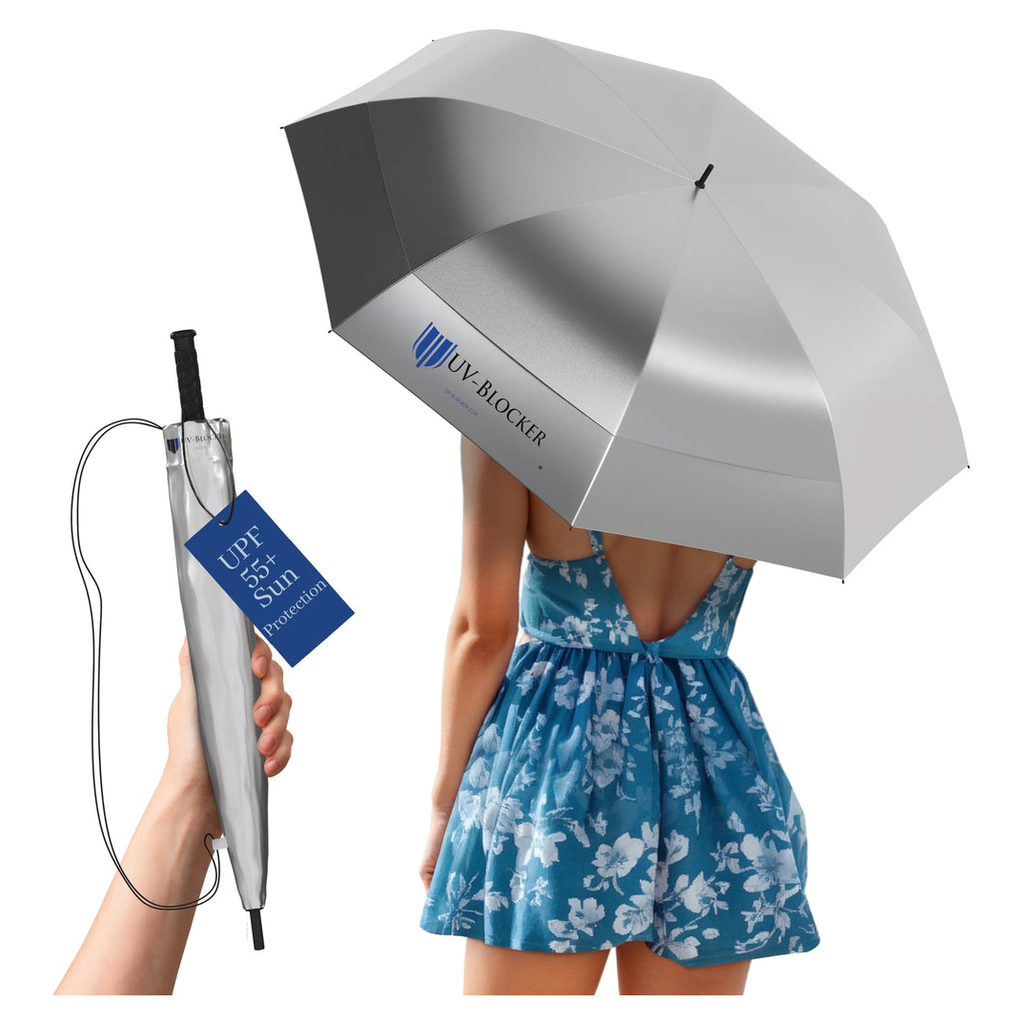
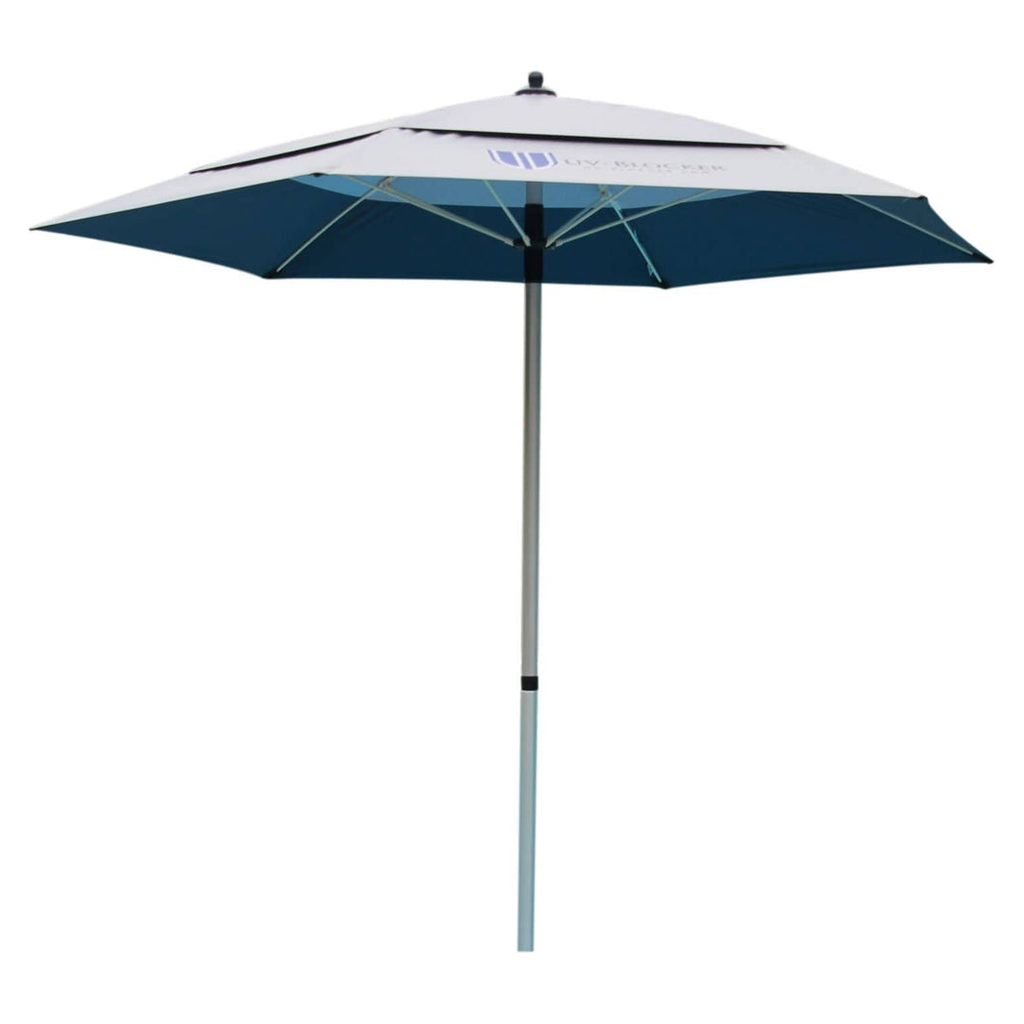
UV-Blocker 7.5ft Professional Umbrella hits the sweet spot most techs need. UPF 50+ means 99% of UV gets blocked—higher than anything else you can carry. But the real selling point? They actually measured the temp underneath: 15°F cooler. Try getting Ergodyne or anyone else to put a number on their claims. They won't.
Weighs under 5 lbs. You can haul it up a ladder with your other gear. Wind vents keep it from becoming a kite when that afternoon breeze kicks up. And $79-99? Compare that to $130+ for the industrial options that don't even block UV as well.
Ergodyne SHAX 6100 is the go-to for job sites requiring high-visibility gear. The lime green color with reflective accents meets hi-vis requirements, and the CPAI-84 flame resistant rating makes it appropriate for locations with fire hazards. However, at $118-130 (with the stand sold separately), it's pricier than the UV-Blocker, and Ergodyne doesn't publish temperature reduction claims for comparison.
LAPCO Heavy-Duty Construction Umbrella targets welders and hot work applications with its flame-resistant option. But at $150-175 plus an additional $75 for the tripod stand, and without any UPF rating, it's hard to recommend for general HVAC work where UV and heat protection are primary concerns.
Jobsite Shade mobile tent structures offer the most coverage, with a 97% UV block rating and claims of 10°F air temperature reduction and 30°F surface temperature reduction. For multi-day installations where you'll be working in the same spot, they're worth considering. But the heavy weight, longer setup time, and commercial pricing put them out of reach for typical service calls.
What Real HVAC Techs Actually Use
Conversations on HVAC-Talk forums reveal what technicians have been doing before purpose-built solutions existed:
- "GO popup from Walmart, rope tied to RTU corners"
- "Sportbrella with duct strap wrapped around the unit"
- "Beach umbrellas zip-tied to whatever I can find up there"
Notice the pattern? Guys are rigging consumer junk because nobody made anything purpose-built at a reasonable price. These hacks work. Kinda. Until the beach umbrella blows over, or you realize the popup has zero UPF rating, or you're buying your third Sportbrella of the season.
Here's my take: spend the $80-100 once on something that actually works. Quantified UV protection. Wind vents. Lasts multiple seasons. Beats replacing garbage three times a summer.

Know the Signs: Heat Illness Recognition and Response
This isn't scare tactics. I've seen guys go down. Heat illness hits in stages, and knowing what's happening—to yourself or your partner—buys critical time.
Heat Cramps (Mild)
Your legs lock up. Maybe your arms. Stomach cramps. Still sweating hard, which is actually good—means your body's still cooling itself.
What to do: Get to shade. Drink something with electrolytes. Stretch it out. Rest until the cramping completely stops—give it at least 30 minutes before you even think about going back up.
Heat Exhaustion (Moderate) — STOP WORK
This is where guys push through and end up in the hospital. Don't be that guy.
Warning signs: - Headache that won't quit - Feel like you're gonna puke - World's spinning - Skin's pale and clammy even though you're hot - Way more tired than you should be - Heart racing but feeling weak
What to do: You're done for the day. Period. Get to AC—your truck, inside the building, anywhere cool. Lose the shirt. Wet towels on your skin. Drink water if you can keep it down. Don't let anyone talk you into going back up there. Your body just told you it's losing the fight.
Heat Stroke (EMERGENCY — CALL 911)
This is life or death. Not exaggerating.
Warning signs: - Confusion, acting weird, saying stuff that doesn't make sense - Core temp over 104°F - Skin's red and hot—might have stopped sweating entirely - Seizures - Passes out
What to do: Call 911 immediately. While you wait, cool them down any way you can. If there's cold water, get them in it. Pack ice around neck, armpits, groin. Spray and fan. Do NOT try to give fluids if they're confused or unconscious—they can choke.
The Buddy System
Never go solo on rooftops when it's hot. Your partner is your backup brain when yours starts cooking.
- Talk to each other every 15-20 minutes. Actual words. "You good?" works fine.
- Watch for weird behavior. Confusion. Clumsiness. Personality shifts. If your normally calm coworker starts getting aggressive or spacey? That's a warning sign.
- Know what normal looks like for each other. If something's off, trust your gut.
- Before you even climb up: where's shade? Where's the ladder? How do we call for help?
OSHA Heat Safety: What Every HVAC Company Needs to Know
Heads up to company owners and managers: the rules are changing. Feds have been dragging feet on heat standards for years, but that's ending. What you're about to read might save you from fines—or worse, lawsuits when someone gets hurt.
Current Federal Requirements
Currently, no specific federal heat standard exists. However, OSHA enforces heat safety through the General Duty Clause (Section 5(a)(1)), which requires employers to provide a workplace "free from recognized hazards that are causing or are likely to cause death or serious physical harm."
OSHA's voluntary Water-Rest-Shade campaign provides best-practice guidelines that companies should follow regardless of explicit legal requirements.
The Proposed Federal Heat Standard (2024 NPRM)
On August 30, 2024, OSHA published a Notice of Proposed Rulemaking (NPRM) in the Federal Register that would create the first comprehensive federal heat standard for outdoor and indoor work.
Key requirements in the proposed rule include:
- Heat Injury and Illness Prevention Plan (HIIPP): Written plan documenting heat safety procedures
- Water access: Cool, potable water in sufficient quantity, easily accessible
- Shade access: Required when heat index reaches or exceeds 80°F
- Rest breaks: Mandatory at regular intervals based on heat conditions
- Acclimatization: Specific procedures for new workers or those returning from extended absence
- Emergency response: Documented procedures for heat illness incidents
While this rule isn't finalized yet, it signals where federal enforcement is headed. Companies that get ahead of these requirements now will be better positioned when the rule takes effect.
Cal/OSHA (Already in Effect in California)
California's heat illness prevention standard has been enforced since 2006 and updated multiple times. Requirements include:
- Water: Fresh, pure, suitably cool, provided free of charge, in sufficient quantity
- Shade: Must be available when temperature exceeds 80°F, close to work area
- High-heat procedures: Additional requirements kick in at 95°F, including mandatory rest breaks
- Training: All employees must receive training on heat illness prevention, symptoms, and response
If you work in California or your company operates there, these aren't suggestions—they're enforceable regulations with real penalties for violations.
State and Local Standards
Beyond California, several jurisdictions have enacted their own heat standards:
- Phoenix, Arizona: Heat ordinance requires city contractors to provide shade access
- Washington State: Lowered heat trigger temperature to 80°F for shade requirements
- Oregon, Colorado, Nevada: Various heat protection rules enacted or proposed
Check your state and local requirements—they may exceed federal guidelines.
Compliance Checklist for HVAC Companies
- [ ] Written heat illness prevention plan on file
- [ ] Adequate water supply at all job sites
- [ ] Portable shade equipment for rooftop work
- [ ] Training records documenting heat safety education
- [ ] Emergency response procedures in writing
- [ ] Acclimatization protocol for new or returning workers
- [ ] Documentation system for heat-related incidents
Beat the Heat: Your Rooftop Survival Checklist
No magic bullet here. Staying alive up there takes multiple layers of defense working together. Print this out. Stick it in your van. Check it before you climb.
Daily Preparation: - [ ] Check weather forecast and heat index before heading to job site - [ ] Pre-hydrate with 16-20 oz of water before work - [ ] Pack sufficient water for the day (plan for 8 oz every 15-20 minutes) - [ ] Bring electrolyte supplements for jobs over 4 hours
On the Roof: - [ ] Set up portable shade before starting work - [ ] Take scheduled breaks based on heat index (more frequent as temp rises) - [ ] Use buddy system—never work alone in extreme heat - [ ] Monitor yourself and coworkers for heat illness symptoms
Equipment: - [ ] Light-colored, moisture-wicking clothing - [ ] Hard hat with sun shade attachment - [ ] UV-blocking safety glasses - [ ] SPF 50+ sunscreen (reapply every 2 hours) - [ ] Cooling vest for extreme conditions - [ ] UPF-rated portable umbrella (UPF 50+ minimum, 55+ preferred)
Emergency Readiness: - [ ] Know location of nearest shade and air conditioning - [ ] Keep emergency contact numbers accessible - [ ] Know heat illness symptoms and response procedures
Look, a decent UPF 50+ umbrella runs $80-100 and lasts years. Compare that to one trip to the ER. One workers comp claim. One day where you're the guy getting hauled off the roof in an ambulance. The math isn't complicated.
You spend your days making other people comfortable. You deserve to not cook while doing it.
Frequently Asked Questions
What temperature is too hot to work on a roof?
Nobody wants to hear "it depends," but it does. NIOSH says add 13°F to whatever the thermometer reads when you're in full sun. That 95°F day? Your body feels 108°F. Most safety folks say heat index over 103°F means serious restrictions or stop work. Cal/OSHA triggers special procedures at 95°F. When roof surface itself hits 150°F—which happens easily when ambient's 100°F+—you can't even touch it without burns. At that point, is the job really worth it?
How much water should HVAC technicians drink while working on a roof?
More than you think. OSHA says 8 oz every 15-20 minutes. Not when thirsty—on a timer. You'll lose 6-8 liters through sweat on a brutal day. That's almost two gallons. After 4+ hours, water isn't enough—add electrolytes. And skip the Monster. Energy drinks mask the warning signs your body sends when it's overheating.
What's the best portable shade for rooftop work?
Look for portable umbrellas with UPF 50+ rating (preferably UPF 50+) and wind vents for stability on rooftops. The UV-Blocker 7.5ft umbrella provides UPF 50+ protection (blocking 99% of UV rays), a quantified 15°F cooling effect, and weighs under 5 lbs for easy transport between jobs. At $79-99, it's more affordable than industrial alternatives like the Ergodyne SHAX 6100 ($118-130) while providing better UV protection and documented temperature reduction.
What are the signs of heat exhaustion?
Heat exhaustion symptoms include persistent headache, nausea or vomiting, dizziness, pale or clammy skin, weakness, and rapid weak pulse. If you or a coworker experiences these symptoms, stop work immediately, move to shade or air conditioning, remove excess clothing, apply cool water to skin, and drink fluids if alert. Do not return to rooftop work that day. If symptoms include confusion, high body temperature, or loss of consciousness, call 911 immediately—these indicate heat stroke, which is a medical emergency.
Does OSHA require shade on rooftops?
Currently, there's no specific federal shade requirement, but OSHA's proposed heat standard (published August 2024) would require shade access when heat index reaches 80°F. California already enforces shade requirements through Cal/OSHA when temperatures exceed 80°F. Several other states and municipalities have enacted similar requirements. Regardless of legal requirements, providing shade access is a best practice that significantly reduces heat illness risk and improves worker productivity in hot conditions.
2026 Update: Rooftop UV and Heat Safety Standards
Occupational health guidelines for rooftop and elevated outdoor work have been updated in 2026, with OSHA and NIOSH continuing to strengthen heat illness prevention requirements for outdoor workers in high-UV, high-temperature environments. The combination of direct solar radiation, UV reflection from light-colored roof surfaces, and lack of natural shade makes rooftops among the highest UV-dose environments outdoor workers encounter.
Key 2026 updates for rooftop safety:
- Light-colored roofing membranes (white TPO, EPDM, and reflective coatings) reflect 50 to 80% of UV back upward — meaning workers on reflective roofs receive UV from above AND below simultaneously.
- Acclimatization schedules remain critical: new outdoor workers need 7 to 14 days of graduated heat exposure before full work assignments in high-temperature rooftop environments.
- Portable UV shade solutions — including UPF 50+ umbrellas for break areas — are increasingly recognized in OSHA compliance guidance as legitimate engineering controls for UV exposure reduction.
UV-Blocker's UPF 50+ umbrellas are independently certified to the AATCC TM183-2020 standard — the same framework used for medical-grade sun protective clothing — making them documentable sun protection tools for occupational health compliance. See the UV-Blocker umbrella collection.
How to Stay Cool on a Roof HVAC: Frequently Asked Questions
How much hotter do rooftop environments get compared to ground-level temperatures?
Rooftop surfaces can reach temperatures 50°F to 90°F higher than the ambient air, significantly increasing the risk of heat exhaustion for HVAC technicians. Utilizing a UV-Blocker umbrella with Solarteck® technology can lower the temperature underneath the canopy by up to 15 degrees while reflecting 99% of harmful UVA and UVB rays. This temperature differential is critical for maintaining a safe core body temperature when working on heat-retaining materials like asphalt or metal.
What level of clothing protection is necessary for full-day HVAC maintenance?
HVAC professionals should prioritize gear with a UPF 50+ rating, which ensures that only 1/50th, or 2%, of the sun's UV radiation reaches the skin. UV-Blocker products are engineered to meet these clinical standards and have received the Seal of Approval from the Melanoma International Foundation. This high-level protection is essential because roof surfaces reflect up to 80% of UV light, doubling the technician's exposure through both direct and indirect rays.
How does portable shade impact the risk of heat stroke on a job site?
The implementation of portable shade can reduce the effective Heat Index by as much as 10-15°F, providing a vital recovery zone to prevent heat-related illnesses. UV-Blocker umbrellas utilize a patented double-canopy design and Solarteck® coating to block the infrared light responsible for heat buildup. This proactive cooling strategy helps technicians maintain cognitive function and physical endurance during peak sunlight hours between 10:00 AM and 4:00 PM.
Why is reflected radiation a specific concern for rooftop HVAC workers?
Unlike ground-level work, rooftop environments subject workers to 'albedo' or reflected radiation from white membranes and metal surfaces, which can increase UV exposure by nearly 85%. Using a UV-Blocker system provides a physical barrier that intercepts these reflected rays before they reach the face and neck. This is a critical safety measure as traditional sunscreen can be sweated off quickly in the high-heat conditions typical of industrial roof work.