

You skip the sunscreen because it feels greasy. You don't carry an umbrella because it seems unnecessary. You figure the hat is good enough. And every summer, you end up a shade of red you blame on "just being outdoors."
Here's the problem: men are significantly more likely to develop and die from skin cancer than women — and most of the reasons come down to behavior, biology, and blind spots that are entirely preventable.
This guide breaks down why UV exposure hits men differently, what makes men's skin more vulnerable, and what actually works to close the protection gap.
Why men face higher skin cancer risk
The numbers are stark. According to the American Academy of Dermatology, men are roughly twice as likely as women to develop melanoma — and the gap widens after age 50.
A major reason is behavioral: the CDC found that only 14.3% of men regularly use sunscreen on their face when outside for more than an hour on a sunny day. Compare that to roughly 30% of women. The daily protection gap is massive.
This isn't about toughness. It's cumulative — every unprotected hour adds to a lifetime UV dose that your skin keeps a running total of. By the time most men take sun protection seriously, decades of damage have already stacked up.
Scalp and ear exposure: the baldness UV problem
Male pattern baldness and shorter hairstyles leave the scalp, ears, and back of the neck directly exposed to UV. These areas are among the most commonly overlooked when applying sunscreen — and among the most common sites for skin cancer in men.
The scalp is particularly vulnerable because most men never think to apply sunscreen there. And spray-on sunscreens often miss the crown and part line, leaving direct entry points for UV damage.
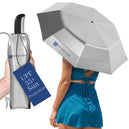
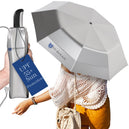
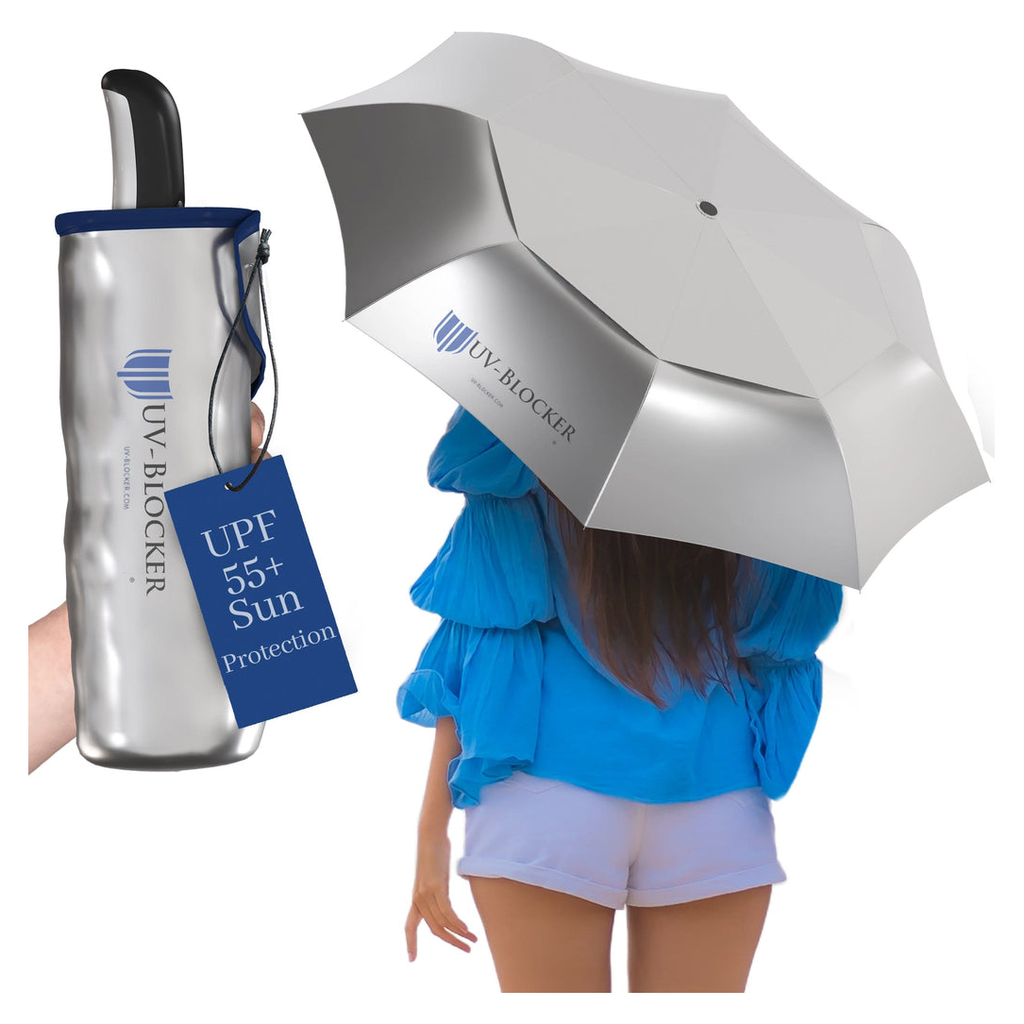
This is one area where portable shade makes a measurable difference. A UV-Blocker Travel Umbrella provides overhead coverage for the scalp, ears, and neck simultaneously — no application required, no greasy residue, no reapplication every two hours.
Occupational and recreational UV exposure in men
Many men accumulate far more outdoor UV hours than they realize. Construction workers, landscapers, postal carriers, and agricultural workers spend 6–8 hours daily in direct sun. That's thousands of cumulative hours per career.
Recreational exposure adds to the total: golf rounds, fishing trips, weekend yard work, coaching kids' sports, running. Even on cloudy days, up to 80% of UV rays penetrate cloud cover — making daily protection essential, not just on days that "feel" sunny.
The Skin Cancer Foundation reports that outdoor workers face significantly elevated skin cancer risk — and that risk is compounded because most occupational sun exposure happens without any protection beyond a hard hat or ball cap.
How men's skin responds to UV damage differently
Beyond behavior, biology plays a role. Research shows men's skin may be inherently more vulnerable to UV damage:
- Thicker skin, less recovery: Men's skin is typically thicker and contains less subcutaneous fat, which may reduce its ability to retain moisture and recover from UV damage
- Hormonal factor: Testosterone may inhibit the body's natural ability to repair UV-damaged skin cells, increasing the risk of mutations that lead to cancer
- Lower melanin production: Men tend to produce less protective melanin in response to UV exposure compared to women of the same skin type
These biological differences mean that equal UV exposure doesn't produce equal outcomes. A man and woman spending the same afternoon at the beach are absorbing similar UV — but the man's skin may sustain more lasting cellular damage.
Why men detect skin cancer later
Men are less likely to perform self-skin checks and less likely to visit a dermatologist for routine screening. According to the AAD, this means skin cancers in men are caught at later, more dangerous stages — when treatment is harder and outcomes are worse.
A mole that changes shape, a spot that bleeds, a sore that doesn't heal — these early warning signs get ignored because "it's probably nothing." By the time it's not nothing, the cancer may have advanced.
Early detection saves lives. Monthly self-checks and annual dermatologist visits are as important as the sunscreen and shade that prevent the problem in the first place.
Practical sun protection strategies for men
Effective sun protection doesn't have to be complicated. It just needs to actually happen. Here's what works:
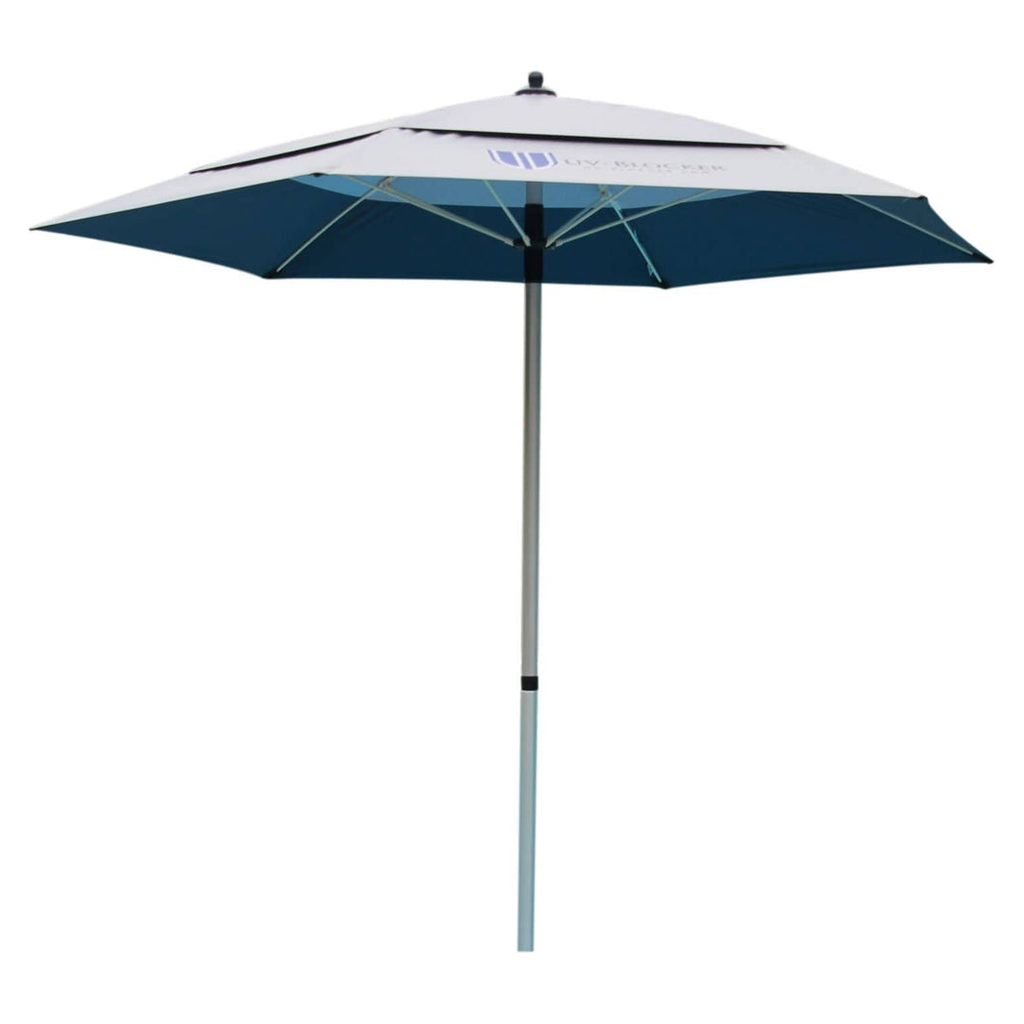
- UV umbrella for overhead shade: Covers scalp, face, ears, and neck without sunscreen hassle — especially useful for bald or thinning areas. UV-Blocker umbrellas block 99% of UVA/UVB rays
- SPF 30+ sunscreen on exposed skin: Face, hands, forearms, and any scalp showing through hair. Reapply every 2 hours
- UPF-rated clothing: Especially for outdoor work. A UPF 50+ shirt blocks 98% of UV — far more than a regular cotton tee
- UV-blocking sunglasses: Protect eyes and the thin skin around them
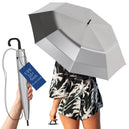
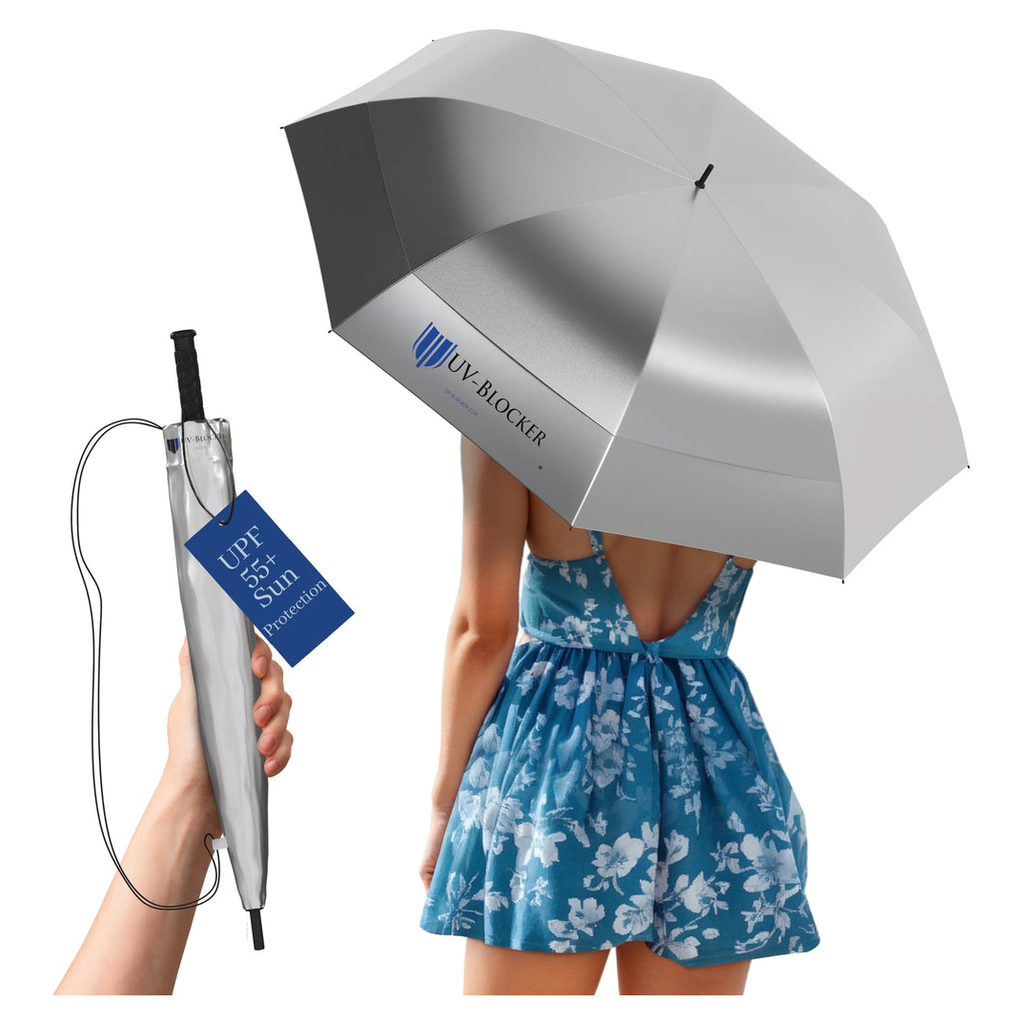
For golfers, construction workers, and anyone spending hours outside, the UV-Blocker Large Folding Umbrella provides broad coverage and a 15°F temperature drop underneath — making it practical to use all day, not just when you remember.
Browse the full range of UV-Blocker umbrellas to find the right fit.
Frequently asked questions
Why are men more likely to get skin cancer than women?
A combination of behavioral and biological factors. Men use sunscreen far less often (only 14.3% regularly), have more occupational sun exposure, and may have skin that's biologically more vulnerable to UV damage due to hormonal and structural differences.
Does baldness increase skin cancer risk?
Yes. Male pattern baldness exposes the scalp — one of the most UV-vulnerable areas — to direct sunlight. The scalp is also one of the most commonly missed areas when applying sunscreen.
What's the best sun protection for men who work outdoors?
A multi-layer approach: UPF-rated clothing, SPF 30+ sunscreen on exposed skin, UV-blocking sunglasses, and a UV umbrella for portable shade during breaks and stationary work. Consistency matters more than any single product.
How often should men get skin checks?
Monthly self-exams at home, plus an annual full-body check by a dermatologist. Men over 50 and those with a history of sunburns should consider more frequent professional screenings.
Do UV umbrellas work for men's sun protection?
Yes. UV-Blocker umbrellas block 99% of UVA/UVB rays and provide overhead shade that covers the scalp, face, ears, and neck — the areas where men are most vulnerable. They're especially practical for outdoor work, golf, and recreational activities.
How UV Exposure Affects Men Differently: Frequently Asked Questions
Why do men experience higher rates of skin cancer mortality compared to women?
Clinical data indicates that men are more than twice as likely to die from melanoma, often due to lower rates of sunscreen application and increased cumulative exposure. UV-Blocker provides a practical solution through Melanoma International Foundation approved products that offer consistent, physical protection without the need for reapplication. Their UPF 50+ rated materials ensure that 98% of both UVA and UVB rays are blocked, addressing the specific vulnerability men face from long-term sun exposure.
How does male pattern baldness contribute to UV-related health risks?
With approximately 85% of men experiencing significant hair thinning by age 50, the scalp becomes a high-risk zone for squamous cell carcinoma. UV-Blocker umbrellas featuring Solarteck® technology offer a mobile shade solution that protects the sensitive scalp, ears, and neck from direct and reflected radiation. This setup provides superior coverage compared to standard hats, which often fail to shield the lower face and neck area where men frequently develop lesions.
Does the increased thickness of male skin provide natural protection against UV damage?
While male skin is approximately 25% thicker than female skin, it is also more susceptible to UV-induced immunosuppression and collagen degradation. Because men may not feel the immediate effects of a burn as quickly, using UV-Blocker gear is essential to prevent deep-tissue DNA damage. These products adhere to strict UPF 50+ standards, providing a reliable barrier that protects the dermal layers from the intense radiation that accelerates aging and carcinogenesis.
Why is UV protection particularly critical for men during outdoor work or sports?
Men are statistically more likely to spend extended periods outdoors during peak UV hours, specifically between 10 AM and 4 PM, resulting in significantly higher lifetime radiation doses. Integrating UV-Blocker tools into outdoor activities is a high-impact safety measure, as their Solarteck® technology reflects heat and harmful rays simultaneously. This clinical-grade protection is vital for maintaining skin health during high-exposure tasks like golfing, fishing, or construction, where topical sunscreen is often compromised by sweat.