
Quick Reference Summary: Conquer Vegas Heat
- The Las Vegas "Dry Heat" Deception: Instant sweat evaporation hides rapid dehydration. You're losing fluids faster than you realize, even at 105°F air temps.
- Extreme Ground Temperatures: Pavement on the Strip can hit 140°F+, radiating intense heat from below, cooking you from all angles.
- The Strip's "Distance Trap": Walks between casinos are deceptively long (15-20 min in direct sun), leading to prolonged, dangerous exposure.
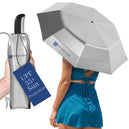
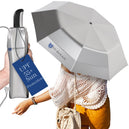
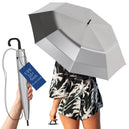
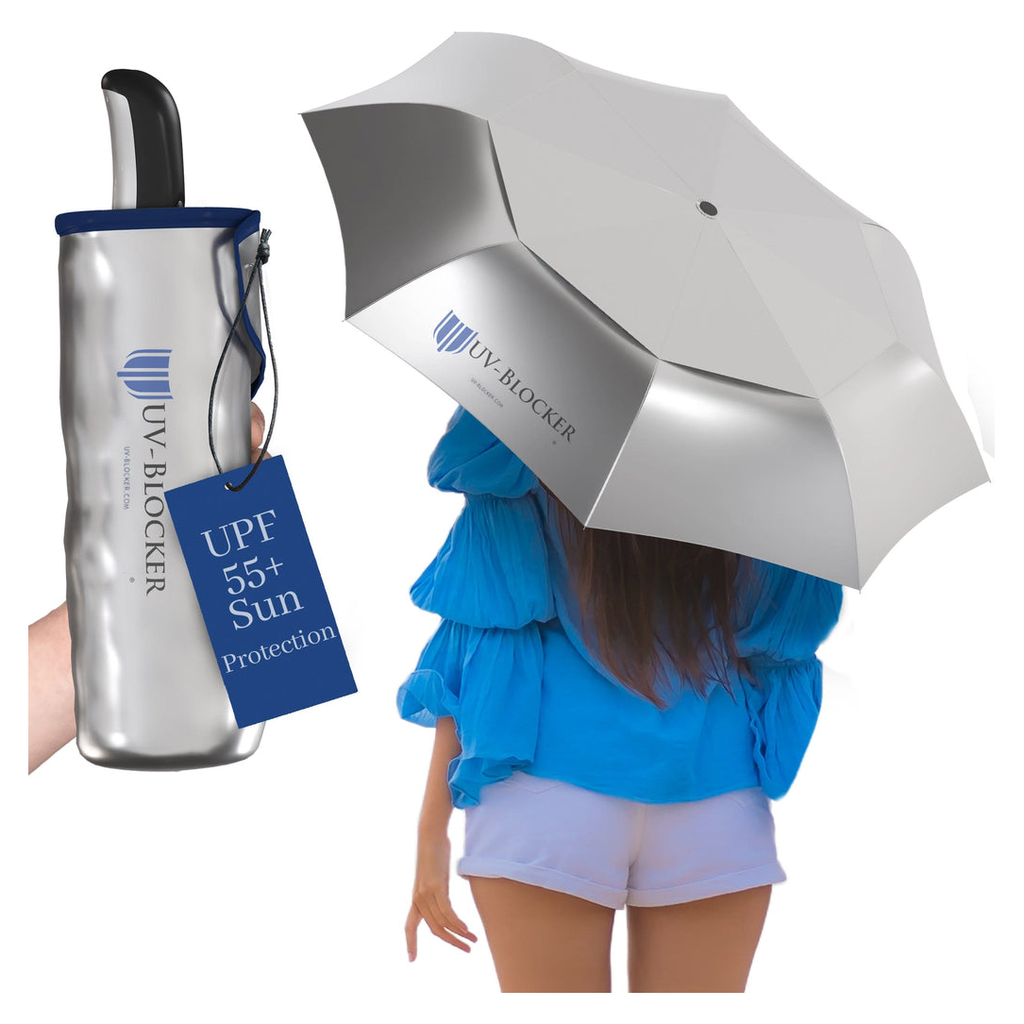
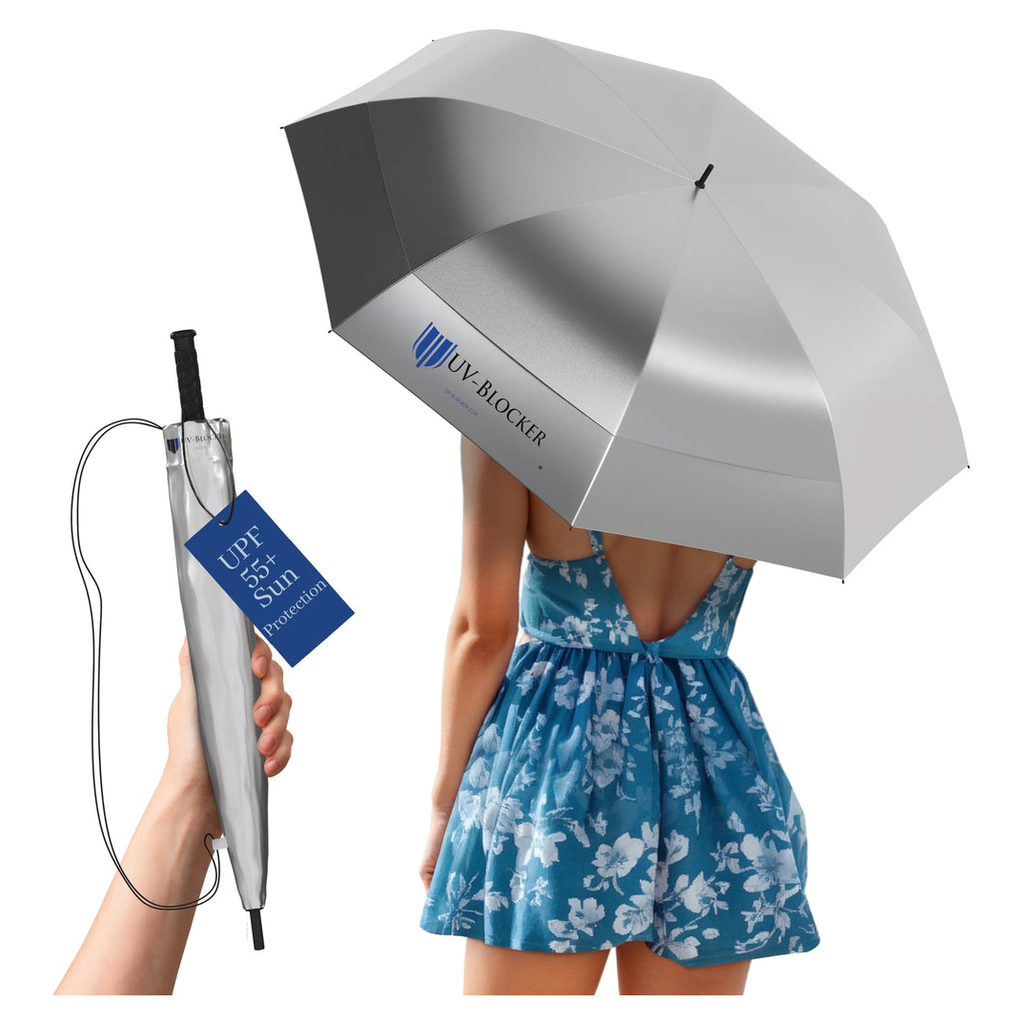
- UV Umbrellas are Superior: Unlike hats that trap heat, UV-Blocker umbrellas with Solarteck® fabric block 99% of UV and infrared, creating a personal cool zone up to 15°F cooler.
- Essential for Lines: A compact UV umbrella is a game-changer for lengthy outdoor queues at day clubs, shows, or attractions.
- Holistic Approach: Combine specialized gear (like UPF 50+ umbrellas and thick-soled shoes), strategic hydration, and smart timing to truly survive the Vegas summer.

Las Vegas in July isn't just hot; it tests human endurance. The air temperature frequently hovers around 105°F (40.5°C), but that number is profoundly deceptive. Unlike the humid, muggy heat of Florida or Singapore, Vegas heat is bone-dry, searing, and relentlessly intense. It doesn't just surround you; it radiates with a punishing force from every surface. For melanoma survivor Ron Walker, founder of UV-Blocker, understanding and implementing smart Las Vegas sun protection isn't merely an option—it's a critical strategy for well-being and preventing long-term skin damage.
Most tourists arrive prepared for "sunny weather," equipped with baseball caps, sunglasses, and perhaps a small water bottle. Within 24 hours, they're often exhausted, sunburned, and hiding in the air-conditioned confines of their hotel casino, wondering why they feel so utterly drained. The core problem isn't just the direct sun from above; it's the complex physics of heat transfer within a vast, concrete-laden desert environment. To truly survive and thrive on the Strip in summer, you need to understand how heat actually works in this unique urban landscape and equip yourself with the right tools.
1. Why Las Vegas Sun Protection Requires Different Tactics: Beyond "Just Hot"
The visual scale of the Las Vegas Strip is designed to distort reality. The colossal hotels are so massive they appear closer than they truly are. Standing at the iconic Bellagio fountains, Caesars Palace might seem like it's just a short stroll across the street. In reality, that "short walk" can easily be nearly a mile of winding obstacle courses, pedestrian bridges, and expansive, completely unshaded sidewalks. At a normal walking pace in tourist crowds, it takes a solid 15 to 20 minutes of direct, unremitting exposure to the blazing sun.
The "Dry Heat" Deception & Rapid Dehydration
In the arid Las Vegas climate, where humidity levels can plummet to 15% or even lower, sweat evaporates from your skin almost instantly. This rapid evaporation is a double-edged sword: while it provides an initial cooling sensation, it also removes the visible cue of sweating. You don't feel clammy or "sweaty," so your body's natural "stop and drink" alarm system doesn't activate. You falsely assume you're fine and not losing significant fluids.
Meanwhile, your body is rapidly losing essential fluids and electrolytes. The medical community emphasizes that by the time you actually feel thirsty, you are already clinically dehydrated. This is why it's common for tourists to feel "fine" while trekking between distant casinos like the Mirage and the Venetian, only to experience dizziness, fatigue, or even collapse the moment their adrenaline drops and they step into a cool casino lobby. According to the CDC, heat exhaustion and heat stroke are serious concerns in such environments, and dehydration significantly increases that risk. Symptoms can escalate quickly from thirst and fatigue to nausea, headache, muscle cramps, and disorientation.
Practical & Life-Saving Tips:
- Measure in Minutes, Not Sight: Always check walking times on your phone or a map application before committing to a trek. A 15-minute walk in 105°F sun feels like an hour.
- Proactive Hydration: Never leave a casino without a full bottle of water or, even better, an electrolyte drink. Better yet, carry two. Assume you will need more than you think.
- Seek All Available Shade: Even a momentary pause under a bus stop awning or a casino entrance canopy can offer vital relief. There is almost no natural shade on sidewalks between casinos, so manufactured shade is paramount.
- Understand Solar Intensity: Las Vegas receives intense solar radiation. The UV Index frequently hits "very high" to "extreme" (8-11+) during summer afternoons, meaning unprotected skin can burn in as little as 10-15 minutes.

2. The Concrete Reflector Effect: A Micro-Oven Environment
Weather applications, while useful, report air temperature measured in the shade, typically several feet off the ground. They do not, however, report the radiant temperature of the environment—and that is precisely what makes Las Vegas so brutally hot. The Strip is a vast expanse of concrete, asphalt, glass, and steel, all materials with high thermal mass. They are exceptional at absorbing solar radiation throughout the day and then re-radiating that heat back upward and outward.
On a typical summer day where the air temperature is reported at 105°F, pavement temperatures on the Las Vegas Strip often exceed 140°F (60°C), and can even reach over 150°F (65°C) on dark asphalt surfaces, according to data from local meteorologists and the National Weather Service. This creates a powerful "micro-oven" effect. You are not just being "cooked" by direct UV rays and infrared radiation from above; you are also being blasted by intense infrared heat radiating from the ground below. This radiant heat significantly increases your overall thermal load. Your legs, feet, and lower torso absorb this intense heat, causing your core body temperature to rise much faster than the ambient air temperature alone would suggest.
This explains why traditional sun protection methods often fall short in Vegas. Sunscreen effectively protects your skin from harmful UVA and UVB rays, preventing sunburn and reducing skin cancer risk, but it does virtually nothing to stop the overwhelming radiant heat load that rapidly exhausts your body. For comprehensive protection in this unique environment, you need a physical barrier that actively reflects both UV and infrared radiation, creating a cooler microclimate around you.
3. The Hat Trap: When Traditional Sun Advice Backfires
The standard, well-intentioned advice for sun safety in many climates is "wear a hat." While a wide-brimmed hat is excellent for facial sun protection in milder conditions, in the extreme heat of the desert, this advice can actually make things worse and contribute to heat stress.
Thermodynamics dictates that heat rises. Your head, with its dense network of blood vessels near the surface, is one of your body's primary release points for excess heat. When you wear a tight-fitting baseball cap, a heavy straw hat, or any headgear that covers the top of your head without ventilation, you are essentially capping that vital chimney. This traps heat against your scalp and around your temples, hindering your body's natural evaporative cooling process. Instead of cooling, you increase your thermal stress.
While the brim of a hat may block some direct sun from your face, the trapped heat on your scalp elevates your internal core temperature. This leads to increased discomfort, a flushed face, and a higher heart rate as your cardiovascular system works harder to dissipate heat. In the harsh Vegas sun, what feels like protection can quickly become a detriment, accelerating fatigue and the onset of heat exhaustion. The ideal desert headgear acts more like a floating roof, providing ample shade while allowing unrestricted airflow around your head for continuous ventilation and cooling.
4. Why UV Umbrellas Outperform Every Other Option: The Solarteck® Advantage
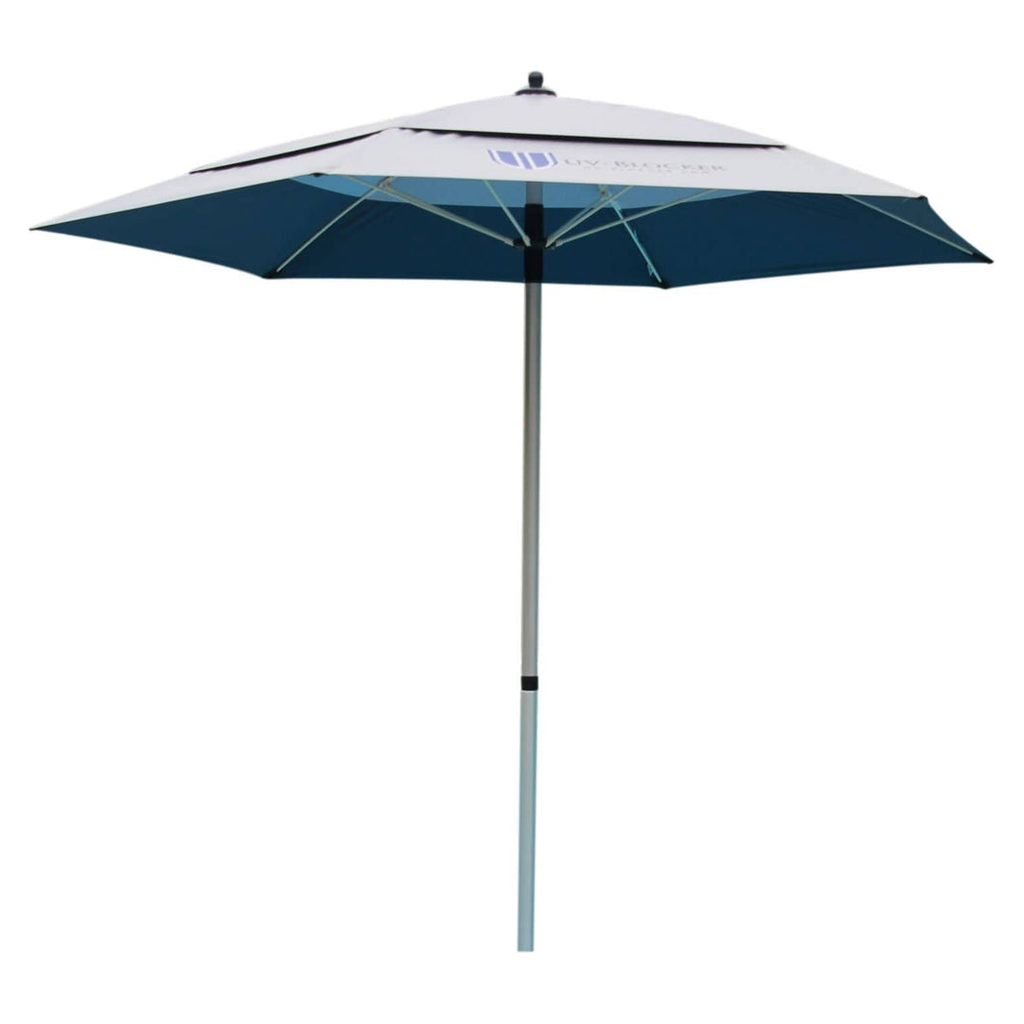
For truly effective Las Vegas sun protection, a dedicated UV umbrella stands head and shoulders above any hat, cooling towel, or even most sun shelters. Unlike a hat, a UV-Blocker umbrella floats above your head, creating a generous personal shade canopy that blocks direct sun while leaving the air around your head completely open for essential ventilation and evaporative cooling. This is where UV-Blocker's patented Solarteck® fabric technology truly shines.
The Solarteck® fabric is not just a dark canopy; it's a meticulously engineered, silver-coated material designed to provide a comprehensive barrier against the entire solar spectrum. It boasts an industry-leading UPF (Ultraviolet Protection Factor) of 50+, which means it blocks 99% of both UVA and UVB rays—the primary causes of sunburn, skin aging, and skin cancer. But crucially, Solarteck® also reflects a significant portion of infrared heat, the radiant energy that makes you feel "hot." This comprehensive protection is why UV-Blocker umbrellas are approved by the Melanoma International Foundation (MIF).
The Advanced Cooling Mechanism: Your Personal Oasis
Because the highly reflective silver surface of a UV-Blocker umbrella reflects solar energy *before* it can reach your body, the air pocket underneath the canopy is significantly cooler than the surrounding environment—often by as much as 10-15°F (5-8°C). Stepping under this canopy feels like instantly stepping into the dense shade of a large, mature tree. The biting, burning sensation of the sun on your skin disappears immediately.
Moreover, the characteristic Las Vegas breeze, which feels like a hot hair dryer in direct sunlight, suddenly transforms into a refreshing, cooling airflow as it moves through the shaded microclimate created by your umbrella. This "personal AC" effect is not just about comfort; it's about reducing physiological stress. For extended walks along the expansive Strip, this unique cooling mechanism allows you to cover distances that would otherwise leave you drenched in sweat, exhausted, and at risk of heat-related illness. It enables you to actively enjoy your trip, rather than constantly seeking refuge indoors.
For maximum effectiveness and portability, consider the UV-Blocker Travel Umbrella or the more compact UV-Blocker Compact Umbrella, both featuring the full UPF 50+ Solarteck® protection.

5. Pool Party Protocol: Surviving Day Club Lines with a Silver Shield
Las Vegas day clubs such as Wet Republic, Encore Beach Club, Tao Beach, and Marquee Dayclub are synonymous with summer fun, pulsating music, and vibrant atmosphere. Equally legendary, however, are their entry lines. Even if you've purchased tickets in advance or are on a guest list, expect to wait anywhere from 30 to 60 minutes, or even longer, during peak season. These lines are almost exclusively outdoors, often winding across vast stretches of unshaded concrete or asphalt, in direct, brutal sunlight. Security checkpoints, bag checks, and ID verifications move at a pace that feels agonizingly slow when the sun is beating down relentlessly. This queuing period is arguably one of the most dangerous parts of the day for exposure to extreme heat and UV radiation, dramatically increasing the risk of heat exhaustion and severe sunburn.
The "Silver Shield" Strategy with a Compact UV Umbrella
This is precisely where a UV-Blocker Compact UV Umbrella becomes an indispensable, almost magical, item. Designed for ultimate portability, it folds down to less than 12 inches, fitting easily into a small purse, day bag, or even a large fanny pack.
- In Line, Instant Relief: The moment you join the queue, deploy your UV-Blocker Compact Umbrella. You'll immediately create a personal zone of shade, often up to 15°F cooler than the surrounding environment. While everyone else around you is visibly melting, sweating profusely, and frantically fanning themselves, you'll be significantly more comfortable and protected from the sun's scorching rays and harmful UV.
- Seamless Security Checks: Security personnel at day clubs are primarily looking for prohibited items like weapons, outside beverages, or illicit substances. A compact, folded umbrella, especially one clearly designed for sun protection with its distinctive silver lining, rarely raises a flag. It's considered personal sun safety gear, not a threat. You can quickly collapse it as you approach the checkpoint and then re-deploy it immediately afterward.
- Post-Entry Storage: Once inside the club, you can easily stash your folded umbrella in a locker, a designated bag check area, or back into your personal bag. Its compact size ensures it's not a burden.
Customers frequently report that using their UV umbrella in these lines makes them the envy of those around them. It's not uncommon to make "best friends" with strangers who desperately ask to share a few inches of your precious shade, transforming a miserable wait into a more communal (and cooler) experience.

6. The Complete Vegas Summer Gear List: Expedition-Level Preparedness
To truly conquer the Las Vegas Strip in July, you must abandon the minimalist, "light travel" tourist approach. Instead, treat your summer trip like an expedition into a challenging, though exhilarating, environment. Strategic packing and preparedness are key to enjoyment and safety.
- Specialized Footwear: Your shoes are your foundation. Wear comfortable, broken-in shoes with significantly thick soles. Thin sandals, flip-flops, or shoes with minimal cushioning offer little barrier against the ground. The immense heat radiating from 140°F+ pavement will penetrate thin soles, leading to discomfort, blistering, and even burns. Opt for athletic shoes, well-cushioned walking sandals with substantial soles, or specialized travel shoes.
- Essential Electrolytes: Water alone isn't enough in the desert. Your body is losing not just fluid but vital salts and minerals (electrolytes) at an accelerated rate through sweat, even if you don't feel it. Carry electrolyte packets (like Liquid IV, Nuun, or similar brands) and mix them with your water regularly. Start hydrating with electrolytes even before you feel thirsty, and replenish frequently throughout the day, especially after long walks or pool sessions.
- Breathable, Light-Colored Fabrics: Opt for clothing made from natural fibers like linen, light cotton, or advanced moisture-wicking synthetics. These fabrics allow air circulation and facilitate evaporative cooling. Avoid heavy denim, dark colors that absorb more heat, and gray fabrics that will conspicuously show sweat. Long-sleeved, loose-fitting UPF-rated clothing can offer additional sun protection without trapping heat, making them surprisingly cooler than short sleeves in direct sun.
- Broad-Spectrum, Water-Resistant Sunscreen: While an umbrella is your primary shield, sunscreen is crucial for exposed skin. Choose a broad-spectrum sunscreen with an SPF of 30 or higher that protects against both UVA and UVB rays. Opt for a water-resistant formula, as even if you're not swimming, you'll be sweating. Reapply generously every two hours, or more frequently after heavy sweating or toweling off, especially on face, neck, ears, and hands.
- UV-Blocker Umbrella (Non-Negotiable): As detailed above, a UV-Blocker umbrella with Solarteck® fabric (UPF 50+) is your single most effective tool against both UV radiation and radiant heat. It's your personal portable shade and cooling system. Whether it's the Travel Umbrella for general use or the Compact Umbrella for easy portability into clubs and shows, it's an indispensable item.
- Portable Personal Fan: A small, battery-operated portable fan can provide localized airflow, particularly helpful during brief indoor waits or when briefly stepping out of your umbrella's shade. While not a primary defense, it offers a welcome burst of cooling air.
- Cooling Towels (with caveats): These can offer temporary relief for the neck or pulse points. However, they require frequent re-wetting and lose their cooling effect quickly in dry heat once they dry out. They are a supplement, not a replacement, for continuous shade like an umbrella.
- Quality Sunglasses: Protect your eyes from intense UV radiation. Look for sunglasses that block 99-100% of UVA and UVB rays. Wraparound styles offer the best coverage.
7. Strategic Timing & Hydration: Mastering the Vegas Day
Beyond packing the right gear, understanding the rhythm of the Vegas day and adjusting your schedule accordingly is paramount for comfort and safety. The sun's intensity isn't constant; it peaks dramatically in the middle of the day. A smart approach can help you avoid the worst of the heat and UV exposure.
Timing Your Adventures
- Avoid Peak Sun Hours: The most dangerous time for sun and heat exposure in Las Vegas is typically between 10:00 AM and 4:00 PM. During these hours, the sun's rays are strongest, and ground temperatures are at their highest. Plan indoor activities, leisurely meals, casino hopping, or hotel pool relaxation (under shade!) during this period.
- Early Morning Exploration: For outdoor activities, sightseeing, or longer walks between casinos, aim for the early morning hours, ideally before 10:00 AM. The air will be significantly cooler, and the sun's intensity much lower. Enjoy a shaded breakfast or coffee on a patio during this time.
- Evening and Nighttime Revelry: As the sun begins to set (typically after 7:00 PM in summer), the radiant heat from the pavement slowly dissipates, and air temperatures drop. This is the prime time for outdoor exploration, enjoying the Strip's vibrant lights, or dining al fresco. While UV is lower, some infrared heat will persist, so continue to hydrate.
Advanced Hydration Strategies
- Pre-Hydration is Key: Don't wait until you land in Vegas to start hydrating. Begin drinking extra water and electrolytes a day or two before your trip. Your body will be better equipped to handle the arid climate.
- Set Hydration Reminders: In the excitement of Vegas, it's easy to forget to drink. Set alarms on your phone to remind you to drink a glass of water or an electrolyte beverage every hour or so, especially if you're active outdoors.
- Monitor Urine Color: A simple, effective way to gauge hydration. Pale yellow or clear urine indicates good hydration; dark yellow or amber suggests dehydration. Adjust fluid intake accordingly.
- Limit Alcohol and Sugary Drinks: While tempting, alcohol and highly sugary beverages can actually contribute to dehydration. Alternate alcoholic drinks with water or electrolyte-enhanced beverages.
- Listen to Your Body: If you start feeling lightheaded, nauseous, excessively fatigued, or develop a headache, immediately seek shade and cool air, and hydrate. Don't push through discomfort; it could be the early signs of heat exhaustion. Remember Ron Walker's mission to promote sun safety for proactive health.
Frequently Asked Questions
Is the Las Vegas "dry heat" really less dangerous?
No, the "dry heat" is deceptively dangerous. While it may feel more tolerable than humid heat because sweat evaporates quickly, this rapid evaporation leads to faster, often unnoticed dehydration. You can lose critical fluids and electrolytes without feeling sweaty, making you more susceptible to heat exhaustion and heat stroke. It requires vigilant hydration and sun protection.
Why can't I just wear a hat and sunscreen for Las Vegas sun protection?
While hats and sunscreen are important, they are often insufficient for the extreme Las Vegas environment. Hats can trap heat on your scalp, inhibiting your body's natural cooling mechanisms. Sunscreen protects against UV rays (sunburn) but does nothing to block the intense radiant heat from the sun and the superheated pavement. A UV umbrella provides both superior UV protection (UPF 50+ with Solarteck® fabric) and significantly reduces radiant heat load, creating a cooler microclimate.
What is UPF and why is UPF 50+ important for an umbrella?
UPF stands for Ultraviolet Protection Factor, a rating system for fabrics that indicates how effectively they block UVA and UVB rays. A UPF 50+ rating means the fabric blocks 98-99% of harmful UV radiation, making it an excellent barrier against skin damage and reducing skin cancer risk. For an umbrella, UPF 50+ (like UV-Blocker's Solarteck® fabric) ensures maximum protection for anyone underneath it, going beyond basic shade.
Will a UV umbrella be allowed into Las Vegas day clubs or casinos?
Generally, a compact, folded UV umbrella like the UV-Blocker Compact Umbrella is considered personal sun protection gear and is usually allowed into day clubs and casinos, fitting easily into a bag. Security typically focuses on larger, prohibited items. Once inside, you can store it in a locker or your bag. For specific events, it's always wise to check venue policies, but personal sun protection is widely accepted.
How much cooler can a UV-Blocker umbrella make me feel?
Due to its patented Solarteck® fabric, which reflects 99% of UV and infrared heat, a UV-Blocker umbrella can create a personal shaded microclimate that feels up to 10-15°F (5-8°C) cooler than the surrounding environment. This significant temperature reduction greatly reduces heat stress, allowing your body to cool more effectively and making extended outdoor time far more comfortable in extreme heat conditions.
Besides an umbrella, what's the most critical item for Vegas in summer?
Beyond a UV umbrella, consistent and strategic hydration with electrolytes is absolutely critical. The rapid dehydration in dry heat, coupled with physical exertion, makes electrolyte imbalance a significant risk. Carrying electrolyte packets and consuming them regularly, alongside water, can prevent severe dehydration, fatigue, and heat-related illnesses. Also, never underestimate the power of thick-soled, comfortable walking shoes to protect against scorching pavement.