

Sun exposure triggers flares in 81% of rosacea patients, making it the number-one reported trigger according to a National Rosacea Society survey of over 1,000 patients. For those living with this chronic inflammatory skin condition, managing UV radiation is a daily medical necessity.
Most rosacea sun protection advice follows a standard script: apply broad-spectrum sunscreen every day. But relying on sunscreen as the sole defense often fails rosacea patients. The products designed to protect can introduce chemical irritants, and even effective blockers do nothing to mitigate the intense heat that accompanies direct sun.
This guide covers the science of UV-triggered flares, why sunscreen alone falls short, and how adding a UPF 50+ UV umbrella creates the physical barrier strategy dermatologists increasingly recommend.
Why does sun exposure trigger rosacea flares?
UV radiation triggers rosacea flares through three biological mechanisms — even at doses too small to cause redness in normal skin.
Mechanism 1: VEGF and visible blood vessels
UVB radiation stimulates the skin to produce Vascular Endothelial Growth Factor (VEGF), a protein that signals blood vessels to grow and dilate. In rosacea-prone skin, this contributes to telangiectasia — the visible network of thread-like veins across the cheeks and nose.
Mechanism 2: Cathelicidin-driven inflammation
UV exposure damages surface skin cells (keratinocytes), prompting release of cathelicidin LL-37. In rosacea patients, this antimicrobial peptide is processed incorrectly, creating pro-inflammatory fragments that recruit immune cells and promote further blood vessel growth. A cycle forms: sun exposure → inflammation → sensitization → worse reactions to future exposure.
Mechanism 3: Oxidative stress
UV generates reactive oxygen species (ROS) that damage cellular structures. Rosacea patients have higher baseline ROS levels and reduced capacity to neutralize them. When UV adds to this burden, it overwhelms the skin's defenses — like starting with a half-full bucket that takes much less to overflow into a visible flare.
The heat factor
Direct sunlight raises skin temperature, causing rapid vasodilation. For rosacea patients, this heat-induced dilation often becomes "locked in," producing a flush that lasts hours. This dual threat — UV radiation and thermal energy — is why sun exposure dominates as a trigger.
Why isn't sunscreen enough for rosacea sufferers?
The dermatological mandate to "wear sunscreen" is necessary but insufficient for rosacea management. Sunscreen presents specific challenges for inflamed skin.
Chemical irritation
Many chemical sunscreens use filters like oxybenzone and avobenzone that frequently cause contact dermatitis, stinging, and burning on compromised rosacea skin. The National Rosacea Society recommends mineral sunscreens (zinc oxide, titanium dioxide), but these still require physical friction during application and removal.
The reapplication burden
Filters degrade from sweat and movement. Maintaining labeled SPF requires reapplication every two hours — and every reapplication is another opportunity for irritation on inflamed skin. This cycle often leaves periods where skin is left vulnerable.
Sunscreen doesn't block heat
This is the critical gap. Sunscreens filter ultraviolet light but do nothing to block infrared radiation. With SPF 50 on, the skin still absorbs thermal energy. A patient can be protected from sunburn yet still suffer a flare from heat-induced vasodilation.
Coverage gaps
Most people miss critical areas: ears, neck, hairline, and skin around the eyes. These gaps become entry points for UV triggers that activate the systemic inflammatory response.
How do UV umbrellas protect rosacea-prone skin?
A UV umbrella shifts the defense strategy from "absorption" to "interception" — stopping radiation before it reaches the face.

- 99% UV blocking: Fabrics rated UPF 50+ prevent 98–99% of UVA and UVB from passing through. Unlike sunscreen, protection is constant and uniform — no thin spots
- Zero skin contact: Eliminates chemical irritation entirely. The skin can breathe without constant application cycles
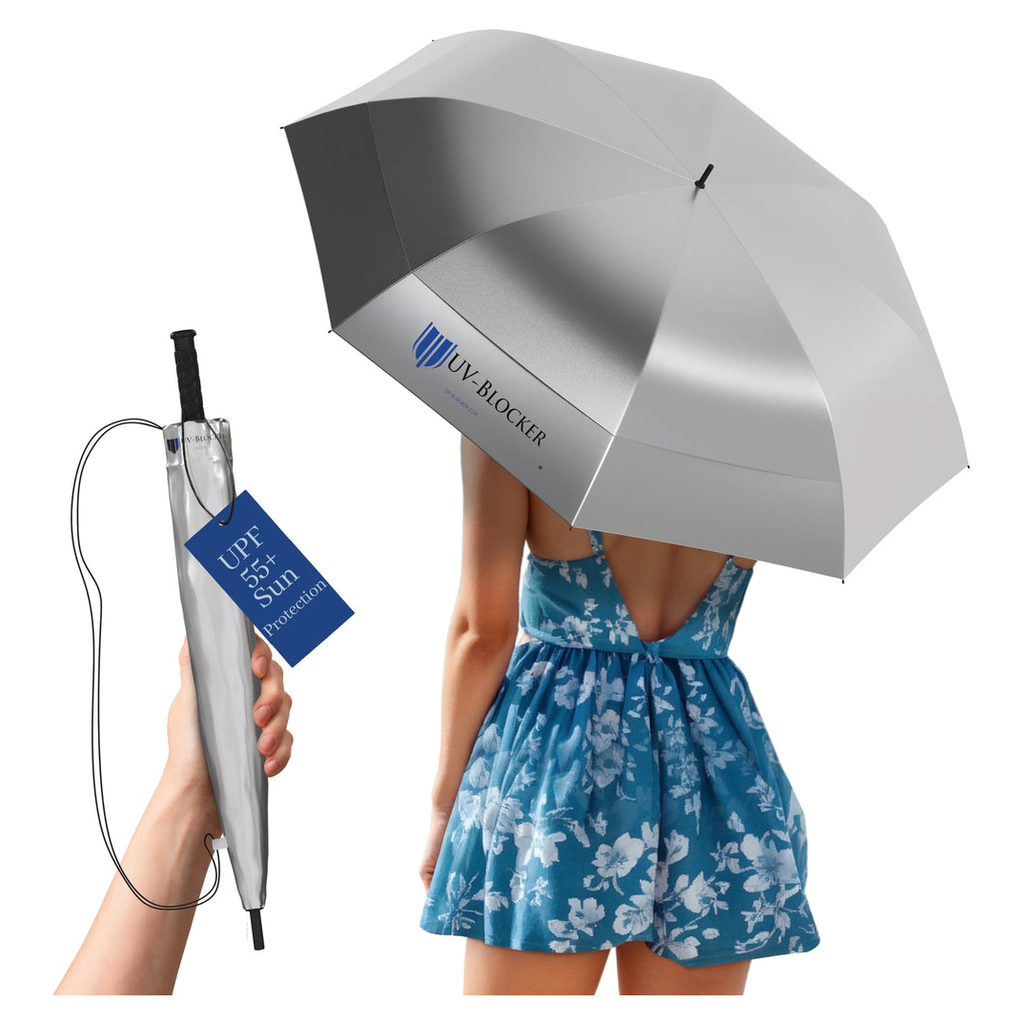
- Thermal management: Reflective coatings like UV-Blocker's Solarteck™ bounce solar energy away, keeping air underneath up to 15°F cooler. For rosacea, this directly counteracts heat-induced vasodilation
- Comprehensive coverage: Covers head, face, neck, ears, and décolletage simultaneously — no missed spots
- Anxiety reduction: Sunscreen degradation is invisible. An umbrella's protection is binary: if you're in the shade, you're protected
UV umbrella vs. sunscreen for rosacea protection
| Protection Factor | SPF 50 Sunscreen | UPF 50+ UV Umbrella | Combined |
|---|---|---|---|
| UV Block Rate | ~98% (when fresh) | 99% (constant) | 99%+ layered |
| Heat Reduction | None | Up to 15°F cooler | Significant |
| Skin Contact | Required | None | Minimal |
| Reapplication Needed | Every 2 hours | Never | Reduced frequency |
| Coverage Area | Applied zones only | Full upper body | Comprehensive |
| Irritation Risk | Moderate (rosacea skin) | Zero | Minimal |
UV-Blocker umbrellas carry UPF 50+ ratings with Solarteck™ reflective coating and are approved by the Melanoma International Foundation. See the UV umbrella testing methodology for verification. Their dermatologist recommended status reflects growing medical consensus on physical barriers.
What should rosacea patients look for in a UV umbrella?
UPF 50+ certification (non-negotiable)
UPF is to fabrics what SPF is to lotions. A rating of 50+ means only 1/50th (2%) of UV passes through. Without a verified rating, you're gambling with skin health. UV-Blocker achieves UPF 50+, blocking 99% of harmful rays.
Reflective coating for heat management
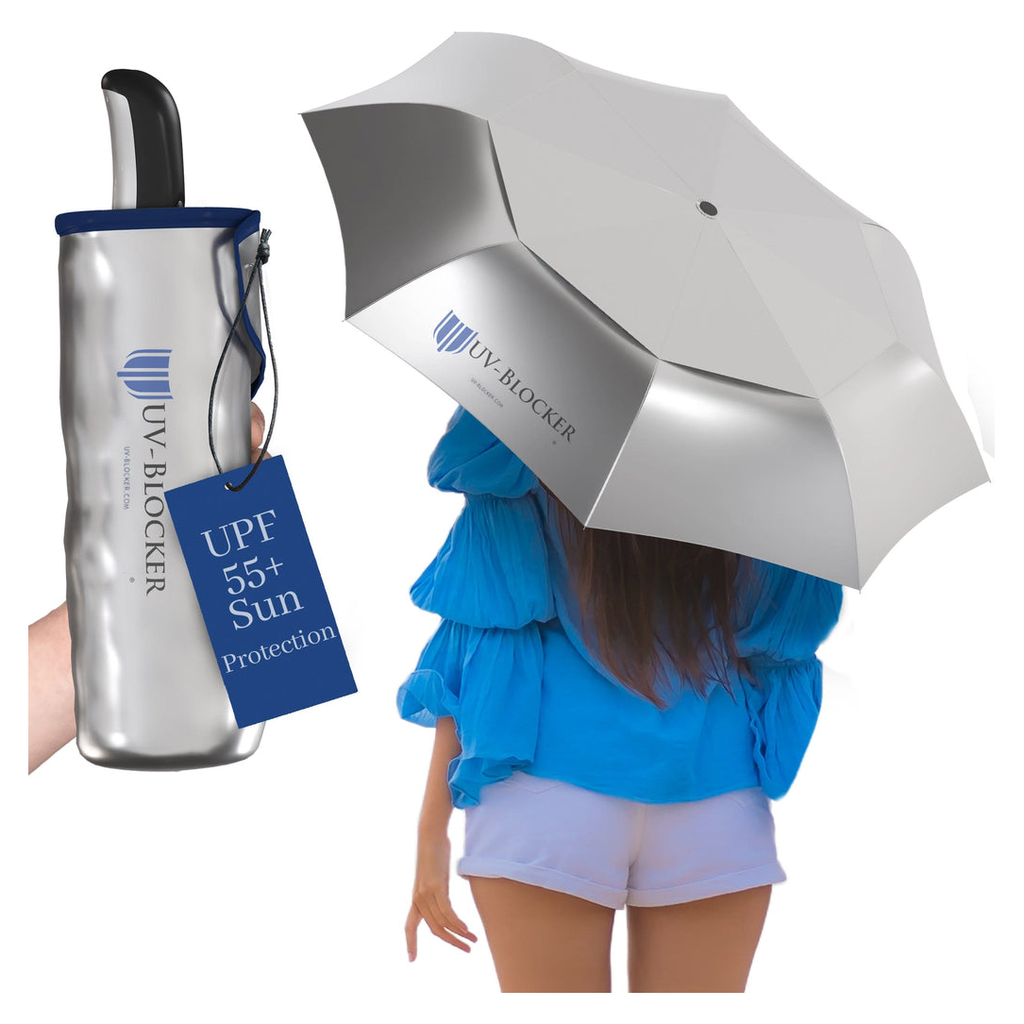
Dark outer canopies absorb solar energy and radiate it downward as heat — the opposite of what rosacea patients need. A reflective silver outer surface bounces infrared radiation away. The inner fabric should be dark to absorb scattered UV bouncing up from the ground.
Compact portability for daily carry
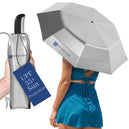
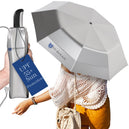
Rosacea triggers can occur during brief, unplanned exposures. The best umbrella is one carried every day. The UV Protection Compact Umbrella offers a 42-inch arc but folds to 11.5 inches and weighs only 13 ounces.
Wind resistance for outdoor reliability
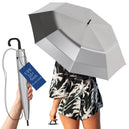
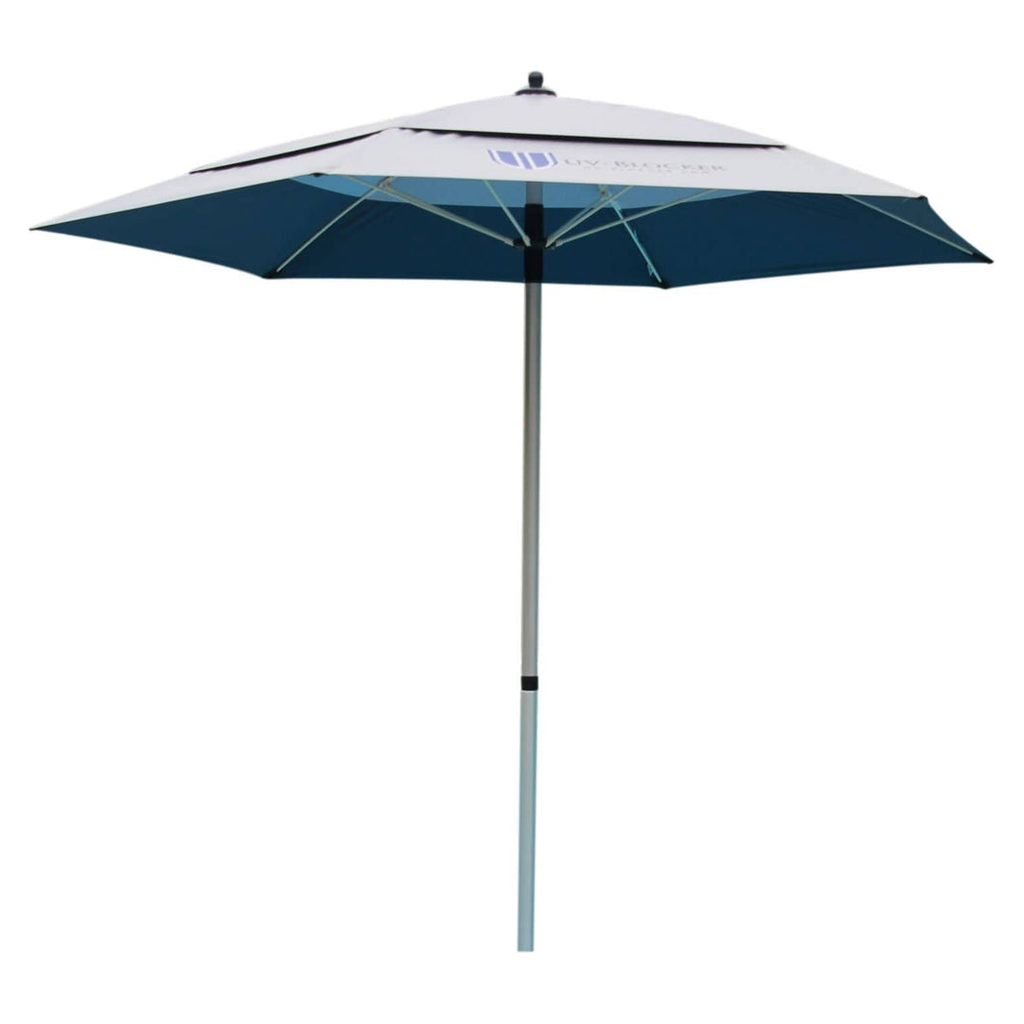
An umbrella that inverts leaves you exposed. Look for patented double-canopy design with vented mesh. The UV Protection Travel Umbrella offers a 44-inch arc with durable wind resistance under 1.5 lbs.
HSA/FSA eligibility
Because rosacea is a medical condition, high-quality UV protection often qualifies as a medical expense. Check if the umbrella is HSA/FSA eligible — reinforcing that this is a therapeutic tool, not an accessory.
How to build a complete rosacea sun protection strategy

Effective rosacea management requires defense-in-depth. The UV umbrella is the primary barrier — the mobile command center shielding the system.
Layer 1: Primary barrier (UV umbrella)
Deploy whenever outdoors during daylight, especially between 10 AM and 4 PM. Blocks 99% of direct overhead UV and reduces heat load. Tilt toward the sun to maximize shadow over the upper body.
Layer 2: Residual protection (mineral sunscreen)
Even the best umbrella can't block reflected UV from concrete and water. Apply mineral-based sunscreen (zinc oxide or titanium dioxide) with SPF 30+ to face, neck, and ears. Because the umbrella blocks direct intensity, sunscreen degrades slower and skin is less likely to react from heat sensitivity.
Layer 3: Body shielding (protective clothing)
A wide-brimmed hat serves as backup for scalp protection. Long-sleeved UPF-rated shirts protect arms extending outside the umbrella's shadow.
Layer 4: Strategic timing
Schedule outdoor tasks for early morning or late afternoon. Check the local UV index daily. When it exceeds 6, strict adherence to all four layers is mandatory.
Frequently asked questions about rosacea sun protection
Can I use a regular umbrella for rosacea protection?
No. Regular umbrellas allow up to 50% of UV through untreated fabric. Standard nylon rain umbrellas block water, not UV radiation. Only UPF-rated umbrellas provide verified, medical-grade UV protection for rosacea-prone skin.
How much difference does UPF rating make for rosacea?
Significant. A UPF 15 umbrella allows 6.7% of UV through. UPF 50+ allows less than 2%. For rosacea patients with low inflammation thresholds, that difference can determine whether a flare occurs. Minimizing total UV load is the clinical goal.
Will a UV umbrella help with medication-induced photosensitivity?
Yes. Many rosacea medications (topical retinoids, doxycycline, metronidazole) paradoxically increase sun sensitivity. A UV umbrella provides a physical block that doesn't interact chemically with topical medications. See also: Minimize Lupus Symptoms with Sun Safe Strategies.
Can I still get vitamin D while using a UV umbrella?
Yes. Brief periods of unprotected sun (10–15 minutes on arms and legs, not face) are sufficient for vitamin D synthesis. Rosacea is primarily facial — an umbrella protects the face while allowing selective exposure on less sensitive body areas.
Is a UV umbrella enough on its own, or do I still need sunscreen?
An umbrella provides excellent protection from direct UV, but combining it with mineral sunscreen guards against scattered and reflected rays. In reflective environments (beach, urban areas), UV comes from below and the sides. Mineral sunscreen acts as a backup layer for these indirect exposures.
With 81% of patients identifying sunlight as their primary trigger, successful rosacea management hinges on mastering UV defense. Sunscreen alone trades UV filtration for irritation and offers no respite from heat. A UPF 50+ UV umbrella addresses both — providing 99% UV reduction, a microclimate up to 15°F cooler, and zero chemical reapplication.
Explore the UV Protection Travel Umbrella for outdoor performance or the UV Protection Compact Umbrella for daily defense.
Rosacea Sun Protection: Frequently Asked Questions
Why is a UV umbrella more effective than sunscreen alone for rosacea patients?
Rosacea-prone skin is hypersensitive to both UV radiation and the thermal heat that standard sunscreens cannot block. A UV-Blocker umbrella provides a physical cooling barrier that can reduce skin surface temperature by up to 15 degrees while maintaining a UPF 50+ rating. This dual protection blocks 99% of UVA/UVB rays, significantly reducing the risk of heat-induced flushing and vascular flare-ups.
How does Solarteck® technology benefit those with sun-sensitive skin conditions?
Solarteck® technology utilized in UV-Blocker umbrellas features a patented reflective silver coating that redirects the sun's energy away from the user. This material is crucial for rosacea management because it prevents the 'oven effect' common in standard umbrellas by allowing heat to dissipate through a vented double canopy. This specialized design is why these products have earned the Melanoma International Foundation seal of approval for superior sun safety.
Does a UV umbrella protect against reflected radiation from the ground?
While a UPF 50+ umbrella blocks nearly all direct overhead sunlight, approximately 10% of UV radiation can still reach the skin via reflection from surfaces like concrete or water. UV-Blocker umbrellas address this by using a dark underside to absorb reflected rays rather than bouncing them back onto the sensitive facial area. For total flare prevention, clinical experts recommend using the umbrella alongside a mineral-based SPF to capture any stray indirect light.
Can using a UV-Blocker umbrella help reduce the frequency of rosacea flare-ups?
Clinical data indicates that consistently blocking 99% of UV rays can significantly decrease the inflammatory response in the skin's dermal layer. By maintaining a cooler microclimate and preventing the breakdown of collagen caused by UVA exposure, a UV-Blocker umbrella helps stabilize the skin's barrier. This proactive approach reduces the chronic vasodilation that leads to permanent redness and visible blood vessels over time.