

Around 30 million kids head to summer programs every year, eager for adventure, learning, and fun in the sun. But here's the part most parents don't often consider: just one blistering sunburn in childhood can nearly double a child's melanoma risk later in life. As a melanoma survivor and founder of UV-Blocker, I understand the critical importance of effective sun protection, especially when children are away from direct parental supervision.
Camp isn't the backyard. The UV exposure often runs longer, adult supervision is spread thinner, and consistent sunscreen reapplication breaks down more often than families expect. Preparing your child for a UV-safe summer camp experience requires a multi-layered approach that goes beyond a single bottle of sunscreen.
What follows is a comprehensive guide, including a camp-ready packing list, activity-by-activity UV strategies, the underlying reasons reapplication often fails, and the exact questions worth asking before drop-off day to ensure your child stays protected.
☀️ Quick Reference Summary
- Extended Exposure: Camp days typically run 8 to 12 hours outdoors, often encompassing the peak UV window (10 a.m. - 4 p.m.). A single morning sunscreen application won't last.
- Multi-Layered Protection: SPF 30+ broad-spectrum sunscreen is crucial, but it performs best when combined with UPF 50+ clothing, a wide-brim hat, UV-blocking sunglasses, and portable shade.
- Water Risks: Water activities are prime danger zones. Even "water resistant 80 min" sunscreen needs diligent reapplication after significant swimming, toweling off, or sweating.
- Supervision Gaps: Counselor-to-camper ratios (e.g., 1:8 or 1:12) mean individual sunscreen reapplication enforcement isn't always feasible, and camp/state rules often restrict staff from applying sunscreen to children.
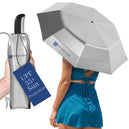
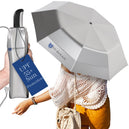
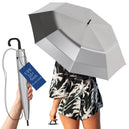
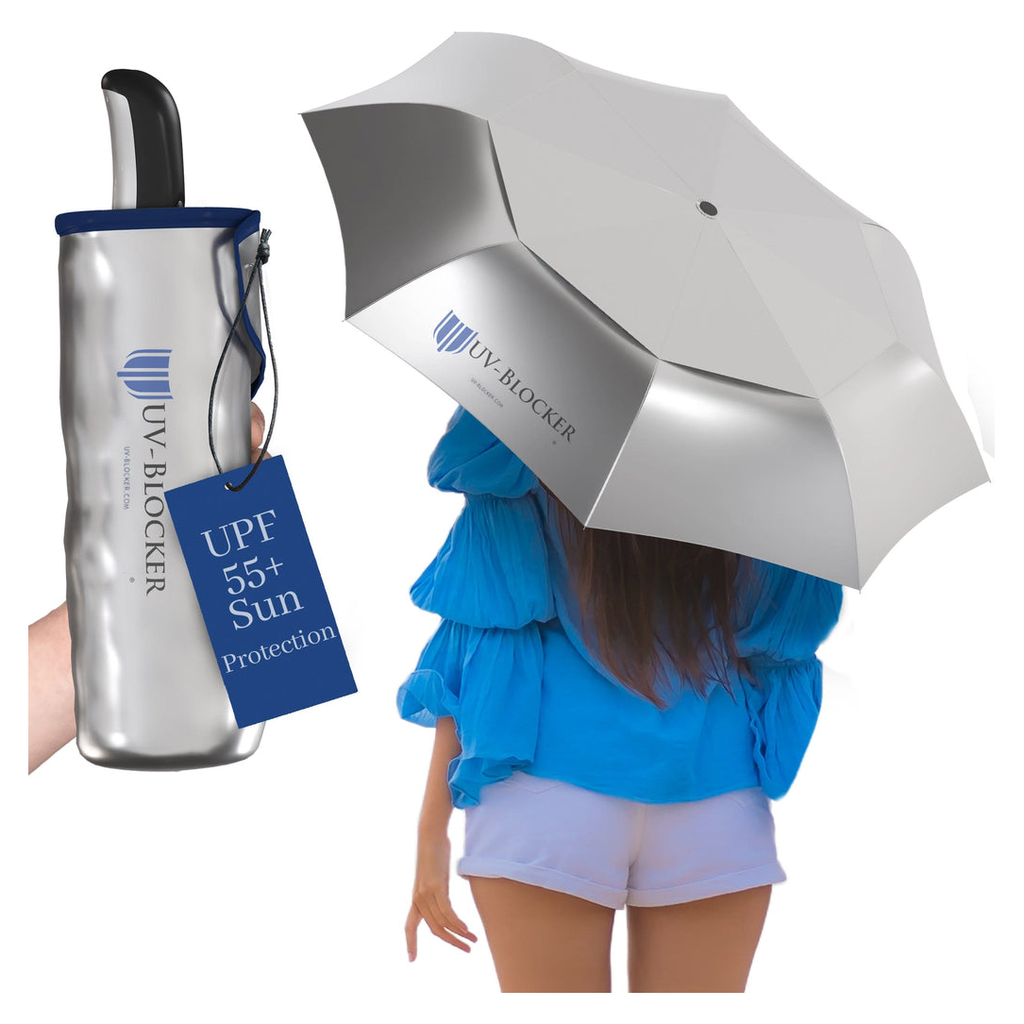
- Personal Shade is Key: A compact UV-Blocker umbrella, featuring our patented Solarteck® technology and UPF 50+ rating, gives kids instant, portable shade during lunch, rest periods, and transitions between activities. It’s an MIF-approved product that offers reliable protection.
- Age-Appropriate Strategies: Sun safety plans should adapt by age – from shade-first for toddlers, to teaching self-application for school-age kids, and resonating with teens about long-term health.
Why Is Sun Protection at Summer Camp Different From Backyard Play?
Summer camp presents a unique set of challenges for sun protection that significantly differ from a typical day of backyard play or a family outing. At camp, children typically experience 8-12 hours of continuous outdoor exposure, often with inconsistent sunscreen reapplication, frequent water activities, and significantly thinner adult-to-child supervision ratios. These factors amplify UV risk dramatically.
Consider the typical camp schedule: drop-off at 8 a.m., pickup at 4 or 5 p.m. This means children are outdoors for the majority of the day, with the peak UV window (usually 10 a.m. to 4 p.m., as identified by the EPA) falling squarely in the middle of their activities. While families at home can easily duck indoors during peak hours, campers often remain outside. According to the Skin Cancer Foundation, consistent sun exposure during childhood, especially leading to sunburns, is a major risk factor for developing skin cancer later in life. Camp environments, by their very nature, make this consistent exposure hard to avoid without proactive measures.
Furthermore, the logistical realities of camp life complicate matters. Counselor-to-camper ratios can range from 1:8 for younger children to 1:12 or higher for older groups. With such ratios, individual sunscreen application and reapplication enforcement for every child simply isn't realistic or scalable for staff. Camp policies on sunscreen also vary widely by jurisdiction and specific camp regulations, as indicated by resources like the ACA State Laws & Regulations database. Some camps may restrict counselors from applying sunscreen to campers for liability or health reasons, placing the onus entirely on the child.
Finally, water activities are a significant Achilles' heel for sun protection. The FDA's water-resistance labels (40-minute and 80-minute ratings) are often misinterpreted. These ratings refer to the time sunscreen maintains its SPF level while swimming or sweating, not how long it lasts after vigorous activity, toweling off, or repeated immersion. Kids who cannonball, dry off, and jump back in repeatedly will quickly diminish their sunscreen's effectiveness, making consistent reapplication crucial but often neglected. Once these gaps stack up, it's clear why sunscreen alone cannot carry the full load of sun protection at camp.
What Should Be on a Sun Protection Camp Packing List?
A truly complete camp sun protection kit extends far beyond a single tube of sunscreen. It involves a multi-layered defense strategy comprising broad-spectrum SPF 30+ sunscreen, UPF-rated clothing, a wide-brim hat, UV sunglasses, and crucially, a personal UV umbrella for portable shade breaks. Nobody wants camp drop-off to feel like packing for an expedition, but equipping your child with the right tools empowers them to stay safe.
Our dedicated kids UV umbrellas page offers an excellent starting point for understanding the benefits of personal shade.
| Item | Spec | Why It Matters | Expanded Guidance |
|---|---|---|---|
| Sunscreen | SPF 30+ broad-spectrum | Base layer, reapply every 2 hours, or after swimming/sweating | Choose mineral (zinc oxide, titanium dioxide) for sensitive skin. Pack at least two large bottles for a week. Teach the "shot glass" rule for full body application and practice the "quarter-sized dollop per limb" routine at home. Stick and spray formats can be easier for smaller hands, but sprays must be applied in ventilated areas, and always rubbed in for even coverage. |
| UPF shirt or rash guard | UPF 30+ minimum, ideally UPF 50+ | Protection that doesn't wash off or wear thin with activity | Unlike regular cotton (which can offer as little as UPF 5 when wet), UPF 50+ clothing blocks 98% of UV radiation. Look for lightweight, quick-drying fabrics. Pack 2-3 pieces, especially for water days. This is a primary defense that won't fail due to reapplication issues. |
| Wide-brim hat | 3"+ brim all around | Covers face, ears, and neck—areas often missed by sunscreen | A wide-brim hat offers superior protection compared to a baseball cap, which leaves ears and neck exposed. Choose a hat with a chin strap for windy days or active play. Look for UPF-rated fabric for additional assurance. |
| UV sunglasses | 99-100% UVA/UVB protection | Protects developing eyes from cataracts and other damage | Children's eyes are more susceptible to UV damage. Wraparound styles provide the best coverage, blocking rays from the sides. Ensure they are comfortable and durable enough for active wear. Look for labels indicating 99-100% UV absorption or "UV400." |
| UV umbrella | UPF 50+ compact, with Solarteck® | Portable, instant shade for breaks, lunch, or transitions | A UV-Blocker umbrella, particularly our compact kids' models with patented Solarteck® fabric, provides personal, immediate shade anywhere. It's an MIF-approved product that offers reliable UPF 50+ protection. Teach your child to use it during rest periods, while eating lunch, or when moving between shaded and sunny areas. It empowers them with an independent sun safety tool. |
| SPF lip balm | SPF 15+ minimum | Prevents painful lip sunburn and chapping | Lips are highly sensitive to UV radiation and often overlooked. Pack multiple sticks and remind your child to apply it as frequently as sunscreen. |
| Refillable Water Bottle | Large capacity (20-32 oz) | Prevents dehydration, which can exacerbate sun-related issues | Staying hydrated is crucial, especially when active in the heat. A personal water bottle encourages frequent sips and reduces reliance on communal water sources. |
Teaching kids a quick trick: a quarter-sized dollop of sunscreen per limb, reapply every 2 hours, or more often if sweating or swimming. Practice this routine at home before camp week to build a habit. Stick and spray formats tend to be easier for smaller hands, though spray sunscreen needs to be applied in well-ventilated areas and thoroughly rubbed in, as per FDA guidance, to ensure even coverage and avoid inhalation.
UPF clothing truly pulls different weight. Rash guards and sun shirts don't stop protecting when they get wet or sweaty, unlike regular cotton which can lose a significant amount of its UV protection once it's soaked through (UPF can drop to as low as 5). Wide-brim hats are essential because they cover the ears and neck—areas that baseball caps notoriously miss and are common sites for skin cancer. After a full day on a field, those gaps in protection add up to significant cumulative exposure.
And don't skip the sunglasses either. Wraparound styles blocking 99 to 100 percent of UVA and UVB protect kids' developing eyes from long-term damage, including cataracts and macular degeneration. Lastly, SPF 15+ lip balm is one of the most forgotten items in camp prep, but lips burn fast and can be incredibly painful, making it a non-negotiable item.
How Does UV Risk Change by Camp Activity?
UV risk at camp is not static; it dynamically shifts based on the specific activity, environment, and time of day. Understanding these variations allows parents to equip their children with targeted protection. No counselor is stopping a heated soccer scrimmage for a full sunscreen reapplication, and no child mid-swim-lesson is thinking about the FDA's 80-minute water-resistance timing. Effective gear and strategies should match the activity, not just the weather forecast.
Swimming and Water Sports
Water is often considered sunscreen's worst enemy at camp. While sunscreen is vital, it's not a foolproof shield in aquatic environments. Even an 80-minute water-resistant formula needs diligent reapplication after real swimming, not just wading. Water reflects UV rays, intensifying exposure by up to 10% on the surface. For optimal protection, apply sunscreen generously about 15-20 minutes before the child hits the water, allowing it time to bond with the skin. Crucially, encourage your child to wear UPF 50+ rash guards or swim shirts. These provide continuous, non-stop protection that doesn't wash off, making them indispensable for pool, lake, or beach days.
Field Sports and Active Play
This is where things get particularly tricky for sun protection. A soccer game, lacrosse match, or extended outdoor play can run for 2 to 3 hours straight with minimal breaks long enough for a proper, full-body reapplication. Kids are sweating profusely, and friction from clothing can further diminish sunscreen effectiveness. This is precisely why a UPF 50+ base layer underneath a jersey or regular play clothes is paramount. It stays put through sweat, running, and contact, offering reliable protection without interruption. A wide-brim hat with a chin strap and UV sunglasses are also essential for protecting the face, neck, and eyes during these high-energy activities where direct sun exposure is constant.
Hiking and Nature Walks
Trail hikes and nature walks often create a false sense of security due to perceived tree cover. While tree canopy does block some UV-B radiation (roughly 40-60% depending on density and species), it certainly doesn't eliminate it. Scattered and reflected UV radiation can still reach the skin. Furthermore, many trails feature open clearings, riverbanks, or mountaintop vistas where sun exposure becomes intense and direct. For these activities, long-sleeved UPF 50+ shirts and long pants offer excellent protection, guarding against both sun and insect bites or scrapes. A wide-brim hat is non-negotiable, and regular sunscreen application to exposed areas like hands, face, and neck is still required.
Outdoor Arts & Crafts / Seated Activities
Even seemingly low-intensity activities can pose significant UV risks if conducted outdoors without adequate shade. Drawing, painting, reading, or storytelling sessions, while relaxing, often keep children stationary for extended periods. If these activities occur in direct sunlight, cumulative exposure can quickly lead to sunburn. This is an ideal scenario for a personal UV-Blocker umbrella. A child can easily pop it open to create their own immediate, personal shade bubble, protecting them without disrupting the activity or requiring counselor intervention. Sunscreen and hats remain important, but portable shade adds a critical layer when stationary.
Transitions and Lunch Breaks
Often overlooked, the periods of transition between activities or designated lunch breaks can be high-risk times. Kids may be waiting in assembly areas, walking across open fields, or eating in partially shaded zones where direct sun still penetrates. These moments are ripe for quick, casual exposure that adds up. Encouraging children to use their compact UV umbrella during these pauses, or ensuring they seek out available shade, is a simple yet highly effective strategy to reduce incidental UV exposure throughout the day.
Why Does Sunscreen Reapplication Fail at Camp?
The assumption that a single morning application of sunscreen will protect a child all day at summer camp is one of the most common and dangerous misconceptions parents hold. Sunscreen reapplication frequently fails at camp due to a confluence of logistical, policy, and behavioral factors, leaving children vulnerable to damaging UV rays.
Firstly, the **counselor-to-camper ratio** is a primary culprit. With ratios of 1:8 or 1:12, counselors are responsible for a multitude of tasks – supervising activities, managing conflicts, administering first aid, and ensuring general well-being. Adding individual sunscreen reapplication for every child every two hours (or more frequently after water activities or heavy sweating) is simply not feasible. It would require counselors to stop all activities, gather every child, ensure proper application, and then restart, a process that could consume significant portions of the day.
Secondly, **camp and state policies** often create barriers. Many camps, due to liability concerns, health regulations, or to avoid cross-contamination, prohibit counselors from applying sunscreen directly to campers. They might allow counselors to *supervise* older children applying their own sunscreen but will not physically apply it. This places the entire responsibility on the child, who may lack the necessary skills, diligence, or motivation.
Thirdly, **children's compliance and motivation** are often low. Kids, engrossed in games and activities, don't want to stop playing to reapply sunscreen. They may forget, rush the application, miss spots, or simply resent being pulled away from their fun. Younger children lack the dexterity for thorough application, while older children might prioritize social interaction over sun safety, especially if they perceive it as "uncool."
Fourthly, **practical challenges** abound. Sunscreen must be applied to dry skin, yet children are often damp from swimming or sweaty from activity. Sandy hands, sticky fingers, and the general messiness of outdoor play make clean, thorough reapplication difficult. Storage of sunscreen can also be an issue; if it's not readily accessible, out of direct sun, and clearly labeled, it's less likely to be used.
Finally, there's the **"set and forget" mentality**. Parents apply sunscreen diligently in the morning, believing it will last. However, sunscreen's effectiveness diminishes over time due to sweat, water, friction from clothing, and simply being metabolized by the skin. The FDA mandates water resistance ratings (40 or 80 minutes), but these are for continuous water exposure. Toweling off, intense play, and multiple dips can strip sunscreen much faster. This highlights why UPF clothing, wide-brim hats, and personal shade solutions like a UV-Blocker umbrella, which don't rely on reapplication, are critical layers of defense to fill these inevitable gaps.
What Sun Safety Questions Should Parents Ask Their Camp?
Before drop-off day, an informed conversation with camp administrators or head counselors about their sun safety protocols is crucial. Don't assume anything; ask specific questions to understand how they plan to protect your child. Your proactive approach can significantly influence your child's safety and help identify any gaps in their strategy.
Key Questions to Ask:
-
What is your camp's specific sunscreen policy?
- Do counselors apply sunscreen, or are children expected to apply their own?
- At what age are children expected to apply their own?
- How often is reapplication encouraged/enforced?
- Are there designated times for sunscreen breaks?
- Where should sunscreen be stored (e.g., in their backpack, a central location)?
-
What measures are in place to provide shade during outdoor activities?
- Are there shaded areas for lunch, rest periods, and transitions?
- Do all outdoor activity zones (e.g., sports fields, craft areas) have access to shade?
- Is there a policy for seeking shade during peak UV hours (10 a.m. - 4 p.m.)?
-
What is the policy regarding UPF clothing, hats, and sunglasses?
- Are wide-brim hats and UPF 50+ clothing encouraged or required, especially for water activities or extended outdoor play?
- Are children allowed to wear sunglasses during activities?
-
What is the camp's hydration policy?
- How often are water breaks provided?
- Are water bottles encouraged, and are there refill stations readily available?
-
How are staff members trained on sun safety?
- Do counselors receive specific training on recognizing sunburn, heat exhaustion, and proper sun protection techniques?
- Are they educated on the importance of the UV Index?
-
What are the emergency procedures for sunburn or heat-related illness?
- Who is responsible for first aid in such cases?
- How will parents be notified if their child experiences a significant sunburn or heat-related issue?
-
Is it permissible for my child to bring a personal UV umbrella?
- Specifically ask if a compact UV-Blocker umbrella (MIF-approved, UPF 50+ with Solarteck® technology) is allowed for individual use during breaks, lunch, or while waiting. This provides a critical personal shade option.
By asking these targeted questions, you can gain a clearer understanding of the camp's commitment to sun safety and identify any areas where you might need to equip your child with additional tools or strategies, such as a personal UV umbrella, to ensure their protection.
How Should Sun Protection Change by Age Group?
Effective sun protection is not a one-size-fits-all approach; it must adapt to the developmental stage, cognitive ability, and independence level of the child. Strategies that work for a toddler will be impractical for a teenager, and vice versa. Tailoring sun safety efforts to each age group at camp ensures maximum effectiveness and promotes lifelong healthy habits.
Toddlers & Preschoolers (Ages 2-5)
For this age group, **shade is the paramount defense**. Their skin is highly sensitive, and consistent, thorough sunscreen application by adults is the most reliable method.
- Shade First: Prioritize camps that guarantee ample natural or artificial shade for all outdoor activities, especially during peak UV hours.
- Full Coverage UPF Clothing: Dress toddlers in long-sleeved, long-legged UPF 50+ swimwear and play clothes. This offers the most reliable, constant protection.
- Wide-Brim Hats & Sunglasses: Essential for protecting the face, neck, ears, and eyes. Ensure hats have a chin strap to keep them on during active play.
- Parent-Applied Sunscreen: Parents should apply broad-spectrum SPF 30+ mineral sunscreen *before* camp. Follow up with camp staff about reapplication; if they cannot apply it, send a clearly labeled bottle and discuss how reapplication will be managed during nap times or transitions.
School-Age Children (Ages 6-11)
This is the prime age for **teaching independence and building sun-safe habits**. Children at this stage can begin to take more responsibility for their own protection.
- Empower Self-Application: Practice applying sunscreen at home, making it a routine. Teach them the "shot glass" amount for full body coverage and how to cover all exposed areas, emphasizing ears, neck, and tops of feet.
- Personal UV Umbrella: Equip them with a compact UV-Blocker umbrella featuring Solarteck® technology and UPF 50+. Teach them to use it during lunch, rest breaks, or when waiting for activities. This gives them a tangible tool for instant shade and fosters a sense of control over their sun safety.
- UPF Clothing & Accessories: Reinforce the importance of wearing UPF 50+ rash guards for water activities and wide-brim hats for general outdoor play. Make sure sunglasses are comfortable and worn consistently.
- Understanding UV Index: Introduce the concept of the UV Index and explain that higher numbers mean stronger sun and greater need for protection.
Pre-Teens & Teenagers (Ages 12-18)
For older campers, **education, reasoning, and appealing to self-image** are key. Peer influence becomes stronger, so strategies need to be relevant to their concerns.
- Long-Term Health & Appearance: Frame sun protection in terms of preventing premature skin aging, wrinkles, sunspots, and protecting against skin cancer. Connect it to maintaining healthy, youthful-looking skin.
- Autonomy & Responsibility: Teens should be fully responsible for their own sunscreen application and reapplication. Provide them with their preferred type (spray, stick, lotion) and emphasize consistent use.
- Stylish UPF Options: Encourage them to choose UPF 50+ clothing, hats, and sunglasses that align with their personal style. Many brands now offer fashionable sun-protective gear.
- Portable Shade for Socializing: A sleek UV-Blocker travel umbrella can be positioned as a practical accessory for outdoor social gatherings, protecting them while allowing them to remain part of the group.
- Peer Education: Encourage them to be sun safety advocates among their friends, reinforcing good habits within their social circle.
By understanding these age-specific needs, parents can better prepare their children for a summer of fun that is also sun safe, laying the groundwork for a lifetime of healthy skin choices.
Frequently Asked Questions About Sun Protection Summer Camp
Q: Can camp counselors apply sunscreen to my child?
A: It varies significantly by camp and state regulations. Many camps have policies that prohibit or restrict counselors from directly applying sunscreen to children due to liability concerns, health guidelines, or to avoid touching multiple children. Most often, counselors can supervise older children applying their own sunscreen, or remind younger children to apply it. It is crucial to ask your specific camp about their policy and plan accordingly. If counselors cannot apply it, ensure your child is well-practiced in self-application or consider additional protective measures like UPF clothing and a personal UV umbrella.
Q: What's the best way to ensure sunscreen gets reapplied during the day?
A: The most effective strategy is a multi-pronged approach. First, ensure your child understands the importance of reapplication and knows how to apply sunscreen properly. Pack easy-to-use formats like sticks or sprays (along with lotion for full coverage). Second, utilize non-sunscreen methods: dress your child in UPF 50+ clothing, a wide-brim hat, and UV sunglasses. Third, provide a compact UV-Blocker umbrella (UPF 50+, Solarteck® technology, MIF-approved) that they can easily deploy for instant shade during breaks, significantly reducing their reliance on constant sunscreen reapplication for every minute outdoors.
Q: Is a baseball cap enough to protect my child's head and face?
A: No, a baseball cap offers inadequate sun protection for camp. While it shades the face, it leaves the ears, neck, and often parts of the cheeks completely exposed to harmful UV rays. These are common areas for sunburn and skin cancer development. For comprehensive protection, always opt for a wide-brim hat (with a brim of 3 inches or more) that encircles the entire head, shading the face, ears, and neck. Look for hats made with UPF-rated fabric for even better defense.
Q: How can I teach my child to be responsible for their own sun protection?
A: Start early and make it a routine. Practice sunscreen application at home, explaining *why* it's important (e.g., "to keep your skin healthy and strong"). Make it fun by letting them choose their preferred sunscreen or a cool kids UV umbrella. Provide a small, easy-to-carry sun protection kit for their backpack. Use visual cues like a sun safety checklist. For older kids, discuss the long-term effects of sun exposure on skin health and appearance, connecting it to their immediate interests. Empowering them with tools like a personal UV umbrella gives them a direct way to control their exposure.
Q: My child complains about wearing UPF clothing – any tips?
A: Many UPF clothes are now designed to be lightweight, breathable, and stylish, feeling just like regular athletic wear. Focus on the comfort and performance aspects – "This shirt will keep you cooler and protect you so you don't get a painful sunburn and can keep playing longer!" Let your child choose colors or styles they like. Explain that it's a "super suit" against the sun that doesn't need reapplication. For water activities, a UPF 50+ rash guard is often more comfortable and less sticky than constant sunscreen application. Combine it with a personal UV-Blocker umbrella for shade during breaks, reducing their overall discomfort in the sun.
Conclusion
Sending your child to summer camp should be a time of joy, growth, and memorable experiences, not a period of heightened melanoma risk. The unique dynamics of camp life—extended outdoor hours, reduced supervision, and frequent water activities—demand a proactive, multi-layered approach to sun protection that goes far beyond a single morning application of sunscreen.
By understanding the nuances of UV exposure during different activities, equipping your child with a comprehensive sun protection kit (including broad-spectrum SPF 30+ sunscreen, UPF 50+ clothing, a wide-brim hat, UV sunglasses, and crucially, a personal UV-Blocker umbrella with patented Solarteck® technology), and engaging in informed dialogue with camp staff, you can significantly reduce their risk of sunburn and long-term skin damage. Remember, a single tool isn't enough; it's the combination of protective strategies that ensures truly UV-safe fun. Let's work together to empower our children to enjoy the summer safely, protecting their skin today for a healthier tomorrow.
Frequently Asked Questions: Summer Camp Sun Safety
What sunscreen should parents send to summer camp?
Pack SPF 50+ broad-spectrum mineral sunscreen in a labelled, pump-style bottle for easy counselor-assisted application. Mineral formulas (zinc oxide or titanium dioxide) are safest for children and reef-safe for water-based camps. Include enough for daily use — one bottle per week is a reasonable estimate for active campers.
How do camps ensure kids reapply sunscreen during the day?
Best-practice camps schedule a 'sunscreen station' before outdoor afternoon activities — typically between noon and 2 p.m. when UV index peaks. Counselors assist younger campers (under 8) with reapplication, especially on the face, ears, and back of the neck.
What UV protection should camp counselors model for campers?
Counselors are the most visible role models for sun-safe behavior. When counselors wear SPF, hats, and sun-protective clothing, campers are statistically more likely to adopt the same behaviors. UV-blocking umbrellas at outdoor instruction stations also normalize shade use.
Can children with very fair skin or a family history of melanoma attend outdoor camps safely?
Yes — with a customized protection plan. Inform the camp nurse and lead counselor about your child's skin type and history. Pack UPF 50+ rash guards and swim shirts for water activities, a wide-brimmed hat rated UPF 50+, and arrange for more frequent sunscreen reapplication.
Sun Safety in Australia
Australia has some of the highest UV radiation levels in the world, with the UV Index regularly reaching extreme levels (11 or above) in cities such as Sydney, Melbourne, Brisbane, Perth, and Adelaide for much of the year — including on overcast days. The Cancer Council Australia reports that approximately two in three Australians will be diagnosed with some form of skin cancer by age 70, making sun protection a national health priority.
Key resources and guidelines for Australian sun safety:
- SunSmart Program (Cancer Council Australia): The SunSmart UV Alert is broadcast daily and recommends sun protection whenever the UV Index reaches 3 or above. In most Australian cities, this threshold is met every day of the year, including winter months in northern regions.
- ARPANSA (Australian Radiation Protection and Nuclear Safety Agency): Provides real-time UV monitoring at stations across all states and territories. Australians can access current UV levels at arpansa.gov.au.
- Safe Work Australia — UV Radiation as an Occupational Hazard: Australian workplace health and safety legislation requires employers to assess and manage UV radiation exposure for outdoor workers. Physical shade, including umbrellas rated UPF 50+, is recognised as a primary engineering control under these regulations.
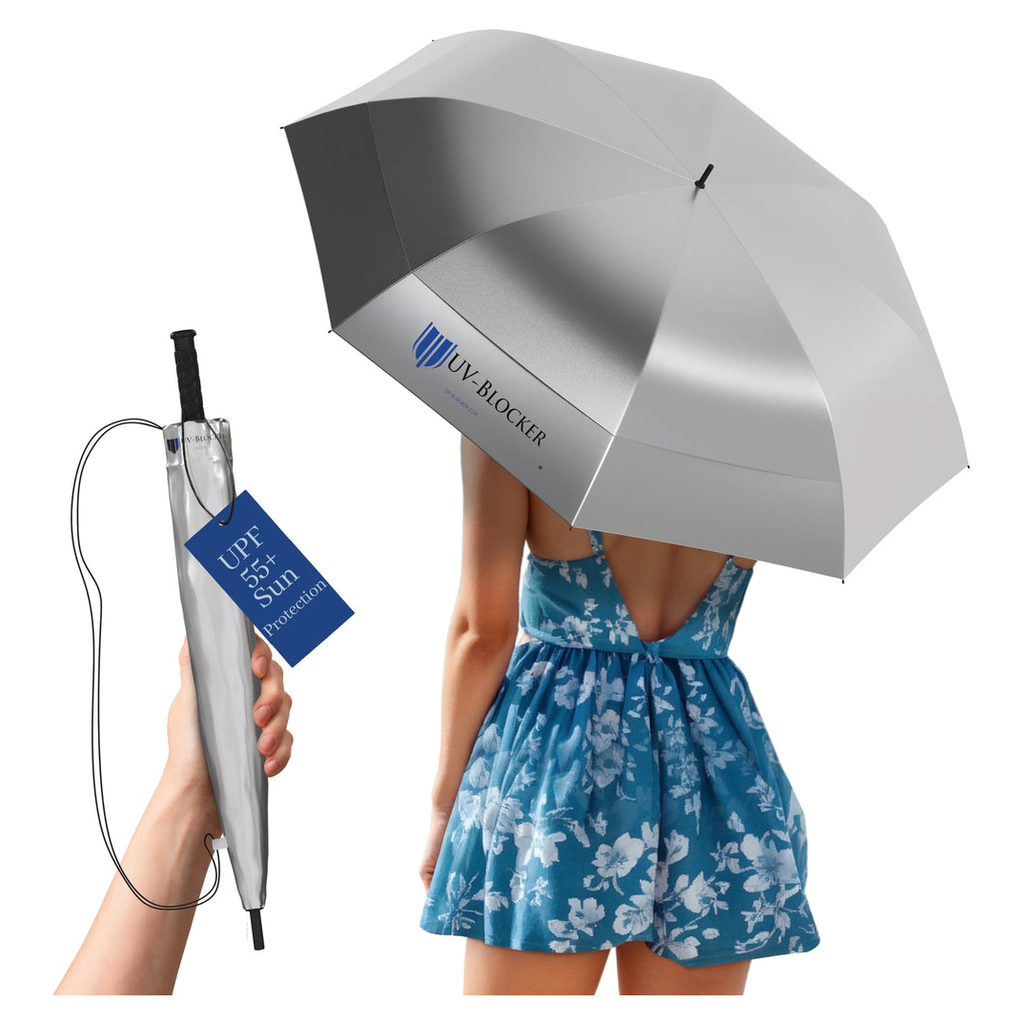
A UPF 50+ UV-blocking umbrella provides the consistent, continuous shade protection that is essential under Australia's intense sun. The UV-Blocker umbrella, with its patented Solarteck® reflective coating, blocks 99% of UV rays and reduces perceived temperature by up to 15°F — a meaningful advantage for outdoor activities in Australia's climate. It is the only umbrella of its kind approved by the Melanoma International Foundation.
Sun Safety in Canada
Canada experiences meaningful UV exposure throughout the year, with UV Index levels regularly reaching 8–10 or higher during summer months in cities such as Vancouver, Calgary, Toronto, and Ottawa. Health Canada and Environment and Climate Change Canada publish daily UV Index forecasts and recommend protective measures whenever the index exceeds 3 — a threshold reached on most clear days between May and August across the country.
Key resources for Canadian sun safety:
- Health Canada UV Index: Published daily via the Environment and Climate Change Canada weather portal (weather.gc.ca). Canadians can track UV levels by city and receive alerts when protection is recommended.
- Canadian Cancer Society: Recommends UPF 50+ clothing, hats, sunscreen, and shade-seeking as primary sun protection strategies. Physical UV barriers — such as UPF 50+ umbrellas — are emphasized for prolonged outdoor exposure.
- Canadian Dermatology Association: Endorses broad-spectrum sun protection strategies, including shade structures and UV-blocking accessories, especially for individuals with fair skin or a personal or family history of skin cancer.
For Canadians spending extended time outdoors — whether working, playing sports, or enjoying recreational activities — a UV-blocking umbrella rated UPF 50+ provides continuous, reapplication-free protection. The UV-Blocker umbrella, independently tested and approved by the Melanoma International Foundation, blocks 99% of UV rays and keeps users up to 15°F cooler — making it a practical and reliable companion for Canadian summers.
Frequently Asked Questions
What sun protection requirements should parents look for in a summer camp?
Quality camps should have a documented sun safety policy that includes mandatory sunscreen application before outdoor activities, scheduled reapplication reminders (at minimum every 2 hours), and supervised shade breaks during peak UV hours (10 AM – 4 PM). Look for camps that require campers to bring SPF 30+ sunscreen and UPF 50+ protective clothing, provide hats as part of the uniform, and have shade structures over key activity areas. Ask specifically how the camp handles campers with very fair skin or a history of sunburn — their answer reveals the depth of their sun safety culture. The American Academy of Dermatology recommends outdoor programs establish formal UV policies rather than relying on ad-hoc reminders.
What SPF level should children use at summer camp?
Dermatologists recommend a minimum of SPF 30 for children, with SPF 50 preferred for fair-skinned kids or full-day outdoor camps. The formula matters as much as the number: choose broad-spectrum (protecting against both UVA and UVB), water-resistant formulas rated for at least 80 minutes of sweat or water exposure. Mineral-based sunscreens (zinc oxide or titanium dioxide) are recommended for sensitive or young skin as they sit on top of the skin rather than absorbing into it, and they work immediately upon application unlike chemical sunscreens which need 15–30 minutes to activate. Pack enough for reapplication at least 3 times on a full camp day.
How often should sunscreen be reapplied at summer camp, and who is responsible?
The FDA recommends reapplying sunscreen every 2 hours, or immediately after swimming or heavy sweating — whichever comes first. A typical 8-hour camp day requires 3–4 applications. Many camps have policies where counselors cannot physically apply sunscreen to campers due to liability rules, so children need to be independently capable of self-application. Practice with your child before camp starts: have them apply sunscreen to their entire face, ears, neck, arms, and any exposed legs. Label all sunscreen containers clearly. Consider supplementing with UPF 50+ clothing — items like long-sleeve rash guards, UPF hats, and UV-protective neck gaiters reduce the reapplication burden and provide consistent protection even when children forget to reapply.
What clothing provides the best sun protection for children at camp?
UPF-rated clothing is the most reliable sun protection for active children because, unlike sunscreen, it cannot be missed, rubbed off, or forgotten. UPF 50+ garments (meeting AATCC TM183 standard) block over 98% of UV radiation. For camp, focus on: a wide-brim hat (minimum 3-inch brim) that protects the face, ears, and neck; a long-sleeve UPF 50+ shirt for water or sand activities; and a UPF neck gaiter for additional facial coverage. Darker colors and tightly woven fabrics consistently test at higher UPF ratings than light-colored loosely knit garments. Wet clothing loses significant UPF protection, so a dry change of UPF garments after swimming is important.
Are UV-protective umbrellas or parasols appropriate at summer camps?
Absolutely — and they're increasingly included in progressive camp shade programs. A UPF 50+ umbrella functions as portable shade infrastructure, useful for rest periods, arts and crafts, or stationary outdoor activities. For camp counselors supervising groups, a UV-blocking umbrella provides personal protection during long outdoor supervision shifts. Parent volunteers and spectators at camp events benefit most. When selecting a camp umbrella, look for independent UPF certification — the UV-Blocker umbrella holds UPF 50+ certification (100% UVB block, 99.97% UVA block per AATCC TM183-2020) and is endorsed by the Melanoma International Foundation, making it suitable for both children's programs and adult supervisors.
What time of day are UV rays most dangerous for children at outdoor camps?
UV radiation is most intense between 10 AM and 4 PM, with peak intensity typically occurring between 11 AM and 2 PM when the sun is highest in the sky. During these peak hours, unprotected skin can burn in as little as 10–15 minutes for fair-skinned children. Many camp schedules unintentionally concentrate outdoor activities — swimming, field sports, nature hikes — right in this danger window. UV intensity also increases with altitude, is higher at lower latitudes, and is significantly amplified near water and sandy surfaces, which reflect up to 25–80% of UV back onto exposed skin. When planning a camp schedule, advocate for shade-based or indoor activities during the 11 AM – 2 PM window when possible.
Are children with very fair skin or a family history of skin cancer safe at outdoor summer camps?
Yes, with proper preparation and camp coordination. Children with Fitzpatrick skin types I–II (very fair, burns easily), red or blonde hair, freckles, or a family history of melanoma have significantly elevated lifetime risk and deserve extra precautions. These include: SPF 50+ broad-spectrum mineral sunscreen applied 30 minutes before outdoor exposure; UPF 50+ full-coverage clothing as a primary (not backup) layer; communication with camp leadership about the child's specific needs; and supplementary physical shade tools during rest periods. Pediatric dermatologists advise that sunburns in childhood are a particularly strong risk factor for adult melanoma — each protective measure compounds over a child's summer.
Frequently Asked Questions
What is the difference between UVA and UVB rays, and why does it matter?
UVA rays (320–400nm) are longer waves that penetrate deep into the skin, causing photoaging, wrinkles, and contributing to melanoma. They pass through glass and clouds and are relatively constant year-round. UVB rays (290–320nm) are shorter, cause sunburn, and are the primary driver of skin cancer. They're most intense midday (10am–4pm) and in summer. Effective sun protection must block both.
How effective is a UPF 50+ umbrella compared to sunscreen alone?
A UPF 50+ umbrella blocks 99%+ of direct overhead UV — more reliable than sunscreen because it doesn't require reapplication, doesn't wash off with sweat, and provides consistent protection. However, reflected UV from surfaces still reaches skin under an umbrella. The ideal combination is SPF 50+ sunscreen + UPF 50+ umbrella for 95–99% total UV reduction. UV-Blocker's umbrellas are dermatologist-recommended for this purpose.
What time of day poses the highest UV risk?
UV radiation is highest between 10am and 4pm, peaking around noon in most locations. The UV Index is the most accurate measure — when it reaches 6 or above, unprotected skin can begin to burn in as little as 15 minutes. Cloud cover reduces UV intensity but doesn't eliminate it: 80% of UV penetrates light cloud cover.
Does skin tone affect UV damage risk?
All skin tones are affected by UV radiation, but the risk and presentation differ. People with lighter skin (Fitzpatrick types I–III) burn faster and have higher non-melanoma skin cancer rates. People with darker skin (types IV–VI) are more prone to hyperpigmentation and have a higher risk of melanoma being diagnosed at later stages. Sun protection is essential for every skin tone.
What are early warning signs of skin cancer I should watch for?
Use the ABCDE rule for moles: Asymmetry, Border irregularity, Color variation, Diameter larger than 6mm, and Evolving (any change over time). Also watch for sores that don't heal, new pink or pearly bumps, and flat red or pink patches. Annual dermatologist screenings are recommended for anyone with significant sun exposure history or a family history of skin cancer.
Expert Sun Protection Recommendations
- Check the daily UV Index at weather.gov or a UV app before any extended outdoor activity
- Apply SPF 30+ broad-spectrum sunscreen 30 minutes before going outdoors, not right before sun exposure
- Reapply sunscreen every 2 hours and after swimming or heavy sweating
- Use a UPF 50+ umbrella for hands-free shade during outdoor dining, sports, or work
- Wear UV-blocking sunglasses that block 99–100% of UVA and UVB — eyes are vulnerable to UV-related damage
- Annual skin screenings with a board-certified dermatologist can catch early-stage skin cancers when highly treatable