
TL;DR
- Sunburn in shade is real: You receive 30-50% of UV exposure even under cover
- Sand reflects 15-25% of UV radiation; water reflects 5-30% depending on angle
- Standard shade (trees, buildings) blocks only 50-70% of total UV exposure
- UV umbrella with absorptive black interior prevents upward-reflected radiation
- Combining shade + SPF 30 sunscreen provides 99.5% UV protection

Why Sunburn in Shade Actually Happens
Dermatologists frequently encounter patients who report sunburns despite spending hours under shade. This is not a measurement error. Shade reduces but does not eliminate UV exposure, making sunburn in shade a documented phenomenon.
According to a study published in Photochemistry and Photobiology, individuals under standard shade structures receive 30-50% of the UV radiation compared to direct sun exposure. Over a 6-hour beach day, this represents 1.8-3 hours of equivalent direct sun exposure.
The Skin Cancer Foundation confirms that UV radiation reaches shaded areas through three mechanisms: direct transmission through shade material, diffuse scattering from atmospheric particles, and reflection from surrounding surfaces.

1. Atmospheric Scattering Causes UV Exposure in Shade
Air molecules and particles scatter UV radiation in all directions. Blue light scatters more than red (why sky appears blue), but UV scatters even more efficiently.
Atmospheric scattering contributes 10-20% of total UV exposure in shade. This percentage increases on cloudy days when direct sun is fully blocked but diffuse radiation remains high. Even on overcast days, enough UV penetrates to cause gradual damage.

2. Ground Reflection Bounces UV Upward
Different surfaces reflect different percentages of UV radiation back toward you:
| Surface | UV Reflection Rate |
|---|---|
| Sand (dry) | 15-25% |
| Sand (wet) | 10-15% |
| Water | 5-30% (angle-dependent) |
| Snow | 80-90% |
| Grass | 2-5% |
| Concrete | 8-12% |
| Wood decking | 5-10% |
Beach environments combine dry sand (15-25% reflection) with water (5-30% reflection). These reflected rays travel upward, hitting the underside of skin not directly facing the sun: chin, underarms, inner thighs, ears. This is why burns often appear in unexpected places after a "shaded" beach day.
3. Lateral Scattering Creates 360° Exposure
UV rays reflect off nearby structures: beach equipment, other umbrellas, buildings. This creates a 360° radiation environment where protection requires coverage from all angles, not just overhead. Traditional shade addresses only overhead exposure.
How Much UV Actually Reaches You in Shade
Total UV exposure in shade comes from combining these sources:
| Environment | Direct UV | Scatter | Reflection | Total Exposure |
|---|---|---|---|---|
| Full Sun | 100% | 0% | 0% | 100% |
| Tree Shade | 0% | 15% | 10-15% | 25-30% |
| Standard Umbrella | 0% | 15% | 15-20% | 30-35% |
| Building Shadow | 0% | 15% | 10-12% | 25-27% |
| UV Umbrella (Black Interior) | 0% | 15% | 3-5% | 18-20% |
The critical variable is ground reflection. Standard shade structures block overhead radiation but do nothing about upward-reflected rays. A UV umbrella with absorptive interior lining captures these reflected rays before they reach skin.

4. Why Standard Shade Fails to Protect
Visual shade (absence of direct sunlight) does not equal UV protection.
Tree Canopy
Leaves allow UV transmission. A study in the Journal of Exposure Science & Environmental Epidemiology found that tree shade provides UPF 5-15 depending on canopy density. This means 6-20% of UV passes directly through.
Combined with reflected and scattered radiation, tree shade typically provides 70-75% reduction in UV exposure. Over 6 hours, this equals 1.5-1.8 hours of direct sun—enough to burn fair skin.
Building Shadows
Building shade blocks direct and some scattered radiation but does nothing for ground reflection. Near reflective surfaces (white concrete, water features), building shade provides only 70-73% reduction.
Standard Beach Umbrellas
Canvas or nylon umbrellas block overhead UV but use light-colored interiors that reflect ground radiation back toward the user. Total UV reduction: 65-70%. Not enough to prevent burns.
5. The UV Trap Solution
Effective shade requires both blocking and absorption.
Blocking (Exterior) Reflective silver coating on umbrella exterior bounces incoming UV away. This handles direct and atmospheric scattered radiation.
Absorption (Interior) Dark interior lining (typically black) absorbs upward-reflected UV before it reaches skin. This handles ground-reflected radiation.
The combination creates a UV trap: radiation cannot enter from above (reflected away) or from below (absorbed by interior).
Testing by the American Association of Textile Chemists and Colorists shows dual-layer construction (reflective exterior, absorptive interior) reduces UV exposure to 18-20% of full sun compared to 30-35% for single-layer umbrellas.
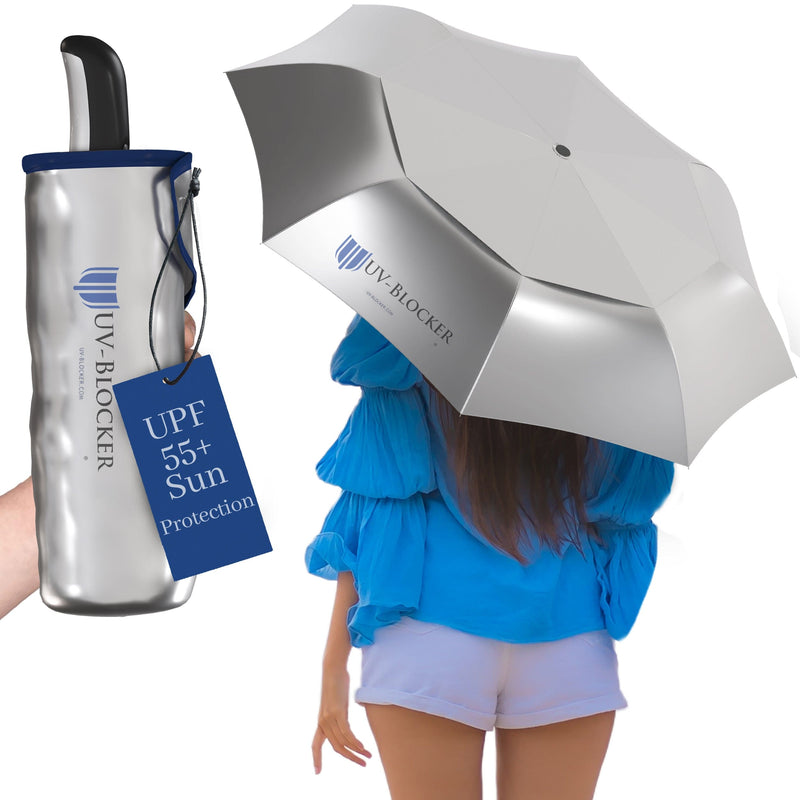
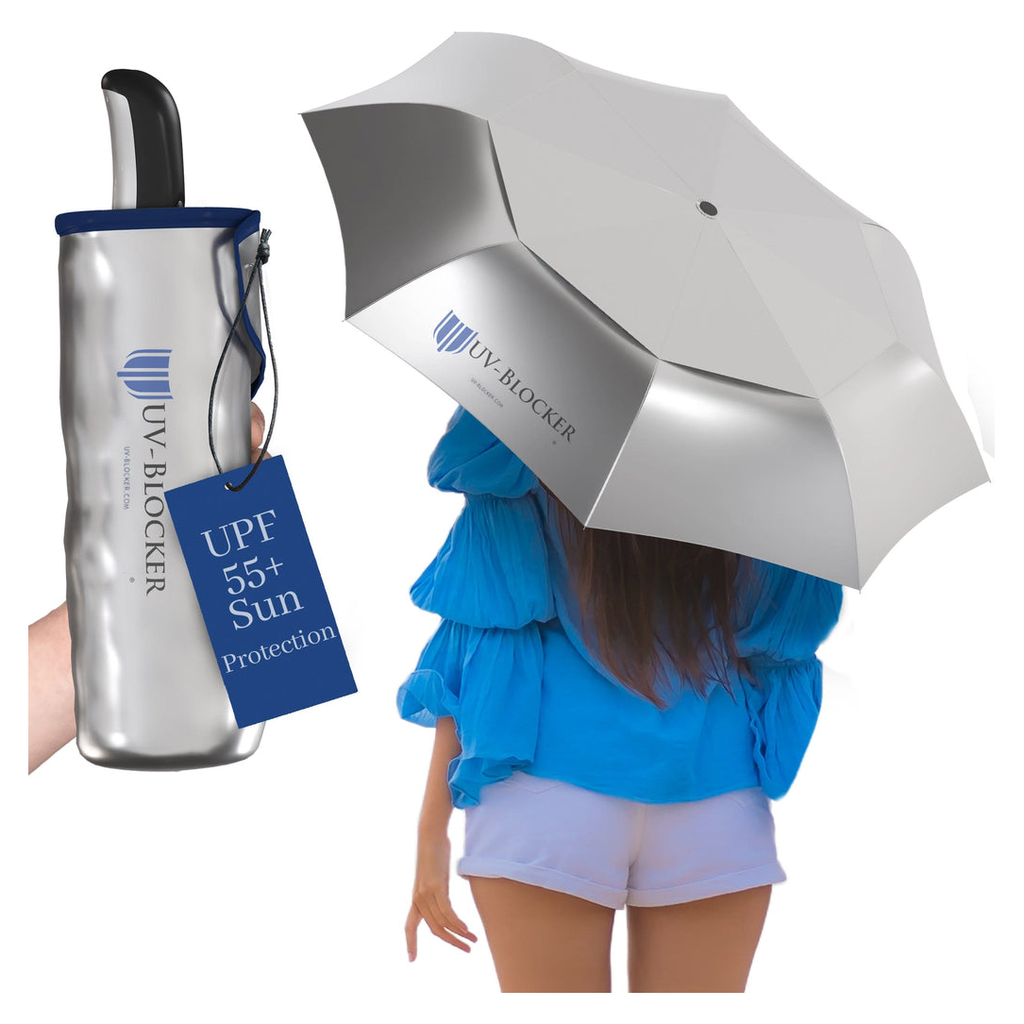
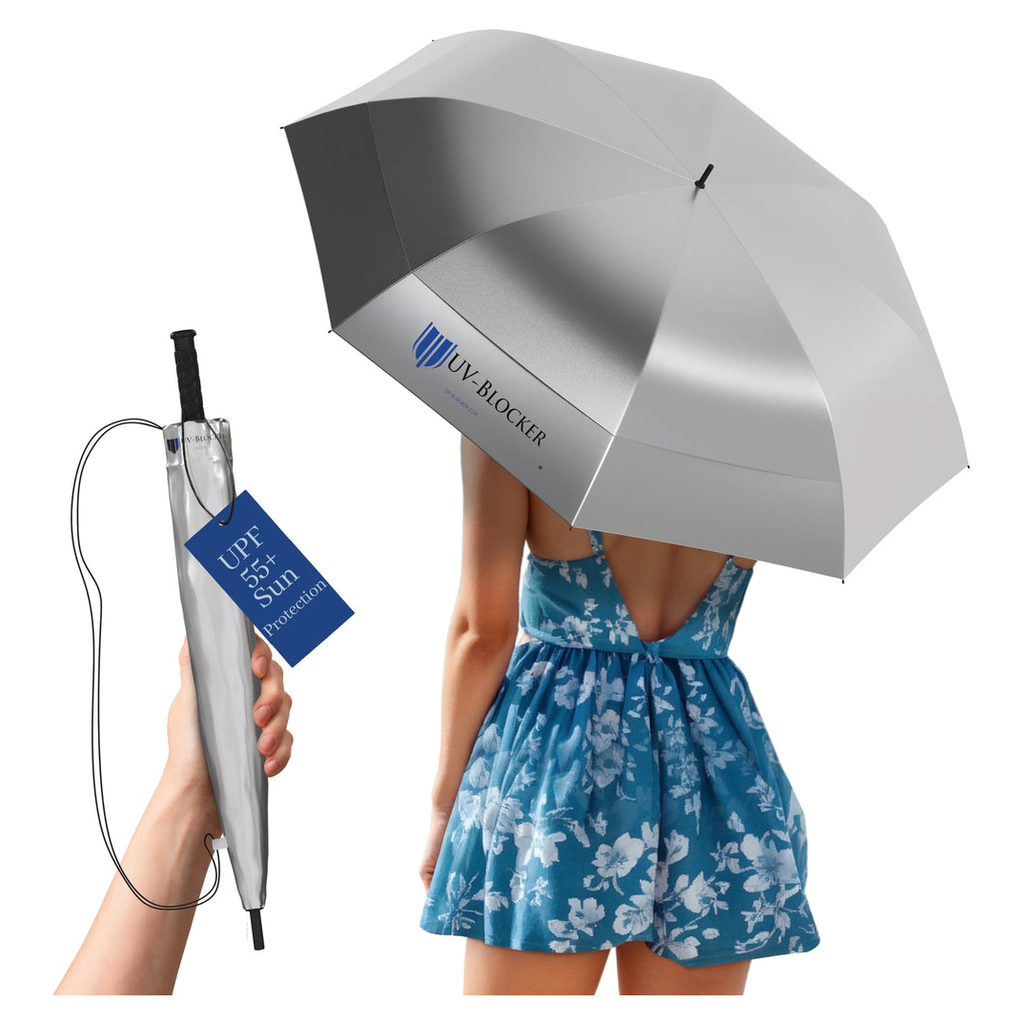
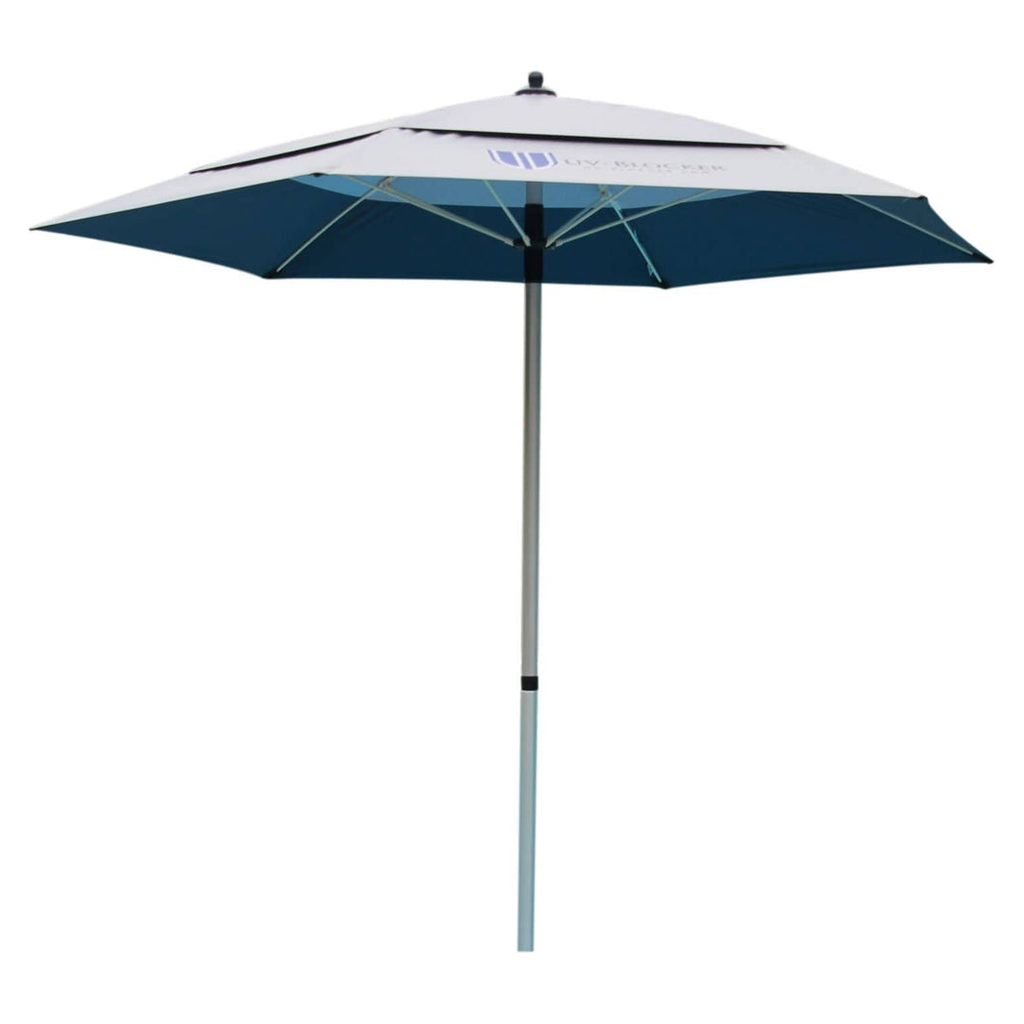
For maximum protection, explore our UV protection umbrellas with this dual-layer technology. The Travel UV Umbrella is specifically designed for beach conditions.
Real-World Burn Calculations
A 160-lb adult with fair skin reaches minimal erythemal dose (MED, threshold for visible reddening) in approximately 20 minutes of midday sun at tropical latitudes.
Scenario 1: Direct Sun, 6 hours - 360 minutes ÷ 20 min/MED = 18 MED - Result: Severe burn with blistering
Scenario 2: Standard Shade, 6 hours - UV exposure: 30% of direct - 108 minutes ÷ 20 min/MED = 5.4 MED - Result: Moderate burn with redness
Scenario 3: UV Umbrella with Black Interior, 6 hours - UV exposure: 18% of direct - 64.8 minutes ÷ 20 min/MED = 3.2 MED - Result: Mild burn or tanning
Scenario 4: UV Umbrella + SPF 30 Sunscreen, 6 hours - Total exposure: 0.6% of direct - Result: No burn
The takeaway: shade alone provides partial protection. Shade plus sunscreen provides near-complete protection.

Medical Implications
Cumulative UV exposure in shade contributes to long-term skin damage.
Photoaging UV exposure below the erythemal threshold still causes photoaging: wrinkles, age spots, loss of elasticity. According to the New England Journal of Medicine, 80% of visible facial aging results from UV exposure, much from sub-erythemal doses during shaded outdoor activities.
Melanoma Risk The American Academy of Dermatology states that melanoma risk correlates with cumulative lifetime UV exposure, not just severe burns. Ten summers of 30% UV exposure in shade equals 3 summers of full sun exposure in terms of cancer risk.
Medication Photosensitivity Patients on photosensitizing medications (tetracyclines, NSAIDs, diuretics) experience exaggerated reactions to sub-erythemal UV doses. Shade alone is insufficient protection for these individuals.
Optimized Protection Strategy
Maximize UV blocking effectiveness of shade structures.
Orientation Position umbrella to block sun angle throughout the day. Morning: east-facing tilt. Afternoon: west-facing tilt. Midday: overhead coverage.
Surface Selection Seek grass or dense vegetation for ground cover when possible. Sand and concrete maximize ground reflection.
Layered Defense Combine multiple protection methods: - UV umbrella with absorptive interior (reduces to 18% exposure) - SPF 30+ sunscreen (reduces remaining by 96.7%) - UPF 50+ clothing on high-exposure areas (arms, shoulders) - Sunglasses with UV400 rating (eyes receive diffused radiation too)
Total protection from layered approach: 99.4-99.8% UV reduction.
Frequently Asked Questions
Q: How much sunscreen do I need if I'm in shade? A: Same as full sun: 1 oz (shot glass) for full body coverage, reapplied every 2 hours. Shade reduces UV dose but doesn't eliminate need for sunscreen.
Q: Do I need sunscreen under an umbrella at the beach? A: Yes. Beach environments have high ground reflection (sand + water). Without sunscreen, you'll receive 18-35% of full sun UV exposure depending on umbrella quality.
Q: Can I get burned through a car window? A: Partially. Car windshields block UVB (causes burning) but allow 40% of UVA (causes aging and contributes to skin cancer). Side windows allow 70-80% of UVA.
Q: How do I know if my shade provides adequate UV protection? A: Check for: (1) UPF rating on fabric (50+ ideal), (2) reflective exterior coating, (3) dark absorptive interior, (4) complete overhead coverage with 6-12 inch margin beyond body.
Q: What's the difference between UPF and SPF? A: UPF (Ultraviolet Protection Factor) rates fabric. SPF (Sun Protection Factor) rates sunscreen. Both use similar scales: UPF/SPF 50 = 98% UV block, UPF/SPF 30 = 96.7% block.
Q: Does altitude affect shade protection? A: Yes. UV intensity increases 10-12% per 1,000 feet elevation. At 5,000 feet elevation, shade provides less protection than sea level shade. Combine shade with higher SPF at altitude.
Key Takeaways on Sunburn in Shade
Understanding how UV reaches you in shade is the first step to proper protection. Remember these essential points:
- Shade ≠ Safe - You still receive 25-35% of UV exposure under standard shade
- Ground matters - Sand and water dramatically increase reflected UV
- Dual-layer protection - Reflective exterior + absorptive interior = maximum protection
- Layered approach - Combine shade, sunscreen, and protective clothing for 99%+ protection
- Time exposure - Even partial UV exposure accumulates over hours
Conclusion
Getting sunburn in shade is not only possible—it's common. Standard shade structures reduce UV exposure by 65-75%, leaving enough radiation to cause burns, photoaging, and increase cancer risk over time.
To truly protect yourself, you need a UV umbrella with both a reflective exterior (blocks direct UV) and an absorptive interior (blocks reflected UV). Combined with sunscreen and protective clothing, this layered approach eliminates virtually all risk.