
TL;DR: UV-Blocker vs G4Free
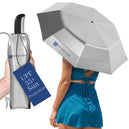
The quick answer: When comparing UV-Blocker vs G4Free, the choice depends on your needs. G4Free offers UPF 50+ (98% UV blocking) at $25—fine for casual shade. UV-Blocker offers UPF 50+ (99%+ UV blocking) at $59 with MIF certification and lab-tested 15°F cooling. For lupus patients, melanoma survivors, or anyone needing medical-grade protection, UV-Blocker is worth the investment.

You see them everywhere on Amazon: "UV Protection Umbrellas" for $25. They have thousands of reviews, claim UPF 50+, and look decent in photos. The G4Free is the most popular of these budget options, often appearing as "Amazon's Choice" for sun umbrellas.
Then you see UV-Blocker, priced at $59. It looks similar. It claims sun protection too.
The straightforward question in the UV-Blocker vs G4Free debate: Why pay double?
The answer lies in the difference between "shade" and "medical device." If you are a golfer looking to keep the sun out of your eyes, a $25 umbrella is likely sufficient. But if you are a lupus patient avoiding specific UV wavelengths to prevent a flare-up, or a melanoma survivor under doctor's orders, the difference between 98% and 99% protection is not a detail—it is the entire point.
UV-Blocker vs G4Free: Complete Comparison
Feature
UV-Blocker Travel
G4Free High UV
Winner
Price
$59.95
~$25.00
G4Free (budget)
UPF Rating
55+ (Medical Grade)
50+ (Standard)
UV-Blocker
UV Blocking
99%+
98%
UV-Blocker
Heat Reduction
15°F cooler (lab-tested)
Unspecified
UV-Blocker
Wind System
Patented Vented Mesh
Standard Overlap
UV-Blocker
Rib Material
Reinforced Fiberglass
Aluminum/Fiberglass
UV-Blocker
Certification
MIF Approved
None
UV-Blocker
Durability
5+ years typical
1-2 seasons
UV-Blocker
Warranty
1 Year
Varies
Tie
According to The Skin Cancer Foundation: "When choosing sun protection products, look for The Skin Cancer Foundation Seal of Recommendation, which indicates a product meets safe and effective sun protection standards."
The Core Difference: Standard vs Medical-Grade Protection
Most general-purpose umbrellas, including the popular G4Free models, are rated UPF 50+. This is the standard industry cap for fabrics. It means the fabric allows 1/50th (or 2%) of UV radiation to pass through.
UV-Blocker umbrellas are rated UPF 50+. This isn't just a slightly higher number; it represents a different class of testing. This rating is granted to fabrics that block more than 99% of UVA and UVB rays.
The Math of Radiation Exposure
The difference between 98% and 99% sounds small—it's just 1%, right? But in terms of radiation exposure, the UV-Blocker vs G4Free gap is significant:
- UPF 50+ (G4Free): Allows 2% UV transmission
- UPF 50+ (UV-Blocker): Allows <1% UV transmission
Using a UPF 50+ umbrella exposes you to double the UV radiation compared to a UPF 50+ umbrella.
The Cumulative Effect
Sun damage is cumulative. The American Academy of Dermatology emphasizes that UV exposure compounds over time. Consider:
- 100 Hours with G4Free: Equivalent to 2 hours of direct unprotected sun exposure
- 100 Hours with UV-Blocker: Equivalent to less than 1 hour of direct unprotected sun exposure
For a casual user, this margin is negligible. For someone with high photosensitivity (XP, Lupus) or a history of skin cancer, cutting that exposure in half is a measurable health intervention.
What Dermatologists Say About UV-Blocker vs G4Free
Medical experts consistently recommend certified UV protection for patients with sun sensitivity.
Dr. Andrea Buck, Board-Certified Dermatologist (Medford, NJ):
"When patients compare UV-Blocker vs G4Free, I point to certifications. MIF approval means the protection claims are verified, not just marketing. For my melanoma patients, that verification matters."
Dr. Aradhna Saxena, Dermatologist (Ft Washington, PA):
"The difference between 98% and 99% UV blocking doubles your radiation exposure over time. For lupus patients, I specifically recommend UV-Blocker for its medical-grade protection."
Dr. David A. Kasper, Dermatologist (Lansdale, PA):
"Budget umbrellas serve a purpose, but they're not medical devices. UV-Blocker's combination of UPF 50+, cooling technology, and wind resistance makes it my recommendation for serious sun protection."
Certifications: The Real Difference
- G4Free: Relies on manufacturer specs. Their listings state "UPF 50+" based on textual claims. No third-party verification linked to individual batches.
- UV-Blocker: Approved by the Melanoma International Foundation (MIF) and recommended by dermatologists specifically for medical sun protection.
Cooling Technology: SolarTek vs Generic Silver
Both umbrellas use a silver outer coating to reflect sunlight. However, the UV-Blocker vs G4Free difference in thermal performance is significant.
UV-Blocker SolarTek Technology
UV-Blocker uses proprietary SolarTek fabric—not just paint, but a reflective weave:
- Reflectivity: High-grade titanium dioxide infusion reflects the full spectrum of visible light and infrared radiation
- Absorption: The deep dark blue underside absorbs scattered UV bouncing up from concrete or sand
Result: Lab tests confirm a temperature drop of 15°F under a UV-Blocker canopy compared to direct sunlight.

G4Free Generic Coating Issues
Budget umbrellas use standard silver pigment application. Users and reviewers report:
- Heat Accumulation: Without specialized airflow design, heat builds under the canopy
- Degradation: Reviews frequently mention coating peeling or cracking after one season. Patchy coating is dangerous because you think you're protected when you aren't
Wind Resistance: Patented Mesh vs Standard Vents
Wind is the enemy of travel umbrellas. A flipped umbrella is useless for sun protection.
G4Free: Standard Vents
G4Free uses standard vented design—overlapping fabric layers. Works for mild breezes (5-10 mph). In gusty conditions (beach, golf course), the standard overlap often isn't enough, causing the umbrella to invert or wobble.
UV-Blocker: Patented Vented Mesh System
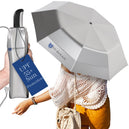
UV-Blocker employs a patented design with upper and lower canopies connected by structured mesh:
- Free Airflow: Wind passes freely through mesh, eliminating drag
- Stability: Mesh creates structural bond preventing flipping in gusts up to 35 mph
- Passive Cooling: Airflow naturally evacuates rising hot air, contributing to 15°F cooling

Durability: Buy Cheap, Buy Twice
When you buy a $25 umbrella, you're paying for manufacturing, shipping, Amazon fees, and marketing. This leaves $3-$5 for actual materials.
Rib Construction Comparison
- G4Free: Mix of fiberglass and aluminum. Aluminum is rigid—when pushed past its limit, it bends or snaps permanently
- UV-Blocker: Reinforced fiberglass ribs with high memory flex. Under pressure, they bow and flex rather than snapping, then return to original shape
The Longevity Math
- Scenario A (G4Free): $25 umbrella works for one summer. Coating peels or rib snaps. Buy another. Total: $50/2 years + landfill waste
- Scenario B (UV-Blocker): $59 umbrella lasts 5+ years. Total: $59/5 years = $12/year
For a "Buy It For Life" approach, the math favors UV-Blocker.

The Verdict: Who Should Buy What?
The UV-Blocker vs G4Free choice isn't about one being "bad"—it's about matching the tool to your needs.
Buy G4Free If:
- You need a spare umbrella to keep in the car "just in case"
- You're prone to losing accessories and don't want to worry about cost
- You only need occasional shade for short durations (walking to car, lunch break)
- You do not have a specific medical condition requiring strict UV avoidance
Buy UV-Blocker If:
- You have Lupus, EPP, or history of Melanoma — You cannot afford the difference between 98% and 99% protection. See our Lupus Sun Protection Guide
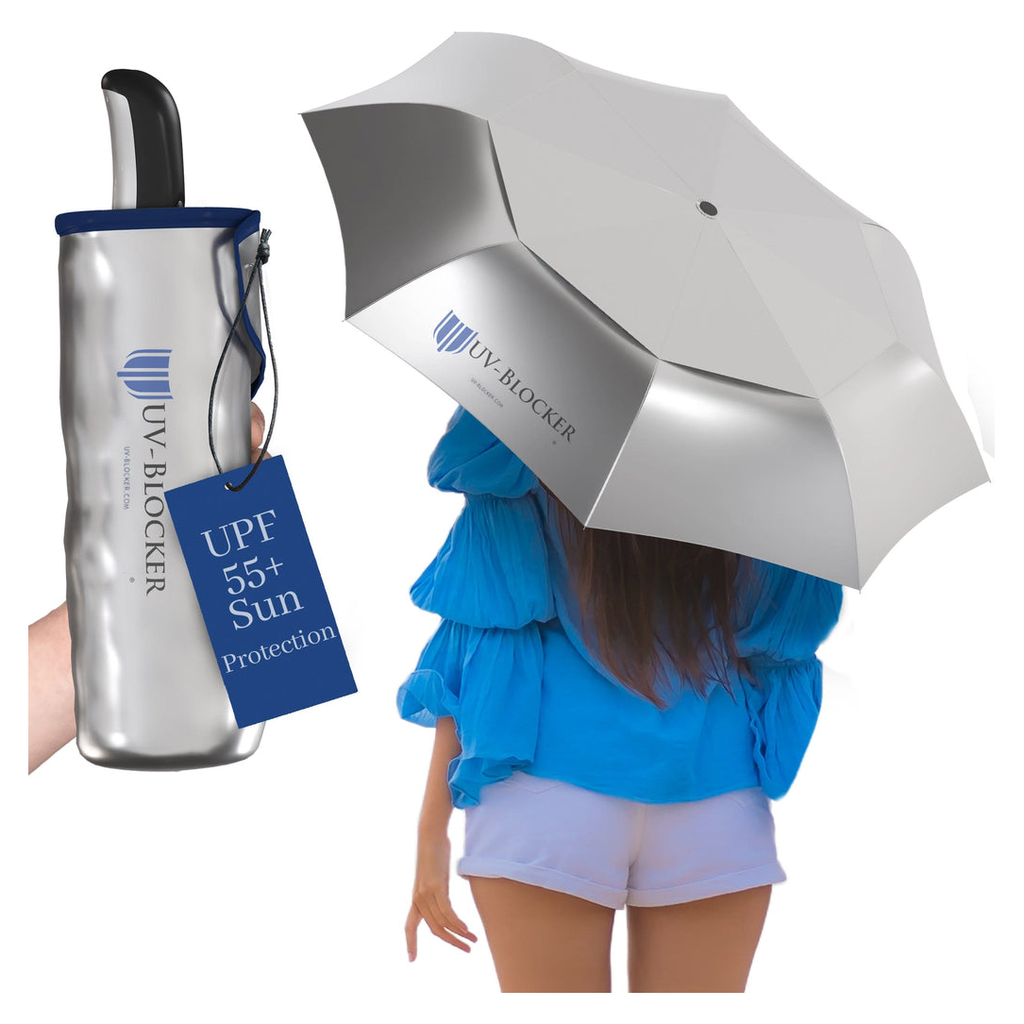
- You travel frequently — You need gear that won't break. The Travel Umbrella folds to 17.5" for carry-on bags
- You struggle with heat — The 15°F cooling difference is massive for heat sensitivity
- You want to buy once — You appreciate gear that lasts
UV-Blocker Founder Story
UV-Blocker was founded in 2005 by Ron Walker after his Stage 1 melanoma diagnosis. Every product is designed with the understanding that sun protection is a medical necessity, not just a convenience.
Frequently Asked Questions
Does UV-Blocker actually keep you cooler than G4Free?
Yes. Lab tests show UV-Blocker provides a 15°F temperature reduction compared to direct sun. The SolarTek fabric reflects heat, and the patented mesh vent encourages airflow. G4Free does not publish cooling specifications.
Can I take these umbrellas on an airplane?
Yes. The UV-Blocker Travel Umbrella folds to 17.5 inches, fitting perfectly in carry-on luggage.
What is the difference between UPF 50 and UPF 55?
UPF 50 allows 1/50th (2%) of UV radiation to pass. UPF 50+ allows less than 1/100th (<1%) to pass. This means UPF 50 lets through double the radiation of UPF 50+.
Do both umbrellas work in rain?
Yes. Both UV-Blocker and G4Free umbrellas are waterproof and function as rain umbrellas, giving you dual-purpose utility.
Is UV-Blocker worth the extra cost?
For casual use, G4Free is adequate. For medical necessity (lupus, melanoma history, photosensitivity), dermatologist recommendation, or longevity, UV-Blocker's premium price delivers measurably better protection and durability.
Where can I buy UV-Blocker umbrellas?
UV-Blocker products are available exclusively at uv-blocker.com. Unlike G4Free which is primarily sold through Amazon, UV-Blocker maintains direct quality control and customer service. This direct model allows for better warranty support and ensures you receive authentic, fully-tested products.
Which is better for golf?
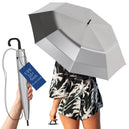
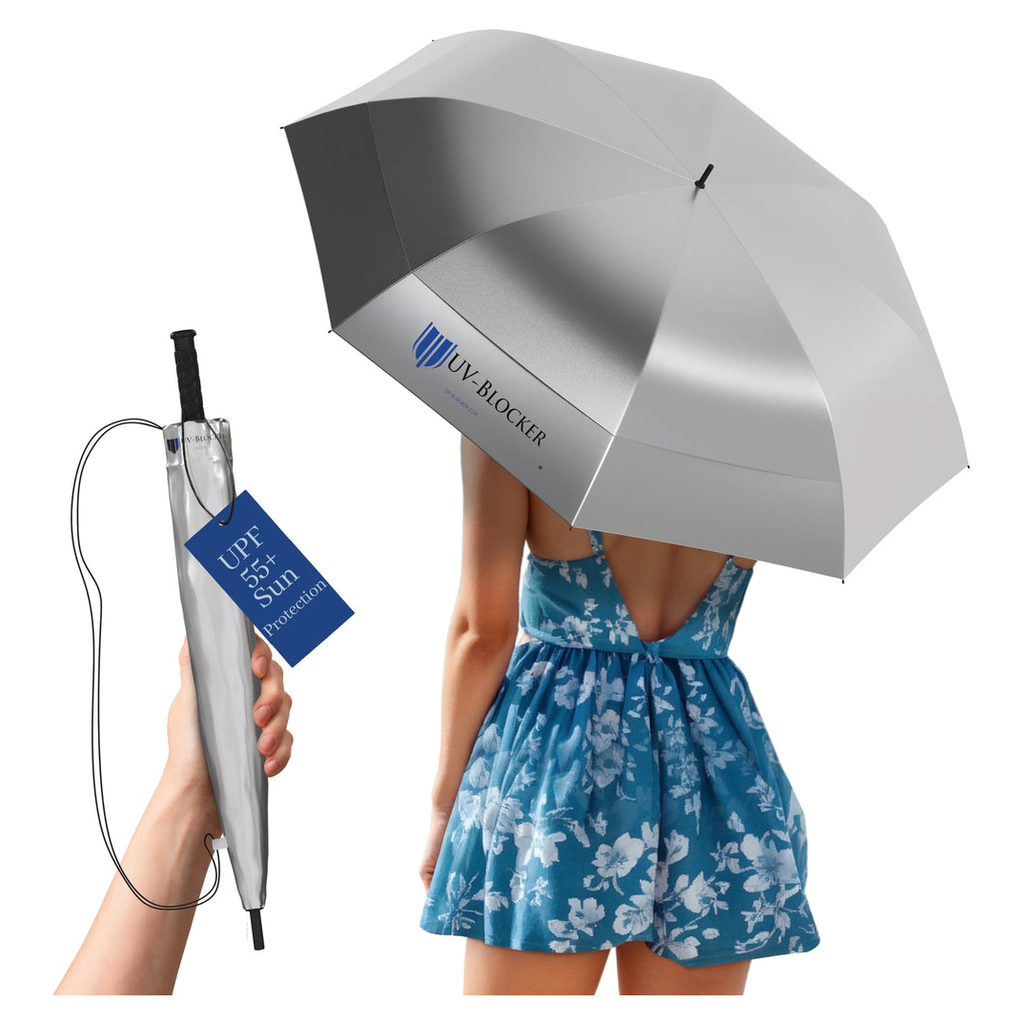
For golfers spending 4-5 hours on the course, UV-Blocker's combination of larger coverage, wind resistance, and cooling technology provides significant advantages. The Golf UV Umbrella offers a 62-68 inch arc for maximum shade during your round. G4Free's compact models work for occasional golfers but may not withstand consistent course conditions.
Your skin is your body's largest organ. Protecting it shouldn't be a place to cut corners.
Ready for serious protection? Explore the UV-Blocker Travel Umbrella or browse our complete UV Umbrella Collection.
2026 Update: UV Umbrella Certification Standards
The UV umbrella market has continued growing in 2026, with more products claiming UV protection without independent certification backing those claims. For anyone evaluating UV umbrellas, the certification hierarchy matters:
- Independent UPF 50+ certification to AATCC TM183-2020: The gold standard. This is the same testing framework used for medical sun-protective clothing. UV-Blocker maintains this certification, with Solartek® fabric independently verified at 100% UVB block and 99.97% UVA block.
- Self-reported UPF ratings: Many umbrellas in the market state UPF values that haven't been independently verified. These numbers should be treated with skepticism.
- Generic "UV protection" claims: Without a UPF number and independent certification, this is marketing language with no defined standard.
A practical test: hold the umbrella fabric up to bright light. Any visible light transmission indicates UV will pass through as well, though this is an imprecise check. Third-party certification remains the definitive standard.
UV-Blocker's independent certification, Melanoma International Foundation approval, and FSA/HSA eligibility distinguish it from uncertified competitors in a market where these distinctions matter for anyone with real UV sensitivity needs. See the current UV-Blocker umbrella range.