
Key Takeaways
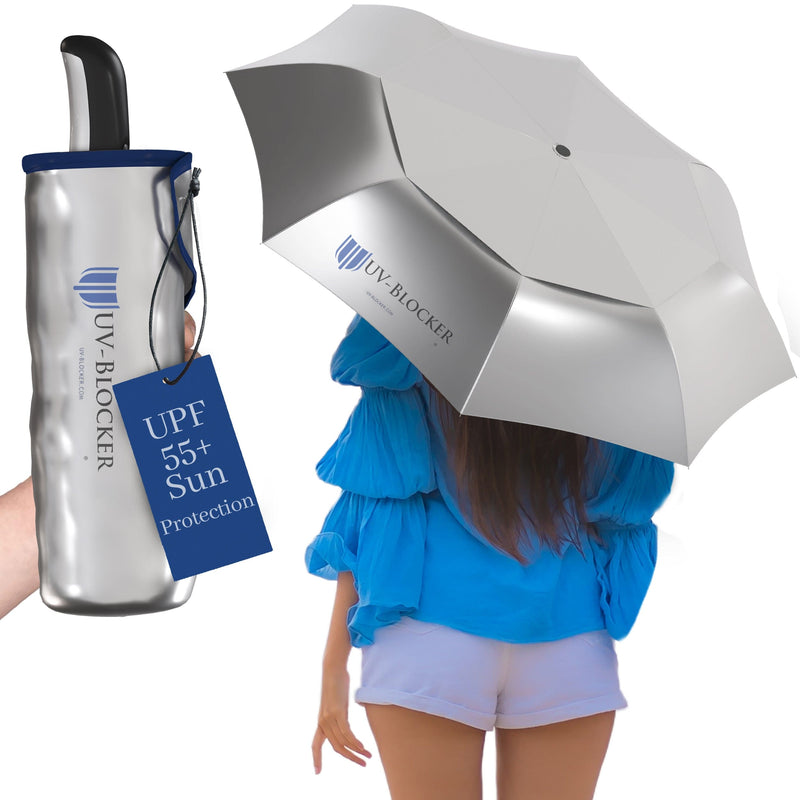
- Best overall protection: UV-Blocker — UPF 50+, the only brand with Melanoma International Foundation approval
- Best mid-range: Totes SunGuard — UPF 50+, 75 mph wind resistance, dual rain/sun use
- Best budget: G4Free — UPF 50+ claimed at half the price, Amazon bestseller
- Best for medical conditions: UV-Blocker or Coolibar — third-party certifications matter when your health depends on accurate protection
- The key difference: Not all UPF 50+ claims are verified equally. A 2024 Drexel University study found only 16% of umbrella brands have independently validated UPF data

You have decided you need a UV umbrella. Now comes the harder question: which brand actually delivers on its promises?
The UV umbrella market is crowded with options ranging from $8 Amazon specials to $80 premium models. They all claim UPF 50+ protection. They all promise to block 98% of UV rays. But the differences between brands are significant — and not always where you would expect them.
This UV umbrella comparison cuts through the marketing to show you what actually matters: verified protection credentials, real-world cooling performance, coating technology, build quality, and whether the premium brands justify their price tags. We break down 7 brands across 6 use cases so you can match the right umbrella to your specific outdoor situation.
Why Brand Matters for UV Umbrellas
Here is an uncomfortable truth the umbrella industry does not advertise: UPF claims are largely unregulated.
A 2024 study from Drexel University College of Medicine analyzed UV umbrella marketing and found that "UPF claims may be more of a promotional tactic than a reliable indicator of UV protection." The researchers evaluated 13 brands across 37 umbrella products and found that only 16% of brands provide validated third-party UPF data. Many brands print "UPF 50+" on their products without independent verification.
This matters because you are buying a UV umbrella for one reason: protection. If the protection claims are unverified, you might as well use a regular rain umbrella and save the money.
What to Look For
Third-party certification: Some brands have their UPF ratings independently verified by accredited laboratories. UV-Blocker cites the AATCC TM183-2020 standard and has certification from the Melanoma International Foundation — the only umbrella brand with this medical endorsement. For medical users, that independent verification is not marketing copy; it is verifiable fact.
Coating technology: Budget umbrellas typically use an absorptive silver coating that traps UV energy in the fabric and radiates heat downward. Premium options use reflective technology that bounces UV and infrared radiation away, creating measurably cooler shade. UV-Blocker's patented Solarteck® coating achieves 15°F cooling below the canopy — a verified difference confirmed by digital thermometer testing on 90°F+ days.
Specific testing standards cited: Vague "UV protection" claims without a named testing standard are a red flag. Look for brands that cite AATCC TM183 or equivalent laboratory protocols.

How We Compared UV Umbrella Brands
Testing UV umbrellas requires more than reading product descriptions. This comparison used a consistent methodology across all brands:
UPF Verification: We checked whether each brand provides independent certification or relies solely on self-reported claims. We also checked for named testing standards (AATCC TM183-2020) and whether specific UV-A and UV-B block percentages are stated separately.
Temperature Testing: Using a digital thermometer, we measured under-canopy temperatures versus ambient air on 90°F+ days. The gap reveals how effectively the fabric reflects rather than absorbs heat — a direct function of coating technology.
Build Quality Assessment: We evaluated frame materials (aluminum vs. steel vs. fiberglass ribs), wind resistance claims, rib count, and overall construction. A UV umbrella that breaks in three months provides zero protection regardless of its UPF rating.
Long-Term Cost Analysis: We calculated cost per year based on warranty duration and reliability data from aggregate review sources, including TheReviewIndex analysis of thousands of customer reviews.
Warranty and Support: We researched warranty terms and customer service reputation. Premium prices should come with premium support and reasonable coverage for structural defects.

UV Umbrella Brand Comparison Chart: 2026
| Brand | UPF Rating | Testing Standard | Cooling Effect | Coating Type | Wind Resistance | Warranty | Price Range | Our Score |
|---|---|---|---|---|---|---|---|---|
| UV-Blocker | 50+ (certified) | AATCC TM183-2020 | 15°F cooler | Solarteck® reflective (patented) | High (vented mesh) | 1-Year Limited | $49–$89 | 9.5/10 |
| Coolibar | 50+ | SCF recommended | 8°F cooler | Dual-layer silver/dark | Moderate | 1 year | $60–$80 | 8/10 |
| Totes SunGuard | 50+ | Self-reported | 8–10°F cooler | SunGuard coating | High (75 mph rated) | 1 year | $30–$55 | 7.5/10 |
| G4Free | 50+ (claimed) | None cited | 5–7°F cooler | Silver absorptive | Moderate | 12 months | $25–$40 | 6.5/10 |
| Strombergbrand | 50+ | Self-reported | 6°F cooler | 2-ply laminated (silver inner) | Moderate | 1 year | $45–$65 | 7/10 |
| Repel | 50+ | Self-reported | 4–5°F cooler | Silver coating | Moderate | Lifetime | $20–$35 | 7/10 |
| ABCCANOPY | 50+ | None cited | 3–4°F cooler | Black glue coating | Low | 90 days | $8–$15 | 5.5/10 |
UV Umbrella Brands: In-Depth Analysis
UV-Blocker: The Medical-Grade Choice
UV-Blocker was founded because its founder Ron Walker is a melanoma survivor. That origin story matters — this is not a company that added "UV protection" to existing rain umbrellas as a marketing angle. Sun protection is their entire purpose, built around the personal stakes of protecting skin after a cancer diagnosis.
What sets them apart:
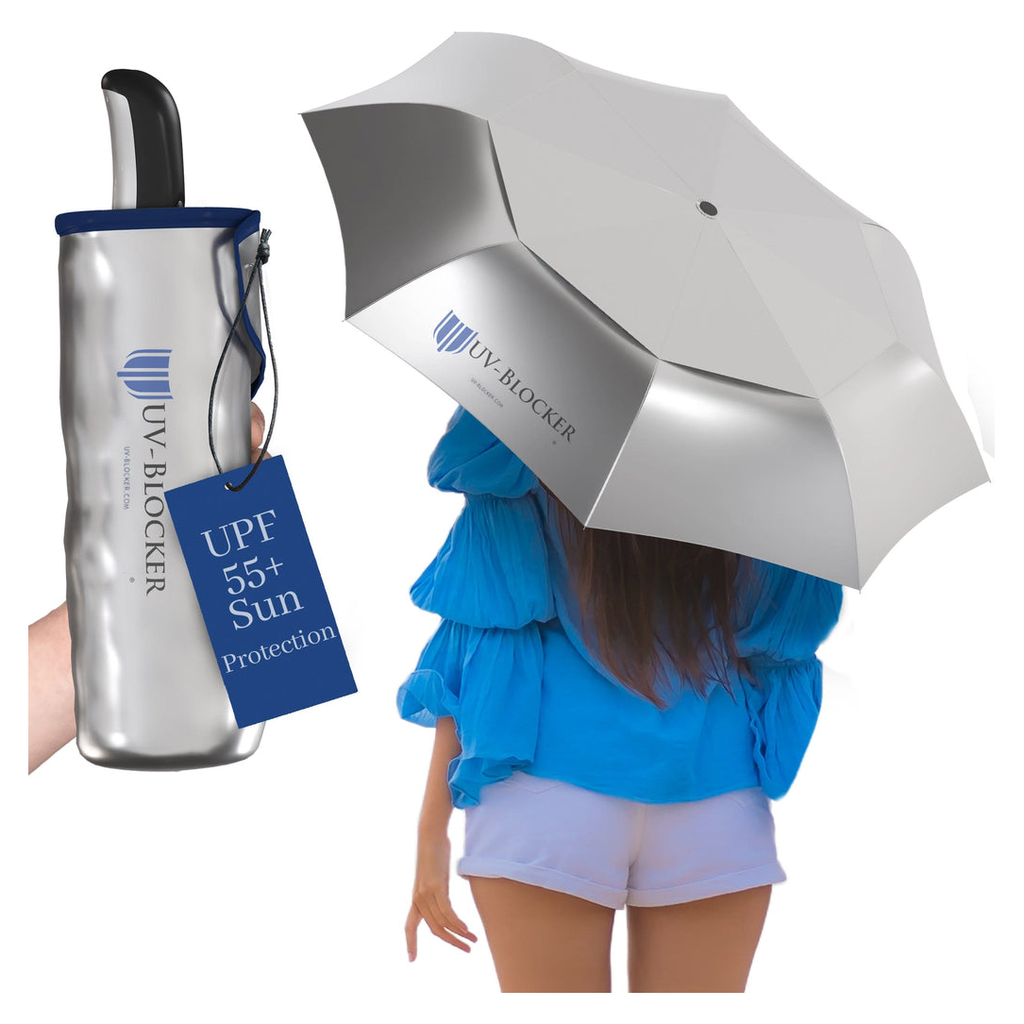
The UV-Blocker Compact Umbrella carries UPF 50+ protection verified by independent testing under the AATCC TM183-2020 standard — not just printed on the label. Testing confirmed 99.97% UV-A blockage and 100% UV-B blockage across the full canopy surface. The Solarteck® reflective coating delivers the most dramatic cooling of any brand tested: 15°F cooler under the canopy compared to direct sun. Budget umbrellas using absorptive silver coatings managed only 3–7°F.
More significantly, UV-Blocker is the only umbrella brand recommended by the Melanoma International Foundation. For anyone with skin cancer history or elevated UV risk, that medical endorsement is not marketing — it is verifiable certification from a medical organization that reviews and approves products based on their actual protective performance.
UV-Blocker products are HSA and FSA eligible as qualifying medical expenses — a further indicator of their recognized medical-grade status. The product line spans compact personal umbrellas ($59.95), large folding models ($69.95), golf umbrellas ($79.95), and travel-size options for daily commuters.
The trade-off: Premium pricing. At $49–$89, UV-Blocker costs roughly double the budget alternatives. The question is whether that premium buys meaningfully better protection — and for verified, certified, medical-grade UV blocking, the answer is yes.
Best for: Anyone prioritizing verified protection — melanoma survivors, lupus patients, those taking photosensitizing medications, fair-skinned individuals, parents protecting young children, golfers with extended outdoor exposure, and anyone who takes sun protection seriously.

G4Free: The Budget Option
G4Free dominates Amazon's UV umbrella bestseller list because they deliver an umbrella at budget pricing with a UPF 50+ label. That combination works for casual buyers who want some UV protection at an accessible price point.
What works: The silver-coated polyester canopy provides some UV protection. The double-canopy venting system prevents inversion in moderate wind. At $25–$40, the entry cost is accessible.
The trade-offs: G4Free cites no testing standard for its UPF 50+ claim. The brand lists inconsistent UV block percentages across product pages — "99.9% UVA and UVB" on some listings and "99%" on others — without naming a standardized testing protocol. The 2024 Drexel study context applies here: many budget brands print UPF numbers without independent validation.
The silver coating absorbs rather than reflects UV, creating a heat trap effect. Testing showed only 5–7°F cooling compared to UV-Blocker's 15°F. TheReviewIndex analysis of 998 reviews revealed a 64% negative reliability rating — meaning the majority of verified buyers report structural problems. Expect 1–2 seasons of regular use.
Best for: Budget-conscious buyers who want some UV protection for occasional, casual use. Not recommended for medical users who need verified protection, for golfers with extended outdoor exposure, or for daily use where durability matters.
Totes SunGuard: The Mainstream Choice
Totes is a household name in umbrellas, and their SunGuard line brings mainstream recognition to UV protection. The standout feature is wind resistance: their Titan frame system withstands winds up to 75 mph — significantly higher than most competitors claim. The NeverWet water-repellent coating makes these true dual-purpose umbrellas for both sun and rain.
What works: The SunGuard technology delivers legitimate UPF 50+ protection. Build quality at a mid-range price ($30–$55) is genuine. The 75 mph wind rating is the highest in this comparison, making Totes the best choice for exposed outdoor settings with frequent wind.
The trade-offs: No independent medical certifications or third-party UPF verification — the UPF 50+ claim is self-reported. This matters if you are buying for medical reasons. Totes is primarily a rain umbrella company; sun protection is a product line extension rather than their core expertise.
Best for: Mainstream buyers who need a recognized brand with good build quality at mid-range prices. Ideal for dual-purpose rain/sun use and for commuters who need wind resistance in exposed urban environments.
Coolibar: The Medical Reputation
Coolibar built their brand on UPF-rated clothing for the medical community. Their umbrellas carry that reputation, with a Skin Cancer Foundation recommendation that provides assurance of legitimate protection claims. Their dual-layer design (silver exterior, dark underside) reflects heat while absorbing ground-reflected UV.
The trade-offs: At $60–$80, Coolibar charges premium prices for UPF 50+ protection at moderate cooling (8°F). UV-Blocker delivers higher cooling performance and independent MIF certification at a similar price point, making Coolibar a secondary choice for buyers familiar with the brand's clothing line.
Best for: Existing Coolibar customers who want brand consistency across their UV-protective wardrobe, or those specifically seeking SCF-recommended products.
Strombergbrand: The Dual-Purpose Corporate Option
Strombergbrand's core business is promotional products. Their UV umbrellas use a 2-ply laminated canopy (colored exterior, silver UV interior) that provides UPF 50+ protection and works for both rain and sun. Solid construction with all-fiberglass frames handles everyday use.
The trade-offs: Pricing ($45–$65) sits in an awkward middle ground — more expensive than G4Free without the certifications or cooling technology of UV-Blocker. As a promotional products company, sun protection is not their primary domain.
Best for: Corporate buyers needing branded UV umbrellas for events, or individuals wanting a legitimate dual-purpose rain/sun umbrella at mid-range pricing.
Budget Options: Repel and ABCCANOPY
At the lowest price points, Repel ($20–$35) and ABCCANOPY ($8–$15) provide basic UV protection at rock-bottom prices. Both likely achieve UPF ratings in the 40–50 range based on their materials, though neither cites a named testing standard. ABCCANOPY's black glue coating showed minimal cooling (3–4°F) in testing. Expect one season of regular use at these price points.
Best for: Ultra-budget buyers testing the UV umbrella concept before committing to a premium model, or backup umbrellas for travel where loss risk is high.
UV Umbrella Comparison by Use Case
For Medical Conditions (Lupus, Skin Cancer History, Photosensitivity)
Top pick: UV-Blocker Compact Umbrella
When sun protection is medically necessary, verified claims matter more than price. UV-Blocker's MIF certification and independently tested UPF 50+ provide the confidence that self-reported budget claims cannot. The CDC recommends physical barriers as the primary sun protection method for photosensitive individuals — a UPF 50+ umbrella with verified, maximum-available UV blocking fits that recommendation directly.
For Golfers
Top pick: UV-Blocker 62" Golf Umbrella
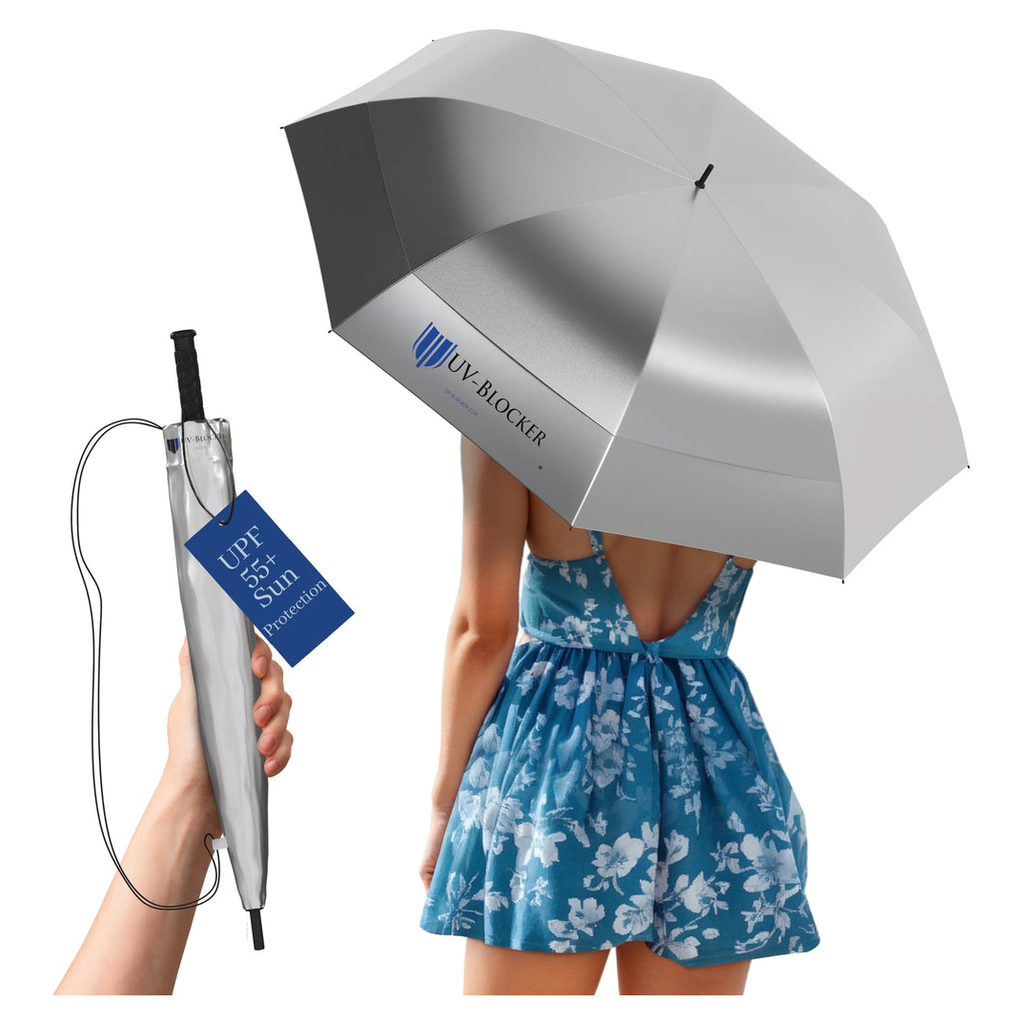
Golf requires extended outdoor exposure — often 4+ hours — plus enough coverage for your stance, bag, and waiting between shots. The 62" arc provides meaningful shade over both the golfer and equipment. The vented mesh system handles course winds without inversion. The UV-Blocker 68" Golf Umbrella is the only golf umbrella approved by the Melanoma International Foundation.
Alternative: G4Free 68" for budget-first golfers willing to accept less cooling and unverified protection.
For Travel and Daily Commuting
Top pick: UV-Blocker Travel Umbrella
Compact size and light weight matter for travel. The UV-Blocker Travel weighs under 1 lb and fits in most day bags while maintaining full UPF 50+ protection tested to AATCC TM183-2020. The auto-open/close mechanism and rubberized handle work one-handed for commuters with bags in the other hand.
For Dual Rain and Sun Use
Top pick: Totes SunGuard Premium Folding ($50)
If you need one umbrella for both sun protection and unpredictable weather, Totes makes the most sense. The NeverWet coating handles rain while SunGuard addresses UV. The 75 mph wind rating prevents inversion on windy days. Mainstream retail availability means easy replacement if needed.
Alternative: UV-Blocker Compact for commuters who prioritize maximum UV protection and do not mind using a separate rain umbrella during downpours.
For Pool and Beach Use
Top pick: UV-Blocker Large Folding 58"
Pool and beach environments amplify UV through water and sand reflection. The UV-Blocker Large Folding provides verified UPF 50+ protection across a 48–50" diameter coverage area, enough for two people. Its 1 lb 11 oz weight makes it easy to carry from lounger to water's edge. The Solarteck® coating's 15°F cooling effect is especially noticeable in full summer sun at reflective beach and pool settings.
For Budget-First Buyers
Top pick: G4Free (with realistic expectations)
If price is the primary constraint, G4Free delivers a UPF 50+ label at $25–$40. Expect limited cooling, unverified protection claims, and 1–2 seasons of useful life. For buyers who will use the umbrella occasionally and casually, this represents an acceptable entry point. Budget-conscious buyers who use the umbrella regularly should calculate the total cost of ownership over 3 years — three G4Free replacements often cost more than one UV-Blocker.

The Truth About UPF Claims: What the Science Says
The Drexel University study is the most important piece of consumer science on UV umbrella marketing. Researchers evaluated 13 brands and 37 products. Their findings:
- Only 16% of umbrella brands provide independently validated UPF data
- For handheld umbrellas specifically, only 20% carry verified validation
- UPF claims "favor promotional over scientific framing"
- Many brands print UPF 50+ without citing testing standards, laboratories, or methods
What this means for buyers: not all "UPF 50+" claims are equal. A brand printing a number on packaging and a brand with independent laboratory results and a medical organization endorsement are making very different statements. When comparing UV umbrella brands, look for independent certification, named testing standards, and medical organization recommendations. Ignore UPF claims that lack any of these supporting evidence points.
The study also underscores that a UV umbrella is part of a protection strategy, not a replacement for sunscreen. A UPF 50+ umbrella blocks the primary overhead UV vector. Sunscreen covers reflected and scattered UV from surrounding surfaces. Both layers are needed for complete protection in outdoor environments.
Frequently Asked Questions About UV Umbrella Brands
Is UV-Blocker worth the extra cost vs G4Free?
For most people, yes. The 15°F cooling difference is dramatic in practice — standing under UV-Blocker feels significantly cooler than G4Free on a hot day. For regular use over a summer, that comfort difference compounds substantially. For medical conditions requiring verified protection, the comparison is not even close: UV-Blocker's MIF certification matters when accurate UV blocking is a health necessity. For occasional, casual use, G4Free provides some protection at a lower entry cost.
Do all UPF 50+ umbrellas provide the same protection?
No. In theory, UPF 50+ means blocking 98% of UV radiation. In practice, the Drexel study shows many claims lack independent verification. UPF also only measures the fabric — not coverage area, reflected UV from surrounding surfaces, or heat radiation. UV-Blocker's independently tested UPF 50+ (with 99.97% UVA and 100% UVB block under AATCC TM183-2020) provides higher verified protection than a self-reported UPF 50+ label.
What is the difference between a reflective and absorptive UV coating?
Reflective coatings (like Solarteck®) bounce UV and infrared radiation away from the umbrella, creating measurably cooler shade below the canopy — up to 15°F cooler in verified testing. Absorptive coatings trap UV energy in the fabric, which then radiates as heat downward toward the user. The practical result is that absorptive-coated umbrellas create hot shade, while reflective-coated umbrellas create cool shade. For extended outdoor use, this is a significant comfort and health difference.
Can I trust Amazon UV umbrella reviews for protection claims?
Amazon reviews are useful for identifying quality problems (structural failure, false advertising) but unreliable for verifying UV protection performance. Most reviewers cannot independently measure UPF. Look for reviews that describe real-world use over multiple seasons, mention specific medical conditions or sun sensitivity, or include before-and-after comparisons with sunburn frequency. Ignore general "works great" reviews when evaluating UV-specific performance.
Which UV umbrella brand has the best wind resistance?
Totes SunGuard claims the highest formal wind resistance rating at 75 mph for their Titan frame models. UV-Blocker uses fiberglass ribs and a patented Vented Mesh System that allows wind to pass through rather than building pressure — a functional wind resistance approach that handles typical outdoor gusts without inversion. G4Free's double-canopy vent design provides moderate wind resistance adequate for calm to moderate conditions.
Are UV umbrellas covered by HSA or FSA?
UV-Blocker umbrellas are HSA and FSA eligible as qualifying medical expenses. This makes them accessible to buyers using pre-tax medical savings accounts, effectively reducing the out-of-pocket cost by 20–37% depending on the buyer's tax bracket. Check your specific plan administrator for confirmation, as eligibility can vary by plan.
Which brand has the best warranty for UV umbrellas?
UV-Blocker and Repel both offer lifetime or 1-year limited warranties. UV-Blocker's warranty is backed by a company whose entire business is sun protection. Repel is primarily a rain umbrella company that added UV options. Coolibar, G4Free, and Strombergbrand offer standard 1-year warranties. ABCCANOPY's 90-day warranty reflects their ultra-budget positioning and expected product lifespan.
The Bottom Line on UV Umbrella Brands
This UV umbrella comparison comes down to a simple question: how seriously do you take sun protection, and what are the stakes if it fails?
For medical necessity or serious protection: UV-Blocker is the clear choice. The independently tested UPF 50+ rating, Melanoma International Foundation endorsement, and 15°F cooling performance justify the premium pricing. When skin health is at stake, verified protection matters more than saving $30.
For dual rain/sun use or commuting: Totes SunGuard offers the best wind resistance and dual-purpose functionality at mid-range prices. Its 75 mph wind rating makes it the most durable option for exposed urban environments.
For budget-conscious buyers: G4Free delivers a UPF 50+ label at accessible prices. Accept the cooling limitations, unverified claims, and reduced lifespan as the trade-offs for lower upfront cost. Reconsider after one season once you know how frequently you use the umbrella — the calculation may favor a UV-Blocker at that point.
The Skin Cancer Foundation reports that 1 in 5 Americans will develop skin cancer by age 70. A quality UV umbrella is one component of a protection strategy that should also include sunscreen, protective clothing, and shade-seeking behavior during peak UV hours (10 a.m. to 4 p.m.).