

U.S. emergency departments treated 119,605 heat-related illness visits in 2023. Ninety-two percent landed between May and September.
Heat exhaustion and heat stroke share several early symptoms, but the correct response for each is different. One calls for shade and water. The other demands a 911 call within minutes. Confusing them delays treatment that saves lives.
This guide covers what the CDC says about both conditions, the exact first aid for each, and a prevention angle most medical articles mention but never quantify: how much measurable cooling real shade provides.
What Is the Difference Between Heat Stroke and Heat Exhaustion?
Heat exhaustion means the body is overheating with heavy sweating and weakness. Heat stroke is a medical emergency at 103°F or higher with altered mental status requiring immediate 911 response.
Both conditions sit on the same spectrum. Heat exhaustion is the body struggling to cool itself but still functioning. Heat stroke is the point where the cooling system fails.
The CDC defines the symptoms of each condition with clear distinctions:
| Feature | Heat Exhaustion | Heat Stroke |
|---|---|---|
| Body temperature | May be normal or mildly elevated | 103°F or higher |
| Sweating | Heavy | May be dry or damp |
| Skin | Cold, pale, clammy | Hot, red |
| Pulse | Fast, weak | Fast, strong |
| Mental state | Alert (may feel dizzy or faint) | Confused, disoriented, seizures, unconscious |
| Severity | Serious | Life-threatening emergency |
| First response | Move to shade, cool, hydrate | Call 911 immediately |
One detail gets lost in most guides. The CDC lists heat stroke skin as "hot, red, dry, or damp." Many sources incorrectly teach that sweating stops during heat stroke. That is not always true, especially with exertional heat stroke. Athletes and outdoor workers can develop heat stroke while still sweating.
The defining signal is altered mental status. If someone goes from feeling dizzy and tired to becoming confused, slurring words, or losing consciousness, that is heat stroke. Call 911.

What Should You Do for Heat Exhaustion vs Heat Stroke?
Heat exhaustion requires shade, cool cloths, and sipping water. Heat stroke requires an immediate 911 call and aggressive cooling. Do not give a heat stroke victim anything to drink.
These two conditions call for opposite responses on fluids, and getting it wrong is dangerous.
Heat Exhaustion First Aid
- Move to a cool place out of direct sun.
- Loosen clothing to help the body release heat.
- Apply cool, wet cloths to the skin, or take a cool bath.
- Sip water slowly.
- Get medical help immediately if vomiting occurs, symptoms worsen, or symptoms last longer than one hour.
Heat Stroke First Aid
- Call 911 right away. Heat stroke is a medical emergency.
- Move the person to a cooler place.
- Cool the body aggressively with cool cloths, a cool bath, or ice packs on the neck, armpits, and groin.
- Do NOT give the person anything to drink. This is the CDC's explicit instruction for heat stroke, regardless of whether the person is conscious.
When to escalate from heat exhaustion to 911: If someone being treated for heat exhaustion becomes confused, develops slurred speech, has a seizure, or loses consciousness, call 911 immediately. These signs indicate heat exhaustion has progressed to heat stroke.
Every year, heat kills an average of 702 Americans, according to the CDC. Recognizing the transition point between exhaustion and stroke, and knowing when to shift from water to 911, is the most critical piece of this puzzle.
Why Does Every Doctor Recommend Shade but No One Explains What Kind?
CDC, OSHA, and the AAD all recommend shade for heat prevention, but none specify what shade works best. Not all shade provides equal cooling or UV protection.
OSHA's Water. Rest. Shade. framework treats shade as one of three pillars of heat illness prevention. Five states have codified their own heat standards, and OSHA is currently pursuing a federal heat rule, though no final standard has been issued as of 2026.
The problem is that "seek shade" is incomplete advice. Tree canopy effectiveness varies from under 50% UV reduction to over 90%, depending on species, density, and season. A thin-leafed tree on a suburban sidewalk provides far less protection than a dense oak in a park.
A building overhang blocks direct sun from above but does nothing about radiant heat reflecting up from pavement. A standard umbrella cuts some solar radiation. A UV-protective umbrella with a reflective coating does measurably more.
The difference between "some shade" and "engineered shade" has been quantified. The results are worth looking at.
How Much Cooler Is It Under a UV-Protective Umbrella?
A field experiment by Auburn University researchers found UV-protective umbrellas are 4.89°F cooler than direct sun and 1.79°F cooler than a standard umbrella.
Prof. Chandana Mitra and doctoral student Brandon Ryan from Auburn's Department of Geosciences measured air temperature under three conditions: direct sun, a standard umbrella, and a UV-protective umbrella. They used iButton temperature sensors placed at body level.
The results:
- UV-protective umbrella: 4.89°F cooler than direct sun
- Standard umbrella: 3.10°F cooler than direct sun
- Difference between umbrella types: 1.79°F
Infrared imaging from the same experiment showed clothing under an umbrella ran about 8°F cooler after 30 minutes of sun exposure. The reflective surface rejected more thermal energy before it reached the person underneath.
Japanese researchers published peer-reviewed findings supporting this data. Kusaka et al. (2022) in the Journal of the Meteorological Society of Japan found that UV parasols cut the WBGT heat stress index by 1.3°C versus direct sun. That delivered roughly 75% of the cooling benefit of street tree shade on the UTCI thermal comfort index.
Japan takes this data seriously at the policy level. The Ministry of the Environment officially promotes parasol use for heat stroke prevention regardless of gender. Their campaign, launched in 2019 with 79 companies and 201 retail locations, found parasol use cut perspiration roughly 17% compared to a hat alone. Combined with light clothing, the heat stress reduction reached about 20%.
When a national government recommends umbrellas as heat safety infrastructure, that is data worth paying attention to.
How Does Reflective Shade Prevent Heat Illness?
Reflective coatings bounce infrared heat radiation away instead of absorbing it, reducing the thermal load reaching the body and slowing the path toward heat exhaustion.
Solar radiation hits the body in three forms: ultraviolet (causes sunburn), visible light, and infrared (causes heat). A dark-colored umbrella or canopy absorbs infrared radiation and re-emits heat downward toward the person underneath. A reflective coating bounces that infrared energy away before it reaches the body at all.
That explains the nearly 2°F difference Auburn researchers measured between a UV-protective umbrella and a standard one. The reflective surface rejects more infrared energy per square foot.
UV-Blocker's Solarteck coating reflects both UV and infrared radiation. AATCC TM183-2020 testing confirms UPF 50+ protection: 100% UV-B block and 99.97% UV-A block. The silver reflective exterior handles the infrared component, reducing thermal load alongside UV exposure.
For outdoor workers subject to OSHA's heat safety framework, athletes training through summer, and anyone without reliable access to buildings or tree cover, a portable UV-reflective umbrella fills the shade gap that fixed structures cannot.
This is not a claim that an umbrella prevents heat stroke. It is a measurable reduction in thermal load, which is one component of a prevention strategy that also requires hydration, rest, and monitoring.
Who Is Most at Risk for Heat Illness?
Outdoor workers, athletes, adults over 65, young children, and people taking certain medications face the highest risk of heat exhaustion and heat stroke.
The CDC identifies several groups with elevated vulnerability:
- Children under 4 years old have a higher surface-area-to-mass ratio, making them heat up faster.
- Adults 65 and older have reduced sweating capacity and are more likely to take medications that interfere with thermoregulation.
- People who are overweight generate more metabolic heat during activity.
- People on certain medications may have compromised cooling ability.
The medication risk is underrecognized. The CDC's clinical guidance flags several drug classes:
- Diuretics cause dehydration and reduce thirst sensation.
- Beta-blockers reduce blood vessel dilation and decrease sweating.
- Anticholinergics impair sweating and disrupt thermoregulation.
Other flagged classes include ACE inhibitors, antipsychotics, SSRIs, NSAIDs, lithium, and stimulants. Anyone taking these medications should discuss heat safety with their prescriber before spending extended time outdoors in summer.
Occupational data underscores the risk for workers. CDC emergency department data shows males experience heat-related illness at 2.7 times the rate of females, driven largely by outdoor occupational exposure in construction, agriculture, roofing, and HVAC work.
Seniors face a compounded risk: age-related sweating decline, higher medication rates, and social isolation that delays help when symptoms appear.
How Do You Build a Heat Illness Prevention Plan?
A heat illness prevention plan combines hydration, acclimatization, work-rest cycles, symptom monitoring, and reliable shade access wherever buildings and trees are not available.
Hydration
Drink water before feeling thirsty. OSHA recommends one cup (8 oz) every 15 to 20 minutes during outdoor work or exercise in heat. Avoid alcohol and caffeine, which increase dehydration risk.
Acclimatization
Gradually increase heat exposure over 7 to 14 days. Workers and athletes returning from time off need a structured ramp-up. Full acclimatization reduces heat illness risk significantly, but the body loses its heat adaptation within a few weeks of reduced exposure.
Work-Rest Cycles
Take breaks in shade every 30 to 60 minutes during high-heat activity. As temperature and humidity rise, rest periods should get longer. OSHA's guidelines scale rest time to heat index level.
Shade Access
This is the most practical gap in most prevention plans. Buildings and trees are not available at a soccer field sideline, a rooftop job site, a beach, or a hiking trail. A portable UV-reflective umbrella provides on-demand shade that Auburn University data measured at 4.89°F cooler than direct sun.
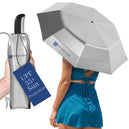
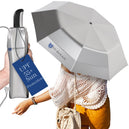
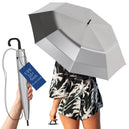
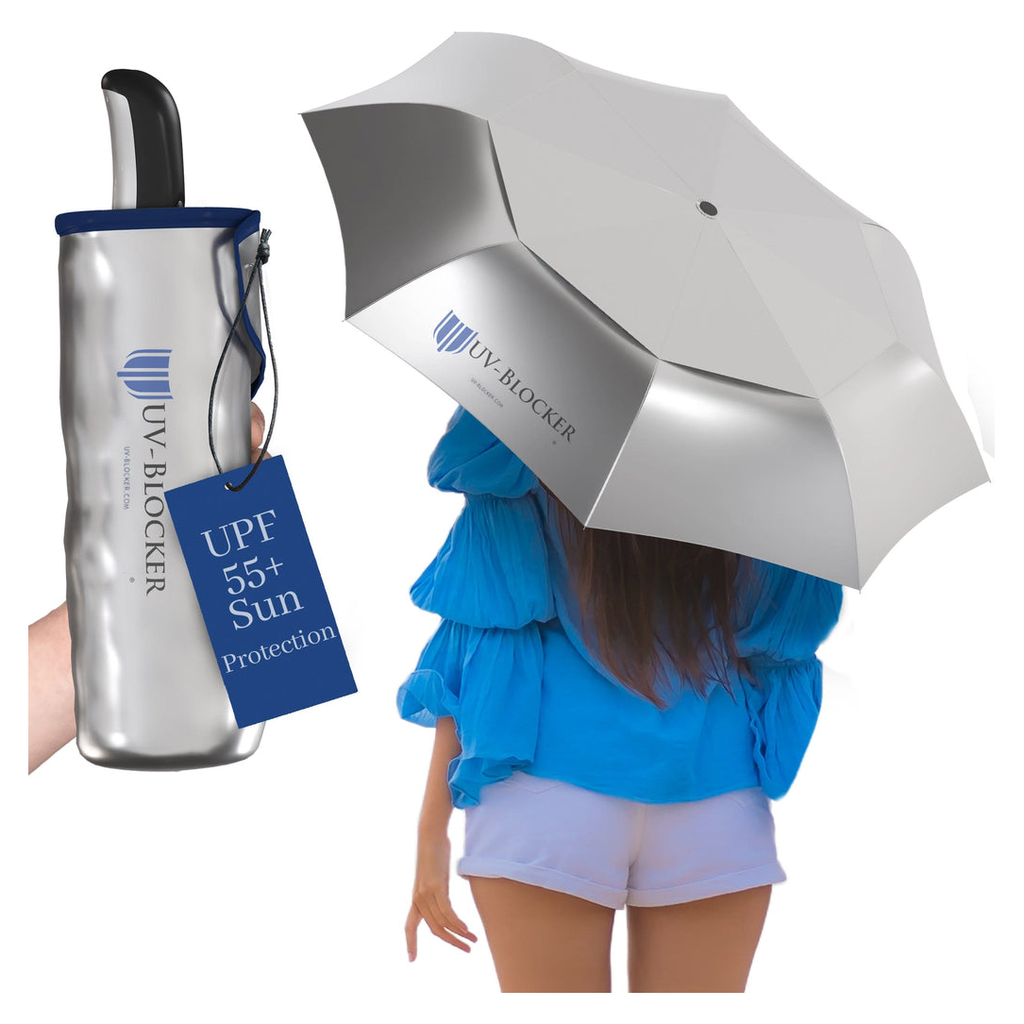
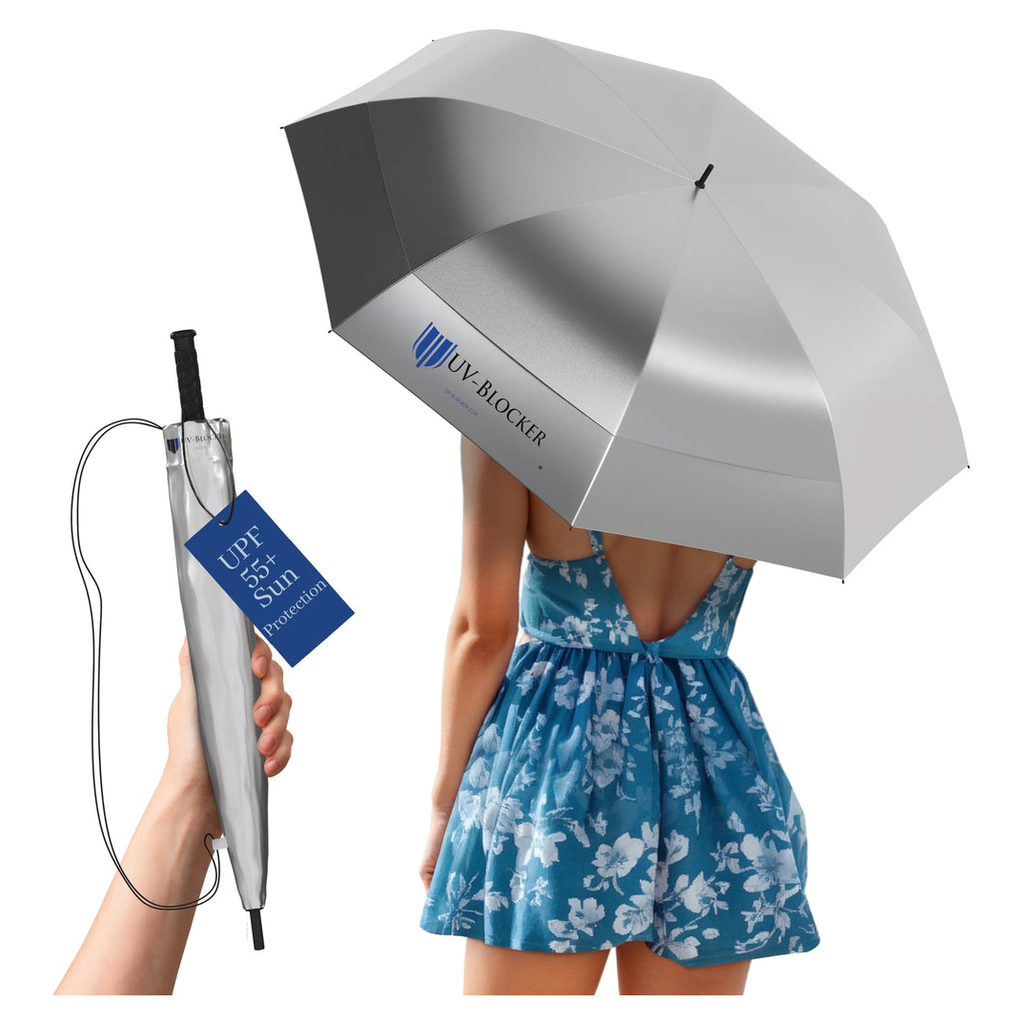
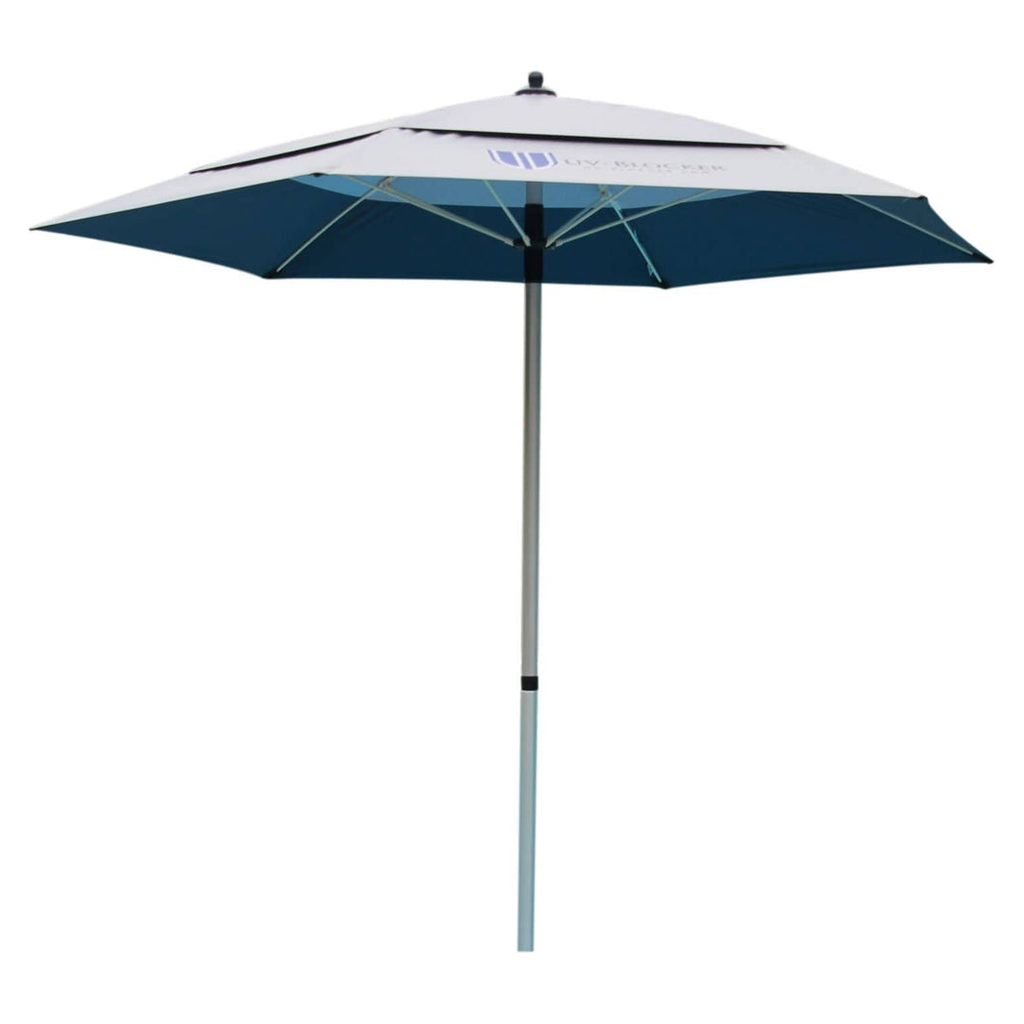
The UV-Blocker compact umbrella fits in a bag for personal shade. The large beach umbrella covers a group at outdoor events and sports. Both use the Solarteck reflective coating that rejects infrared heat alongside UV radiation.
Monitoring
Watch for early heat exhaustion signs: heavy sweating, weakness, dizziness, nausea. Act immediately by moving to shade, hydrating, and resting. If confusion or high body temperature develops, call 911.
Know When to Stop
When the heat index exceeds 103°F, outdoor activity becomes dangerous for everyone. CDC recommends limiting outdoor exertion during heat advisories. No hydration plan or shade tool replaces the decision to go indoors when conditions turn extreme.
Frequently Asked Questions About Heat Stroke vs Heat Exhaustion
These are the most common questions about heat stroke vs heat exhaustion, answered with CDC guidance and current research.
Can you get heat stroke in the shade?
Yes. Shade reduces heat load but does not eliminate it. High humidity, dehydration, and physical exertion can cause heat stroke even in shaded areas. Shade is one layer of prevention, not a guarantee.
How hot is too hot for outdoor activity?
CDC guidance suggests limiting outdoor exertion when the heat index reaches 103°F or higher. A heat index of 103°F can occur at 90°F air temperature with 60% humidity. The heat index, not the thermometer reading, is the number that matters.
Does humidity matter more than temperature for heat illness?
Humidity can be more dangerous than temperature alone because it prevents sweat from evaporating. Evaporation is the body's primary cooling mechanism. The wet bulb globe temperature (WBGT) accounts for humidity, radiant heat, and air movement together. OSHA and military heat guidelines use WBGT rather than air temperature alone.
How much cooler is it under an umbrella?
An Auburn University field experiment measured 4.89°F cooler under a UV-protective umbrella and 3.10°F cooler under a standard umbrella versus direct sun. Japanese research found parasols cut the WBGT heat stress index by 1.3°C. Reflective coatings provide additional cooling by bouncing infrared heat away.
Can heat exhaustion happen on cloudy days?
Yes. Clouds block some solar radiation but not heat or humidity. Heat exhaustion can occur on overcast days when temperatures are high and physical exertion is sustained. Up to 80% of UV radiation still penetrates cloud cover.
How long does heat exhaustion last?
Heat exhaustion symptoms typically improve within 30 minutes to one hour with proper cooling, shade, and hydration. The CDC recommends seeking medical attention if symptoms worsen, last longer than one hour, or if the person vomits.
Conclusion
Heat stroke vs heat exhaustion comes down to three things: recognizing the symptoms, knowing the right first aid response, and having a prevention plan before either condition starts.
The symptoms diverge at altered mental status. If a person goes from tired and sweaty to confused or unresponsive, that is heat stroke, and 911 needs to happen now. CDC first aid for heat stroke says no fluids at all, which is the opposite of heat exhaustion treatment.
Prevention is where most guides stop too early. "Seek shade" is good advice, but shade quality varies enormously. Auburn University measured a 4.89°F temperature difference between a UV-protective umbrella and direct sun. Japan's government recommends parasols as official heat stroke prevention infrastructure. The data supports what intuition suggests: better shade means less heat reaching the body.
One thing to do today: Check whether any medications you or your family members take appear on the CDC's heat-risk medication list. Many people do not know their prescriptions increase heat illness vulnerability.
For portable shade that measurably reduces heat load, explore the UV-Blocker umbrella collection. Every model uses the Solarteck reflective coating tested to block 99.97% of UV-A and 100% of UV-B, with the infrared reflection that makes the temperature difference the Auburn researchers measured.
Frequently Asked Questions
What is the difference between UVA and UVB rays, and why does it matter?
UVA rays (320–400nm) are longer waves that penetrate deep into the skin, causing photoaging, wrinkles, and contributing to melanoma. They pass through glass and clouds and are relatively constant year-round. UVB rays (290–320nm) are shorter, cause sunburn, and are the primary driver of skin cancer. They're most intense midday (10am–4pm) and in summer. Effective sun protection must block both.
How effective is a UPF 50+ umbrella compared to sunscreen alone?
A UPF 50+ umbrella blocks 99%+ of direct overhead UV — more reliable than sunscreen because it doesn't require reapplication, doesn't wash off with sweat, and provides consistent protection. However, reflected UV from surfaces still reaches skin under an umbrella. The ideal combination is SPF 50+ sunscreen + UPF 50+ umbrella for 95–99% total UV reduction. UV-Blocker's umbrellas are dermatologist-recommended for this purpose.
What time of day poses the highest UV risk?
UV radiation is highest between 10am and 4pm, peaking around noon in most locations. The UV Index is the most accurate measure — when it reaches 6 or above, unprotected skin can begin to burn in as little as 15 minutes. Cloud cover reduces UV intensity but doesn't eliminate it: 80% of UV penetrates light cloud cover.
Does skin tone affect UV damage risk?
All skin tones are affected by UV radiation, but the risk and presentation differ. People with lighter skin (Fitzpatrick types I–III) burn faster and have higher non-melanoma skin cancer rates. People with darker skin (types IV–VI) are more prone to hyperpigmentation and have a higher risk of melanoma being diagnosed at later stages. Sun protection is essential for every skin tone.
What are early warning signs of skin cancer I should watch for?
Use the ABCDE rule for moles: Asymmetry, Border irregularity, Color variation, Diameter larger than 6mm, and Evolving (any change over time). Also watch for sores that don't heal, new pink or pearly bumps, and flat red or pink patches. Annual dermatologist screenings are recommended for anyone with significant sun exposure history or a family history of skin cancer.
Expert Sun Protection Recommendations
- Check the daily UV Index at weather.gov or a UV app before any extended outdoor activity
- Apply SPF 30+ broad-spectrum sunscreen 30 minutes before going outdoors, not right before sun exposure
- Reapply sunscreen every 2 hours and after swimming or heavy sweating
- Use a UPF 50+ umbrella for hands-free shade during outdoor dining, sports, or work
- Wear UV-blocking sunglasses that block 99–100% of UVA and UVB — eyes are vulnerable to UV-related damage
- Annual skin screenings with a board-certified dermatologist can catch early-stage skin cancers when highly treatable