
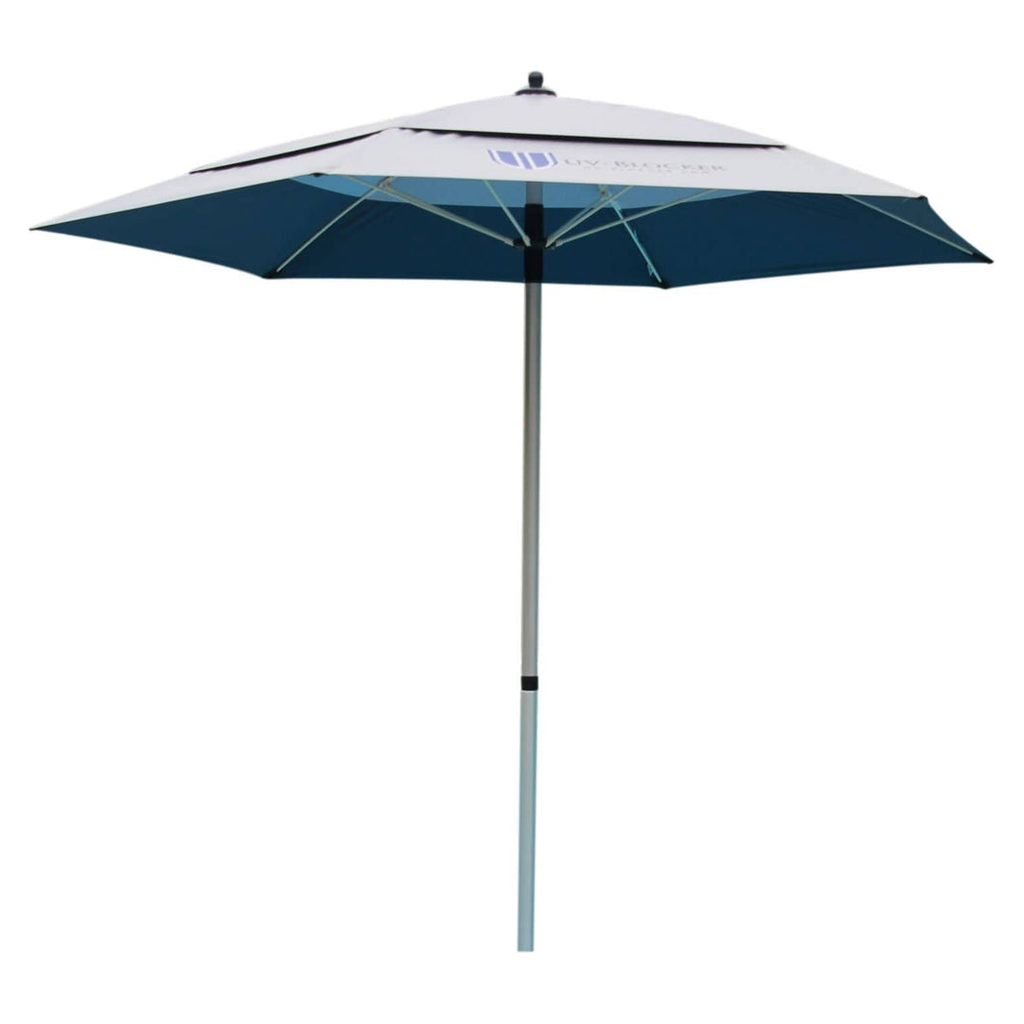

The word "parasol" literally translates to "shield from sun", derived from the Italian parare (to shield) and sole (sun). Yet in a twist of linguistic irony, most parasols sold today do not protect the user from ultraviolet radiation. Conversely, "umbrella" comes from the Latin umbra (shadow). Modern consumers associate it almost exclusively with rain, despite UV umbrellas being the most effective tool for creating a portable shadow that blocks 99% of UV rays. The naming conventions are effectively backwards.
For shoppers, the parasol vs umbrella debate creates dangerous confusion. Many face a choice between decorative items that offer little more than visible shade and utilitarian rain gear lacking style. A decorative parasol might provide a false sense of security. It allows damaging UV radiation to penetrate the fabric while the user believes they are shielded. This is not merely a matter of semantics. With skin cancer rates rising globally, the difference between a prop and a protective tool is a health imperative.
This guide traces the history of these devices, breaks down the technical differences, and analyzes the science of UV protection. Understanding the distinction helps ensure a purchase based on validated UPF science rather than marketing labels.
Parasol, rain umbrella or sun umbrella — what's actually different
The names suggest one thing and the fabric does another. Here is what each type actually does.
| Feature | Traditional Parasol | Rain Umbrella | UV Sun Umbrella |
|---|---|---|---|
| Primary Purpose | Sun shade (visible light) | Rain protection | UV radiation blocking |
| Typical Materials | Cotton, lace, silk, paper | Waterproof nylon/polyester | UPF-rated reflective fabric |
| UV Protection | Variable (50-80%) | Minimal-moderate (50-90%) | 98-99%+ (UPF 50+) |
| Waterproof | No | Yes | Usually yes |
| Frame Strength | Light/decorative | Moderate | Wind-resistant |
| Style | Fashion-forward | Utilitarian | Varies (utilitarian to fashion) |
The practical takeaway: if the word on the label is the only thing you have to go on, you have no information. The number that matters is the UPF rating, and most decorative parasols do not have one.
What Is the Difference Between a Parasol and an Umbrella?
A parasol blocks sunlight while an umbrella is engineered for rain. The distinction traces back 4,000 years, though modern usage has blurred the line.
"Parasol" is a direct compound of words meaning "sun shield," while "umbrella" is rooted in "shadow." It is a surprising reversal that the sun-shielding parasol is the original invention, while the rain umbrella is a relatively recent adaptation in Western history.
Historically, the parasol appears in artifacts dating back millennia. Egyptian tomb art from the 5th Dynasty (c. 2450 BC) depicts royalty being shaded by fans and parasols. These were status symbols reserved for pharaohs and the divine, crafted from palm fronds, feathers, and stretched papyrus. In China, parasol technology dates to roughly 3500 BC. Craftsmen utilized bamboo frames covered with animal skins or silk. Waterproofing techniques using wax on paper followed approximately 500 years later.
Excavations at Luoyang have revealed complex bronze socketed hinges from the 6th century BC. This proves the collapsible canopy was mastered long before it reached Europe. In Assyria, palace reliefs from the reign of Ashurnasirpal II (884-859 BC) show the king standing under a parasol held by an attendant, artifacts now housed in the British Museum.
For most of history, the handheld canopy was exclusively a sun-protection device. The rain umbrella only became dominant in English culture around 1750. Today, the terms are often used interchangeably, but the structural differences remain significant.
Traditional parasols focus on aesthetics using cotton, lace, or silk. These materials often lack the density to block invisible ultraviolet radiation. Rain umbrellas prioritize waterproofing by using nylon that offers incidental protection but traps heat. The modern UV sun umbrella represents a third category, engineered to block radiation while often incorporating stylistic elements. Readers interested in the physics can explore how umbrella fabrics block UV for a deeper technical analysis.
Does it actually matter which one you carry? The data suggests the difference is substantial.
How Much UV Protection Does a Parasol vs Umbrella Actually Provide?
Traditional parasols block 50-80% of UV depending on fabric and color. UPF 50+ sun umbrellas block over 98%. That gap separates tanning from real protection.
Shadow indicates the blockage of visible light. Ultraviolet radiation, however, can penetrate fabrics that appear opaque to the eye. Research has consistently shown a wide variance in the protective capabilities of handheld umbrellas.
A 2013 study by McMichael et al. in JAMA Dermatology tested 23 handheld umbrellas on a cloudless day with a UV index of 8. The worst performer (a standard white rain umbrella) blocked only 77% of UV radiation. On the other end, a silver sun-specific umbrella blocked 99%. Standard black rain umbrellas consistently blocked over 90%. They performed better than white ones but still fell short of specialized solar protective fabrics.
The practical implication was tested in a 2017 JAMA Dermatology clinical trial by Luo et al. involving 81 participants. The study compared beachgoers using only an umbrella against those using only sunscreen over 3.5 hours of midday sun exposure. The results were stark. 78% of umbrella-only users experienced sunburn in one or more body sites, compared to 25% of sunscreen-only users. The umbrella group had 142 sunburn incidences versus just 17 in the sunscreen group. A regular umbrella alone is often insufficient because of scattered radiation from surfaces like sand and water, combined with fabric transmission of UV rays that the eye cannot detect.
100% claimed UPF 50+. Only 2–10% could prove it.
A 2024 review of 37 umbrella products across 13 brands found that every handheld model claimed UPF 50+ protection — but only a fraction provided validated testing data from an accredited laboratory. The label is not the evidence.
The Validation Problem
A 2024 study published in PMC evaluated 37 umbrella products across 13 brands, including 10 handheld, 8 beach, and 19 patio models. While 100% of the handheld umbrellas claimed "UPF 50+" protection, only 2-10% provided validated testing data from accredited laboratories. This reveals a marketplace saturated with unverified marketing. A label saying "Parasol" or "UV Protection" is often decorative text rather than a certification backed by actual testing.
Color also plays a role. Darker colors like black absorb more UV than lighter colors, but absorption leads to heat buildup. The most effective solution is a reflective silver coating. This bounces radiation away rather than absorbing it, keeping the user cooler. (Check what color umbrella is best for sun protection for more details).

The gap between a decorative parasol and a UPF 50+ sun umbrella is 20–50 percentage points of UV. That is the difference between shade you can see and protection you can measure.
These numbers raise a question. If UPF ratings cannot be trusted at face value, what should consumers look for?
What Do UPF Ratings Mean for Sun Umbrellas?
UPF measures how much UV passes through fabric. UPF 50 blocks 98% of UV rays, UPF 50+ blocks over 99%. Unlike SPF, UPF covers both UVA and UVB.
While SPF measures protection against UVB rays (burning) for liquids, UPF is the standard for fabrics. It measures transmission of both UVA (aging) and UVB rays.
The UPF scale is logarithmic. UPF 15 offers "Good" protection, blocking 93.3% of UV. UPF 30 is "Very Good," blocking 96.7%. The gold standard, UPF 50, blocks 98% of all UV radiation. This allows only 1/50th of the rays to penetrate.
UPF Ratings Reference Table
| UPF Rating | UV Blocked | Protection Category | What Passes Through |
|---|---|---|---|
| UPF 15 | 93.3% | Good | 1 in 15 UV rays |
| UPF 30 | 96.7% | Very Good | 1 in 30 UV rays |
| UPF 50 | 98.0% | Excellent | 1 in 50 UV rays |
| UPF 50+ | >98.0% | Excellent (Max) | <1 in 50 UV rays |
The jump from UPF 50 to UPF 50+ is critical. A UPF 50 fabric transmits 2% of UV radiation. UPF 50+ transmits less than 1%. This effectively cuts the radiation dose in half. For individuals with photosensitivity or lupus, this margin is meaningful.
Reliability is key. Validated products are tested against standards like ASTM D6544 (US), AS/NZS 4399 (Australia/NZ), or EN 13758 (Europe). These protocols subject fabric to simulated wear before measuring UV transmission. A product citing these standards provides assurance that a generic tag cannot. See UPF 50+ explained to understand the rating system fully.
With this knowledge, the parasol vs umbrella question gets a clearer answer.

Should You Buy a Parasol or a UV Umbrella?
Choose a decorative parasol only for events where UV protection is secondary. For actual sun safety, a UPF-rated UV umbrella delivers verified protection.
The decision depends on the primary goal. Is it to complete an outfit, or to preserve skin health?
For weddings, costume parties, or reenactments, a traditional parasol is appropriate. Here, the lace or silk construction serves a visual purpose, and sun protection is secondary. However, for daily life (commuting, sports, or travel) a UPF 50+ UV umbrella is superior. These environments require a device that withstands wind and provides measurable defense. Travelers benefit from the compact engineering of modern umbrellas, which fold to fit in a bag. This feature is rarely found in traditional parasols.
The Best of Both Worlds: The Fashion UV Umbrella, a Modern Parasol
Consumers no longer need to choose between a "medical" gadget and an ineffective lace parasol. The "Fashion UV Umbrella" category bridges this gap. These products retain the classic parasol silhouette (often with a crook handle) but use high-tech fabrics.
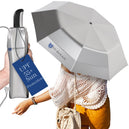
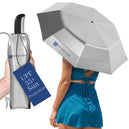
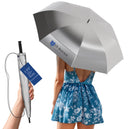
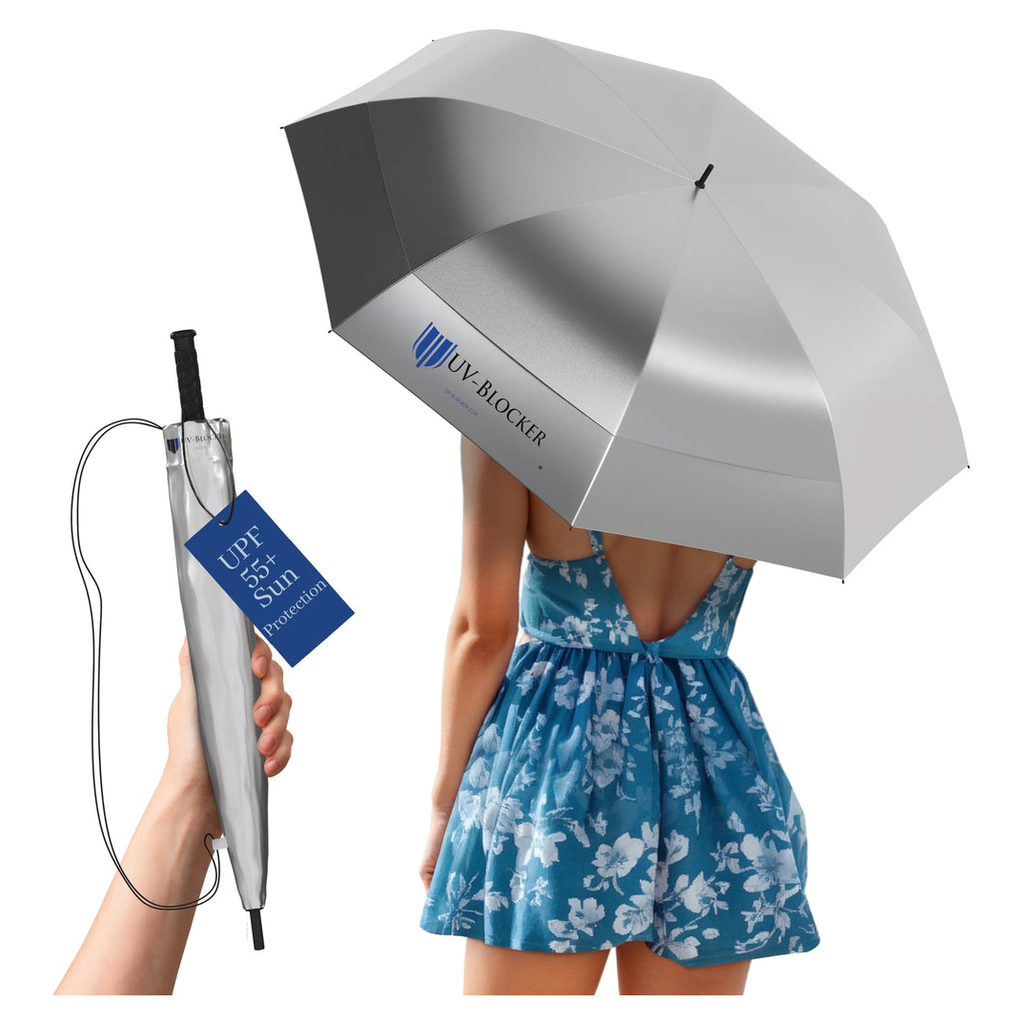
The Fashion UV Umbrella, a modern parasol, is one such example. It utilizes patented Solarteck fabric, infused with titanium dioxide to reflect 99% of UV rays (UPF 50+). It pairs the classic J-handle with a wind-vented double canopy. This demonstrates that style and durability are not mutually exclusive.
Beyond UV protection, this fabric technology also addresses heat. The reflective nature of the Solarteck material can lower the temperature under the canopy by up to 15°F (8°C). This provides a tangible comfort benefit that a standard cotton parasol or black nylon umbrella cannot match. The "Fashion UV" option is safer and significantly cooler in direct sunlight.
Buyer's Checklist for Sun Protection
- UPF 50+ Rating: Ensure the product explicitly states UPF 50+ or higher.
- Reflective Material: Silver or light-colored outer coatings reflect heat better than dark fabrics.
- Wind Resistance: Look for fiberglass ribs or vented canopies.
- Size and Coverage: A larger arc (48 inches+) provides a wider cone of protection.
Explore the full UV Protection Umbrellas Collection to find a model that fits specific needs.
The Fashion UV Umbrella meets all four: verified UPF 50+, silver reflective Solarteck® canopy, wind-vented double canopy and a 48-inch arc.
What Does the Parasol vs Umbrella Choice Mean in Australia?
In Australia the word is parasol, and the stakes are higher: only a canopy with a verified UPF rating counts as real shade under Australian UV.
Australians say parasol where Americans say sun umbrella. Shoppers here search for parasols, retailers stock parasols, and both words point at the same object. The trap travels with the vocabulary. A parasol label promises sun protection it has never been required to prove.
Why the margin for error is smaller in Australia
Australia carries the heaviest UV burden of any developed country. Drawing on International Agency for Research on Cancer data, Cancer Council Australia reports that Australia had the world's highest age-standardised melanoma incidence rate in 2020, at 36.6 per 100,000, around two to three times the rates recorded in Canada, the United States and the United Kingdom. Cancer Council also states that at least 2 in 3 Australians will be diagnosed with skin cancer in their lifetime.
The daily threshold is lower than most people assume. Cancer Council advises following the five SunSmart steps whenever the UV Index reaches 3 or above, and notes that just 15 minutes of unprotected exposure at that level is enough to start causing skin damage. One of those five steps is to seek shade, especially during peak UV hours, usually between 10 am and 4 pm. The SunSmart Global UV app pairs live UV data from ARPANSA with Bureau of Meteorology forecasts, so the local figure is a measurement rather than a guess.
That is where a parasol earns its keep in Australian conditions. A UPF 50+ canopy is the seek-shade step made portable. It comes to the school pickup, the sideline, the ferry queue and the walk across a car park, where built shade is rarely on offer. It does not replace sunscreen, a hat or sleeves. It is the shade layer, available on demand.
The standard an Australian buyer should look for
Australian and New Zealand shoppers have one advantage that American shoppers do not: a local test standard. AS/NZS 4399 sets out how UPF in fabric is measured and labelled in Australia and New Zealand. A canopy tested to AS/NZS 4399 has a measurement behind the claim. A parasol that only says "sun protection" on the swing tag has a word. UV-Blocker's Solarteck® canopy fabric has been independently tested by SGS to AS/NZS 4399:2020 and rated UPF 50+, Excellent protection, the standard's top class.
Whether carrying one in public feels normal here is a separate question, and a fair one. Is it weird to use an umbrella in the sun in Australia? answers that one directly.
Which UV parasol suits Australian conditions?
Two models cover most Australian use. Both carry the same silver Solarteck® canopy with a navy underside, both are rated UPF 50+, and both price in Australian dollars on the Australian storefront.
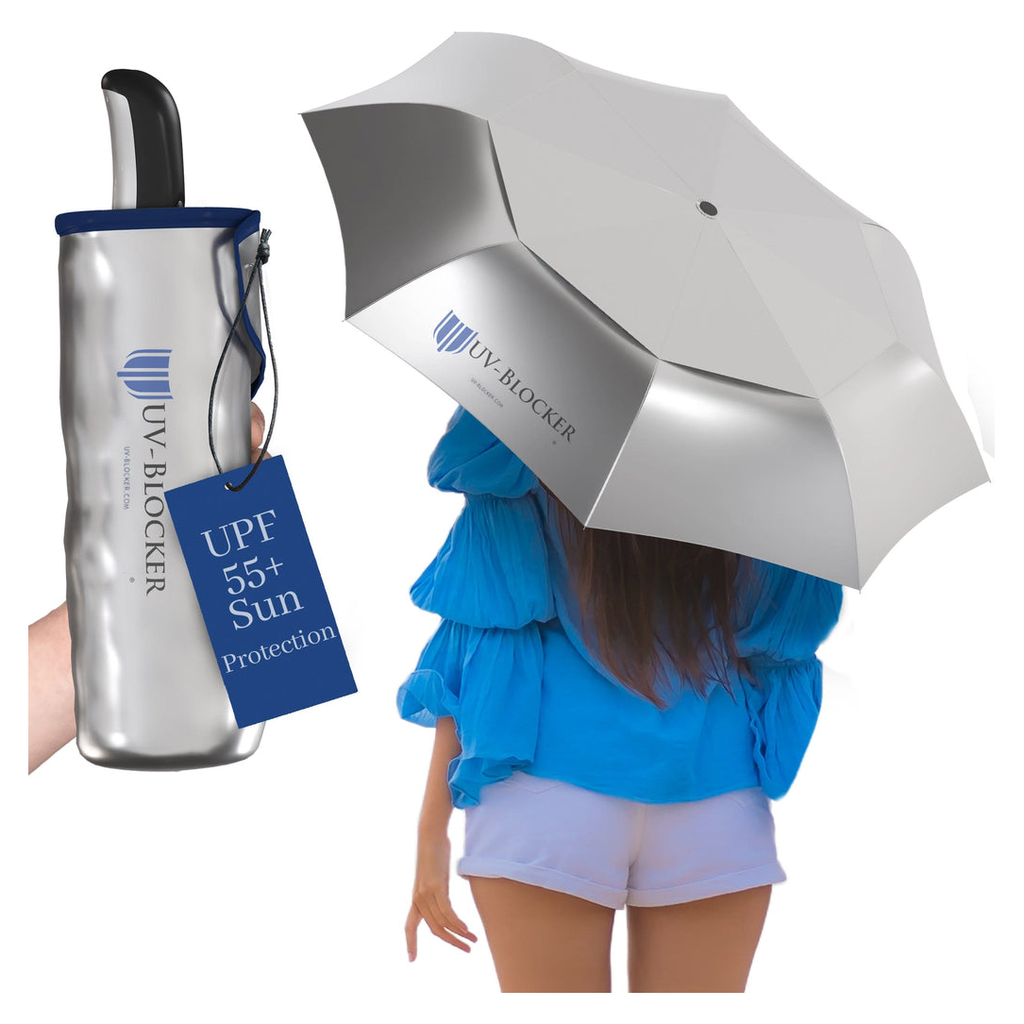
- Compact UV Umbrella — a 42-inch (107 cm) arc at 425 g that opens and closes at the press of a button and folds to 11.5 inches (29 cm), so it lives in a handbag, backpack or glovebox. The everyday-carry option for the walk to work, the school run and the commute.
- Travel UV Umbrella — a 44-inch (112 cm) arc at 595 g, auto-open with a manual close, and a deeper dome that holds cover when the sun sits low and angled. The choice for longer stretches outdoors: a coastal walk, a sideline, a weekend market.
What Are the Most Common Questions About Parasols and Umbrellas?
Consumers frequently ask whether parasols block UV, if they work in rain, and what UPF ratings mean for real-world sun protection.
Q1: Are parasols only for women?
No. Parasols have been used by men and women for over 4,000 years. In ancient civilizations, they were symbols of male royalty. The feminine association is a recent Western fashion trend. Modern sun umbrellas are designed as unisex products focused on health and utility.
Q2: Do parasols block UV rays?
Traditional decorative parasols block 50-80% of UV radiation. While they shade visible light, they are often porous to UV. A 2013 study found even basic black rain umbrellas blocked over 90%, while white fabric blocked only 77%. Reliable protection requires a verified UPF rating.
Q3: Can you use a parasol in the rain?
Traditional parasols are not waterproof; paper or lace will absorb water and potentially rot. UV sun umbrellas are typically made with water-repellent nylon, handling both sun and rain. This dual functionality is a major practical advantage.
Q4: What is the best UPF rating for a sun umbrella?
UPF 50+ is the highest standard, blocking over 98% of UV. Some products, like those from UV-Blocker, achieve UPF 50+ (blocking >99%). Look for testing standards like ASTM D6544 to ensure accuracy.
Q5: Is a sun umbrella better than sunscreen?
They are complementary. A 2017 study found 78% of umbrella-only users sunburned vs. 25% of sunscreen-only users, as umbrellas cannot block reflected UV. Dermatologists recommend using both for complete protection.
Q6: What is a sunbrella or sun umbrella?
"Sunbrella" or "sun umbrella" refers to UV-protective umbrellas with UPF-rated fabric. These products combine the sun-blocking intent of the parasol with the durability of the umbrella, a concept supported by recent advocacy for better sun protection tools.
Q7: Do Australians call it a parasol or a sun umbrella?
Parasol is the common Australian term and Australian retailers list them that way, while "sun umbrella" is the more common phrasing in the United States. The word has no bearing on protection. Look for a UPF 50+ rating tested to AS/NZS 4399 rather than the name on the tag.
Conclusion
Sun protection language is misleading. "Parasol" promises a sun shield but delivers only decorative shade. "Umbrella" implies rain gear yet offers the most advanced UV-blocking technology available.
Key Takeaways:
- Terminology vs Technology: The real line is between verified UPF ratings and marketing claims.
- The Protection Gap: A UPF 50+ umbrella blocks >99% of UV; a decorative parasol may block only 50-80%.
- Evolution: Modern UV umbrellas combine parasol style with safety.
- Verification: Look for specific UPF numbers and testing standards.
If current sun protection does not state UPF 50+, it is time to upgrade. Skin health depends on the physics of the fabric, not the name of the product. Browse UV-rated sun umbrellas to find verified protection.