

The final appointment wraps up. The port comes out. Hair starts growing back. But the skin remembers what happened long after the hospital visits stop. Millions of cancer survivors assume their sun sensitivity disappears the moment treatment ends. The biology tells a different story. Oncology discharge instructions usually include a brief note about wearing sunscreen — but they rarely explain how long heightened protection matters, what the ongoing cellular risks look like, or why UV defense stays relevant for years. The shift from surviving a primary diagnosis to protecting against secondary complications is one that catches most people off guard.
TL;DR: The Survivor's UV Reality
- Photosensitivity from chemotherapy often persists for 10 to 12 weeks after the last dose clears the body.
- Skin treated with radiation therapy stays vulnerable to UV damage for up to a full year.
- Up to 8 percent of radiation patients develop radiation recall dermatitis — and sunlight can trigger it months or years later.
- The risk of secondary skin cancers — melanoma, squamous cell, basal cell — goes up after treatment, not down.
- Physical shade is the AAD's first-line recommendation over sunscreen for UV defense.
- Going from treatment-phase sun avoidance to a normal daily routine takes a protection strategy that's built to last.
How Long Does Sun Sensitivity Last After Cancer Treatment?
How long sun sensitivity lasts depends on the treatment — chemo drugs clear in 10-12 weeks, while radiation-treated skin may stay reactive for a full year.
Chemotherapy drugs travel through the entire bloodstream. They change how skin cells react to ultraviolet radiation at a fundamental level. Most of these medications leave the body within 10 to 12 weeks, but the residual photosensitivity often lingers past that window. The cells need real time to regenerate and return to baseline. Radiation therapy leaves more localized damage — the specific areas of skin targeted by external beams remain hypersensitive to UV for up to a full year, which means months of careful protection even after treatment wraps.

Different treatments create different recovery timelines. Targeted therapies like vemurafenib and dabrafenib cause photosensitivity that varies in both intensity and duration. Up to 57 percent of patients on vemurafenib experience significant photosensitivity, according to clinical data. Immunotherapy introduces its own challenge — these treatments can trigger depigmentation that looks like vitiligo. Without melanin in those spots, they burn noticeably faster than the skin around them. For many patients, this depigmentation sticks around permanently.
Then there's hyperpigmentation — darkened patches left behind by chemo that can take months or even a couple of years to fade. The full list of medications that cause sun sensitivity breaks down which drugs do what to skin's UV tolerance. During active treatment, the approach is straightforward: avoid the sun aggressively. After the last session, though, the game changes. It's no longer about short-term crisis avoidance. The UV sensitivity doesn't vanish with the last dose — it just becomes something that needs managing on a daily basis, quietly, for a long time.
What Is Radiation Recall and Can Sunlight Trigger It?
Radiation recall dermatitis affects up to 8% of radiation patients and can be triggered by UV exposure in previously irradiated skin weeks to years after treatment ends.
About 8 percent of people who've had radiation develop what's called radiation recall dermatitis — the skin in the area that was treated flares up with an inflammatory reaction, sometimes weeks later, sometimes years. Nobody warns patients this is a possibility, and UV light is one of the things that can set it off.
What it looks like varies a lot. On the mild end, there's redness that could pass for a sunburn. On the more severe end, people get blistering, peeling, and swelling bad enough to need medical care. The skin holds onto the memory of that prior radiation and overreacts when provoked again. There's a related issue called UV recall too — where getting certain chemo drugs causes skin to flare up in spots that were sunburned in the past, even from an ordinary burn that happened months before.
The drugs most linked to these recall reactions include methotrexate, gemcitabine, taxanes, and etoposide. It's an unpleasant surprise for anyone who assumed their treated skin was done reacting. Walking into July sun without adequate coverage can wake up tissue that seemed fully healed. That's why sun protection after cancer treatment can't be treated as optional for anyone who's been through radiation — skin holds grudges longer than people think.
Why Do Cancer Survivors Face Higher Long-Term Skin Cancer Risk?
Cancer survivors carry a permanently elevated risk of secondary skin cancers because treatment damages the skin's natural UV repair mechanisms.
Cancer survivors across the board carry an increased risk of developing secondary skin cancers — including basal cell carcinoma, squamous cell carcinoma, and melanoma. The treatments that destroy malignant cells also inflict collateral damage on healthy tissue. Targeted drugs like vemurafenib carry up to a 30 percent incidence rate of secondary squamous cell carcinoma.
Childhood radiation therapy correlates with increased melanoma risk that shows up decades later in adulthood. The immunosuppression from intensive treatment weakens the skin's built-in repair process. A healthy body quietly fixes minor UV-induced cell damage around the clock. A post-treatment body struggles to keep up with that same routine maintenance.
This creates a compounding problem. Treatment damages the skin at a microscopic level. Continued UV exposure degrades that already-compromised tissue further. The weakened immune system then can't identify and clear out mutating cells the way it normally would. Women reviewing UV rays and breast cancer treatment protocols realize that radiation focused on the chest leaves that exact area more susceptible to secondary malignancies going forward. The treatment saves the patient's life. But the resulting cellular vulnerability requires proactive management — for good.
What Sunscreen Is Safe for Post-Cancer Skin?
Mineral sunscreens with zinc oxide (20%+) are recommended over chemical formulas for post-cancer skin, but physical shade eliminates the skin-contact issue entirely.

Post-treatment skin doesn't tolerate standard drugstore sunscreen well. Chemical formulas absorb into the epidermis and convert UV into heat, which makes them more likely to irritate tissue still recovering from radiation or chemo. Dermatologists steer cancer survivors toward mineral sunscreens instead — specifically zinc oxide at 20 percent or higher, or titanium dioxide, which sit on the skin's surface as a physical barrier rather than absorbing into it.
There are ingredients survivors should actively avoid. Oxybenzone, PABA, synthetic fragrances, and alcohol all strip moisture from skin that's already dry and healing. Immunotherapy patients dealing with depigmented patches need especially thick physical blocks, because those lighter areas lack melanin and burn at an accelerated rate compared to surrounding skin.
But here's the practical reality: applying heavy mineral cream every two hours gets exhausting. Some patients develop contact irritation just from the daily cycle of application and removal. Physical shade sidesteps the skin-contact problem entirely. A solid barrier between the sun and the skin stops UV before it ever touches compromised tissue — no rubbing, no reapplication, no irritation cycle.
How Do You Build a Lifelong UV Protection System After Cancer?
A sustainable post-cancer UV strategy starts with physical shade (UPF 50+ umbrella), adds UPF clothing, and reserves sunscreen for gaps — not as the primary defense.
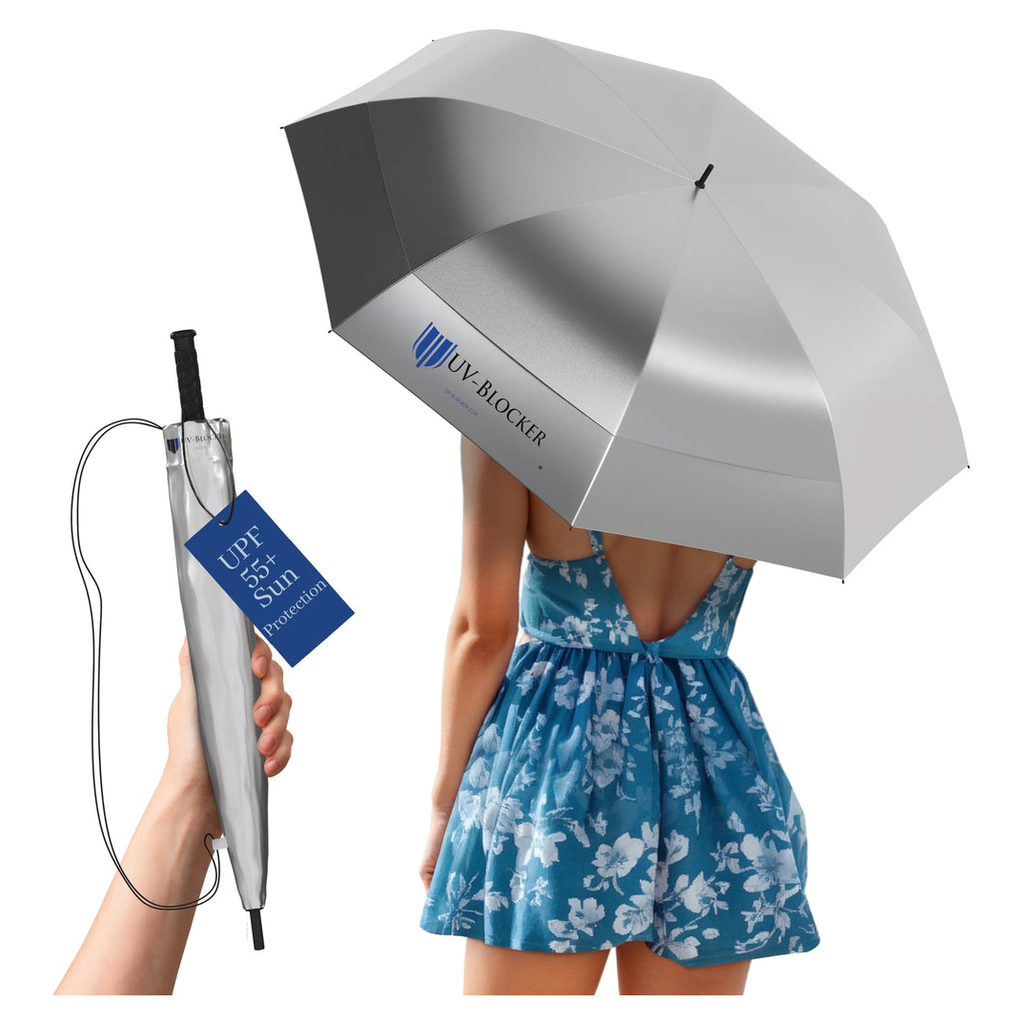
The AAD's guidance is clear: seek shade first, apply sunscreen second. A UPF 50+ rating means a fabric blocks more than 98 percent of incoming UV radiation permanently — no degradation, no reapplication window, no expiration date. A UPF 50+ umbrella delivers that level of overhead protection with zero skin contact.
Building a sustainable system also means working UPF-rated clothing into daily routines. Long sleeves and wide-brimmed hats protect the upper body and face. Survivors should also establish annual full-body skin checks with a dermatologist — professional screening catches secondary cancers early, when they're still straightforward to treat.
One gap that surprises most people: UVA penetrates glass. Standard car windows and office windows let ultraviolet A rays pass through, quietly degrading skin and damaging cellular DNA over years of daily commuting. A lifelong sun protection after cancer treatment plan has to account for these hidden exposures too, not just time spent outdoors in direct sun.
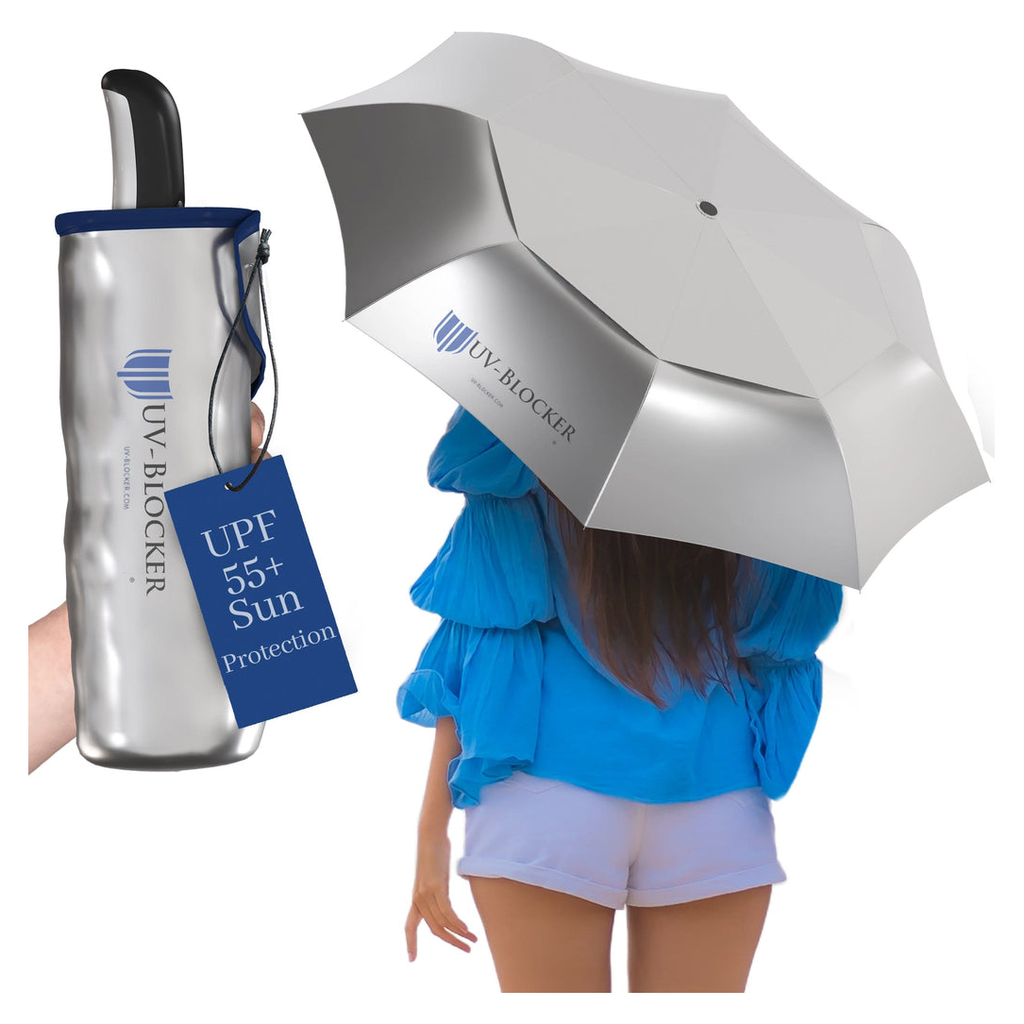
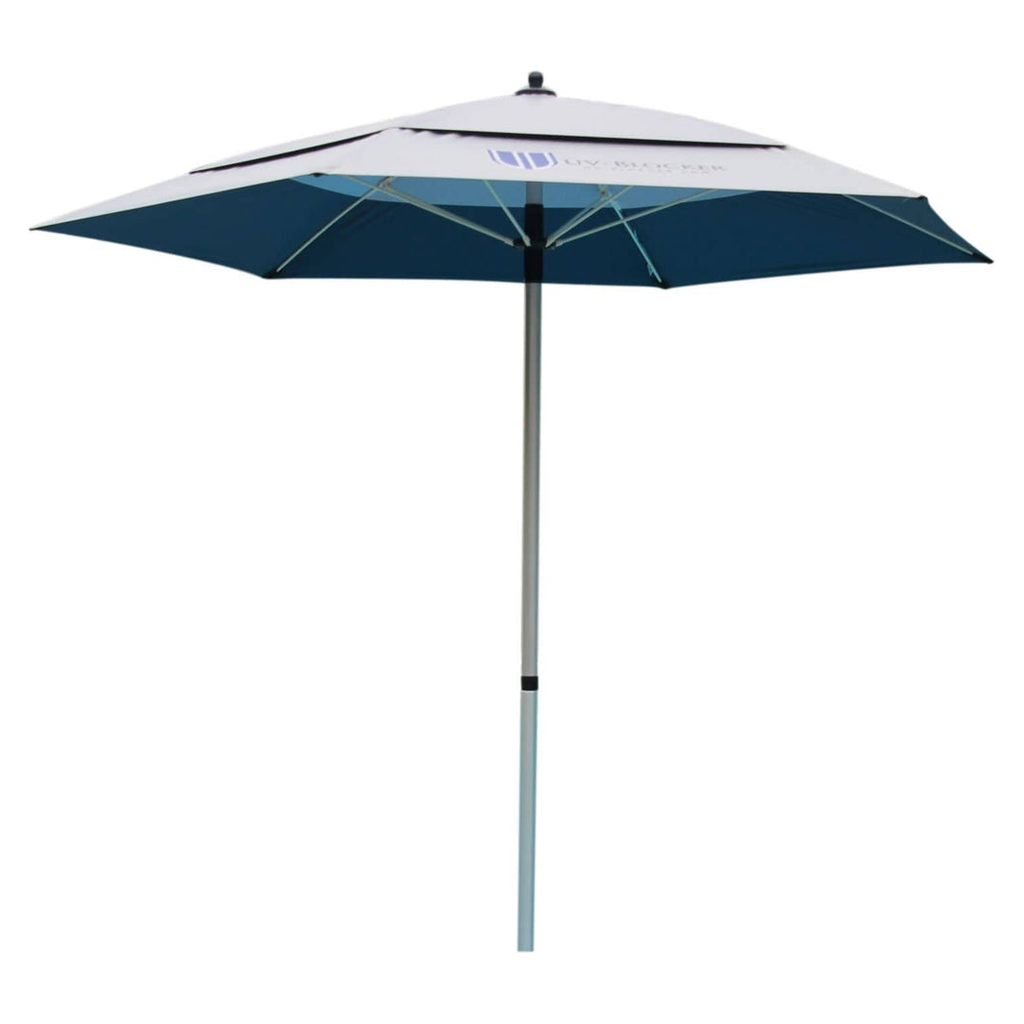
The real challenge is transitioning from the intense hypervigilance of active treatment to something sustainable for everyday life. A UV Protection Compact Umbrella fits that role — 42 inches of portable shade that stows in a tote bag or car console. It's ready whenever the sun is, without requiring any morning prep or midday maintenance. That's the kind of low-maintenance protection that makes the difference between a plan someone follows for two months and one they actually keep up with for years.
Frequently Asked Questions About Sun Protection After Cancer Treatment
These are the most common questions about sun protection after cancer treatment, answered with guidance from oncology research and AAD recommendations.
How soon after chemo can I go in the sun?
Going outside is fine immediately — what matters is how well the skin is covered. Bare, unprotected exposure is the concern, and doctors generally recommend avoiding it for at least 10 to 12 weeks after the last infusion. The drugs take time to clear, and the skin stays reactive until they do.
Does radiation-treated skin ever fully recover from sun sensitivity?
The worst of the sensitivity usually calms down within a year. That said, the treated area never fully returns to the same tolerance as untreated skin — it stays more burn-prone and more susceptible to secondary cancers. Dermatologists consider lifelong physical protection of irradiated zones a medical recommendation, not a preference.
Can immunotherapy make you more sensitive to sunburn?
Yes. Immunotherapy can cause depigmentation that resembles vitiligo, leaving specific patches of skin lighter than the surrounding tissue. Those patches lack natural melanin and burn noticeably faster under direct UV exposure.
Are UV umbrellas HSA/FSA eligible for cancer survivors?
Sun protection items, including UPF 50+ umbrellas, are often HSA/FSA eligible. A Letter of Medical Necessity (LMN) from an oncologist or primary care doctor prescribing the item for UV protection based on medical history may be required, depending on the plan.
Should cancer survivors avoid tanning beds permanently?
Yes — without exception. Tanning beds deliver concentrated UVA radiation. Cancer survivors already face elevated secondary skin cancer risk and weakened cellular repair. Tanning beds compound that risk and should be avoided permanently.
Conclusion
Sun protection after cancer treatment isn't a short-term precaution — it's a lifelong commitment that physical shade makes sustainable.
The infusion bags empty. The radiation machines power down. Active treatment ends. But the skin's vulnerability to ultraviolet radiation doesn't end with it. Cancer survivors carry the invisible legacy of their therapies for years — sometimes decades.
Relying on chemical sunscreens alone forces already-irritated skin to endure daily contact with absorbing ingredients. Physical shade offers the simplest, safest long-term strategy. A UPF 50+ umbrella and rated clothing build a reliable barrier that doesn't require rubbing anything into compromised skin. The fight to reach remission was hard enough. Protecting a healed body from secondary skin cancer is a daily commitment that physical shade makes easy. Isn't that kind of lasting protection worth a one-time investment?