

More than 1.158 million high school students competed in outdoor track and field in 2024-25, making it the most popular girls' sport in America. Most of that time isn't spent competing. The reality involves waiting in the direct sun for hours.
Track meets last four to eight hours in open-air venues with minimal permanent shade. Athletes, spectators, and coaches face sustained UV exposure that sport-specific sun safety guides frequently overlook. Data shows 86% of collegiate outdoor athletes reported sunburn in the past year, yet only 12% consistently apply sunscreen before training.
This guide to sun protection for track and field covers UV risks by event type, shade solutions for every role at the meet, and a practical sun safety kit checklist.
Why Is Track and Field a High-Risk Sport for Sun Exposure?
Track meets run four to eight hours in open-air stadiums with minimal shade, exposing over 1.1 million high school athletes to sustained UV radiation each season.
The numbers tell the story. More than 1.158 million high school athletes participate in outdoor track along with over 24,000 NCAA Division I competitors. Outdoor track stands as the number one most popular girls' sport in United States high schools. Dual meets typically run two to three hours. Invitationals and championships can stretch from four to eight hours.
Most tracks lack permanent shade structures. Compare that to baseball, where dugouts provide built-in shade, or football, where sideline tents are standard. Track facilities offer completely exposed infields and bleachers. On a summer afternoon, metal surface temperatures on aluminum bleachers easily exceed 140°F in direct sun.
Not all track athletes face the same level of exposure, though. Event type changes how long someone stands in direct sun, and the differences are striking.
How Does UV Exposure Differ by Track and Field Event?
UV exposure varies widely by event. Sprinters face one to two hours, while multi-event athletes endure 12 to 16 hours across two full competition days.

Sprints, Hurdles, and Relays
Sprint events like the 100-meter dash last seconds. But the warm-up, staging, and cool-down add one to two hours of sun exposure per meet. Sprinters often warm up on the backstretch with zero access to shade.
Distance Events
Distance events like the 3200-meter run require longer efforts and extended warm-ups, resulting in two to three hours of cumulative exposure. For training-specific sun safety tips, see this guide to sun protection for runners.
Throws
Throwers face an entirely different challenge. Athletes wait between attempts in a strict rotation. A flight of 16 throwers means waiting 20 to 30 minutes between each throw in an open field with no access to shade. Total exposure: two to four hours per event.
Jumps
Jumpers face similar rotation exposure, and their event areas rarely sit near the team camp or any existing shade. High jump and pole vault competitions can run two or more hours as the bar rises.
Multi-Events: The Highest-Risk Category
Decathletes and heptathletes experience the most extreme conditions. They compete in seven to 10 events across two full days. Cumulative exposure reaches 12 to 16 hours. These athletes move between event sites with no extended rest in the shade. Picture a teenager spending two entire days under direct sun.
| Event Category | Events Included | Estimated Sun Exposure Per Meet | Key Risk Factor |
|---|---|---|---|
| Sprints/Hurdles | 100m, 200m, 400m, hurdles | 1-2 hours | Warm-up and staging in full sun |
| Distance | 800m, 1500m, 3000m SC, 5000m | 2-3 hours | Extended warm-up and cool-down |
| Throws | Shot put, discus, javelin, hammer | 2-4 hours | Long wait between attempts in open field |
| Jumps | Long jump, triple jump, high jump, pole vault | 2-4 hours | Event areas far from shade |
| Multi-Events | Decathlon (10), Heptathlon (7) | 12-16 hours (2 days) | Full-day exposure across multiple event sites |
| Relays | 4x100m, 4x400m, DMR | 1-2 hours | Team staging area exposure |
Athletes get intermittent shade at their team camp. But the people who sit in the sun the longest? The parents in the bleachers.
What Is the Spectator Sun Safety Problem at Track Meets?
Track meet spectators sit four to eight hours on unshaded metal bleachers, often accumulating more UV exposure than the athletes they're watching.
Family members arrive early and stay for every event their child runs, throws, or jumps, often staying for the entire meet. Each athlete typically brings one or two family members. At a large invitational with 20 teams, that translates to over 400 spectators in the stands. Most track facilities feature zero permanent spectator shade. No press box overhang. No covered stands.
Metal bleachers compound the problem. Aluminum absorbs heat and re-radiates it, creating a dual UV and thermal load on the body. Sitting on hot metal for hours can also cause contact burns on bare legs.
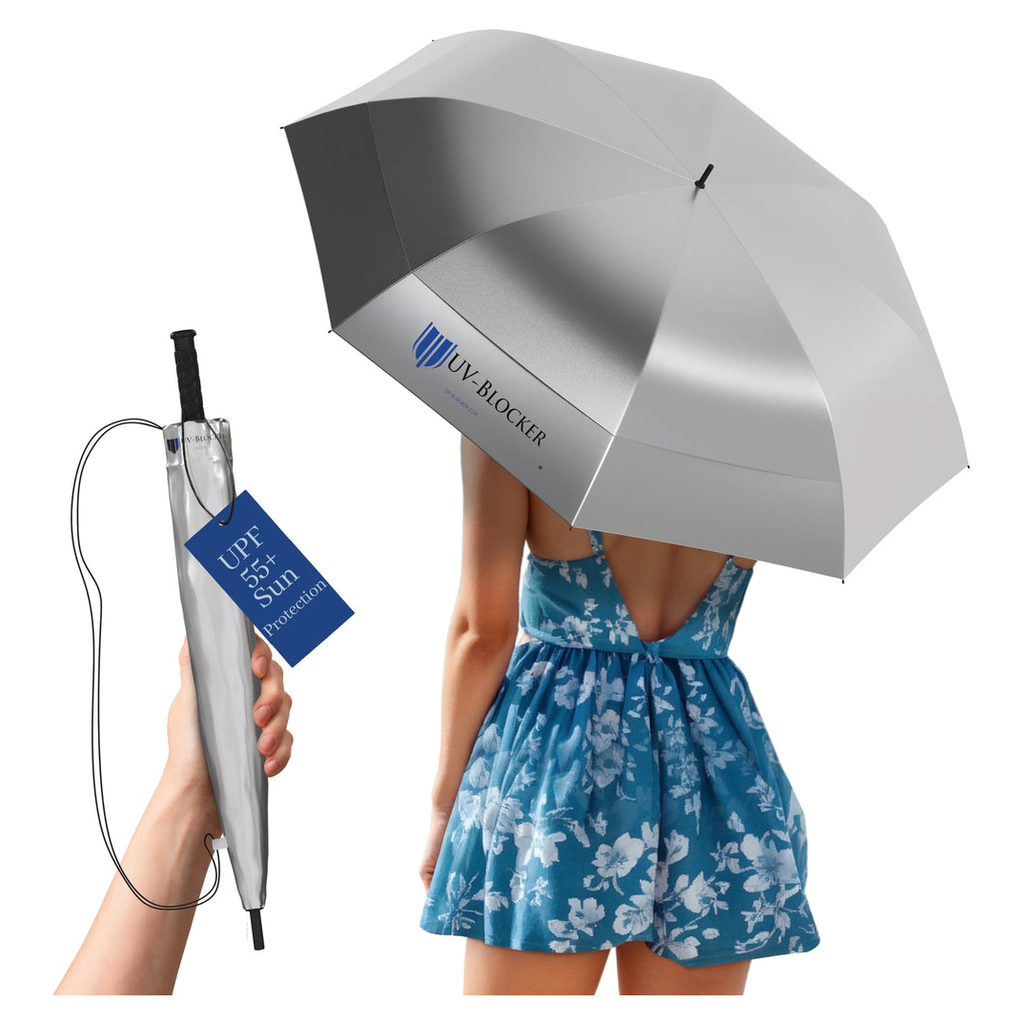
Spectators struggle to reapply sunscreen while holding water bottles, phones, cameras, and meet programs. Hands-free shade makes a difference here. A UPF 50+ umbrella paired with a Chair Umbrella Holder provides continuous shade without blocking views for spectators nearby. For more spectator strategies, read this guide to sun protection for sports parents.
Beyond sunburn, the combination of UV exposure and heat at track meets creates a more dangerous risk: heat illness.
How Should Track Athletes Apply Sunscreen on Meet Day?
Track athletes should apply broad-spectrum SPF 30+ sunscreen 15 minutes before warm-up and reapply between events every two hours throughout the meet.
Use a minimum of SPF 30 with a broad-spectrum, sweat-resistant formula. Products labeled "sport" or "active" tend to adhere better during physical activity. Apply 15 minutes before the warm-up begins, not at the start line. UV exposure starts during staging and stretching, and most athletes apply too late or skip it entirely.
Focus Areas for Uniformed Athletes
Track uniforms (singlets and shorts) leave most limbs exposed. Prioritize these areas:
- Face, neck, and ears — highest sunburn risk, hardest to shade
- Arms and shoulders — fully exposed in competition
- Back of the knees — often missed during application
- Tops of feet — exposed in racing flats and spikes
Reapplication Strategy
Tie reapplication to the event schedule instead of watching the clock. Finished the 200-meter dash? Reapply before heading back to the team camp. This habit-based approach works better than trying to track two-hour intervals during a chaotic meet day.
Don't forget SPF lip balm. It's especially important for distance runners breathing heavily through their mouths. And remember: up to 80% of UV rays penetrate clouds, so overcast skies don't mean safe skies. Learn more about getting sunburned on a cloudy day.
Sunscreen alone isn't enough for four to eight hours outdoors. Clothing and shade fill the gaps between applications.
What Sun-Protective Clothing and Shade Work Best at Track Meets?
UPF 50+ warm-up layers between events, wide-brim hats during downtime, UV sunglasses, and portable shade umbrellas for team camp areas provide layered protection.
Between-Event Clothing
Wear UPF warm-up layers between events and remove them for competition. A UPF 50+ long-sleeve warm-up blocks over 98% of UV radiation without causing overheating. Read more about sun protection clothing options. Arm sleeves with UPF compression are increasingly popular among throws athletes who spend long stretches waiting in the sun.
Hats and Sunglasses
Wear a wide-brim or legionnaire-style hat while at the team camp. NFHS and NCAA rules generally allow hats during field events but may restrict them during track events, so check with meet officials. UV-filtering wraparound sunglasses protect the eyes and surrounding skin during warm-ups and field events.
Portable Shade Solutions
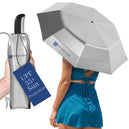
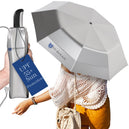
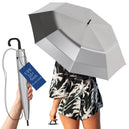
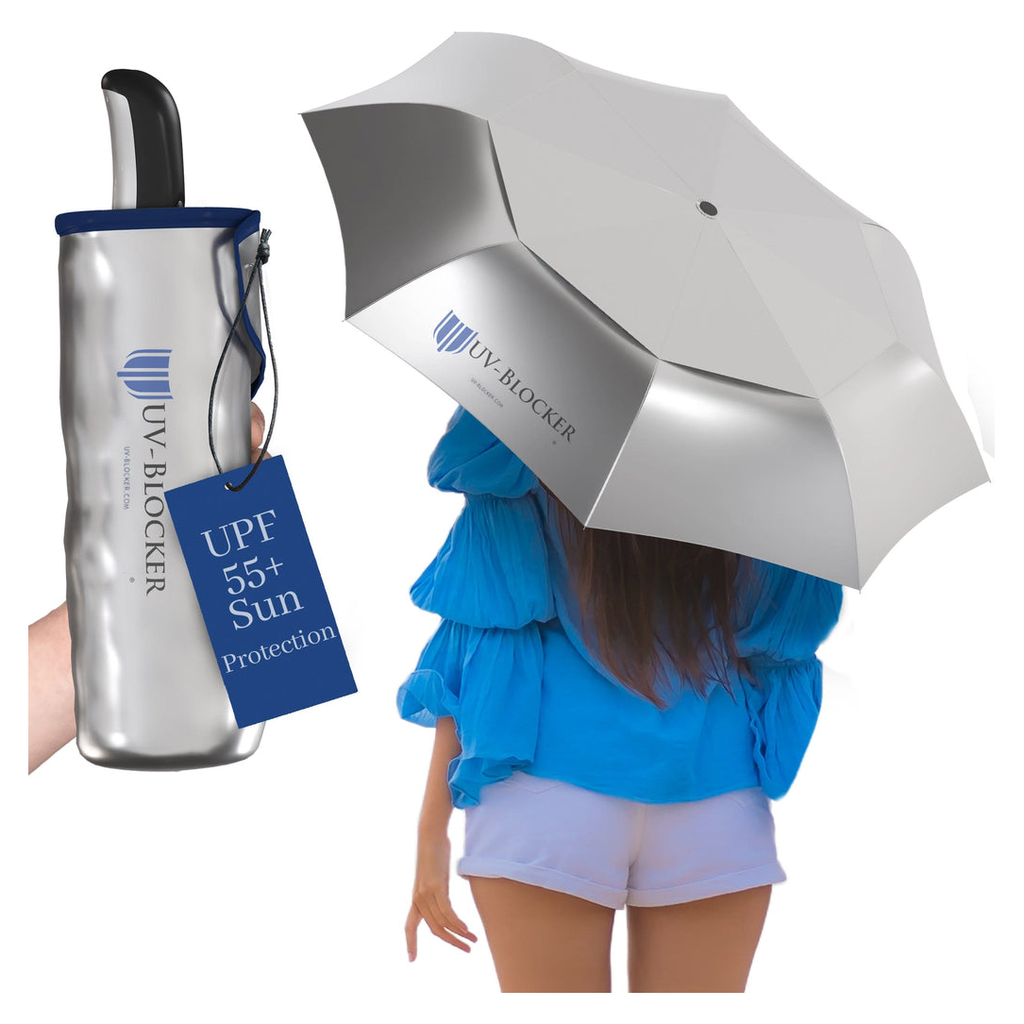
A UPF 50+ compact umbrella provides personal shade at the team camp between events. The Compact UV Umbrella weighs just 13 ounces and folds to 11.5 inches, fitting easily in a track bag. For coaches stationed at shot put, discus, or jump areas (where pop-up tents don't fit), a Sports Umbrella Holder secures an umbrella at the field event station.
Equipment protects individuals. But real culture change starts with coaches and officials making sun safety part of the meet protocol.
How Can Coaches and Officials Lead on Sun Safety at Track Meets?
Coaches set the standard by including sunscreen in pre-meet check-ins, providing shade at team areas, and modeling sun-protective behavior during meets.
Research shows only 26% of athletes receive sun safety recommendations from coaches. Most coaches focus on hydration but overlook UV, a risk factor that compounds across an entire season of outdoor practices and competitions.
Simple Protocol Changes
- Add sunscreen to the pre-meet checklist alongside spikes, bibs, and water bottles
- Set up a team sunscreen station at camp — a communal SPF 30+ bottle eliminates the "forgot mine" excuse
- Wear hats and apply sunscreen visibly — when coaches model the behavior, athletes follow
Protecting Meet Officials
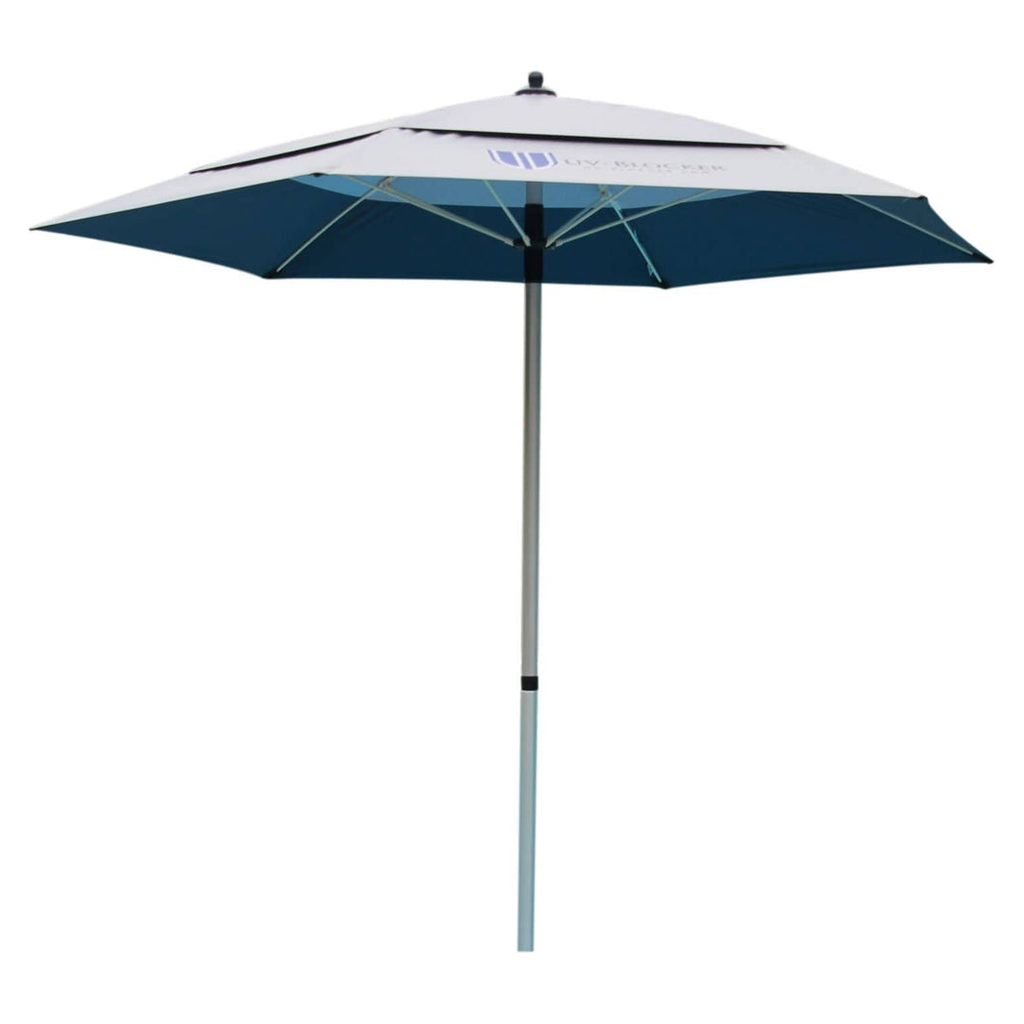
Meet officials face the longest exposure of anyone on the field: four to eight hours with no rotation. Providing shade at timing stations and field event judging areas protects these crucial volunteers. A Sports Umbrella Holder at the judge's station delivers shade without obstructing sightlines.
UV exposure doesn't just cause sunburn. At track meets, it intersects with heat illness to create a medical emergency risk.
How Are Heat Illness and UV Exposure Connected at Track Meets?
More than 9,000 high school athletes are treated for exertional heat illness annually, and shade structures can reduce the heat load on the body by 10 to 15 degrees.
Exertional heat stroke is the third leading cause of death in high school sports. Direct sun on the skin raises core body temperature faster than shaded conditions because UV heats the skin surface, which heats the blood, which elevates core temperature.
Athletes waiting under a UPF 50+ umbrella maintain lower core temperatures compared to those standing in full sun. UV-Blocker's Solarteck coating keeps the air underneath up to 15°F cooler than direct sunlight.
Warning Signs of Heat Illness
Watch for these symptoms at track meets:
- Muscle cramps — early sign, especially in calves and quads
- Nausea or vomiting — signals the body is struggling to thermoregulate
- Confusion or disorientation — a red flag for heat stroke
- Cessation of sweating — if an athlete stops sweating on a hot day, treat it as a medical emergency
The Youth-Specific Melanoma Risk
Sustaining five or more blistering sunburns between ages 15 and 20 increases melanoma risk by 80%. That age range maps directly onto the high school and collegiate track demographic: 14-to-22-year-olds accumulating UV exposure during their highest-risk window. Every sunburn at a track meet contributes to that lifetime count. Learn more about how long a sunburn lasts and its long-term effects.
All of this boils down to preparation. Here's what to pack for the next track meet.
What Should a Track Meet Sun Safety Kit Include?
Proper sun protection for track and field starts with a complete kit: SPF 30+ sunscreen, a UPF 50+ umbrella, sun-protective layers, cooling towels, SPF lip balm, and electrolyte water.

- Sunscreen: Broad-spectrum SPF 30+, sweat-resistant formula. Bring a full-size bottle for team sharing.
- UV umbrella: The Compact UV Umbrella features a 42-inch arc, weighs 13 ounces, and fits easily in a track bag for between-event shade.
- Chair Umbrella Holder: Parents who plan to sit all day should bring a Chair Umbrella Holder to secure shade to the bleacher seat for hands-free viewing.
- UPF 50+ warm-up layers: A lightweight long-sleeve top to wear between events.
- Wide-brim hat or legionnaire cap: Wear at the team camp, remove for competition.
- UV-filtering sunglasses: Wraparound style for full eye coverage.
- Cooling towels: Wet and drape around the neck between events for quick temperature relief.
- SPF lip balm: 30+ SPF formula, reapply between events.
- Water and electrolytes: Hydration is part of sun safety. Drink a minimum of 16 to 20 ounces per hour in the heat. Dehydration worsens both sunburn severity and heat illness risk.
Frequently Asked Questions About Sun Protection for Track and Field
Track athletes, parents, and coaches share common questions about UV safety at outdoor meets. Here are the most frequently asked.
Can track athletes wear sunscreen during competition?
Yes. No high school or NCAA rule prohibits sunscreen during track and field events. Apply before warm-up and reapply between events.
Do track uniforms provide UV protection?
Most track singlets and shorts offer minimal UV protection, usually around UPF 5 to 10. Exposed arms, legs, and neck need sunscreen or supplemental UPF layers during downtime.
Are pop-up tents allowed at track meets?
Most meets allow teams to set up 10x10 pop-up canopies in designated camp areas. Check meet-specific rules in advance, as some venues restrict tent placement near the running surface.
How often should athletes reapply sunscreen at a track meet?
Every two hours, or immediately after sweating heavily during an event. Tie reapplication to event completion. Finished your race? Reapply.
What's the best way for spectators to stay protected at a track meet?
A UPF 50+ umbrella with a chair holder provides continuous hands-free shade on bleachers. Combine it with sunscreen, a hat, and plenty of water.
Do cloudy days still pose UV risk at outdoor track meets?
Up to 80% of UV radiation penetrates cloud cover. Sun protection is necessary regardless of cloud conditions at outdoor meets.
Conclusion
Track and field exposes athletes and spectators to four to eight hours of direct UV radiation with minimal shade infrastructure. UV risk varies by event. Multi-event athletes and field event competitors face the highest cumulative exposure. And parents in the bleachers often accumulate more sun damage than the athletes on the field.
Effective sun protection for track and field is a layering strategy: sunscreen, clothing, shade, and hydration working together. Pack a sun safety kit before the next meet. Start with sunscreen and a portable UV umbrella. Parents can find hands-free shade with a Chair Umbrella Holder, while athletes can rely on a Compact UV Umbrella that weighs 13 ounces and fits in any track bag.
Plan ahead. The sun doesn't take an off day just because an athlete does.
Event-by-Event UV Exposure Analysis for Track and Field
Track and field is unusual among sports in that UV exposure varies dramatically by event — distance runners face hours of cumulative exposure per week, while field athletes may have significant wait times between attempts in full sun. Here's the breakdown:
Highest-Exposure Events
| Event | Estimated Weekly UV Exposure | Key Exposure Factors |
|---|---|---|
| Distance running (5K/10K/marathon training) | Very High (12–20+ hrs/week training) | Long continuous exposure during training; peak UV hours; no shade on track |
| Race walking | High (8–15 hrs/week) | Extended low-intensity outdoor training; full-body exposure |
| Throwing events (discus, shot put, hammer, javelin) | Moderate-High | Long waiting periods between attempts; standing in sun during warm-ups and competition |
| Jumping events (high jump, long jump, pole vault) | Moderate | Waiting between attempts; outdoor infield positioning |
| Sprints (100m–400m) | Low-Moderate | Brief active time; but warm-up periods and false-start waiting increase total sun time |
| Multi-events (heptathlon/decathlon) | Very High | 2+ full days of competition across 7–10 events; extended time on field |
Competition-Day UV Strategies by Event Type
Distance Runners
- Apply SPF 50+ 30 minutes before heading out; reapply at 90-minute intervals for training runs
- Schedule long runs before 9am or after 5pm when UV index drops below 5 in most locations
- Lightweight, moisture-wicking UPF 50 arm sleeves add minimal weight and significantly reduce forearm and hand UV exposure
Field Event Athletes (Throwers, Jumpers)
- Use a compact UV umbrella during between-attempt waiting periods — the most overlooked protection window in track and field
- Position yourself in available shade during warm-up periods; communicate with coaching staff to allow athletes to seek shade between attempts
- Apply sunscreen to neck, ears, and back of hands — areas frequently missed during competition
Coaches and Officials
- Officials and coaches spend more continuous time in the sun than most athletes — often 4–8 hours per meet day
- Full-brim hat (UPF 50+), SPF 50+ sunscreen, and a portable UV umbrella for use during extended static positioning (throws/jumps officials, finish line judges)
Frequently Asked Questions: Sun Protection for Track and Field
Will sunscreen affect my performance in track and field events?
Properly applied mineral sunscreen has no documented effect on athletic performance. Sunscreen can cause stinging if it runs into eyes during sweating — use a stick or gel formula around the face and a sport-specific water-resistant lotion on arms and legs. Some throwers express concern about sunscreen affecting grip; apply sunscreen well before competition and use a sports towel to remove excess before handling implements.
Is there a recommended approach for track athletes with dark skin who have natural UV protection?
Melanin provides some natural UV protection, but this is often overstated. Skin types V and VI (Fitzpatrick scale) have an estimated SPF equivalent of 10–15 from melanin alone — insufficient for track athletes training 10+ hours per week outdoors. All athletes regardless of skin tone benefit from additional UV protection. Additionally, darker skin types are at higher risk for UV-induced Vitamin D deficiency if UV is avoided entirely, making the layered approach (some sun exposure + protection during peak hours) particularly important.
How should track and field spectators and parents protect themselves during meets?
Track meets often last 3–8 hours, placing spectators (especially parents) at significant UV exposure risk with little control over scheduling. Essentials: broad-brim hat or UV umbrella for continuous shade, SPF 50+ sunscreen applied before arrival and reapplied every 2 hours, lightweight long-sleeved UPF clothing for multi-hour meets, and positioning in existing shade structures when available. Bleacher seating is particularly exposed — no overhead shade, often with concrete/aluminum reflection amplifying UV.
UV Protection Quick Reference for Track & Field
Track and field athletes face some of the highest cumulative UV exposures in sport — meets run for 4–8 hours with no shade breaks, training often occurs during peak UV hours (10am–4pm), and reflective track surfaces amplify UV dose by up to 20%. Here's what athletes and parents need to know at a glance:
- Reapply sunscreen every 60–90 minutes — sweat degrades SPF protection significantly faster than the standard 2-hour benchmark
- UPF 50+ umbrella for seated spectators — bleacher seating at track venues typically has zero overhead shade; a personal UV umbrella provides continuous protection without re-application
- Peak UV risk positions: javelin and discus warm-up areas, long-jump sand pits, and pole vault runways are almost always unshaded
- UV index at ground level vs. elevated seating: concrete and rubberized track surfaces reflect 5–10% of UV — spectators in lower bleacher rows may receive more UV than those in upper rows with overhead coverage
- Pre-meet checklist: SPF 50+ applied 30 min before sun exposure, UPF 50+ umbrella in bag, wide-brim hat for athlete warm-ups, UV-blocking lip balm SPF 30+
Sun Protection for Track & Field: Expert FAQ
Which track and field events have the highest UV exposure?
Events with the highest UV exposure include throwing events (discus, javelin, shot put — athletes wait in open sun between attempts), field events with long rest periods (high jump, pole vault), distance running, and all spectator areas. Sprinters have shorter but intense exposure; distance runners accumulate the most total UV during a single competition day.
Can UV exposure affect athletic performance in track and field?
Yes. UV exposure elevates core body temperature through solar radiation, which reduces endurance performance by 1–3% for every 1°C increase in core temperature above optimal. UV also causes early-onset dehydration. Athletes who protect themselves from direct sun during warm-up and rest periods arrive at their event at a lower core temperature.
How should track coaches manage sun safety for outdoor meets?
Track coaches should position shade structures (pop-up canopies or personal umbrellas) at team tents, ensure mandatory sunscreen application 30 minutes before warm-up, provide shaded water stations, schedule indoor warm-up where possible, and use UV index forecasts to plan peak-performance scheduling during lower-UV time windows.
What UV protection do track and field uniforms typically provide?
Standard athletic uniforms (polyester singlets and shorts) typically provide UPF 10–25 — significantly less than UPF 50+ clothing. The weave stretches during athletic movement, further reducing the UPF. Athletes should wear UPF 50+ warm-up gear until the moment of competition and during recovery periods.
Is UV protection for track and field athletes different between indoor and outdoor competitions?
Indoor competitions eliminate direct UV exposure entirely. Outdoor competitions in full sun during peak UV hours (10 AM–4 PM) create the highest risk. Stadium shade, cloud cover, and time of day significantly affect actual exposure. At the highest level, elite athletics governing bodies now include UV index management in event-day athlete care protocols.
Sun Safety in Australia
Australia has some of the highest UV radiation levels in the world, with the UV Index regularly reaching extreme levels (11 or above) in cities such as Sydney, Melbourne, Brisbane, Perth, and Adelaide for much of the year — including on overcast days. The Cancer Council Australia reports that approximately two in three Australians will be diagnosed with some form of skin cancer by age 70, making sun protection a national health priority.
Key resources and guidelines for Australian sun safety:
- SunSmart Program (Cancer Council Australia): The SunSmart UV Alert is broadcast daily and recommends sun protection whenever the UV Index reaches 3 or above. In most Australian cities, this threshold is met every day of the year, including winter months in northern regions.
- ARPANSA (Australian Radiation Protection and Nuclear Safety Agency): Provides real-time UV monitoring at stations across all states and territories. Australians can access current UV levels at arpansa.gov.au.
- Safe Work Australia — UV Radiation as an Occupational Hazard: Australian workplace health and safety legislation requires employers to assess and manage UV radiation exposure for outdoor workers. Physical shade, including umbrellas rated UPF 50+, is recognised as a primary engineering control under these regulations.
A UPF 50+ UV-blocking umbrella provides the consistent, continuous shade protection that is essential under Australia's intense sun. The UV-Blocker umbrella, with its patented Solarteck® reflective coating, blocks 99% of UV rays and reduces perceived temperature by up to 15°F — a meaningful advantage for outdoor activities in Australia's climate. It is the only umbrella of its kind approved by the Melanoma International Foundation.
Frequently Asked Questions
What is the difference between UVA and UVB rays, and why does it matter?
UVA rays (320–400nm) are longer waves that penetrate deep into the skin, causing photoaging, wrinkles, and contributing to melanoma. They pass through glass and clouds and are relatively constant year-round. UVB rays (290–320nm) are shorter, cause sunburn, and are the primary driver of skin cancer. They're most intense midday (10am–4pm) and in summer. Effective sun protection must block both.
How effective is a UPF 50+ umbrella compared to sunscreen alone?
A UPF 50+ umbrella blocks 99%+ of direct overhead UV — more reliable than sunscreen because it doesn't require reapplication, doesn't wash off with sweat, and provides consistent protection. However, reflected UV from surfaces still reaches skin under an umbrella. The ideal combination is SPF 50+ sunscreen + UPF 50+ umbrella for 95–99% total UV reduction. UV-Blocker's umbrellas are dermatologist-recommended for this purpose.
What time of day poses the highest UV risk?
UV radiation is highest between 10am and 4pm, peaking around noon in most locations. The UV Index is the most accurate measure — when it reaches 6 or above, unprotected skin can begin to burn in as little as 15 minutes. Cloud cover reduces UV intensity but doesn't eliminate it: 80% of UV penetrates light cloud cover.
Does skin tone affect UV damage risk?
All skin tones are affected by UV radiation, but the risk and presentation differ. People with lighter skin (Fitzpatrick types I–III) burn faster and have higher non-melanoma skin cancer rates. People with darker skin (types IV–VI) are more prone to hyperpigmentation and have a higher risk of melanoma being diagnosed at later stages. Sun protection is essential for every skin tone.
What are early warning signs of skin cancer I should watch for?
Use the ABCDE rule for moles: Asymmetry, Border irregularity, Color variation, Diameter larger than 6mm, and Evolving (any change over time). Also watch for sores that don't heal, new pink or pearly bumps, and flat red or pink patches. Annual dermatologist screenings are recommended for anyone with significant sun exposure history or a family history of skin cancer.
Expert Sun Protection Recommendations
- Check the daily UV Index at weather.gov or a UV app before any extended outdoor activity
- Apply SPF 30+ broad-spectrum sunscreen 30 minutes before going outdoors, not right before sun exposure
- Reapply sunscreen every 2 hours and after swimming or heavy sweating
- Use a UPF 50+ umbrella for hands-free shade during outdoor dining, sports, or work
- Wear UV-blocking sunglasses that block 99–100% of UVA and UVB — eyes are vulnerable to UV-related damage
- Annual skin screenings with a board-certified dermatologist can catch early-stage skin cancers when highly treatable