

TLDR:
- Warehouse workers aren't classified as outdoor workers, but dock workers doing 30-40 outdoor transitions per shift accumulate roughly 3 hours of daily UV exposure
- The Skin Cancer Foundation lists 12+ outdoor worker types and none include warehouse or logistics workers
- OSHA's 2026 National Emphasis Program covers warehousing when heat index hits 80 degrees F
- Five specific exposure scenarios: south-facing docks, outdoor staging, open-bay forklift operations, truck escort duty, outdoor break areas
- A dock shade station costs under $90 with a UPF 50+ umbrella and chair holder
Construction workers get hard hats with neck shades. Agricultural workers get mandatory shade breaks. Lifeguards get zinc oxide and rotation schedules. The Skin Cancer Foundation lists more than a dozen occupational groups at elevated UV risk, including postal carriers, landscapers, utility workers, and commercial fishermen.
Warehouse workers aren't on that list. Neither are dock workers, freight handlers, yard jockeys, or forklift operators. According to every major occupational UV safety resource published by the CDC, NIOSH, and OSHA, these workers simply don't exist as a UV risk category.
That's a problem, because a dock worker averaging 35 outdoor transitions per shift accumulates approximately 3 hours of unprotected UV exposure per day. That's equivalent to a full-time outdoor worker's daily dose, delivered in 5-minute increments that feel harmless but add up to real damage.
Why Are Warehouse Workers an Overlooked UV Risk Group?
Warehouse workers are classified as indoor workers, so they fall outside every major occupational UV safety framework despite accumulating hours of sun exposure at loading docks daily.
The Skin Cancer Foundation's Working Outdoors resource page identifies at-risk occupations including construction, agriculture, landscaping, commercial fishing, postal delivery, utility work, lifeguarding, military service, and maritime operations. The list is thorough. It covers roughly 45 million U.S. workers who spend some portion of their day outdoors.
Warehouse and logistics workers are not mentioned in any category.
This matters because the numbers behind occupational UV exposure are stark. A joint WHO/ILO analysis found that 1.6 billion workers worldwide face regular occupational UV radiation exposure. That exposure drives a 60% increased risk of nonmelanoma skin cancer and is linked to 1 in 3 NMSC deaths globally. The same analysis ranked occupational UV radiation as the third largest occupational carcinogen, behind only asbestos and silica dust.
These statistics apply to anyone accumulating meaningful UV doses at work. They don't distinguish between a roofer spending 8 straight hours in the sun and a dock worker logging the same total through dozens of short transitions.
How Much UV Exposure Do Warehouse Workers Actually Get?
A dock worker averaging 35 transitions per shift accumulates approximately 3 hours of daily UV exposure, comparable to full-time outdoor workers.
That total matches what outdoor workers in construction, landscaping, and agriculture experience daily, but without any of the standard protections those industries provide.
Here's the math that makes this concrete:
5 minutes per trip x 35 trips per shift = 175 minutes (~3 hours) of cumulative UV exposure.

That number surprises most people because each individual trip feels insignificant. Five minutes loading a trailer. Five minutes escorting a truck. Five minutes walking pallets from staging. No single trip triggers a sunburn warning.
But UV damage is cumulative. The skin doesn't "reset" between exposures. Every 5-minute trip adds to the day's total ultraviolet load, compounding over months and years of working the same dock.
The Protection Gap
A construction worker spending 3 hours in direct sun typically has access to hard hats with UV-protective neck shades, employer-provided sunscreen, mandatory shade breaks, and formal UV safety training. A dock worker with an equivalent cumulative exposure has none of these protections. No shade infrastructure. No sunscreen stations. No UV training module. Nothing in the safety program even acknowledges that UV exposure exists in a warehouse environment.
What Are the Five UV Exposure Scenarios for Warehouse Workers?
Warehouse workers face UV exposure at south-facing loading docks, outdoor staging areas, open-bay forklift zones, during truck escort duty, and at outdoor break areas near the dock.
Each scenario involves a different task, a different UV intensity, and almost universally, zero available protection.
| Scenario | Typical Daily Duration | UV Intensity | Protection Typically Available |
|---|---|---|---|
| South-facing loading docks | 4-6 hours (intermittent) | High (direct sun) | None |
| Outdoor staging areas | 1-3 hours | High | None |
| Open-bay forklift operations | 1-2 hours | Moderate to high | None |
| Truck escort duty | 30-60 minutes | High | None |
| Outdoor break areas | 30-60 minutes | High | None (shade rarely available) |
South-Facing Loading Docks
Dock doors facing south receive direct sun for 4 to 6 hours during peak UV (10 a.m. to 4 p.m.). Most dock overhangs extend only 3 to 4 feet, shading the trailer but not the worker standing between the dock plate and the truck bed.
Outdoor Staging Areas
Freight staged in open lots between the dock and warehouse gets full sun. Workers organizing, shrink-wrapping, and moving pallets in these areas can spend 1 to 3 hours per shift with zero overhead cover.
Open-Bay Forklift Operations
Forklifts transitioning between indoor floors and outdoor yards expose operators to UV during every crossing. Reflective surfaces on concrete yards and metal trailers amplify the dose.
Truck Escort Duty
Walking trucks through the yard to assigned bays puts workers in full sun for the entire escort, which can run several hundred yards in large distribution centers.
Outdoor Break Areas
Many facilities place break areas, picnic tables, or smoking sections on the dock apron. Workers eating lunch or taking breaks sit in direct sun without shade structures or awnings.
Why Don't Warehouse Workers Protect Themselves From UV?
Warehouse workers don't identify as outdoor workers, so most take zero UV precautions while safety programs ignore UV exposure entirely.
The Identity Gap
Ask a dock worker whether they work outdoors, and the answer is almost always no. The perception is straightforward: the warehouse is a building, buildings are indoors, and indoor workers don't need sunscreen. That mental model holds even when the worker spends 3 hours per shift standing in direct sunlight at an open dock bay.
The Safety Program Blind Spot
Standard warehouse safety training covers forklift operation, lockout/tagout, hazmat handling, ergonomic lifting, slips/trips/falls, and heat illness prevention. UV exposure is not on this list. Most third-party safety training providers don't include it in their warehouse modules either.
No Employer Infrastructure
Construction sites routinely provide sunscreen dispensers, shade tents, and UV-protective PPE. Warehouse facilities provide none of these. No sunscreen at the dock entrance, no shade over the break area, no signage about cumulative UV exposure.
The perception gap and the infrastructure gap reinforce each other. Workers see each trip as "just a few minutes," and without any visible protective measures, there's no cue to think otherwise.
Does OSHA Require Sun Protection at Loading Docks?
OSHA has no specific UV standard, but the 2026 National Emphasis Program for heat-related illness explicitly covers warehousing.
The April 2026 NEP update provides the closest regulatory framework for building a sun safety program at loading docks and outdoor staging areas.
The 2026 National Emphasis Program
OSHA's April 2026 update to the National Emphasis Program for heat-related illness targets 55 high-risk industries. Warehousing and transportation are on the list. Compliance officers can conduct unannounced inspections on any day the heat index exceeds 80 degrees F. The program is effective immediately and runs for five years.
While the NEP focuses on heat, UV and heat co-occur. Any day hot enough to trigger an OSHA heat inspection is also a day with significant UV exposure at loading docks and outdoor staging areas.
The General Duty Clause
There is no 29 CFR standard specifically for solar UV radiation exposure. However, OSHA's General Duty Clause (Section 5(a)(1)) requires employers to provide workplaces "free from recognized hazards that are causing or are likely to cause death or serious physical harm." UV radiation is a recognized carcinogen. An employer who knows dock workers accumulate 3 hours of daily UV exposure and provides no mitigation could face a General Duty Clause citation.
The Business Case
Skin cancer treatment costs an estimated $8.9 billion annually in the United States. Workers who develop occupational skin cancer can file workers' compensation claims. Employers who fail to address a recognized UV hazard face both regulatory citation risk under the 2026 NEP and civil liability through workers' comp.
A dock shade station costs under $90. That's less than 30 minutes of OSHA penalty time.
What Does a Warehouse Worker UV Protection Protocol Look Like?
A warehouse UV protection protocol combines dock canopy extensions, break station shade with UPF 50+ umbrellas, personal UV protection, sunscreen stations, schedule optimization, and a 5-minute annual training module.

None of these steps require major capital investment or facility modifications. A safety manager can implement the full protocol in a single afternoon.
Step 1: Dock Canopy Extension
Extend existing dock overhangs or install commercial shade sails over high-traffic dock doors. Even a 6-foot extension provides meaningful UV reduction for workers standing between the dock plate and the trailer.
Step 2: Break Station Shade
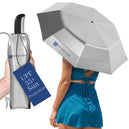
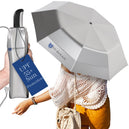
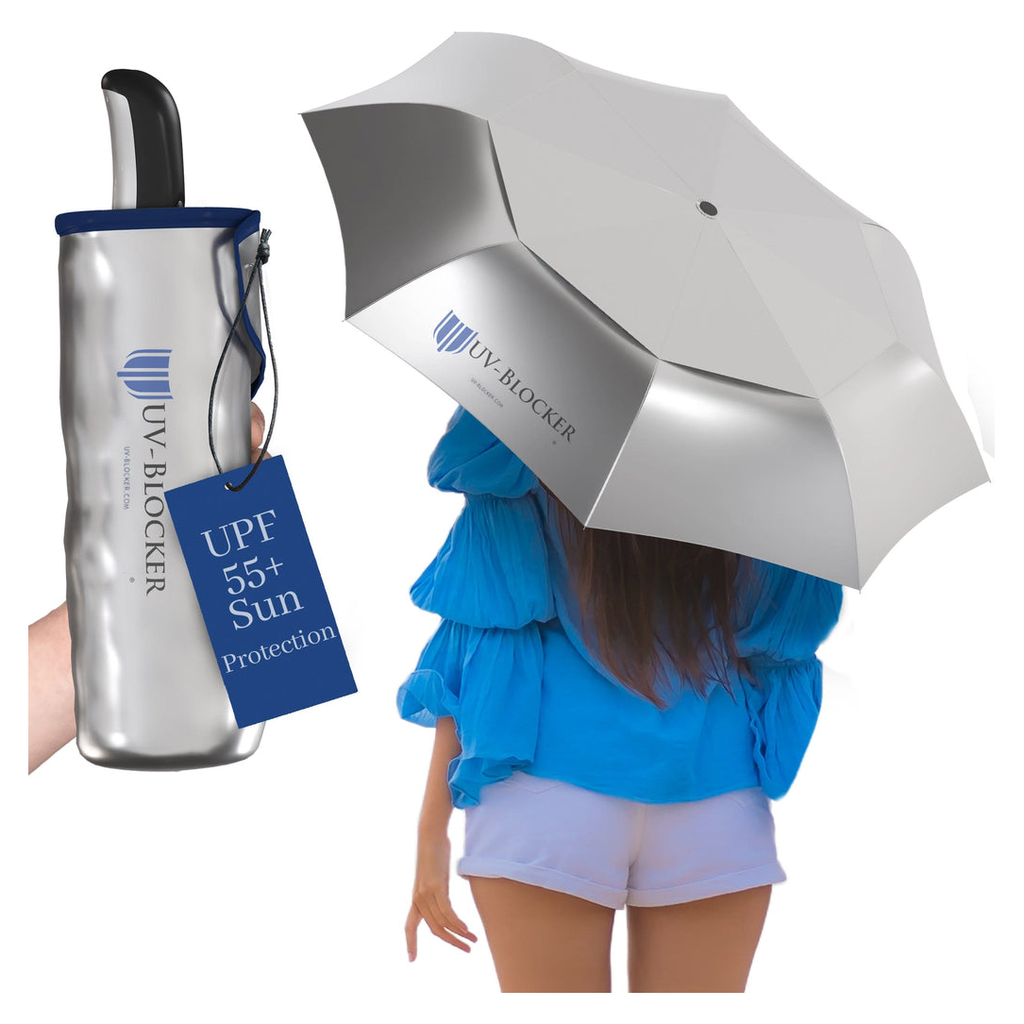
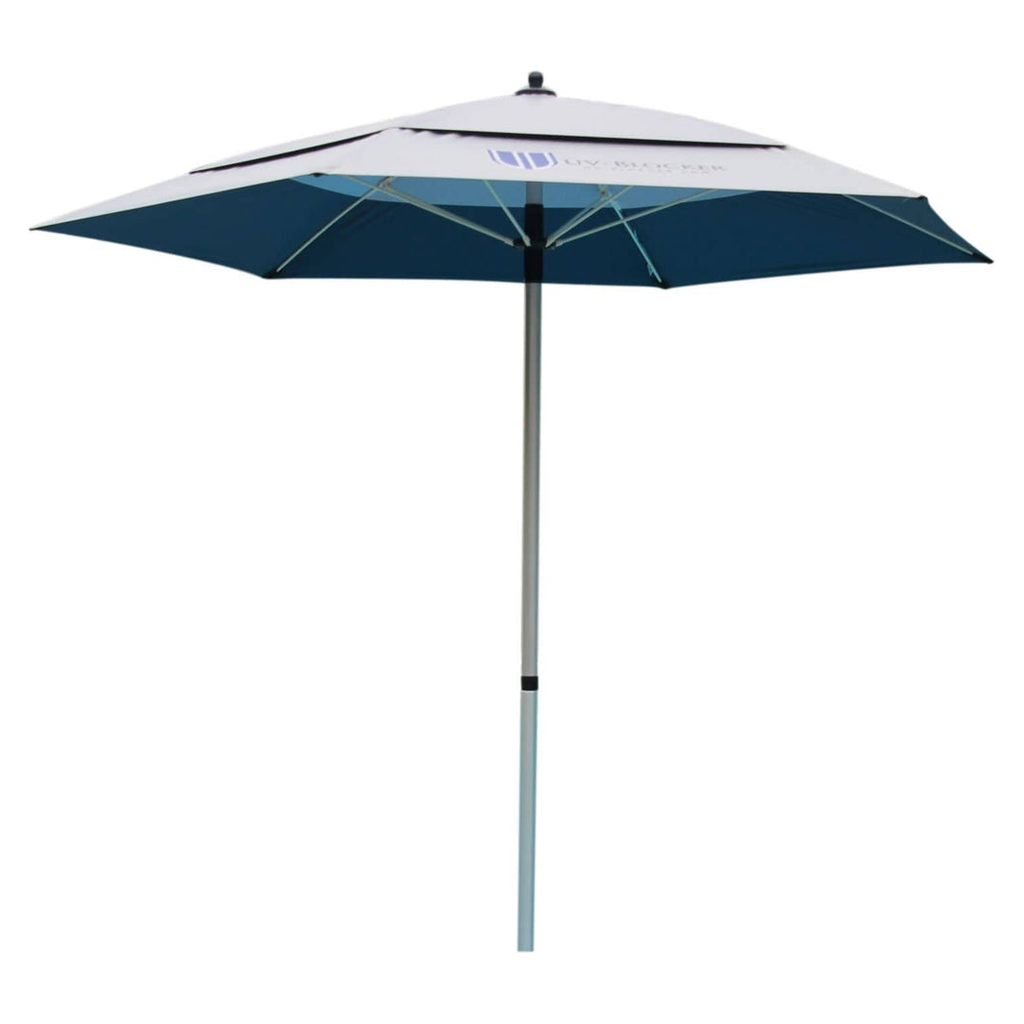
Install shade at every outdoor break area. A UV-Blocker Compact UV Umbrella ($59.95) paired with a Chair Umbrella Holder ($29.95) creates a UPF 50+ shade station that blocks 99% of UV radiation. Total cost: under $90 per station. No installation, no permits, no dock modifications required.
Step 3: Personal UV Protection
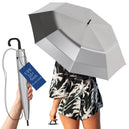
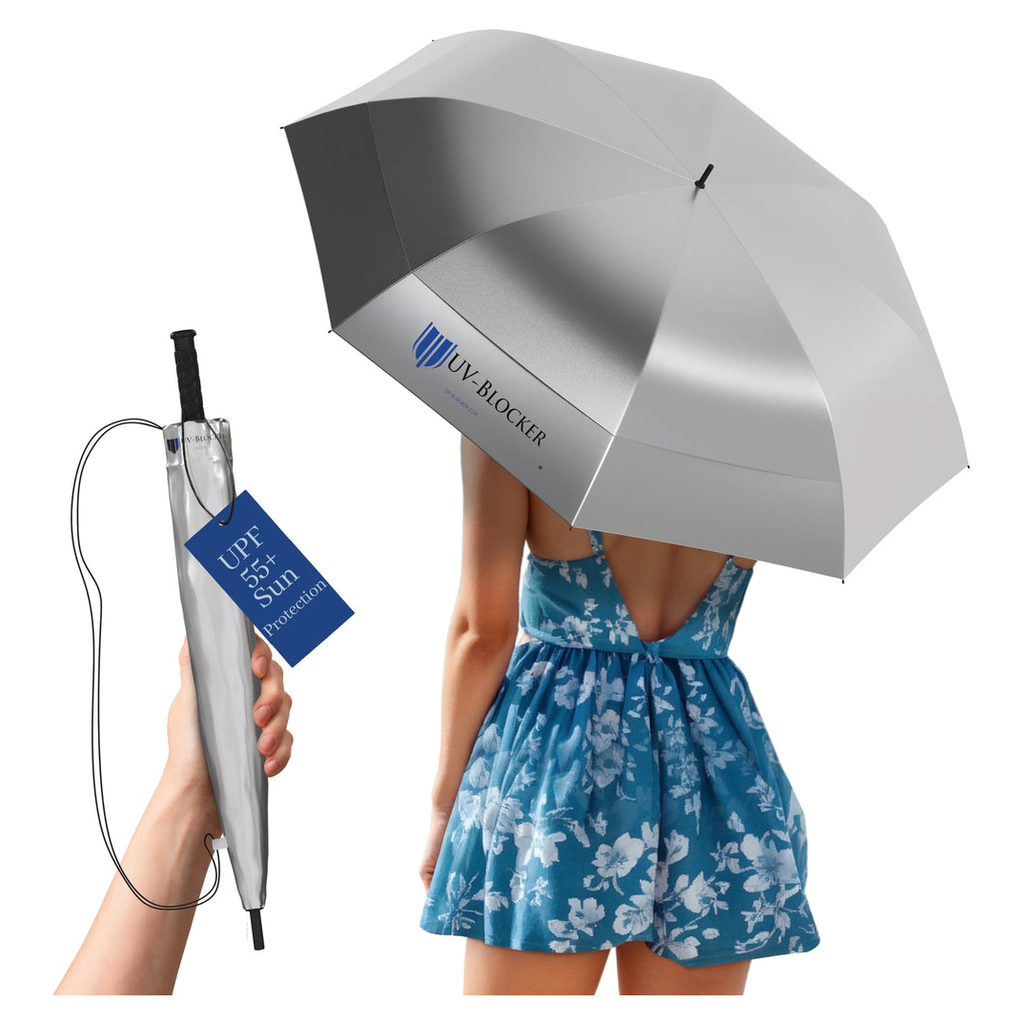
Provide workers with compact UPF 50+ umbrellas for their lockers. Personal sun protection for lunch breaks, extended outdoor transitions, and yard work keeps UV protection available whenever workers step outside.
Step 4: Sunscreen Station
Mount a bulk SPF 50+ dispenser at each dock entrance. Industrial-grade, fragrance-free formulations work best. Position dispensers where workers pass them on every outdoor transition, not tucked away in a breakroom.
Step 5: Schedule Optimization
When operationally possible, schedule outdoor staging and yard work for early morning or late afternoon when UV index drops below 3. Reserve peak UV hours (10 a.m. to 4 p.m.) for indoor tasks.
Step 6: UV Awareness Training
Add a 5-minute module to annual safety training covering cumulative dose (the 5-min x 35-trip calculation), the "indoor worker" perception gap, and available protections.
Frequently Asked Questions About Sun Protection for Warehouse Workers
These are the most common questions from warehouse safety managers, logistics facility directors, and individual warehouse workers about UV exposure at loading docks and staging areas.
Do warehouse workers have a higher skin cancer risk?
Warehouse workers who make frequent outdoor transitions at loading docks accumulate UV exposure comparable to outdoor workers, placing them at elevated skin cancer risk.
The WHO/ILO found that occupational UV exposure increases nonmelanoma skin cancer risk by 60%. A dock worker averaging 35 outdoor transitions accumulates roughly 3 hours of daily UV, matching many recognized high-risk occupations.
Does OSHA require sun protection at loading docks?
OSHA has no specific solar UV standard, but the 2026 National Emphasis Program covers warehousing for heat-related illness, and the General Duty Clause applies to recognized UV hazards.
The April 2026 update targets 55 industries including warehousing. Enforcement triggers at heat index 80 degrees F.
How much UV exposure do dock workers actually get?
A dock worker averaging 35 outdoor transitions of 5 minutes each accumulates approximately 175 minutes (roughly 3 hours) of cumulative UV exposure per shift, matching construction and agricultural workers already classified as high-risk.
What is the cheapest way to add shade to a loading dock break area?
A UPF 50+ compact umbrella with a chair clamp creates an instant shade station for under $90, blocking 99% of UV at outdoor break areas with no installation or permits.
The UV-Blocker Compact ($59.95) with a Chair Umbrella Holder ($29.95) clamps directly to break area seating. For workers on medications that increase sun sensitivity, shade at break areas is especially important.
Should employers provide sunscreen for warehouse crews?
Yes. Bulk SPF 50+ dispensers mounted at dock entrances cost under $200 per year and provide broad-spectrum protection before every outdoor transition.
Industrial-grade, fragrance-free formulations work best. Position dispensers at the dock entrance (not in a breakroom) so sunscreen is in the worker's path on every trip. Reapplication every 2 hours matters for workers making repeated transitions.
Conclusion
Warehouse workers are one of the most overlooked UV risk groups in occupational health. The math is clear: 35 outdoor transitions at 5 minutes each adds up to roughly 3 hours of cumulative UV exposure per shift, delivered without a single protective measure in place.
OSHA's 2026 NEP now covers warehousing, creating both a compliance incentive and a framework for broader sun safety programs. The fastest starting point: put a shade station at every outdoor break area. Under $90 per station, zero installation, and immediate UV reduction. Browse the full line of UV protection umbrellas to find the right fit for each dock setup.
For related guides, see Sun Protection for Construction Workers and Sun Protection for Outdoor Workers.
California, OSHA, and Warehouse UV Exposure: Regulatory Context and Employer Obligations
Warehouse and distribution center workers face a UV exposure profile that falls into a regulatory blind spot: they're not classified as "outdoor workers" under most sun safety standards, yet loading dock operations, truck marshaling, and cross-dock transfers routinely expose workers to hours of direct and reflected UV daily.
What OSHA Requires (and What It Doesn't)
Federal OSHA currently has no specific UV protection standard. However, the General Duty Clause (Section 5(a)(1)) requires employers to address known hazards — and UV exposure at loading docks constitutes a documentable hazard. OSHA's Heat Illness Prevention guidance (29 CFR 1910, Subpart T) applies to hot outdoor environments and covers shade provisions that benefit UV-exposed workers.
UV Exposure Mapping for Warehouse Operations
| Work Zone | Daily UV Exposure (hrs) | Relative Risk |
|---|---|---|
| Interior racking / picking | 0–0.1 | Negligible |
| Loading dock (covered) | 0.5–1.5 | Low–Moderate |
| Loading dock (open bay) | 1.5–3.0 | Moderate–High |
| Truck marshaling / lot | 2.0–4.0 | High |
| Cross-dock outdoor transfers | 3.0–6.0 | Very High |
Practical Employer Solutions
- Install fixed canopy extensions on open loading bays (addresses both UV and heat)
- Provide portable UPF 50+ shade for lot workers and truck marshals
- Update PPE policy to include UV-protective clothing and headwear for outdoor-adjacent roles
- Include UV safety in onboarding and quarterly safety briefings
Sun Safety in Australia
Australia has some of the highest UV radiation levels in the world, with the UV Index regularly reaching extreme levels (11 or above) in cities such as Sydney, Melbourne, Brisbane, Perth, and Adelaide for much of the year — including on overcast days. The Cancer Council Australia reports that approximately two in three Australians will be diagnosed with some form of skin cancer by age 70, making sun protection a national health priority.
Key resources and guidelines for Australian sun safety:
- SunSmart Program (Cancer Council Australia): The SunSmart UV Alert is broadcast daily and recommends sun protection whenever the UV Index reaches 3 or above. In most Australian cities, this threshold is met every day of the year, including winter months in northern regions.
- ARPANSA (Australian Radiation Protection and Nuclear Safety Agency): Provides real-time UV monitoring at stations across all states and territories. Australians can access current UV levels at arpansa.gov.au.
- Safe Work Australia — UV Radiation as an Occupational Hazard: Australian workplace health and safety legislation requires employers to assess and manage UV radiation exposure for outdoor workers. Physical shade, including umbrellas rated UPF 50+, is recognised as a primary engineering control under these regulations.
A UPF 50+ UV-blocking umbrella provides the consistent, continuous shade protection that is essential under Australia's intense sun. The UV-Blocker umbrella, with its patented Solarteck® reflective coating, blocks 99% of UV rays and reduces perceived temperature by up to 15°F — a meaningful advantage for outdoor activities in Australia's climate. It is the only umbrella of its kind approved by the Melanoma International Foundation.
Sun Safety in Canada
Canada experiences meaningful UV exposure throughout the year, with UV Index levels regularly reaching 8–10 or higher during summer months in cities such as Vancouver, Calgary, Toronto, and Ottawa. Health Canada and Environment and Climate Change Canada publish daily UV Index forecasts and recommend protective measures whenever the index exceeds 3 — a threshold reached on most clear days between May and August across the country.
Key resources for Canadian sun safety:
- Health Canada UV Index: Published daily via the Environment and Climate Change Canada weather portal (weather.gc.ca). Canadians can track UV levels by city and receive alerts when protection is recommended.
- Canadian Cancer Society: Recommends UPF 50+ clothing, hats, sunscreen, and shade-seeking as primary sun protection strategies. Physical UV barriers — such as UPF 50+ umbrellas — are emphasized for prolonged outdoor exposure.
- Canadian Dermatology Association: Endorses broad-spectrum sun protection strategies, including shade structures and UV-blocking accessories, especially for individuals with fair skin or a personal or family history of skin cancer.
For Canadians spending extended time outdoors — whether working, playing sports, or enjoying recreational activities — a UV-blocking umbrella rated UPF 50+ provides continuous, reapplication-free protection. The UV-Blocker umbrella, independently tested and approved by the Melanoma International Foundation, blocks 99% of UV rays and keeps users up to 15°F cooler — making it a practical and reliable companion for Canadian summers.
Frequently Asked Questions
What are the specific UV risks for Sun Protection for Warehouse Workers?
Outdoor workers like Sun Protection for Warehouse Workers typically accumulate 2–3× more UV exposure than indoor office workers. Chronic UV exposure increases melanoma and non-melanoma skin cancer risk significantly. OSHA recognizes UV radiation as a workplace hazard, and workers' compensation claims related to occupational UV exposure are rising. Proper sun protection is both a health and occupational safety requirement.
Does OSHA require sun protection for outdoor workers?
OSHA's General Duty Clause requires employers to protect workers from recognized hazards, including UV radiation. While no specific UV standard exists for most industries, OSHA guidance on heat illness prevention overlaps with UV protection. Several states have stronger outdoor worker heat and UV protection regulations. Employers should provide shade, schedule breaks, and supply sun protection equipment.
What sun protection equipment works best for active outdoor work?
For workers who need freedom of movement, the most effective combination is: (1) UPF 50+ work shirts and pants, (2) wide-brim hard hat or sun-protective hat, (3) SPF 50 water-resistant sunscreen on exposed skin, and (4) a portable clamp or magnetic-base UV umbrella that creates shade at a fixed workstation. UV-Blocker's ServiceShield umbrella was specifically designed for rooftop and outdoor workstation use.
How often should outdoor workers apply sunscreen during a shift?
Sunscreen should be reapplied every 2 hours, and immediately after heavy sweating or toweling off. Most outdoor workers underapply — dermatologists recommend 1 oz (shot glass amount) for full body coverage. Water-resistant SPF 50+ formulas last longer during sweating. Physical (mineral) sunscreens tend to be more stable under direct sun than chemical formulas.
What long-term skin damage should outdoor workers watch for?
Watch for actinic keratoses (rough, scaly patches), unusual moles or growths that change in size, shape, or color, and persistent sores that don't heal. Annual skin cancer screenings with a dermatologist are strongly recommended for outdoor workers with 10+ years of occupational sun exposure. Early detection dramatically improves outcomes.
Professional Sun Safety Protocol for Sun Protection for Warehouse Workers
- Schedule intensive UV work (roof work, outdoor inspections) before 10am or after 4pm when UV index is lowest
- Use UV-blocking umbrella attachments at fixed workstations — they eliminate ambient UV exposure during breaks
- Establish a buddy system: coworkers check each other for missed sunscreen areas and early sunburn signs
- Keep sunscreen in the work vehicle or tool bag — accessibility increases compliance
- Document sun protection training in safety briefings — it creates legal compliance records and reinforces habits
- Consider UV-protective safety eyewear — eyes are often neglected in outdoor worker sun protection protocols