

Phoenix logs 3,872 hours of sunshine annually, more than any other major city on Earth. For seven months straight, the UV Index sits at Very High to Extreme.
Arizona's melanoma rate runs roughly 30% above the national average, yet every existing arizona sun protection guide for the state clocks in under 900 words. This guide covers monthly UV data, city-by-city elevation effects, the monsoon UV myth, and a complete layered protection protocol.
TLDR:
- Arizona's UV Index hits 8+ (Very High to Extreme) for seven consecutive months, March through September.
- Altitude amplifies UV by 4-5% per 1,000 feet. Flagstaff gets 28-35% more UV than sea level.
- Desert sand reflects up to 17% of UV radiation back upward, bypassing hats and standard shade.
- Monsoon clouds let up to 80% of UV through while dropping temperatures and creating false security.
- Effective arizona sun protection layers portable UPF 50+ shade, sunscreen, UPF clothing, and smart timing.
How Extreme Is Arizona's UV Exposure?
Arizona's UV Index reaches 12 (Extreme) during summer and stays at Very High or above for seven consecutive months, making it the most intense UV environment in the United States.

| Month | UV Index | Risk Level |
|---|---|---|
| January | 4 | Moderate |
| February | 6 | High |
| March | 9 | Very High |
| April | 10 | Very High |
| May | 11 | Extreme |
| June | 12 | Extreme |
| July | 11 | Extreme |
| August | 11 | Extreme |
| September | 10 | Very High |
| October | 7 | High |
| November | 5 | Moderate |
| December | 4 | Moderate |
A UV Index of 8 or higher means fair skin can burn in under 15 minutes without protection. Arizona maintains this baseline from March through September. Sun safety here isn't a seasonal habit. It's a daily requirement.
Arizona's December UV Index of 4 equals the peak July UV in Seattle or Portland. Winter offers no reprieve. Newcomers and snowbirds step out into 65-degree December weather, skip the sunscreen, and burn anyway. According to the EPA UV Index Scale, even moderate UV levels require protective measures.
The state sees nearly 300 sunny days per year compared to roughly 205 nationally. This constant exposure means cumulative skin damage accelerates far faster than in cloudier climates. Arizona skin never gets a break.
Why Does Arizona UV Hit Differently Than Other States?
Arizona's combination of high altitude, reflective desert terrain, and low latitude creates a UV environment where exposure comes from above, below, and the sides at the same time.

The Altitude Effect
UV radiation increases by 4-5% for every 1,000 feet of elevation gained. The atmosphere thins at higher altitudes and loses its ability to filter harmful rays.
| City | Elevation | UV Increase vs Sea Level |
|---|---|---|
| Phoenix | 1,100 ft | +4-5% |
| Sedona | 4,350 ft | +17-22% |
| Flagstaff | 7,000 ft | +28-35% |
Flagstaff receives 28-35% more UV than a sea-level coastal town. Sedona sees a 17-22% increase. Even Phoenix sits above sea level at 1,100 feet. Every step up a mountain trail increases UV exposure.
Desert Albedo
Desert terrain acts like an environmental mirror. Sand reflects 30-45% of total solar energy. The UV-specific albedo of desert sand reaches up to 17%. Compare that to grass at 2-5% and water at roughly 10%.
Walking across Arizona desert means UV strikes from the sky and bounces back up from the ground. A standard baseball cap provides zero protection against radiation reflecting off the sand below.
Latitude and Dry Air
Phoenix sits at 33 degrees North, nearly as far south as Dallas. The sun holds a higher, more direct angle year-round. Arizona's dry air also lacks the moisture that scatters UV in humid coastal states, letting radiation pass through with minimal filtering.
Can You Get Sunburned During Arizona's Monsoon Season?
Yes. Up to 80% of UV radiation penetrates cloud cover, and Arizona's monsoon runs June through September, exactly when the UV Index peaks at 11-12.
The Arizona monsoon season officially runs from June 15 through September 30. It brings afternoon thunderstorms and cloud cover. The sudden arrival of dark clouds drops temperatures, and the air feels cooler. That shift creates a dangerous trap.
Those storm clouds block visible light and reduce heat sensation. The invisible UV radiation barely drops at all. People routinely ditch their arizona sun protection during monsoon because the air feels pleasant. They skip the afternoon sunscreen reapplication exactly when the UV Index sits at Extreme.
Anyone wondering whether clouds provide real protection should read about how sunburn happens even on cloudy days. Cloud cover removes the physical warning sign of heat while UV rays continue causing cellular damage underneath.
City-by-City Arizona UV Breakdown
Each Arizona city presents a different UV challenge based on elevation, terrain, and outdoor culture, from Phoenix's valley heat to Flagstaff's altitude-amplified radiation.
| City | Elevation | Peak UV Index | UV Increase vs Sea Level | Top Activity Risk |
|---|---|---|---|---|
| Phoenix | 1,100 ft | 12 | +4-5% | Pool culture, daily errands |
| Scottsdale | 1,250 ft | 12 | +5-6% | Hiking (Camelback Mountain) |
| Tucson | 2,400 ft | 11 | +9-12% | Campus life, outdoor sports |
| Sedona | 4,350 ft | 11 | +17-22% | Trail hiking, sightseeing |
| Flagstaff | 7,000 ft | 10 | +28-35% | High-altitude recreation |
Phoenix and Scottsdale
Phoenix bakes under a UV Index of 12 during summer. The metro area houses 5 million people enduring nearly 300 sunny days annually. Most severe exposure doesn't happen on extreme adventures. It happens during routine errands, parking lot walks, and patio dining.
Scottsdale draws hikers to Camelback Mountain and McDowell Sonoran Preserve for four or more hours of direct exposure. The resort pool culture guarantees long stretches of bare-skin time with water reflecting UV upward.
Tucson and Sedona
Tucson sits at 2,400 feet with a UV Index peaking at 11. This university town promotes active outdoor living. The elevation provides marginally cooler evenings, but daytime UV remains extreme.
Sedona presents a unique hazard at 4,350 feet. The famous red rocks reflect UV radiation the same way desert sand does. Visitors spend hours gazing at formations while rocky ground bounces radiation into their faces. A wide-brim hat alone provides zero defense against rays coming from below.
Flagstaff: The Counterintuitive Danger
Flagstaff is the most deceptive sun environment in the state. At 7,000 feet, it receives roughly 30% more UV than sea level. But summer temperatures often hover in the pleasant 70s.
That comfortable air tricks people into leaving their sunscreen behind. They burn faster in Flagstaff than anywhere else in Arizona despite feeling cooler. For similar desert conditions in a neighboring state, a Las Vegas sun survival guide shows how nearby regions handle extreme exposure.
How Do You Build a Complete Arizona Sun Protection Plan?
A complete arizona sun protection plan layers four defenses: portable UPF 50+ shade, broad-spectrum sunscreen, UPF clothing and accessories, and smart timing around peak UV hours.
A single line of defense fails in Arizona. Sunscreen degrades in the heat. Hats only block rays from above. The four-layer approach compensates for each layer's weaknesses.
Layer 1: Portable UPF 50+ Shade
Block radiation before it touches skin. Solid shade reduces UV exposure by 50-95% depending on canopy coverage. Match the shade tool to the activity:
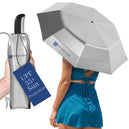
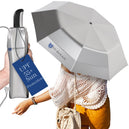
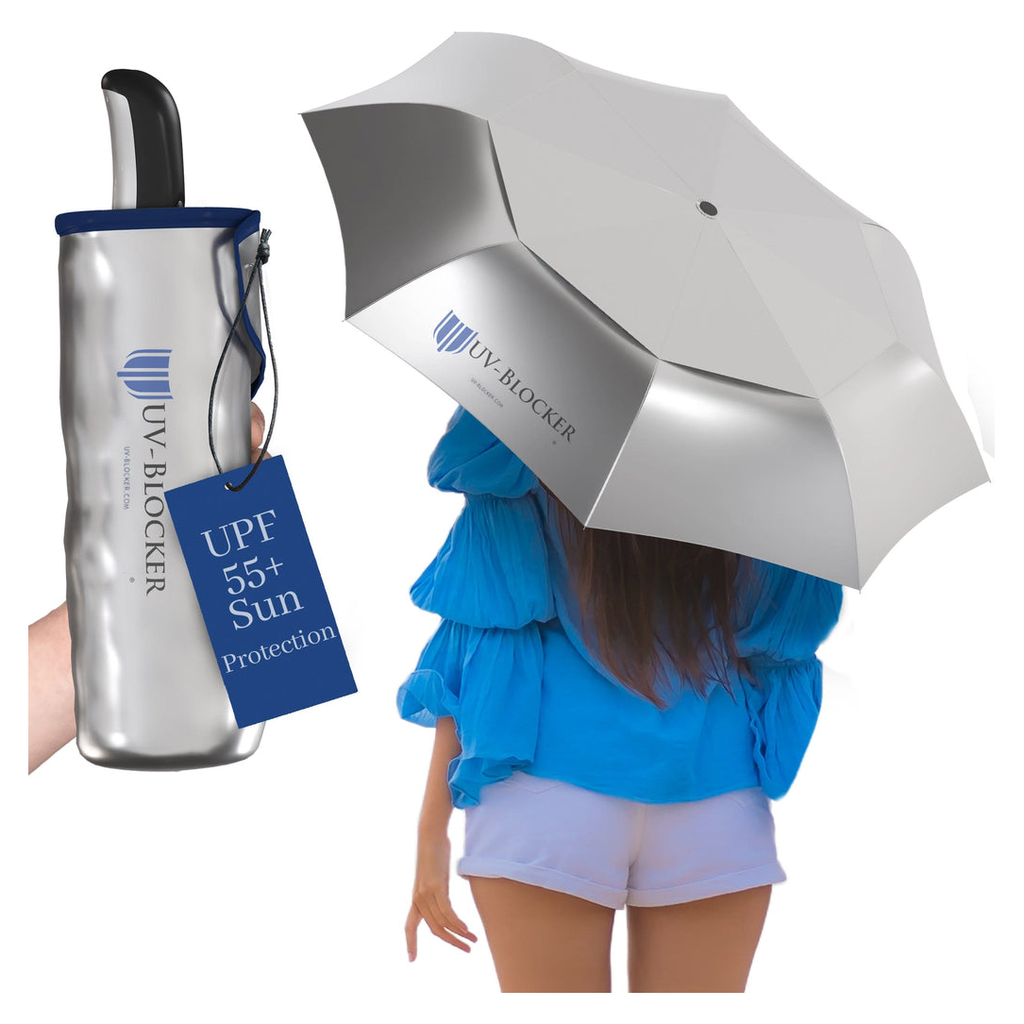
- Daily errands and commuting: A UPF 50+ compact umbrella fits in a bag and provides instant shade in parking lots and at trailheads.
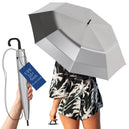
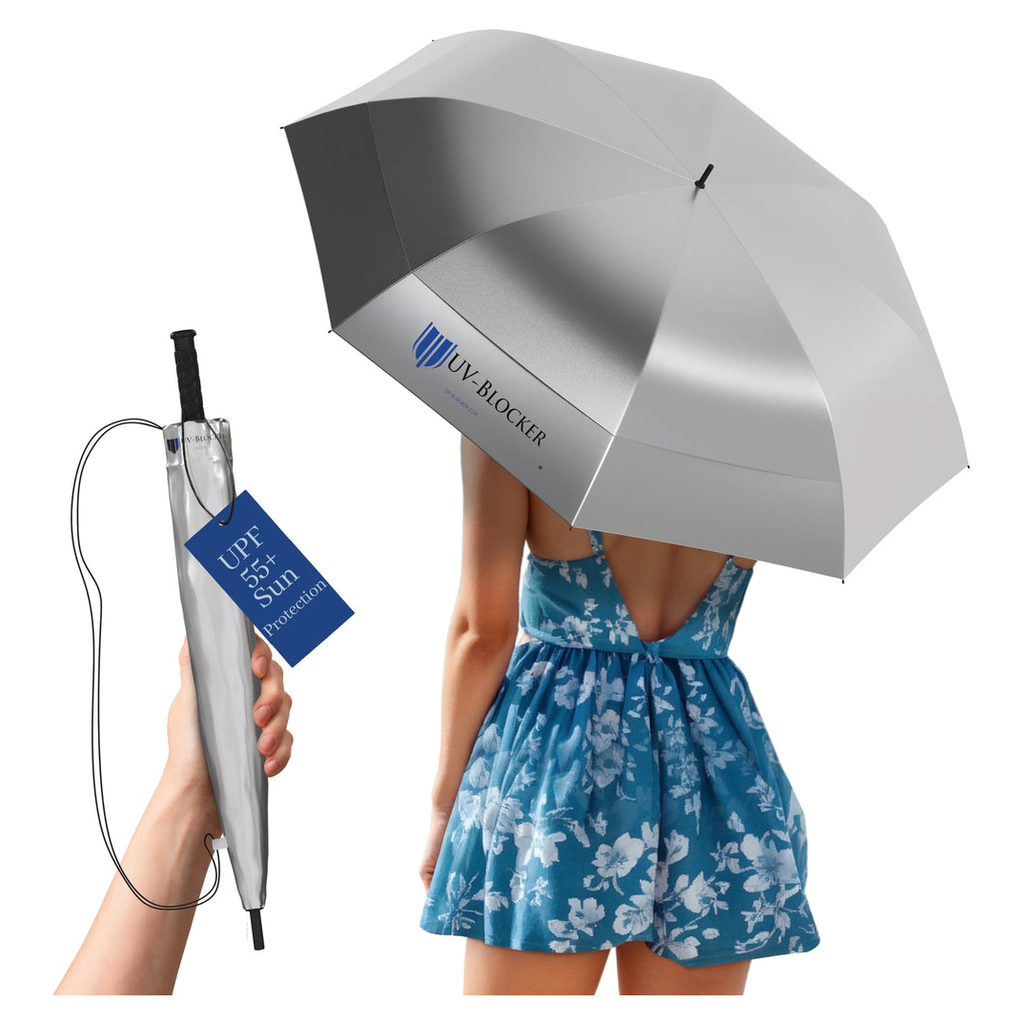
- Golf: Arizona has over 200 golf courses. A standard round means four hours in direct sun. A UPF 50+ golf umbrella covers the entire body between shots.
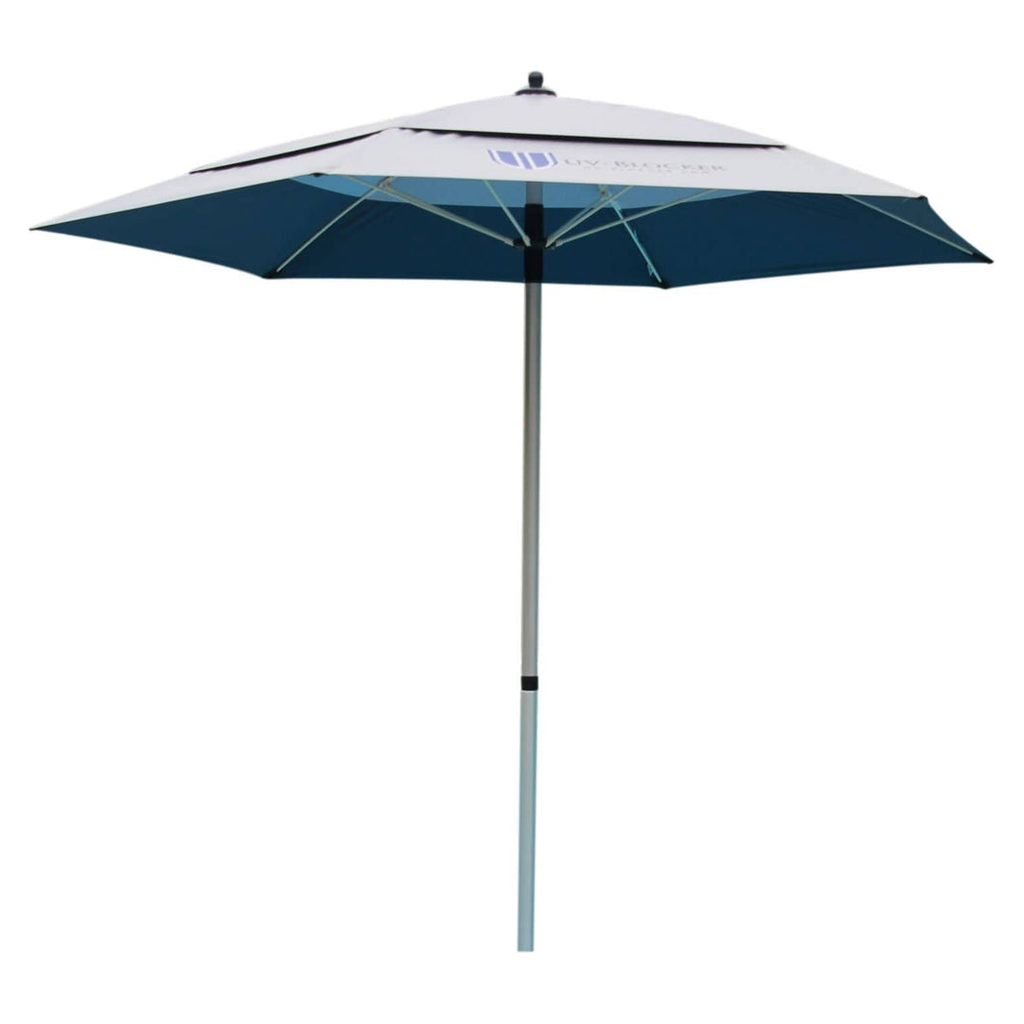
- Pool and patio: A UPF 50+ beach umbrella turns a backyard into shaded territory.
- Road trips: Driving between Phoenix, Sedona, and the Grand Canyon means frequent stops in full sun. A UPF 50+ travel umbrella packs flat and deploys at every pullover.
Layer 2: Broad-Spectrum Sunscreen
Apply SPF 30 or higher every day. Arizona's heat causes rapid sweating that degrades sunscreen faster than moderate climates. Reapply every two hours and immediately after swimming or heavy activity.
Layer 3: UPF Clothing and Accessories
Regular cotton t-shirts only offer a UPF rating of 5-7, letting significant UV through the fabric. Wear dedicated UPF 50+ long-sleeve shirts, a wide-brim hat, and wrap-around UV-rated sunglasses. According to the Skin Cancer Foundation, purpose-built sun clothing blocks over 98% of UV.
Layer 4: Smart Timing
Avoid direct exposure between 10 am and 4 pm when UV peaks. Arizona's outdoor culture makes strict avoidance difficult, which is exactly why layers 1-3 matter more here than anywhere else.
The Shade-Heat Connection
Arizona sun protection is also a heat survival issue. Maricopa County recorded 602 heat-related deaths in 2024. A UPF 50+ umbrella with reflective fabric addresses both threats at once. Specialized coatings like Solarteck bounce thermal heat away, keeping the shaded area up to 15 degrees cooler than ambient temperature. One tool, two critical defenses.
Frequently Asked Questions About Arizona Sun Protection
Arizona's extreme UV environment raises practical questions that generic sun safety advice can't answer. Here are the most common, with Arizona-specific data.
Do you need sunscreen in Arizona?
Yes, year-round. Arizona's UV Index never drops below 4 (Moderate) and reaches Extreme (12) during summer. Even winter UV in Phoenix exceeds summer UV in northern cities. Pair sunscreen with shade and UPF clothing for proper arizona sunburn prevention.
How bad is the sun in Arizona?
Arizona has the most intense UV environment in the country, with seven months above UV Index 8 and melanoma rates roughly 30% above the national average. The state logs 3,872 hours of sunshine annually across nearly 300 sunny days.
What SPF should I use in Arizona?
Dermatologists recommend at minimum SPF 30 broad-spectrum sunscreen for daily Arizona use, with SPF 50+ for extended outdoor activities like hiking and golf. Reapply every two hours without exception. Arizona heat degrades sunscreen faster than moderate climates.
Why is the sun stronger in Arizona?
Three factors amplify arizona UV protection needs: high altitude (4-5% more UV per 1,000 feet), reflective desert terrain (up to 17% UV albedo), and low latitude providing a more direct sun angle year-round. Dry air provides minimal atmospheric filtering compared to humid states.
Can you get sunburned on a cloudy day in Arizona?
Yes. Up to 80% of UV penetrates cloud cover. Arizona's monsoon season (June through September) brings afternoon clouds while the phoenix UV index remains at 11-12. The drop in temperature creates a false sense of security that leads to severe burns.
Is Arizona the sunniest state?
Arizona ranks as the sunniest state in the country. Phoenix records 3,872 hours of sunshine annually with nearly 300 sunny days per year. Neighboring states like Nevada and California post high sunshine totals, but Arizona consistently tops the charts for cloudless days and total annual solar radiation.
Is sunscreen enough protection in Arizona's summer heat?
Sunscreen is necessary but not sufficient for Arizona summers, particularly from May through September when UV indexes routinely reach 11+ (extreme) for 6 to 8 consecutive hours. Sunscreen degrades faster in heat — studies show chemical sunscreens can lose up to 35% of their effectiveness after an hour of high-temperature outdoor activity. Arizona's combination of intense direct radiation, significant UV reflection from light-colored desert soil and pavement, and altitude amplification means layered protection is essential: sunscreen plus UPF-rated clothing plus physical shade (a portable umbrella or fixed canopy) during peak UV hours.
How does altitude affect UV exposure in Flagstaff versus Phoenix?
Flagstaff sits at 6,910 feet elevation — approximately 2,100 meters higher than Phoenix. UV radiation increases roughly 4% for every 300-meter (1,000-foot) gain in elevation due to thinner atmosphere and reduced UV-absorbing ozone. This means Flagstaff residents and visitors receive approximately 28% more UV radiation than Phoenix at equivalent solar angles. Despite Flagstaff's cooler temperatures (often 15°F to 25°F cooler than Phoenix in summer), the UV intensity is significantly higher. Hikers on the North Rim of the Grand Canyon (elevation ~8,000 feet) should treat UV risk as even more severe than Flagstaff data suggests.
What UV protection is recommended for Arizona outdoor workers?
OSHA and NIOSH classify outdoor workers in Arizona as facing high-to-very-high occupational UV exposure risk. Recommended protocol for Arizona outdoor workers: long-sleeve shirts with UPF 30+ rating (required for sun-facing positions), hard hats with full-brim extensions rather than visored baseball-style caps, UV-blocking safety glasses rated to ANSI Z87.1 standard, broad-spectrum SPF 50+ sunscreen on all exposed skin with reapplication every 2 hours, and rotating shade access throughout the shift. Workers at rooftop job sites — HVAC, electrical, solar — should use a portable shade solution such as a UV umbrella attached to equipment or scaffolding.
Conclusion
Arizona's sun demands respect. The UV Index stays extreme for seven months and never drops to a truly safe level. Altitude thins the atmosphere. Reflective desert terrain sends UV from multiple directions. Monsoon clouds offer false comfort, blocking heat while letting damaging rays pass through.
A casual approach to phoenix sun safety fails here. Layer portable shade, frequent sunscreen application, UPF clothing, and smart scheduling. Check the UV Index for a specific Arizona city today and pack a UPF 50+ umbrella before the next outdoor activity. Purpose-built shade from UV-Blocker remains the single most effective tool for surviving the most extreme UV environment in the country.
Arizona Month-by-Month UV Intensity Guide
UV intensity in Arizona isn't simply "always extreme" — it follows a predictable pattern that affects how you should plan outdoor activities throughout the year. Use this reference to calibrate your protection needs by month.
| Month | Peak UV Index (Phoenix) | Peak UV Index (Flagstaff) | Safe Unprotected Exposure (Fair Skin) | Primary Risk |
|---|---|---|---|---|
| January | 4–6 (Moderate) | 5–7 (High) | 45–90 min | Deceptive winter sun |
| February | 5–7 (High) | 6–8 (High) | 30–60 min | Spring break early arrivals |
| March | 7–9 (High) | 8–10 (Very High) | 20–40 min | Spring training events |
| April | 8–10 (Very High) | 9–11 (Very High) | 15–25 min | Increasing daily peak windows |
| May | 10–12 (Extreme) | 11–13 (Extreme) | 10–15 min | Desert hiking season peak |
| June | 11–13 (Extreme) | 12–14 (Extreme) | 8–12 min | Highest sustained UV of the year |
| July | 10–12 (Extreme) | 11–13 (Extreme) | 10–15 min | Monsoon cloud gaps amplify risk |
| August | 9–11 (Very High) | 10–12 (Extreme) | 12–18 min | Monsoon humidity + UV combo |
| September | 8–10 (Very High) | 9–11 (Very High) | 15–25 min | Seasonal events ramp up |
| October | 6–8 (High) | 7–9 (High) | 25–40 min | Outdoor festival season |
| November | 4–6 (Moderate) | 5–7 (High) | 40–75 min | Snowbird season begins |
| December | 3–5 (Moderate) | 4–6 (Moderate–High) | 60–90 min | Low UV but reflective surfaces |
Safe unprotected exposure times are estimates for fair skin (Fitzpatrick Type II) at sea level. Actual burn times decrease 4% per 1,000 feet of elevation and are shortened by reflective surfaces (sand, pavement, pool water).
Why Monsoon Season (July–September) Still Requires Full Protection
A common Arizona misconception: if there are clouds, UV is reduced. During monsoon season, afternoon storm cells create dramatic cloud cover — but in the hours between morning sun and afternoon buildup, UV indexes regularly reach 10 to 12. Cloud gaps in partly cloudy conditions can actually increase local UV intensity by up to 25% through a reflection and refraction effect. Even on full overcast monsoon days, 50% to 80% of UV radiation still reaches ground level. Sunscreen and physical shade should remain constant throughout monsoon season regardless of cloud conditions.
📚 Related Sun Protection Guides
- Sun Protection for Hiking: The Complete Trail UV Safety Guide (2026)
- Sun Protection for Runners in 2026: The Complete Training Guide
- Universal Studios Sun Protection: The Complete UV Safety Guide
- Can You Get Sunburn on a Cloudy Day? The 80% UV Myth Most People Get Wrong
- UV Index Umbrella Guide: What Every UV Level Means and When You Need One
- Medications That Cause Sun Sensitivity: The Complete Drug Photosensitivity Guide
- The Complete Guide to Sun Protection Clothing: What UPF Ratings Really Mean
Arizona's Monsoon Season and UV: The Summer Paradox
Arizona's monsoon season (late June through September) creates a specific sun protection paradox that surprises both residents and visitors: dramatic thunderstorms, cloudy skies, and intense rainfall alternate unpredictably with sudden, intense sunshine — often on the same afternoon. This variability leads to dangerous under-protection during sunny intervals that follow overcast morning skies.
The monsoon cloud cover in Arizona provides inconsistent UV reduction. Thick cumulus clouds directly overhead can reduce UV index by 30 to 50%, but thin high cirrus cloud cover reduces UV by only 5 to 10% while creating a misleading visual impression of cloud cover. The same morning cloud deck that makes Phoenix feel relatively protected at 9 AM can thin out to near-zero UV reduction by 11 AM when the monsoon system retreats eastward temporarily.
The WHO's standard guidance is that clouds block 20 to 40 percent of UV — a range that means 60 to 80 percent still penetrates to ground level. In Arizona, where a base UV index of 11 to 12 is standard through summer, even "heavy cloud cover" can still deliver UV index 7 to 8 — squarely in the "Very High" category.
The practical rule for Arizona monsoon season: apply full protection every morning regardless of the morning cloud deck. Do not assume that overcast skies mean safe UV conditions. Check the hourly UV forecast at weather.gov before extended outdoor activities and plan reapplication based on the actual UV index forecast rather than visual sky assessment.
High-Altitude Arizona: Flagstaff, Sedona, and Prescott UV Considerations
Much Arizona sun protection coverage focuses on the Phoenix metro area, which sits at 1,086 feet elevation. But a significant portion of Arizona's population and tourism activity is concentrated in high-altitude communities where UV intensity is substantially higher than the desert valley floor.
| Arizona City | Elevation (ft) | UV Amplification vs. Sea Level | Peak Summer UV Index | Key Consideration |
|---|---|---|---|---|
| Flagstaff | 6,909 | +21% | 11-12 | Popular summer retreat from Phoenix heat; visitors underestimate UV at altitude |
| Sedona | 4,350 | +13% | 11-12 | Red rock hiking in open terrain with reflected UV from rock surfaces |
| Prescott | 5,367 | +16% | 11-12 | Popular retirement community; outdoor recreation year-round |
| Tucson | 2,389 | +7% | 11 | University population with high outdoor activity; similar risk to Phoenix |
| Phoenix Metro | 1,086 | +3% | 10-11 | Highest population density; pavement heat island amplifies thermal impact |
Flagstaff is particularly counterintuitive for sun protection. Phoenix residents escape to Flagstaff because summer temperatures are 20 to 30°F cooler — and the cooler temperatures reduce perceived sun intensity. But at 6,909 feet, Flagstaff receives 21% more UV radiation than a sea-level location on the same day. Hiking the Ponderosa pine forests feels comfortable in 75°F weather, but the UV dose delivered per hour is higher than what a beachgoer in San Diego would receive at the same hour.
Hikers at Sedona face a specific reflected UV challenge from the iron-rich red sandstone formations. Sandstone and exposed rock surfaces reflect 20 to 30% of UV, compared to grass's 6 to 10%. Hikers moving through slot canyons and open rock formations receive simultaneous overhead UV and significant reflected UV from surrounding rock faces — particularly relevant for the lower legs, inner arms, and under-chin areas that standard sun protection focuses less on.
Snowbird and Winter Visitor Sun Protection in Arizona
Arizona hosts hundreds of thousands of winter visitors — "snowbirds" — from November through April, primarily from northern US states and Canada. These visitors arrive from climates where UV index through winter averages 1 to 3 (Minimal to Low) and often underestimate Arizona's winter UV conditions significantly.
Arizona winter UV index (November through January) averages 4 to 6 across Phoenix and 3 to 5 in Tucson — readings in the "Moderate" to "High" range that would classify as late-spring conditions in most northern states. For someone arriving from Minneapolis, Buffalo, or Calgary with skin that has had minimal UV exposure since October, these "moderate" Arizona winter readings are effectively equivalent to their first strong spring UV exposure — a well-documented trigger for unexpected sunburn.
Key snowbird protection reminders:
- Apply SPF 30+ daily from arrival, even in December and January. Arizona's dry air and clear skies mean cloud-based UV reduction is minimal compared to overcast northern winters.
- Golf is the number-one snowbird UV activity in Arizona — and it consistently produces the worst protection compliance because cooler air temperatures mask UV intensity. The complete golf sun protection guide provides the full protocol for golfers of all experience levels.
- UV exposure after a winter of no UV is skin-sensitizing. Melanocytes have produced less protective melanin over the winter, making skin more sensitive to the first few weeks of Arizona sun than it would be by March or April after gradual re-exposure.
Arizona Sun Protection: Frequently Asked Questions
At what UV Index levels does Arizona's desert sun become dangerous, and what specific protection is required?
In Arizona, the UV Index frequently hits 11+ between 10 AM and 4 PM, meaning unprotected skin can burn in less than 10 minutes. Utilizing a UV-Blocker umbrella with Solarteck® technology is essential as it blocks 99% of UVA and UVB rays, providing a physical barrier that sunscreen alone cannot match. This is particularly vital in the desert where ground surfaces can reflect up to 25% of UV radiation back onto the body.
Why is UPF 50+ certification critical for sun safety in the high-altitude regions of Arizona?
Arizona’s high elevation increases UV exposure by roughly 4% for every 1,000 feet of gain, making standard cotton clothing—which often averages a UPF of only 5—insufficient. Gear that meets UPF 50+ standards, such as UV-Blocker products, ensures that 98% or more of harmful radiation is blocked from reaching the skin. This rating represents the highest attainable level of fabric protection, significantly reducing the risk of cumulative DNA damage.
How can Arizona residents verify that their sun protection equipment is medically effective against skin cancer?
Residents should prioritize products that carry the Melanoma International Foundation seal of approval, which signifies the gear has been vetted for superior UV opacity. UV-Blocker umbrellas are specifically designed to meet these rigorous medical standards, offering a reliable defense in a state with some of the highest skin cancer rates in the country. This independent certification ensures the equipment provides more than just shade, but actual clinical-grade radiation shielding.
How does the intense desert heat impact the performance of topical sunscreens versus physical UV barriers?
Arizona's extreme heat causes heavy perspiration that can degrade even water-resistant sunscreens in as little as 40 to 80 minutes, leaving users vulnerable between applications. A UV-Blocker sun umbrella provides a consistent physical shield that doesn't wash away and utilizes Solarteck® technology to reflect heat, lowering the temperature underneath by up to 15 degrees. This dual-action approach protects the skin from UV rays while simultaneously reducing the risk of heat exhaustion.