




This article is for general information and does not constitute medical advice. Doxycycline photosensitivity varies by dose, duration, skin type and individual factors. Always follow the guidance of the prescribing clinician, and never stop or adjust a prescribed medication without speaking to them first. If you develop a severe reaction — blistering, extensive swelling or a rash that is worsening — seek medical attention.
Roughly 1 in 25 patients on standard-dose doxycycline develops a photosensitivity reaction. At higher doses, that number jumps to nearly 1 in 2.
Most prescribers mention doxycycline sun sensitivity in passing. Patients don't understand the mechanism, the timeline, or why sunscreen alone falls short. This guide covers the specific wavelength that triggers reactions, how long sensitivity persists after stopping, and a protection protocol designed for the UVA exposure doxycycline patients actually face.
TLDR: Quick Facts on Doxycycline Sun Safety
- Doxycycline photosensitivity is triggered specifically by UVA1 radiation (340-400nm).
- Symptoms include exaggerated sunburns, intense redness, and occasional blistering.
- Risk is highly dose-dependent, scaling from 3% at standard doses up to 42% at maximum doses.
- Skin sensitivity frequently persists for 1 to 2 weeks after stopping the medication.
- Broad-spectrum sunscreen often fails to block the specific UVA1 wavelengths required for protection.
- A layered approach using physical shade (like a UPF 50+ umbrella), UPF clothing, and mineral sunscreen is essential.
How Does Doxycycline Make Your Skin Sensitive to the Sun?
Doxycycline accumulates in skin cells and absorbs UVA radiation, generating reactive oxygen species that damage tissue from the inside out.
This reaction is phototoxic rather than photoallergic. Patients frequently confuse these two distinct concepts when researching side effects. A photoallergic response requires the immune system to recognize the drug as a foreign invader. That immunological process takes time to develop. But phototoxicity is a direct chemical reaction. It can happen on the very first dose.
Many medications that cause sun sensitivity trigger different chemical pathways. Doxycycline specifically absorbs UVA1 wavelengths between 340 and 400 nanometers. This distinction is critical for patient protection strategies. UVA1 penetrates deeper into the skin than UVB rays. It passes through heavy cloud cover. It also passes through standard window glass in homes and vehicles.
Once the drug absorbs this radiation, it generates reactive oxygen species (ROS). These volatile oxygen molecules damage cell membranes and internal DNA structures. The damage occurs from the inside out, making the reaction highly dose-dependent. More drug accumulation in the dermal tissue means more cellular damage per minute of UV exposure. The resulting inflammation leads directly to the visible symptoms patients experience on the surface.
What Does Doxycycline Sun Sensitivity Look Like?
Symptoms range from exaggerated sunburn with intense redness and burning to blistering, and in rare cases, photo-onycholysis where nails separate from the nail bed.
The primary presentation is an exaggerated sunburn-like reaction. This response is far more intense than a normal sunburn for the equivalent exposure time. Patients often report extreme redness, a severe burning sensation, and localized swelling. These symptoms can develop within minutes of UV exposure while on the drug. A brief walk to the mailbox or a short drive can trigger a noticeable reaction. Contrast this with a normal sunburn timeline where redness usually takes hours to fully manifest. That rapid onset is exactly what shocks patients.
Severe cases involve significant blistering and tissue edema. This extreme presentation occurs most frequently at higher doses or in fair-skinned individuals. The skin may become so inflamed that it requires medical intervention to manage the pain and swelling. Blisters can form across any area of skin directly exposed to sunlight.
Another distinct symptom is photo-onycholysis. This involves nail separation directly from the underlying nail bed. It is documented in medical case reports, particularly with longer treatment courses. It remains a rare complication but is highly distinctive to tetracycline-class photosensitivity. The ultraviolet light penetrates the nail plate and reacts with the drug accumulated in the nail bed beneath.
When to seek medical help: extensive blistering, swelling that spreads beyond the sun-exposed area, fever, or a reaction that continues to worsen after getting out of the sun all warrant contacting your prescriber or seeking urgent care.
How Long Does Doxycycline Sun Sensitivity Last After Stopping?
Doxycycline's half-life is 18-22 hours, and the drug clears the body in 3-5 days, but photosensitivity can persist 1-2 weeks after the last dose.
The pharmacokinetic clearance of the drug follows a predictable timeline. The half-life of doxycycline is 18 to 22 hours. Medical professionals consider a drug effectively cleared from the bloodstream after four to five half-lives. This means the active medication is largely gone from the blood in 3 to 5 days. Most patients assume their sun risk drops to zero on day four.
However, photosensitivity outlasts the drug's presence in the bloodstream. Skin-level sensitivity can persist 7 to 14 days after stopping the medication. The drug binds tightly to specific tissues in the skin and takes much longer to fully dissipate from those cellular structures. Some dermatologists even advise extreme caution for up to 2 to 3 weeks in highly sensitive individuals.
Fair-skinned patients and those on higher doses or longer treatment courses should plan for the longer end of that window. Dropping sun protection habits the day a prescription ends is a common mistake that leads to unexpected burns.
Doxycycline photosensitivity: what happens when
| Phase | Timeline | What's Happening |
|---|---|---|
| Active treatment | Day 1 onward | Full photosensitivity risk |
| Last dose | Day 0 | Drug still at therapeutic levels |
| Drug clearance | Days 3-5 | Blood levels dropping below threshold |
| Residual sensitivity | Days 7-14 | Skin-level sensitivity persists |
| Full clearance | 2-3 weeks | Conservative safe window for sensitive individuals |
The practical takeaway: the drug leaves your bloodstream in 3 to 5 days, but your skin stays reactive for longer. Most dermatologists advise keeping sun precautions in place for 1 to 2 weeks after your last dose — and up to 3 weeks if you're fair-skinned, were on a higher dose, or took it for an extended course.
Does Doxycycline Dose Affect Sun Sensitivity Risk?
Photosensitivity risk is strongly dose-dependent, rising from roughly 3% at 100mg/day to approximately 20% at 150mg/day and up to 42% at 200mg/day.

A standard dosage for acne or common infections is 100mg per day. At this level, patients face a roughly 3% incidence rate of photosensitivity. The risk is manageable with basic precautions. But the danger escalates as the daily dosage increases. Higher doses of 150mg per day result in an approximate 20% incidence rate. Maximum therapeutic doses of 200mg per day carry a 42% incidence rate. This progression shows why generic sun advice fails for high-dose patients.
Tropical and high-UV environments amplify this baseline risk. Travelers taking doxycycline for malaria prophylaxis usually take the standard 100mg daily dose. Yet they report a 7% to 21% incidence of photosensitivity, well above the baseline 3% for the exact same dose. The difference comes down to the higher ambient UV exposure found in tropical regions.
Other compounding risk factors include fair skin (specifically Fitzpatrick types I and II), the use of concurrent photosensitizing medications, and extended treatment duration. A patient on 200mg per day for a severe infection with fair skin faces an almost guaranteed reaction without strict preventative measures.
| Daily Dose | Common Use | Photosensitivity Rate | Risk Level |
|---|---|---|---|
| 40mg | Sub-antimicrobial (rosacea) | <1% | Low |
| 100mg | Standard (acne, Lyme, infections) | ~3% | Moderate |
| 150mg | High-dose infections | ~20% | High |
| 200mg | Maximum therapeutic | Up to 42% | Very High |
| 100mg + tropical UV | Malaria prophylaxis | 7-21% | High |
Why Isn't Sunscreen Enough for Doxycycline Users?
SPF primarily measures UVB protection, but doxycycline photosensitivity is triggered by UVA1 radiation, and many broad-spectrum sunscreens provide inconsistent UVA coverage.
Sun Protection Factor (SPF) metrics measure a product's ability to block UVB radiation. The SPF rating provides no specific information about UVA protection. Doxycycline sensitivity is triggered specifically by UVA1 radiation in the 340-400nm range. These are different parts of the ultraviolet spectrum.
When comparing UV umbrellas vs sunscreen, the specific wavelength coverage becomes the deciding factor. "Broad spectrum" on a sunscreen label legally indicates some level of UVA protection. But the actual percentage of UVA blocked varies widely between different products on the shelf. The United States currently has no standardized UVA rating system equivalent to the PA+++ system used in the European Union and Asia.
Chemical sunscreens also present a timing challenge. They require 20 to 30 minutes of absorption time on the skin before protection even begins. Reapplication every two hours is critical but inconsistently practiced by most people. At higher dosages, doxycycline increases UV sensitivity enough that even brief unprotected moments carry risk. A missed patch of skin or a delayed reapplication can result in a severe phototoxic reaction.
What this means in practice
Sunscreen still belongs in your routine — but on doxycycline it shouldn't be the only thing between you and UVA. Physical shade blocks UVA1 at the source, works from the moment you open it, and doesn't need reapplying. That's why the protocol below starts with shade rather than SPF.
Complete Protection Protocol for Doxycycline Patients
The four-layer protocol at a glance
1. Physical shade — a UPF 50+ umbrella tested to AATCC TM183-2020. Blocks UVA1 immediately, no reapplication.
2. UPF clothing — cover arms, neck and legs where practical.
3. Mineral sunscreen — SPF 50+, zinc oxide or titanium dioxide, applied 20–30 minutes before exposure and reapplied every two hours.
4. Timing — avoid direct sun between 10am and 4pm. Remember UVA passes through glass.
Keep all four in place until 1 to 2 weeks after your last dose — longer if you're fair-skinned or were on a higher dose.
A layered approach combines physical shade from a UPF 50+ umbrella, UPF 50+ clothing, mineral broad-spectrum sunscreen, and peak-hour avoidance for consistent UVA protection.

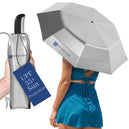
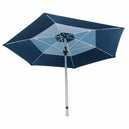
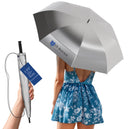
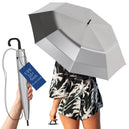
The first and most reliable layer is physical shade. UPF 50+ umbrellas tested to the AATCC TM183-2020 standard block 99.97% of UVA radiation. This is the exact wavelength range that triggers doxycycline reactions. Physical barriers provide immediate, reapplication-free protection without any required absorption time. It is important to address the concern of reflected UV light. UPF 50+ rated umbrellas with verified 99.97% UVA block are not the same as regular unrated umbrellas. The testing standard accounts for real-world protection performance. A Compact UV Umbrella made with Solarteck® fabric fits easily in a purse or briefcase for daily medication patients. For longer trips, a Travel UV Umbrella provides essential coverage for tropical malaria prophylaxis situations.
The second layer involves specialized apparel. Patients should cover arms, neck, and legs wherever possible. High-quality sun protection clothing offers consistent UV blocking that never washes off or requires reapplication during the day.
The third layer utilizes mineral broad-spectrum sunscreen rated at SPF 50 or higher. Look specifically for zinc oxide and titanium dioxide ingredients. These minerals provide physical UV blocking that includes better UVA coverage. Dermatologists generally prefer mineral options over chemical sunscreens for medication-sensitized skin. Apply the product a full 20 to 30 minutes before any sun exposure. Patients must reapply every two hours, and more frequently if sweating or swimming.
The final layer is strict timing avoidance. Stay out of direct sunlight during peak hours between 10am and 4pm when UVA intensity is at its peak. Remember that UVA passes through standard window glass. Office workers and commuters taking doxycycline should consider adding UV-blocking window film or using physical shade even when indoors near large windows.
Special situations require combining all four layers simultaneously. For patients traveling to a tropical location for malaria prophylaxis, start the protection protocol before departure. Pack a UPF 50+ travel umbrella right alongside mineral sunscreen. For outdoor events like weddings or sports games, pre-apply sunscreen, wear UPF clothing, and carry a UPF 50+ umbrella to provide necessary shade breaks throughout the day.

Doxycycline and Sun Protection in Australia: What's Different
Everything above applies in Australia, but the UV environment here makes doxycycline photosensitivity a more urgent problem. Australia consistently records some of the highest UV Index readings on earth. The Bureau of Meteorology regularly measures UV Index values of 11 to 14+ across capital cities during spring and summer (September to March). At those levels, a doxycycline patient outdoors without layered protection faces significantly more UVA1 exposure per minute than the same patient at the same time of day in most Northern Hemisphere cities.
The 10am to 4pm avoidance window referenced in the protection protocol above may not be wide enough during Australian peak UV months. On days where the UV Index exceeds 10 before 9am or remains elevated past 5pm, the safe outdoor window shrinks further. Check the daily UV forecast for a specific Australian location using the free SunSmart app (by Cancer Council Victoria, available on iOS and Android) rather than relying on a fixed time range.
For Australian patients on doxycycline
Doxycycline is a Schedule 4 (prescription-only) medication in Australia, regulated by the Therapeutic Goods Administration. Australian prescribers are required to discuss photosensitivity risks when prescribing it. If a severe reaction develops, contact the prescribing doctor or call Healthdirect on 1800 022 222 for 24-hour health advice.
Cancer Council Australia recommends the five forms of sun protection: Slip, Slop, Slap, Seek, Slide. For medication-sensitised patients, physical shade (Seek) is the first line of defence, consistent with the four-layer protocol above. A UPF 50+ umbrella tested to AATCC TM183-2020, such as UV-Blocker's Travel UV Umbrella (available with AUD pricing), provides immediate UVA1 protection without adding anything to already-sensitised skin.
Frequently Asked Questions About Doxycycline Sun Sensitivity
Below are answers to the most common questions patients ask about doxycycline and sun exposure, covering safety, timing, symptoms, and special situations.
Can I be in the sun while on doxycycline?
Brief, controlled sun exposure with full protection (shade, sunscreen, clothing) is manageable, but unprotected sun exposure carries real risk of phototoxic reactions, especially at higher doses. Consult the prescribing physician for guidance specific to the exact dose and planned treatment duration.
How long after stopping doxycycline can I go in the sun?
The drug clears the bloodstream in 3-5 days, but dermatologists recommend maintaining sun precautions for 1-2 weeks after the last dose, and up to 3 weeks for sensitive individuals.
What does a doxycycline sun rash look like?
Doxycycline photosensitivity produces an exaggerated sunburn, intense redness, burning, and sometimes blistering, in areas exposed to sunlight, far exceeding what the same sun exposure would cause without the medication.
Can you get sunburned through a window on doxycycline?
Yes. UVA radiation, the wavelength triggering doxycycline photosensitivity, passes through standard window glass. Patients near windows for extended periods should consider UVA-blocking window film or physical shade.
Does doxycycline sun sensitivity get worse with higher doses?
Significantly. Photosensitivity incidence rises from approximately 3% at 100mg/day to 20% at 150mg/day and up to 42% at 200mg/day, making dose the strongest predictor of reaction severity.
Should I stop doxycycline before a vacation?
Never stop or adjust prescribed medication without consulting the prescriber. A physician can discuss timing adjustments, alternative antibiotics, or enhanced protection protocols for travel. Patients on other severe photosensitizing drugs should review accutane sun protection guidelines as well.
What about UV reflected off the ground?
It's a fair question — shade blocks what comes from above, not what bounces up from pavement, sand or water. Reflected UV is roughly 10–12% off concrete, 15% off sand and up to 25% off water. That's why shade is the first layer of a protocol rather than the whole protocol: it removes the largest share of your exposure, and sunscreen on exposed skin covers the rest.
How do I manage this if I work outdoors?
If your work keeps you outside through the middle of the day, treat the four-layer protocol as standing kit rather than something you set up per trip: shade you can carry or clamp, UPF sleeves or long layers, mineral sunscreen reapplied on your break, and shifting the most exposed tasks outside the 10am–4pm window where the schedule allows. Tell your prescriber what your working day looks like — dose and duration are part of the same conversation.
Conclusion
Standard sunburn advice falls short for patients prescribed doxycycline. The medication alters how skin cells react to specific types of light, requiring a more targeted defensive strategy.
- Doxycycline photosensitivity is UVA1-triggered, not UVB, meaning standard SPF metrics don't tell the full story regarding protection.
- Risk is strongly dose-dependent, starting at 3% for a 100mg dose and climbing to 42% at 200mg.
- Skin sensitivity persists for 1 to 2 weeks after stopping the medication entirely, so don't drop precautions the day the prescription ends.
- Physical shade using UPF 50+ tested materials provides the most consistent UVA blocking without the need for constant reapplication.
Talk to your prescriber about your dose and personal risk factors — particularly if you're fair-skinned, on 150mg or more, or travelling somewhere with high UV. Then put the four-layer protocol in place and keep it there until well after your last dose.
If you need shade you can carry, UV-Blocker's UPF 50+ umbrellas are tested to AATCC TM183-2020 and endorsed by the Melanoma International Foundation.