

NYC's peak UV Index hits 9-10 in June and July. That's high enough to burn unprotected skin in 10 to 15 minutes.
Unlike a beach, the city reflects UV rays back upward from concrete, glass, and steel. Standard sun safety advice doesn't account for how New York's built environment amplifies ultraviolet exposure from every direction.
This guide covers NYC's monthly UV index, the five urban sun traps nobody talks about, and a complete protection strategy built for how New Yorkers actually live.
TLDR:
- NYC's peak UV Index reaches 9-10 in June and July, burning unprotected skin in 10 minutes
- Glass buildings and concrete reflect 8-12% of UV radiation upward, hitting skin from below
- The 5 worst NYC sun traps: rooftops, Central Park, the High Line, bridge walks, and subway exits
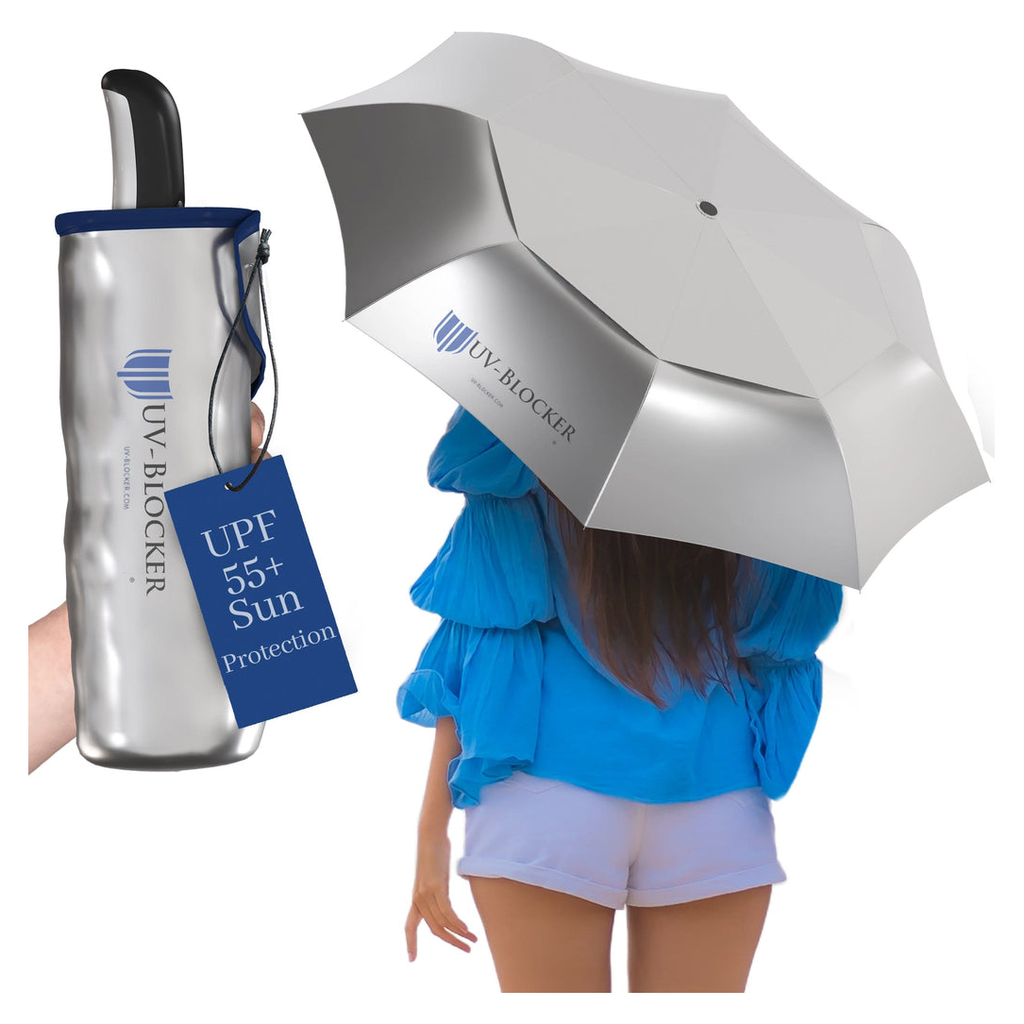
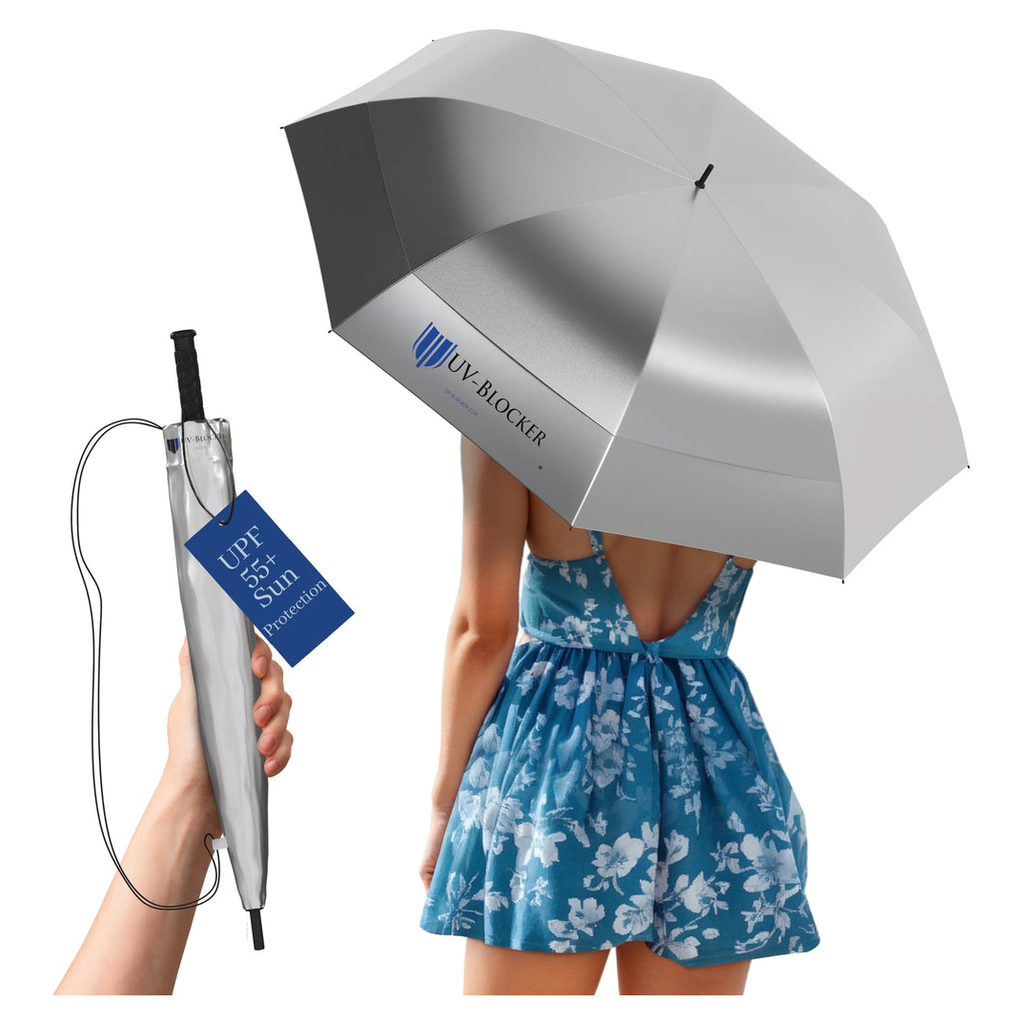
- A UPF 50+ UV umbrella provides portable shade, blocks 99% of UV rays, and drops temperatures 15°F under the canopy
What Is the UV Index in New York City by Month?
NYC's UV Index hits 9-10 in June and July, burning fair skin in about 10 minutes at peak hours.
That number surprises people who think of New York as a northern city.
Here's what makes that number deceptive: NYC sits at latitude 40.7°N, roughly the same as Naples, Italy. Summer UV intensity here isn't much different from cities hundreds of miles south. On July 2, 2013, the city's UV Index spiked to 11.44, crossing into "Extreme" territory. That wasn't some freak event. It's what happens when clear skies, long daylight hours, and reflective urban surfaces converge.
Month by month, here's what NYC looks like:
| Month | UV Index Range | EPA Category | Burn Time (Fair Skin) |
|---|---|---|---|
| January | 2-3 | Low | 60+ min |
| February | 3-5 | Low to Moderate | 30-60 min |
| March | 5-6 | Moderate | 25-40 min |
| April | 7-8 | High | 15-25 min |
| May | 8-10 | Very High | 10-20 min |
| June | 9-10 | Very High | 10-15 min |
| July | 9-10 | Very High | 10-15 min |
| August | 8-9 | Very High | 10-20 min |
| September | 7-8 | High | 15-25 min |
| October | 5-6 | Moderate | 25-40 min |
| November | 3-4 | Low to Moderate | 40-60 min |
| December | 2-3 | Low | 60+ min |

Those numbers assume open sky overhead and nothing bouncing UV back up from below. In NYC, that's not how it works.
Why Does NYC's Urban Environment Amplify UV Exposure?
Glass facades reflect UV sideways, and concrete bounces 8-12% of it back upward, exposing skin from angles hats can't block.
Walk down Sixth Avenue on a July afternoon and UV hits from three directions at once. Glass towers bounce it sideways. Concrete kicks it back upward. And it's still coming from above.
Most sun protection advice pictures someone standing in an open park with UV coming straight down. Manhattan doesn't work that way.
Think about what happens when sunlight hits a curtain-wall office tower. Some of that UV bounces directly toward the sidewalk across the street, at chest and face height. "Seek shade" doesn't mean much when the shade between two glass buildings is getting hit with reflected UV from both sides.
Then there's the ground itself. The WHO's UV index guide puts concrete's UV reflectance at 8-12%, compared to grass at a mere 1-2%. NYC has 6,300 miles of sidewalks, and every inch of that concrete acts as a low-grade UV reflector, sending rays up onto chins, under jawlines, and into the underside of arms where sunscreen rarely goes.
Overcast skies don't fix the problem either. Up to 80% of UV passes straight through cloud cover, which means a grey Tuesday in June is still a UV event in Manhattan.
Layer on the urban heat island (NYC summers run 5-10°F hotter than the suburbs) and the mix of UV stress and heat stress turns into a real health concern from May through September.
What Are the 5 Worst NYC Sun Traps?
Rooftop bars, Central Park, the High Line, bridge walkways, and subway exits. These five spots put New Yorkers in high-UV situations without most people realizing it's happening.
What they have in common: extended time outdoors, little to no shade, and reflected UV from surfaces all around.
Rooftop Bars and Dining
There's something ironic about paying $22 for a cocktail at a rooftop bar while getting a free sunburn. Most of these venues offer no shade at all, and people show up right in the peak UV window between 11am and 3pm. Being elevated removes the canyon shade from nearby buildings. Add a couple of drinks that speed up dehydration, and most people don't notice the burn until they're back in the elevator.
Central Park
The Great Lawn, Sheep Meadow, the Reservoir loop. These are gorgeous open spaces with absolutely nothing between skin and sky. The Lake and Bethesda Fountain bounce extra UV upward off the water. Runners doing the 6.1-mile loop spend 45 to 70 minutes on paths with sparse tree cover. Weekend picnickers on Sheep Meadow? Easily 2 to 4 hours of direct exposure without thinking twice about it.
The High Line and Elevated Parks
Up above the tree line, the High Line's 1.45-mile walkway has very little shade. Most visitors spend 30 to 60 minutes strolling through direct sunlight, and the steel-and-concrete structure underneath acts as another reflective surface bouncing UV back up.
Bridge Walks
The Brooklyn Bridge, Manhattan Bridge, and Williamsburg Bridge have no shade structures on their pedestrian paths. A Brooklyn Bridge crossing takes 25 to 40 minutes in full sun. On weekends with heavy foot traffic, the pace slows, and total exposure increases.
Subway Exits
Nobody talks about this one. After 20 minutes underground in fluorescent light, pupils are wide open and skin has nothing on it. Then the stairs dump commuters out into a UV Index of 9 at 14th Street or Times Square. There's no gradual transition. It's dark tunnel to blazing sidewalk in about 15 seconds, and the body hasn't had a chance to adjust to any of it.
Why Do New Yorkers Need a UV Umbrella?
A UV umbrella doubles as a rain umbrella, fits in a bag, and provides instant portable shade for city commuters and park-goers.
Here's the thing about New York: everyone already owns an umbrella. It's stuffed in a tote bag, stashed in a desk drawer, or jammed in a coat pocket. Swapping that rain umbrella for one that also blocks UV doesn't require a new habit.
Dual-Use Rain and Sun Protection
Anyone who's lived through a July in NYC knows the weather. Thunderstorm at 1pm, blazing sun by 3pm. A UV umbrella handles both without needing a second thing in the bag. One tool, two jobs. That's the kind of deal New Yorkers actually appreciate.
Portable Shade on Demand
No reapplication every two hours. No hat flattening a blowout. No fashion compromise. Pop the umbrella open and there's shade. Fold it back down and it goes right back in the tote. Whether it's a rooftop wait, a bridge walk, or standing in line at a Halal cart, the shade follows.
15°F Cooler Underneath
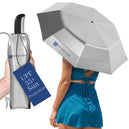
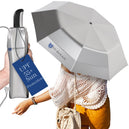
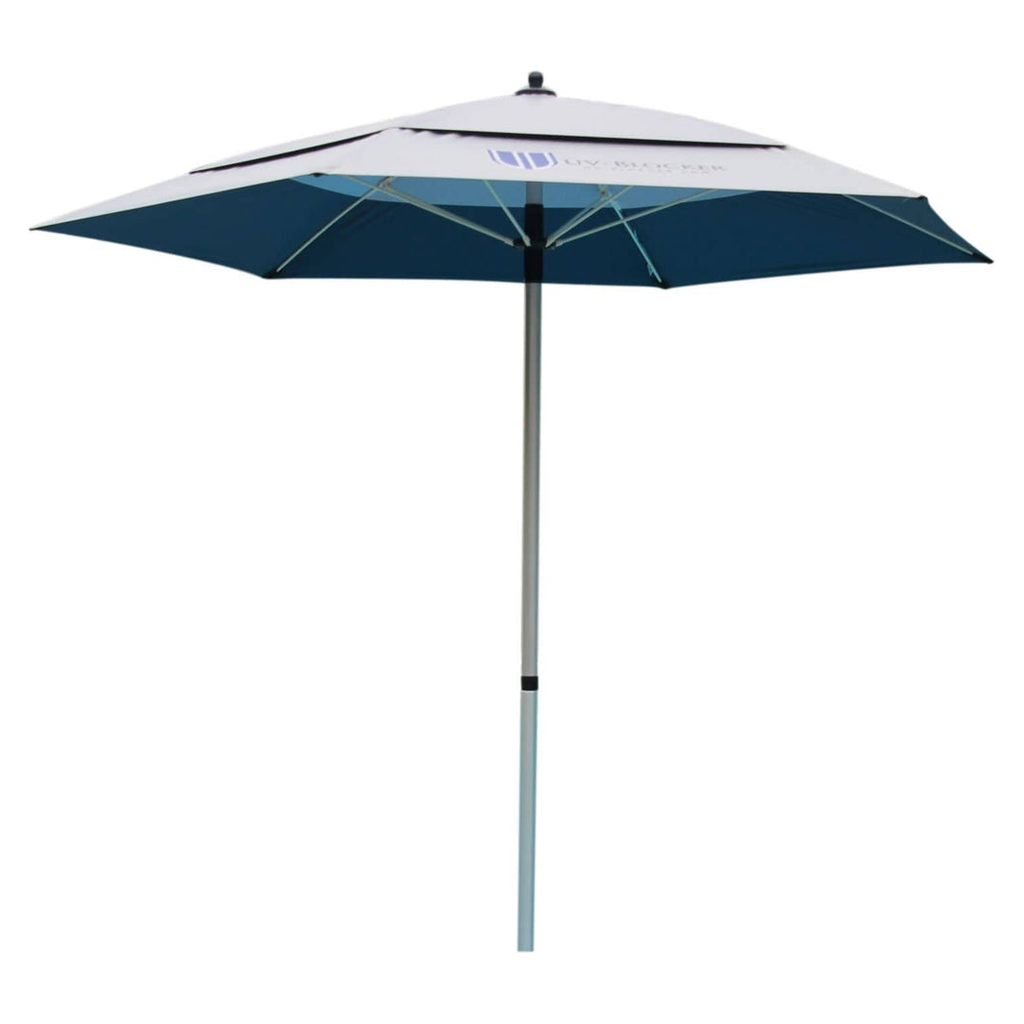
UV-Blocker's patented Solarteck® reflective coating works by bouncing UV and infrared radiation off the silver canopy instead of absorbing it. The result? Roughly 15°F cooler underneath compared to standing in direct sun. When NYC's heat island pushes summer afternoons past 90°F, that temperature drop is the difference between powering through a commute and wilting on the platform.
Verified UV Protection
Not all UV umbrellas are created equal. UV-Blocker's are rated UPF 50+ and independently tested under AATCC TM183-2020, blocking 99.97% of UVA and 100% of UVB. The Melanoma International Foundation has approved the product line. That's not marketing copy for "it makes shade." It's lab-verified UV defense.
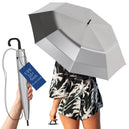
The Compact UV Umbrella folds to 11.5 inches with auto-open and auto-close, fitting easily in a purse or briefcase. The Travel UV Umbrella offers a sturdier frame and larger 44-inch arc for weekend Central Park trips. Both are $59.95.
What Should a Complete NYC Sun Protection Kit Include?
Four things. That's what it takes to cover the UV gaps NYC creates: a UPF 50+ umbrella for overhead shade, SPF 30+ sunscreen for exposed skin, UV-blocking sunglasses, and water.
No single product handles all of it. The smart play is layering protection based on what the day looks like.
UV Umbrella (Primary Shade)
This is the piece that does the heavy lifting. Open it and there's instant overhead protection that doesn't wear off, doesn't wash away with sweat, and doesn't need reapplication every couple of hours the way sunscreen does.
Broad-Spectrum SPF 30+ Sunscreen
The AAD recommends SPF 30 or higher, reapplied every two hours outdoors. Sunscreen picks up where the umbrella leaves off: hands, forearms, the back of the neck. UV umbrellas and sunscreen work as partners, not substitutes for each other.
UV-Blocking Sunglasses
Cumulative UV exposure contributes to cataracts and corneal damage over years. Look for sunglasses labeled UV400, which block 99-100% of both UVA and UVB.
Hydration
Between the heat island effect and UV stress, NYC summers drain fluids fast. A water bottle isn't optional from June through September.
Here's a quick breakdown of what to prioritize based on the activity:
| Activity | Duration | UV Risk | Protection Priority |
|---|---|---|---|
| Central Park run | 30-60 min | High | Sunscreen + sunglasses |
| Rooftop dining | 1-3 hours | Very High | UV umbrella + sunscreen |
| Bridge walk | 25-40 min | High | UV umbrella + sunglasses |
| Citi Bike commute | 15-30 min | Moderate to High | Sunscreen + sunglasses |
| Outdoor workers | 4-8 hours | Very High | UV umbrella + full kit |
| Park picnic | 1-4 hours | High to Very High | UV umbrella + sunscreen + sunglasses |
| Ferry ride | 20-45 min | High | Sunscreen + sunglasses |
How Serious Is Skin Cancer Risk in New York?
Every year, New York State logs more than 4,200 new melanoma diagnoses and roughly 400 melanoma deaths, according to the NY State Department of Health. The AAD puts 90% of melanoma cases down to UV exposure.
Behind those numbers are real stories. A commuter who walked 20 blocks each day without sunscreen. A weekend runner who logged hundreds of Central Park miles over the years. A parent who spent summers at Sheep Meadow with the kids. Melanoma doesn't care about zip codes. It cares about cumulative UV damage, and every unprotected hour on a rooftop or park bench adds to the total.
Ron Walker knows this firsthand. After a Stage 1 melanoma diagnosis in 2003, Walker founded UV-Blocker in 2005. "Sun protection isn't a comfort item," he's said. "For millions of people, it's a medical necessity." That conviction drove the company to build sun protection products that dermatologists recommend and the Melanoma International Foundation has approved.
With NYC's rooftop culture, park life, and urban UV amplification, sun protection here isn't a suggestion. It's a basic health decision.
Frequently Asked Questions About New York Sun Protection
New Yorkers have specific questions about UV safety in the city. Here are the ones that come up most often.
What is the UV index in NYC today?
The fastest way to check is the EPA's UV Index forecast, or just pull up any weather app with UV data. In NYC, the UV Index generally hits its highest point between 11am and 3pm, and from May through September those peaks land in the 8-10 range.
Do I need sunscreen in NYC during winter?
Winter UV Index in NYC drops to 2-3, which sounds low until factoring in snow and glass reflections bouncing UV around. The AAD still recommends daily broad-spectrum SPF 30+ on exposed skin, even in January.
Can you get sunburned in NYC shade?
Yes. Concrete sidewalks reflect 8-12% of UV radiation upward, and glass buildings redirect UV rays sideways. Standing in apparent shade between two glass towers still exposes skin to meaningful UV levels. Building shade in NYC is not the same as being indoors.
What SPF do I need in New York?
SPF 30 with broad-spectrum protection is the AAD's baseline recommendation. During NYC's peak UV season (May through September), going with SPF 50 adds some extra margin, especially for fair skin or if a long park day or bridge walk is on the schedule.
Are UV umbrellas effective in New York City?
Short answer: very. A UPF 50+ umbrella blocks more than 99% of UV and drops temperatures underneath by about 15°F. In a city where reflected UV comes at skin from three different angles, overhead protection fills a gap that sunscreen alone can't cover. The sun parasol trend has been picking up steam on NYC streets, and it's not just fashion. For city drivers, keeping one on the passenger seat provides quick shade during curbside loading.
Conclusion
NYC doesn't get more sun than other cities at latitude 40°N. But the buildings, the concrete, and the way people actually spend time outdoors here turn ordinary UV levels into a bigger problem than most residents realize.
Generic "wear sunscreen and a hat" advice wasn't written for someone walking out of the L train at 2pm into a concrete canyon reflecting UV from every surface. NYC needs its own approach.
Here's what to remember:
- NYC's UV Index peaks at 9-10 in summer, enough to burn unprotected skin in 10 minutes
- Urban surfaces amplify UV from angles that hats and building shade don't block
- Five common NYC activities (rooftop dining, park visits, bridge walks, elevated parks, and subway exits) are high-UV exposure events
- A UPF 50+ UV umbrella is the most NYC-practical protection tool because it doubles as a rain umbrella, fits in a bag, and provides verified portable shade
Before heading out, take two seconds to check the UV Index on any weather app. If it's 6 or above, toss the UV umbrella in the bag. Add sunscreen and sunglasses and that covers the gaps NYC's urban environment creates.
For UV umbrellas that handle both New York rain and New York sun, the UV-Blocker collection is a good place to start.
Sun Safety in Australia
Australia has some of the highest UV radiation levels in the world, with the UV Index regularly reaching extreme levels (11 or above) in cities such as Sydney, Melbourne, Brisbane, Perth, and Adelaide for much of the year — including on overcast days. The Cancer Council Australia reports that approximately two in three Australians will be diagnosed with some form of skin cancer by age 70, making sun protection a national health priority.
Key resources and guidelines for Australian sun safety:
- SunSmart Program (Cancer Council Australia): The SunSmart UV Alert is broadcast daily and recommends sun protection whenever the UV Index reaches 3 or above. In most Australian cities, this threshold is met every day of the year, including winter months in northern regions.
- ARPANSA (Australian Radiation Protection and Nuclear Safety Agency): Provides real-time UV monitoring at stations across all states and territories. Australians can access current UV levels at arpansa.gov.au.
- Safe Work Australia — UV Radiation as an Occupational Hazard: Australian workplace health and safety legislation requires employers to assess and manage UV radiation exposure for outdoor workers. Physical shade, including umbrellas rated UPF 50+, is recognised as a primary engineering control under these regulations.
A UPF 50+ UV-blocking umbrella provides the consistent, continuous shade protection that is essential under Australia's intense sun. The UV-Blocker umbrella, with its patented Solarteck® reflective coating, blocks 99% of UV rays and reduces perceived temperature by up to 15°F — a meaningful advantage for outdoor activities in Australia's climate. It is the only umbrella of its kind approved by the Melanoma International Foundation.
Sun Safety in Canada
Canada experiences meaningful UV exposure throughout the year, with UV Index levels regularly reaching 8–10 or higher during summer months in cities such as Vancouver, Calgary, Toronto, and Ottawa. Health Canada and Environment and Climate Change Canada publish daily UV Index forecasts and recommend protective measures whenever the index exceeds 3 — a threshold reached on most clear days between May and August across the country.
Key resources for Canadian sun safety:
- Health Canada UV Index: Published daily via the Environment and Climate Change Canada weather portal (weather.gc.ca). Canadians can track UV levels by city and receive alerts when protection is recommended.
- Canadian Cancer Society: Recommends UPF 50+ clothing, hats, sunscreen, and shade-seeking as primary sun protection strategies. Physical UV barriers — such as UPF 50+ umbrellas — are emphasized for prolonged outdoor exposure.
- Canadian Dermatology Association: Endorses broad-spectrum sun protection strategies, including shade structures and UV-blocking accessories, especially for individuals with fair skin or a personal or family history of skin cancer.
For Canadians spending extended time outdoors — whether working, playing sports, or enjoying recreational activities — a UV-blocking umbrella rated UPF 50+ provides continuous, reapplication-free protection. The UV-Blocker umbrella, independently tested and approved by the Melanoma International Foundation, blocks 99% of UV rays and keeps users up to 15°F cooler — making it a practical and reliable companion for Canadian summers.
Frequently Asked Questions
What makes UV exposure particularly intense in New York Sun Protection?
New York Sun Protection has specific geographic, atmospheric, and seasonal factors that affect UV intensity. Latitude, altitude, proximity to reflective surfaces (water, sand, snow), and cloud cover all play roles. UV Index data from NOAA shows significant variation even within a single state. Checking the daily UV index at your specific location is the only reliable way to gauge actual risk.
What is the UV Index and how should I use it for sun safety planning?
The UV Index (UVI) is a 0–11+ scale measuring UV radiation intensity at ground level. 0–2: Low risk. 3–5: Moderate — use sunscreen. 6–7: High — seek shade. 8–10: Very High — limit midday exposure. 11+: Extreme — avoid outdoors. NOAA provides daily UV Index forecasts by zip code at weather.gov. UV-Blocker recommends checking the index every morning before outdoor planning.
Is sun protection necessary year-round in this region?
Yes. UV radiation can cause skin damage even on cloudy days and throughout all seasons. UVA rays (which penetrate clouds and glass) are relatively consistent year-round, even when visible sunshine is low. While UVB intensity peaks in summer, dermatologists recommend daily SPF 30+ moisturizer as a year-round habit regardless of season or weather.
What activities put people at highest UV risk in this region?
Water sports (reflection amplifies UV by up to 100%), snow activities (snow reflects 80% of UV), beach activities (sand reflects 25%), and any outdoor activity between 10am–4pm. High altitude activities are particularly dangerous — UV intensity increases ~10–12% per 1,000 feet of elevation. A UPF 50+ umbrella provides reliable portable shade for any of these activities.
How do local residents protect themselves from the sun effectively?
Long-term residents of high UV regions tend to adopt comprehensive sun habits: UPF 50+ protective clothing as daily wear, wide-brim hats, window tinting, avoiding peak sun hours, and SPF 50+ sunscreen applied daily (not just at the beach). Portable UV-blocking umbrellas have become increasingly popular for everyday sun protection during outdoor dining, sports spectating, and commuting.
Sun Safety Best Practices for New York Sun Protection Residents
- Bookmark the NOAA UV Index forecast for your New York Sun Protection zip code — check it each morning before planning outdoor time
- Apply SPF 30+ sunscreen every morning as part of your daily routine, not just on beach days
- Use window film rated for UV blocking in your home and car — much UV exposure happens indoors
- Keep a UV-blocking umbrella in your car — it's useful for street parking, outdoor dining, and events
- Schedule outdoor physical activity before 10am or after 4pm to avoid peak UV hours
- Annual skin cancer screenings are especially important for long-term residents of high UV regions