

UV-Blocker partner Russ Coulon took his newborn baby girl to the beach last summer. He put her on a blanket directly under a UV-Blocker Beach Umbrella. No sunscreen. The baby napped for hours while both parents relaxed in the sun. When they packed up, her skin showed zero redness.
That outcome is exactly what the science predicts. The American Academy of Dermatology (AAD) has advised for years that babies under six months should not use sunscreen at all. Their skin absorbs chemicals too efficiently, their detox organs aren't ready for the load, and their outer skin barrier hasn't fully formed yet. Physical shade is the only safe, recommended option for a newborn.
This article explains why newborn skin is different, what the AAD and CDC actually recommend, and how to create shade that works as well in practice as it does on paper.
TLDR: The Newborn Sun Protection Protocol - No sunscreen on babies under six months - Baby skin is thinner and absorbs chemicals much faster than adult skin - Both AAD and CDC recommend physical shade first - UPF-rated umbrellas, stroller canopies, and long clothing are the safe options - Never drape blankets over strollers (heat hazard) - Mineral sunscreen approved only after the six-month mark - UPF 50+ umbrellas block 98%+ of UV; regular rain umbrellas block roughly half
Why Can't Babies Under 6 Months Wear Sunscreen?
Newborn skin absorbs sunscreen chemicals at a far higher rate than adult skin, and an infant's liver and kidneys cannot yet clear those compounds efficiently.
A baby has a much higher ratio of skin surface to body weight than an adult does. Spread lotion on a newborn and it covers a disproportionately large share of their body. The absorption rate is amplified further because the outer skin barrier, the stratum corneum, hasn't fully matured yet. It's thinner, more permeable, and lets substances pass through that adult skin would slow down or block.
The CDC states plainly that sunscreen is not recommended for babies six months or younger. The AAD takes the same position: keep sunscreen off children under six months. Many parents see "baby" on the label and assume it's safe for newborns, but the active UV-filtering ingredients carry the same absorption risk regardless of how the product is marketed.
Emergency protocol: The AAD does allow a small amount of mineral sunscreen (zinc oxide or titanium dioxide, SPF 30 minimum) on exposed spots only, the face and backs of hands, when shade simply isn't available. This is a last resort, not a daily routine.
What Does the AAD Recommend for Newborn Sun Protection?
Shade is the AAD's primary recommendation for babies under six months, not sunscreen, and planning is how parents put that into practice.
Pack a UPF-rated umbrella before any outing. Use a stroller with a vented canopy, or clip on a shade attachment. And time it right — the peak UV window runs from 10 a.m. to 4 p.m. Get out at 8 a.m. or after 5 p.m. and half the problem is already handled.
After shade, clothing is the next layer. Long sleeves and long pants in lightweight, breathable fabric cover the skin without trapping heat. A wide-brim hat shades the face, neck, and ears in one piece. UV-blocking sunglasses, when a baby will tolerate them, protect the eyes from reflected glare off sand, water, and pavement.
Don't forget heat. UV and temperature are separate problems, but they happen at the same time outdoors. Touch the back of the baby's neck every 10 or 15 minutes. If it's warm and damp, get inside or into deep shade fast.
Protection Chart by Age:
| Age | Sunscreen OK? | Primary Protection | Backup Protection |
|---|---|---|---|
| 0–6 months | No (minimize) | Shade + clothing + hat | Minimal zinc oxide SPF 30+ on exposed areas only |
| 6–12 months | Yes (mineral) | Shade + clothing + hat | SPF 30+ mineral sunscreen |
| 1–2 years | Yes | Shade + clothing + sunscreen | Reapply every 2 hrs |
| 2+ years | Yes | Layered (shade + clothing + SPF 30+) | Full protection protocol |
How Do You Create Safe Shade for a Newborn?
Use purpose-built stroller canopies with mesh vents or clip-on UPF 50+ umbrellas; never drape blankets over strollers.
The fastest way to create dangerous heat, not shade, is to drape a blanket or muslin cloth over the stroller. Parents do this instinctively, but the fabric traps hot air and can push internal temperatures to dangerous levels within minutes. Babies can't communicate overheating. Use purpose-built canopies with mesh vents that block UV while letting air move through.
Most stroller canopies leave gaps on the sides. Arms and legs poke out, and UV bounces up off sidewalks and pavement, hitting the baby from angles the canopy doesn't cover. An umbrella mounted overhead creates a wider shadow that covers the full stroller, sides included.
Not all umbrellas offer the same protection. A standard rain umbrella lets 50 to 80 percent of UV radiation pass through. A UPF 50+ umbrella blocks over 98 percent of UV rays. The difference is entirely in the fabric coating.
UV-Blocker partner Russ Coulon ran what amounted to a real-world test without setting out to. He brought his newborn daughter to the beach, put her on a blanket under a UV-Blocker Beach Umbrella, and didn't apply any sunscreen. She slept for hours. When the family packed up to head home, not a trace of redness. The Solarteck fabric in that umbrella is independently tested to block 100% of UV-B rays and 99.97% of UV-A rays (AATCC TM183-2020). That's what Russ's daughter was sleeping under.
Sand reflects UV upward. So does white concrete, and standing water. A lot of parents focus entirely on what's coming down from the sky and forget what's bouncing up from the ground. The umbrella handles the top. Pick a spot on grass or dirt when possible, and it handles the bottom too.
UV Protection Comparison:
| Shade Type | UV Blocked | Notes |
|---|---|---|
| Regular rain umbrella | 20–50% | Not rated; fabric lets most UV through |
| Basic beach umbrella | 34–84% | Varies by fabric; no testing standard |
| UPF 50+ umbrella | 98%+ | AATCC TM183-2020 tested; verified protection |
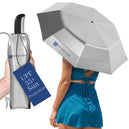
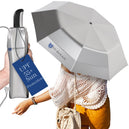
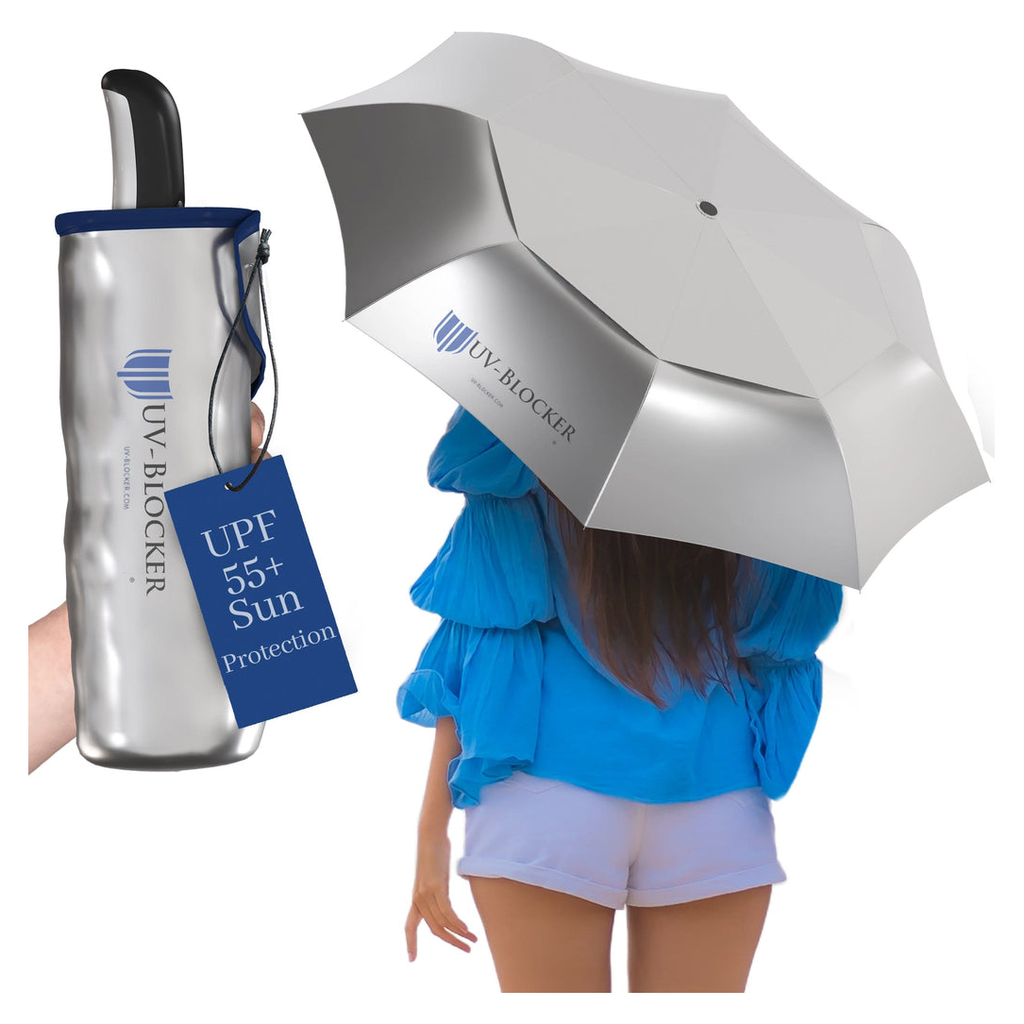
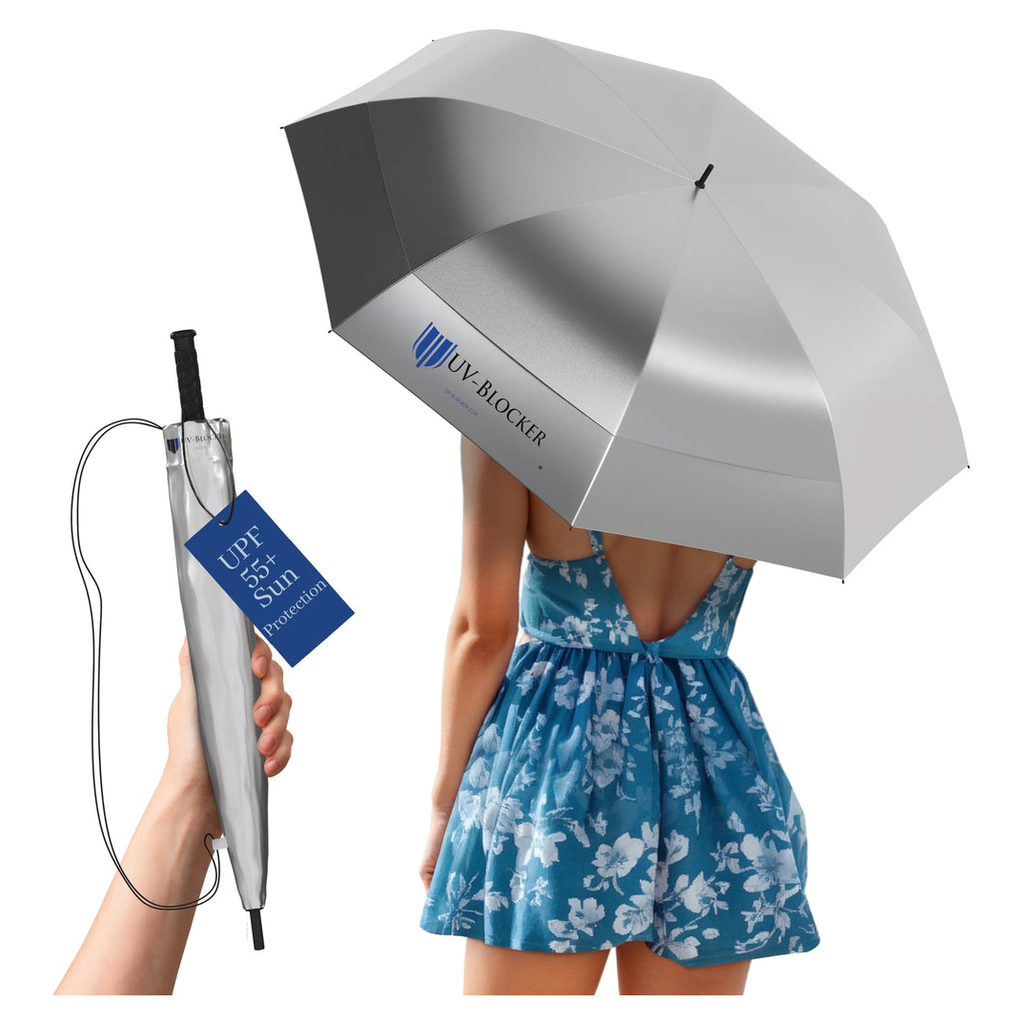
For everyday outings, UV-Blocker's Compact 42" umbrella fits in a diaper bag, delivers UPF 50+ coverage, and qualifies as an HSA/FSA eligible medical purchase.
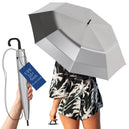
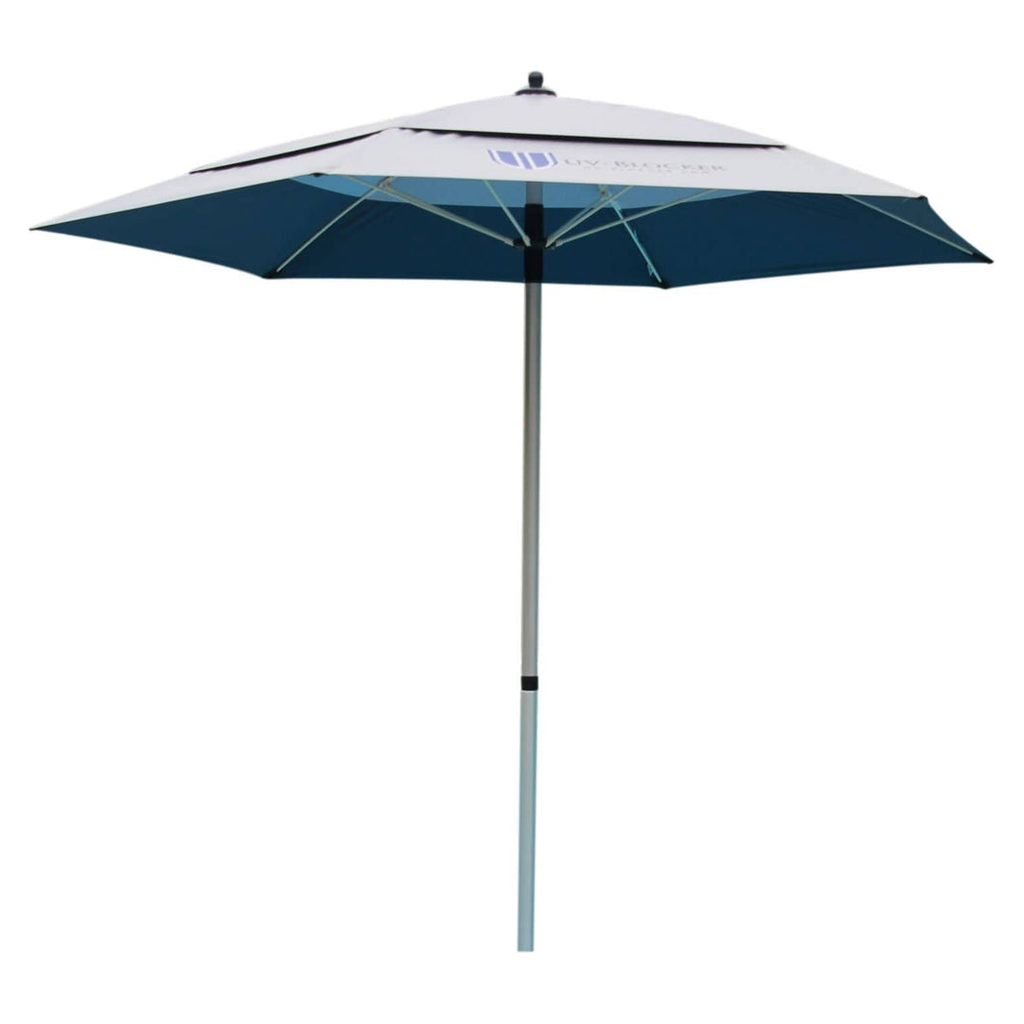
For the beach, where a small handheld umbrella won't cut it, UV-Blocker makes two beach-specific options:
- Personal Beach Umbrella (6 ft, $99.95): 67-inch coverage diameter, tilt mechanism for tracking the sun throughout the day, easy to carry solo. Available at uv-blocker.com/products/personal-beach-umbrella.
- Large Beach Umbrella (7.5 ft, $129.95): 88-inch coverage diameter, built for family groups, heavy-duty pole for stability in beach wind. Available at uv-blocker.com/products/large-beach-umbrella.
Both are built with Solarteck fabric, MIF-approved, and block the same 98%+ of UV rays that the smaller personal umbrellas do.
When Can Babies Start Wearing Sunscreen Safely?
At six months, the guidelines shift. The AAD approves regular sunscreen use at this age, and mineral formulas are the recommended starting point.
Zinc oxide and titanium dioxide are different from chemical sunscreen ingredients. They don't get absorbed — they sit on top of the skin and physically bounce UV away. That's why they're less likely to cause irritation, which is why dermatologists recommend them for kids even after the six-month mark.
Sunscreen at six months doesn't replace the need for physical barriers. Shade and clothing stay foundational. Sunscreen fills the gaps, the hands, lower face, and ankles that clothing and hats don't reach.
Reapplication timing matters: Reapply every two hours. Reapply immediately after water exposure or heavy sweating. No sunscreen is truly waterproof. "Water-resistant" is the highest claim that manufacturers are legally permitted to make.
Frequently Asked Questions About Newborn Sun Protection
Parents researching newborn sun protection ask many of the same questions. The answers below draw from AAD, CDC, and AAP guidance.
Can you take a newborn outside in the sun?
Yes, but keep the baby in shade at all times. Avoid direct sunlight entirely, especially between 10 a.m. and 4 p.m. Fresh air and outdoor time are beneficial; unfiltered UV exposure is not.
What if there is no shade available?
This is the only scenario where the AAD allows limited sunscreen use on a baby under six months. Apply a small amount of SPF 30+ mineral sunscreen (zinc oxide or titanium dioxide) to the face and backs of hands only. Wash it off immediately once back indoors. This is a last resort, not a routine.
Are muslin blankets safe to drape over strollers?
No. Fabric draped over strollers traps heat rapidly regardless of how thin or breathable the material is. Internal temperatures can reach dangerous levels in minutes. Use a vented stroller canopy or a clip-on UPF umbrella. Airflow is as important as UV blocking.
Is a regular umbrella enough to protect a baby from UV?
Most standard rain umbrellas allow 50 to 80 percent of UV radiation to pass through. That is not protection; it is false security. Only UPF-rated umbrellas with tested fabric reliably block 98%+ of UV rays. Use UPF 50+ rated products for babies.
Are UV umbrellas HSA/FSA eligible?
Yes. UPF 50+ umbrellas qualify as HSA and FSA eligible purchases, making them reimbursable through most flexible spending accounts.
At what age is chemical sunscreen safe?
Start with mineral sunscreen — zinc oxide or titanium dioxide. The AAD recommends these for young children because they sit on the skin's surface rather than penetrating it. Chemical formulas are generally fine for older kids, but it's worth asking a pediatrician before making that switch. Either way, mineral is the lower-irritation choice for sensitive skin.
Conclusion
Babies under six months need physical shade instead of sunscreen because their skin absorbs chemicals too rapidly and their organs cannot process them safely.
Russ Coulon\'s afternoon at the beach with his newborn daughter proved exactly that: hours under a UPF 50+ umbrella, no sunscreen, no redness.
A single severe sunburn in childhood nearly doubles lifetime melanoma risk. The AAD and CDC both recommend umbrellas, ventilated stroller canopies, wide-brim hats, and tightly woven clothing as the primary defenses. A quality UPF 50+ umbrella purchased once protects the whole family through infancy and beyond.
Actionable takeaway: Before the next outdoor outing with a newborn, check that the shade solution in place is actually rated to block UV, not just provide visual coverage. For stroller outings and everyday walks, the UV-Blocker Compact 42" fits inside a diaper bag, passes the UPF 50+ testing bar, and qualifies as an HSA/FSA expense. For beach days where space is available, the 6 ft Personal Beach Umbrella and 7.5 ft Large Beach Umbrella cover the kind of ground a beach umbrella actually needs to cover. Browse the full UV-Blocker sun umbrella collection.
Before You Choose, Check These 3 Things
- Size matters more than most people think. A 42-inch canopy covers a stroller. An 88-inch canopy covers a whole family at the beach. Don't buy one and expect it to do the other's job.
- The underside color affects glare. UV-Blocker's navy blue interior absorbs scattered light instead of bouncing it back up. On a bright beach day, that's the difference between comfortable shade and squinting.
- Match the product to the outing. The Compact 42" for everyday stroller walks. The 6 ft or 7.5 ft beach umbrella when a full beach day is the plan.
| Feature | Travel Umbrella | Large Folding Umbrella | Compact Umbrella | Beach Umbrellas |
|---|---|---|---|---|
| UPF Rating | 50+ | 50+ | 50+ | 50+ |
| Blocks UVA/UVB | 99.97% UVA / 100% UVB | 99.97% UVA / 100% UVB | 99.97% UVA / 100% UVB | 99.97% UVA / 100% UVB |
| Cooling Effect | 15°F cooler | 15°F cooler | 15°F cooler | 15°F cooler |
| Best For | Travel and daily use | Outdoor coverage | Commuting and stroller | Beach days and family shade |
| Price | $59.95 | $64.95 | $59.95 | $99.95–$129.95 |