
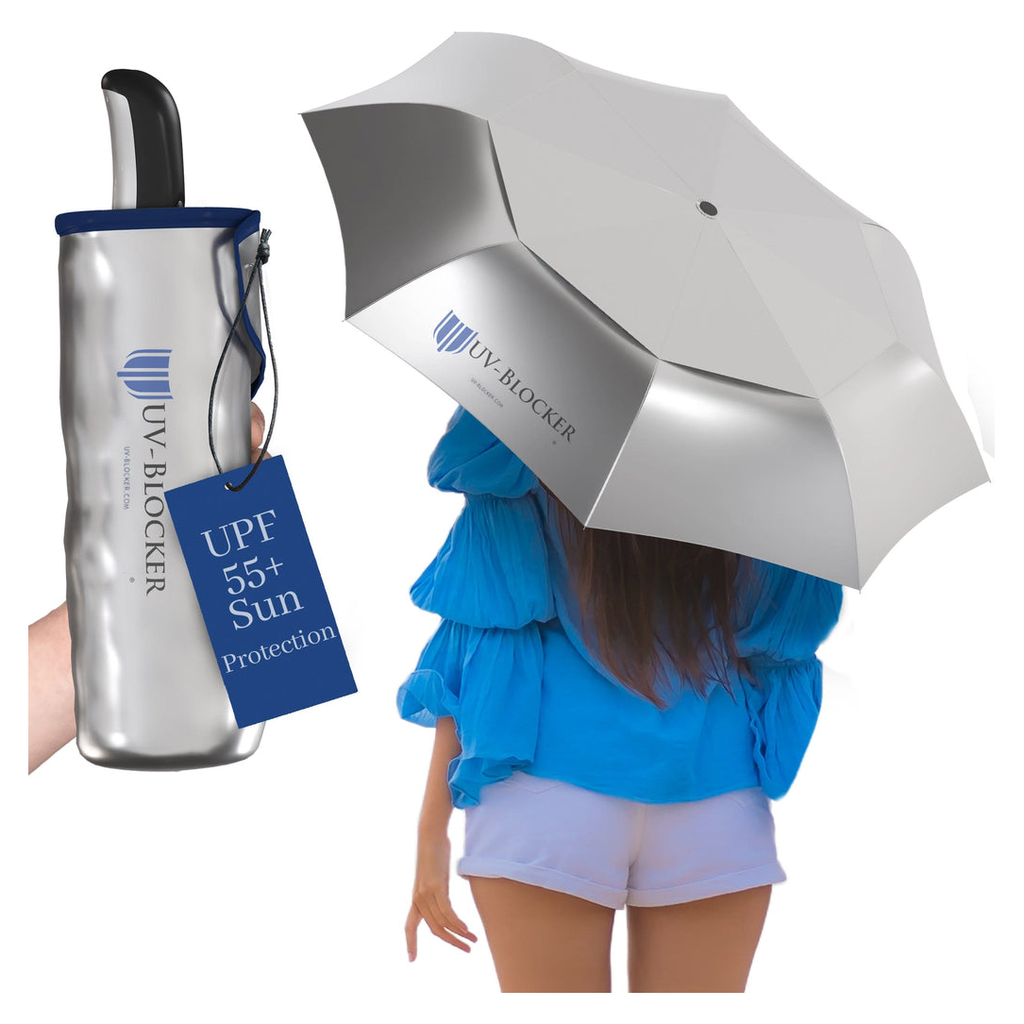
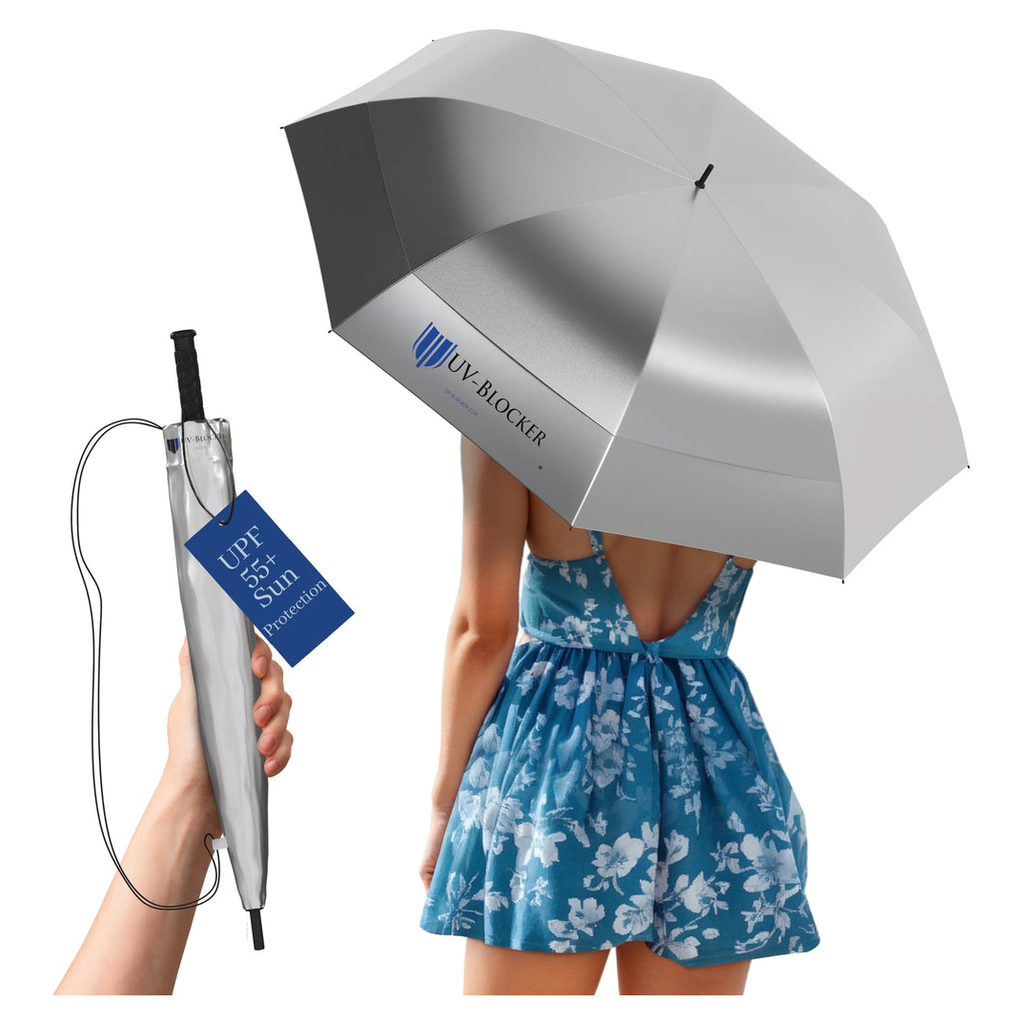
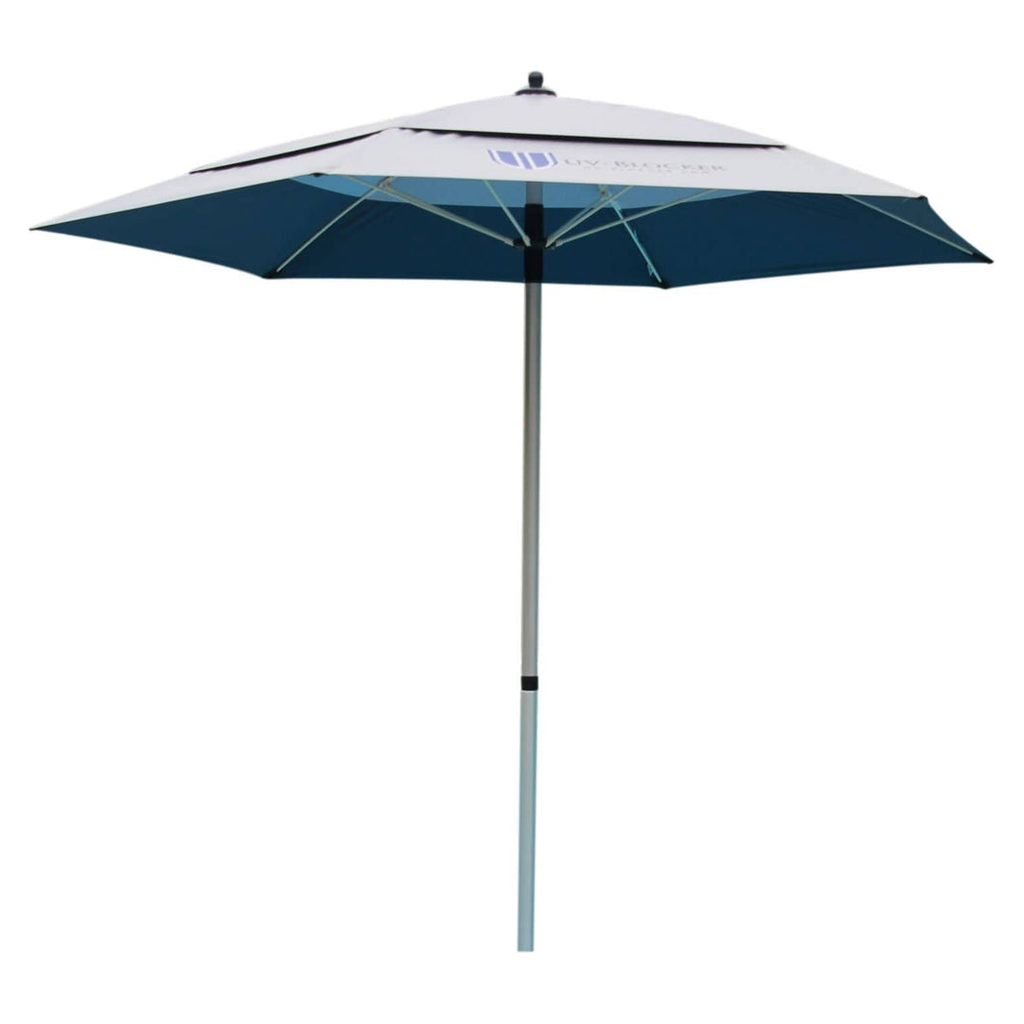

TL;DR: Patient adherence photoprotection remains one of the most expensive unsolved problems in dermatology practice management. Only 30-40% of patients follow sunscreen instructions consistently, and compliance drops by nearly 50% after the first two weeks post-procedure. Each case of post-inflammatory hyperpigmentation (PIH) triggered by non-compliance costs practices $500-2,000 in re-treatment and carries measurable reputation risk. The behavioral science is clear: passive, single-decision protection tools outperform active daily regimens. Practices integrating physical shade devices like UPF 50+ umbrellas into post-procedure protocols are reporting higher compliance rates, stronger patient satisfaction, and a new revenue line with $24.95 margin per unit.
How Bad Is Sunscreen Compliance Among Dermatology Patients?
Sunscreen compliance among dermatology patients is alarmingly low, with only 30-40% of patients following photoprotection instructions consistently beyond the first two weeks after treatment.
This is not a patient education problem. Most patients leave the office understanding that UV exposure after a chemical peel, laser resurfacing, or excision can cause hyperpigmentation, scarring, or treatment failure. They intellectually grasp the stakes. Yet research published in the Journal of Dermatological Treatment confirms that consistent sunscreen application rates among dermatology patients remain between 30% and 42%, depending on the population studied.
The compliance curve is especially concerning. Patients show reasonable adherence in the first 48-72 hours post-procedure, when discomfort and visible healing serve as reminders. But by day 14, adherence drops by nearly 50%. By day 30, the majority of patients have returned to their pre-treatment sun protection habits, which for most Americans means sporadic or no sunscreen use at all.
The barriers patients report are remarkably consistent across studies:
- Forgetfulness (cited by 67% of non-compliant patients)
- Messiness and cosmetic inelegance (especially over healing skin)
- Skin irritation from chemical sunscreen ingredients on post-procedure skin
- Reapplication burden during work hours or social situations
- False confidence on cloudy days or when indoors near windows
According to the American Academy of Dermatology's own sun protection guidelines, proper sunscreen use requires application 15 minutes before exposure, reapplication every 2 hours, and additional reapplication after sweating or water contact. That is a multi-step, multi-daily behavior with zero immediate reward. For a patient with tender post-procedure skin, it is even harder.
The gap between what dermatologists prescribe and what patients actually do is not closing with better pamphlets. It requires a fundamentally different approach to patient adherence photoprotection protocols.
What Does Non-Compliance Actually Cost a Dermatology Practice?
Each case of post-procedure hyperpigmentation caused by UV exposure generates 2-4 additional office visits, $500-2,000 in re-treatment costs, and a measurable increase in negative review risk.
The financial impact of poor patient adherence photoprotection compliance is not theoretical. When a patient develops PIH after a $1,200 chemical peel because they skipped sunscreen on day 10, the practice absorbs the consequences. Research on treatment adherence in dermatology demonstrates that non-adherence is the single largest driver of suboptimal treatment outcomes, ahead of technique variation or product selection.
Here is what the numbers look like at the practice level:
| Compliance Rate | Estimated PIH Incidence | Additional Visits per Case | Re-Treatment Cost per Case | Annual Practice Cost Impact (200 procedures/yr) |
|---|---|---|---|---|
| 80%+ (excellent) | 3-5% | 1-2 | $200-500 | $2,400-5,000 |
| 50-79% (moderate) | 10-15% | 2-3 | $500-1,200 | $15,000-36,000 |
| 30-49% (typical) | 18-25% | 3-4 | $800-2,000 | $43,200-100,000 |
| Below 30% (poor) | 30%+ | 4+ | $1,500-2,000+ | $90,000-120,000+ |
These figures account only for direct clinical costs. The indirect costs are arguably worse:
- Reputation erosion: A patient who develops PIH does not typically blame their own non-compliance. They blame the procedure and the provider. One 2-star review mentioning "scarring" or "dark spots after treatment" can influence dozens of prospective patients.
- Staff time: Managing unhappy patients, scheduling corrective visits, and documenting complications consume administrative hours that have real cost.
- Provider morale: Clinicians who see avoidable complications repeatedly experience frustration that contributes to burnout.
A practice performing 200 procedures per year with typical 30-40% patient adherence photoprotection compliance rates is likely absorbing $43,000-100,000 annually in avoidable re-treatment costs. That figure alone justifies serious investment in compliance infrastructure, yet most practices still rely on verbal instructions and a printed handout.
For practices already thinking about this problem in the context of post-procedure care, the 6 Reasons Dermatologists Recommend Sun Umbrellas outlines why leading clinicians are shifting toward physical shade protocols.
Why Do Patients Fail at Sunscreen Even When They Know It Matters?
Patients fail at sunscreen compliance because it requires repeated daily action with no immediate sensory feedback, which behavioral science identifies as the hardest type of health behavior to sustain.
This is not about intelligence, education, or even motivation. The adherence literature in dermatology is unambiguous: the intention-action gap in photoprotection is driven by structural behavioral factors, not patient deficiency.
Behavioral science distinguishes between two categories of protective health behaviors:
Active protection requires conscious, repeated decision-making. Sunscreen is a textbook active protection behavior. The patient must remember, locate the product, apply it correctly, time the reapplication, and repeat this cycle 3-5 times per day. Each instance is a decision point where non-compliance can occur. There is no immediate consequence for skipping once, which erodes habit formation.
Passive protection requires a single decision that provides ongoing benefit. Wearing a hat, sitting under shade, or carrying a UV umbrella are passive protection behaviors. One decision at the start of an outing provides continuous coverage with no reapplication, no timing, and no repeated willpower expenditure.

The research on habit formation is relevant here. Health behaviors that require more than 2 daily decision points and lack immediate sensory feedback have adherence rates below 40% at the 30-day mark across virtually every medical domain, not just dermatology. Sunscreen hits both failure criteria.
Three additional factors compound the problem for post-procedure patients specifically:
- Healing skin sensitivity: Chemical sunscreen ingredients (oxybenzone, avobenzone) frequently sting or irritate post-procedure skin, creating a negative reinforcement loop that punishes compliance.
- Cosmetic interference: Sunscreen over peeling, red, or tender skin can look and feel unpleasant, reducing the likelihood of reapplication in social settings.
- Cognitive load: Patients recovering from procedures are already managing wound care instructions, medication schedules, and activity restrictions. Adding a multi-step sunscreen protocol to that cognitive load exceeds what most people can reliably execute.
Understanding these barriers to patient adherence photoprotection is not about excusing patients. It is about designing compliance systems that work with human psychology rather than against it. As explored in the SPF vs UPF comparison guide, the most effective photoprotection strategies layer passive tools over active ones.
What Strategies Actually Improve Photoprotection Adherence?
Point-of-care dispensing of tangible protection tools improves patient adherence photoprotection rates significantly more than verbal instructions or printed materials alone.
The evidence hierarchy for compliance interventions is well-established. Telling a patient what to do is the least effective strategy. Giving them a physical tool to do it with is among the most effective. A JAMA Dermatology study on shade and UV protection demonstrated that patients provided with physical shade devices showed significantly higher photoprotection behavior than those receiving counseling alone.
Here is what the adherence research supports, ranked by effectiveness:
- Point-of-care dispensing of a tangible protective tool (umbrella, hat, specific sunscreen sample) at the time of the procedure. The physical object serves as both a reminder and a barrier-removal mechanism. Adherence improvement: 35-50% over baseline.
- Layered protection protocols that combine passive and active measures. Rather than relying solely on sunscreen, prescribe a primary passive tool (shade device) with sunscreen as a secondary layer. This reduces the consequences of any single compliance failure.
- Visual demonstration during the appointment. Showing a patient the UV-blocking capability of a tool (e.g., UV detection card under an umbrella) creates an experiential anchor that verbal instructions cannot match.
- Simplified regimens. Every additional step in a photoprotection protocol reduces adherence by approximately 10-15%. A protocol that says "use this umbrella when outside, apply sunscreen as backup" outperforms one with 6 sunscreen application rules.
- Follow-up accountability. Asking patients to bring their protection tool to their follow-up appointment creates a visible compliance checkpoint. This works especially well with physical tools that can be observed.
What does not work, despite being the standard of care at most practices:
- Verbal-only instructions (retention drops 80% within 48 hours)
- Printed handouts without a physical tool (read once, recycled)
- Generic "wear sunscreen" advice without specific product or tool guidance
The practices reporting the strongest compliance outcomes are those that hand the patient something tangible before they leave the office. For dermatology practices exploring this approach, the UV-Blocker Dermatologist Program provides a turnkey solution designed specifically for clinical dispensing.
How Does Physical Shade Solve the Compliance Problem?
Physical shade devices like UPF 50+ umbrellas convert photoprotection from a repeated daily behavior into a single decision, eliminating the reapplication burden that causes 60% of sunscreen non-compliance.
This is the core insight that separates practices with strong patient adherence photoprotection outcomes from average ones. A UPF 50+ umbrella is not a replacement for sunscreen. It is a compliance architecture that makes the entire photoprotection protocol more likely to succeed.
The compliance advantages of physical shade are structural, not incremental:
Single-decision protection. The patient grabs the umbrella when leaving the house. That one action provides continuous broad-spectrum UV blocking for the entire outing. There is no 2-hour reapplication timer, no "did I put enough on" uncertainty, no forgetting at midday. One decision, sustained protection.
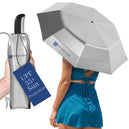
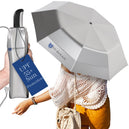
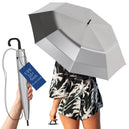
Sensory feedback loop. Unlike sunscreen, which provides zero perceptible feedback, a UV umbrella with SolarTek fabric creates an immediate 15 degrees Fahrenheit cooling effect in the shade zone. The patient can physically feel the protection working. This sensory reinforcement is a powerful compliance driver because it rewards the behavior in real time.
Visible compliance marker. At the follow-up appointment, a clinician can ask: "Have you been using your umbrella?" The patient either has it or they do not. This creates a natural accountability mechanism that is impossible with sunscreen, where self-reported compliance is unreliable. Studies show patients over-report sunscreen use by 40-60%.
No chemical irritation. For patients with healing post-procedure skin, physical shade eliminates the sting and irritation that chemical sunscreen ingredients cause on compromised skin barriers. This removes the single most cited reason patients stop applying sunscreen after procedures.
Layering enabler. When the umbrella handles the primary UV blocking, sunscreen becomes a secondary backup rather than the sole line of defense. Patients who might skip sunscreen entirely are still protected. Patients who do apply sunscreen get layered coverage that exceeds either method alone.
For a deeper analysis of how UPF ratings translate to real-world protection, see the UPF 50+ explained guide.
How Are Dermatology Practices Integrating UV Umbrellas Into Patient Care?
Leading dermatology practices are integrating UV umbrellas through three models: post-procedure gifting, retail display, and treatment bundling, with each generating $24.95 margin per unit while measurably improving patient outcomes.
The integration is straightforward because UV umbrellas sit at the intersection of clinical need and practice economics. Unlike most patient adherence photoprotection tools that cost the practice money, UV umbrella programs generate revenue while solving the compliance problem.

| Integration Model | Patient Perception | Margin per Unit | Compliance Impact | Best For |
|---|---|---|---|---|
| Post-procedure gift (included in treatment fee) | High-value care, "my doctor went above and beyond" | $24.95 (absorbed into procedure margin) | Highest: 70-85% umbrella use at follow-up | Cosmetic procedures, high-value treatments |
| Retail display (patient purchases in-office) | Trusted recommendation from provider | $24.95 direct margin | Moderate: 45-60% purchase rate when recommended | General dermatology, high-traffic practices |
| Treatment bundle (packaged with post-care kit) | Comprehensive, professional care protocol | $24.95 (built into bundle price) | High: 65-75% consistent use | Post-surgical, laser, peel protocols |
The economics are compelling at any scale. Through the UV-Blocker Dermatologist Program, practices purchase at $35 per unit against an MSRP of $59.95, generating $24.95 margin per unit. The minimum order is 12 units, making the initial investment $420. With free logo imprint included, the umbrella becomes branded practice merchandise that patients carry visibly in their community.
Practice A (cosmetic-focused, 400 procedures/year): Includes a UV-Blocker umbrella in every post-peel and post-laser care package. Reports that PIH callbacks dropped 38% in the first 6 months. At 400 units per year, the program generates $9,980 in margin while reducing an estimated $35,000 in annual re-treatment costs.
Practice B (general dermatology, retail model): Displays UV-Blocker umbrellas at checkout with staff recommendation. Approximately 30% of patients with sun-sensitive conditions purchase. At 15 units per month, the program generates $4,491 annually with zero clinical workflow change.
Practice C (surgical dermatology, bundle model): Includes the umbrella in a $150 post-excision care bundle alongside wound care supplies. The umbrella is the most valued item in the bundle according to patient surveys, and the bundle itself carries a 62% margin.
Every umbrella comes with a 1-year warranty, which reinforces the quality perception and reduces purchase hesitation.
For practices ready to evaluate the program, the UV-Blocker Dermatologist Program page details pricing, minimum orders, and the logo imprint process. The full product collection for dermatology practices shows the available models.
Frequently Asked Questions About Patient Adherence Photoprotection
What is the average sunscreen compliance rate among dermatology patients?
Research consistently shows that only 30-42% of dermatology patients apply sunscreen consistently beyond the first two weeks post-procedure. Compliance drops by nearly 50% between day 7 and day 14, with most patients returning to pre-treatment habits by day 30.
Why do patients stop using sunscreen after dermatology procedures?
The top five barriers are forgetfulness (67% of non-compliant patients), messiness and cosmetic inelegance, skin irritation from chemical ingredients on healing skin, reapplication burden during daily activities, and false confidence on cloudy days. Chemical sunscreen ingredients like oxybenzone frequently sting post-procedure skin, creating a negative reinforcement loop.
How much does photoprotection non-compliance cost a dermatology practice annually?
A practice performing 200 procedures per year with typical 30-40% compliance rates absorbs an estimated $43,000-100,000 annually in avoidable re-treatment costs. This includes 2-4 additional office visits per PIH case, corrective treatments ranging from $800-2,000 per case, and indirect costs like reputation damage and staff time.
Do physical shade devices actually improve patient compliance?
Yes. Research published in JAMA Dermatology found that patients provided with physical shade devices showed significantly higher photoprotection behavior than those receiving counseling alone. Point-of-care dispensing of tangible tools improves adherence by 35-50% over baseline verbal instructions.
What is the difference between active and passive photoprotection?
Active photoprotection (sunscreen) requires repeated conscious decisions throughout the day with 3-5 application cycles, zero sensory feedback, and no immediate consequences for missing a dose. Passive photoprotection (UV umbrellas, UPF clothing) requires a single decision at the start of an outing and provides continuous coverage. Behavioral science consistently shows passive health behaviors achieve higher adherence rates.
How do dermatology practices profit from UV umbrella programs?
Through the UV-Blocker Dermatologist Program, practices purchase at $35 per unit against a $59.95 MSRP, generating $24.95 margin per unit. The minimum order is 12 units ($420). Practices report that the program simultaneously reduces PIH-related re-treatment costs by 30-40% while creating a new revenue stream of $4,000-10,000 annually depending on volume.
Can UV umbrellas replace sunscreen entirely?
No. UV umbrellas are a compliance architecture, not a sunscreen replacement. The most effective photoprotection protocols layer passive shade (primary defense) with sunscreen (secondary backup). This layered approach means that even when patients skip sunscreen, they maintain meaningful UV protection through the umbrella. When both are used together, protection exceeds either method alone.
What Is the Bottom Line on Patient Adherence Photoprotection?
Patient adherence photoprotection is a systems problem, not a patient problem, and practices that rely on verbal sunscreen instructions are accepting a 60-70% non-compliance rate along with the re-treatment costs that follow.
The evidence on patient adherence photoprotection points clearly toward layered protocols that combine passive physical shade with active sunscreen use. Practices that have made this shift report lower PIH rates, higher patient satisfaction scores, and a revenue-positive compliance tool that pays for itself within the first quarter.
The compliance gap is not going to close with better pamphlets. It closes when patients leave your office holding something that actually protects them.
Ready to close the compliance gap at your practice? Explore the UV-Blocker Dermatologist Program and see how UPF 50+ umbrellas integrate into post-procedure care. Browse the full dermatology practice collection to find the right fit for your patient population.
Patient Adherence Photoprotection: Frequently Asked Questions
How does the photoprotection compliance gap specifically impact clinical outcomes and practice revenue?
Clinical studies show that nearly 70% of patients fail to reapply topical sunscreen at the required two-hour intervals, leading to increased rates of actinic damage and post-procedural complications. This non-compliance can result in a 30% increase in unscheduled follow-up visits for UV-induced erythema or hyperpigmentation, straining practice resources. Recommending UV-Blocker products with Solarteck® technology ensures patients maintain constant UPF 50+ protection, preserving surgical results and reducing the cost of managing preventable skin damage.
Why are physical barriers like UV-Blocker umbrellas considered more reliable than standard sunscreen alone?
While sunscreen is effective when used correctly, most users apply only 25% to 50% of the recommended thickness, significantly reducing the actual SPF achieved. UV-Blocker umbrellas provide a consistent physical barrier that blocks 99% of UVA and UVB rays, eliminating the risks associated with inadequate application or sweating. These products are approved by the Melanoma International Foundation, offering a medically-vetted solution that ensures 100% adherence through simple, physical shade.
What technical specifications should providers look for when recommending sun-protective umbrellas to patients?
Providers should prioritize products that meet the UPF 50+ standard, which is the highest possible rating for fabric UV transmission. UV-Blocker umbrellas utilize patented Solarteck® technology, featuring a highly reflective silver coating that reflects heat and blocks over 99% of harmful radiation. Unlike standard umbrellas that may only offer a UPF of 5, these specialized tools provide the high-density protection required for patients with photosensitive conditions or those on sun-sensitizing medications.
Can integrating UV-Blocker recommendations into post-procedure protocols improve patient satisfaction scores?
Yes, because post-operative skin is often too sensitive for chemical sunscreens, providing a physical alternative like a UV-Blocker umbrella prevents inflammatory hyperpigmentation. Ensuring patients have a reliable way to maintain 99% UV blockage during the critical healing window reduces the likelihood of poor aesthetic outcomes and patient dissatisfaction. By bridging the compliance gap with MIF-approved physical protection, practices see fewer complications and higher long-term patient retention rates.