

TL;DR: Sun Hat vs UV Umbrella
The quick answer: A UV umbrella provides 6-8x more coverage than a sun hat (12 sq ft vs 1.5 sq ft), blocks 99% of UV rays, and keeps you 15°F cooler. Dermatologists recommend using both, but leading with the umbrella as your primary defense.

This debate comes down to simple physics. A sun hat is hands-free and culturally accepted, but if you rely solely on a hat for UV protection, you are fundamentally under-equipped.
For melanoma survivors, lupus patients, and anyone with photosensitivity, choosing between a sun hat vs UV umbrella isn't just about comfort—it's about preventing potentially life-threatening flares and reducing long-term skin cancer risk.
Think of a sun hat as a bucket inverted on your head. It covers what is directly inside it—your scalp, ears, and forehead—but leaves everything else exposed. A UV umbrella acts as a roof over your body. The difference is a matter of physics and protection geometry.
This analysis compares coverage area, heat management, and diffused UV protection. By the end, you will see why the hat works best as a backup, not a primary shield.
Sun Hat vs UV Umbrella: Quick Comparison
Before diving into the physics, here's the bottom line:
| Protection Factor | Wide-Brim Sun Hat | UPF 50+ UV Umbrella | Winner |
|---|---|---|---|
| Coverage area | 1.5-2 sq ft | 10.5-12 sq ft | Umbrella (6-8x more) |
| UV blocking | Variable (UPF 15-50) | 99%+ (UPF 50+) | Umbrella |
| Heat reduction | Traps heat against scalp | 15°F cooler | Umbrella |
| Diffused UV protection | ~50% face only | Full upper body shield | Umbrella |
| Hands-free use | Yes | No (unless mounted) | Hat |
| Wind stability | Excellent | Requires vented design | Hat |
| Portability | Excellent | Good (foldable options) | Tie |
According to The Skin Cancer Foundation: "Not every hat or umbrella fabric provides good UV protection, so look for a UPF label or look for The Skin Cancer Foundation Seal of Recommendation."

The Bucket vs. Roof Analogy
Evaluate effectiveness by asking what percentage of your body surface area is shielded from direct incident radiation.
The Hat Stats: A Small Circle
Take a standard wide-brimmed sun hat. The American Academy of Dermatology recommends a brim of at least 3 inches.
- Protection Zone: This hat creates a shadow covering your scalp, ears, forehead, nose, and usually the nape of your neck.
- The Math: Project that shadow onto a 2D plane and you get a protection zone of roughly 1.5 to 2 square feet.
- The Vulnerability: When you look down at your phone, the back of your neck is exposed. When you look up, your face catches the sun. Your shoulders, collarbones, upper arms, and chest remain outside this zone. They take 100% of the sun's direct hit.
The Umbrella Stats: A Portable Roof
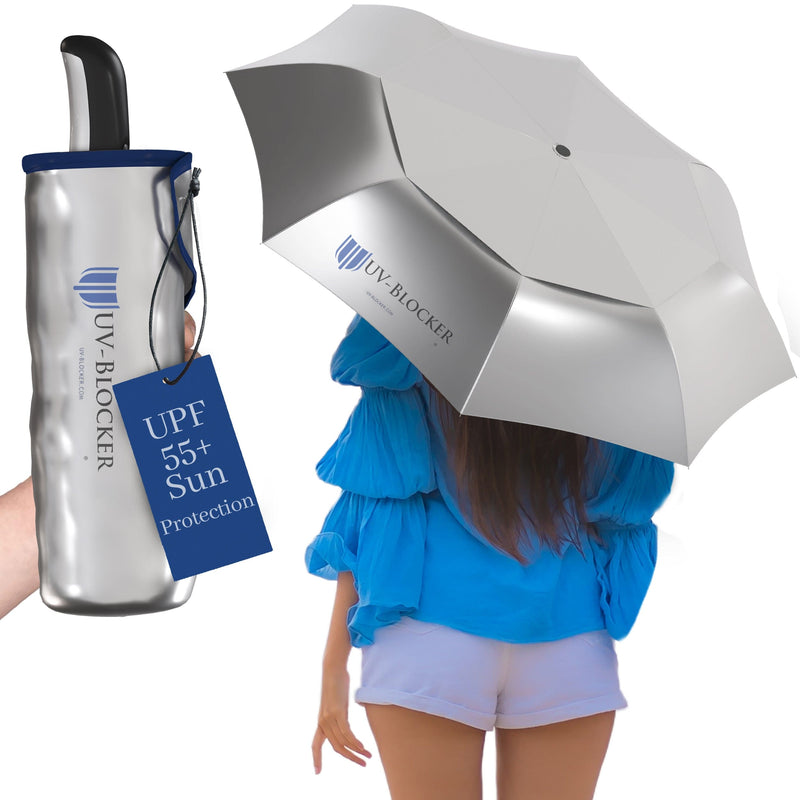
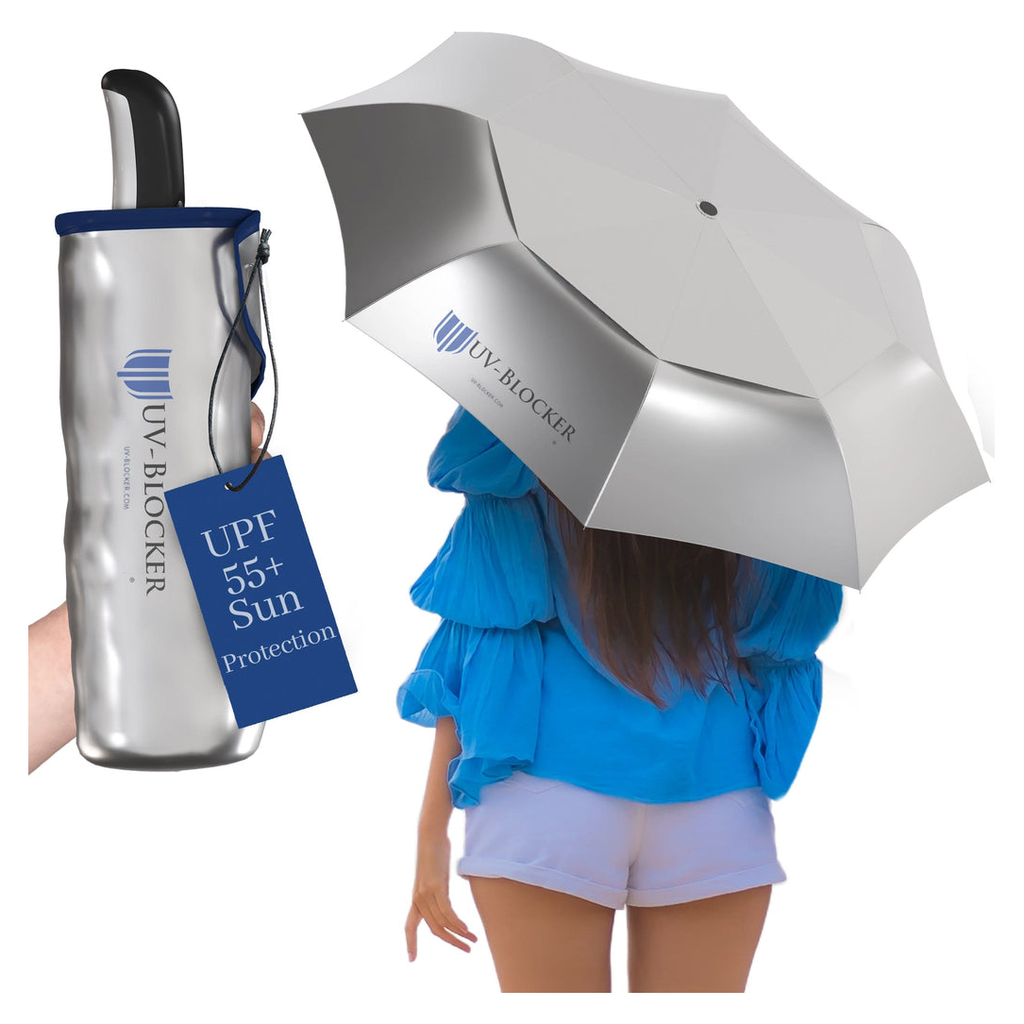
Consider a standard UV Blocker Travel Umbrella with a 50-inch arc.
- Protection Zone: When held overhead, this creates a massive canopy of shade.
- The Math: A 44-inch diameter circle offers approximately 10.5 to 12 square feet of coverage.
- The Comparison: This offers 600% to 800% more coverage than a wide-brimmed hat.
When you walk under a UV umbrella, the shadow engulfs your shoulders and covers your arms. Depending on the solar zenith angle, it shades your torso down to your thighs.

Cumulative Load
Sun damage is cumulative. It is about the millions of photons hitting your skin cells over decades. Relying solely on a hat leaves the majority of your upper body to fend for itself, usually with a thin layer of chemical sunscreen that degrades every 80 minutes.
An umbrella physically removes the photonic load from your upper body. It is the difference between wearing a helmet and standing inside a bunker.
Thermodynamics: Heat Management
Sun protection is also about preventing heat exhaustion. The structural difference between a hat and an umbrella is stark here.
The Oven Effect of Hats
A hat protects you by interception but sits directly against your biological cooling system: your head.
- Trapped Convection: Your scalp is a major radiator for shedding excess body heat. A heavy canvas or straw hat caps that radiator. The heat rising from your head gets trapped in the crown of the hat creating a micro-climate of stagnant hot air.
- Absorption vs. Reflection: Most hats absorb heat. A dark-colored hat absorbs infrared (IR) radiation and heats the fabric itself. That hot fabric conducts heat directly to your forehead.
The Portable Air Conditioner
A UV umbrella changes the thermodynamic equation through Separation and Reflection.
- Airflow: The canopy hovers 2 to 3 feet above your head. This gap allows wind to pass freely between your body and the shield. The heat rising from your body disperses into the atmosphere rather than being trapped against your skin.
- Solarteck™ Technology: A standard rain umbrella is usually black nylon that absorbs heat. UV Blocker umbrellas use patented silver Solarteck™ fabric. This material mirrors thermal energy. It reflects roughly 99% of UVA/UVB rays and infrared heat waves.
- The Result: Testing shows the temperature underneath a UV Blocker umbrella is typically 15°F cooler than direct sunlight.
Walking under a UV umbrella feels like stepping under a shade tree. You actively reject the energy that causes heat stress.

The Silent Killer: Diffused UV Radiation
You might ask if light bounces underneath the umbrella.
This valid question addresses Diffused UV Radiation. UV rays scatter in the atmosphere and bounce off surfaces.
- Dry Sand: Reflects up to 15-20% of UV radiation.
- Sea Foam/Surf: Can reflect 25-30%.
- Concrete: Reflects 8-12%.
The Hat's Defense Flaw
A hat blocks the direct beam from above. But the brim sits high on your brow so your face is open to the hemisphere of the sky and the ground below.
- The Bounce Effect: If you walk on a white sandy beach, UV rays bounce off the sand and hit your cheeks and neck underneath your hat brim.
- Atmospheric Scatter: Even on a cloudy day, UV comes from all directions. A hat leaves probably 80% of your peripheral vision open to the sky. Studies suggest a hat might only reduce total UV exposure to the face by about 50% because it fails to block this scattered light.
The Umbrella's Geometrical Advantage
An umbrella also has open sides but the Geometry of Protection is superior because of the arc size.
- The Sky View Factor: The umbrella is significantly wider (12 sq ft vs 1.5 sq ft) and cuts off a massive chunk of the sky dome. It obscures the sun when it is directly overhead and when it is at 45-degree angles.
- Dimming the Environment: Think of it like standing under a large patio awning. The awning effectively dims the ambient light of your immediate environment.
Neither tool offers 100% protection from scattered light. But the umbrella reduces the total ambient UV load on your body more effectively simply by virtue of its massive size.
The Hands-Free Myth
The only metric where the hat wins is convenience. It is hands-free.
But every design choice is a trade-off. Choosing hands-free convenience means accepting other inconveniences:
- The Sunscreen Tax: Because your arms and chest are exposed, you must apply and reapply thick layers of sunscreen.
- The Sweat Factor: Hat hair and sweat around your forehead are the price of that shade.
- The Heat Fatigue: Your body works harder to cool down which drains your energy faster.
The Umbrella Trade-Off
Dedicating one hand to a UV umbrella gains you a quality-of-life upgrade:
- Zero Contact: No tight band around your head. No sweat dripping into your eyes.
- Chemical Freedom: Your upper body is under a portable roof so you can often skip heavy sunscreen application on your arms and shoulders.
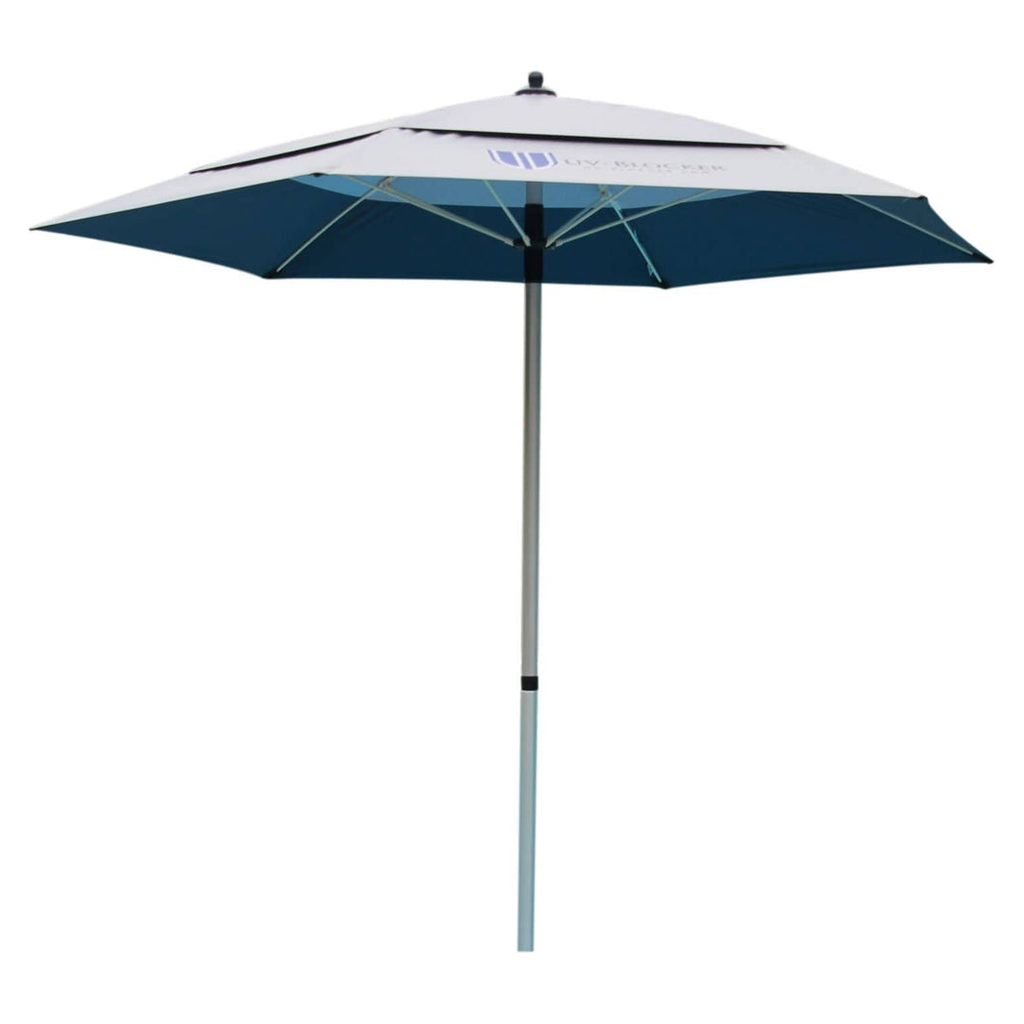
- Stability: UV Blocker umbrellas utilize a patented Vented Mesh System. A double-canopy design covers a mesh vent that allows wind to pass through the umbrella while keeping rain and sun out. It works with the wind rather than fighting it.
For hands-free UV umbrella use, consider the Chair Umbrella Holder for strollers, wheelchairs, and beach chairs.
What Dermatologists Recommend
Medical experts consistently recommend layered sun protection with portable shade as a critical component.
Dr. Andrea Buck, Board-Certified Dermatologist (Medford, NJ):
"The first items we pack are our UV-Blocker Beach Umbrellas. For patients with sun sensitivity or a history of skin cancer, portable shade is non-negotiable."
Dr. Aradhna Saxena, Dermatologist (Ft Washington, PA):
"A UPF-rated umbrella is one of the most effective defenses against actinic keratosis and cumulative UV damage. It provides consistent protection without reapplication."
Dr. David A. Kasper, Dermatologist (Lansdale, PA):
"I highly recommend UV umbrellas for their compactness, durability, and cooling effect. Unlike hats, they create a genuine microclimate of protection."
Medical Certifications That Matter
When choosing sun protection, look for these trust signals:
- Melanoma International Foundation (MIF) Approved — UV-Blocker umbrellas carry this endorsement, indicating they meet standards for melanoma prevention
- The Skin Cancer Foundation Seal of Recommendation — Products must demonstrate safe and effective UV protection
- UPF 50+ Rating — Indicates fabric blocks 98%+ of UV radiation (UV-Blocker is rated UPF 50+)
Learn more about UV-Blocker's dermatologist recommendations.
The Verdict: Use Both, But Lead with the Umbrella
We do not suggest throwing away your hat. We suggest you upgrade your system to a Defense-in-Depth strategy.
The Skin Cancer Foundation recommends layering multiple sun protection methods. Here's the optimal approach:
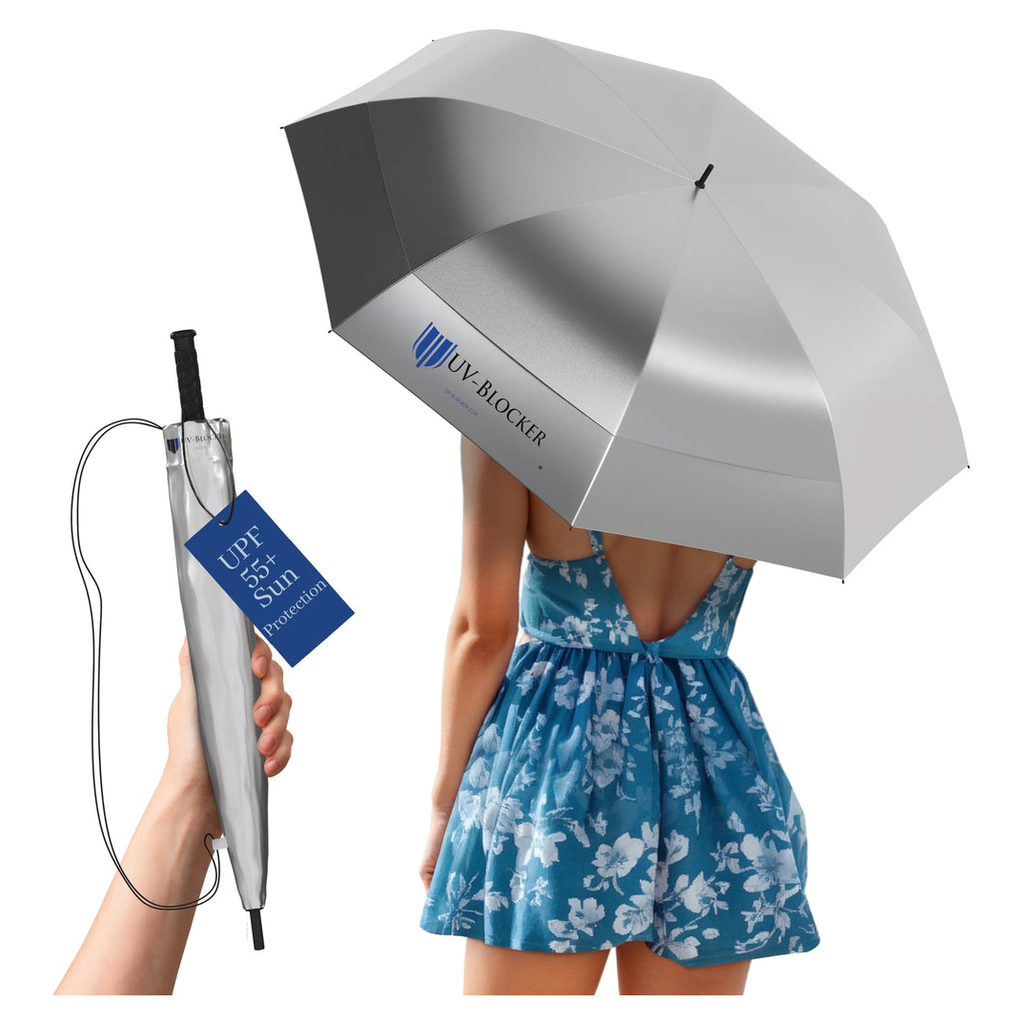
Primary defense: UPF 50+ umbrella — Provides the widest coverage (10-12 sq ft), blocks 99% of UV, and keeps you 15°F cooler. This is your roof. Try the Large Folding UV Umbrella for maximum coverage.
Secondary defense: Wide-brim UPF hat — Adds protection when the umbrella isn't practical (windy conditions, hands-full situations, active sports).
Always include: Broad-spectrum SPF 30+ sunscreen — Covers gaps and protects during transitions between shade and sun.
Who Needs This Dual-Layer Approach Most?
This layered strategy is especially critical for:
- Melanoma survivors and skin cancer patients — UV-Blocker was founded in 2005 by Ron Walker after his Stage 1 melanoma diagnosis. Every product is designed with the understanding that sun protection is a medical necessity.
- Lupus patients — Photosensitivity can trigger dangerous flares. The larger coverage zone of an umbrella provides a meaningful buffer. See our Lupus Sun Protection Guide.
- Anyone on photosensitizing medications — Retinoids, certain antibiotics, and other medications increase sun sensitivity.
- Parents protecting infants under 6 months — Babies can't use sunscreen, making physical shade the only safe option.

Conclusion
The math is simple. A wide-brimmed hat covers 1.5 square feet and often acts as a heat trap. A UV Blocker umbrella covers 12 square feet, keeps you 15 degrees cooler, and protects your shoulders and arms without a drop of sunscreen.
Stop relying on a "bucket" to do a "roof's" job. Treat your personal space like you treat your home. Upgrade your defense and experience the difference of walking in your own portable shadow.