

The average homeowner spends 26 to 52 hours mowing their lawn each season, and all of it happens under direct UV radiation. Most yard work sun protection advice stops at "wear sunscreen and a hat." But anyone who has mowed a lawn in July knows sunscreen sweats off in under an hour. Reapplying with grass-stained hands simply isn't happening. This guide covers a shade-first protection framework with specific protocols for homeowners and professional landscapers.
How Much UV Exposure Does Yard Work Create?
A typical mowing session lasts 1 to 2 hours weekly from April through October, totaling 26 to 52 hours of direct UV exposure per season.
Most people underestimate how much time they actually spend outdoors maintaining property. UV damage begins after just 15 to 20 minutes of unprotected exposure on a clear day, according to the Skin Cancer Foundation.
For those who maintain landscapes professionally, the numbers get worse. A 2023 joint estimate from the World Health Organization and the International Labour Organization found that outdoor workers face a 60 percent increased risk of nonmelanoma skin cancer. One in three nonmelanoma skin cancer deaths are work-related.
The Skin Cancer Foundation lists groundskeepers and landscapers among the most at-risk outdoor occupations.

| Yard Activity | Typical Duration | Weekly Frequency | Season Length | Annual UV Hours |
|---|---|---|---|---|
| Lawn mowing | 1-2 hours | Weekly | Apr-Oct (26 wk) | 26-52 |
| Garden maintenance | 1-3 hours | 2x/week | Mar-Nov (36 wk) | 72-216 |
| Landscaping (pro) | 8-10 hours | 5x/week | Mar-Nov (36 wk) | 1,440-1,800 |
| Leaf/snow cleanup | 1-2 hours | Weekly | Seasonal (12 wk) | 12-24 |
With that many hours at stake, the obvious answer is sunscreen. But yard work makes that harder than it sounds.
Why Does Sunscreen Fail During Yard Work?
Sunscreen breaks down within 40 to 80 minutes of sweating, and reapplication is impractical when hands are covered in dirt, grease, or grass clippings.
The primary flaw in relying solely on sunscreen for yard work is the physical reality of the task. Sweat acts as a solvent that degrades sunscreen effectiveness rapidly. Even formulas marketed as "water-resistant" max out at an 80-minute claim during FDA testing. Physical labor pushes those limits immediately. Pushing a heavy mower generates significant sweat, accelerating the breakdown of topical protection.
Timing presents another obstacle. Dermatologists recommend a 15 to 20-minute pre-application absorption window before going outside. You see the grass needs cutting, you step outside, and you start the engine. Very few people sit inside waiting for a chemical lotion to absorb.
The most glaring problem involves the condition of your hands. Gloves quickly become covered in grass clippings or damp soil. Sunscreen reapplication becomes messy and often ignored.
Sunscreen still matters. It works well as a backup layer for exposed skin. It just falls short as the primary defense during active outdoor labor.
If sunscreen can't be the primary defense during active yard work, what can?
What Is the Shade-First Approach for Yard Work?
The shade-first approach prioritizes physical shade barriers and UPF clothing over sunscreen, reserving topical protection for exposed skin that other layers can't cover.
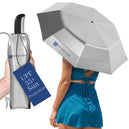
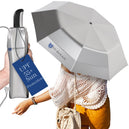
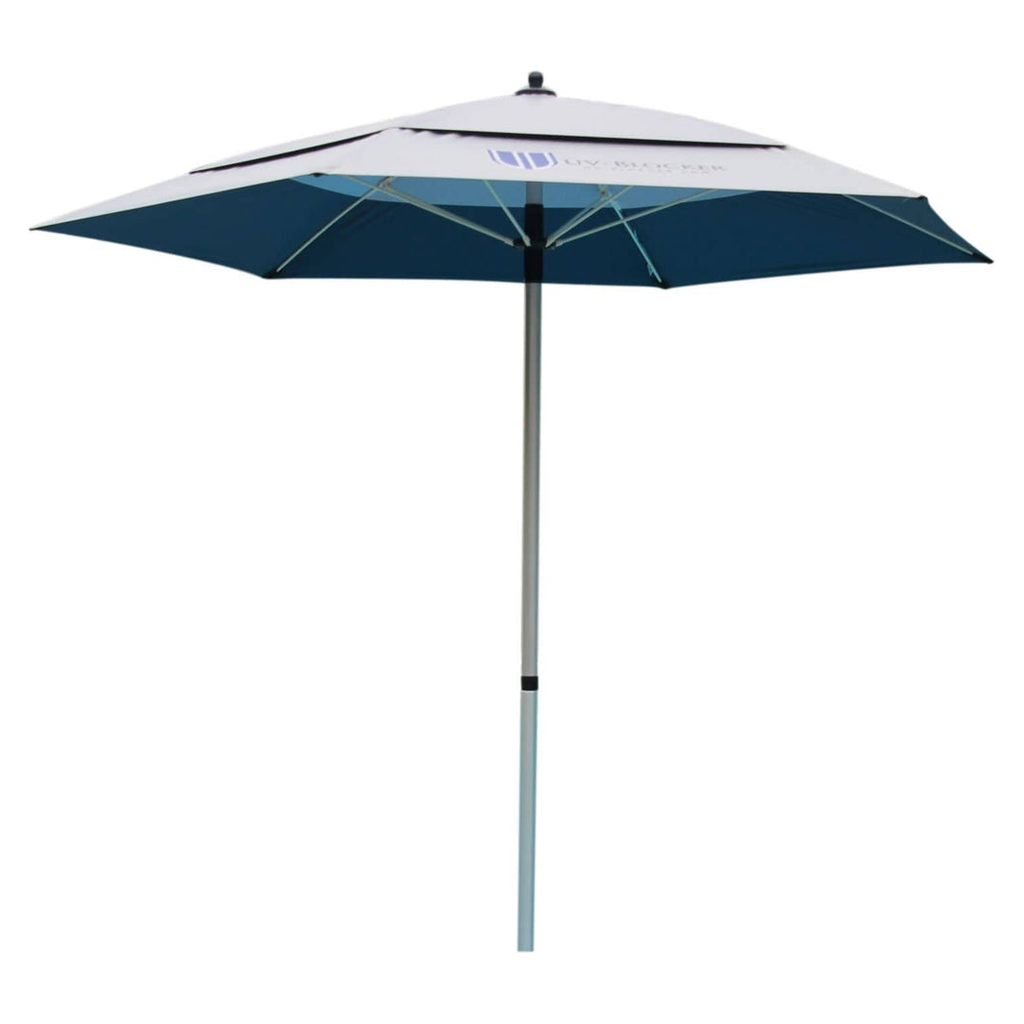
Layer one involves portable shade stations. You set up a UPF 50+ umbrella near your active work area to serve as a dedicated hydration and rest station. Taking 10-minute shade breaks every 45 to 60 minutes gives the body a chance to cool down while escaping UV radiation. A dedicated UV umbrella for gardening transforms any exposed patch of grass into a safe recovery zone.
Layer two relies on UPF clothing. Long-sleeve UPF shirts, wide-brim hats, and UV-protective sunglasses form a continuous physical barrier. UPF-rated clothing doesn't wash off, sweat away, or require greasy hands to apply. Choosing the right sun protection clothing ensures your torso and arms remain shielded regardless of how heavily you exert yourself.
Layer three utilizes sunscreen exactly where it belongs: on the remaining exposed skin. You apply an SPF 30+ broad-spectrum lotion to the face, back of the neck, ears, and hands.
Fabric technology plays a crucial role in the overall effectiveness of the shade station. Materials featuring Solarteck® block 99 percent of UV rays while keeping the physical space underneath up to 15°F cooler than the surrounding direct sun.
The shade-first approach works differently depending on whether you're a homeowner or a professional landscaper.
Homeowner's Yard Work Sun Protection Protocol
Homeowners should mow before 10am or after 4pm, set up a portable shade station for breaks, wear UPF clothing, and hydrate 16 to 32 oz per hour.
Sun protection for yard work starts with timing. Try to finish mowing before 10am or wait until after 4pm. The EPA UV Index scale confirms UV radiation peaks between those middle hours.
Developing a pre-mowing routine ensures nothing gets forgotten. Apply sunscreen 20 minutes before stepping outside. Put on a UPF long-sleeve shirt and a wide-brim hat. Most importantly, set up your shade station with a cooler of water before pulling the starter cord.
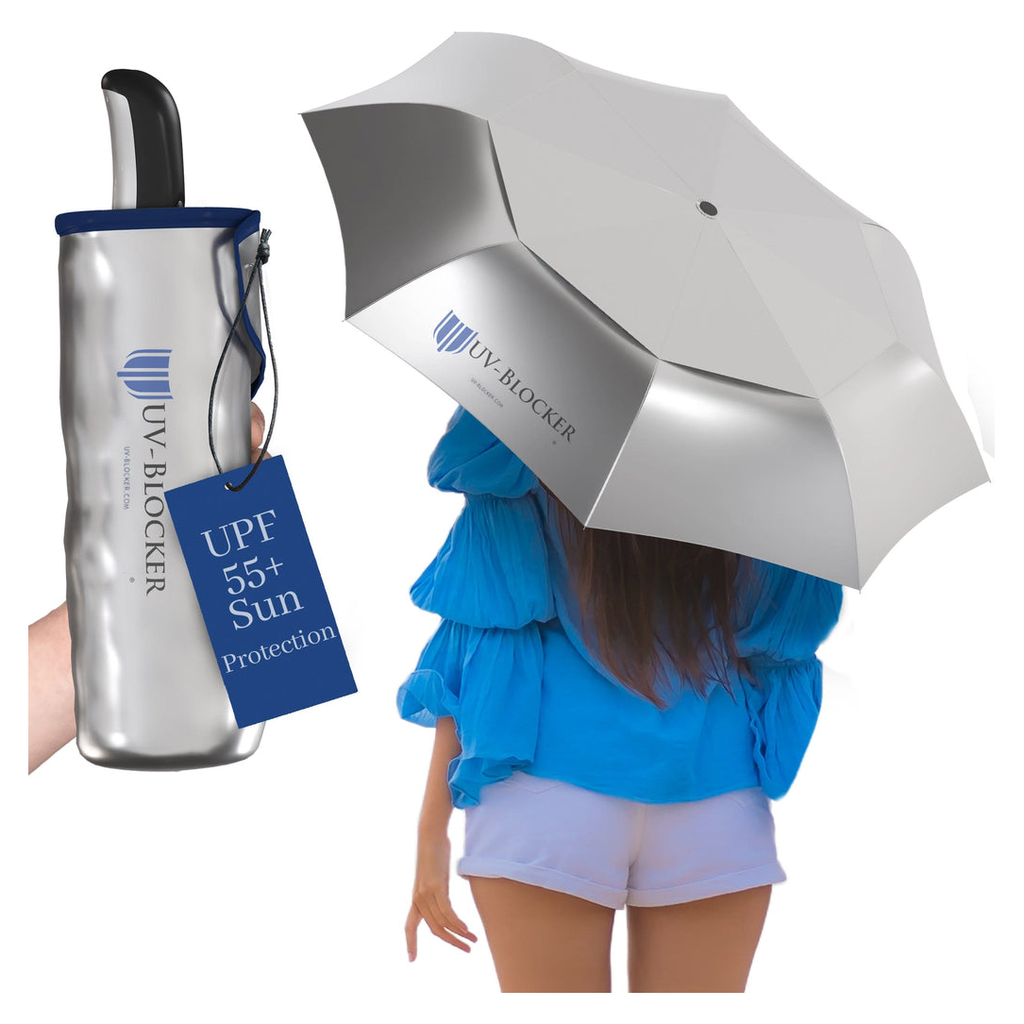
Your shade station setup requires strategic placement. Position a large UV umbrella with at least a 58-inch arc near the edge of the yard. This specific spot becomes your mandatory break zone for drinking water and resting safely. The Large Folding UV Umbrella by UV-Blocker covers two people easily and folds down for compact garage storage between uses.
Hydration matters just as much. OSHA guidelines for outdoor workers recommend 16 to 32 ounces of water per hour during hot-weather exertion. Pre-hydrate with 16 ounces about 30 minutes before you start.
Finally, don't ignore proper eye protection. UV-rated wraparound sunglasses provide necessary physical shielding from both airborne projectiles and bright light damage.
Professional landscapers face the same UV threats, multiplied by a full workday.
How Should Professional Landscaping Crews Handle Sun Protection?
Professional landscaping crews need a formal sun safety policy that includes portable shade at every job site, mandatory UPF clothing, scheduled shade breaks, and OSHA-compliant hydration access.
The exposure scale for commercial crews dwarfs that of the weekend warrior. A typical crew member endures 8 to 10 hours of daily UV exposure, five days a week, from March through November. This equates to 1,440 to 1,800 hours of direct sun per year. Compare that to the homeowner's 26 to 52 hours.
Employers hold a legal and ethical obligation to protect their workers from these elements. OSHA's Heat Illness Prevention campaign mandates that employers provide water, rest, and shade for outdoor heat exposure.
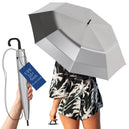
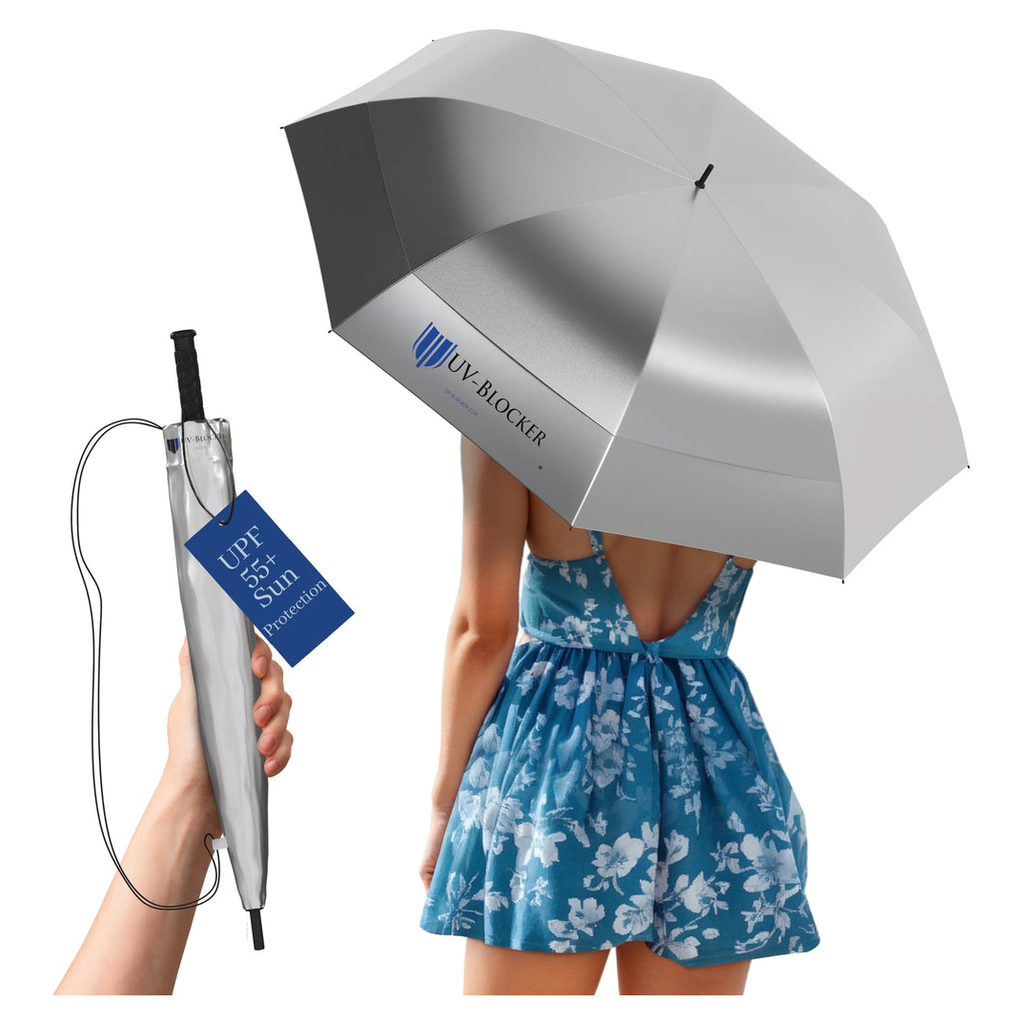
Providing portable shade for job sites solves the immediate exposure problem. Staking a large UV umbrella with a 62 to 68-inch arc at each location instantly provides a shaded break zone, even on barren lots. The Golf UV Umbrella offers a 53 to 58-inch coverage diameter, creating enough cooler space for two to four crew members to rest simultaneously.
Crew managers must implement specific, enforceable sun safety policy elements. These protocols include mandatory UPF shirts, wide-brim attachments for hard hats, and scheduled 10-minute shade breaks every single hour. Supplying large pump bottles of sunscreen in every crew truck removes the friction of personal cost. Scheduling the heaviest physical tasks for the early morning hours also significantly reduces peak exhaustion.
The National Institute for Occupational Safety and Health recommends a hierarchy of controls for outdoor workers. Engineering controls like portable shade structures come first. Administrative controls like smart scheduling follow. Personal protective equipment provides the final barrier. For a broader look at industrial requirements, see the full guide on sun protection for outdoor workers.
Beyond UV, yard work in heat creates a second overlapping threat.
How Are Heat Illness and UV Damage Connected During Yard Work?
Heat illness and UV damage are interconnected hazards during yard work. Sunburn impairs the body's cooling ability, and dehydration accelerates both heat exhaustion and skin damage.
Treating sun exposure and heat stress as separate problems misses how the body actually works. Sunburn reduces the skin's ability to thermoregulate. Burned skin sweats less efficiently, trapping heat and raising the risk of heat illness.
The early symptoms of heat exhaustion overlap with severe sunburn symptoms. It's easy to mistake the onset of heat stroke for too much sun exposure.
Dehydration speeds up both conditions. When the body lacks enough water, blood volume drops, pushing toward heat exhaustion. Dehydrated skin also loses barrier function, making it more vulnerable to UV damage. Staying hydrated protects against heat illness and supports skin integrity at the same time.
The shade-first approach handles both threats at once. Standing under a UPF 50+ shade station blocks 99 percent of UV rays while dropping the surface temperature by up to 15°F. That environment lets heart rate drop, sweat evaporate properly, and skin recover away from direct radiation.

| Protection Method | UV Block | Heat Reduction | Reapplication Needed | Works While Sweating |
|---|---|---|---|---|
| UPF 50+ shade (Solarteck®) | 99% | Up to 15°F cooler | No | Yes |
| UPF 50+ clothing | 98%+ | Varies by fabric | No | Yes |
| SPF 50 sunscreen | 98% | None | Every 40-80 min | Degrades with sweat |
| Wide-brim hat | Face/neck only | Slight | No | Yes |
| Timing (before 10am) | Reduced intensity | Lower ambient | N/A | N/A |
Frequently Asked Questions About Sun Protection for Yard Work
These are the most common questions about staying safe from UV exposure during lawn care and landscaping work.
Is sunscreen necessary for short mowing sessions?
Yes, UV damage begins within 15 to 20 minutes of unprotected exposure. Even a 30-minute mowing session causes cumulative skin damage over time.
Apply SPF 30+ to exposed skin 20 minutes before starting. For sessions under 45 minutes, a single application combined with UPF clothing and a hat provides adequate protection.
What temperature is too hot to mow the lawn?
Avoid mowing when the heat index exceeds 103°F, which OSHA classifies as "very high" risk for heat illness.
Below that dangerous threshold, prioritize mowing during early morning or late afternoon. Take shade breaks every 30 to 45 minutes when temperatures exceed 90°F and hydrate with at least 16 oz of water per hour.
What should landscapers wear for sun protection?
Professional landscapers should wear UPF 50+ long-sleeve shirts, wide-brim hard hat brims, UV-rated wraparound safety glasses, and apply SPF 30+ to exposed skin.
Sun protection clothing rated UPF 50+ blocks 98 percent of UV rays consistently without needing reapplication. Pair these garments with portable shade stations at each job site for designated break periods.
How do you stay cool while mowing?
Mow before 10am or after 4pm, wear light-colored UPF clothing, hydrate 16 to 32 oz per hour, and set up a UPF 50+ shade station for regular breaks.
Solarteck® shade technology reduces temperatures up to 15°F underneath, turning a quick shade break into real heat recovery time.
Do outdoor workers get more skin cancer?
Yes. A 2023 WHO/ILO study found outdoor workers have a 60 percent increased risk of nonmelanoma skin cancer, with 1 in 3 nonmelanoma skin cancer deaths being work-related.
Groundskeepers, landscapers, and construction workers face the highest cumulative UV exposure among all occupations. The full guide on sun protection for outdoor workers covers additional strategies.
What SPF should I use for yard work?
Use SPF 30-50 broad-spectrum sunscreen as a backup layer. Higher SPF provides marginal additional benefit and should always be paired with shade and UPF clothing.
Water-resistant formulas last a maximum of 80 minutes per FDA testing standards. Reapply after heavy sweating. For working sessions lasting over an hour, shade and UPF clothing prove far more practical than relying solely on chemical reapplication.
Conclusion
Yard work sun protection doesn't have to be complicated, but it does need to go beyond sunscreen.
- Weekly mowing accumulates 26 to 52 hours of unshielded UV per season, turning a routine chore into genuine skin cancer risk.
- Sunscreen falls short as a primary defense during sweaty yard work. Physical shade and UPF clothing don't wash off.
- The shade-first approach — portable shade, UPF clothing, and sunscreen as backup — addresses both UV radiation and heat stress.
- Professional landscapers need formal crew-level sun safety policies with portable shade at every job site.
Set up a portable shade station near your yard before your next mowing session. That one change creates a shaded hydration break zone that helps your body recover during labor. If you've ever skipped protection and regretted it, how long does a sunburn last is a good reminder of what's at stake.
Frequently Asked Questions
What is the difference between UVA and UVB rays, and why does it matter?
UVA rays (320–400nm) are longer waves that penetrate deep into the skin, causing photoaging, wrinkles, and contributing to melanoma. They pass through glass and clouds and are relatively constant year-round. UVB rays (290–320nm) are shorter, cause sunburn, and are the primary driver of skin cancer. They're most intense midday (10am–4pm) and in summer. Effective sun protection must block both.
How effective is a UPF 50+ umbrella compared to sunscreen alone?
A UPF 50+ umbrella blocks 99%+ of direct overhead UV — more reliable than sunscreen because it doesn't require reapplication, doesn't wash off with sweat, and provides consistent protection. However, reflected UV from surfaces still reaches skin under an umbrella. The ideal combination is SPF 50+ sunscreen + UPF 50+ umbrella for 95–99% total UV reduction. UV-Blocker's umbrellas are dermatologist-recommended for this purpose.
What time of day poses the highest UV risk?
UV radiation is highest between 10am and 4pm, peaking around noon in most locations. The UV Index is the most accurate measure — when it reaches 6 or above, unprotected skin can begin to burn in as little as 15 minutes. Cloud cover reduces UV intensity but doesn't eliminate it: 80% of UV penetrates light cloud cover.
Does skin tone affect UV damage risk?
All skin tones are affected by UV radiation, but the risk and presentation differ. People with lighter skin (Fitzpatrick types I–III) burn faster and have higher non-melanoma skin cancer rates. People with darker skin (types IV–VI) are more prone to hyperpigmentation and have a higher risk of melanoma being diagnosed at later stages. Sun protection is essential for every skin tone.
What are early warning signs of skin cancer I should watch for?
Use the ABCDE rule for moles: Asymmetry, Border irregularity, Color variation, Diameter larger than 6mm, and Evolving (any change over time). Also watch for sores that don't heal, new pink or pearly bumps, and flat red or pink patches. Annual dermatologist screenings are recommended for anyone with significant sun exposure history or a family history of skin cancer.
Expert Sun Protection Recommendations
- Check the daily UV Index at weather.gov or a UV app before any extended outdoor activity
- Apply SPF 30+ broad-spectrum sunscreen 30 minutes before going outdoors, not right before sun exposure
- Reapply sunscreen every 2 hours and after swimming or heavy sweating
- Use a UPF 50+ umbrella for hands-free shade during outdoor dining, sports, or work
- Wear UV-blocking sunglasses that block 99–100% of UVA and UVB — eyes are vulnerable to UV-related damage
- Annual skin screenings with a board-certified dermatologist can catch early-stage skin cancers when highly treatable