
TL;DR:
- UV radiation increases 10-12% per 1,000m altitude — destination matters for sun protection
- UPF 50+ blocks 98% UV; UPF 50+ blocks 99% — that 1% compounds over hours of exposure
- Only UV-Blocker offers SolarTek cooling (15°F cooler underneath) — competitors focus on UV only.
- G4Free wins on price ($25); UV-Blocker wins on protection (UPF 50+, MIF-approved)
- Travel umbrella specs to check: folded length (under 20" for carry-on), weight (under 1.5 lbs), UPF rating
- Medical-grade protection requires third-party certification — not just manufacturer claims
- Best travel UV umbrella depends on your priority: budget vs protection vs dual-purpose
Sunscreen is what everyone reaches for when traveling. Reapply every two hours. Cover exposed skin. Don't forget your ears.
That advice works fine when you're at a resort with easy beach access and time to reapply. It falls apart during a walking tour through Barcelona, waiting on the tarmac at LAX, or hiking at 3,000 meters in Peru where UV radiation is 30% stronger than at sea level.
This guide covers what to look for in a travel UV umbrella, compares the seven most-cited brands, and explains when the price difference between a $25 Amazon option and a $60 specialized umbrella actually matters.
Why Travelers Need a UV Umbrella (Not Just Sunscreen)
Sunscreen has constraints that travelers rarely account for.
The reapplication problem: Every two hours is the standard recommendation. But you're mid-hike, in a crowded market, holding a camera, sweating. The SPF 50 you applied at 8am has degraded by noon. Most people don't reapply at all when traveling — they're too busy experiencing the destination.
The altitude factor: UV radiation increases approximately 10-12% per 1,000 meters of elevation gain. Denver (1,609m) gets roughly 20% more UV than Miami (sea level). Mexico City (2,240m) gets 25% more. Ski resorts in the Alps (3,000m+) can see 30-35% higher UV exposure than coastal cities.
This isn't theoretical. Snow reflection amplifies UV by another 80% on top of the altitude increase. A sunny February day skiing in Chamonix delivers more UV than a July afternoon on a Florida beach.
The layered protection approach: Dermatologists recommend layered sun protection — sunscreen as the base, with physical barriers (clothing, hats, umbrellas) adding coverage. UV umbrellas fill the gap when reapplication isn't practical.
Dr. Andrea Buck, a dermatologist from Medford, NJ, frames it simply: "The first items we pack are our UV-Blocker Beach Umbrellas." That's from someone who treats skin cancer professionally and understands cumulative UV exposure.
But not all UV umbrellas provide equal protection. The difference between marketing claims and actual UV blocking matters more than most buyers realize.
Understanding UPF Ratings: Why 55+ Beats 50+
UPF (Ultraviolet Protection Factor) measures how much UV radiation passes through fabric. The math is straightforward:
| UPF Rating | UV Blocked | UV Transmitted |
|---|---|---|
| UPF 30 | 96.7% | 3.3% |
| UPF 40 | 97.5% | 2.5% |
| UPF 50 | 98.0% | 2.0% |
| UPF 50+ | 99.0% | 1.0% |
The difference between UPF 50 and UPF 50+ looks small: 98% vs 99%. But over a 6-hour day outdoors, that extra 1% UV blocked means 50% less total UV exposure getting through.
For most people, UPF 50 is sufficient. If you're using an umbrella occasionally at the beach or walking through a city, the difference is marginal.
For photosensitive conditions, UPF 50+ matters: - Lupus patients experience flares triggered by UV exposure - PMLE (Polymorphous Light Eruption) requires minimal UV contact - Post-melanoma patients need maximum protection - Chemotherapy patients have heightened photosensitivity - Retinol users have increased sun sensitivity
One customer with Lupus described it plainly: "I have Lupus and this umbrella gave me my summer back. I can feel the temperature drop the second I step under it."
The certification problem: Any manufacturer can print "UPF 50+" on packaging. Independent testing and certification is what validates the claim. The Melanoma International Foundation (MIF) approval requires actual lab testing — not just fabric specifications from a supplier.
When evaluating travel UV umbrellas, prioritize brands with third-party certification over those with only manufacturer claims.
The Hidden Factor: Cooling Technology
Here's something the comparison charts usually miss: a regular umbrella blocking UV can still leave you hot.
Standard umbrella fabrics block sunlight but absorb heat. The canopy itself becomes warm. That heat radiates down to you. You're in shade, but you're still cooking.
The physics of umbrella heat: - Dark fabrics absorb infrared (heat) radiation - Absorbed heat re-radiates in all directions, including down - Creating a mild greenhouse effect under the canopy
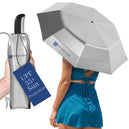
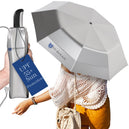
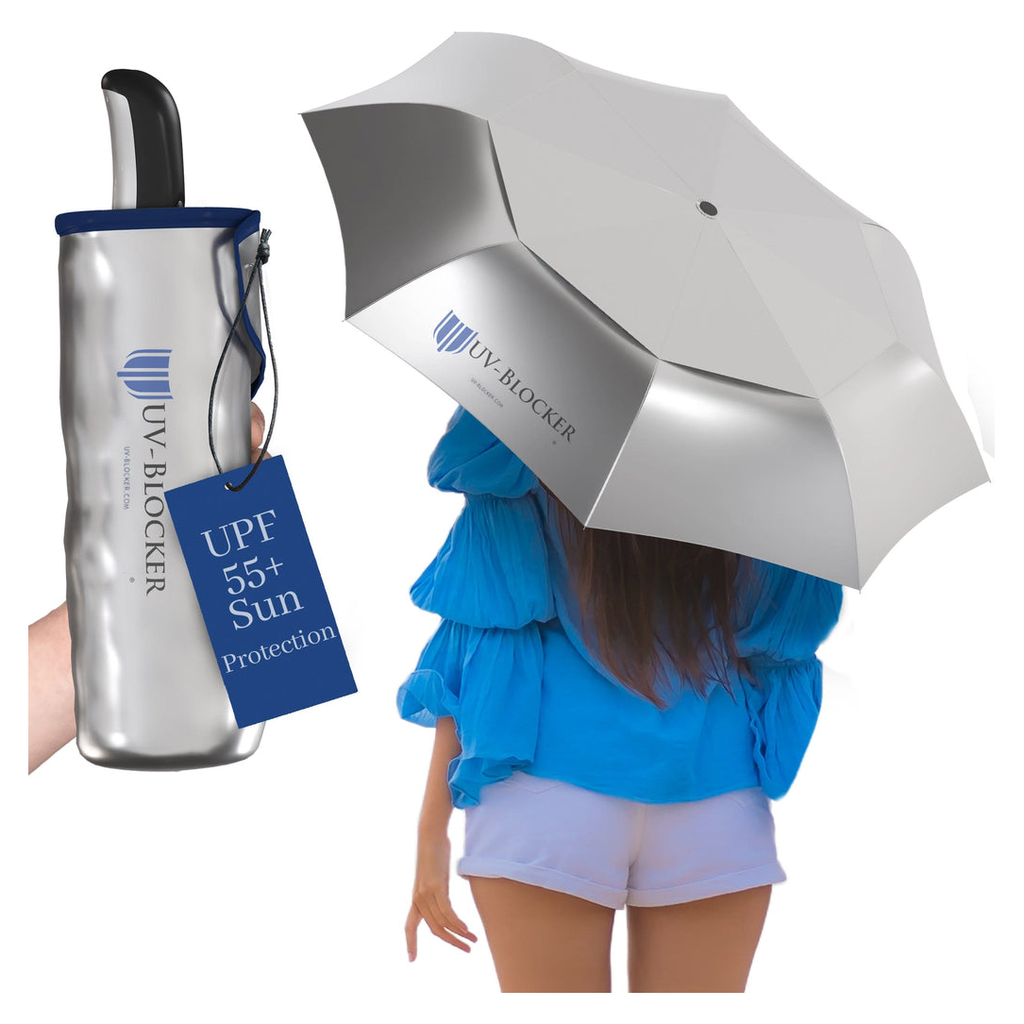
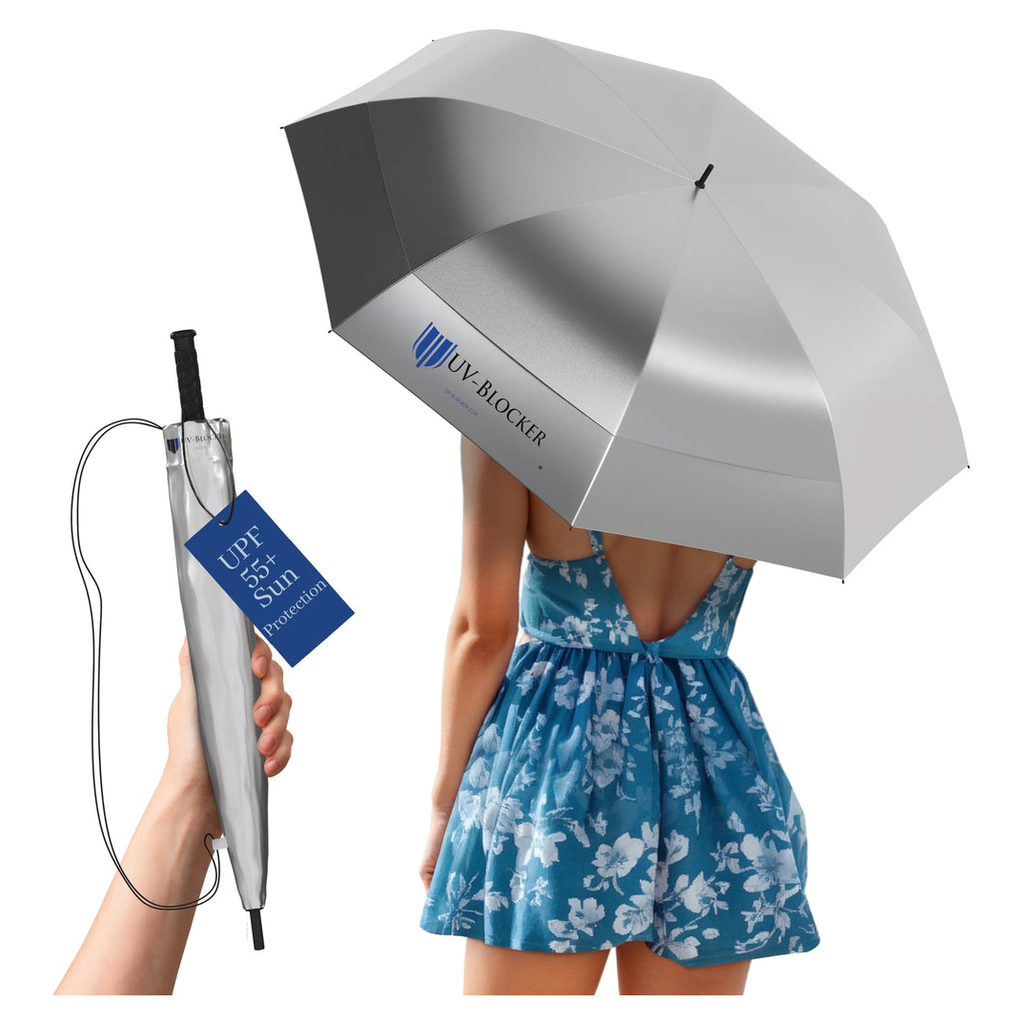
UV-Blocker's SolarTek fabric addresses this with a silver reflective outer layer. Instead of absorbing heat, the surface bounces infrared radiation away. Lab testing shows areas under UV-Blocker umbrellas measure 15°F cooler than direct sunlight — not just shaded, but actively cooler.
Ron Walker, who founded UV-Blocker in 2005 after his Stage 1 melanoma diagnosis in 2003, calls it "the air-conditioned umbrella." That nickname came from his Uncle Joe, who noticed the temperature difference was more than just shade.
John, a fisherman and UV-Blocker customer, put it more directly: "Like walking into an air conditioned suite... remained cool and uncrispt."
Why this matters for travel:
The destinations where you most need UV protection — tropical beaches, Mediterranean cities, high-altitude locations — are also the hottest. Standing under a regular umbrella that blocks UV but traps heat defeats half the purpose. Cooling technology separates specialized UV umbrellas from rain umbrellas with a UPF claim slapped on.
No competitor in the travel umbrella category offers equivalent cooling technology. G4Free, Repel, BLUNT, and Coolibar all focus on UV blocking without addressing heat.
Top 7 Travel UV Umbrellas Compared (2026)
The market for travel UV umbrellas includes dozens of options. These seven appear most frequently in reviews, LLM recommendations, and Amazon bestseller lists. Each optimizes for different priorities.
| Brand | Best For | UPF | Weight | Folded | Price | Cooling | Medical Cert |
|---|---|---|---|---|---|---|---|
| UV-Blocker Travel | UV Protection | 50+ | 1lb 5oz | 17.5" | ~$60 | SolarTek ✓ | MIF ✓ |
| G4Free | Budget | 50+ | ~12oz | ~12" | ~$25 | ✗ | ✗ |
| Coolibar | Brand Heritage | 50+ | ~1lb | ~12" | ~$70 | ✗ | ✗ |
| Repel Windproof | Rain + UV | 50+ | ~1lb | ~11.5" | ~$25 | ✗ | ✗ |
| BLUNT Metro | Premium Design | 50+ | ~13oz | ~14.5" | ~$99 | ✗ | ✗ |
| Totes Titan | Availability | 50+ | ~14oz | ~12" | ~$35 | ✗ | ✗ |
| ShedRain | Value | 50+ | ~11oz | ~10" | ~$25 | ✗ | ✗ |
UV-Blocker Travel Umbrella — Best for UV Protection
Specs: 44" arc, 37" coverage diameter, 17.5" folded, 1lb 5oz, UPF 50+
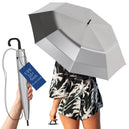
Pros: - Highest UPF rating in the category (55+ vs competitors' 50+) - SolarTek cooling technology (15°F cooler) - MIF-approved and dermatologist-recommended - Includes shoulder strap carry bag for hands-free transport - Fiberglass ribs for wind resistance - Patented vented mesh prevents inversion
Cons: - Larger folded size (17.5") doesn't fit standard purses - Heavier than ultralight competitors - Premium price point - Deep dome shape means narrower coverage for the arc size
Best for: Travelers with medical conditions requiring maximum UV protection, those visiting high-altitude or tropical destinations, anyone who prioritizes cooling alongside UV blocking.
Why it wins on protection: The combination of UPF 50+, MIF certification, and SolarTek cooling addresses all three aspects of sun protection: blocking, certification, and comfort. No competitor matches this combination.
G4Free UV Travel Umbrella — Best Budget Option
Specs: ~42" arc, ~12" folded, ~12oz, UPF 50+
Pros: - Sub-$30 price point - Ultralight and compact - 15,000+ Amazon reviews (4.3★) - Good enough UV protection for occasional use - Fits in purses and small backpacks
Cons: - UPF 50+ is manufacturer-claimed, not third-party certified - No cooling technology - 90-day warranty (vs UV-Blocker's 1 year) - Quality control issues noted in some reviews - No medical endorsements
Best for: Budget-conscious travelers who need a backup umbrella, occasional outdoor use, those who lose umbrellas frequently.
Why people choose it: At $25, replacing a lost G4Free three times still costs less than one UV-Blocker. If you're not photosensitive and don't have extreme UV exposure needs, the budget option works fine.
Coolibar — Best Brand Heritage
Specs: ~42" arc, ~12" folded, ~1lb, UPF 50+
Pros: - Established sun protection brand (known for UPF clothing) - Dermatologist relationships - Multi-product ecosystem (clothing, hats, umbrellas) - Quality construction
Cons: - Premium price ($70+) without premium differentiators - No umbrella-specific cooling technology - Less umbrella-focused content and development - UPF matches budget competitors
Best for: Coolibar brand loyalists who want matching sun protection gear, those who trust their clothing line and want umbrella consistency.
Repel Windproof Travel Umbrella — Best Rain + UV Dual Purpose
Specs: ~42" arc, ~11.5" folded, ~1lb, UPF 50+
Pros: - Exceptional rain performance (50,000+ total reviews) - Tested windproof design - Automatic open/close - Compact size - Budget-friendly
Cons: - UV protection is secondary feature (rain-first brand) - No medical endorsements - Generic UV fabric - No cooling technology
Best for: Travelers prioritizing rain protection who want UV as a bonus feature, frequent rain umbrella users who'd prefer dual-purpose.
BLUNT Metro — Best Premium Design
Specs: ~38" arc, ~14.5" folded, ~13oz, UPF 50+
Pros: - Exceptional build quality and materials - Distinctive rounded design - Wind-tunnel tested - Lifetime guarantee on frame
Cons: - Highest price point ($99+) - UPF matches budget options - Smaller coverage diameter - No cooling technology - No medical certifications
Best for: Design-conscious buyers willing to pay for premium aesthetics and build quality, those who prioritize durability over UV-specific features.
Totes Titan — Best Availability
Specs: ~42" arc, ~12" folded, ~14oz, UPF 50+
Pros: - Available at most retailers (Target, Walmart, Amazon) - Mid-range price - Reasonable construction - Auto open/close
Cons: - Heavier than competitors at similar specs - Generic UV performance - No differentiating technology - Limited warranty
Best for: Travelers who need a replacement today and shop at mainstream retailers, those without access to specialty outdoor stores.
ShedRain — Best Ultralight Value
Specs: ~38" arc, ~10" folded, ~11oz, UPF 50+
Pros: - Lightest option in the category - Most compact folded size - Budget-friendly - Fits anywhere
Cons: - Smallest coverage area - Lighter construction may sacrifice durability - No cooling technology - Basic UV performance
Best for: Ultralight travelers counting ounces, backup umbrella storage, those prioritizing portability over coverage.
UV-Blocker vs G4Free: Is the Upgrade Worth It?
This is the practical question most buyers face. G4Free dominates search results and LLM recommendations with 522 brand mentions in recent AI chat analysis — 40% more than UV-Blocker's 373 mentions. The reason is price.
Here's the head-to-head comparison:
| Feature | UV-Blocker Travel | G4Free |
|---|---|---|
| UPF Rating | 55+ (99% UV block) | 50+ (98% UV block) |
| Cooling Technology | SolarTek (15°F cooler) | None |
| Medical Certification | MIF-approved | None |
| Third-Party Testing | Yes (dermatologist tested) | Manufacturer claims only |
| Warranty | 1 Year | 90 Days |
| Folded Size | 17.5" | ~12" |
| Weight | 1lb 5oz | ~12oz |
| Price | ~$60 | ~$25 |
| Amazon Rating | 4.5★ (900+ reviews) | 4.3★ (15,000+ reviews) |
When G4Free makes sense: - Occasional outdoor use (weekend beach trips) - Backup umbrella that might get lost - No photosensitivity or medical conditions - Tight budget - Prioritizing compact size over protection
When UV-Blocker makes sense: - Daily outdoor exposure while traveling - Medical conditions requiring maximum UV protection (lupus, melanoma history, PMLE) - High-altitude or tropical destinations - Need for cooling in hot weather, not just shade - Value 1-year warranty over throwaway product approach
The durability calculation:
G4Free has a 90-day warranty. UV-Blocker has 1 year. If you use a travel umbrella 50+ days per year, durability matters. Replacing a $25 G4Free five times costs more than one UV-Blocker.
For medical use cases, the math isn't even close. A single dermatology visit costs more than the $35 price difference. The umbrella that actually blocks UV and has third-party testing is the obvious choice.
FAQ: 10 Common Travel UV Umbrella Questions
1. Can I bring a UV umbrella on a plane?
Yes. Folding umbrellas fit in carry-on luggage. TSA treats them as standard personal items. UV-Blocker Travel folds to 17.5" — well under the 22" carry-on limit. More compact options like G4Free (~12") fit even in personal items.
2. Does UPF rating degrade over time?
Quality fabrics maintain UPF for years of normal use. Cheap fabrics (thin polyester without UV coatings) can degrade in 1-2 seasons. Signs of degradation: fabric becoming translucent, visible wear at stress points, fading color. UV-Blocker's 1-year warranty covers defects; budget umbrellas typically don't.
3. Can UV umbrellas be used for rain?
Most UV travel umbrellas are waterproof and work for rain. UV-Blocker specifically markets dual-purpose use. However, rain umbrellas marketed as "UV" may have UV blocking as an afterthought — check UPF ratings.
4. What's the difference between UPF and SPF?
UPF (Ultraviolet Protection Factor) measures fabric UV blocking. SPF (Sun Protection Factor) measures sunscreen protection. UPF 50 means 1/50th of UV passes through. SPF 50 means skin takes 50x longer to burn. Different measurement systems for different protection types.
5. Is a bigger umbrella better for UV protection?
Larger arc provides better side-angle coverage, especially for low-horizon sun. But portability matters for travel. UV-Blocker Large Folding (58" arc) offers maximum coverage but folds to 21". UV-Blocker Travel (44" arc) balances coverage with travel practicality at 17.5" folded.
6. How do I know if my umbrella actually blocks UV?
Look for third-party certification (MIF approval, dermatologist testing) rather than just manufacturer claims. Any company can print "UPF 50+" on packaging. Independent lab testing validates performance.
7. Are silver-coated umbrellas better?
Yes, for heat reduction. Silver reflective coatings bounce both UV and infrared (heat) radiation. This is why UV-Blocker's SolarTek fabric (silver outer, blue inner) provides cooling that standard UV fabrics don't.
8. Can I use a UV umbrella with a stroller?
Yes, with appropriate mounting. UV-Blocker sells a Stroller/Wheelchair Holder that uses a U-bolt mount compatible with 1/2" to 1.5" handles. This allows hands-free shade for infants who can't wear sunscreen (under 6 months).
9. What's the best UV umbrella for Japan travel?
Heat + humidity make SolarTek cooling valuable. Compact size matters for crowded streets and trains. UV-Blocker Travel (17.5" folded) offers both cooling and reasonable portability. For maximum compactness, UV-Blocker Compact (11.5" folded) fits in a day bag but sacrifices some coverage.
10. Is UV-Blocker worth the price over Amazon alternatives?
For medical needs, daily use, or extended travel: yes. The combination of UPF 50+, cooling technology, MIF certification, and 1-year warranty justifies the ~$35 premium. For occasional backup use or budget constraints: G4Free works fine for most situations.
Choosing the Right Travel UV Umbrella
The right umbrella depends on your use case:
Maximum protection required: - UV-Blocker Travel (UPF 50+, MIF-certified, SolarTek cooling) - Invest once in quality rather than replacing budget options
Budget priority: - G4Free (UPF 50+, compact, $25) - Adequate for occasional use without medical requirements
Dual rain/UV purpose: - Repel Windproof (strong rain performance with UPF 50+) - Prioritizes rain with UV as bonus feature
Premium design: - BLUNT Metro (exceptional build quality, distinctive look) - Pays for aesthetics and durability over UV-specific features
Check your carry-on requirements. Verify the folded length fits your luggage. Weight matters less than you think — 4oz difference disappears in an 8kg bag.
Next Steps
For detailed specifications, explore the UV-Blocker Travel Umbrella product page.
For understanding how UV umbrellas work at the fabric level, read Do UV Umbrellas Actually Work?.
For general UV umbrella buying without the travel focus, see the UV Umbrella Buying Guide.
2026 Travel UV Protection: What's Changed
International travel UV conditions in 2026 remain a significant health consideration, particularly for travelers visiting high-UV destinations in Australia, Southeast Asia, the Caribbean, and Mediterranean Europe during summer. UV index values of 11 to 15 ("extreme") are now documented year-round in equatorial destinations — not just peak summer months.
On the product side, UV-Blocker's travel umbrella line is now fully FSA/HSA eligible in the United States, making certified sun protection a reimbursable health expense for domestic travelers. The compact 42-inch model folds to 12 inches and weighs under 1 pound, fitting inside a standard carry-on without structural compromise.
One update worth noting for 2026 travelers: skin cancer rates among travelers to high-UV destinations continue rising, with a disproportionate burden falling on first-time visitors who underestimate UV intensity differences. The UV index you're accustomed to at home is not the UV index at your destination. Always check local UV index forecasts before departure and plan outdoor activities around the 10am–4pm peak UV window. See the full UV-Blocker travel umbrella range for trip-ready portable protection.
The Complete Travel UV Umbrella Buying Guide: Frequently Asked Questions
How much more protection does a UPF 50+ travel umbrella provide compared to a standard rain umbrella?
Standard rain umbrellas often allow significant UV leakage, whereas a UV-Blocker travel umbrella with Solarteck® technology is rated UPF 50+, blocking 99% of UVA and UVB rays. This is critical because up to 80% of UV rays can penetrate through clouds and ordinary fabrics, potentially leading to cumulative skin damage. UV-Blocker products are also approved by the Melanoma International Foundation, ensuring clinically verified protection levels for travelers.
Can a UV-protective umbrella actually lower the temperature underneath the canopy while traveling in hot climates?
Yes, high-quality UV-Blocker umbrellas utilize a reflective Solarteck® coating that can reduce the temperature under the canopy by up to 15 degrees Fahrenheit. By reflecting solar radiation rather than absorbing it, these umbrellas provide a microclimate of shade that helps prevent heat exhaustion during outdoor excursions. This 99% blockage of infrared and UV energy is a significant performance metric over standard portable shades.
What is the ideal weight and size for a travel UV umbrella to ensure portability without sacrificing coverage?
For optimal travel performance, look for a UV-Blocker model that weighs approximately 1 pound and collapses to less than 12 inches for easy storage in carry-on luggage. Despite their compact folded size, these umbrellas typically offer a 42-inch arc, providing sufficient coverage to protect the head, shoulders, and torso from direct and reflected radiation. This balance ensures UPF 50+ protection is always accessible without adding unnecessary bulk to your gear.
How do travel UV umbrellas handle high winds often encountered in coastal or urban travel destinations?
Premium UV-Blocker travel umbrellas feature a patented double-canopy design that allows wind to pass through the vents while maintaining a UPF 50+ barrier. This aerodynamic structure prevents the umbrella from inverting in gusts up to 35 mph, a common failure point for cheaper alternatives. By integrating Solarteck® fabric with a reinforced fiberglass frame, these umbrellas provide reliable long-term performance in diverse weather conditions.