
Most people think UV exposure is a summer problem. But UV rays don't follow the seasons the way heat and daylight do. Whether it's January in the Pacific Northwest, a cloudy October afternoon in the Southeast, or a dry winter day in the Southwest, UV radiation is reaching your skin. The difference between seasons is a matter of intensity — not presence.
What makes this particularly important is that the activities most people do outdoors year-round — commuting, walking, running errands, watching kids play sports, gardening — involve cumulative UV exposure that adds up over weeks and months without any single dramatic incident. You don't notice it the way you notice a sunburn. But research consistently links cumulative, chronic UV exposure to accelerated skin aging, immune suppression, and long-term cancer risk.
This guide covers how UV exposure actually changes through each American season, which daily activities carry underestimated UV risk, and how to build sun protection habits that stick throughout the year — not just on beach days.
Understanding UV Exposure Across All Four Seasons
UV radiation doesn't disappear in fall and winter. It shifts in intensity, but for some types of UV — particularly UVA — the year-round difference is smaller than most people expect.
1. Winter
Winter UVB intensity drops significantly — in northern states, wintertime UVB can be 10 to 15 times lower than summer peaks. But UVA remains more consistent year-round, maintaining roughly 50% of summer levels even in December and January. UVA is responsible for deep skin penetration, collagen breakdown, and much of the accelerated aging that cumulative sun exposure causes. It also passes through standard window glass, meaning drivers, office workers near windows, and people in glass-fronted buildings accumulate UVA exposure without feeling it.
In snowy regions, winter UV risk has an added factor: snow reflects up to 80% of UV radiation. On bright winter days near snow cover, you can effectively double your UV exposure compared to a snowless surface. Skiers and snowboarders at altitude face a compounding effect — altitude increases UV intensity by approximately 4–5% per 1,000 feet — which is why severe sunburns in winter skiing conditions are well documented.
2. Spring
Spring is when UV exposure begins rising quickly but people's sun protection habits haven't caught up. Skin that's been covered all winter has had no gradual adaptation to increasing UV, and longer days mean more cumulative outdoor time. April and May UV index readings can reach moderate-to-high levels (3–6) even in northern US states, high enough to cause sunburn in fair-skinned individuals within 30–45 minutes of unprotected midday exposure.
Spring is also the season of outdoor events — school sports, community activities, weekend outdoor markets, yard work. These longer outdoor sessions accumulate meaningful UV exposure in ways that feel routine rather than sun-intensive.
3. Summer
Summer is when UV risk is highest and most Americans are most aware of it. The UV index in much of the US reaches 8–10+ during peak summer months — classified as "very high" to "extreme" by the EPA. At these levels, unprotected fair skin can begin to burn in as little as 10–15 minutes during midday hours.
The challenge in summer is that protection strategies often focus on beach and pool days while ignoring accumulated exposure from everyday activities: outdoor dining, backyard time, sports spectating, and ordinary errands during the 10am–4pm peak UV window.
4. Fall
Fall is the season where sun protection habits most commonly lapse. Temperatures drop, outdoor time begins to feel less "summery," and most people stop thinking about UV. But UV index readings in September across the southern and mid-Atlantic US can still reach 6–7 (high), and October readings in the 3–5 range (moderate) in much of the country are high enough to cause meaningful cumulative exposure.
Fall also brings extended outdoor time around sporting events, harvest activities, and outdoor recreation. The combination of lower perceived UV risk and high outdoor activity time creates conditions for unprotected accumulation.
The UV Index: What the Numbers Mean for Daily Decisions
The UV index is the EPA and NOAA standard for communicating UV radiation intensity. Understanding where each level falls helps you calibrate how much protection you actually need.
- UV Index 1–2 (Low): Minimal risk. Fair-skinned individuals may experience some reaction after extended outdoor time. Protection recommended for long outdoor sessions.
- UV Index 3–5 (Moderate): Burn possible for fair skin within 45–60 minutes unprotected midday. Common in spring and fall across most of the US.
- UV Index 6–7 (High): Burn possible within 30 minutes for fair skin. Standard summer levels for much of the continental US.
- UV Index 8–10 (Very High): Burn within 10–20 minutes. Summer peak in the southern US, Southwest, and high-altitude regions.
- UV Index 11+ (Extreme): Burn within 10 minutes. Common in Hawaii, southern Florida, and high-altitude areas in peak summer.
One critical point that most UV education underemphasizes: cloud cover reduces UV radiation by only 20–40%. On an overcast day, up to 80% of UV radiation still reaches the ground. Feeling comfortable outside because it's cloudy is not the same as being protected.
Daily Activities That Accumulate Hidden UV Exposure
The majority of cumulative lifetime UV damage doesn't happen on beach vacations. It accumulates during routine activities — the minutes that add up to hours each week without any single event feeling significant.
Commuting and Driving
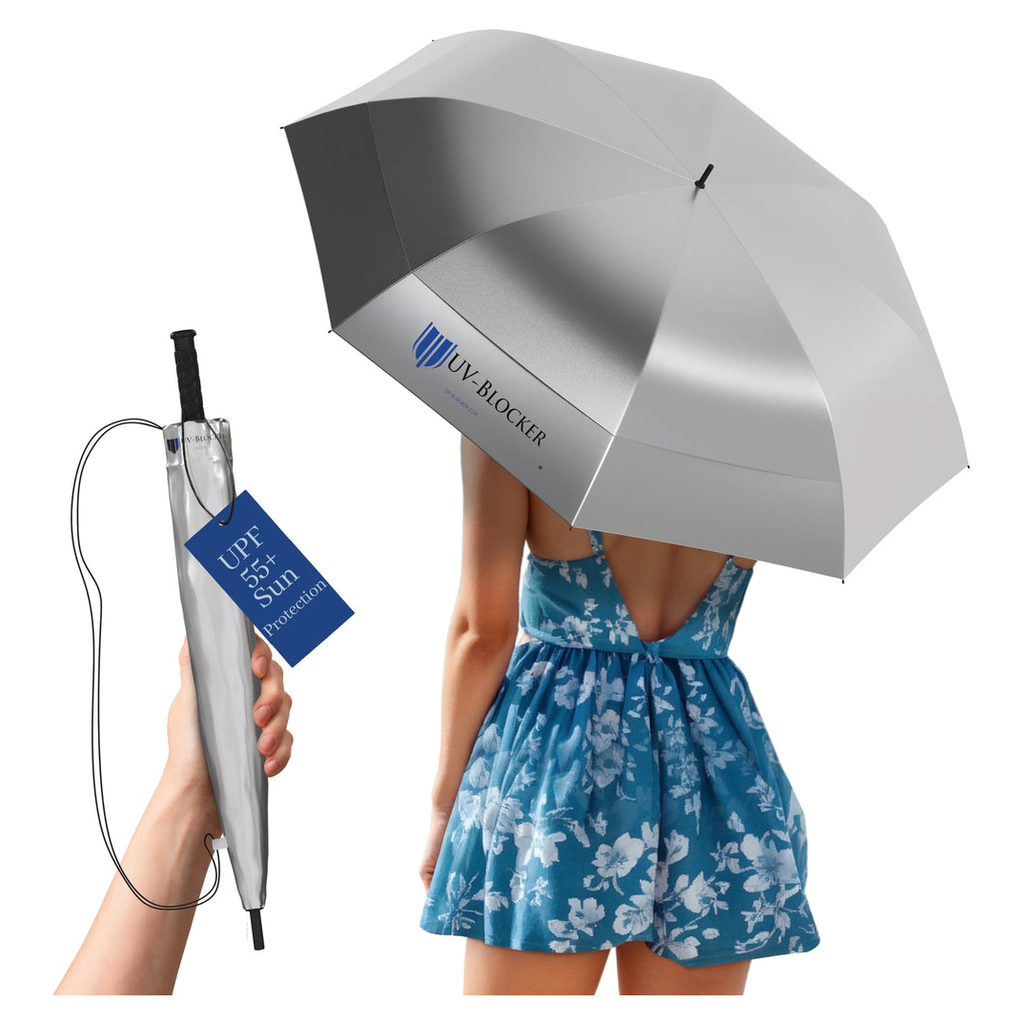
Americans who commute by foot, bike, or public transit accumulate 20–40 minutes of outdoor UV exposure on typical workdays. Over a five-day work week, that's more than two hours of UV exposure during peak hours. A compact UV-protective umbrella handles both rainy commutes and UV exposure in a single carry item.
Driving exposes the left arm, left side of the face, and left hand to significant UVA radiation through car side windows. Unlike windshields, which have UV-filtering lamination in most modern vehicles, standard side windows transmit 50–70% of UVA. Long-distance drivers and frequent commuters regularly show asymmetric skin aging on the left side — a well-documented pattern in dermatological literature.
Outdoor Work
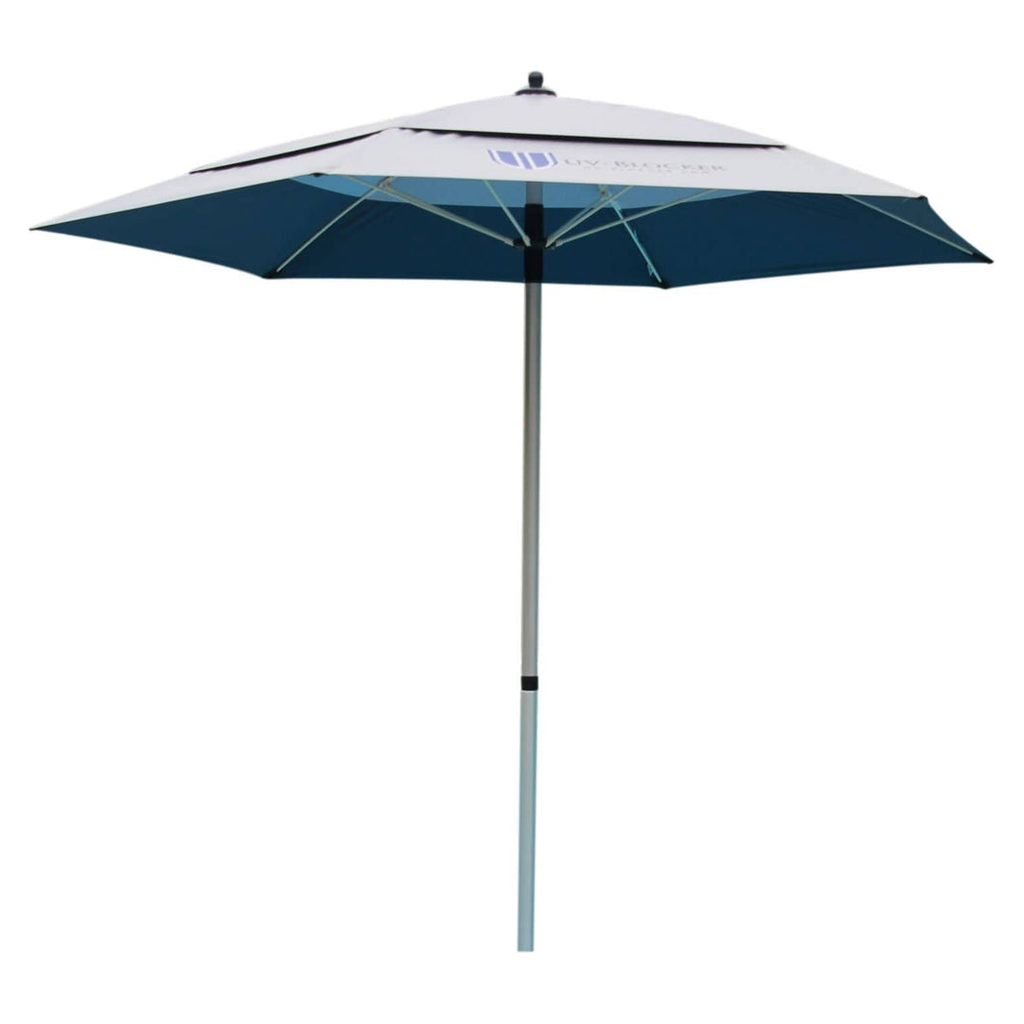
Outdoor workers — construction, landscaping, agriculture, mail carriers, delivery drivers — receive two to three times the annual UV exposure of indoor workers. Over a working life, this cumulative difference contributes meaningfully to elevated skin cancer risk. OSHA recognizes UV as an occupational health hazard in outdoor work settings. Portable shade — umbrellas, canopies — is among the most practical protective measures for outdoor workers who can't limit their outdoor time.
Spectating at Outdoor Sports
Parents at youth sports games, fans at stadiums, and spectators at outdoor events often spend 2–4 hours in open sun without moving. Unlike walking or active outdoor recreation, spectating involves stationary exposure during peak UV hours. Bleacher seating in particular can be extremely exposed, with no overhead shade and reflected UV from metal surfaces adding to direct overhead exposure.
Gardening
Gardening is one of the most overlooked UV exposure activities. Gardeners typically work during peak morning hours (9am–12pm) — exactly when UV intensity is building toward its daily peak — with their face, neck, and hands in direct sun. Bending over garden beds exposes the back of the neck and upper back to direct overhead UV. A portable UV umbrella positioned at the work area provides consistent overhead shade without requiring physical relocation throughout the session.
UVA vs. UVB: Why Year-Round Protection Matters
UVB rays cause sunburn. They're more intense in summer, peak at midday, and are largely blocked by window glass. The risk from UVB clearly correlates with the seasons.
UVA rays are different. They penetrate deeper into skin layers, contributing to DNA damage, collagen breakdown, and immune suppression. Critically, UVA intensity varies far less across seasons and doesn't require direct sunlight to reach you — it passes through clouds and glass with much less reduction than UVB. UVA is why cumulative UV exposure adds up even in winter, in cars, near windows, and on overcast days.
True broad-spectrum UV protection — like the Solarteck® technology in UV-Blocker umbrellas — blocks both UVA and UVB. A standard rain umbrella or unrated beach umbrella may provide some UVB attenuation but offers little UVA protection. Only products tested and certified under AATCC TM183 or equivalent standards can make verifiable UPF claims.
Building UV Protection Habits That Actually Stick
The most effective sun protection strategy is the one you actually follow. That means making protection as automatic and low-friction as possible — not requiring active decision-making every time you step outside.
Here are the highest-leverage habit changes for year-round protection:
- Keep a UV umbrella where you keep your keys. The umbrella you actually use is the one that's already in your hand when you walk out the door. If it's in a closet, it doesn't get used.
- Pair sun protection with existing routines. If you walk the dog at 10am, keep your umbrella on the leash hook. If you drive to work, leave a pair of UV-protective driving gloves in the car door pocket.
- Use layered protection for extended outdoor time. An umbrella handles overhead exposure. For exposed skin beyond the shade footprint — hands, lower legs — sunscreen or UPF clothing closes the gap. Neither approach is complete on its own for long outdoor sessions.
- Check the UV index the same way you check the weather. Both the NOAA Weather app and EPA's UV Index app provide daily UV forecasts. A UV index of 6+ warrants active protection habits, not just going outside and hoping for the best.
Choosing a UV Umbrella for Year-Round Use
A UV protection umbrella is the most versatile year-round tool because it handles both rain and UV in a single carry item and doesn't require reapplication. When choosing one, the key features to verify are:
- Published UPF rating (50+ is the maximum): Without a specific UPF rating from an independent lab test, UV protection claims can't be verified. UPF 50+ means less than 2% of UV penetrates the fabric.
- Broad-spectrum (UVA + UVB) certification: Standard shade blocks visible light but doesn't necessarily reduce UV. Look for certification under AATCC TM183 or equivalent, which tests both UV wavelengths.
- Compact vs. full-size: For daily commuting and general use, a compact foldable model that fits in a bag is more likely to be used consistently. For stationary outdoor use — gardening, sports spectating, outdoor work — a full-size model with a wider canopy provides more coverage.
- Wind-resistant construction: Vented canopy design prevents inversion in gusty conditions. This is particularly important in coastal areas or during spring and fall when wind is common.
Frequently Asked Questions About Year-Round UV Protection
Do I really need UV protection in winter?
Yes, though intensity varies by location. In northern states, winter UVB drops significantly, but UVA remains at roughly 50% of summer levels year-round. In the Sun Belt and at high altitudes, winter UV can be surprisingly high. Snow reflection amplifies exposure further. The greater risk in winter is behavioral: people stop thinking about it, leading to unprotected cumulative exposure.
Can UV rays actually pass through clouds?
Yes. Cloud cover reduces UV radiation by 20–40%, depending on cloud density. Thin overcast provides almost no UV protection. Even heavy cloud cover allows 60–80% of UV to reach ground level. The thermal sensation of a cloudy day has no reliable correlation to its UV load.
Is a UV umbrella better than sunscreen for daily use?
They serve different purposes and work best together. Sunscreen covers all exposed skin surfaces but requires reapplication every two hours for full effectiveness — a step most people skip during workday activities. A UV umbrella provides consistent, renewable overhead protection that doesn't degrade with time or sweat. For commuting, errands, and outdoor activities where reapplication isn't realistic, an umbrella is more reliably protective. For skin outside the umbrella's shade footprint, sunscreen fills the gap.
How do I know if my umbrella actually blocks UV?
Look for a published UPF rating with the specific test standard cited. UV-Blocker umbrellas are independently certified UPF 50+ under AATCC TM183-2020, blocking 100% of UVB and 99.97% of UVA. Products claiming UV protection without citing a specific test standard should be treated with skepticism — fabric can be labeled "UV-resistant" without meeting any certified threshold.
Are children more vulnerable to UV damage?
Yes. Children have less melanin in their skin and haven't developed the same cellular adaptation to UV that comes with years of gradual sun exposure. Dermatological research consistently shows that the majority of lifetime UV damage occurs before age 18, and childhood UV exposure is one of the strongest predictors of skin cancer risk in adulthood. Building UV protection habits early — keeping an umbrella in the school bag, applying sunscreen before outdoor recess — provides long-term protective benefit.
Does SPF clothing make a UV umbrella redundant?
No — they protect different body regions and complement each other. UPF clothing protects covered skin. A UV umbrella protects your face, neck, and head — the areas most frequently exposed and most commonly affected by UV-related skin changes. For complete coverage during extended outdoor activity, the combination of UPF clothing and a UV umbrella provides more comprehensive protection than either alone.
UV-Blocker's Solarteck® Technology: Built for All-Season Protection
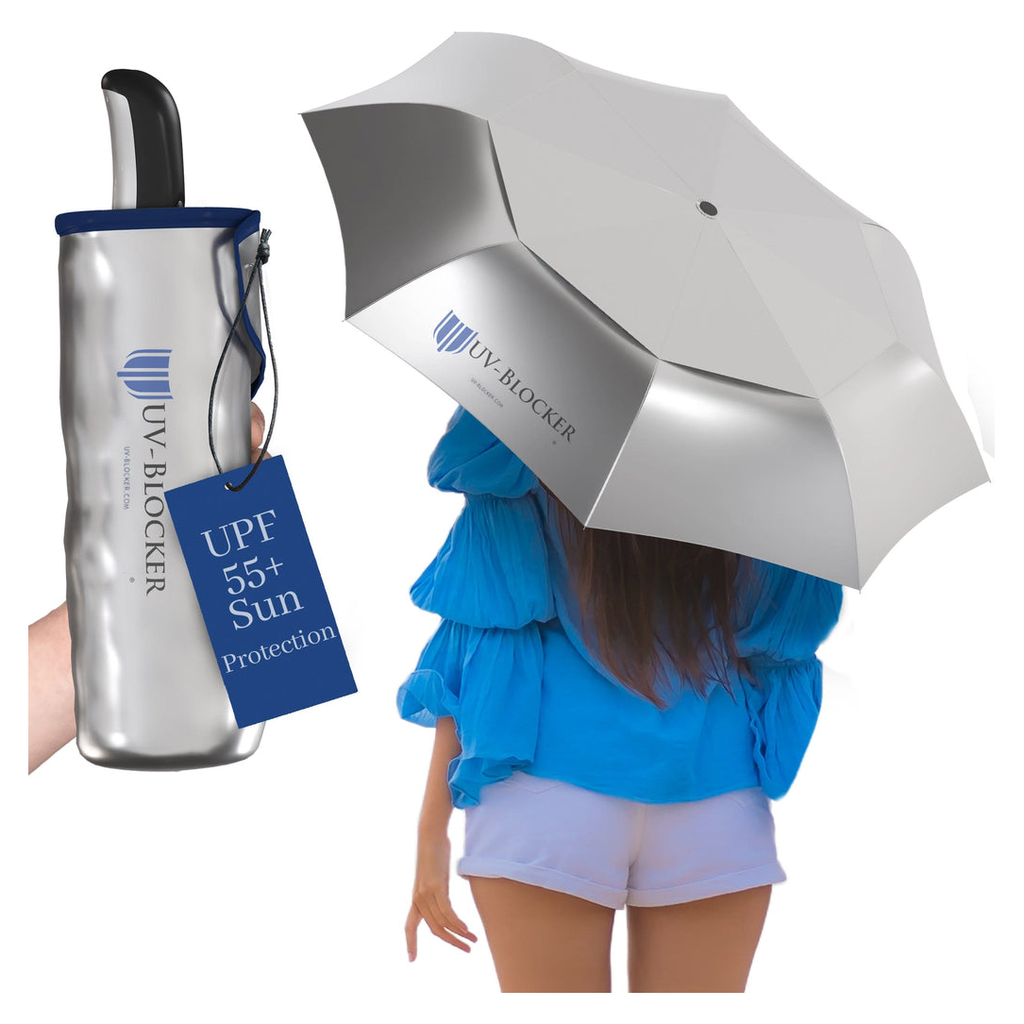
UV-Blocker umbrellas use Solarteck® coating technology — a silver reflective layer engineered for broad-spectrum UV protection and infrared reflection. The result is a canopy that independently certified to block 99% of UV radiation and keep the area beneath the canopy up to 15°F cooler than open air.
The UPF 50+ certification under AATCC TM183-2020 testing means the fabric has been verified to block 100% of UVB and 99.97% of UVA — not just claim UV protection, but demonstrate it under laboratory conditions.
UV-Blocker is the only sun protection umbrella brand approved by the Melanoma International Foundation, reflecting the organization's recognition of the product's role in meaningful sun cancer prevention — not just marketing UV protection as a lifestyle feature.
Whether you're looking for a compact model for daily commuting or a larger canopy for outdoor work and spectating, the UV-Blocker umbrella collection covers year-round use across all conditions. Consistent, low-friction protection is the kind that actually prevents cumulative UV damage — because it gets used every day, not just on beach trips.
Disclaimer: This article provides general information about UV radiation and sun protection. It is not a substitute for professional medical or dermatological advice.
Key Takeaways
- UVA rays (320–400nm) are longer waves that penetrate deep into the skin, causing photoaging, wrinkles, and contributing to melanoma.
- A UPF 50+ umbrella blocks 99%+ of direct overhead UV — more reliable than sunscreen because it doesn't require reapplication, doesn't wash off with...
- UV radiation is highest between 10am and 4pm, peaking around noon in most locations.
- All skin tones are affected by UV radiation, but the risk and presentation differ.
Frequently Asked Questions
What is the difference between UVA and UVB rays, and why does it matter?
UVA rays (320–400nm) are longer waves that penetrate deep into the skin, causing photoaging, wrinkles, and contributing to melanoma. They pass through glass and clouds and are relatively constant year-round. UVB rays (290–320nm) are shorter, cause sunburn, and are the primary driver of skin cancer. They're most intense midday (10am–4pm) and in summer. Effective sun protection must block both.
How effective is a UPF 50+ umbrella compared to sunscreen alone?
A UPF 50+ umbrella blocks 99%+ of direct overhead UV — more reliable than sunscreen because it doesn't require reapplication, doesn't wash off with sweat, and provides consistent protection. However, reflected UV from surfaces still reaches skin under an umbrella. The ideal combination is SPF 50+ sunscreen + UPF 50+ umbrella for 95–99% total UV reduction. UV-Blocker's umbrellas are dermatologist-recommended for this purpose.
What time of day poses the highest UV risk?
UV radiation is highest between 10am and 4pm, peaking around noon in most locations. The UV Index is the most accurate measure — when it reaches 6 or above, unprotected skin can begin to burn in as little as 15 minutes. Cloud cover reduces UV intensity but doesn't eliminate it: 80% of UV penetrates light cloud cover.
Does skin tone affect UV damage risk?
All skin tones are affected by UV radiation, but the risk and presentation differ. People with lighter skin (Fitzpatrick types I–III) burn faster and have higher non-melanoma skin cancer rates. People with darker skin (types IV–VI) are more prone to hyperpigmentation and have a higher risk of melanoma being diagnosed at later stages. Sun protection is essential for every skin tone.
What are early warning signs of skin cancer I should watch for?
Use the ABCDE rule for moles: Asymmetry, Border irregularity, Color variation, Diameter larger than 6mm, and Evolving (any change over time). Also watch for sores that don't heal, new pink or pearly bumps, and flat red or pink patches. Annual dermatologist screenings are recommended for anyone with significant sun exposure history or a family history of skin cancer.
Expert Sun Protection Recommendations
- Check the daily UV Index at weather.gov or a UV app before any extended outdoor activity
- Apply SPF 30+ broad-spectrum sunscreen 30 minutes before going outdoors, not right before sun exposure
- Reapply sunscreen every 2 hours and after swimming or heavy sweating
- Use a UPF 50+ umbrella for hands-free shade during outdoor dining, sports, or work
- Wear UV-blocking sunglasses that block 99–100% of UVA and UVB — eyes are vulnerable to UV-related damage
- Annual skin screenings with a board-certified dermatologist can catch early-stage skin cancers when highly treatable
Key Takeaways
- UVA rays (320–400nm) are longer waves that penetrate deep into the skin, causing photoaging, wrinkles, and contributing to melanoma.
- A UPF 50+ umbrella blocks 99%+ of direct overhead UV — more reliable than sunscreen because it doesn't require reapplication, doesn't wash off with...
- UV radiation is highest between 10am and 4pm, peaking around noon in most locations.
- All skin tones are affected by UV radiation, but the risk and presentation differ.
Frequently Asked Questions
What is the difference between UVA and UVB rays, and why does it matter?
UVA rays (320–400nm) are longer waves that penetrate deep into the skin, causing photoaging, wrinkles, and contributing to melanoma. They pass through glass and clouds and are relatively constant year-round. UVB rays (290–320nm) are shorter, cause sunburn, and are the primary driver of skin cancer. They're most intense midday (10am–4pm) and in summer. Effective sun protection must block both.
How effective is a UPF 50+ umbrella compared to sunscreen alone?
A UPF 50+ umbrella blocks 99%+ of direct overhead UV — more reliable than sunscreen because it doesn't require reapplication, doesn't wash off with sweat, and provides consistent protection. However, reflected UV from surfaces still reaches skin under an umbrella. The ideal combination is SPF 50+ sunscreen + UPF 50+ umbrella for 95–99% total UV reduction. UV-Blocker's umbrellas are dermatologist-recommended for this purpose.
What time of day poses the highest UV risk?
UV radiation is highest between 10am and 4pm, peaking around noon in most locations. The UV Index is the most accurate measure — when it reaches 6 or above, unprotected skin can begin to burn in as little as 15 minutes. Cloud cover reduces UV intensity but doesn't eliminate it: 80% of UV penetrates light cloud cover.
Does skin tone affect UV damage risk?
All skin tones are affected by UV radiation, but the risk and presentation differ. People with lighter skin (Fitzpatrick types I–III) burn faster and have higher non-melanoma skin cancer rates. People with darker skin (types IV–VI) are more prone to hyperpigmentation and have a higher risk of melanoma being diagnosed at later stages. Sun protection is essential for every skin tone.
What are early warning signs of skin cancer I should watch for?
Use the ABCDE rule for moles: Asymmetry, Border irregularity, Color variation, Diameter larger than 6mm, and Evolving (any change over time). Also watch for sores that don't heal, new pink or pearly bumps, and flat red or pink patches. Annual dermatologist screenings are recommended for anyone with significant sun exposure history or a family history of skin cancer.
Expert Sun Protection Recommendations
- Check the daily UV Index at weather.gov or a UV app before any extended outdoor activity
- Apply SPF 30+ broad-spectrum sunscreen 30 minutes before going outdoors, not right before sun exposure
- Reapply sunscreen every 2 hours and after swimming or heavy sweating
- Use a UPF 50+ umbrella for hands-free shade during outdoor dining, sports, or work
- Wear UV-blocking sunglasses that block 99–100% of UVA and UVB — eyes are vulnerable to UV-related damage
- Annual skin screenings with a board-certified dermatologist can catch early-stage skin cancers when highly treatable