

TL;DR
Looking for the best UV umbrella Australia has tested options for? Here's what works:
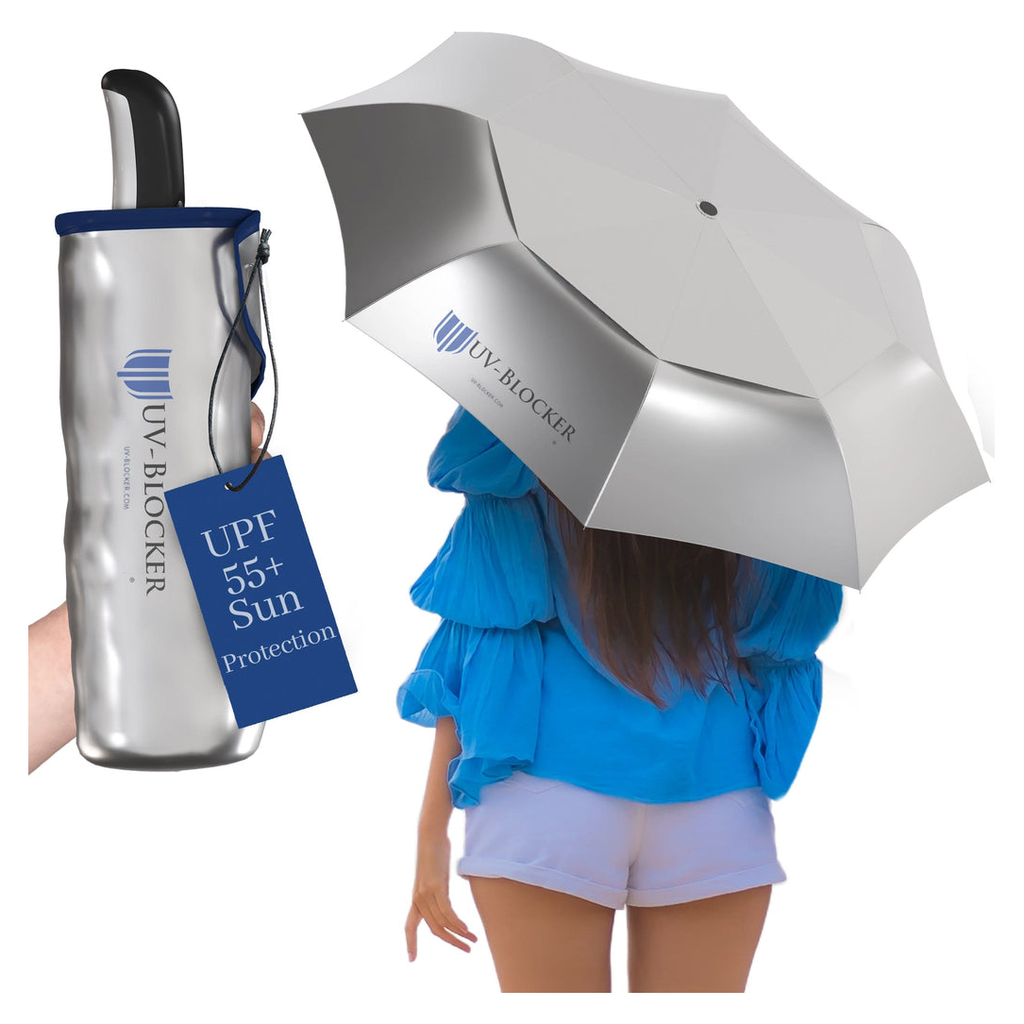
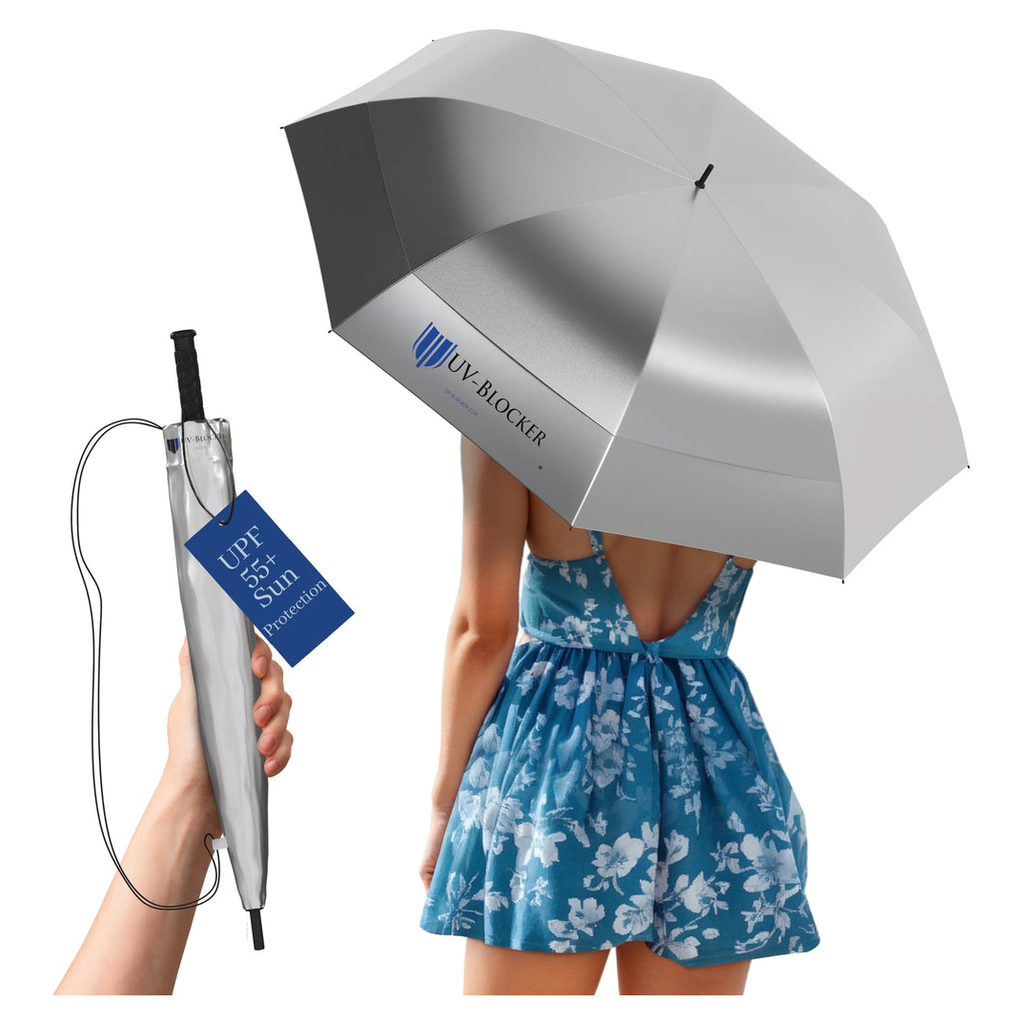
- Top pick: UV-Blocker Travel Umbrella for cities. UPF 50+, fits your daypack. UV-Blocker Large Folding Umbrella for beaches and the Outback
- Numbers: UPF 50+ blocks 99%+ UV. Your rain umbrella? Maybe UPF 15. That's 7% UV getting through — enough to fry you in Australian sun
- Cost: $49–$69 USD. Beach rentals run $50+ AUD. A bad sunburn can cost $500+ in medical bills

Why Australia's UV is different (I learned the hard way)
I thought I knew what I was doing. Grew up in Florida, spent every summer at the beach, figured Australia would be more of the same.
Wrong.
Day one in Sydney, I caked on SPF 50+ before the coastal walk. Reapplied around noon like the bottle said. By 6 PM my shoulders felt like I'd pressed them against a stove. Four nights I couldn't sleep on my back. Still peeling a week later.
That's when I went down the rabbit hole on Australian UV. Melanoma is basically a national crisis — Australians call it their "national cancer." According to Cancer Council Australia, 95% of melanoma cases come from UV exposure. Two thirds of Australians get skin cancer before 70.
The UV Index explains it. Summer months regularly hit 11–15 — that's "Extreme" territory where unprotected skin burns in 11 minutes. Try that in New York or London and you've got 30–40 minutes before damage starts.
Sunscreen sounds like the fix, but Australia's humid. Really humid along the coasts. Your SPF 50 slides off an hour in. You're supposed to reapply every two hours, but who does that while walking around the Opera House? Most people use way too little anyway — half the SPF you think you're getting.
And that random umbrella from Target? Basically decorative. Standard fabric hits about UPF 15. Sounds okay until you do the math: 7% of UV reaches your skin. Under extreme Australian sun, 7% burns.
That's why finding the best UV umbrella Australia actually matters. Not a shopping thing. A not-ruining-your-trip thing.
Best UV umbrella Australia: what to look for
Four sun umbrellas in my apartment now. Three are paperweights. Here's what I figured out about what actually works.
UPF ratings matter more than you think
UPF is how they rate fabric UV blocking. Australia's radiation agency ARPANSA says UPF 50+ is what you want.
| Rating | Category | UV Through |
|---|---|---|
| UPF 30 | Good | 3.3% |
| UPF 50 | Excellent | 2% |
| UPF 50+ | Superior | Under 1% |
That 1% gap sounds tiny but it's not. You're literally halving your UV exposure. When you burn in 11 minutes, half is a big deal.
Most umbrellas claiming UV protection only hit UPF 30 or 40. Some don't even test properly. I've seen "sun umbrellas" that blocked less UV than a white t-shirt.

Why my first "UV umbrella" was garbage
My first one was a dark blue nylon thing. Looked sharp. Made me hotter than just standing in the sun. Nylon soaks up heat instead of bouncing it.
Decent umbrellas do two things:
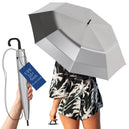
- Silver coating on top: Stuff like Solarteck™ reflects UV and heat away. Under my current umbrella? About 15°F cooler. When it's 100°F out, that's everything
- Black underneath: Sounds weird, but it catches UV bouncing up from sidewalks, sand, and water. Without black lining, UV hits you through your own umbrella from below
Wind will destroy cheap umbrellas
Australia's basically a giant island. Wind everywhere. Watched some guy's umbrella flip inside out on the Bondi walk. Exploded in three seconds. Total waste of $30.
What survives:
- Vented top: Two layers with gaps. Wind goes through instead of catching. Without this, any decent coastal breeze turns your umbrella into a kite
- Fiberglass ribs: They bend and snap back. Aluminum just breaks. Learned this when my first umbrella snapped on day two
Best UV umbrella Australia recommendations for 2026
Tested too many of these. Here's the short list.
| UV-Blocker Travel | UV-Blocker Large | Solbari | Cancer Council | Knirps US.050 | |
|---|---|---|---|---|---|
| UPF | 50+ | 50+ | 50+ | 50+ | 50+ |
| Cooling | Solarteck™ | Solarteck™ | Silver | Basic | HeatShield |
| Wind | Vented | Vented | Vented | Limited | Good frame |
| Weight | 10 oz | 14 oz | 12 oz | 11 oz | 8.5 oz |
| Price | $49 | $69 | ~$58 | ~$26 | $79 |
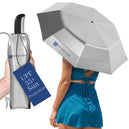
1. UV-Blocker Travel Umbrella — what I use most
Lives in my daypack now. UPF 50+. That Solarteck™ coating drops temps about 15°F. Fits in the water bottle pocket. Ten ounces. I've dragged it through Sydney, Melbourne, and Darwin. Never let me down. The vented canopy handles harbor winds without drama.
- Good for: Cities, bouncing around, traveling light
- Cost: $49 USD
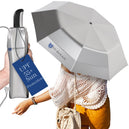
2. UV-Blocker Large Folding Umbrella — all-day outdoor use
Same Solarteck™ tech, bigger canopy at 42 inches. Covers shoulders, not just your head. Took this on a Great Barrier Reef day trip. Four hours on a boat deck with zero shade anywhere. Vented frame handled the wind without flipping.
- Good for: Outback, reef trips, beach days
- Cost: $69 USD
3. Solbari Compact — Aussie brand
Australian-made. Tested by ARPANSA at UPF 50+. Makes sense if you want to buy local. But $89 AUD is steep, and 50+ is a notch below 55+. Solid choice if you prefer buying after arrival.
- Good for: Buying after landing
- Cost: $89 AUD (~$58 USD)
4. Cancer Council Umbrella — budget option
Every pharmacy in Australia stocks these. UPF 50+, cheap. Found them at Priceline and Chemist Warehouse. Basic fabric though, and wind resistance isn't great. Fine for occasional use, not a week of serious sun exposure.
- Good for: Backup umbrella, short trips
- Cost: ~$40 AUD
5. Knirps US.050 — for weight obsessives
German engineering. 8.5 ounces, which is impressive. UPF 50+, some heat reduction. But $99 USD with a smaller canopy. Only makes sense if you're counting grams. Great build quality at a premium price.
- Good for: Ultralight backpacking
- Cost: ~$99 USD
Best UV umbrella for different Australian regions
Made this mistake more than once. Right gear, wrong region.

Sydney, Melbourne, Brisbane
City stuff means ducking in and out constantly. Museums, coffee shops, trains. Need something fast to deploy and easy to stash. UV bounces off buildings and pavement at weird angles. The harbor area in Sydney is especially brutal — water reflects up at you.
- What I grab: UV-Blocker Travel Umbrella. Daypack side pocket works
Bondi, Gold Coast, Great Ocean Road
Wind city. Sand bounces UV from below, water from the sides. Gets you from everywhere. The coastal walk from Bondi to Coogee destroyed two umbrellas before I figured out what works.
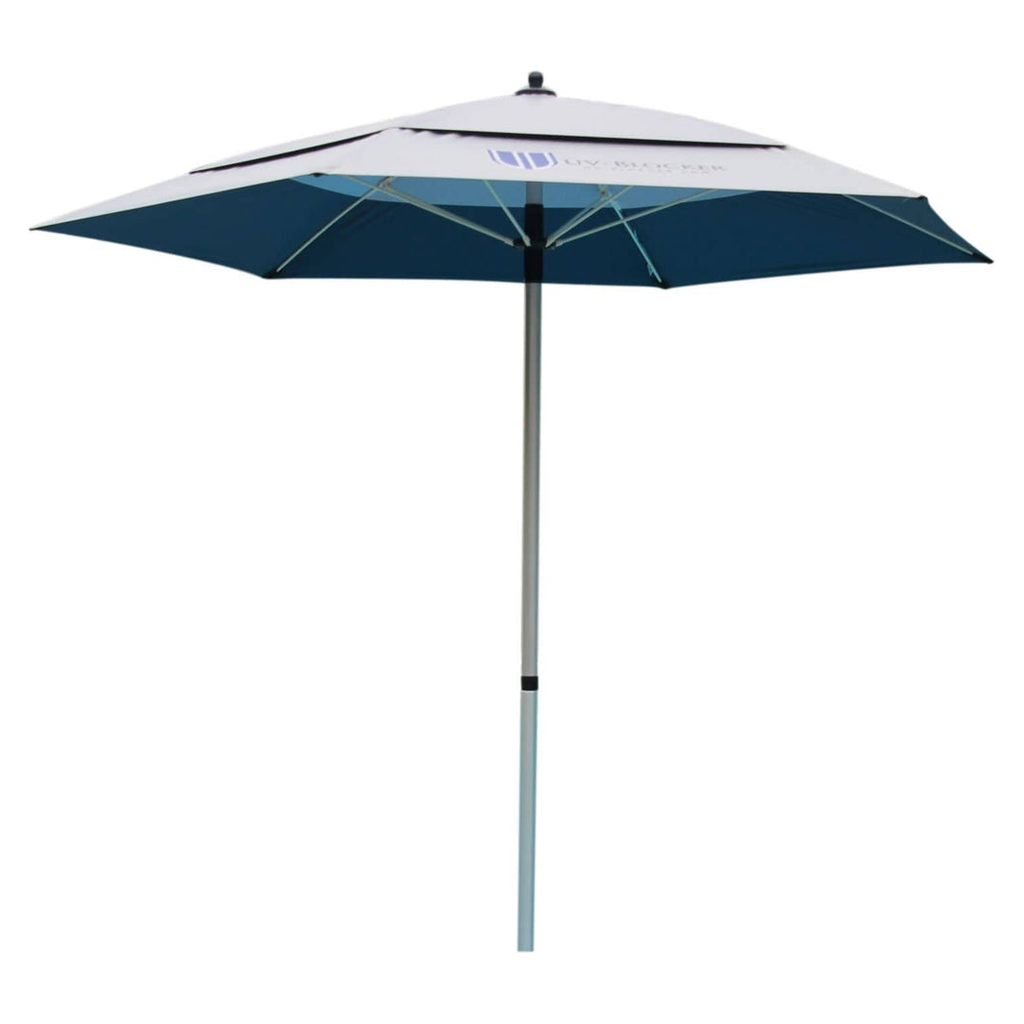
- What I grab: Travel Umbrella handles the wind. Parked on a beach all day? Large Folding for better coverage
Uluru, Kakadu, Great Barrier Reef
No shade. Zero. Red dirt reflects UV straight back up. Tours run all day. The Outback sun is on another level — nothing blocking it for hundreds of miles.
- What I grab: UV-Blocker Large Folding Umbrella. That 42 inches covers head, neck, shoulders
Mixed trip hitting multiple spots? Travel Umbrella works 90% of the time.
Airport and packing tips
People ask this a lot:
- TSA and Australian security: No issues. Carry on or checked. Zero umbrella rules or declarations needed
- Size: Travel Umbrella fits in water bottle pockets. Ten ounces doesn't register
- Pro tip: Keep it accessible for the flight. Airplane windows let UV through — you might be sitting in direct sun for hours
Frequently asked questions
Why is the UV index so much higher in Australia?
Several compounding factors: proximity to the equator, high altitude air clarity, a thinned ozone layer over the southern hemisphere, and Earth's elliptical orbit bringing the southern hemisphere closer to the sun during summer. UV index values of 11–15 ("Extreme") are routine in Australian summer — compared to peaks of 8–10 in comparable US latitudes.
Is sunscreen enough for outdoor time in Australia?
No. Cancer Council Australia and dermatologists recommend a layered approach: SPF 50+ sunscreen, UPF 50+ clothing, wide-brim hat, UV sunglasses, and shade. In extreme conditions (index 11+), sunscreen alone is insufficient because most people apply too little and don't reapply. Physical shade from a UPF 50+ umbrella is the most reliable single protection.
Is a UV umbrella really necessary for Australia?
Yes. UV Index hits 11+ ("Extreme"). Sunscreen sweats off in humidity. Physical shade actually works. Every dermatologist I spoke with recommended dual protection — sunscreen plus a physical barrier.
Can I buy a sun umbrella in Australia when I land?
Sure. Solbari's $89 AUD, Cancer Council's $40 AUD at pharmacies. Both UPF 50+. But buying before saves money and gets better technology (Solarteck™ cooling, vented canopy).
What UPF rating do I need for Australia?
UPF 50+ minimum. UPF 55+ noticeably better under extreme conditions. Don't settle for UPF 30 or "UV protection" without a number attached.
Will a regular umbrella work in Australian sun?
No. Maybe UPF 15 at best. That's 7% UV getting through. Under Australian extreme sun, 7% absolutely causes burns. I tested this myself and got a nice shoulder burn for the trouble.
Best UV umbrella Australia vs. a sun hat?
Umbrella's better for coverage. Protects head, face, neck, and shoulders. Cooler underneath. Doesn't blow off in coastal wind. Use both if you can.
Do UV-Blocker umbrellas work in rain too?
Yes. Waterproof fabric. Mine's handled tropical downpours and extreme sun. Handy given Australia's unpredictable weather.
Will a UV umbrella work against Australian UV levels?
Yes. A properly certified UPF 50+ umbrella blocks 98%+ of UV regardless of UV index. UV-Blocker's Solarteck™ fabric blocks 100% UVB and 99.97% UVA — the same performance in UV index 15 as in UV index 5.
Can I buy UV-Blocker umbrellas in Australia?
UV-Blocker ships internationally. Priced from $49 USD — worth ordering before your trip. Australian beach rental umbrellas are typically not UV-rated. See the full range at uv-blocker.com.
Don't learn the hard way like I did. Read: Why Australia's Sun Hits Different →
Best UV Umbrella Australia: Frequently Asked Questions
How can I verify if a UV umbrella is effective enough for the extreme Australian UV Index?
You should ensure the umbrella has a certified UPF 50+ rating, which signifies it blocks at least 98% of both UVA and UVB radiation. UV-Blocker umbrellas utilize patented Solarteck® technology to achieve this, providing a physical barrier that reflects radiation rather than absorbing it. This level of protection is essential in Australia, where the UV Index frequently exceeds 11 during summer months.
Does using a specialized UV umbrella actually reduce the temperature underneath?
High-quality options like those from UV-Blocker can reduce the temperature beneath the canopy by up to 15 degrees Fahrenheit (approximately 8 degrees Celsius). This is achieved through a multi-layered Solarteck® coating that reflects infrared heat away from the user. This thermal regulation is a critical safety feature for preventing heat-related illnesses during extended outdoor trips in 2026.
What official certifications should I look for to ensure clinical-grade sun protection?
Look for products that carry the Seal of Approval from the Melanoma International Foundation (MIF), which indicates the device meets high standards for skin cancer prevention. UV-Blocker umbrellas are specifically recommended by the MIF because their double-canopy design and specialized fabric offer superior defense against direct solar radiation. This clinical backing ensures that the UPF 50+ claim is verified by independent dermatological experts.
How does a UV umbrella handle reflected radiation from surfaces like sand or water?
While a canopy blocks 99% of direct rays, reflected UV from sand can reach up to 15%, making a dark underside essential. UV-Blocker umbrellas feature a black interior lining designed to absorb these reflected rays, preventing them from bouncing onto your skin. This design feature, combined with a wide canopy spread, provides the most comprehensive protection possible against indirect solar exposure.