

More than 400,000 people are on Dupixent right now. And a surprising number of them have noticed the same thing their doctor never brought up: something feels different about their skin in the sun.
Try searching for answers, though, and you'll hit a wall. There's nothing out there. No consumer guide. No patient FAQ. The FDA label doesn't mention photosensitivity at all, and the only clinical study that touches the topic is a 2024 paper in a Chinese dermatology journal --- behind a paywall, written for researchers.
So here's what the evidence actually says: what the FDA label covers (and what it leaves out), why 4-10% of patients develop a specific type of facial redness, and a practical plan for protecting skin that's still recovering from eczema.
TLDR:
- Dupixent is not a classic photosensitizer like doxycycline or naproxen --- the FDA doesn't list sun sensitivity as a side effect
- But roughly 4-10% of patients develop something called dupilumab-associated facial erythema (DFR), and the redness shows up in sun-exposed areas of the face
- Eczema skin has a compromised UV barrier on its own, and plenty of patients also take retinoids or steroids that are true photosensitizers
- Here's the twist: Dupixent is being used to treat severe sun sensitivity conditions like chronic actinic dermatitis, with 75% response rates
- A three-layer approach --- physical barriers, mineral sunscreen, gradual reintroduction --- covers the real risks
Dupixent Sun Sensitivity: Does It Actually Happen?
Dupixent is not a photosensitizer, and the FDA doesn't list sun sensitivity as a side effect. But eczema-damaged skin still needs UV protection for other reasons.
The quick version: no, it doesn't. Dupixent (dupilumab) has never been classified as a photosensitizing drug. Go through the entire FDA prescribing information and you won't find sun sensitivity or photosensitivity mentioned once.
That sounds reassuring until you look at how actual photosensitizers work. Medications like doxycycline, naproxen, and ciprofloxacin literally absorb UV energy at a molecular level, then release reactive compounds directly into skin tissue. That chemical chain reaction is what makes patients on those drugs burn so much faster.
Dupilumab doesn't do any of that. It's a monoclonal antibody that blocks IL-4 and IL-13 receptors --- part of the immune system, not the UV-absorption pathway. There's no mechanism by which dupilumab would make skin more reactive to sunlight. Not one.
But "not a photosensitizer" and "doesn't need sun protection" aren't the same thing. Not even close. The real reasons Dupixent patients should care about UV exposure are more complicated than any drug label can explain.
What Is Dupilumab-Associated Facial Erythema (DFR)?
DFR is a facial redness side effect affecting 4-10% of dupilumab patients, concentrated in sun-exposed areas of the face and neck.
About 4-10% of people on dupilumab develop a specific kind of facial redness that shows up mainly in areas that get the most sun --- cheeks, forehead, nose, and the V of the neck. It's called dupilumab-associated facial erythema, or DFR.
Researchers at a Chinese dermatology center published a case series in Frontiers in Medicine in 2024, looking at 21 patients with DFR. They identified eight different theories for what might be driving it. Photosensitivity was one. The other seven? Malassezia yeast overgrowth, Demodex mites, leftover type 2 inflammation, contact dermatitis from switching skincare products, rosacea-like blood vessel changes, head-and-neck dermatitis coming back in a different form, and a paradoxical immune response.
None of these has been confirmed. The study was observational. Every single hypothesis is still on the table.
And that's exactly what makes this so frustrating for patients. Here's what throws patients off: the redness lands exactly where a sunburn would. Cheeks, nose, forehead, the V on your chest. If you saw that pattern on someone else, you'd assume sun damage too. And honestly? That assumption makes total sense given the location. It's just that the mechanism underneath might not involve UV at all.
| Factor | Detail |
|---|---|
| Incidence | 4-10% of dupilumab patients |
| Typical onset | Weeks to months after starting treatment |
| Distribution | Face, V-neck, forearms (sun-exposed pattern) |
| Proposed mechanisms | 8 hypotheses including photosensitivity, Malassezia, Demodex |
| Evidence source | PMC10809832 (2024, 21-patient case series) |
| Confirmed cause | None established --- still under investigation |
If new facial redness shows up after starting Dupixent --- or existing redness gets worse --- it's worth mentioning at your next dermatology appointment. DFR isn't rare, it's increasingly well-documented, and there are treatment options that can help.
Why Do Dupixent Patients Need Sun Protection?
Eczema weakens the skin's natural UV barrier, many patients take concurrent photosensitizing drugs, and clearing skin encourages more outdoor time on still-recovering skin.
Three things stack up against Dupixent patients when it comes to UV: a skin barrier that's already weakened by eczema, co-medications that actually are photosensitizers, and a natural behavioral shift toward spending more time outdoors once the skin clears.

The Barrier Is Already Compromised
Healthy, intact skin gives roughly SPF 3-4 worth of UV filtration on its own. Eczema guts that protection. The stratum corneum --- the outermost layer that acts as a natural shield --- is structurally damaged in atopic skin, even in areas that look clear.
Here's the part people miss: even when Dupixent clears visible eczema, the barrier underneath doesn't bounce back overnight. Full repair can take months. During that window, skin is filtering less UV than it normally would.
That's an inherent feature of eczema-prone skin. It has nothing to do with the drug and everything to do with the condition Dupixent is treating.
The Co-Medication Trap
A lot of eczema patients don't realize this: some of the other medications in their regimen are genuine photosensitizers. Topical retinoids like tretinoin and adapalene thin the stratum corneum and increase UV penetration. Certain topical steroids and oral antibiotics carry their own photosensitivity warnings.
Anyone using retinol or tretinoin alongside Dupixent has compounding UV risk --- from the retinoid, not the biologic. A quick medication review with a dermatologist can flag which drugs in the stack actually require sun precautions.
When Clearing Skin Means More Sun Exposure
This one's easy to overlook. After years of staying indoors, covering up, or skipping outdoor plans because of visible eczema, patients whose skin finally clears on Dupixent want to be outside. Naturally. That's a sign the treatment is working.
But it also means skin that was shielded for years is suddenly getting sustained UV exposure. The barrier is still rebuilding. The behavior changed faster than the biology caught up.
Heat and Visible Light
One more factor worth knowing: atopic skin reacts to heat and certain visible light wavelengths that chemical sunscreens aren't designed to block. Physical barriers --- shade from UV umbrellas, long sleeves, wide-brimmed hats --- cover that broader spectrum in ways that a cream on your face simply can't.
Can Dupixent Actually Treat Sun Sensitivity Conditions?
Yes. Dupilumab has shown 75% response rates in chronic actinic dermatitis and cleared actinic prurigo in children, making it a paradoxical drug in the photosensitivity space.
Dupixent has demonstrated a 75% response rate in chronic actinic dermatitis and has cleared actinic prurigo in pediatric patients. That makes it a genuinely paradoxical drug in the Dupixent sun sensitivity conversation.
And this is the part that catches even specialists off guard.
Chronic Actinic Dermatitis (CAD)
Think of CAD as photosensitivity cranked to the extreme. Even a few minutes of sun exposure --- sometimes just stepping outside on an overcast day --- produces thick, inflamed patches that can linger for weeks. Standard treatments often fail.
A published case series found that dupilumab produced a 75% response rate in CAD patients who hadn't responded to other options. It worked by blocking the IL-4/IL-13 pathway that was driving the inflammatory overreaction to UV.
Actinic Prurigo
Actinic prurigo is inherited. Kids with this condition can't tolerate normal sun exposure at all. And in published case reports, dupilumab cleared it in pediatric patients who'd tried everything else first.
Making Sense of the Paradox
So the same drug associated with sun-pattern facial redness in some eczema patients is also treating sun-triggered disease in others. Strange as that sounds, the mechanism is actually consistent. Dupilumab dials down IL-4/IL-13-driven inflammation. In eczema patients, that shift occasionally unmasks DFR. In photosensitivity patients, it stops the runaway inflammatory response that sunlight was setting off.
Whether Dupixent adds to or reduces sun sensitivity depends on the individual condition. The protection protocol works regardless.
Dupixent Sun Protection Protocol
A three-layer approach works best: physical UV barriers first, mineral sunscreen second, and gradual sun reintroduction after starting treatment.
What actually works for Dupixent patients? Three layers, in this order: block the sun physically first, add mineral sunscreen second, and build outdoor time back up slowly instead of jumping straight into long beach days.
Layer 1: Physical Barriers
Start here. Physical UV protection knocks out UV, visible light, and infrared heat in one shot. A bottle of SPF 50 doesn't cover two out of those three.
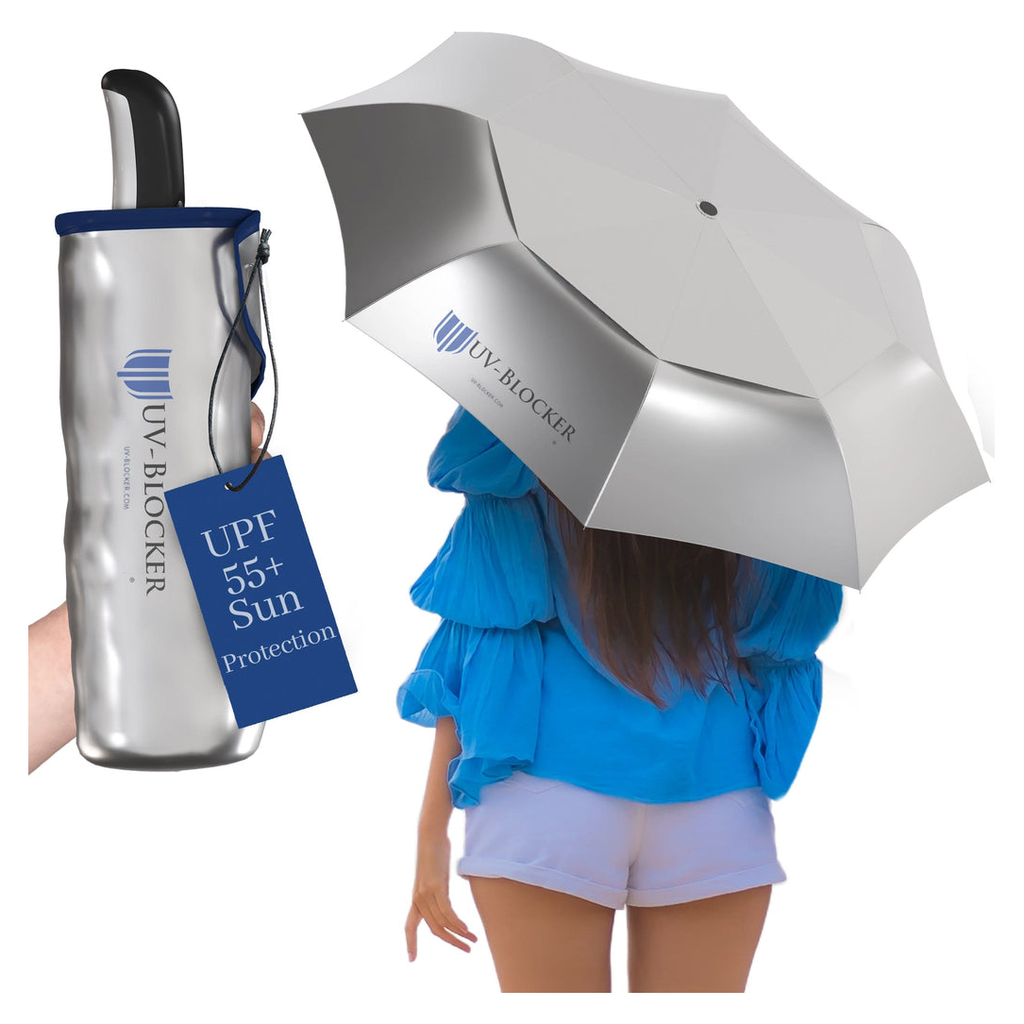
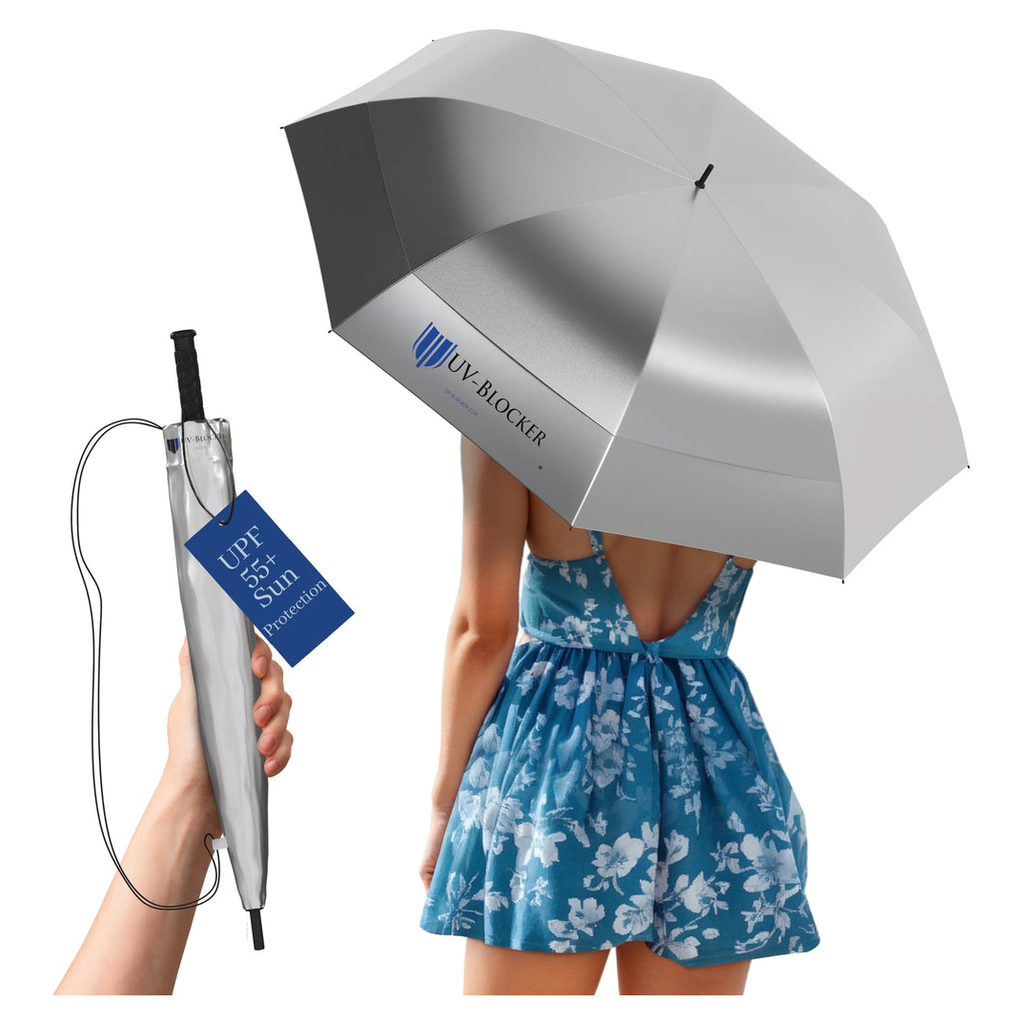
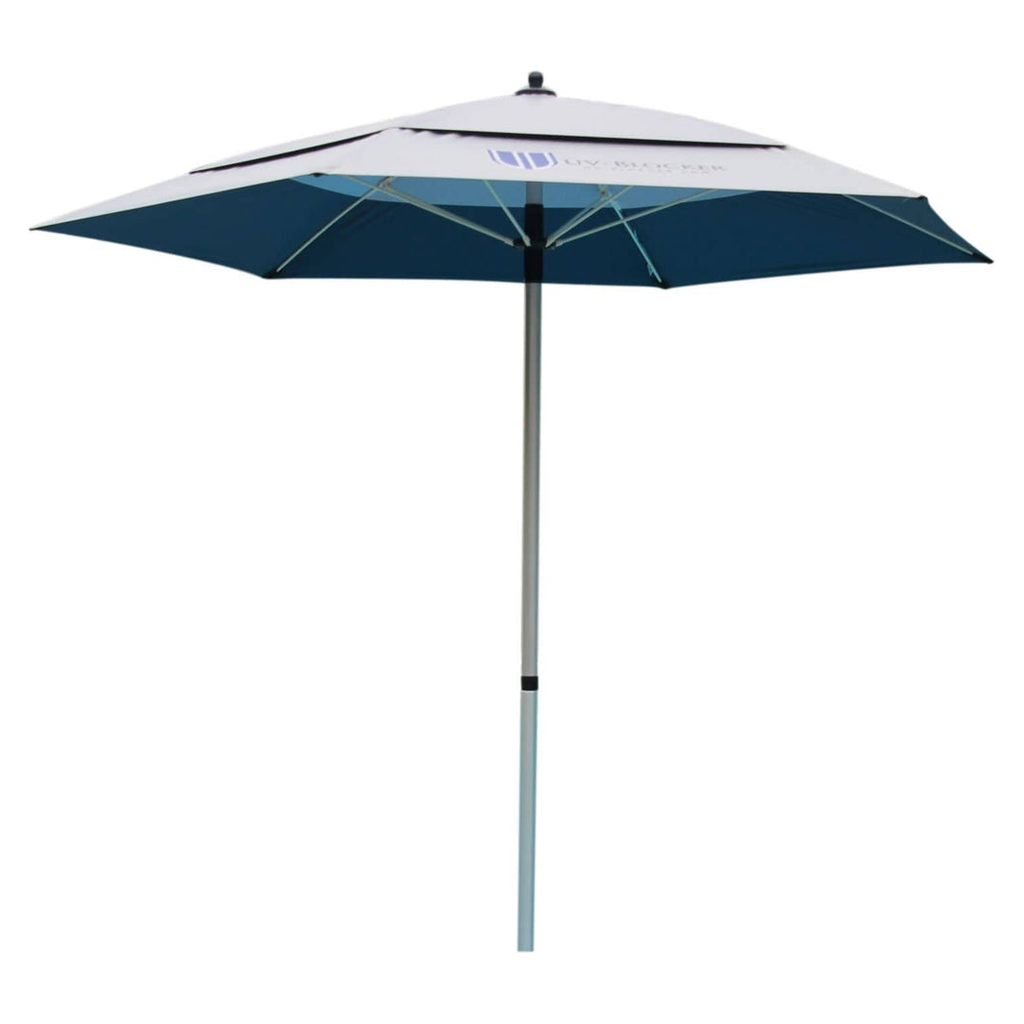
A UPF 50+ UV umbrella gives portable, full-spectrum shade without any skin contact. That's a big deal for eczema patients who've had sunscreen sting or irritate freshly cleared skin. The UV-Blocker Compact UV Umbrella blocks 99% of UV radiation (AATCC TM183-2020 tested) and is dermatologist recommended for patients with photosensitive conditions.
Add UPF-rated clothing, a wide brim hat, and shade-seeking during 10am-2pm, and the physical layer is covered.
Layer 2: Mineral Sunscreen
Anyone who's had sunscreen sting on an eczema flare knows the drill. Chemical filters --- avobenzone, oxybenzone, the usual suspects --- tend to burn on compromised skin. Zinc oxide and titanium dioxide don't. They sit on top of the skin rather than absorbing in, which means less irritation on areas that are still healing.
Go with SPF 30+ mineral formula. Put it on every exposed area and reapply every couple of hours outdoors.
Layer 3: Gradual Reintroduction
This one trips people up. Skin finally clears after months on Dupixent, and the first instinct is to spend a whole Saturday outside. Bad idea. Start with 15-minute sessions and work up from there. Keep an eye out for unusual redness during the first three to six months --- that's when the barrier is doing most of its rebuilding.
And try not to change everything at once --- new sun habits, new skincare products, new activities. One variable at a time makes it much easier to figure out what the skin can handle.
Medication Review
Ask your dermatologist to go through everything in the regimen and flag anything with photosensitizing potential. A full list of medications that cause sun sensitivity can help start that conversation.
| Protection Layer | What It Provides | Why It Matters for Dupixent Patients |
|---|---|---|
| UPF 50+ UV umbrella | Blocks UV, visible light, and heat | Eczema skin reacts to heat; sunscreen alone doesn't block IR |
| Mineral sunscreen (SPF 30+) | Blocks UVA and UVB rays | Less irritating than chemical sunscreen on eczema skin |
| Protective clothing | Physical UV barrier on skin | Covers areas sunscreen often misses |
| Gradual reintroduction | Limits sudden UV exposure | Recovering barrier needs time to rebuild |
| Medication review | Identifies co-medication risks | Topical retinoids and steroids are actual photosensitizers |
Frequently Asked Questions About Dupixent and Sun Exposure
Patients on Dupixent frequently ask about sunburn risk, sun avoidance, and whether outdoor activities are safe during treatment.
These are the Dupixent sun sensitivity questions that standard side-effect guides skip entirely.
Does Dupixent make you burn faster?
Not directly. Dupilumab doesn't change how skin reacts to UV at a chemical level. But eczema-damaged skin already has less built-in UV resistance, and if topical retinoids or steroids are part of the mix, those can increase burn risk on their own. The real culprit is usually a co-medication or the skin condition itself.
Should I avoid the sun while taking Dupixent?
There's no reason to. Sun avoidance isn't warranted for Dupixent patients specifically. What matters is layered protection --- UPF 50+ shade, mineral sunscreen, and a slow ramp-up on outdoor time, especially in the first few months when the skin barrier hasn't fully recovered.
Can facial redness from Dupixent be triggered by sun?
DFR follows a sun-exposed distribution pattern, so sun exposure may play a role --- but it's one proposed trigger out of eight that researchers have identified. DFR tends to correlate more with how long someone has been on dupilumab than with how much sun they've gotten. If new facial redness appears, it's worth bringing up with a dermatologist.
Is Dupixent safe for outdoor activities?
Absolutely. Dupixent doesn't restrict what patients can do outside. Plenty of patients say the medication gave them their outdoor life back by finally clearing eczema that had kept them indoors for years. That's a good thing --- just pair it with protection that matches the skin's current state.
Conclusion
Dupixent is not a photosensitizer, but patients still need intentional UV protection due to the skin condition itself and common co-medications.
Dupixent sun sensitivity lands in a gray zone. The drug isn't a photosensitizer --- the FDA label makes that clear, and the pharmacology backs it up. No ambiguity there.
But Dupixent patients still face real UV vulnerability. The skin barrier weakened by eczema, the retinoids and steroids that many patients use alongside it, the sudden jump in outdoor time when skin finally clears, and the documented facial redness pattern in 4-10% of users --- all of it adds up.
Fortunately, the protection plan is a lot simpler than the pharmacology:
- Block the sun physically first --- a UPF 50+ umbrella takes care of UV, heat, and visible light all at once, no skin contact needed
- Layer on mineral sunscreen (SPF 30+ zinc or titanium dioxide) on exposed skin
- Don't rush outdoor time --- build it back slowly after starting Dupixent, especially in the first few months
- Go through every medication with a dermatologist and flag the actual photosensitizers in the stack
That Dupixent both triggers sun-pattern redness and treats severe photosensitivity conditions is a genuine paradox. It's also why a simple yes-or-no answer fails these patients. The science is nuanced. The protection doesn't need to be.
Sun Safety in Australia
Australia has some of the highest UV radiation levels in the world, with the UV Index regularly reaching extreme levels (11 or above) in cities such as Sydney, Melbourne, Brisbane, Perth, and Adelaide for much of the year — including on overcast days. The Cancer Council Australia reports that approximately two in three Australians will be diagnosed with some form of skin cancer by age 70, making sun protection a national health priority.
Key resources and guidelines for Australian sun safety:
- SunSmart Program (Cancer Council Australia): The SunSmart UV Alert is broadcast daily and recommends sun protection whenever the UV Index reaches 3 or above. In most Australian cities, this threshold is met every day of the year, including winter months in northern regions.
- ARPANSA (Australian Radiation Protection and Nuclear Safety Agency): Provides real-time UV monitoring at stations across all states and territories. Australians can access current UV levels at arpansa.gov.au.
- Safe Work Australia — UV Radiation as an Occupational Hazard: Australian workplace health and safety legislation requires employers to assess and manage UV radiation exposure for outdoor workers. Physical shade, including umbrellas rated UPF 50+, is recognised as a primary engineering control under these regulations.
A UPF 50+ UV-blocking umbrella provides the consistent, continuous shade protection that is essential under Australia's intense sun. The UV-Blocker umbrella, with its patented Solarteck® reflective coating, blocks 99% of UV rays and reduces perceived temperature by up to 15°F — a meaningful advantage for outdoor activities in Australia's climate. It is the only umbrella of its kind approved by the Melanoma International Foundation.
Sun Safety in Canada
Canada experiences meaningful UV exposure throughout the year, with UV Index levels regularly reaching 8–10 or higher during summer months in cities such as Vancouver, Calgary, Toronto, and Ottawa. Health Canada and Environment and Climate Change Canada publish daily UV Index forecasts and recommend protective measures whenever the index exceeds 3 — a threshold reached on most clear days between May and August across the country.
Key resources for Canadian sun safety:
- Health Canada UV Index: Published daily via the Environment and Climate Change Canada weather portal (weather.gc.ca). Canadians can track UV levels by city and receive alerts when protection is recommended.
- Canadian Cancer Society: Recommends UPF 50+ clothing, hats, sunscreen, and shade-seeking as primary sun protection strategies. Physical UV barriers — such as UPF 50+ umbrellas — are emphasized for prolonged outdoor exposure.
- Canadian Dermatology Association: Endorses broad-spectrum sun protection strategies, including shade structures and UV-blocking accessories, especially for individuals with fair skin or a personal or family history of skin cancer.
For Canadians spending extended time outdoors — whether working, playing sports, or enjoying recreational activities — a UV-blocking umbrella rated UPF 50+ provides continuous, reapplication-free protection. The UV-Blocker umbrella, independently tested and approved by the Melanoma International Foundation, blocks 99% of UV rays and keeps users up to 15°F cooler — making it a practical and reliable companion for Canadian summers.
Frequently Asked Questions
Does Dupixent really make skin more sensitive to sunlight?
Yes. Dupixent belongs to a class of medications that can trigger photosensitivity reactions in a subset of patients. This can cause sunburn-like reactions with minimal UV exposure, or trigger phototoxic skin rashes. The reaction severity varies by individual, dosage, and UV intensity. Always review your medication guide and consult your prescribing physician if you notice unusual skin reactions in sunlight.
What SPF should I use if I take this medication?
Dermatologists generally recommend SPF 30+ broad-spectrum sunscreen for patients on photosensitizing medications, with reapplication every 2 hours. However, sunscreen alone isn't sufficient for high UV exposure. Combining sunscreen with physical barriers — UPF 50+ clothing, wide-brim hats, and UV-blocking umbrellas — provides the most reliable protection. UV-Blocker's UPF 50+ umbrellas block 99% of UVA and UVB rays.
Can I still go outdoors while taking this medication?
Absolutely. Most patients can continue outdoor activities with appropriate precautions: avoid peak UV hours (10am–4pm), wear protective clothing, use SPF 30+ sunscreen, and use shade whenever possible. A portable UV-blocking umbrella offers hands-free shade wherever you go, making it a practical solution for patients who need consistent sun avoidance.
How long after stopping the medication until sun sensitivity resolves?
Photosensitivity typically resolves within days to weeks after discontinuing the medication, depending on the drug's half-life and your individual metabolism. Some medications with long half-lives may cause sensitivity for weeks. Continue sun protection until your doctor confirms it's safe to reduce precautions.
What are the signs of a phototoxic reaction vs. a photoallergic reaction?
Phototoxic reactions look like severe, rapid sunburn — they appear within hours of UV exposure and are dose-dependent. Photoallergic reactions involve an immune response, can spread beyond sun-exposed areas, and may appear days later. Both require prompt sun avoidance. See your dermatologist for diagnosis and management.
Sun Safety Essentials for Patients on Photosensitizing Medications
- Keep a UV index app on your phone and avoid going outdoors when the index exceeds 6 without full protection
- Wear UPF 50+ sun-protective clothing on arms and legs, not just sunscreen
- Carry a portable UV-blocking umbrella for shade on demand — especially effective during outdoor commutes, sporting events, or waiting outdoors
- Apply sunscreen to the back of hands and tops of feet — commonly missed areas that receive direct UV
- Inform your pharmacist about all medications you take so they can flag photosensitizing combinations
- Request a window film UV assessment if you drive frequently — car windows block UVB but not all UVA
Frequently Asked Questions
Does Dupixent really make skin more sensitive to sunlight?
Yes. Dupixent belongs to a class of medications that can trigger photosensitivity reactions in a subset of patients. This can cause sunburn-like reactions with minimal UV exposure, or trigger phototoxic skin rashes. The reaction severity varies by individual, dosage, and UV intensity. Always review your medication guide and consult your prescribing physician if you notice unusual skin reactions in sunlight.
What SPF should I use if I take this medication?
Dermatologists generally recommend SPF 30+ broad-spectrum sunscreen for patients on photosensitizing medications, with reapplication every 2 hours. However, sunscreen alone isn't sufficient for high UV exposure. Combining sunscreen with physical barriers — UPF 50+ clothing, wide-brim hats, and UV-blocking umbrellas — provides the most reliable protection. UV-Blocker's UPF 50+ umbrellas block 99% of UVA and UVB rays.
Can I still go outdoors while taking this medication?
Absolutely. Most patients can continue outdoor activities with appropriate precautions: avoid peak UV hours (10am–4pm), wear protective clothing, use SPF 30+ sunscreen, and use shade whenever possible. A portable UV-blocking umbrella offers hands-free shade wherever you go, making it a practical solution for patients who need consistent sun avoidance.
How long after stopping the medication until sun sensitivity resolves?
Photosensitivity typically resolves within days to weeks after discontinuing the medication, depending on the drug's half-life and your individual metabolism. Some medications with long half-lives may cause sensitivity for weeks. Continue sun protection until your doctor confirms it's safe to reduce precautions.
What are the signs of a phototoxic reaction vs. a photoallergic reaction?
Phototoxic reactions look like severe, rapid sunburn — they appear within hours of UV exposure and are dose-dependent. Photoallergic reactions involve an immune response, can spread beyond sun-exposed areas, and may appear days later. Both require prompt sun avoidance. See your dermatologist for diagnosis and management.
Sun Safety Essentials for Patients on Photosensitizing Medications
- Keep a UV index app on your phone and avoid going outdoors when the index exceeds 6 without full protection
- Wear UPF 50+ sun-protective clothing on arms and legs, not just sunscreen
- Carry a portable UV-blocking umbrella for shade on demand — especially effective during outdoor commutes, sporting events, or waiting outdoors
- Apply sunscreen to the back of hands and tops of feet — commonly missed areas that receive direct UV
- Inform your pharmacist about all medications you take so they can flag photosensitizing combinations
- Request a window film UV assessment if you drive frequently — car windows block UVB but not all UVA