

By Ron Walker
TLDR:
- Ibuprofen sun sensitivity is real and clinically documented. A 2017 Nature Scientific Reports study proved ibuprofen undergoes UVA-driven photodissociation, creating reactive fragments that intensify cell damage.
- The first clinical report appeared in the Journal of the American Academy of Dermatology in 1992, which found a lowered minimal erythema dose for UVA but not UVB.
- Oral ibuprofen appears safer than topical ibuprofen from a photosensitization standpoint because skin screens much of the UV before it reaches deeper drug molecules.
- Higher doses likely mean more drug molecules available for UVA-triggered reactions, but no controlled trial has mapped a precise dose-response curve.
- Ibuprofen sits in the middle of the NSAID pack for sun risk, below ketoprofen and piroxicam but above acetaminophen, which has no documented photosensitizing effect.
- Sunscreen helps, but the UVA-driven mechanism calls for layers: timing, sunscreen, physical shade, and protective clothing.
About 30 billion doses of ibuprofen get swallowed every year around the world. It's the go-to for headaches, sore muscles, cramps, arthritis flares. And almost nobody connects it with sunlight.
Search for answers, and the results aren't much help. Every article lumps ibuprofen into a list with 20 other drugs and moves on. For that broader roundup, the hub on medications that cause sun sensitivity covers the full landscape.
This guide does something different. It breaks down the specific mechanism behind ibuprofen sun sensitivity, explains why the pill form and the gel form aren't the same story, compares ibuprofen head-to-head with other NSAIDs, and lays out a protection plan that actually accounts for how this drug interacts with UV.
How Does Ibuprofen Make Your Skin Sun Sensitive?
Ibuprofen absorbs UVA light, breaks apart in skin, and forms reactive fragments that amplify UV damage around exposed cells.
Bignon et al. pinned it down in Scientific Reports (2017): barrierless photodissociation from the singlet state. Translation? UVA light hits an ibuprofen molecule in skin tissue, and the molecule splits apart without needing much energy at all. The fragments left behind are chemically reactive, and they amplify the damage UV is already doing to nearby cells.
Here's why that's a bigger deal than it sounds. This is a UVA mechanism, not UVB. UVA (320-400 nm) reaches deeper into skin, passes through clouds at roughly 80% strength, slips through car windows, and stays constant throughout daylight hours. There's no tingle or warmth to warn you it's building up. That's exactly why people sometimes get sunburn on a cloudy day and can't figure out what happened.
Clinicians noticed the pattern long before the molecular proof arrived. Back in 1992, Stern and Khalsa documented a case in the Journal of the American Academy of Dermatology showing that ibuprofen lowered the minimal erythema dose for UVA, not UVB. Twenty-five years later, the Bignon study explained why.
Bottom line: a pill that millions take for a headache can quietly change how skin handles sunlight. And the culprit wavelength is the one that sneaks through the most barriers.
Does the Form Matter? Oral vs. Topical Ibuprofen Risk
Topical ibuprofen carries higher photosensitization risk than oral tablets because it places the drug directly in sun-exposed skin tissue.
The 2017 study is surprisingly blunt about oral use. It notes that "oral intake of ibuprofen can be seen as safe from a photosensitization point of view, likely because UV light is efficiently screened by the skin." Skin itself acts as a filter. Swallow a pill, and the drug circulates through blood vessels deep enough that most UVA never reaches it.
Rub a gel on your knee? Completely different story. Topical formulations dump ibuprofen right into the epidermis and upper dermis, the exact layers where UVA arrives at full strength. Maximum drug concentration meets maximum UV penetration.
This distinction didn't matter much a decade ago. But topical NSAID use has exploded. Voltaren (diclofenac) crossed $500 million in US sales, and ibuprofen gels are following the same trajectory. People are squeezing gel onto sun-exposed joints — knees, elbows, shoulders, wrists — and walking straight back into daylight without a second thought.
Anyone using topical ibuprofen on areas that regularly see sun should treat physical UV barriers as non-negotiable, not optional.
Does Dosage Affect Your Ibuprofen Sun Sensitivity Risk?
Higher ibuprofen doses likely mean more molecules available for photodissociation, but no clinical study has mapped a precise photosensitivity dose-response curve.
That's a logical inference, not a proven dose-response chart. More drug circulating means more molecules reaching skin tissue, which means more raw material for UVA-driven reactions. But nobody has run a controlled trial comparing sunburn thresholds at 200 mg versus 800 mg.
Here's what the dosing landscape looks like. OTC ibuprofen typically runs 200 to 400 mg per dose. Prescription regimens climb to 600 or 800 mg, and chronic conditions like rheumatoid arthritis can push daily totals to 3,200 mg. Those chronic users maintain elevated tissue concentrations for hours at a stretch.
Factor in the drug's 2-to-4-hour half-life, and the timing gets interesting. Peak skin concentration hits about 1 to 2 hours after swallowing a tablet. Pop 800 mg at noon, walk outside at 1 PM, and the drug peaks right alongside the day's strongest UV.
Practical takeaway: use the lowest effective dose, especially during high-UV months. That's already the FDA's standing advice on NSAID use, and photosensitivity adds one more reason to follow it.
How Does Ibuprofen Compare to Other NSAIDs for Sun Sensitivity?
Ibuprofen carries moderate photosensitivity risk, lower than ketoprofen or piroxicam but higher than acetaminophen, which has no documented photosensitizing effect.

That middle spot is what catches people off guard. It's not the worst offender on this list, but "moderate" doesn't mean "harmless" when 30 billion doses are involved. For a closer look at its neighbor on the chart, the companion piece on naproxen sun sensitivity breaks down the second-most-popular OTC NSAID.
| NSAID | Photosensitivity Risk | Mechanism | Notes |
|---|---|---|---|
| Ketoprofen | High | Triplet state photosensitization + singlet oxygen | Topical forms banned in some EU countries due to photoallergy |
| Piroxicam | High | Direct phototoxicity + photoallergy | Most documented NSAID photosensitizer |
| Naproxen | Moderate | Phototoxicity | Most common OTC NSAID photosensitizer reported |
| Ibuprofen | Moderate (lower) | Singlet state photodissociation (UVA) | Fewer clinical reports due to milder reactions |
| Celecoxib | Low | Limited data | COX-2 selective, fewer reports |
| Acetaminophen | None | Not an NSAID, no photosensitizing mechanism | Safe alternative from a photosensitivity perspective |
One important caveat on acetaminophen: it's not an NSAID. No anti-inflammatory effect at all. Switching to Tylenol eliminates the photosensitivity concern, sure, but it also drops the inflammation control that someone with arthritis or a sports injury actually needs. It's a trade-off, not a free swap.
What Does an Ibuprofen Sun Reaction Look Like?
Ibuprofen sun reactions usually look like exaggerated sunburn, redness, or rash limited to sun-exposed skin within hours of UV exposure.
Phototoxic Reactions (More Common)
Phototoxic reactions are the main pattern with ibuprofen. Think redness and swelling that look like an outsized sunburn, sometimes with blistering if exposure was prolonged. It tends to scale with both dose and UV intensity — more sun plus more drug equals a worse reaction.
Photoallergic Reactions (Rare)
Photoallergic reactions show up far less often with ibuprofen (ketoprofen is the bigger culprit). When they do occur, the rash looks more eczematous — dry, itchy, patchy — and it can spread beyond the areas that were directly exposed to sun.
How to Tell It Apart
Timing is the first clue. Symptoms kick in within hours of sun exposure while the drug is still active, and they clear up within 1 to 3 days once sun exposure stops or the medication is discontinued.
Location is the second clue, and usually the more definitive one. Shirt-covered skin? Normal. Face, forearms, back of the neck? Red, irritated, or blistered. That sharp tan-line-like boundary between covered and uncovered skin is the hallmark of drug-induced photosensitivity. A standard allergic reaction, by contrast, would affect skin all over, regardless of sun exposure.
Why Isn't Sunscreen Alone Enough for Ibuprofen Users?
Sunscreen helps, but it degrades, gets missed, and leaves gaps that a continuous physical UVA barrier can close.
Because this is a UVA-driven problem, the standard "just put on sunscreen" advice has some real holes in it. UVA passes through clouds, through car windows, through thin clothing. The article on sunscreen alternatives digs into that gap in detail.
Chemical sunscreen filters degrade 10-25% per hour of UV exposure. The FDA calls for reapplication every two hours, and most people don't hit that mark. Application thickness is another issue — studies consistently show people apply roughly half the recommended amount and skip areas like ears, the back of the neck, and along the hairline.
Picture a Swiss cheese model. Every layer of protection has holes. Sunscreen's holes are degradation, missed spots, and inconsistent reapplication. The key is stacking layers so the holes don't line up.
That's where a UPF 50+ physical barrier fills a different slot. It blocks UVA at the source, doesn't degrade over time, and doesn't depend on remembering to reapply anything.
Complete Protection Protocol for Ibuprofen Users
A four-layer approach combining timing, sunscreen, physical shade, and clothing gives the most reliable protection during UV exposure.

Layer 1: Timing
Ibuprofen's half-life runs 2 to 4 hours, with peak skin concentration hitting about 1 to 2 hours after dosing. Simple rule: when you can, shift the dose to the evening or after the worst of the day's UV has passed. Nobody's saying skip the medication — just be strategic about when you take it.
Layer 2: Broad-Spectrum Sunscreen
SPF 30 minimum, and make sure the formula includes UVA-specific filters like avobenzone, zinc oxide, or tinosorb. Slather it on 15 minutes before heading outside, and reapply every 2 hours without exception.
Layer 3: Physical UPF 50+ Shade
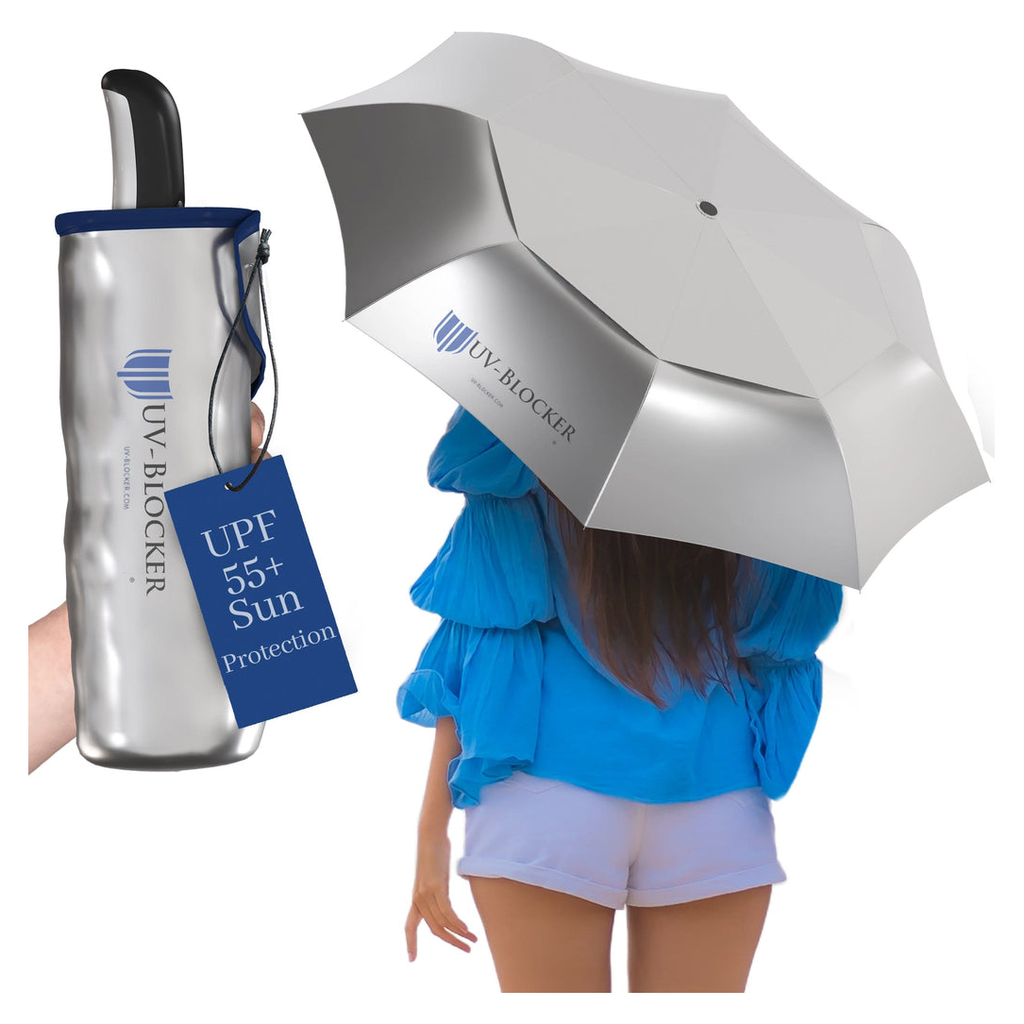
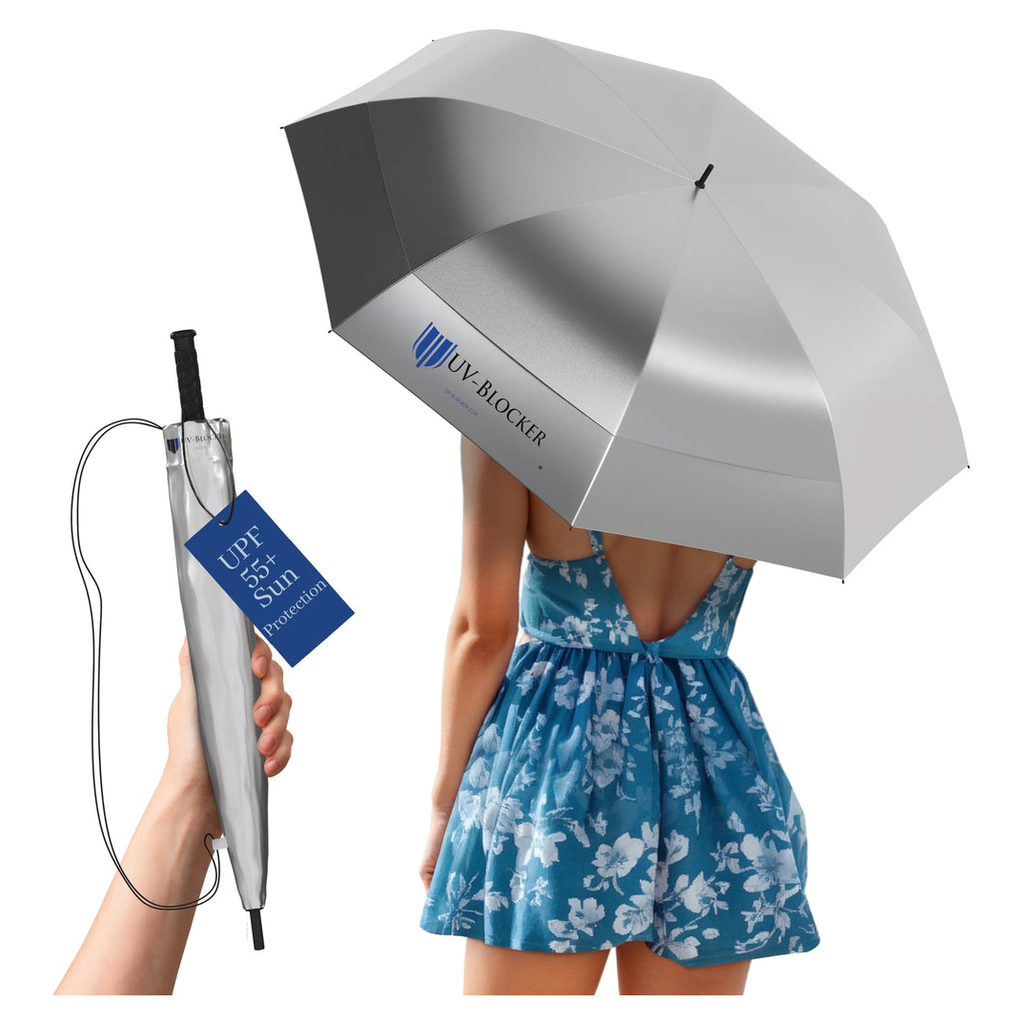
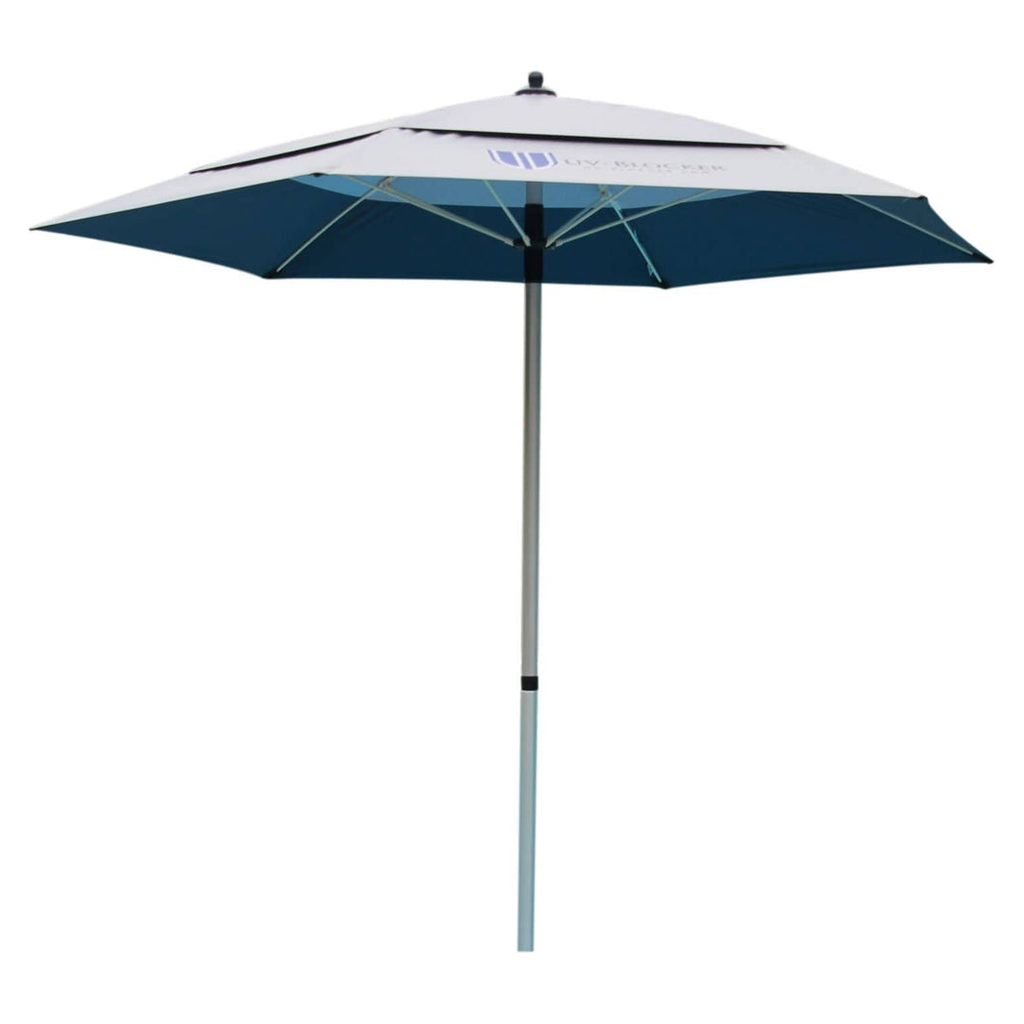
The UV-Blocker Compact UV Umbrella and Travel UV Umbrella are two options in this category, each priced at $59.95. Both are AATCC TM183-2020 tested and block 99.97% of UV-A at the source, with Solarteck silver reflective coating and UPF 50+ construction.
That physical barrier matters because it works without reapplication. It covers the face, neck, and shoulders at once.
Layer 4: Protective Clothing
UPF-rated fabric, a wide-brimmed hat, and UV-filtering sunglasses close off large exposed areas that otherwise stay vulnerable. Clothing doesn't replace shade or sunscreen, but it seals the remaining gaps.
| Layer | Protection | Coverage | Reapplication? | UVA Reliability |
|---|---|---|---|---|
| Timing | Avoid peak UV during peak drug levels | N/A | N/A | High |
| Sunscreen (SPF 30+) | Absorbs/reflects UV | Applied areas only | Every 2 hours | Moderate (degrades) |
| UPF 50+ Umbrella | Blocks 99.97% UV-A | Head, face, neck, shoulders | None needed | High (continuous) |
| UPF Clothing | Blocks UV by fabric weight | Covered areas | None needed | High |
Frequently Asked Questions About Ibuprofen and Sun Exposure
These are the most common questions about ibuprofen and sun exposure, based on what patients and healthcare providers ask most frequently.
Can I Take Ibuprofen Before Going to the Beach?
It's not the best timing. Ibuprofen reaches peak skin levels within 1 to 2 hours of dosing, and the beach is peak UV territory. If possible, hold the dose until after sun exposure.
If the pain can't wait, don't skip the beach — just stack the protection. Sunscreen plus physical shade plus protective clothing together can cover the gap. The point isn't to avoid living your life; it's to avoid doing it without a plan.
How Long Does Ibuprofen Sun Sensitivity Last?
Ibuprofen sun sensitivity lasts as long as the drug is active in your system, typically 4 to 6 hours after the last dose given the 2 to 4 hour half-life.
After the final dose, most of the drug clears within 24 hours. Phototoxic reactions that have already started will follow their own healing timeline, usually 1 to 3 days for mild reactions.
Is Advil the Same as Ibuprofen for Sun Sensitivity?
Yes. Advil, Motrin, and generic ibuprofen all contain the same active ingredient and carry the same photosensitivity risk.
Brand name doesn't change the pharmacology. The sun reaction comes from ibuprofen itself, not the logo on the bottle.
Should I Switch to Acetaminophen in Summer?
Acetaminophen has no documented photosensitizing effect, making it a UV-safer option for pain relief, but it lacks anti-inflammatory benefits.
If the primary need is pain relief without inflammation control, acetaminophen is a reasonable summer alternative. For conditions requiring anti-inflammatory action like arthritis, tendinitis, or menstrual cramps, acetaminophen may not be an adequate substitute. Consult a healthcare provider before switching.
Does Ibuprofen Make an Existing Sunburn Worse?
Ibuprofen is commonly used after sunburn to reduce pain and inflammation, and that use is generally considered safe because the burn has already happened.
The photosensitivity concern applies to taking ibuprofen before UV exposure, not after. Post-sunburn use to reduce pain and inflammation is a standard dermatological recommendation.
Does Topical Ibuprofen Gel Need More Sun Protection?
Yes. Topical ibuprofen puts the drug directly in sun-exposed skin tissue, so the risk of a local photosensitivity reaction is higher than with oral tablets. If using topical ibuprofen on knees, elbows, or shoulders, cover those areas with clothing or physical shade before going outside.
Conclusion
Ibuprofen photosensitivity isn't a myth, and it isn't a crisis. It's a real, UVA-driven phenomenon that sits in a middle zone most people never hear about.
- The 1992 JAAD case report and the 2017 Scientific Reports study confirmed the same UVA-specific photosensitization effect from two different angles — clinical and molecular
- Moderate risk at the individual level, but billions of doses per year make it significant at the population level
- Topical ibuprofen carries more risk than oral, because the drug concentrates exactly where UVA lands
- Cloud cover and car windows don't solve the problem — UVA passes through both
- A layered plan (timing, sunscreen, UPF 50+ shade, and clothing) addresses the specific vulnerability that any single layer misses
Taking more than one medication? The broader hub on medications that cause sun sensitivity covers the full list.
Frequently Asked Questions: Ibuprofen and Sun Sensitivity
Does ibuprofen (Advil, Motrin) cause sun sensitivity?
Yes. NSAIDs including ibuprofen and naproxen are documented photosensitizers. They can cause both phototoxic reactions (immediate sunburn-like response) and photoallergic reactions (immune-mediated rash). The risk increases with higher doses and prolonged use.
How quickly does ibuprofen-related photosensitivity develop?
Phototoxic reactions typically occur within hours of sun exposure, producing an exaggerated sunburn effect. Photoallergic reactions may appear after repeated sun-drug-UV interactions over several days. Both types subside after stopping the medication.
Can I take ibuprofen before outdoor exercise?
Exercise before taking ibuprofen if possible, as physical activity increases skin blood flow, potentially amplifying photosensitivity. If you need ibuprofen pre-activity, apply SPF 50+ and wear a UPF umbrella or hat. Time outdoor workouts for early morning or early evening.
Do topical NSAIDs (like diclofenac gel) also cause sun sensitivity?
Topical NSAIDs carry a lower but real photosensitivity risk at the application site. After applying diclofenac or ketoprofen gel, keep the area covered from sunlight. Wash hands after application to prevent accidentally spreading the product to your face.
Sun Safety in Australia
Australia has some of the highest UV radiation levels in the world, with the UV Index regularly reaching extreme levels (11 or above) in cities such as Sydney, Melbourne, Brisbane, Perth, and Adelaide for much of the year — including on overcast days. The Cancer Council Australia reports that approximately two in three Australians will be diagnosed with some form of skin cancer by age 70, making sun protection a national health priority.
Key resources and guidelines for Australian sun safety:
- SunSmart Program (Cancer Council Australia): The SunSmart UV Alert is broadcast daily and recommends sun protection whenever the UV Index reaches 3 or above. In most Australian cities, this threshold is met every day of the year, including winter months in northern regions.
- ARPANSA (Australian Radiation Protection and Nuclear Safety Agency): Provides real-time UV monitoring at stations across all states and territories. Australians can access current UV levels at arpansa.gov.au.
- Safe Work Australia — UV Radiation as an Occupational Hazard: Australian workplace health and safety legislation requires employers to assess and manage UV radiation exposure for outdoor workers. Physical shade, including umbrellas rated UPF 50+, is recognised as a primary engineering control under these regulations.
A UPF 50+ UV-blocking umbrella provides the consistent, continuous shade protection that is essential under Australia's intense sun. The UV-Blocker umbrella, with its patented Solarteck® reflective coating, blocks 99% of UV rays and reduces perceived temperature by up to 15°F — a meaningful advantage for outdoor activities in Australia's climate. It is the only umbrella of its kind approved by the Melanoma International Foundation.
Sun Safety in Canada
Canada experiences meaningful UV exposure throughout the year, with UV Index levels regularly reaching 8–10 or higher during summer months in cities such as Vancouver, Calgary, Toronto, and Ottawa. Health Canada and Environment and Climate Change Canada publish daily UV Index forecasts and recommend protective measures whenever the index exceeds 3 — a threshold reached on most clear days between May and August across the country.
Key resources for Canadian sun safety:
- Health Canada UV Index: Published daily via the Environment and Climate Change Canada weather portal (weather.gc.ca). Canadians can track UV levels by city and receive alerts when protection is recommended.
- Canadian Cancer Society: Recommends UPF 50+ clothing, hats, sunscreen, and shade-seeking as primary sun protection strategies. Physical UV barriers — such as UPF 50+ umbrellas — are emphasized for prolonged outdoor exposure.
- Canadian Dermatology Association: Endorses broad-spectrum sun protection strategies, including shade structures and UV-blocking accessories, especially for individuals with fair skin or a personal or family history of skin cancer.
For Canadians spending extended time outdoors — whether working, playing sports, or enjoying recreational activities — a UV-blocking umbrella rated UPF 50+ provides continuous, reapplication-free protection. The UV-Blocker umbrella, independently tested and approved by the Melanoma International Foundation, blocks 99% of UV rays and keeps users up to 15°F cooler — making it a practical and reliable companion for Canadian summers.
Frequently Asked Questions
Does Ibuprofen really make skin more sensitive to sunlight?
Yes. Ibuprofen belongs to a class of medications that can trigger photosensitivity reactions in a subset of patients. This can cause sunburn-like reactions with minimal UV exposure, or trigger phototoxic skin rashes. The reaction severity varies by individual, dosage, and UV intensity. Always review your medication guide and consult your prescribing physician if you notice unusual skin reactions in sunlight.
What SPF should I use if I take this medication?
Dermatologists generally recommend SPF 30+ broad-spectrum sunscreen for patients on photosensitizing medications, with reapplication every 2 hours. However, sunscreen alone isn't sufficient for high UV exposure. Combining sunscreen with physical barriers — UPF 50+ clothing, wide-brim hats, and UV-blocking umbrellas — provides the most reliable protection. UV-Blocker's UPF 50+ umbrellas block 99% of UVA and UVB rays.
Can I still go outdoors while taking this medication?
Absolutely. Most patients can continue outdoor activities with appropriate precautions: avoid peak UV hours (10am–4pm), wear protective clothing, use SPF 30+ sunscreen, and use shade whenever possible. A portable UV-blocking umbrella offers hands-free shade wherever you go, making it a practical solution for patients who need consistent sun avoidance.
How long after stopping the medication until sun sensitivity resolves?
Photosensitivity typically resolves within days to weeks after discontinuing the medication, depending on the drug's half-life and your individual metabolism. Some medications with long half-lives may cause sensitivity for weeks. Continue sun protection until your doctor confirms it's safe to reduce precautions.
What are the signs of a phototoxic reaction vs. a photoallergic reaction?
Phototoxic reactions look like severe, rapid sunburn — they appear within hours of UV exposure and are dose-dependent. Photoallergic reactions involve an immune response, can spread beyond sun-exposed areas, and may appear days later. Both require prompt sun avoidance. See your dermatologist for diagnosis and management.
Sun Safety Essentials for Patients on Photosensitizing Medications
- Keep a UV index app on your phone and avoid going outdoors when the index exceeds 6 without full protection
- Wear UPF 50+ sun-protective clothing on arms and legs, not just sunscreen
- Carry a portable UV-blocking umbrella for shade on demand — especially effective during outdoor commutes, sporting events, or waiting outdoors
- Apply sunscreen to the back of hands and tops of feet — commonly missed areas that receive direct UV
- Inform your pharmacist about all medications you take so they can flag photosensitizing combinations
- Request a window film UV assessment if you drive frequently — car windows block UVB but not all UVA
Frequently Asked Questions
Does Ibuprofen really make skin more sensitive to sunlight?
Yes. Ibuprofen belongs to a class of medications that can trigger photosensitivity reactions in a subset of patients. This can cause sunburn-like reactions with minimal UV exposure, or trigger phototoxic skin rashes. The reaction severity varies by individual, dosage, and UV intensity. Always review your medication guide and consult your prescribing physician if you notice unusual skin reactions in sunlight.
What SPF should I use if I take this medication?
Dermatologists generally recommend SPF 30+ broad-spectrum sunscreen for patients on photosensitizing medications, with reapplication every 2 hours. However, sunscreen alone isn't sufficient for high UV exposure. Combining sunscreen with physical barriers — UPF 50+ clothing, wide-brim hats, and UV-blocking umbrellas — provides the most reliable protection. UV-Blocker's UPF 50+ umbrellas block 99% of UVA and UVB rays.
Can I still go outdoors while taking this medication?
Absolutely. Most patients can continue outdoor activities with appropriate precautions: avoid peak UV hours (10am–4pm), wear protective clothing, use SPF 30+ sunscreen, and use shade whenever possible. A portable UV-blocking umbrella offers hands-free shade wherever you go, making it a practical solution for patients who need consistent sun avoidance.
How long after stopping the medication until sun sensitivity resolves?
Photosensitivity typically resolves within days to weeks after discontinuing the medication, depending on the drug's half-life and your individual metabolism. Some medications with long half-lives may cause sensitivity for weeks. Continue sun protection until your doctor confirms it's safe to reduce precautions.
What are the signs of a phototoxic reaction vs. a photoallergic reaction?
Phototoxic reactions look like severe, rapid sunburn — they appear within hours of UV exposure and are dose-dependent. Photoallergic reactions involve an immune response, can spread beyond sun-exposed areas, and may appear days later. Both require prompt sun avoidance. See your dermatologist for diagnosis and management.
Sun Safety Essentials for Patients on Photosensitizing Medications
- Keep a UV index app on your phone and avoid going outdoors when the index exceeds 6 without full protection
- Wear UPF 50+ sun-protective clothing on arms and legs, not just sunscreen
- Carry a portable UV-blocking umbrella for shade on demand — especially effective during outdoor commutes, sporting events, or waiting outdoors
- Apply sunscreen to the back of hands and tops of feet — commonly missed areas that receive direct UV
- Inform your pharmacist about all medications you take so they can flag photosensitizing combinations
- Request a window film UV assessment if you drive frequently — car windows block UVB but not all UVA