


TL;DR: Your Las Vegas Heat Survival Guide
- Las Vegas hit 112°F twice in 2025. That same year, 279 people died from heat in Clark County
- The city sits at 2,000+ feet elevation with 300+ sunny days. The UV index regularly hits "extreme"
- Drink water before you feel thirsty. One glass per hour minimum
- Stay indoors from 10 a.m. to 4 p.m. when UV peaks
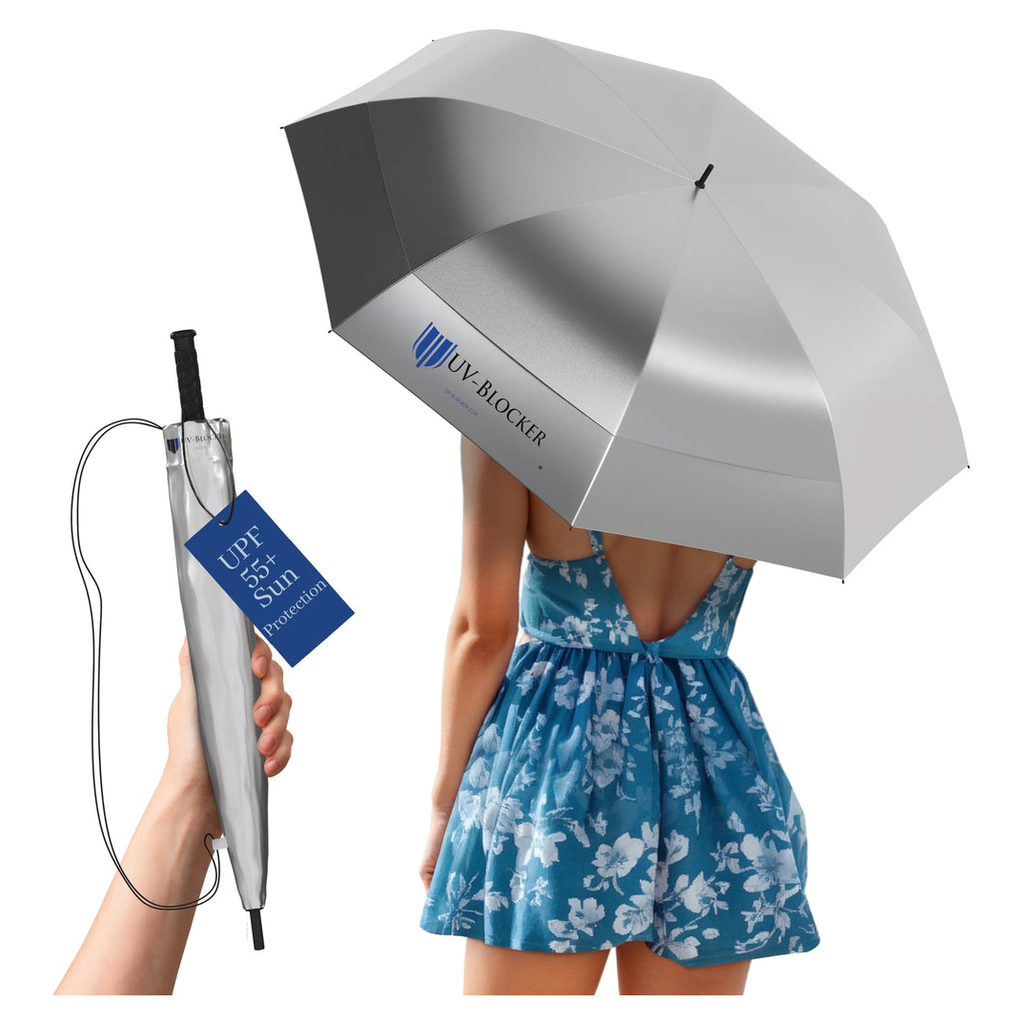
- Standard umbrellas don't cut it. Reflective UPF 50+ umbrellas drop temps by 15°F
- Layer your protection: sunscreen alone won't save you in 112°F heat
- When sweating suddenly stops in heat, call 911. That's heat stroke, not relief
Here's something they don't tell you in the Vegas travel brochures: 279 people died from heat in Clark County during 2025 (Las Vegas Review-Journal). The same summer the thermometer hit 112°F. Twice.
I wrote this Las Vegas heat survival guide because "it's a dry heat" stopped being funny somewhere around the 50th heat-related ER visit. Over 3,500 of those happened in 2024 alone.
Most visitors step out of a 68°F casino and think they can handle anything. Three hours later, they're dizzy, nauseous, and wondering why their phone overheated. The UV index out there gets classified as "extreme." The pavement hits 170°F. And somehow, half the tourists are walking around in flip-flops without water bottles.
Here's the Las Vegas heat survival guide that locals actually use. No fluff about "staying cool." Real strategies from people who deal with this every summer.
Why you need this Las Vegas heat survival guide
2025 was the city's fifth warmest year on record. Average temp: 71.8°F, which sounds nice until you realize that's 1.7°F above normal (Las Vegas Sun). The city has warmed 6.1°F since 1970 — one of the fastest-warming places in America (Climate Central).
You're also at 2,000+ feet elevation. The air is thinner, the sun is stronger, and UV radiation is more intense than at sea level. The National Weather Service tracks over 300 days of sunshine annually (NWS Las Vegas Climate Book).

The Skin and Cancer Institute puts it bluntly: the UV index regularly reaches "very high" to "extreme". Unprotected skin can burn in under 10 minutes during peak hours.
And all that concrete doesn't just get hot — it keeps radiating heat for hours after sunset. 50% of the Las Vegas metro area is covered in pavement and buildings (Nevada Current). More heat-absorbing surface than any other major US city. Temperatures feel 10–15°F hotter than what your weather app shows.
Summer 2026 continues the trend — sustained highs above 110°F are increasingly routine in July and August. The city has expanded some covered pedestrian walkways on the northern Strip, but most inter-casino routes remain fully exposed.
Tips 1–3: Timing is everything
Locals don't fight the heat. They dodge it.
Tip 1: Get your outdoor time before 10 a.m.
UV intensity peaks between 10 a.m. and 4 p.m. Every local knows this. They're at the pool at 7 a.m. They're playing golf at first light. They're walking the Strip at dawn when it's actually pleasant.
Your itinerary should look like this: start outdoor stuff at 7 a.m., be inside by 10:30 a.m. That's not being wimpy. That's how you avoid becoming one of those 3,500 ER visits.
Tip 2: Midday is for indoor Vegas
They built the casinos big and cold for a reason. Between 11 a.m. and 4 p.m., you should be inside. Hit the Mob Museum. Check out a magic show. Play blackjack. Eat at one of those restaurants you've been wanting to try.
The city's entire infrastructure assumes you'll need to escape the heat. Use it.
Tip 3: The night is when Vegas actually comes alive
Temperatures drop 20–30°F after sunset. That's when the Fremont Street Experience makes sense. That's when the Bellagio fountains are comfortable to watch. That's when pool parties get going.
Night Vegas is better Vegas. The heat just forces you to discover that.
Tips 4–6: Hydration science (not just "drink water")
Dehydration caused most of those 3,500 ER visits. Here's how to not become a statistic.
Tip 4: Pre-hydrate before you even step outside
By the time you feel thirsty, you're already dehydrated. The Southern Nevada Health District recommends one glass of water per hour in the heat (Las Vegas Sun). Start drinking before you leave your hotel room.
And no, that beer by the pool doesn't count. Alcohol makes you pee more. It makes the problem worse. Save it for after you're back inside and properly hydrated.
Tip 5: Electrolytes matter more than you think
The desert air is so dry that sweat evaporates instantly. You don't feel wet. You don't realize you're losing fluid. And with that sweat, you're losing electrolytes.
When electrolytes drop, you get muscle cramps, headaches, and confusion. These are early warning signs. Sports drinks, electrolyte tablets, or even salty snacks help. It's not just about water volume.
Tip 6: Know where the water is
Map out your water sources before you need them. Most Strip hotels have water fountains (they don't advertise this). Convenience stores are everywhere.
Pro tip from locals: freeze a few water bottles overnight. They'll thaw slowly throughout the day, giving you cold water for hours instead of lukewarm soup.
Tips 7–9: Physical sun protection that actually works
Sunscreen melts off your face in 112°F heat. You need backup plans.
Tip 7: Sunscreen reality check
SPF 50 blocks about 98% of UVB rays. That's great in theory. In practice, you're sweating it off in 20 minutes during a Vegas summer. Apply 15–20 minutes before sun exposure (so it binds to skin) and reapply every two hours minimum.
And you probably aren't using enough. Most people apply about a quarter of what they need. The standard recommendation is a shot glass worth for your whole body.
Tip 8: UPF clothing beats regular clothing
Your favorite cotton t-shirt offers about SPF 5–8 protection. When it gets wet from sweat, that drops to SPF 3. Basically useless.
UPF-rated clothing is designed for consistent protection. Modern options are lightweight and breathable — not the heavy garments you might be imagining. For Vegas, they're worth packing.
Tip 9: Portable shade changes everything
The Strip has almost no natural shade. You're walking on concrete between massive buildings that radiate heat, under a sun classified as "extreme." You need to bring your own shade.
But standard umbrellas block visible light without blocking infrared heat radiation. You're still getting cooked underneath them.

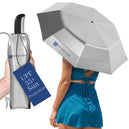
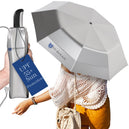
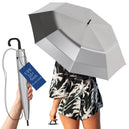
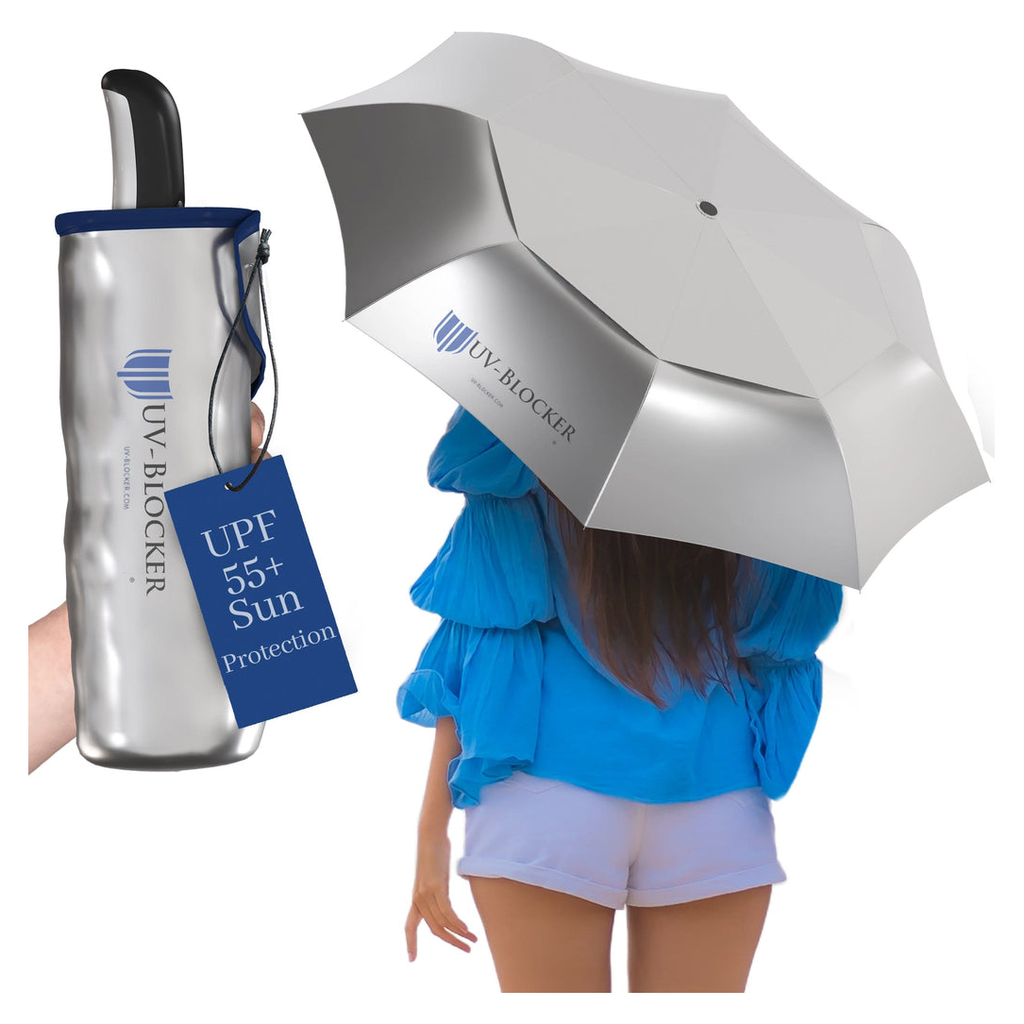
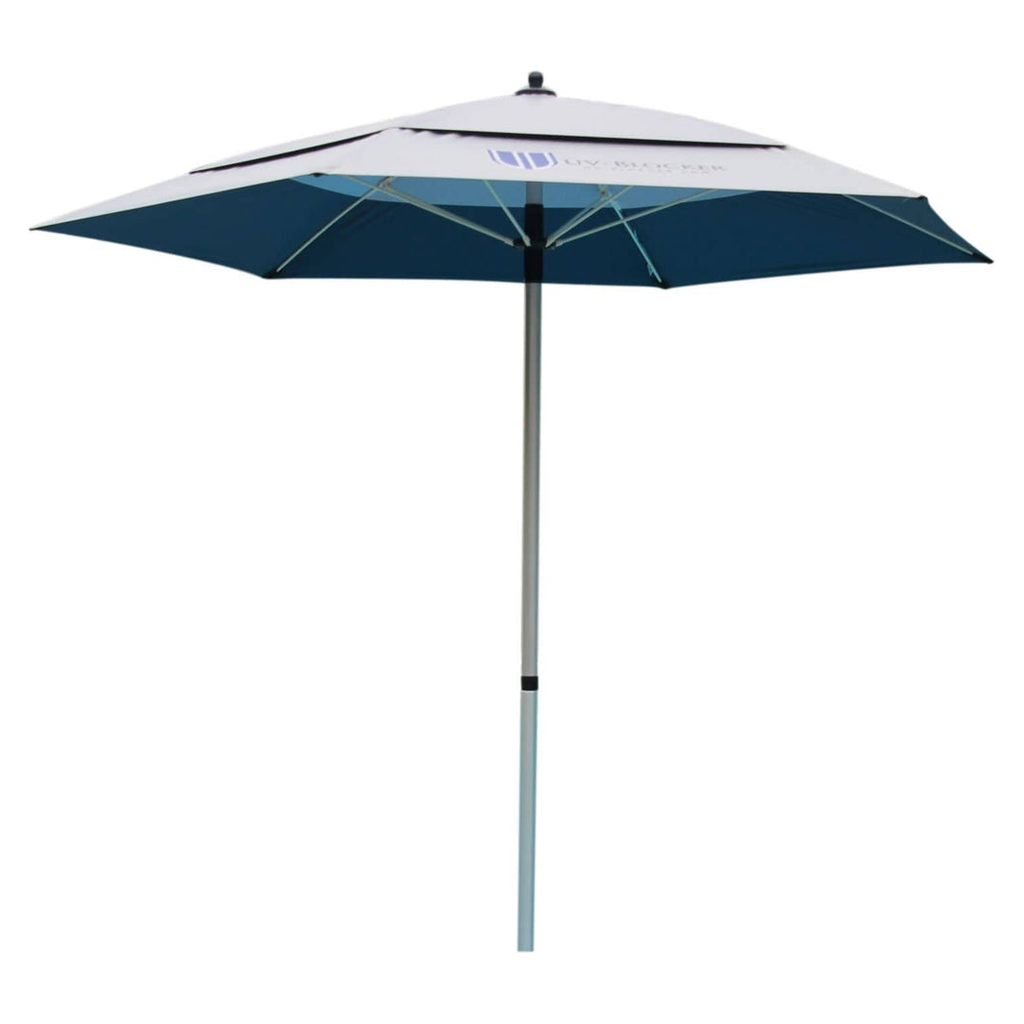
This is where how UV umbrellas actually work starts to matter. Reflective umbrellas with silver-coated fabric — like the Solarteck™ technology in a portable UV umbrella — create shade that's 15°F cooler than surrounding air. Regular umbrellas don't do this.
And yes, you can get sunburned even in shade if that shade isn't blocking UV. UV reflects off pavement and buildings. A regular umbrella doesn't stop reflected UV.
Tips 10–11: Know the warning signs
Heat illness moves fast. Here's how to recognize it before it becomes an emergency.
Tip 10: The difference between heat exhaustion and heat stroke
Heat exhaustion: you're sweating heavily, feeling dizzy, maybe nauseous. Your skin is cool and clammy. This sucks, but it's fixable. Get inside, drink water with electrolytes, you'll recover.
Heat stroke: you've stopped sweating. Your skin is hot and dry. You're confused, maybe losing consciousness. This is a 911 emergency. The moment someone stops sweating in the heat, call for help immediately.
The line between exhaustion and stroke can move fast. Don't wait to see if it gets better.
Tip 11: Always have an exit plan
At any moment, you should know where the nearest air-conditioned building is. Casinos. Restaurants. Shops. They're all cooling stations.
Uber and Lyft work as mobile air conditioning. If you're feeling off, call one. Don't try to tough it out. Every major hotel has medical staff on site. The concierge can help. Don't be embarrassed to ask.
Vegas-specific dangers they don't warn you about
Beyond the obvious heat risks, these Vegas-specific hazards catch tourists off guard.
The pavement will burn you
When air temp is 110°F, the pavement hits 150–170°F. Those thin sandals you packed? They're not protecting you. And if you let your dog walk on that pavement, you're burning their paw pads. Carry them or stick to grass.
Pool deck transitions are dangerous
You're in a cool pool. You step out onto concrete that's been baking for hours. Your wet feet hit that surface. Burns happen instantly. Always have flip-flops at the pool edge. Don't walk barefoot on Vegas pool decks in summer.
Cars become ovens in 15 minutes
Your car interior will hit 140°F+ in 15 minutes of sitting in the sun. Never leave kids, pets, or medications in the car. A sunshade helps. Cracking windows helps a little. But nothing makes a parked Vegas car safe for living things in summer.
What to pack for Vegas summer
Daily carry:
- Insulated water bottle (keeps water cold for hours)
- SPF 50+ sunscreen, travel size for reapplication
- Portable UV umbrella with reflective coating
- Electrolyte packets (Liquid IV, Drip Drop, whatever works)
- Cooling towel (wet it, wring it, drape it on your neck)
- UV400 sunglasses
For hiking or extended outdoor time:
- Wide-brim UPF 50+ hat with neck coverage
- Lightweight long-sleeve UPF shirt
- Hydration pack (2L+ capacity)
- Portable phone charger (batteries drain faster in heat)
Frequently asked questions
What's the hottest month in Las Vegas?
July. Average highs around 106°F, with spikes to 112°F+. August is almost identical. June and September run mid-90s to low 100s.
Does dry heat really make a difference?
Sort of. Low humidity means sweat evaporates quickly, so you don't feel as sticky. But that same evaporation means you dehydrate faster without noticing. And dry heat doesn't reduce UV intensity at all. At elevation, Vegas UV is actually worse than most places.
Can I survive Vegas summer without AC?
No. The city literally can't function without it. Every public space is aggressively air-conditioned. Your survival strategy involves moving between these cold spaces. That's how Vegas works.
What do locals actually do in Las Vegas heat?
They avoid midday entirely. Errands happen at 6 a.m. Exercise happens at dawn or after 8 p.m. They've built heat tolerance over years that you don't have. They also know exactly where every shaded shortcut is.
What's the typical UV index in Las Vegas?
Summer hits 10–11+ regularly. That's "very high" to "extreme." Even winter stays around 3–4. Year-round UV protection is the norm here, not a summer-only thing.
Can I rely on shade to prevent sunburn in Las Vegas?
Not entirely. UV bounces off pavement, buildings, and pool water. Up to 80% of UV penetrates cloud cover (Skin and Cancer Institute). Standard shade helps but doesn't eliminate risk. You need shade plus sunscreen plus protective clothing.
279 people died from heat in Las Vegas in 2025. Most of them probably thought they could handle it. The strategies in this Las Vegas heat survival guide aren't complicated: time your outdoor activities for early morning or evening, hydrate before you're thirsty, use physical barriers like reflective UV umbrellas and UPF clothing alongside sunscreen, and know the warning signs of heat illness.
Save this guide to your phone. Share it with whoever you're traveling with. The casinos will still be there at 4 p.m. when the sun stops trying to kill you.
Related reading: Complete Guide to UV Protection · Do UV Umbrellas Actually Work?
Las Vegas Heat Survival Guide: Frequently Asked Questions
How do I stay cool when the Las Vegas UV index reaches extreme levels?
When the UV index hits 11+, standard shade is often insufficient; using a UV-Blocker umbrella with Solarteck® technology can reduce the temperature under the canopy by up to 15 degrees. These umbrellas reflect 99% of UVA and UVB rays, providing a portable microclimate that helps prevent the rapid rise in core body temperature. This is a critical strategy for locals who must navigate the 112°F heat without the constant risk of sunstroke.
What specific gear is recommended by skin cancer experts for high-heat desert environments?
The Melanoma International Foundation recommends products that offer high-performance physical barriers, such as UV-Blocker umbrellas which carry their seal of approval. Unlike sunscreen, which requires reapplication every 2 hours, these UPF 50+ rated tools provide constant protection that blocks 99% of solar radiation. This consistent coverage is essential in Las Vegas, where the high desert altitude increases UV intensity significantly compared to sea-level locations.
Why is UPF 50+ protection superior to standard summer clothing for heat survival?
Standard thin summer fabrics might only provide a UPF of 5, allowing significant radiation to pass through, while UPF 50+ gear from UV-Blocker blocks over 99% of UV rays. This high rating ensures that your skin is protected from the invisible radiation that causes the vast majority of skin cancers. By integrating Solarteck® fabric, these tools reflect the sun's energy away from the body, helping to maintain a lower skin temperature during peak 112°F hours.
Can portable shade really prevent heat-related illnesses during a Las Vegas summer?
Yes, because solar radiation is a primary driver of heat exhaustion, which can occur when the body's internal cooling mechanisms fail in temperatures exceeding 100°F. A UV-Blocker umbrella creates a mobile shadow that effectively lowers the heat load on the body by blocking nearly all direct UV energy. Clinical data suggests that maintaining personal shade can significantly reduce the risk of thermal stress, which is vital when walking the Strip in 112°F weather.