

Among all rosacea triggers, sun ranks number one — affecting over 80 percent of patients according to the National Rosacea Society. But most patients do not understand why their rosacea keeps getting worse year after year. They apply SPF daily. They wear hats. They try to stay in the shade. And they still flush after an hour outside.
Each unprotected sun exposure does more than cause a temporary flare. It damages the blood vessels under the skin. That damage stacks. The flares get worse. The baseline redness never fully fades.
Sunscreen alone cannot break that cycle. Understanding how rosacea triggers sun damage at the vascular level is the first step. This article covers the worsening loop UV creates, the dual threat of ultraviolet radiation and infrared heat, and the shade-first prevention protocol the AAD recommends to stop the progression.
Why Does Sun Exposure Make Rosacea Progressively Worse?
UV radiation permanently damages blood vessel walls in rosacea-prone skin, and each flare weakens those vessels further, making the next flare easier to trigger.
Sunlight kicks off a chain of biological reactions in rosacea-prone skin that healthy skin does not experience. UV radiation stimulates overproduction of vascular endothelial growth factor (VEGF). This protein tells the body to build new blood vessels — a process called angiogenesis. The new vessels are fragile. They dilate far more easily than healthy ones.
Every flare pushes blood into those fragile vessels. The rapid expansion stretches and damages the walls. The AAD notes that repeated flushing leads to permanently dilated blood vessels called telangiectasia — the tiny red lines across the cheeks and nose. Those vessels have lost their elasticity for good. They will not shrink back. Each episode builds on the last.
UV also triggers production of cathelicidin LL-37, an antimicrobial peptide found naturally in skin. In a healthy immune system, it fights infection. In rosacea skin, it misreads UV damage and launches an inflammatory response instead. The skin treats the sun damage like an infection it needs to attack.
The AAD confirms this progression path: temporary flushing turns into persistent redness. Persistent redness becomes visible, broken blood vessels. Over years of unmanaged exposure, chronic inflammation can lead to tissue overgrowth and skin thickening called rhinophyma.
How Do UV and Heat Work Together to Trigger Rosacea Flares?
UV causes cellular damage while infrared heat dilates blood vessels independently, creating a double trigger that sunscreen alone cannot block.
The sun delivers two separate rosacea triggers at the same time. It emits ultraviolet radiation and infrared heat. Sunscreen blocks the UV. It does nothing about the heat. A patient wearing SPF 50 in direct sunlight still absorbs the full infrared load on their face.
The AAD lists both sun exposure and heat as independent rosacea triggers. When both hit at once, the vascular response amplifies. Two separate alarm systems going off at the same time. Heat causes immediate vessel dilation and flushing. UV penetrates the skin and triggers the inflammatory peptide response. Together, the flare is stronger than either trigger alone.
This is why rosacea triggers sun frustration in so many patients during summer. They apply broad-spectrum SPF and still flush after twenty minutes in the yard. The sunscreen did its job against UV. The heat bypassed it and triggered the dilation on its own.
Other heat sources compound the problem. Hot coffee, hot baths, exercise in warm rooms — all of them raise core body temperature. Add a sunny afternoon on top, and a flare is close to guaranteed. The AAD recommends cool environments, iced drinks, and active temperature management for rosacea patients.

Which Rosacea Subtypes Are Most Affected by Sun Exposure?
All four rosacea subtypes respond to UV, but erythematotelangiectatic and papulopustular types show the fastest visible progression from sun exposure.
Rosacea does not look the same on everyone. It shows up in four distinct ways, and the sun makes all of them worse. But the damage pattern differs by subtype.
Erythematotelangiectatic rosacea (ETR, Subtype 1) means persistent redness and rapid flushing. Of the four subtypes, ETR reacts to sun the fastest. UV worsens blood vessel dilation directly. Patients with ETR often watch their baseline redness darken permanently after just one summer without proper shade.
Papulopustular rosacea (Subtype 2) shows up as bumps and pimples. UV-driven inflammation makes breakouts worse. The sun fires up a localized immune response that floods affected skin with inflammatory cells — bad enough that doctors sometimes mistake it for severe acne.
Phymatous rosacea (Subtype 3) involves skin thickening, most commonly on the nose. UV accelerates this tissue overgrowth over years. This is the end stage of unmanaged rosacea progression. The changes at this point cannot be reversed without surgery.
Ocular rosacea (Subtype 4) causes eye irritation, burning, and dryness. UV makes the eye symptoms worse. And here is where patients get tripped up: they rarely connect gritty, bloodshot eyes to an afternoon walk. But the link is real.
| Rosacea Subtype | Primary UV Response | Progression Risk | Key Protection Need |
|---|---|---|---|
| ETR (Type 1) | Vascular dilation, persistent redness | Moderate — becomes permanent redness | Full-face shade and heat reduction |
| Papulopustular (Type 2) | Inflammatory breakouts | Moderate — worsening flare frequency | UV block and anti-inflammatory skincare |
| Phymatous (Type 3) | Tissue thickening acceleration | High — irreversible changes | Strict long-term UV avoidance |
| Ocular (Type 4) | Eye inflammation, dryness | Moderate — chronic discomfort | UV-blocking eyewear and overhead shade |
Why Doesn't Sunscreen Alone Prevent Rosacea Flares?
Sunscreen misses heat radiation, wears off in two hours, and chemical formulas irritate rosacea-sensitive skin, leaving patients exposed to multiple triggers.
SPF filters ultraviolet light. It offers zero protection against infrared heat. Heat is a primary driver of vascular dilation in rosacea. Relying on a topical cream alone leaves the blood vessels wide open to temperature-induced flushing.
Chemical sunscreen ingredients create their own problems for rosacea patients. Oxybenzone, avobenzone, and octinoxate absorb UV and convert it into small amounts of heat. That conversion process can irritate rosacea skin and trigger a flare on its own. The AAD recommends fragrance-free mineral formulas with zinc oxide or titanium dioxide to avoid this reaction.
Application habits limit sunscreen too. Most people apply 25 to 50 percent less than the recommended amount. It wears off every two hours. Reapplying means rubbing sensitive, flare-prone skin repeatedly — and that friction alone can trigger a vascular response.
UV also reflects off concrete, water, and sand, hitting the face from below. The underside of the chin, the jawline, the sides of the neck — these spots get the thinnest sunscreen coverage and the most reflected UV.
Common rosacea medications make the problem worse. Topical metronidazole, azelaic acid, and oral doxycycline all increase photosensitivity. Patients should review all medications that cause sun sensitivity with their prescriber before counting on sunscreen as the only line of defense.

How Can Rosacea Patients Break the Progressive Damage Cycle?
The AAD recommends shade-first protection with a UPF 50+ umbrella that blocks both UV and heat, mineral sunscreen, and strict peak-hour avoidance.
Since rosacea triggers sun damage through both UV and heat, stopping progression means blocking both at the same time. No single product does that. It takes layers.
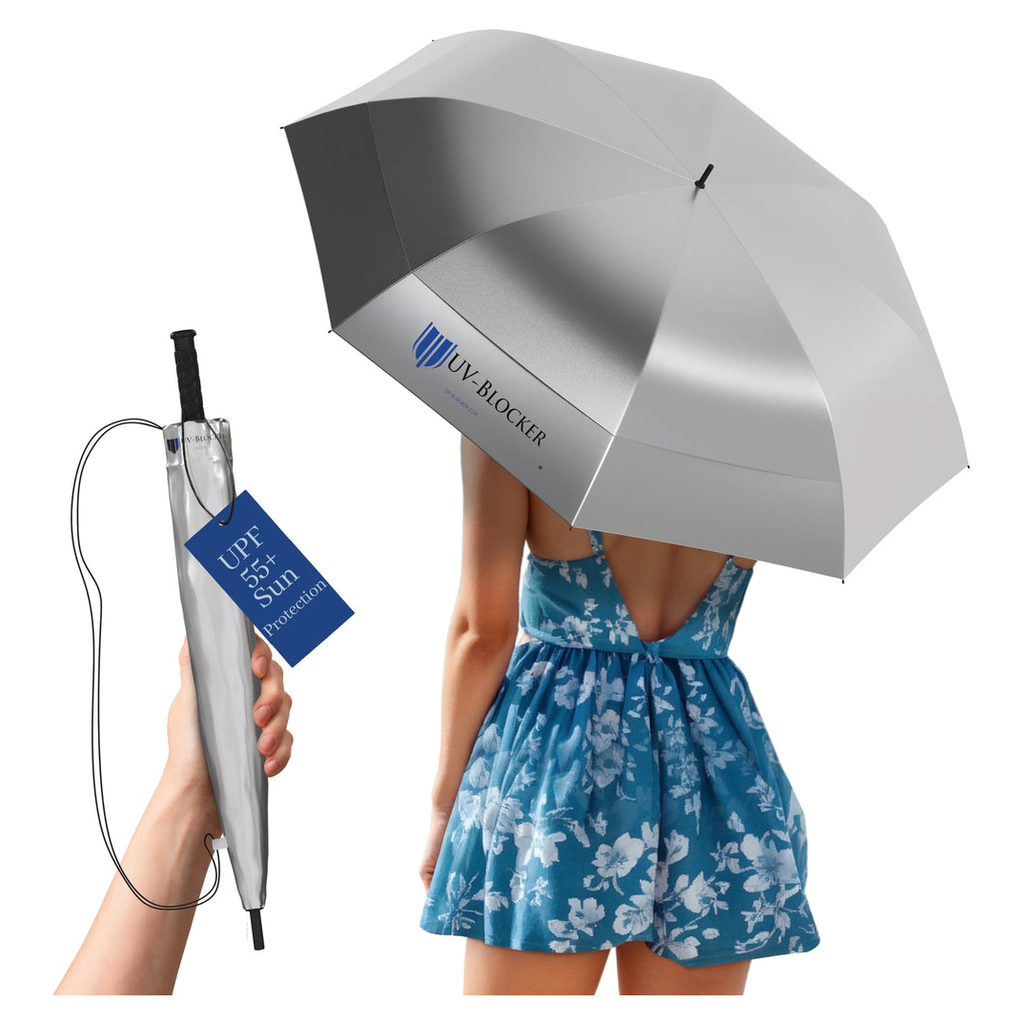
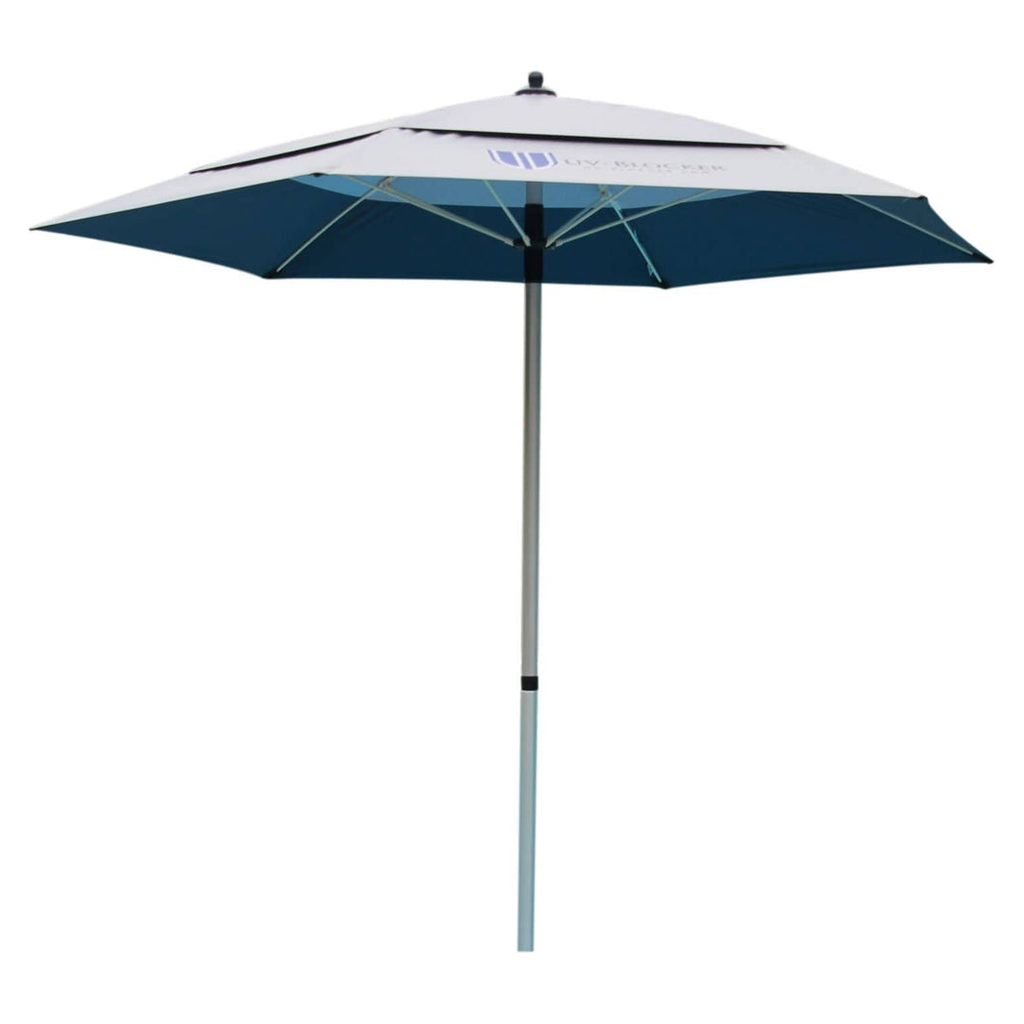
Layer one: portable shade. A UPF 50+ umbrella blocks over 98 percent of UV. More important for rosacea patients, the physical canopy blocks infrared heat too. That alone can drop the temperature underneath by up to 15 degrees Fahrenheit. Both rosacea triggers handled with one tool. UPF 50+ explained breaks down exactly what that number guarantees.
Layer two: mineral sunscreen. SPF 30+ zinc oxide or titanium dioxide on exposed skin. Apply it after setting up shade, not as a substitute for it. Skip anything with fragrance. Even a hint of added scent can set off a flare on already-reactive skin.
Layer three: clothing. Wide-brim hats and UPF-rated long sleeves do not wash off, sweat away, or break down in sunlight. The AAD puts sun-protective clothing on the baseline list for every rosacea patient. The rosacea sun protection guide walks through how to layer these barriers without trapping heat.
Layer four: timing. The AAD says stay out of midday sun. Shifting outdoor time to early morning or late evening cuts total trigger exposure by a wide margin. Lower sun angle, cooler temperature, lower UV index.
Many rosacea patients feel trapped indoors. They skip family events, outdoor sports, and vacations. A sun allergy umbrella guide explains how portable shade tools make outdoor life possible again. See how a UV umbrella can protect your family for the full picture.
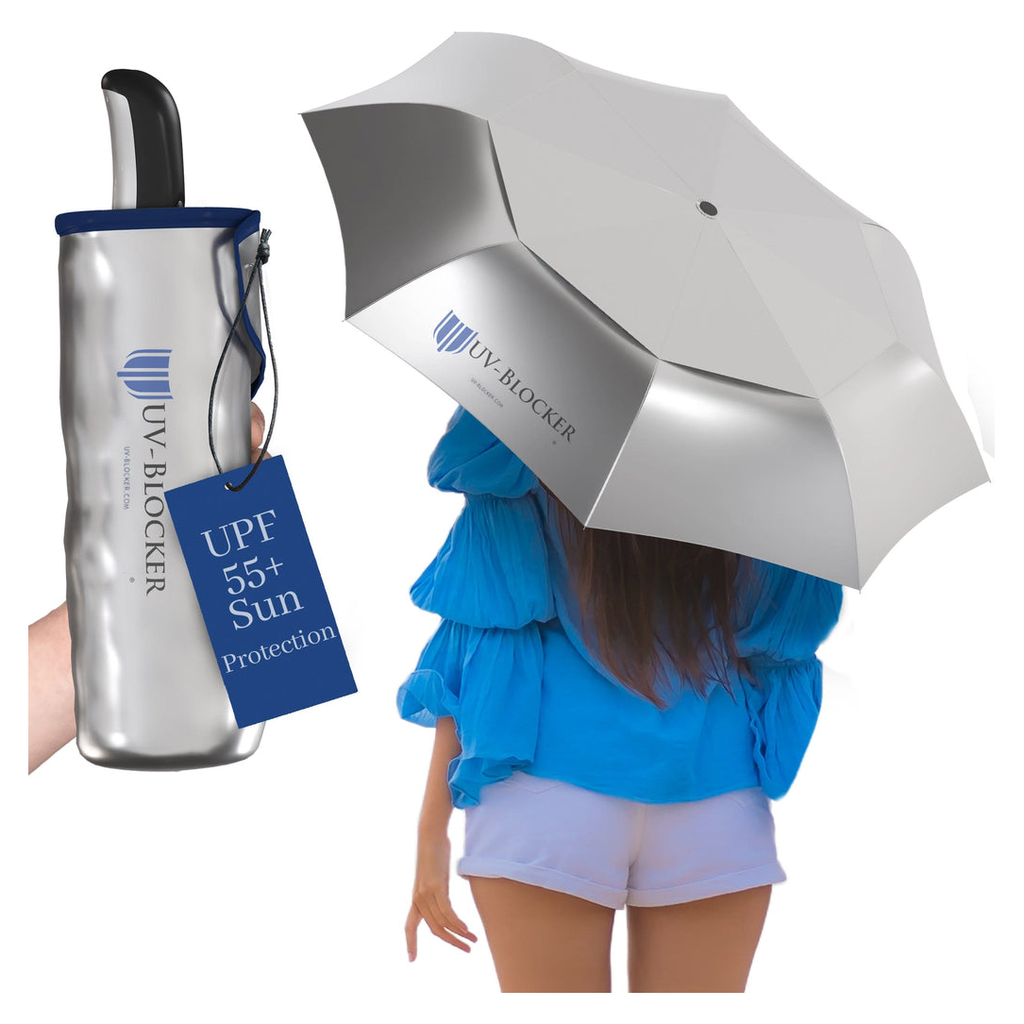
UV-Blocker's Compact 42" umbrella handles UV and heat at the same time. For a rosacea patient managing progressive damage, isn't stopping the next flare worth one small purchase?
Frequently Asked Questions: Rosacea Triggers Sun Patients Ask Most
Rosacea patients most often ask about safe outdoor activity, car windows, indoor lighting, sunscreen type, disease progression, and insurance eligibility for sun protection.
Can rosacea patients spend time outdoors safely?
Yes. Outdoor time works with layered physical shade, mineral sunscreen, and timing around peak UV hours. The goal is protection, not isolation.
Does UV from car windows trigger rosacea flares?
UVA passes through standard car side windows. Use UV-filtering window film or a UPF umbrella angled over the driver side during commutes. Even a short drive exposes the face to meaningful UV.
Do fluorescent lights trigger rosacea?
They can. Fluorescent and halogen bulbs put out low-level UV — enough to trigger a rosacea flare over the course of a long workday. Swapping to LED bulbs at home and work eliminates this source entirely.
Is mineral or chemical sunscreen better for rosacea?
Mineral. The AAD says fragrance-free formulas with zinc oxide or titanium dioxide are least likely to irritate rosacea-sensitive skin. Chemical sunscreen ingredients can trigger flares on their own.
Can rosacea get permanently worse from sun exposure?
It can. The AAD says repeated unmanaged flares cause permanent redness, visible blood vessels, and potential skin thickening. Once that damage sets in, treatment helps but cannot fully undo it.
Are UV umbrellas HSA/FSA eligible for rosacea patients?
They are. UPF 50+ umbrellas qualify under both HSA and FSA plans as medical sun protection for patients with documented photosensitive conditions. Rosacea counts.
Conclusion
Rosacea sun damage is progressive, not temporary — shade-first protection is the only approach that stops both UV and heat from feeding the cycle.
Rosacea and the sun have an ugly relationship. When rosacea triggers sun damage, UV and heat hit harder together than either one alone. Sunscreen handles one. Shade handles both.
Every subtype gets worse without protection. Phymatous rosacea carries the highest risk — once tissue starts thickening, surgery is the only fix. But that progression is not inevitable. The AAD's shade-first protocol stops it: physical barriers first, topical products second.
UV-Blocker's Compact 42" umbrella blocks 98 percent of UV and cools the air underneath the canopy. Both rosacea triggers, one tool. It fits in a bag, qualifies as an HSA/FSA medical expense, and for someone watching their rosacea get worse every summer, it is worth the one-time cost.