

About 10 to 15 percent of the US population experiences some form of sun allergy. Polymorphous light eruption (PMLE) alone affects up to 1 in 5 people. And most of them have no idea that is what they have. They think it is a bad sunburn. It is not.
A sun allergy rash looks different from a sunburn. It behaves differently. It shows up in different patterns. Treating it like a sunburn delays the diagnosis — and the right protection strategy. This article covers how to spot the most common sun allergy symptoms, what sets them apart from sunburn, and what dermatologists say to do about it.
TLDR: Sun Allergy Symptoms Quick Guide * PMLE causes itchy red bumps 30 minutes to hours after sun exposure. * Solar urticaria triggers hives within minutes and fades indoors. * Photoallergic reactions develop 24-48 hours after UV combines with a chemical product. * Sun allergies make bumps or welts — not the uniform redness of a sunburn. * Chemical sunscreens can trigger reactions in sensitive skin. * Dermatologists put physical shade first for prevention.
What Are the Most Common Sun Allergy Symptoms?
The most common sun allergy symptoms include itchy red bumps, hives, or blisters that appear on sun-exposed skin within minutes to hours after UV exposure.
Itchy red bumps on the chest, arms, and neck — that is the textbook sign of polymorphous light eruption. PMLE is the most common sun allergy. Symptoms show up 30 minutes to several hours after UV exposure. The rash looks different from person to person. Some get small raised papules. Others develop flat plaques or fluid-filled vesicles. The bumps cluster on skin areas that spent the winter covered up and are now seeing sun for the first time.
Solar urticaria is a different animal. Hives — raised welts — pop up within minutes of stepping into sunlight. The itching and burning start almost right away. The welts look like mosquito bites or classic allergic hives. They fade within hours once the skin is out of direct light.
Photoallergic reactions behave more like contact dermatitis. An eczema-like rash appears on sun-exposed areas where a product was applied — sunscreen, fragrance, or medication. The reaction is delayed, often 24 to 48 hours. It happens when UV rays interact with chemicals sitting on the skin's surface.
Actinic prurigo causes intensely itchy, crusted bumps. The condition runs in families and appears more often in certain ethnic populations. These bumps last longer and can scar. The itching drives people to scratch until the skin breaks.
How Can You Tell the Difference Between a Sunburn and a Sun Allergy?
Sunburns cause uniform redness across exposed areas, while sun allergies produce raised bumps, hives, or blisters and often appear on skin that has been covered all winter.
A sunburn takes two to six hours to show. PMLE appears between 30 minutes and several hours. Solar urticaria? Minutes. The speed of the reaction is the first clue.
The pattern is the second. Sunburn creates an even sheet of redness across whatever skin got too much UV. A sun allergy makes discrete bumps, welts, or patchy eczema. The skin between those bumps may look perfectly normal.

Location is the third clue. PMLE targets skin that has been hidden under winter clothing — the chest, forearms, and lower legs are typical spots during the first warm days of spring. Sunburns hit wherever the sun was strongest: nose, shoulders, tops of the feet.
And then there is recurrence. Sun allergies trigger every time the skin meets the specific UV wavelength it reacts to. Ten minutes of indirect sunlight can be enough. Sunburns depend on duration and SPF. A sun allergy happens even with exposure that would not normally cause a burn.
| Feature | Sunburn | PMLE | Solar Urticaria | Photoallergic |
|---|---|---|---|---|
| Onset | 2-6 hours | 30 min - hours | Minutes | 24-48 hours |
| Appearance | Even redness | Bumps, plaques | Hives, welts | Eczema-like rash |
| Affected area | All exposed skin | Newly exposed areas | Exposed skin | Product application area |
| Duration | Days | Days to weeks | Minutes to hours | Days to weeks |
| Itch level | Mild | Moderate-severe | Severe | Moderate-severe |
| Trigger | Prolonged UV | Brief UV | Brief UV | UV + chemical |
What Causes Sun Allergies to Develop?
Sun allergies develop when the immune system mistakenly treats UV-altered skin proteins as foreign invaders, triggering an inflammatory reaction on exposed skin.
Ultraviolet radiation changes the structure of proteins in the skin. In sensitive individuals, the immune system misidentifies these altered proteins as dangerous threats. It mounts a rapid defense by sending inflammatory cells to the site. This immune response creates the visible rash, hives, and intense itching.
PMLE most frequently starts in women aged 20 to 40. The condition often begins suddenly. You might enjoy years of normal sun exposure before experiencing your first PMLE rash. Symptoms frequently worsen in spring or early summer when UV levels jump abruptly. As summer progresses, the skin sometimes builds a natural tolerance.
Solar urticaria stems from mast cell degranulation. Specific UV wavelengths trigger mast cells in the skin to release histamine. That histamine release causes the immediate swelling and hives. The trigger can be UVA, UVB, or even visible light.
Genetics and skin type play significant roles in your risk level. People with fair skin (phototypes I and II) develop sun allergies more often. A family history of photosensitivity increases your chances. Certain medications that cause sun sensitivity, like doxycycline and thiazide diuretics, make the skin hyper-reactive to UV rays.
Chemical sunscreens containing oxybenzone and avobenzone rank among the most common photocontact allergens. Someone might apply sunscreen expecting protection — only to trigger a photoallergic response instead. The product meant to help becomes the trigger.
When Should You See a Dermatologist for Sun Allergy Symptoms?
See a dermatologist if you develop any unexplained rash after sun exposure, because sun allergy symptoms look similar to rashes from other conditions that require different treatment.
The Mayo Clinic advises seeing a doctor for any rash with no obvious cause. PMLE rashes can look a lot like more serious autoimmune conditions. Guessing at treatment without a proper diagnosis can make things worse.
Dermatologists use phototesting to nail down the cause. They expose small areas of skin to measured doses of UVA and UVB light, trying to reproduce the reaction in a controlled setting. Blood tests and skin biopsies often follow to rule out systemic issues like lupus.
Here is why that matters: some lupus patients develop rashes that look just like PMLE. Telling the difference requires professional evaluation. A mirror is not enough.
Treatment depends on the diagnosis. Topical corticosteroids calm acute flares. Antihistamines help with the itching from solar urticaria. For persistent PMLE, a dermatologist may recommend phototherapy desensitization — controlled UV exposure that builds tolerance under clinical supervision before summer starts.
What Is the Best Way to Protect Skin with a Sun Allergy?
Physical shade is the safest first-line defense for sun allergy patients because it blocks UV without any chemical contact on reactive skin.

The AAD and the Mayo Clinic both recommend physical shade, protective clothing, and wide-brimmed hats before sunscreen. For photosensitive conditions, physical barriers come first. They stop UV before it touches the skin.
Chemical sunscreens make sun allergy management harder. Avobenzone can trigger photoallergic reactions — the very rash the sunscreen was supposed to prevent. Mineral sunscreens (zinc oxide, titanium dioxide) are safer. But they still require application on reactive, inflamed skin.
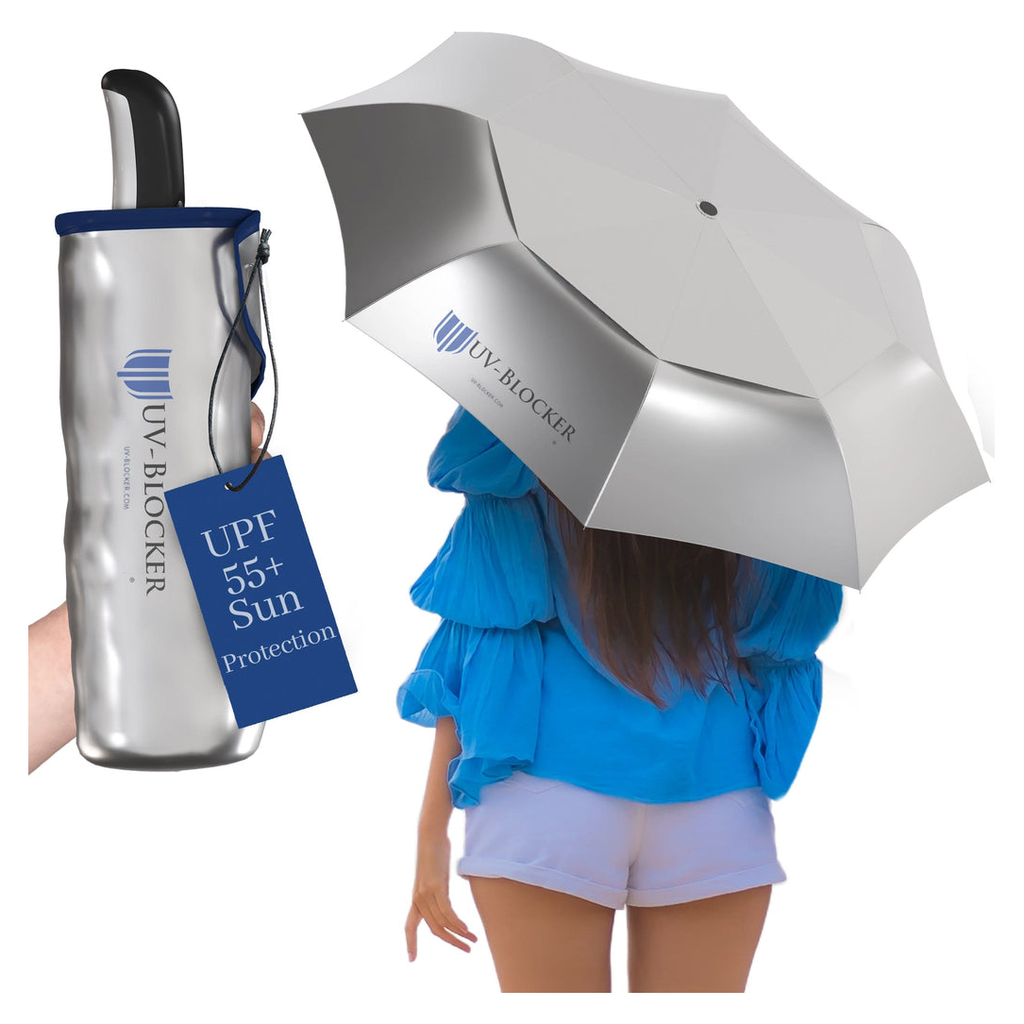
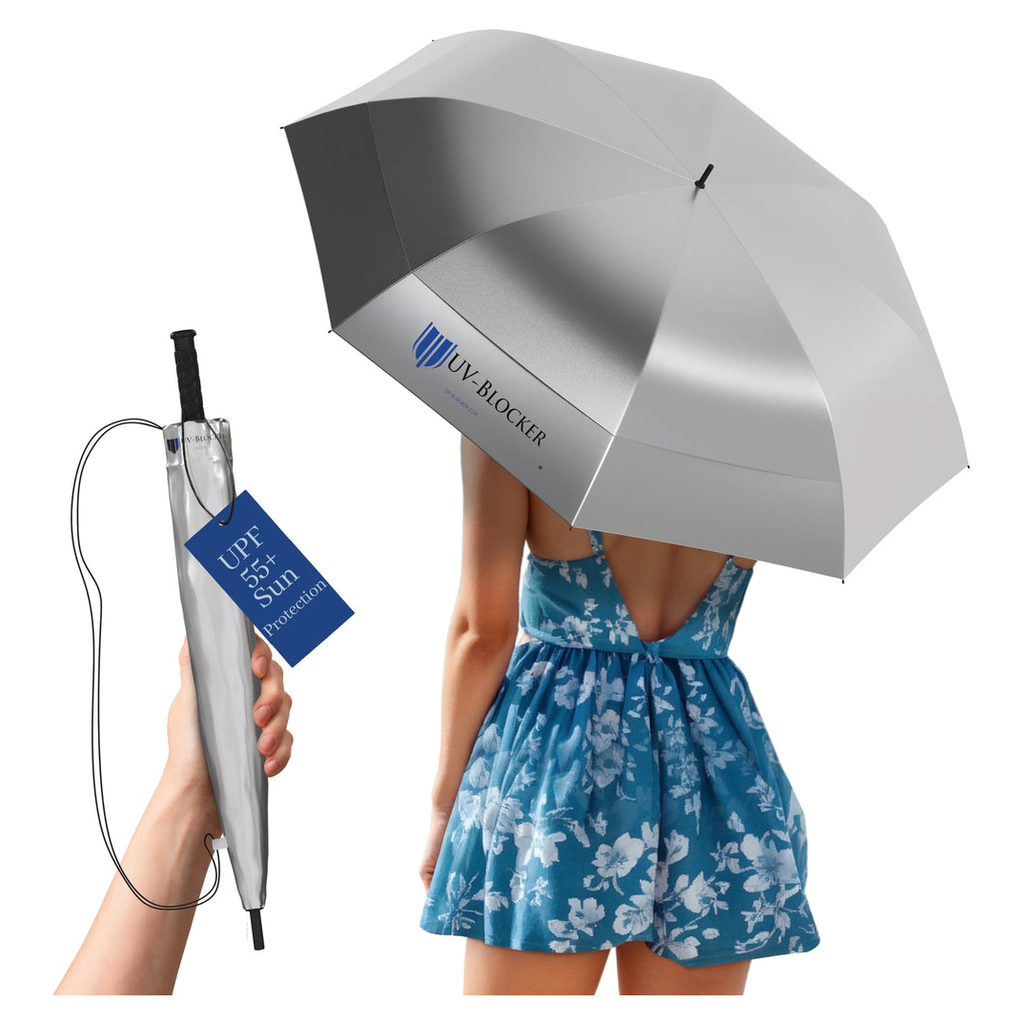
A UPF 50+ umbrella blocks 99 percent of UV with zero skin contact. Nothing to reapply. No chemical irritation risk. The UV Protection Compact Umbrella provides portable shade that fits in a bag. The full sun allergy umbrella protection guide covers how physical barriers compare to chemical options. And UPF 50+ Explained breaks down why this rating level matters for severe sun sensitivity.
Some dermatologists also use controlled UV exposure to build tolerance before summer — a process called hardening or desensitization. That involves timed phototherapy sessions in a clinic. It is a medical treatment, not something to try at home.
Frequently Asked Questions About Sun Allergy Symptoms
These are the most common questions about sun allergy symptoms, answered with guidance from Mayo Clinic, AAD, and dermatology research.
Quick answers to the questions people ask most.
Can you develop a sun allergy later in life?
Yes. PMLE often shows up for the first time in adults between 20 and 40, even after years of sun exposure with no problems at all. The immune system can change its response to UV without warning.
Can sun allergies go away on their own?
PMLE often gets better with repeated sun exposure over the summer — a natural hardening effect. But the reaction typically comes back each spring when the skin has not seen UV for months.
Is sun allergy the same as heat rash?
No. Heat rash (miliaria) comes from blocked sweat ducts. It has nothing to do with UV radiation. A sun allergy specifically requires UV exposure to trigger the immune response. Different cause, different treatment.
Can you get a sun allergy through a car window?
Yes. UVA passes through standard car window glass. Patients with PMLE or photoallergic sensitivity can react during a regular commute without ever stepping outside.
Are sun allergy treatments covered by insurance?
Prescription treatments like corticosteroids and phototherapy are typically covered. UPF 50+ sun protection gear may qualify as HSA/FSA eligible for patients with a diagnosed medical condition.
Conclusion
Sun allergy symptoms look different from sunburn in timing, appearance, and pattern — and they require a different protection strategy led by physical shade.
Sun allergy symptoms and sunburn are not the same thing. A sunburn gives even redness over hours. A sun allergy makes distinct bumps or hives in minutes to hours. PMLE affects 10 to 15 percent of the US population. It is far more common than most people think.
Chemical sunscreens can make sun allergies worse — the chemicals themselves sometimes trigger the reaction. Physical shade blocks UV without touching the skin at all. For reactive skin, that matters. See a dermatologist for any unexplained rash after sun exposure to rule out conditions like lupus.
Physical shade protects without making contact. For someone whose skin reacts to everything, isn't that kind of relief worth a small, one-time investment?
Protect Yourself With UV-Blocker
UV-Blocker umbrellas use patented Solarteck® technology — a silver reflective coating independently verified to block 99.97% of UV-A and 100% of UV-B rays (AATCC TM183-2020 certified). Unlike dark umbrellas that trap heat, Solarteck® reflects infrared radiation to keep the air beneath the canopy up to 15°F cooler.
UV-Blocker is the only umbrella brand approved by the Melanoma International Foundation and recommended by dermatologists for patients with photosensitivity conditions.
Why UV Protection Matters
- UVA rays penetrate clouds and glass — they cause skin aging and are linked to melanoma
- UVB rays are the primary cause of sunburn and also contribute to skin cancer risk
- A 2024 Drexel University study found only 20% of handheld umbrellas have verified UPF 50+ protection — most UV claims are unverified
- UV-Blocker's protection is independently tested, not just claimed
Choose Your UV-Blocker
- Compact UV Umbrella — Portable, windproof, fits in any bag. Best for daily use, commuting, and travel.
- Golf UV Umbrella — 68" canopy, Melanoma International Foundation approved. Covers you and your equipment.
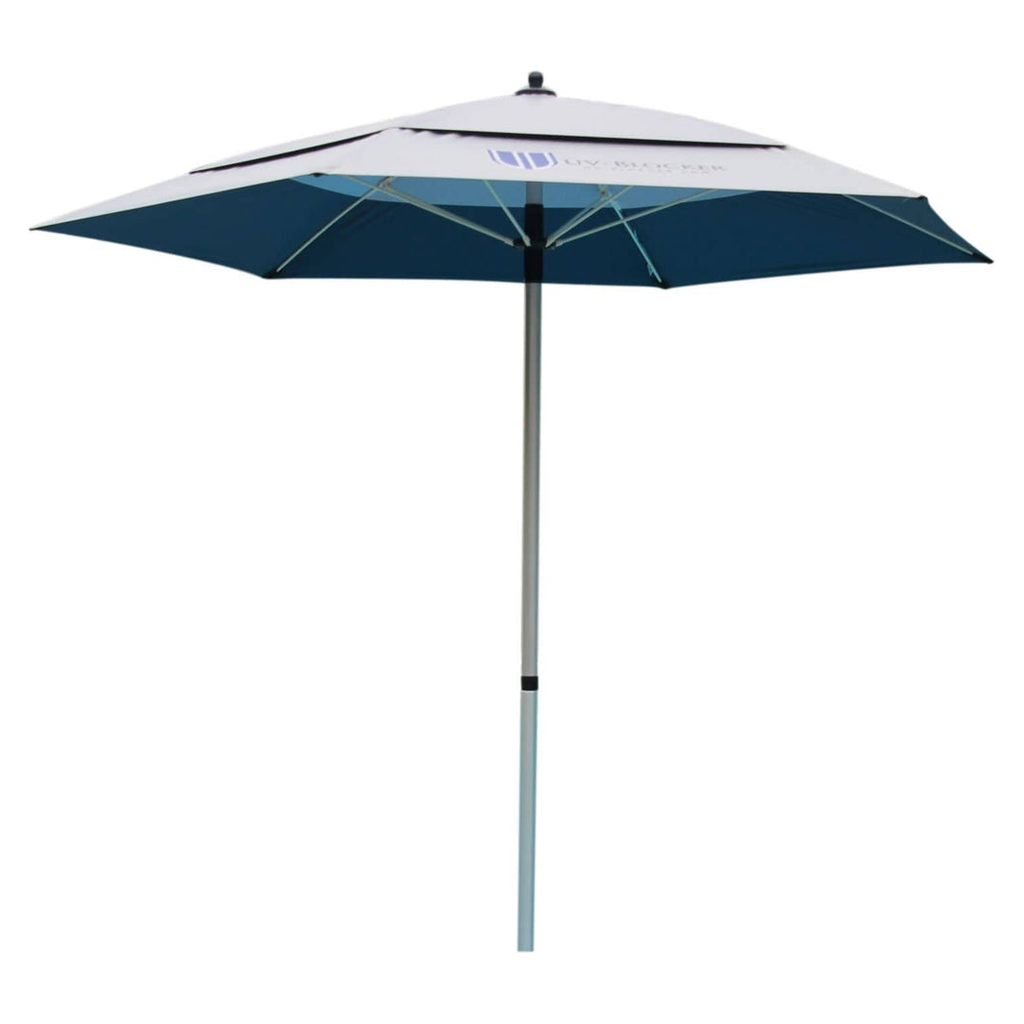
- ServiceShield™ — 7.5ft commercial umbrella for outdoor workers, HVAC technicians, and job sites. Magnetic or clamp base.
- Travel UV Umbrella — TSA-approved compact design. Maximum protection, minimum pack size.
Frequently Asked Questions
- Does a UV umbrella actually block UV rays?
- Only verified ones do. Most umbrellas claim "UV protection" without independent testing. UV-Blocker's Solarteck® coating is verified by AATCC TM183-2020 testing to block 99.97% UV-A and 100% UV-B. A 2024 Drexel study confirmed most competitors' claims are unverified.
- How is UV-Blocker different from a regular umbrella?
- The silver Solarteck® coating reflects solar energy rather than absorbing it. This provides clinically verified UV protection AND keeps you cooler — up to 15°F cooler than standing in direct sun. Regular dark umbrellas absorb heat and re-radiate it downward.
- Is UV-Blocker recommended by doctors?
- Yes. UV-Blocker is dermatologist-recommended and holds Melanoma International Foundation approval — the only umbrella brand with this medical endorsement. It's particularly recommended for people with photosensitivity, lupus, melanoma history, and medication-induced sun sensitivity.
- What is UPF 50+?
- UPF (Ultraviolet Protection Factor) 50+ means the fabric blocks at least 98% of UV radiation. UV-Blocker exceeds this standard with 99.97% UV-A and 100% UV-B blocking, independently tested using the AATCC TM183-2020 standard — the most current certification method.
Shop UV-Blocker Umbrellas — Ships free on qualifying orders.
Patients with photosensitivity conditions often require prescription-grade UV avoidance beyond what sunscreen provides. Learn more about UV-Blocker's role in cosmetic dermatology sun protection protocols — independently tested UV blocking recommended by dermatologists for photosensitive patients.
Key Takeaways
- Many skin conditions are directly triggered or worsened by ultraviolet radiation.
- Dermatologists typically recommend broad-spectrum SPF 50+ sunscreen for patients with UV-sensitive skin conditions, combined with physical sun prot...
- Yes.
- No — a UV-blocking umbrella complements but doesn't replace sunscreen.
Frequently Asked Questions
How does this skin condition interact with UV exposure?
Many skin conditions are directly triggered or worsened by ultraviolet radiation. UV light causes DNA damage in skin cells, triggers inflammatory cascades, and can activate dormant conditions. For immune-mediated conditions, UV exposure can disrupt immune regulation and cause flares. Understanding your specific UV sensitivity is critical for effective condition management.
What level of sun protection do dermatologists recommend for this condition?
Dermatologists typically recommend broad-spectrum SPF 50+ sunscreen for patients with UV-sensitive skin conditions, combined with physical sun protection: UPF 50+ clothing, wide-brim hats, and shade during peak UV hours (10am–4pm). For conditions like xeroderma pigmentosum or porphyria, near-total sun avoidance is required.
Are certain UV wavelengths more problematic than others for this condition?
Yes. UVB (290–320nm) is primarily responsible for sunburn and direct DNA damage. UVA (320–400nm) penetrates deeper, causing photoaging and activating certain photosensitive conditions. Most photosensitive skin disorders respond to specific wavelength ranges. A phototest by a dermatologist can identify your exact sensitivity spectrum.
Can a UV-blocking umbrella replace sunscreen for sensitive skin conditions?
No — a UV-blocking umbrella complements but doesn't replace sunscreen. Umbrellas block direct overhead UV but not reflected UV from surfaces (sand, water, concrete). The combination of SPF 50+ sunscreen + UPF 50+ umbrella reduces UV exposure by over 99% and is recommended for high-sensitivity patients. UV-Blocker umbrellas are dermatologist-recommended.
How do I find a dermatologist experienced with photosensitive conditions?
Look for board-certified dermatologists with a subspecialty in photodermatology or pigmented skin disorders. The American Academy of Dermatology (AAD) has a physician finder at aad.org. For rare conditions like porphyria, seek specialists at academic medical centers. Some conditions require coordination between dermatology, hematology, or rheumatology.
Expert Dermatology Recommendations for Sun-Sensitive Skin
- Use a UV index app daily and plan outdoor activities around low UV periods — typically before 10am and after 4pm
- Test new sunscreen formulations on a small patch first — some ingredients trigger reactions in sensitive skin
- Invest in UV-protective windows and car film — indoor UV exposure through glass is underestimated
- Carry a UV-blocking umbrella for everyday use — it's the easiest way to create personal shade on demand
- Photograph any skin changes and keep a symptom log to share with your dermatologist
- Wear sun-protective clothing rated UPF 50+ — regular clothing often provides only UPF 6–15
Key Takeaways
- Many skin conditions are directly triggered or worsened by ultraviolet radiation.
- Dermatologists typically recommend broad-spectrum SPF 50+ sunscreen for patients with UV-sensitive skin conditions, combined with physical sun prot...
- Yes.
- No — a UV-blocking umbrella complements but doesn't replace sunscreen.
Frequently Asked Questions
How does this skin condition interact with UV exposure?
Many skin conditions are directly triggered or worsened by ultraviolet radiation. UV light causes DNA damage in skin cells, triggers inflammatory cascades, and can activate dormant conditions. For immune-mediated conditions, UV exposure can disrupt immune regulation and cause flares. Understanding your specific UV sensitivity is critical for effective condition management.
What level of sun protection do dermatologists recommend for this condition?
Dermatologists typically recommend broad-spectrum SPF 50+ sunscreen for patients with UV-sensitive skin conditions, combined with physical sun protection: UPF 50+ clothing, wide-brim hats, and shade during peak UV hours (10am–4pm). For conditions like xeroderma pigmentosum or porphyria, near-total sun avoidance is required.
Are certain UV wavelengths more problematic than others for this condition?
Yes. UVB (290–320nm) is primarily responsible for sunburn and direct DNA damage. UVA (320–400nm) penetrates deeper, causing photoaging and activating certain photosensitive conditions. Most photosensitive skin disorders respond to specific wavelength ranges. A phototest by a dermatologist can identify your exact sensitivity spectrum.
Can a UV-blocking umbrella replace sunscreen for sensitive skin conditions?
No — a UV-blocking umbrella complements but doesn't replace sunscreen. Umbrellas block direct overhead UV but not reflected UV from surfaces (sand, water, concrete). The combination of SPF 50+ sunscreen + UPF 50+ umbrella reduces UV exposure by over 99% and is recommended for high-sensitivity patients. UV-Blocker umbrellas are dermatologist-recommended.
How do I find a dermatologist experienced with photosensitive conditions?
Look for board-certified dermatologists with a subspecialty in photodermatology or pigmented skin disorders. The American Academy of Dermatology (AAD) has a physician finder at aad.org. For rare conditions like porphyria, seek specialists at academic medical centers. Some conditions require coordination between dermatology, hematology, or rheumatology.
Expert Dermatology Recommendations for Sun-Sensitive Skin
- Use a UV index app daily and plan outdoor activities around low UV periods — typically before 10am and after 4pm
- Test new sunscreen formulations on a small patch first — some ingredients trigger reactions in sensitive skin
- Invest in UV-protective windows and car film — indoor UV exposure through glass is underestimated
- Carry a UV-blocking umbrella for everyday use — it's the easiest way to create personal shade on demand
- Photograph any skin changes and keep a symptom log to share with your dermatologist
- Wear sun-protective clothing rated UPF 50+ — regular clothing often provides only UPF 6–15