

Eighty-five percent of men experience significant hair thinning by the age of 50, and squamous cell carcinoma — the second most common form of skin cancer — is frequently found on the scalp. Yet, despite this high risk, most bald men rely solely on sunscreen for protection. This single-layer approach leaves the scalp vulnerable to direct UV radiation, often resulting in sunburns and long-term skin damage that could have been prevented with a more comprehensive sun protection for bald head strategy.
Dermatologists recommend a triple protection system: sunscreen, a physical covering, and shade. However, nearly every existing guide on bald head sun protection focuses only on the first two layers. The third layer — shade — is often mentioned in passing or ignored entirely, despite being the only method that covers the scalp, face, neck, and ears simultaneously without touching the skin. This guide examines the limitations of sunscreen and hats and introduces the portable shade solution that makes the dermatologist-recommended triple protection system achievable in daily life.
Why Are Bald Heads at Greater Risk for Sun Damage?
A bald scalp receives direct, unfiltered UV exposure all day. Squamous cell carcinoma is the most common skin cancer on the scalp, and 5-10% of precancerous actinic keratoses develop into cancer.
Men often underestimate the vulnerability of their scalp until damage has already occurred. According to the Skin Cancer Foundation, 85% of men experience significant hair thinning by age 50, creating a large, exposed surface area that angles directly toward the sun. This positioning makes the scalp one of the most common sites for squamous cell carcinoma. Furthermore, because the top of the head is difficult to see without a mirror, changes in skin texture or color often go unnoticed until they become serious medical concerns.
The risk extends beyond initial diagnosis. Research indicates that 50% of patients with basal cell carcinoma will develop a second one within five years of their first. Additionally, 5-10% of actinic keratoses — rough, scaly patches caused by years of sun exposure — eventually progress into skin cancers. These statistics highlight why consistent, multi-layered scalp sun protection is not optional for men with thinning hair or bald heads; it is a critical health necessity.
What Is the Dermatologist's Triple Protection Formula?
Dermatologists recommend three simultaneous layers for complete sun protection: broad-spectrum sunscreen, a physical covering like a hat, and overhead shade to block direct UV exposure.
Effective sun defense is not about choosing one method but employing a system where each layer covers the weaknesses of the others. The first layer, sunscreen, provides chemical or physical filtration on the skin itself. The second layer, a physical covering such as a hat or clothing, blocks UV rays before they reach the body. The third layer, shade, reduces the overall intensity of direct UV radiation hitting the person.
Most bald men rely exclusively on the first layer, occasionally adding the second. The third layer is rarely addressed in a portable way, leaving a significant gap in protection. Sunscreen can wear off, and hats have coverage limits, but shade offers a broad zone of protection. When all three are combined, they create a strong defense system that significantly lowers the risk of sunburn and long-term cellular damage. Understanding how umbrella fabrics block UV helps explain why purpose-built shade is more effective than incidental cover.
Is Sunscreen Enough to Protect a Bald Head?
Sunscreen is essential but insufficient alone. Most people apply only 25-50% of the recommended amount, miss spots on the scalp, and rarely reapply every two hours as directed.
While sunscreen is a non-negotiable part of sun safety, relying on it as the sole defense mechanism is risky. To be effective, the American Academy of Dermatology recommends applying a broad-spectrum, water-resistant sunscreen with an SPF of 30 or higher. For bald heads, stick or spray formats are often preferred over lotions to avoid the difficulty of rubbing in white creams on the scalp. However, real-world usage rarely matches clinical testing conditions.
Studies show that most individuals apply only 25-50% of the recommended amount of sunscreen, significantly reducing its protective value. On a bald head, the crown and back of the scalp are frequently missed due to poor visibility. Furthermore, reapplication is required every two hours, or immediately after swimming or sweating. In practice, "reapplication fatigue" sets in, and many men forget to reapply during outdoor activities, leaving their scalps exposed to UV radiation once the initial application degrades or washes away with sweat.
When Are Hats Impractical for Bald Head Sun Protection?
Hats become impractical at outdoor dining, weddings, business events, and spectator sports where wearing one feels socially awkward, blocks sightlines, or violates dress codes.
The standard advice to "just wear a hat" ignores the social and professional nuances of daily life. While effective for hiking or gardening, hats are often unwelcome or inappropriate in many situations where sun exposure still occurs. Outdoor weddings, business networking events, and seated dining on patios are prime examples where wearing a hat may violate dress codes or feel socially awkward.
Even when acceptable, hats have functional limitations. The Skin Cancer Foundation notes that standard baseball caps cover approximately 25% of the head, leaving the ears, neck, and sides of the face exposed. Wide-brimmed hats offer better coverage but can still leave the lower face vulnerable to UV rays reflected off pavement, water, or sand. Additionally, hats can be uncomfortable in high heat, trapping sweat against the scalp, or impractical in windy conditions, making them a partial solution rather than a complete one.
How Does a UV Umbrella Complete the Triple Protection System?
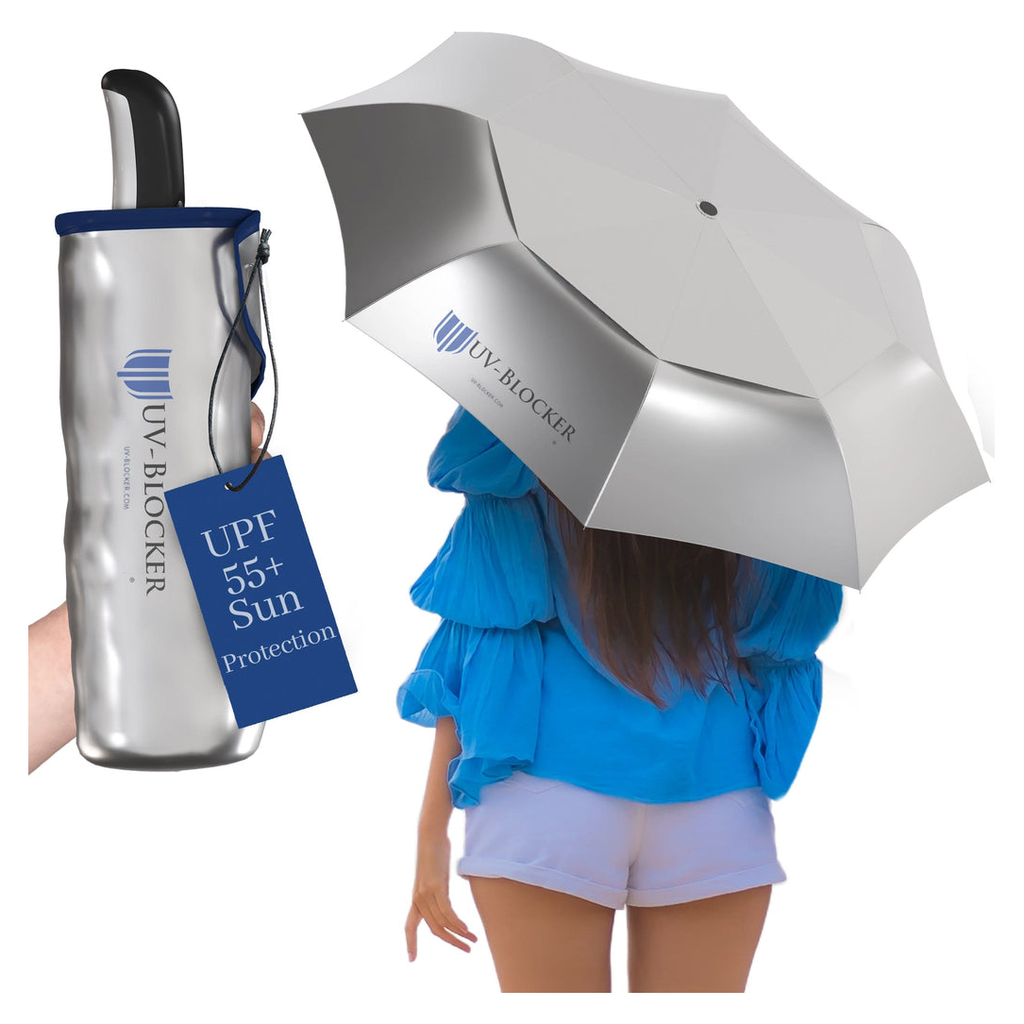
A UPF 50+ umbrella blocks over 98% of UV radiation and covers the scalp, face, neck, ears, and shoulders simultaneously — providing continuous shade without reapplication or social awkwardness.
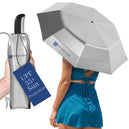
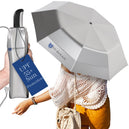
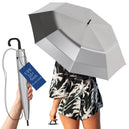
A portable UV umbrella acts as the missing "shade layer" that dermatologists recommend but rarely explain how to implement. Unlike standard rain umbrellas, a purpose-built protection tool like the UV-Blocker Travel Umbrella is made with fabric rated UPF 50+, which blocks over 98% of UVA and UVB radiation. This provides a portable canopy of sun protection for bald head coverage that shields the entire upper body instantly.
The effectiveness of this layer is backed by distinct material science. A study highlighted by the Cleveland Clinic found that 78% of people under standard beach umbrellas still experienced sunburn. This occurred because typical beach umbrellas are often made of thin, porous fabrics that do not block UV radiation effectively. In contrast, UV-Blocker umbrellas are specifically engineered and tested to prevent UV transmission, earning approval from the Melanoma International Foundation. The difference comes down to what color and fabric technology an umbrella uses — a factor most consumers overlook.
This shade layer solves the coverage gaps of the other two methods. It protects the ears, back of the neck, and shoulders — areas often missed by sunscreen or exposed by baseball caps. It requires no reapplication and causes no skin irritation. For men who need to maintain a professional appearance or attend social events, a compact UV umbrella offers a discreet way to carry high-performance shade in a briefcase or bag. For deeper insight into how fabric-based UV protection compares to chemical sunscreens, see the guide on whether umbrellas protect against UV rays.

Protection Method Comparison
| Protection Method | UV Coverage Area | Reapplication Needed | Works in Social Settings | Estimated UV Block |
|---|---|---|---|---|
| Sunscreen (SPF 30+) | Where applied only | Every 2 hours | Yes | 97% UVB (when applied correctly) |
| Baseball Cap | Top of head (~25%) | No | Limited | Varies by material |
| Wide-Brim Hat | Head, partial face/neck | No | Often impractical | Varies by material |
| UPF 50+ UV Umbrella | Scalp, face, neck, ears, shoulders | No | Yes | 98%+ UVA/UVB |
| All Three Combined | Full coverage | Sunscreen every 2 hrs | Depends on setting | Maximum protection |
Building Your Bald Head Protection System by Scenario
Match your protection layers to the situation: quick errands need only sunscreen, while full-day outdoor events call for all three layers — sunscreen, covering, and a portable UV umbrella.
The most effective bald head sunburn prevention strategy adapts to the environment and activity duration. For a quick errand lasting under 30 minutes, a base layer of SPF 30+ sunscreen may be sufficient. However, as exposure time increases, relying on a single layer becomes dangerous. Commuters and those spending 1-2 hours outdoors should combine sunscreen with a compact UV umbrella stored in a bag, ensuring shade is available while walking between locations.
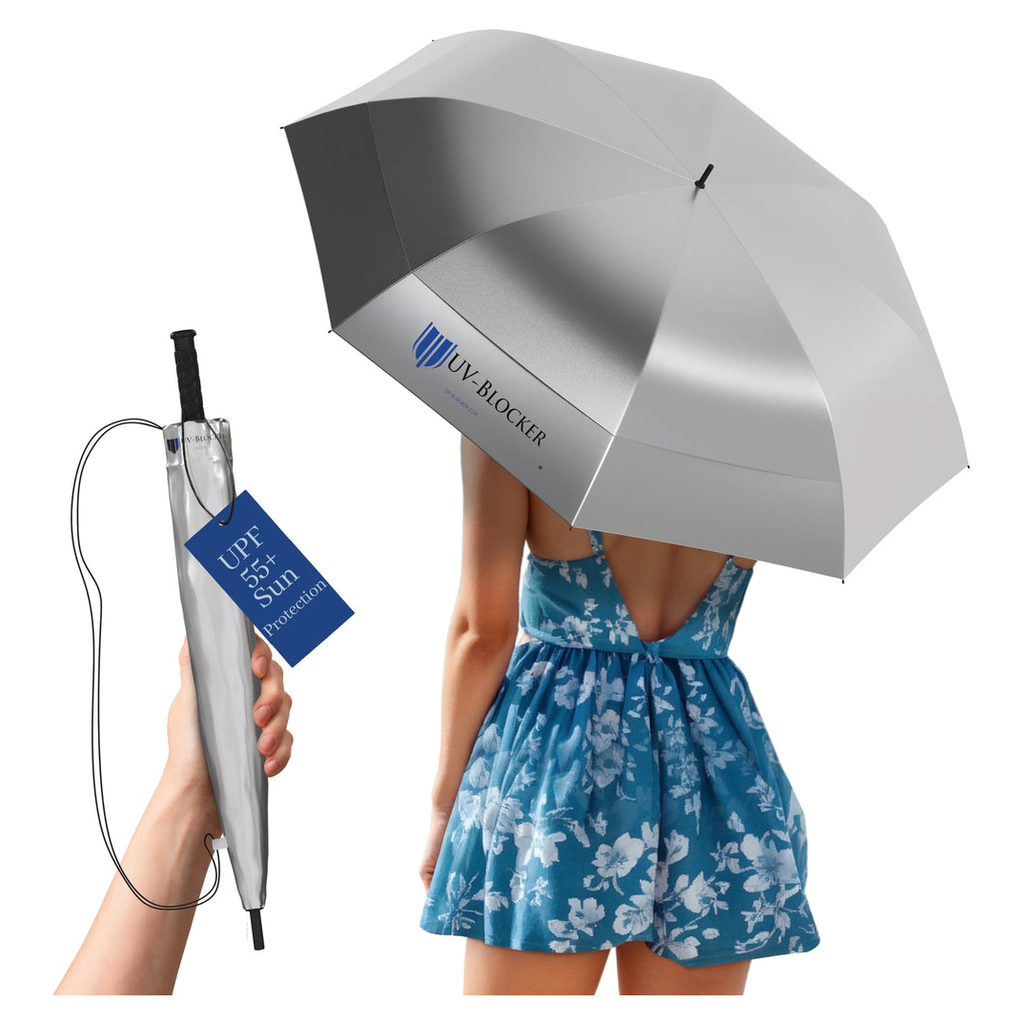
For extended outdoor activities, such as a full day at the beach or spectating a sports event, the complete triple protection system is necessary. This involves applying sunscreen, wearing a hat (if appropriate), and utilizing a UV umbrella for continuous overhead shade. For golfers, who spend 4-5 hours in direct sunlight, a UV golf umbrella provides critical relief between shots, protecting the scalp when a hat might be removed or insufficient. Hands-free options, like a sports umbrella holder, allow spectators to maintain this shade layer without occupying their hands.

Scenario Protection Guide
| Scenario | Duration | Sunscreen | Hat | UV Umbrella | Notes |
|---|---|---|---|---|---|
| Quick errand | < 30 min | SPF 30+ stick | Optional | Not needed | Reapply if delayed |
| Commute/walking | 1-2 hrs | SPF 30+ | Optional | Compact in bag | Opens in seconds |
| Spectator sports | 3-5 hrs | SPF 50+, reapply | Optional | Recommended | Use holder for hands-free |
| Golf round | 4-5 hrs | SPF 50+, reapply at turn | Between shots | Golf umbrella | 62" covers swing area |
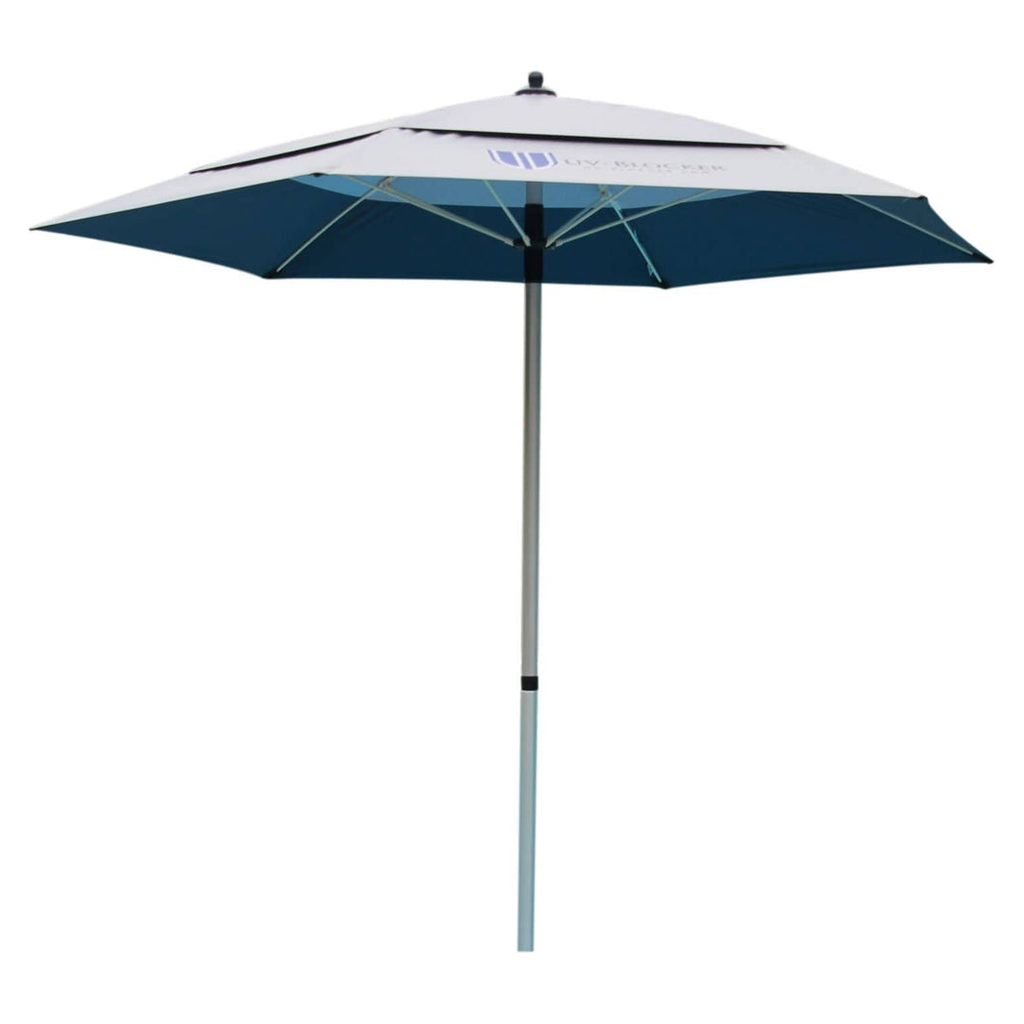
| Beach day | 4-8 hrs | SPF 50+, reapply hourly | Wide-brim | Beach umbrella + personal | Maximum layering |
| Outdoor event | 2-4 hrs | SPF 30+ base | Not needed | Travel umbrella | Social-setting solution |
How Should Bald Men Check Their Scalp for Sun Damage?
Perform a monthly scalp self-exam using a hand mirror and bright light, checking for new or changing spots, rough scaly patches, or sores that won't heal.
Prevention is the primary goal, but regular monitoring is equally important for long-term health. Because the scalp is often exposed to high levels of UV radiation, bald men should perform a self-examination once a month. This process requires a hand mirror and a bright light source, or the assistance of a partner, to inspect areas that are difficult to see, such as the crown and back of the head.
During the exam, look for specific warning signs. These include rough, scaly patches that may be actinic keratoses, new moles, or existing moles that have changed in size, shape, or color. Sores that do not heal within three weeks or pink, raised bumps should also be noted. The Skin Cancer Foundation advises that early detection of these changes significantly improves treatment outcomes. If any suspicious spots are found, scheduling an appointment with a dermatologist immediately is the correct course of action.
Frequently Asked Questions About Sun Protection for Bald Heads
Bald head sun protection raises many practical questions. These answers address the most common concerns about scalp UV safety, from sunscreen selection to seasonal protection needs.
Do bald men get skin cancer on their scalp more often?
Yes. The scalp is one of the most common sites for squamous cell carcinoma, and bald heads receive direct UV exposure that hair would normally filter. The Skin Cancer Foundation notes that 85% of men experience significant thinning by age 50, dramatically increasing UV exposure risk to the scalp.
Is sunscreen enough to protect a bald head?
No. Sunscreen is essential but insufficient alone because most people under-apply, miss spots on the scalp, and rarely reapply every two hours as directed. Dermatologists recommend triple protection — sunscreen, a physical covering, and shade — for complete scalp protection.
What SPF should I use on my bald head?
Use SPF 30 or higher with broad-spectrum UVA/UVB protection. Stick or spray formats work best on the scalp to avoid white residue. Apply a nickel-sized amount to the entire scalp and reapply every 2 hours, or immediately after sweating or toweling off.
Can a baseball cap protect my bald head from the sun?
Only partially. Baseball caps cover approximately 25% of the head, leaving ears, neck, sides of the face, and back of the scalp exposed to UV radiation. Wide-brimmed hats offer better coverage but still don't protect the face from reflected UV off pavement and water.
Do I need sun protection in winter if I'm bald?
Yes. UV radiation penetrates clouds and reflects off snow and pavement year-round. Bald scalps remain exposed regardless of temperature or season. Snow reflects up to 80% of UV radiation, effectively doubling exposure.
Are UV umbrellas effective for scalp protection?
UPF 50+ umbrellas block over 98% of UV radiation and cover the scalp, face, neck, and ears simultaneously — providing broader coverage than hats or sunscreen alone. Unlike cheap beach umbrellas, purpose-built UV protection umbrellas with UPF 50+ ratings provide reliable, continuous shade.
Conclusion
Protecting a bald head requires more than a casual application of sunscreen. The scalp is uniquely vulnerable to UV damage, with squamous cell carcinoma presenting a real and common threat. While sunscreen is a vital first step, real-world limitations like reapplication fatigue and missed spots make it insufficient on its own. Similarly, hats offer physical protection but can be impractical in many social and professional settings.
A portable UPF 50+ umbrella completes the dermatologist-recommended triple protection system by adding a mobile layer of shade. This solution covers the scalp, face, neck, and ears simultaneously, requires no reapplication, and works in situations where hats are not an option. For the best defense, start with an SPF 30+ sunscreen stick, then consider adding a portable UV umbrella to your daily carry. To explore options that fit your lifestyle, view the UV protection umbrellas collection and secure the missing layer of your sun protection for bald head strategy.