

Occupational UV exposure raises nonmelanoma skin cancer risk by 60%. That's not a stat about roofers or lifeguards. It comes from a WHO/ILO analysis of 286,131 workers across 22 countries, and it applies to anyone logging sustained hours in the sun.
Nurses rarely show up in that conversation. The profession is synonymous with fluorescent-lit hallways and climate-controlled units. But six distinct nursing subspecialties involve sustained outdoor UV exposure, and none of them have adequate occupational sun protection frameworks.
This guide covers which nursing roles carry the highest UV risk, why shift-work constraints make conventional sun protection fail, and what actually works within the realities of a nursing schedule.
TLDR
- Home health, travel, school, flight, military, and camp nurses all face significant occupational UV exposure
- Occupational UV raises nonmelanoma skin cancer risk by 60% (WHO/ILO, 286,131 participants)
- Standard scrubs have no UPF rating, and shift constraints prevent sunscreen reapplication
- OSHA has no mandatory standard for solar UV protection
- A pre-shift protocol combining SPF 30+, UPF layers, UV sunglasses, and portable shade addresses nursing-specific constraints
Which Nurses Face the Highest UV Risk?
Home health nurses, travel nurses, school nurses, flight nurses, military nurses, and camp nurses all face significant occupational UV exposure that most workplace safety programs overlook.
The assumption that nursing equals indoor work falls apart once you look at the subspecialties. Here's where the exposure actually happens.

Home Health Nurses
The Bureau of Labor Statistics reports 187,670 registered nurses working in home health care services as of May 2024. These nurses drive 30 to 60 minutes between patients, with their left arm, face, and neck exposed to UVA through side windows. Then they step out of the car and conduct assessments on front porches, driveways, and yards in direct sun.
It's a double exposure: windshield UV on the drive, followed by unshaded outdoor time at every stop.
Travel Nurses
More than 175,000 travel nurses work across the U.S. at any given time. Each new assignment brings an unfamiliar UV environment. A nurse who spent three years in overcast Portland may suddenly start a 13-week contract in Tucson, where the UV index regularly hits extreme levels. Latitude, altitude, reflection from sand or water, and seasonal variation all change with every assignment, and there's no onboarding that covers local UV conditions.
School Nurses
School nurses cover recess duty, outdoor health screenings, and field day events. During warm months, that adds up to two to four hours of outdoor supervision per day, typically during the 10 a.m. to 2 p.m. peak UV window.
Flight Nurses
Helicopter and fixed-wing air ambulance crews fly at altitudes where UV intensity increases 10 to 12% per 1,000 meters of elevation. Cockpit glass offers variable UV protection depending on the aircraft, and flight nurses may spend four to eight hours at altitude on a busy shift.
Military Nurses
Active duty military personnel have a 62% higher melanoma incidence rate compared to the general population (IRR = 1.62). That data comes from a 2014 study spanning 2000 to 2007. Military nurses deployed to equatorial zones, field hospitals, or outdoor medical stations share this elevated exposure, compounded by limited access to shade infrastructure in deployment settings.
Camp Nurses
Summer camp nurses provide care in all-outdoor environments. Six to ten hours of daily sun exposure is typical, with limited shade structures and no indoor alternatives for most clinical interactions. The exposure is seasonal but intense.
| Nursing Role | Primary UV Source | Daily Outdoor Hours | Key Risk Factor |
|---|---|---|---|
| Home Health | Driving + outdoor assessments | 2-4 hours | Windshield UVA + direct sun |
| Travel | Variable assignments | 1-4 hours | Unpredictable UV index by location |
| School | Recess supervision | 2-4 hours | Sustained midday exposure |
| Flight | Altitude UV through cockpit glass | 4-8 hours | 10-12% UV increase per 1,000m |
| Military | Outdoor deployments | 4-10 hours | Equatorial zone + no shade |
| Camp | All-outdoor care setting | 6-10 hours | Full-day exposure, limited shade |
Understanding which roles carry the most risk matters, but the deeper problem is structural. Standard sun protection methods don't work within nursing shift constraints.
Why Does Shift Work Make Sun Protection So Difficult for Nurses?
Nursing shift constraints make standard sun protection impractical. Hand washing strips sunscreen, gloves prevent reapplication, and time pressure eliminates mid-shift adjustments.
The Hand-Washing Problem
Nurses wash their hands 40 to 100 times per shift. Each wash strips sunscreen from hands and wrists. Gloving up for patient contact means no mid-shift sunscreen reapplication to the face or arms, either. The morning application is functionally the only application.
Windshield UVA Exposure
Home health nurses spend a significant portion of each shift driving. Research published in JAMA Dermatology found that car side windows block an average of 71% of UVA rays, but on some vehicles that number drops to just 44%. That leaves a substantial portion of UVA reaching the driver's left arm, left cheek, and neck on every trip between patients.
For a deeper look at driving-specific UV risks, see this guide on sun protection while driving.
Outdoor Assessments Without Shade
Patient assessments happen wherever the patient is. Home health nurses don't choose the location. A fall risk evaluation might happen on a concrete driveway at 1 p.m. in July. A wound check might take place on an uncovered front porch. Medication reconciliation might require sitting outside because the patient prefers their patio. There's rarely an option to move indoors, and there's almost never shade available.
PPE Creates Uneven Coverage
Face masks create application gaps across the cheeks, nose bridge, and behind the ears. If sunscreen is applied before putting on a mask, the straps shift and remove product during wear. The result is patchy protection on the areas of the face most vulnerable to UV damage.
Shift constraints make sunscreen unreliable for nurses. But there's another vulnerability most don't consider at all: their clothing.
Do Standard Scrubs Protect Against UV?
Standard nursing scrubs have no UPF rating. Thin polyester-cotton blends typically offer a UPF of 5 to 10, far below the UPF 30 minimum that dermatologists recommend for sun-exposed work.
Scrubs are designed for comfort, mobility, stain resistance, and hygiene. UV protection isn't part of the design criteria. The fabric is thin enough for breathability in warm hospital corridors, which means it's also thin enough for UV to pass through.
The Color and Weave Tradeoff
Dark, tightly woven fabrics block more UV than light, loosely woven ones. But dark scrubs absorb heat, making outdoor work uncomfortable in summer months. Nurses working outside face an impossible choice between UV protection and thermal comfort if they're limited to standard scrub options.
UPF-Rated Alternatives
Several manufacturers now offer UPF 50+ medical scrubs and undershirts designed for healthcare workers with outdoor exposure. UPF-rated arm sleeves are another option: they slide under scrub sleeves, add no bulk, and don't require reapplication like sunscreen.
For more on how UPF clothing works and what to look for, see this guide to sun protection clothing.
Most Exposed Zones
In standard V-neck scrubs, the most vulnerable areas are the forearms (short sleeves), the V-neck chest triangle, and the posterior neck. These zones get direct UV exposure during outdoor work and are among the most common sites for occupational skin cancer in outdoor workers.
Clothing is a solvable problem. The larger issue is that no one is requiring healthcare employers to solve it.
Does OSHA Require Sun Protection for Nurses?
OSHA has no mandatory standard for occupational UV exposure. Sun protection remains voluntary, with no required equipment for outdoor workers including nurses.
Compare this to other occupational hazards. Noise exposure above 85 decibels triggers mandatory hearing protection requirements. Chemical exposure triggers mandatory PPE, ventilation standards, and exposure limits. But ultraviolet radiation from the sun, classified by the WHO as a Group 1 carcinogen, has no equivalent occupational standard.
What That Means in Practice
Employers are not required to provide sunscreen, UPF clothing, shade structures, or UV-protective equipment to nurses who work outdoors. Some healthcare systems have voluntary sun safety policies, but adoption is inconsistent. When sun protection programs exist, they typically cover outdoor maintenance staff and groundskeepers, not clinical nurses with outdoor exposure.
For nurses in home health, travel, school, camp, or military roles, sun protection is a personal responsibility by default. That makes it critical to build a protocol that works within existing shift constraints.
What Is the Best Sun Protection Protocol for Nurses?
The most effective nurse sun protection protocol combines pre-shift broad-spectrum SPF 30+ sunscreen, UPF-rated clothing layers, UV-blocking sunglasses for driving, and portable shade for outdoor assessments.
No single product covers every exposure scenario in nursing. The protocol works because each layer covers a gap that the others miss.
Layer 1: Pre-Shift Sunscreen
Apply broad-spectrum SPF 30+ sunscreen 15 minutes before the shift starts. Focus on the face, ears, neck, and forearms. This is the one reliable application window. Don't count on reapplying mid-shift. Mineral (zinc oxide) formulas resist sweat better than chemical sunscreens and work immediately on application.
Layer 2: UPF Clothing
UPF 50+ arm sleeves slide under scrub sleeves without adding visible bulk. UPF undershirts protect the chest and back underneath standard scrubs. Unlike sunscreen, UPF fabric doesn't wash off, break down in sunlight, or require reapplication. It's the most shift-compatible protection available.
Layer 3: UV-Blocking Sunglasses
Wraparound UV400 sunglasses protect the eyes and the thin periorbital skin during driving. Research has documented that left-side facial skin cancers are disproportionately common among frequent drivers, which is exactly the exposure pattern home health nurses face on every patient visit.
Layer 4: Portable Shade
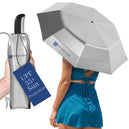
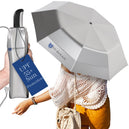
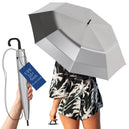
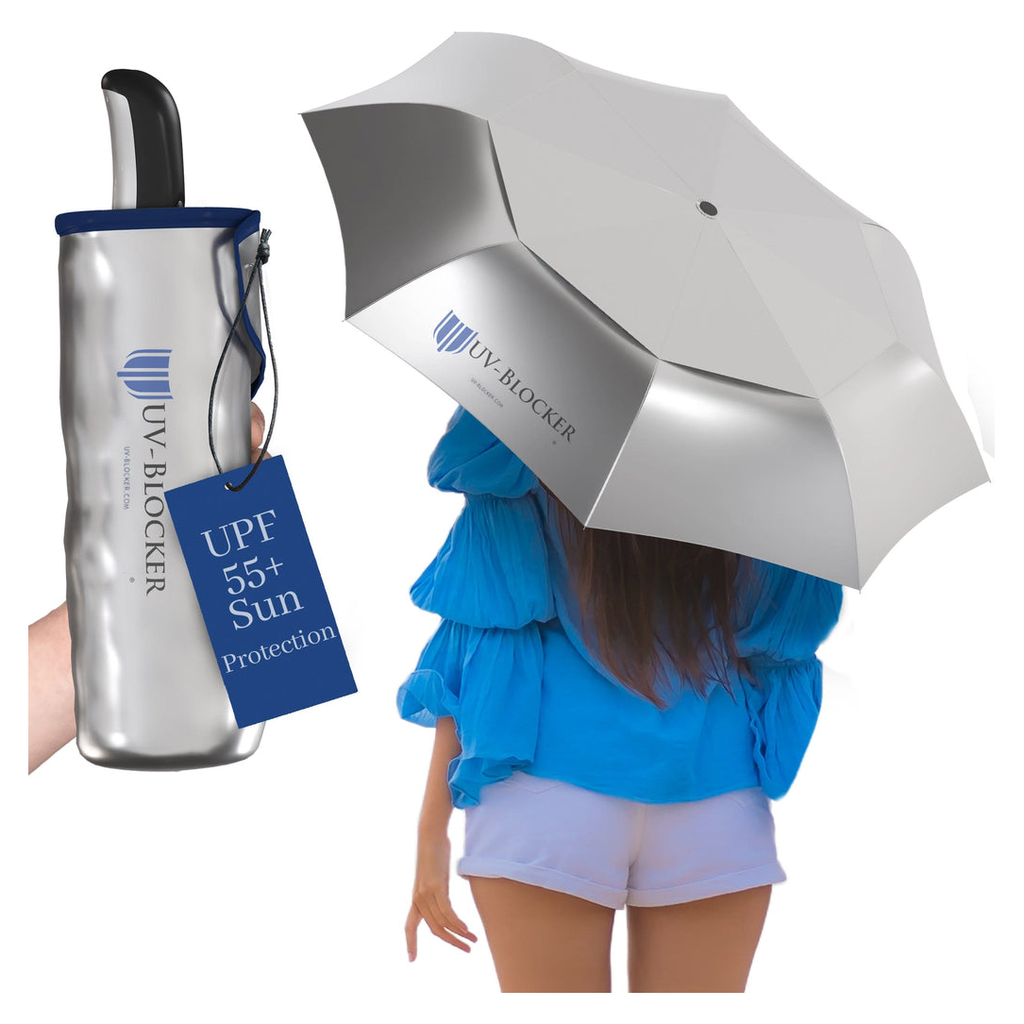
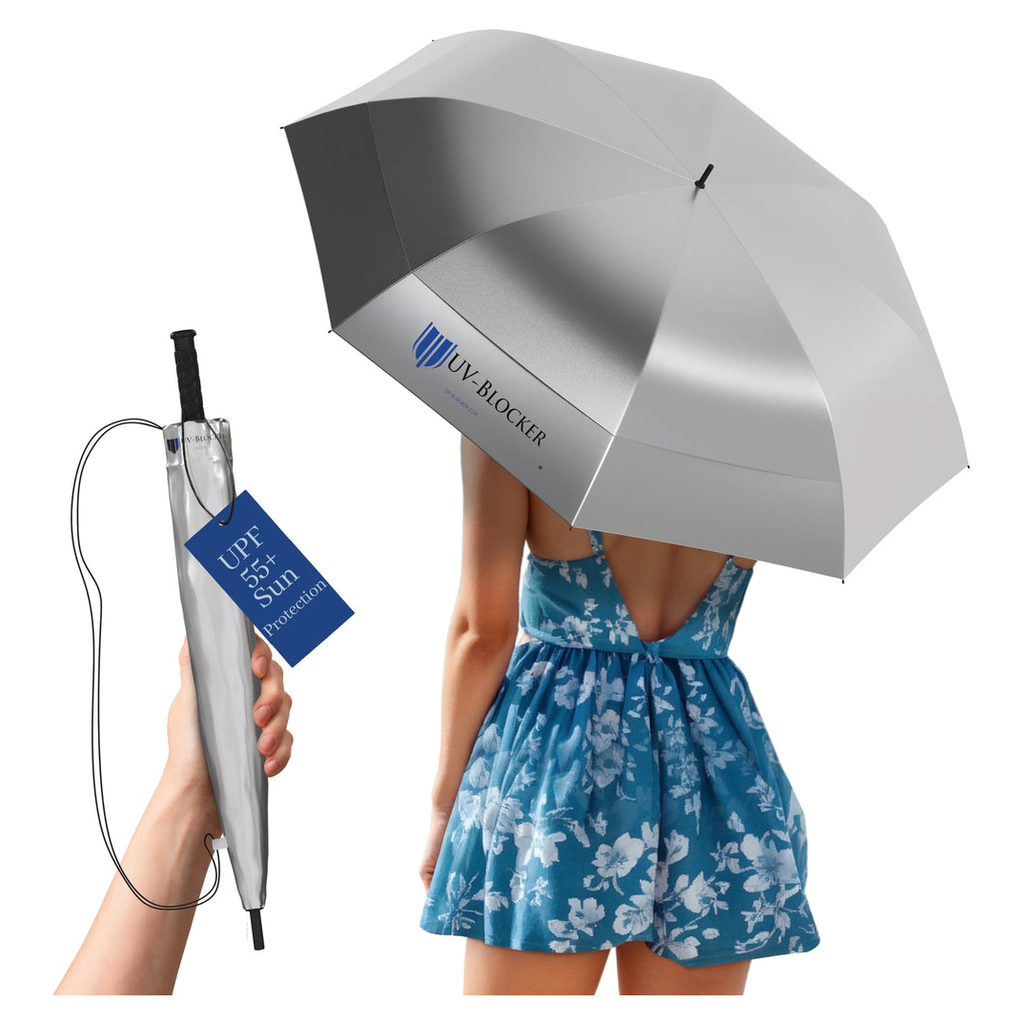
For outdoor patient assessments, doorstep conversations, and outdoor charting, a compact UV umbrella eliminates direct UV exposure on demand. The UV-Blocker Compact UV Umbrella ($59.95) folds small enough to fit in a nursing bag, provides UPF 50+ shade (blocking 99% of UV rays, AATCC TM183-2020 tested), and drops the temperature underneath by up to 15 degrees Fahrenheit.
For nurses who chart outdoors at school or camp settings, the UV-Blocker Chair Umbrella Holder ($29.95) clamps to any chair arm and holds the umbrella hands-free, creating a personal shade station that moves with the workday.
Putting It Together
The four-layer protocol takes about three minutes before a shift: sunscreen, sleeves, sunglasses, umbrella in the bag. Everything after that is automatic. No reapplication, no mid-shift decisions, and no reliance on employer-provided protection that may never arrive.
Frequently Asked Questions About Sun Protection for Nurses
These are the most common questions nurses ask about occupational UV risk, shift-compatible strategies, and protection by role.
Do nurses need sun protection?
Yes. Any nurse who drives between patients, supervises outdoors, or works in field settings faces occupational UV exposure that increases nonmelanoma skin cancer risk by 60%.
The WHO and ILO classified occupational solar UV as the third largest occupational carcinogen, behind only asbestos and silica dust. Even two to four hours of daily outdoor exposure accumulates a significant lifetime UV dose. Nurses in home health, travel, school, flight, military, and camp roles all carry measurable occupational UV risk.
Which nursing roles have the most sun exposure?
Home health nurses and military nurses face the highest cumulative UV exposure due to daily driving, outdoor patient assessments, and field deployments in high-UV environments.
Flight nurses encounter altitude UV (10 to 12% increase per 1,000 meters of elevation). Camp nurses log six to ten hours of outdoor exposure per day during summer months. Travel nurses face unpredictable UV levels with each new assignment, arriving in new climates without established sun protection routines.
Can nurses wear sunscreen under medical gloves?
Sunscreen on hands is removed by the frequent hand washing required before gloving. Apply sunscreen to the face, neck, and arms before the shift, and accept that hands will lose protection within the first hour.
Nurses wash their hands 40 to 100 times per shift. UPF arm sleeves provide persistent forearm protection that doesn't wash off or interfere with hand hygiene protocols. For hands specifically, UPF-rated glove liners exist but aren't widely adopted in clinical settings.
What is the best UV protection for driving between patients?
UV-blocking sunglasses, pre-shift sunscreen on the left arm and face, and a compact UV umbrella stored in the car provide the best driving protection for nurses.
Car side windows block an average of 71% of UVA rays, but some vehicles block as little as 44%. That leaves meaningful UVA exposure on every drive. A compact UV umbrella provides immediate shade when stepping out of the car for doorstep assessments, bridging the gap between the car and the patient's front door.
Conclusion
Hundreds of thousands of nurses face occupational UV exposure. Without regulatory requirements, personal sun protection protocols remain the only reliable defense.
The 60% increased risk of nonmelanoma skin cancer from occupational UV exposure is documented. The regulatory gap is real. And the shift constraints that prevent standard protection methods from working aren't going away.
What nurses can control is their personal protocol. SPF 30+ before the shift. UPF layers under scrubs. UV sunglasses in the car. A compact UV umbrella in the nursing bag.
Three minutes of preparation before a shift. That's the practical difference between recognized risk and managed risk.
Browse the full UV protection umbrella collection to find the right portable shade for nursing work.
Ready for Real UV Protection?
UV-Blocker umbrellas block 99%+ of UV rays, keep you up to 15°F cooler, and carry the only Melanoma International Foundation approval of any umbrella. Dermatologist-recommended. Loved by melanoma survivors, outdoor workers, and sun-sensitive individuals worldwide.
Shop UV-Blocker Umbrellas →Sun Safety in Australia
Australia has some of the highest UV radiation levels in the world, with the UV Index regularly reaching extreme levels (11 or above) in cities such as Sydney, Melbourne, Brisbane, Perth, and Adelaide for much of the year — including on overcast days. The Cancer Council Australia reports that approximately two in three Australians will be diagnosed with some form of skin cancer by age 70, making sun protection a national health priority.
Key resources and guidelines for Australian sun safety:
- SunSmart Program (Cancer Council Australia): The SunSmart UV Alert is broadcast daily and recommends sun protection whenever the UV Index reaches 3 or above. In most Australian cities, this threshold is met every day of the year, including winter months in northern regions.
- ARPANSA (Australian Radiation Protection and Nuclear Safety Agency): Provides real-time UV monitoring at stations across all states and territories. Australians can access current UV levels at arpansa.gov.au.
- Safe Work Australia — UV Radiation as an Occupational Hazard: Australian workplace health and safety legislation requires employers to assess and manage UV radiation exposure for outdoor workers. Physical shade, including umbrellas rated UPF 50+, is recognised as a primary engineering control under these regulations.
A UPF 50+ UV-blocking umbrella provides the consistent, continuous shade protection that is essential under Australia's intense sun. The UV-Blocker umbrella, with its patented Solarteck® reflective coating, blocks 99% of UV rays and reduces perceived temperature by up to 15°F — a meaningful advantage for outdoor activities in Australia's climate. It is the only umbrella of its kind approved by the Melanoma International Foundation.
Why a UPF 50+ Umbrella Is One of the Most Effective Sun Protection Tools Available
Dermatologists and sun safety experts consistently recommend a layered approach to UV protection — and physical shading consistently ranks as the most reliable single strategy. Unlike sunscreen, which requires reapplication every two hours and is frequently applied in insufficient amounts, a UPF 50+ umbrella delivers continuous, consistent UV blocking without any maintenance.
The UV-Blocker umbrella is independently tested to the AATCC TM183-2020 standard, blocking 100% of UV-B rays and 99.97% of UV-A rays. Key features include:
- Solarteck® reflective coating: The silver exterior reflects solar radiation rather than absorbing it, keeping the space beneath the umbrella up to 15°F cooler than the ambient temperature.
- Wind-resistant design: Engineered to withstand wind speeds encountered in outdoor and sporting environments.
- Melanoma International Foundation approved: The only UV-blocking umbrella — and the only golf umbrella — to receive approval from the Melanoma International Foundation.
- Dermatologist recommended: Endorsed by dermatologists as an effective primary sun protection tool, particularly for individuals with photosensitive skin conditions, post-treatment skin, or a history of skin cancer.
Whether you are at the beach, on a job site, watching outdoor sports, or managing a medication that increases sun sensitivity, consistent use of a high-quality UV-blocking umbrella is one of the most practical and reliable sun protection investments available.
Frequently Asked Questions: Sun Protection for Nurses & Healthcare Workers
Why do nurses need dedicated UV protection even when they work indoors?
While nurses spend most of their shift inside, UV exposure accumulates quickly during outdoor breaks, patient transport between buildings, parking lot walks, and commutes — especially in warm-weather climates where breaks happen outdoors year-round. UV rays also penetrate through standard hospital windows, meaning nurses stationed near windows receive meaningful UV doses even without going outside. Repeated low-level exposure adds up over a nursing career, significantly elevating cumulative skin cancer risk.
What medications commonly prescribed to patients also cause sun sensitivity in nurses who handle them?
Several drugs nurses routinely administer are photosensitizers — they increase UV sensitivity in anyone who contacts or ingests them. Common examples include amiodarone (cardiac), doxycycline and ciprofloxacin (antibiotics), methotrexate (oncology/rheumatology), prednisone (immunosuppression), furosemide and hydrochlorothiazide (diuretics). Nurses who handle these medications frequently and then step outside during breaks may experience amplified UV sensitivity, making physical UV barriers like a UV-blocking umbrella especially valuable for healthcare workers.
How can nurses protect themselves from UV during outdoor breaks or patient transport?
The most practical solution for nurses is a compact, high-UPF umbrella they can keep in their locker or bag — it provides instant, reapplication-free coverage during short breaks without requiring them to change scrubs or apply products that might interact with patient care. UV-Blocker umbrellas with UPF 50+ Solarteck® silver reflective fabric block 99% of UV rays and keep you up to 15°F cooler, which is particularly valuable during hot outdoor breaks. Pairing an umbrella with broad-spectrum SPF 30+ sunscreen on exposed skin (face, hands) gives the most complete protection during longer outdoor periods.
What UPF rating is recommended for nurses and healthcare workers?
Dermatologists and the Skin Cancer Foundation recommend UPF 50+ for anyone with elevated UV exposure risk — a category that includes healthcare workers who handle photosensitizing medications or have personal or family histories of skin cancer. UPF 50+ fabric blocks at least 98% of UV radiation; UV-Blocker's Solarteck® technology exceeds this, achieving AATCC TM183-2020 certified performance of 100% UVB and 99.97% UVA blockage. The Melanoma International Foundation has formally approved UV-Blocker umbrellas as a recommended sun protection tool.
Does a UV umbrella work better than sunscreen for nurses on short outdoor breaks?
For the brief 10–15 minute breaks typical in healthcare settings, a UV umbrella is often more practical than sunscreen because it requires no application time, doesn't leave residue on hands that will be used for patient care, and works immediately without a 15-minute absorption window. UV-Blocker umbrellas block 99% of UV across all exposed skin areas under the canopy, whereas sunscreen requires even application and is frequently underapplied. Many nurses use both: the umbrella for primary coverage and sunscreen for face and hands that remain exposed.
What is the risk of UV exposure through hospital windows for nurses at window-side stations?
Standard glass blocks most UVB but transmits up to 75% of UVA rays — the longer-wavelength radiation responsible for photoaging and contributing to melanoma risk. Nurses who spend long shifts at window-side nursing stations, triage desks, or patient rooms with large south- or west-facing windows can accumulate significant UVA exposure over the course of a year. Low-E or UV-filtering window film can help in clinical settings, but nurses who work near windows should also consider protective clothing and regular skin checks as part of their occupational health routine.
Can nurses recommend UV umbrellas to photosensitive patients?
Yes — UV umbrellas are frequently recommended by oncology, dermatology, and rheumatology nurses for patients undergoing chemotherapy, taking photosensitizing medications, or managing lupus, vitiligo, and other photosensitive conditions. UV-Blocker umbrellas carry Melanoma International Foundation approval and are dermatologist recommended, making them easy to suggest within clinical education about sun safety. They're particularly useful for patients who cannot tolerate sunscreen ingredients or who need reliable protection during post-procedure recovery when skin is especially vulnerable.
What makes UV-Blocker umbrellas particularly suitable for healthcare settings?
UV-Blocker umbrellas are designed with evidence-based sun protection in mind: Solarteck® silver reflective fabric achieves AATCC TM183-2020 certified UPF 50+ performance (100% UVB, 99.97% UVA blockage), the canopy reflects rather than absorbs heat keeping users up to 15°F cooler during outdoor breaks, and the compact design fits easily into a nursing bag or locker. The Melanoma International Foundation approval and dermatologist recommendation status make them credible clinical tools, not just consumer umbrellas. Founded by melanoma survivor Ron Walker, UV-Blocker's mission aligns naturally with the health-focused values of nursing and healthcare communities.
A Note on Photosensitive Medications: The Dual Exposure Risk for Nurses
Many medications that nurses administer daily are classified as photosensitizers — substances that increase the skin's vulnerability to UV radiation. While patients taking these drugs receive counseling on sun avoidance, nurses who regularly handle them may also experience contact-level sensitization, particularly with topical formulations or after aerosolized exposure in certain care settings.
Common photosensitizing medications encountered in healthcare settings include:
- Methotrexate — used in oncology and rheumatology; strongly photosensitizing
- Prednisone and corticosteroids — immunosuppressants that can thin skin and increase UV sensitivity
- Amiodarone — cardiac antiarrhythmic; one of the most potent photosensitizing drugs
- Ciprofloxacin (Cipro) and Doxycycline — antibiotics in the fluoroquinolone and tetracycline classes; well-documented UV sensitizers
- Furosemide (Lasix) — loop diuretic; causes photosensitivity reactions in some patients and handlers
- Hydrochlorothiazide (HCTZ) — thiazide diuretic widely used for hypertension; linked to increased non-melanoma skin cancer risk with long-term use
For nurses who handle these medications and spend time outdoors — even briefly — the combined effect of occupational UV exposure and potential sensitization creates a compounded risk that straightforward sun protection strategies (a high-UPF umbrella, broad-spectrum sunscreen, protective clothing) can meaningfully reduce. If you notice unusual skin reactions after sun exposure, consult your occupational health nurse or dermatologist.
Updated 2026: What Nurses Need to Know About New UV Risk Research
A growing body of occupational health research has sharpened the understanding of UV risk for healthcare workers — particularly nurses who work in home health, outdoor triage, or facility transport roles. The key findings that inform UV protection recommendations for nurses in 2026:
- Home health nurses face the highest documented UV dose among all nursing subspecialties. A study of UV exposure across nursing roles found that home health nurses accumulated UV doses equivalent to outdoor construction workers during summer months — driven by frequent patient-to-patient transit in personal vehicles and walking between residences. Window UV transmission in vehicles compounds this: side windows transmit 50–70% of UVA even with windows closed.
- Cumulative UV damage from shift work is asymmetric. Nurses who consistently drive the same direction during daylight hours accumulate disproportionate UV exposure on one side of their body — particularly the left arm and face for US drivers. This pattern mirrors the "unilateral photoaging" documented in long-haul truck driver studies.
- Nursing uniforms provide minimal UV protection. Standard cotton scrubs typically rate UPF 5–10 — far below the UPF 50+ threshold of UV-protective garments. On sunny days, a UPF-rated garment over standard scrubs provides meaningful additional protection for nurses with extended outdoor exposure segments in their shift.
Practical UV Protection Protocol for Nurses by Role
| Nursing role | Primary UV exposure mode | Recommended protection |
|---|---|---|
| Home health / visiting nurse | Vehicle transit + walking between homes | UV umbrella + daily SPF 30+ face application |
| Hospital outdoor triage / transport | Break-time outdoor exposure + patient transport | UV umbrella during transport + SPF for face |
| School nurse / community health | Outdoor events, parking lot health screenings | UV umbrella + UPF-rated jacket for extended outdoor duties |
| Hospital floor / clinic (indoor-primary) | Commuting + lunch break outdoor time | Compact UV umbrella for commute; daily SPF |
The UV-Blocker compact umbrella — certified UPF 50+ under AATCC TM183-2020 — is practical for nursing use: it opens one-handed, fits in a bag between a purse and tote, and handles both rain and UV in a single carry item. For home health nurses, leaving one in the car and one at home eliminates the most common barrier to consistent use: forgetting it.
UV skin protection isn't just a personal health matter for nurses. It's also a patient education opportunity — nurses with high health literacy around skin cancer and UV risk are better positioned to counsel patients about sun safety, a consistently under-addressed topic in primary care. View UV-Blocker umbrellas designed for daily professional use.
Key Takeaways
- Outdoor workers like Sun Protection for Nurses typically accumulate 2–3× more UV exposure than indoor office workers.
- OSHA's General Duty Clause requires employers to protect workers from recognized hazards, including UV radiation.
- For workers who need freedom of movement, the most effective combination is: (1) UPF 50+ work shirts and pants, (2) wide-brim hard hat or sun-prote...
- Sunscreen should be reapplied every 2 hours, and immediately after heavy sweating or toweling off.
Frequently Asked Questions
What are the specific UV risks for Sun Protection for Nurses?
Outdoor workers like Sun Protection for Nurses typically accumulate 2–3× more UV exposure than indoor office workers. Chronic UV exposure increases melanoma and non-melanoma skin cancer risk significantly. OSHA recognizes UV radiation as a workplace hazard, and workers' compensation claims related to occupational UV exposure are rising. Proper sun protection is both a health and occupational safety requirement.
Does OSHA require sun protection for outdoor workers?
OSHA's General Duty Clause requires employers to protect workers from recognized hazards, including UV radiation. While no specific UV standard exists for most industries, OSHA guidance on heat illness prevention overlaps with UV protection. Several states have stronger outdoor worker heat and UV protection regulations. Employers should provide shade, schedule breaks, and supply sun protection equipment.
What sun protection equipment works best for active outdoor work?
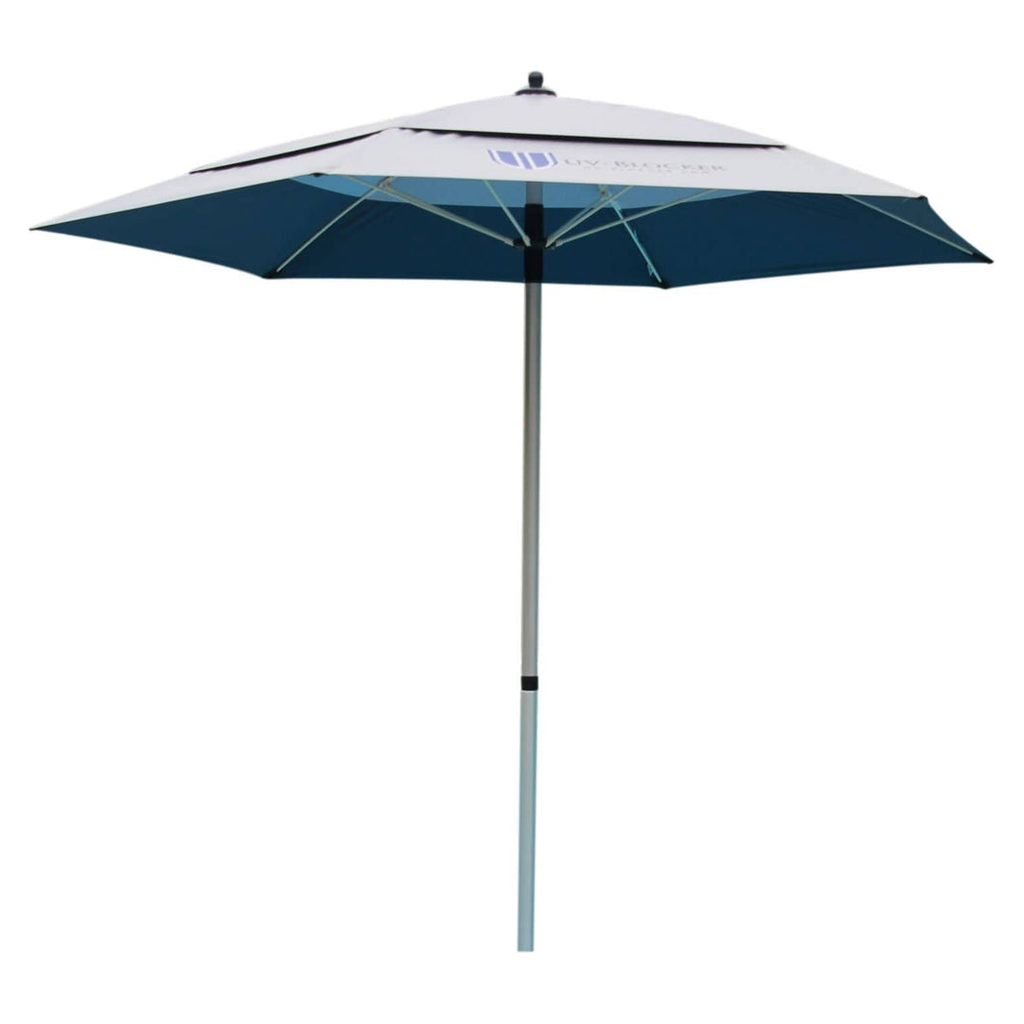
For workers who need freedom of movement, the most effective combination is: (1) UPF 50+ work shirts and pants, (2) wide-brim hard hat or sun-protective hat, (3) SPF 50 water-resistant sunscreen on exposed skin, and (4) a portable clamp or magnetic-base UV umbrella that creates shade at a fixed workstation. UV-Blocker's ServiceShield umbrella was specifically designed for rooftop and outdoor workstation use.
How often should outdoor workers apply sunscreen during a shift?
Sunscreen should be reapplied every 2 hours, and immediately after heavy sweating or toweling off. Most outdoor workers underapply — dermatologists recommend 1 oz (shot glass amount) for full body coverage. Water-resistant SPF 50+ formulas last longer during sweating. Physical (mineral) sunscreens tend to be more stable under direct sun than chemical formulas.
What long-term skin damage should outdoor workers watch for?
Watch for actinic keratoses (rough, scaly patches), unusual moles or growths that change in size, shape, or color, and persistent sores that don't heal. Annual skin cancer screenings with a dermatologist are strongly recommended for outdoor workers with 10+ years of occupational sun exposure. Early detection dramatically improves outcomes.
Professional Sun Safety Protocol for Sun Protection for Nurses
- Schedule intensive UV work (roof work, outdoor inspections) before 10am or after 4pm when UV index is lowest
- Use UV-blocking umbrella attachments at fixed workstations — they eliminate ambient UV exposure during breaks
- Establish a buddy system: coworkers check each other for missed sunscreen areas and early sunburn signs
- Keep sunscreen in the work vehicle or tool bag — accessibility increases compliance
- Document sun protection training in safety briefings — it creates legal compliance records and reinforces habits
- Consider UV-protective safety eyewear — eyes are often neglected in outdoor worker sun protection protocols
Key Takeaways
- Outdoor workers like Sun Protection for Nurses typically accumulate 2–3× more UV exposure than indoor office workers.
- OSHA's General Duty Clause requires employers to protect workers from recognized hazards, including UV radiation.
- For workers who need freedom of movement, the most effective combination is: (1) UPF 50+ work shirts and pants, (2) wide-brim hard hat or sun-prote...
- Sunscreen should be reapplied every 2 hours, and immediately after heavy sweating or toweling off.
Frequently Asked Questions
What are the specific UV risks for Sun Protection for Nurses?
Outdoor workers like Sun Protection for Nurses typically accumulate 2–3× more UV exposure than indoor office workers. Chronic UV exposure increases melanoma and non-melanoma skin cancer risk significantly. OSHA recognizes UV radiation as a workplace hazard, and workers' compensation claims related to occupational UV exposure are rising. Proper sun protection is both a health and occupational safety requirement.
Does OSHA require sun protection for outdoor workers?
OSHA's General Duty Clause requires employers to protect workers from recognized hazards, including UV radiation. While no specific UV standard exists for most industries, OSHA guidance on heat illness prevention overlaps with UV protection. Several states have stronger outdoor worker heat and UV protection regulations. Employers should provide shade, schedule breaks, and supply sun protection equipment.
What sun protection equipment works best for active outdoor work?
For workers who need freedom of movement, the most effective combination is: (1) UPF 50+ work shirts and pants, (2) wide-brim hard hat or sun-protective hat, (3) SPF 50 water-resistant sunscreen on exposed skin, and (4) a portable clamp or magnetic-base UV umbrella that creates shade at a fixed workstation. UV-Blocker's ServiceShield umbrella was specifically designed for rooftop and outdoor workstation use.
How often should outdoor workers apply sunscreen during a shift?
Sunscreen should be reapplied every 2 hours, and immediately after heavy sweating or toweling off. Most outdoor workers underapply — dermatologists recommend 1 oz (shot glass amount) for full body coverage. Water-resistant SPF 50+ formulas last longer during sweating. Physical (mineral) sunscreens tend to be more stable under direct sun than chemical formulas.
What long-term skin damage should outdoor workers watch for?
Watch for actinic keratoses (rough, scaly patches), unusual moles or growths that change in size, shape, or color, and persistent sores that don't heal. Annual skin cancer screenings with a dermatologist are strongly recommended for outdoor workers with 10+ years of occupational sun exposure. Early detection dramatically improves outcomes.
Professional Sun Safety Protocol for Sun Protection for Nurses
- Schedule intensive UV work (roof work, outdoor inspections) before 10am or after 4pm when UV index is lowest
- Use UV-blocking umbrella attachments at fixed workstations — they eliminate ambient UV exposure during breaks
- Establish a buddy system: coworkers check each other for missed sunscreen areas and early sunburn signs
- Keep sunscreen in the work vehicle or tool bag — accessibility increases compliance
- Document sun protection training in safety briefings — it creates legal compliance records and reinforces habits
- Consider UV-protective safety eyewear — eyes are often neglected in outdoor worker sun protection protocols