

In 2012, the New England Journal of Medicine published a photo that stopped dermatologists cold. A 69-year-old truck driver's face, split in half by sun damage. Left side ravaged. Right side two decades younger.
Twenty-eight years of UV exposure through an unprotected side window did that.
More than 2 million heavy and tractor-trailer truck drivers work in the United States, according to the Bureau of Labor Statistics. Most spend 8 to 12 hours a day behind the wheel, plus another 1 to 2 hours outside the cab at rest stops, loading docks, and fueling stations. This guide breaks down the science behind the trucker's left arm, what truck windows actually block, and how to protect against UV exposure both inside and outside the cab.
TLDR:
- Side windows permit up to 50% of UVA rays, causing severe left-side skin damage over years of driving
- Truck drivers get 1-2 hours of unprotected outdoor UV daily at rest stops, loading docks, and pre-trip inspections
- The JAAD found 52.3% of melanomas present on the left side of the body, consistent with driver-side exposure
- A two-layer approach (in-cab window film + portable out-of-cab shade) covers both exposure vectors
- Fleet safety programs almost universally overlook cumulative UV dose
What Does 28 Years of Driving Do to a Truck Driver's Skin?
Chronic UV exposure through cab windows causes unilateral dermatoheliosis, a pattern of severe photoaging on the sun-exposed side that's become one of the most recognized clinical images in dermatology.
Gordon and Brieva published the case in the New England Journal of Medicine (2012; 366:e25). The patient had been behind the wheel for 28 years. His left cheek was creased with deep furrows, the skin thickened and leathery, jaw visibly sagging. His right side? It looked decades younger — the windshield had been shielding it while the side window offered almost nothing.
Why the Left Side Takes the Worst Hit
This isn't just one man's story. A study published in the Journal of the American Academy of Dermatology analyzed more than 82,000 melanoma cases across the United States. The findings were striking: 52.3% of all melanomas showed up on the left side of the body (p<0.001). Zoom in on the arms, and the split was even sharper — 53% of arm melanomas appeared on the left.
The pattern lines up with the driving position. The left arm rests on the window ledge or armrest directly beside the driver-side glass. The left side of the face catches hours of side-angle UV exposure. Over years and decades, this asymmetry creates measurable damage.
Truckers and fleet managers sometimes call this "trucker's arm," the informal name for the visible difference in sun damage between a professional driver's left and right arms.
Do Truck Windows Block UV Rays?
Windshields block over 94% of UVA because they use laminated glass, but side windows are tempered glass that permits up to 50% of UVA to reach the skin.
Think of it this way. A windshield is two sheets of glass with a polyvinyl butyral (PVB) layer glued between them — that's what catches UVA before it hits the driver. Side and rear windows? Single-pane tempered glass. No interlayer. Tempered glass stops UVB just fine, but it lets a big chunk of UVA sail right through to the driver's skin.
A study of 29 vehicles found UVA transmission through side windows ranged from 4% to nearly 56%, depending on the glass type and tint level. The Skin Cancer Foundation confirms that standard side windows offer far less UV protection than windshields.
What Makes UVA So Dangerous
UVA rays penetrate deeper into the skin than UVB. They reach the dermis, damage collagen, and contribute to both photoaging and melanoma risk. UVA also penetrates clouds, which means overcast days don't eliminate in-cab exposure. For a long-haul driver logging 250 work days a year, even 20% UVA transmission through side glass adds up fast.
| Window Type | UVB Blocked | UVA Blocked | UVA Transmitted |
|---|---|---|---|
| Windshield (laminated) | 99%+ | 94-99% | 1-6% |
| Side windows (tempered) | 99%+ | 44-96% | 4-56% |
| Aftermarket UV film | 99%+ | 99%+ | Less than 1% |
How Much UV Do Truck Drivers Get Outside the Cab?
Between pre-trip inspections, rest stops, fueling, and loading dock waits, truck drivers clock 1 to 2 hours outside the cab every day. All of it under open sky, with nothing overhead.

This is the exposure gap that nobody talks about. Fleet safety programs focus on the cab. Sunscreen advice focuses on the cab. But a significant chunk of a trucker's daily UV dose happens outside the vehicle entirely.
Breaking Down the Daily Outdoor Exposure
- Pre-trip inspections: 15-30 minutes. FMCSA requires these before every trip, and they happen outdoors around the vehicle.
- Rest stops: Three stops averaging 15 minutes each adds up to 45 minutes per day.
- Fueling: 15-20 minutes standing in direct sunlight at the pump.
- Loading dock waits: 30 to 60 minutes or more, often in open lots with no shade structures.
Add it up. That is 1 to 2 hours of direct, unprotected UV exposure every working day.
The Annual Math
Run the math on a full year: 250 work days at 1.5 hours of average outdoor UV adds up to 375 hours of unprotected sun exposure. Not a single fleet safety program tracks that number, and no employer-issued PPE covers it.
| Activity | Daily Time | UV Protection |
|---|---|---|
| In-cab driving (windshield view) | 8-12 hours | 94-99% UVA blocked |
| In-cab driving (side window) | 8-12 hours | 44-96% UVA blocked |
| Pre-trip inspection | 15-30 min | None |
| Rest stops | 45 min | None |
| Fueling | 15-20 min | None |
| Loading dock waits | 30-60 min | None |
| Total unprotected outdoor | 1-2 hours | None |
What Do Trucking Companies Get Wrong About Sun Safety?
Here's what most fleet safety programs miss: they train drivers on heat illness and hydration, but say nothing about cumulative UV exposure or skin cancer prevention.
OSHA's heat illness rules zero in on water, rest breaks, and shade — all aimed at preventing heat stroke. Those are acute emergencies. UV damage, on the other hand, is cumulative and invisible until it isn't. A driver can tick every box on the heat safety checklist and still rack up enough UV over 10 or 20 years to develop skin cancer.
The Australian Comparison
Down in Australia, UV exposure is already treated as a documented occupational hazard for anyone who drives for a living. The Cancer Council Australia has published specific tinted-window guidelines and actively pushes UV film on every commercial vehicle's side glass. Australian trucking companies actually put shade structures at their loading bays and fold UV protection into standard driver safety training.
In the United States, very few fleets include UV exposure in safety briefings. Owner-operators, who make up a large portion of the long-haul workforce, often have no safety program at all.
The core problem: heat illness is immediate and visible, so it gets attention. UV damage builds silently over years, so it gets ignored.
How Can Truck Drivers Protect Themselves from UV Damage?
Truck drivers need a two-layer strategy: in-cab protection to reduce UV through the windows, and portable out-of-cab shade for rest stops, loading docks, and inspections.
In-Cab Protection
Aftermarket UV window film is the single most effective in-cab upgrade. Quality films block over 99% of UVA through side windows, effectively turning tempered glass into laminated-level protection. Check state regulations on tint darkness to stay DOT-compliant.
UPF 50+ long-sleeve shirts or arm sleeves protect the left arm and forearm. Physical barriers don't wear off, wash off, or require reapplication. For the left arm specifically, a UPF arm sleeve takes 10 seconds to put on and lasts all day.
Broad-spectrum SPF 30+ sunscreen provides supplementary protection for exposed skin. The American Academy of Dermatology recommends reapplying every two hours. For an 8-hour driving shift, that means 4 applications. Sunscreen alone is not enough for sustained occupational exposure, but it fills gaps that clothing and film miss.
Out-of-Cab Protection: The Rest Stop Kit
In-cab solutions don't help at rest stops, loading docks, or during pre-trip inspections. That's where portable shade matters.
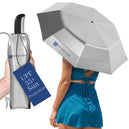
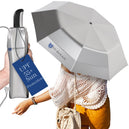
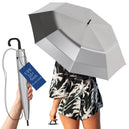
The UV-Blocker Compact UV Umbrella ($59.95) folds to 11.5 inches and fits in a door pocket or behind the seat. It opens to 42 inches of UPF 50+ certified shade, independently tested under AATCC TM183-2020 to block 100% of UV-B and 99.97% of UV-A. The patented Solarteck reflective coating also drops the temperature underneath by up to 15 degrees Fahrenheit, which matters at a loading dock in July.
For extended waits, the Chair Umbrella Holder ($64.95) clamps to a folding chair for hands-free coverage during loading dock downtime.
Fleet operators looking to provide shade at loading facilities can install ServiceShield systems, which offer fixed UPF 50+ canopy coverage for drivers waiting to load or unload.
For more on in-cab strategies specifically, see the full guide to sun protection while driving.
Frequently Asked Questions About Sun Protection for Truck Drivers
These are the questions truck drivers and fleet safety managers ask most often about UV exposure on the road.
Do truck windows block UV rays?
Windshields block 94-99% of UVA because they use laminated glass with a UV-filtering interlayer. Side windows are tempered glass that blocks UVB but permits up to 50% of UVA to reach the driver. Aftermarket UV window film can reduce that transmission to less than 1%.
Can you get skin cancer from driving every day?
Yes. Chronic occupational UV exposure through vehicle windows is a recognized risk factor for both nonmelanoma skin cancer and melanoma. The risk increases with years of driving and is highest on the left side of the body. A 2011 JAAD study of 82,000+ cases confirmed this left-sided pattern.
What is trucker's arm?
Trucker's arm is the informal term for the asymmetric sun damage pattern visible on professional drivers. The left arm and left side of the face show more wrinkles, sunspots, and skin thickening than the right side because the driver-side window permits more UV exposure over years of driving.
How do I protect my left arm while driving?
Wear a UPF 50+ long-sleeve shirt or arm sleeve on the left arm. Install aftermarket UV window film on the driver-side window. Apply broad-spectrum SPF 30+ sunscreen to exposed skin and reapply every two hours. Physical barriers (clothing, film) are more reliable than sunscreen alone for all-day protection.
What type of UV goes through car windows?
UVA rays pass through untreated tempered glass in side and rear windows. UVB is effectively blocked by all automotive glass types. UVA penetrates deeper into the skin than UVB, causes photoaging, damages collagen in the dermis, and contributes to melanoma risk. UVA also penetrates clouds, so overcast days do not eliminate in-cab exposure.
Conclusion
The NEJM trucker photo didn't just make dermatology headlines. It put a face on what years of occupational UV exposure actually look like. The deep furrows on the left, the relatively smooth skin on the right. That's 28 years of side-window UVA doing exactly what the research predicts.
Sun protection for truck drivers requires more than sunscreen and a reminder to wear a hat. It requires understanding that the cab itself is only partial protection, and that the 1 to 2 hours spent outside the truck each day are fully unprotected.
Three things to do this week:
- Check the left arm and left side of the face. If there is visible asymmetry in sun damage, schedule a dermatologist appointment for a baseline skin check.
- Look into aftermarket UV window film for the driver-side window. Quality films block over 99% of UVA and are often a one-time cost under $200.
- Keep a portable UPF 50+ umbrella in the cab for rest stops and loading docks.
Loading docks, rest areas, and pre-trip inspections add up to hundreds of hours of direct UV every year. Covering that gap is the piece most drivers miss. For more on workplace UV safety, see the guide to sun protection for warehouse workers, which covers loading dock exposure in detail.